

Article archive

Furniture giants and software titans to be present at LIGNA Conference this May

The first ever LIGNA conference will address the growing importance of new business processes and digital revolution for development, production and distribution. It will also demonstrate how companies have embraced the Industry 4.0 initiative in Germany and successfully restructured their production processes.

“An integrated approach to woodworking production opens up exciting new prospects for the sector. We will demonstrate that Industry 4.0 has already moved well beyond the visionary stage,” said Christian Pfeiffer, Director of LIGNA at Deutsche Messe.

The conference, Integrated manufacturing in the woodworking industries – the woodworking community on its way to Industry 4.0, will be held from May 3 to 4 at the Robotation Academy in Hannover, Germany.

The first keynote will be given by Timothy Kaufmann, Business Development Internet of Things, SAP Deutschland, followed by Markus Kuhbach, Wood Division Director at Adolf Würth GmbH & Co. KG, and then Per Berggren, Manager Industrial Strategies, IKEA Industry. A networking event at the end of the day will give everyone opportunities to get acquainted and share ideas and expertise.

The next day will begin with a keynote address by Olaf Katzer, Head of International Training and Career Development at Volkswagen AG.

The afternoon will feature other presentations, lectures and panel discussions with reference to the furniture industry, the wholesale trade, the automobile and caravan industries, information systems/IT, automation technology, mechanical engineering and science/technology.

As the conference is expected to attract many non-German speaking visitors, interpreters will be on hand to translate the proceedings from the German into English.

[gravityform id="1" title="true" description="true"]

[gravityform id="2" title="true" description="true"]

Sino-Forest trial: Lawyers blame former CEO multibillion-dollar Ponzi-scheme

Sino-Forest Corporation is one of the leading forest plantation operators in China and based in Ontario, Canada. The company took its shape back in 1994, by managing tree plantations and manufacturing downstream engineered-wood products. Most of its revenues seem to come from the wood fibre sales and also from Omnicorp Limited, an investment holding company, out of which Sino-Forest owns 60%. Omnicorp claims to import wood fibre into China and its main business areas include log harvesting, lumber processing and sales of logs and lumber products to China and over countries all over the world.
Since September 2009, Sino-Forest has had 757,000 hectares of trees to manage and over 700,000 hectares of trees available for purchase. The main business segments of the company include wood fibre operations and manufacturing.
All goes well, until June 2011, when Carson Block from Muddy Water Research, blamed the company that it had been inflating its assets and earnings, while Sino-Forest’s shares were actually, worthless. At that time, the Chinese company knew its peak, being listed the most valuable forestry company on the Toronto Stock Exchange and reaching a market capitalization of $6 billion.
Apparently, from June 2005 to March 2011, the company's shares rose by 340 per cent from $5.75 per share to $25.30 per share. The so-called “multibillion-dollar Ponzi-scheme” had all its hands covered in a substantial theft. After Muddy Waters published their report, Sino-Forest’s shares dropped 82%. As if it weren’t enough for the company to go down, the important investor John Paulson sold its whole stake in the company, causing $720 million loss.
Other losses included the company’s payment for Ernst and Young, a group of financial institutions, for which David Horsley, one of the formers CEOs, paid $117 million, $32.5 million and $5.6 million to settle the lawsuits coming for the investors.
The company thus collapsed in 2012.
At the moment, after 173 days of hearings, and 5 Sino-Forest executives accused of fraud, a lawyer at the Ontario Securities Commission kicked off the closing arguments in the case. Apparently, Allen Chan, the last former CEO of Sino-Forest, was the one behind the great fraud scheme that left shareholders without any values.
Hugh Craig, the lawyer, stated that Chan signed off all of the transactions of the company during the Monday meetings in court. Chan was also accused for two instances of fraud, known as "Greenheart fraud" and the "standing timber fraud." Apparently, Chan had hidden his interest in Sino-Forest's acquisition of forest products company Greenheart Group Ltd. and then the company lied to investors by overstating the value of its assets, as Yahoo News reported. Supposedly, the company owned 500,000 hectares of standing timber, worth US $2.9 billion, but the land couldn’t be found anywhere.
Former CEOs Albert Ip, Alfred Hung, George Ho and Simon Yeung were also accused of misleading the investors and lying about the assets and revenues of Sino-Forest. Further on, together with Chan, the five CEOs were accused of undisclosed relationships with suppliers and customers and providing misleading documentation to support the alleged fraud. Apparently, they issued false financial statements from 2007 to 2010.
The company’s lawyers tried to explain that all these accusations must be regarded from another point of view, which is to consider that they were actually workarounds that Sino-Forest had to make because the business practices in China are different and thus, should be seen as operational mistakes made by a fast-growing company.
 
[gravityform id="1" title="true" description="true"]
 
[gravityform id="2" title="true" description="true"]


Valmet delivers € 20 million wood pellet plant in Finland

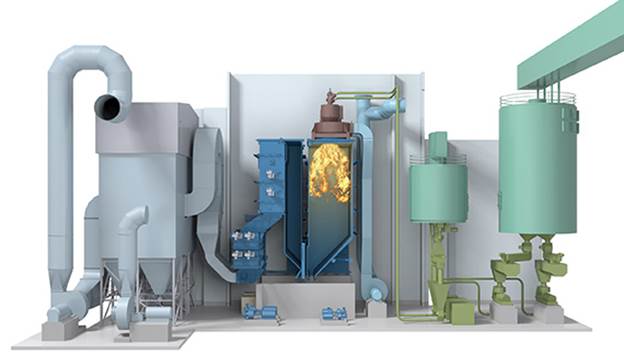
Valmet will provide a wood pellet heating plant to Helen Oy's Salmisaari power plant. The wood pellet plant will enable Helen to increase the use of wood pellets in the district heat production in Helsinki. The start-up of the heating plant is expected to take place at the beginning of 2018. The value of the order is over € 20 million.

"Utilization of wood pellets as fuel increases the use of domestic renewable fuels in energy production and creates jobs in raw material sourcing and transport. The heating plant also supports Helen's goals of climate-neutral production," says Heikki Hapuli, Director, Production and Distribution at Helen Oy.

"In designing the Salmisaari wood pellet plant we have been able to utilize the experiences gained in earlier, similar projects. The plant fulfils the tightening environmental requirements by utilizing a low-NOx burner technique and efficient dust removal. Pellets made of barkless raw material as well as industrial pellets, which have been produced by also including bark and forest residue, can be utilized as fuel at the plant," says Kai Mäenpää, Vice President, Energy Sales and Services Operations, Valmet.
Technical information about the delivery
Valmet will supply the wood pellet heating plant as a total delivery. Valmet's delivery includes fuel conveyors from the existing storage silos, wood pellet grinding and the wood dust equipment, hot water boiler and flue gas cleaning by way of a bag hose filter. In addition, Valmet will supply the plant construction, electrification and a Valmet DNA automation system. Helen will be in charge of the construction of the foundation.
About Helen Oy
Helen Oy`s business consists primarily of the production of electricity, district heating and cooling, as well as energy distribution and sales. The company has close to 400,000 clients in various parts of Finland. The company's district heating covers over 90% of the heating needs of the city of Helsinki. Helen also expands energy-efficient district cooling in Helsinki. The company aims to produce energy in a carbon-neutral way by the year 2050.
 
[gravityform id="1" title="true" description="true"]
 
[gravityform id="2" title="true" description="true"]
 

Large Malaysian plywood manufacturer cuts shipments to Japan

Shing Yang, the largest Malaysian plywood manufacturer for Japan, decided to stop its sales of panels, like concrete forming, for the moment. The reason for this decision is to restore its decreasing market in Japan.
The president of Shing Yang commented that this may be an unusual measure to restore the company's market in Japan and that the plan is to reduce the production by 30%. The main target of the company is to reduce total inventories in Japan down to a proper level so that the demand for plywood to get back to a normal level.
The plywood market imports have suffered a poor demand since August 2015, causing the export prices to drop. The total 2015 supply was down by 17.3%, compared to 2014. Yet, the market remained stable for the following 6 months through August last year.
Also, the orders for Malaysian plywood products decreased by 20% and the Japanese market continued to decline in 2016 too, making the orders to drop even more. The export prices of 3x6 JAS coated concrete forming panel dropped by $50 compared to November 2015.
Fortunately, the Malaysian Ringgit was weaker enough to cover the lower dollar export prices, but, at the moment, the Ringgit is rebounding, causing mills to suffer losses.
Moreover, the Shing Yang president stated that isn’t reasonable to think that the export prices should be reduced according to the Japanese market prices, so he decided to withhold the panels supply until the inventories in Japan are properly reduced and the market improves accordingly.
The plywood mills in Sarawak now face severe log supplies shortage, because of the tight control of the illegal harvest law. Thus, the cost of logs climbed considerably and it is urgent to improve profitability. Shing Yang considers that shifting from limited sources of natural grown trees to low cost planted trees also reviews average sales prices by looking at other markets like India, Australia, the U.S.A., Africa and South America.
Shin Yang Trading Sdn. Bhd. (SYT) operates in the wholesale and distribution networks for products utilised in logging, timber processing, shipbuilding, shipping, construction, civil engineering and quarry industries.
 
[gravityform id="1" title="true" description="true"]
 
 
[gravityform id="2" title="true" description="true"]


EU tropical sawn hardwood imports up 9% in 2015

In 2015, EU imports of tropical sawn hardwood were 1.05 million cu.m, 9% more than previous year. The value of EU imports increased by 15% to Euro772 million,  ITTO reported.
The average unit value of tropical sawn hardwood imports into the EU in 2015 was Euro732 per cubic meter, up from Euro670 per cubic meter the previous year, the increase due to the euro being on average 20% weaker against the US$ in 2015 compared to 2014 (Chart 1).


While the rise in EU imports of tropical sawn hardwood in 2015 is encouraging, the volume of imports remains at historically very low levels. Import volume in 2015 was only 40% of the level prevailing before the global financial crises and fell short even of the level between 2009 and 2011 in the immediate aftermath of the crises.
The pace of increase in import volume in 2015 was also slower than for temperate sawn hardwoods which jumped 19% to 1.26 million cu.m. The share of tropical in total EU sawn hardwood imports fell from 48% in 2014 to 46% in 2015, continuing a long term trend (Chart 2).
On the other hand, the loss of tropical wood’s share in EU sawn hardwood imports is less obvious in euro value terms; tropical wood’s share was 57% in 2015, the same as the previous year and not too far short of the level of 62% that prevailed before the global financial crises.
 
[gravityform id="1" title="true" description="true"]
 
[gravityform id="2" title="true" description="true"]

Brazil fights to remove US plywood tariffs

The Brazilian Association of Mechanically-Processed Timber Industry (ABIMCI) has consistently waged battle with the US in recent years to remove tariffs on Brazilian plywood.
ABIMCI has, once again, filed a formal petition with the office of the United States Trade Representative asking for a review the status of the Brazilian plywood within the Generalized System of Preferences (GSP).
Since 2005, Brazilian softwood plywood exports to the US have attracted an 8% duty which, says ABIMCI, undermines the competitiveness of Brazilian plywood.
ABIMCI filed new petition at the beginning of April this year with the US government requesting the re-designation of Brazilian pine plywood within GSP.
A similar application was denied last year. ABIMCI says it filed the petition again in order to promote fair competition among market players.
 
[gravityform id="1" title="true" description="true"]
 
[gravityform id="2" title="true" description="true"]

Stora Enso to start 100 000m3/yr LVL production at Varkaus in this quarter

The contruction of Stora Enso's new LVL (Laminated Veneer Lumber) production line in Varkaus, Finland is proceeding according to the schedule. The raw material supply for the production has now begun. The new production line, starting up during this quarter, will increase the yearly usage of heavy spruce logs in Varkaus with some 200 000 m3.

"We are now acquiring raw material for successful test runs and production start-up," says Jaakko Huovinen, Director responsible for Wood Production division operations in Varkaus.

The new LVL production line will significantly increase the need for heavy logs in Varkaus unit. In addition, the craftliner that started up at the end of 2015 has already increased pulpwood usage with 1,1 million cubic metres.

"The heavy spruce log supply together with the increased pulpwood supply is well aligned with Varkaus area wood supply base. The wood is mainly supplied from local privately owned forests," describes Riku Koskinen, the Head of Wood Supply in Eastern Finland.

Stora Enso announced in February 2015 that it will invest EUR 43 million in building a new LVL line in Varkaus. The new products are complementing the existing product portfolio. After the ramp-up phase, the annual production capacity will be 100 000m3. During 2015, Varkaus mill's fine paper machine was successfully transferred as virgin fibre based craftliner.
 
[gravityform id="1" title="true" description="true"]
 
[gravityform id="2" title="true" description="true"]
US housing starts drop more than expected in March

Housing starts in the United States dropped more than expected in March, according to data released by the U.S. Commerce Department. The fall is a clear sign of a cooling housing market in line with with a sharp slowdown in economic growth in the first quarter of this year.
Housing starts declined by 8.8 percent to a seasonally adjusted annual pace of 1.09 million units, the lowest level since October, the Commerce Department said on Tuesday.
The economy has been slammed by a strong dollar and weak global demand, which have weighed on exports. Lower oil prices are also a drag as they have undercut profits of energy firms, causing a sharp decline in spending on capital projects.
Building permits, a sign of future construction, dropped 7.7 percent to a 1.09 million-unit rate last month, the lowest level since March last year.
 
[gravityform id="1" title="true" description="true"]
 
[gravityform id="1" title="true" description="true"]

Brazil: Australian red cedar replacing mahogany and cedar

Domestically grown Australian red cedar (Toona ciliate, one of Australia's few native deciduous trees) is gaining popularity in Brazil. This timber is also known as toon or toona (also applied to other members of the genus Toona), Australian red cedar, Burma cedar, Indian cedar, Moulmein cedar and Queensland red cedar. It is also sometimes called Indian mahogany.
Australian red cedar grown in Brazil has started to replace high value native timbers such as Brazilian cedar (Cedrela fissilis) and mahogany (Swietenia macrophylla).
The domestic market for sawnwood of around 25 million cubic metres can readily absorb timber from plantation thinnings of red cedar which can be used for fine finish products in civil construction such as boards and batten panelling, doors, windows and furniture. Logs can also be used to produce decorative veneers.
Australian red cedar harvested at 15 years when trees are over 50 cm in diameter. Thinnings of 8 year old cedar generate an early financial return.
Reports suggest that thinnings from one hectare of plantation can produce around 30 cu.m of sawnwood.
Currently, sawnwood produced from thinnings attracts a price in the region of R$ 1,500 per cu.m. One hectare of mature logs at the final harvest is said to generate around 100 cu.m of sawnwood.
 
[gravityform id="1" title="true" description="true"]
 
[gravityform id="2" title="true" description="true"]

UK: Forestry industry divided on Brexit referendum

Confor has recently published a survey regarding the key issues that the forestry sector in the UK needs to consider ahead of the EU referendum in June. The “Seeing the EU through the trees” paper will represent the basis for discussion at the All-Party Parliamentary Group on Forestry meeting at Westminster, set to take place today.
The poll was designed to measure the perspectives of the forestry and wood sectors, along with asking whether those responding wish to remain in the EU. Mainly, the open document considers 6 areas where decisions made at European level have direct or indirect impacts on the forestry and timber industry: trade, plant health, direct financial support from the EU, regulations, red tape and bureaucracy, labour market and controlling UK borders and the economy.

"For those who owned woods or practised forestry 30 or more years ago, the challenge now of trying to get things done, or claiming grants, can seem a nightmare. The prospect of leaving the EU and getting rid of it all sounds something like paradise. Something that seems so good should perhaps be looked at a little more closely,” said Guy Watt of John Clegg Consulting, who has written the paper.

The forestry and timber trade body represents 2,000 businesses in the UK and the poll made by Confor showed that 52% of them were in favour of remaining a member of the EU, while 48% of them prefer to leave the union.
Mr Watt also questions whether the UK “gold plates” EU directives and wonders if that practice would be given up easily if the UK voted to leave.
Also, the paper includes information about the amount of grant support for woodland owners in England, Scotland, Wales and Northern from Europe, between 2014 and 2020. Thus, it shows that, between the mentioned period, woodland owners in Scotland will receive £36million and the forestry industry will be granted £783,000 as research funding.
 
[gravityform id="1" title="true" description="true"]
 
[gravityform id="2" title="true" description="true"]


Production in construction down in euro area

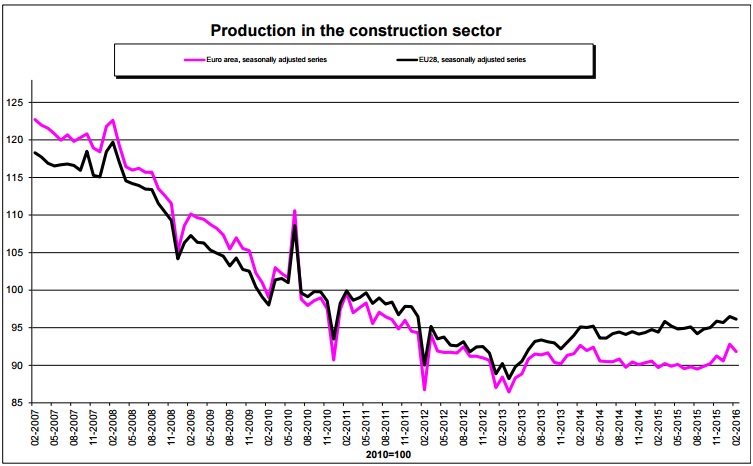
In February 2016 compared with January 2016, seasonally adjusted production in the construction sector fell by 1.1% in the euro area (EA19) and by 0.4% in the EU28, according to first estimates from Eurostat, the statistical office of the European Union.
In January 2016, production in construction grew by 2.4% in the euro area and by 0.9% in the EU28. In February 2016 compared with February 2015, production in construction grew by 2.5% in the euro area and by 2.3% in the EU28.


Monthly comparison by construction sector and by Member State
The decrease of 1.1% in production in construction in the euro area in February 2016, compared with January 2016, is due to building construction falling by 1.5%, while civil engineering grew by 0.9%. In the EU28, the decrease of 0.4% is due to building construction falling by 0.5%, while civil engineering grew by 0.3%.
Among Member States for which data are available, the largest decreases in production in construction were recorded in France (-6.0%), Sweden (-5.1%) and Slovenia (-4.1%), and the highest increases in Romania (+5.1%), the United Kingdom (+3.1%) and Bulgaria (+2.7%).
Annual comparison by construction sector and by Member State
The increase of 2.5% in production in construction in the euro area in February 2016, compared with February 2015, is due to building construction rising by 2.8% and civil engineering by 1.3%. In the EU28, the increase of 2.3% is due to building construction rising by 2.9%, while civil engineering fell by 1.4%.
Among Member States for which data are available, the highest increases in production in construction were recorded in Slovakia (+18.8%), Spain (+13.0%) and Sweden (+11.3%), and the largest decreases in Slovenia (-30.8%), Hungary (-19.3%) and Poland (-10.1%).
 
[gravityform id="1" title="true" description="true"]
 
[gravityform id="2" title="true" description="true"]

Global forest products industry should be part of the solution to climate change

The International Council of Forest and Paper Associations (ICFPA) and its members welcome the signing of the landmark United Nations agreement to tackle climate change, set to take place on April 22. The agreement urges countries to implement policies that would allow them to keep a global temperature rise below 2 degrees Celsius. The global forest products industry has a highly significant role to play in the implementation of these targets.
“The global forest products industry has made significant strides in reducing its carbon footprint, stocking carbon, and generating greenhouse gas removals – all helping to mitigate climate change”, said ICFPA President and Brazilian Tree Industry (Ibà) President Elizabeth de Carvalhaes. “This agreement is crucial to implementing some of the policies that consider biomass as carbon neutral when harvested from sustainably managed forests and to further recognize all positive contributions that forests and forest products provide in combating climate change.”
The inherently-renewable global forest products industry remains committed to mitigating climate change for the benefit of the green economy and society at large. ICFPA members have achieved an impressive 5% reduction in their greenhouse gas emissions intensity since 2010/2011 and 17% since the 2004-2005 baseline year (2015 ICFPA Sustainability Progress Report).
The European pulp and paper industry has been a global champion in mitigating greenhouse gas emissions. It has set itself in 2011 a clear vision of becoming carbon neutral by 2050 and since then, taken concrete steps to reach that goal,” said Jori Ringman, Acting Director General of Confederation of European Paper Industries (CEPI). “Thanks to responsible sourcing practices and sustainable forest management, the forest area is growing in Europe by an area of over 1,500 football pitches per day. CEPI is pleased to see development in the same direction globally”, he added.
The forest industry’s significant role in mitigating climate change was highlighted in the ICFPA-commissioned report Analysis of Forest Contributions to the INDCs by acclaimed researcher Paulo Canaveira. Having looked at the contributions of forests in the national targets of ICFPA member countries (INDCs) and global mitigation effort from 2020 onwards, the report concludes that many countries identify forests and the land-use sector as relevant to policies and measures implemented to meet their targets. Reducing emissions from deforestation, but also sustainable forest management, afforestation and reforestation are commonly mentioned as key mitigation practices. In some developing countries, they even constitute the country’s main contributions.
Other climate change mitigation efforts of the global forest products industry include supporting national and regional climate policies and programs; investing in technologies with low carbon footprints and ones that improve carbon sequestration; and developing bio-based technologies to find innovative ways to use wood fiber and substitutes for goods traditionally made from fossil fuels.
About
The ICFPA represents more than 30 national and regional forest and paper associations around the world. Together, ICFPA members represent over 90 percent of global paper production and more than half of global wood production.
For more information about the global forest and paper industry, visit icfpa.org.
 
[gravityform id="1" title="true" description="true"]
 
[gravityform id="2" title="true" description="true"]

 

EIA urges Indonesia to support 'legal timber' system

Joko ‘Jokowi’ Widodo, the President of Indonesia met today with UK Prime Minister David Cameroon, during a business-focus tour of Europe. With this occasion,  EIA (Environmental Investigation Agency) is urging Jokowi to support the commitment made in a process of ensuring that only legal timber and products are exported from the country.
The Forest Law Enforcement Governance and Trade (FLEGT) Action Plan was created to work against the illegal loggings and illegal timber trades happening in the country since 1999. Thus, the plan included measures to prohibit such actions, by also discovering the root cause of the illegal loggings.

“More than a decade of hard work and negotiations is coming to fruition and we’re likely just months away from seeing the first FLEGT-approved timber imports from Indonesia. Although there remains a lot of work to do, the FLEGT process gives us grounds for cautious optimism that forest crime can be addressed effectively,” said Faith Doherty, the EIA Forest Campaign Team Leader.

Moreover, the Environmental Investigation Agency (EIA), which started the investigations leading to the instauration of FLEGT, obliged the Indonesian Government to ensure full implementation of the Timber Legality Assurance System (TLAS) to cover all timber sources, particularly conversion timber, which accounts for a significant proportion of the whole of Indonesia’s timber production, as One World News reported.
Jokowi released a statement last week and said that the government will build up a moratorium on oil palm and mining permits, together with an audit of current permits. Thus, as Doherty explained, if the moratorium will be implemented properly, it will support the change of natural forests to oil palm plantations, along with tracking the illegalities.
 
[gravityform id="1" title="true" description="true"]
 
[gravityform id="2" title="true" description="true"]


EIA urges Indonesia to support ‘legal timber’ system

Joko ‘Jokowi’ Widodo, the President of Indonesia met today with UK Prime Minister David Cameroon, during a business-focus tour of Europe. With this occasion,  EIA (Environmental Investigation Agency) is urging Jokowi to support the commitment made in a process of ensuring that only legal timber and products are exported from the country.

The Forest Law Enforcement Governance and Trade (FLEGT) Action Plan was created to work against the illegal loggings and illegal timber trades happening in the country since 1999. Thus, the plan included measures to prohibit such actions, by also discovering the root cause of the illegal loggings.

“More than a decade of hard work and negotiations is coming to fruition and we’re likely just months away from seeing the first FLEGT-approved timber imports from Indonesia. Although there remains a lot of work to do, the FLEGT process gives us grounds for cautious optimism that forest crime can be addressed effectively,” said Faith Doherty, the EIA Forest Campaign Team Leader.

Moreover, the Environmental Investigation Agency (EIA), which started the investigations leading to the instauration of FLEGT, obliged the Indonesian Government to ensure full implementation of the Timber Legality Assurance System (TLAS) to cover all timber sources, particularly conversion timber, which accounts for a significant proportion of the whole of Indonesia’s timber production, as One World News reported.

Jokowi released a statement last week and said that the government will build up a moratorium on oil palm and mining permits, together with an audit of current permits. Thus, as Doherty explained, if the moratorium will be implemented properly, it will support the change of natural forests to oil palm plantations, along with tracking the illegalities.


[gravityform id="1" title="true" description="true"]


[gravityform id="2" title="true" description="true"]


New Zealand export log prices remain stable in April

The export log prices in New Zealand remained stable in April, because the improved demand caused an increase in the shipping costs. The average wharf gate price for New Zealand A-grade logs was unchanged at $119 a tonne in April, from March, according to AgriHQ's monthly survey of exporters, forest owners and sawmillers.
China, the biggest market for New Zealand, registered a in-market price for A-grade logs, of US $111/JAS, from US $107/JAS in March, because of a slow activity during the Chinese New Year holiday. Also, the log inventories on Chinese ports stood at 3.6 million to 3.8 million cubic metres, with an offtake of 60,000 tonne a day, marginally less than the current volumes arriving at ports, according to NZNEWSUK.

"With the Chinese New Year period well and truly passed, activity has increased in the Chinese market. The build-up of inventories on port this year did not reach the high levels observed in previous years, largely due to the lower volumes hitting Chinese ports from New Zealand prior to this period, coupled with a faster recovery in market activity after the Chinese New Year holidays,” AgriHQ analysts Reece Brick and Shaye Lee said in their report

The increased oil prices enabled growing shipping prices, because there were fewer ships to come to New Zealand due to a drop in the palm kernel and fertilizer imports.
Moreover, the increased demand in the construction sector caused the structural log prices to go underpinned, while for roundwood a lift in demand from the horticulture and viticulture industries is offsetting a decline in demand from the dairy industry. Also, the pulp market was steady, as NZNEWSUK reported.
 
[gravityform id="1" title="true" description="true"]
 
[gravityform id="2" title="true" description="true"]


US, still the largest sawn hardwood supplier to the EU

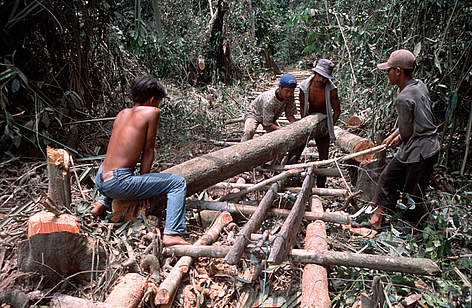
The US remained the single largest external supplier of sawn hardwood into the EU in 2015, but deliveries fell by 6% to 366,000 cu.m. At the same time, the EU’s sawn hardwood imports from Canada fell by 23% to 24,000 cu.m.
Data compiled by the American Hardwood Export Council (AHEC) indicates that exports of US sawn hardwood to the EU fell 11% in volume and 10% in dollar value last year. While exports of white oak and red oak increased slightly, there was a significant fall in exports of other U.S. hardwood species, particularly tulipwood and ash.
According to AHEC, “these declines occurred at a time when European currencies weakened sharply against the dollar and there was only slow post-recession growth in key economic sectors, like construction and furniture”. AHEC also note that concerns about future supplies of ash due to the Emerald Ash Borer, combined with uncertainty over EU rules for phytosanitary certification of American ash may have encouraged manufacturers to build up stock during 2014.
This combined with the weakening euro led to the sharp fall in exports of ash during 2015. American ash is now subject to very stringent phytosanitary requirements in the EU which is severely limiting opportunities for export of this species.
 
[gravityform id="1" title="true" description="true"]
 
[gravityform id="2" title="true" description="true"]
US lumber prices fall in mid-April

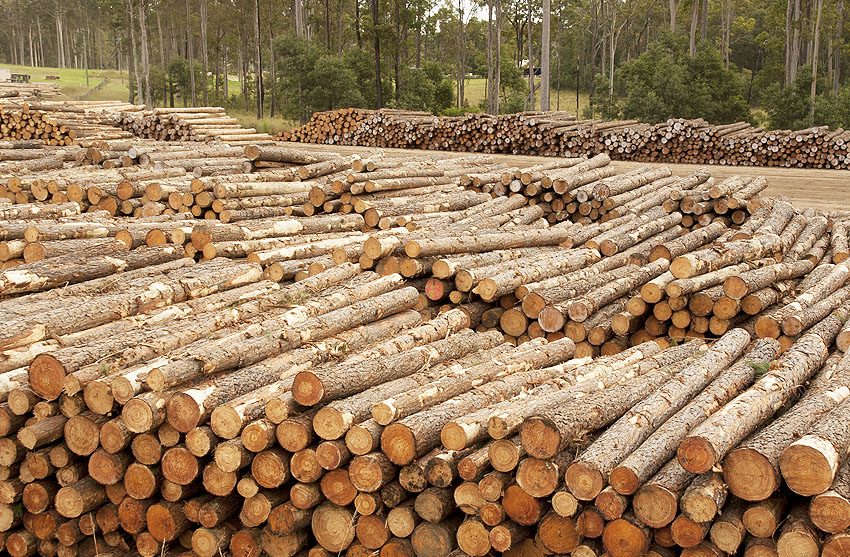
Mixed price trends kept US framing lumber traders off balance in mid-April. Gains were mostly secured in the Southern Pine market, with treaters, home centers, and truss manufacturers among the most active buyers. Prices softened in Western and Eastern S-P-F. In the US West, the brisk sales pace of recent weeks moderated; prices of Hem Fir were firm, while weakness was prevalent in green and dry Douglas Fir. The Random Lengths Framing Lumber Composite Price fell for the first time in 11 weeks.

Week
Apr 15
Previous Week
Apr 8
Year Ago
2015
Random Lengths Framing Lumber Composite Price* $346 $347 $336
KD Western S-P-F #2&Btr 2x4 R/L Mill Price 294 308 269
KD Eastern S-P-F #1&2 2x4 R/L, delivered Great Lakes 384 389 369
Green Douglas Fir Std&Btr 2x4 R/L (Portland) 325 335 295
Southern Pine (Westside) #2 2x4 R/L 411 400 406
KD Coast Hem-Fir #2&Btr 2x4 R/L 382 378 310
Ponderosa Pine (Inland) #2&Btr 1x12 R/L 685 685 670
* Weighted average of 15 key items


Random Lengths Panel Market Report

US structural panel prices shifted in both directions amid a slower overall trading pace. Solid mill order files kept OSB prices on a firm to higher track, although sales slowed from the pace of previous weeks. Buyers took on a more cautious tone. In Southern Pine plywood markets, prices of rated sheathing softened. Activity at the retail and distribution levels was brisk, but eroding order files put pressure on mills to find trading levels. A slow week of trading at the mill level resulted in a few cracks appearing in western Fir plywood prices.

(f.o.b. mill prices)  Week
Apr 15
Previous Week
Apr 8
Year Ago
2015
Random Lengths Structural Panel Composite Price* $359 $360 $369
Southern (west-east) 15/32-inch 3-ply rated sheathing plywood 360-385 370-393 430-487
Southern (west-east) 15/32-inch 4-ply rated sheathing plywood 363-390 373-397 435-490
Western 1/2-inch 4-ply rated sheathing plywood 363 369 425
North Central 7/16-inch Oriented Strand Board 247 242 180
*Weighted average of 11 key items

 
[gravityform id="1" title="true" description="true"]
 
[gravityform id="2" title="true" description="true"]

Significant growth in UK timber and panels imports

The latest Statistical Bulletin published by UK's Timber Trade Federation (TTF) reveals a strong start to 2016 for UK timber and panels trade.
Import volume in the UK in the first month of 2016 reached 756,000 m3 with a 1.6% increase compared to December 2015. The result was similar to the one registered in January 2015, but better than each of the January volumes since 2008 with the exception of 2014.
The 2016 start continues buoyant market trends experienced throughout the year 2015.
China and Brazil, in particular, keep growing their share of UK timber and panels market. The first country has increased its penetration of the UK market with hardwood plywood, while Brazil has achieved a similar domination of the softwood plywood imports.
As explained in the chart, the 2015 overall share of timber and panels imported by the UK from Europe was 84.9%, 0.5% lower than 2014. A similar drop affected North American share of supply (-0.2%) as well as Africa, Middle East and Oceania (-0.2%).
Conversely, 2015 saw an increase of supply from Asia (+0.5%) - mainly due to the growth of hardwood plywood from China - and Central & South America (+0.4%), fed by Brazilian exports of softwood plywood.
Nick Boulton, Head of Technical and Trade at TTF said: “These statistics show a continued positive trend for the UK timber trade. It is interesting to see growth of softwood plywood imports from Brazil, where the major manufacturers have made significant investment in strong third party Quality Assurance for their products enabling UK buyers to have greater confidence in their purchases.”
 
[gravityform id="1" title="true" description="true"]
 
[gravityform id="2" title="true" description="true"]

Price of wood pellets drops in Germany

The price of wood pellets in Germany has decreased in the spring of 2016. As the German Energy Wood and Pellet Association (DEPV) reports, pellets currently cost on average 231.89 EUR / t, decreasing by 3.2% compared to the previous month. As compared to last year, wood pellets prices dropped 5.1%. One kilogram of pellets currently costs 23.19 cents a kilowatt-hour (kWh) of heat from pellets of 4.63 cents.
The price advantage of pellets over natural gas is currently 25% and 4.5% for fuel oil.

"Most pellet operators start in spring  to replenish their stock. The pellet price depends on the available wood supply and thus by means of comprehensible market influences, "says Martin Bentele, Managing Director of DEPV.

In Germany, the price of wood pellets in April 2016 has the following regional differences:
in southern Germany, pellets cost 228.52 EUR / t, for a 6 t purchase quantity. In central Germany, pellets cost 230.73 EUR / t and in the north and east 240.10 EUR / t.
Larger quantities (26 t) were traded in April 2016 at the following rates: North / East: 221.72 EUR/ t, Center: 216.56 EUR / t, South: 214.90 EUR / t (all incl. VAT).

Price evolution of wood pellets in Germany

Germany:Price of wood pellets April 2016
Create line charts

[gravityform id="1" title="true" description="true"]
 
[gravityform id="2" title="true" description="true"]

Finland: Roundwood purchases up 21% in the first quarter

The member companies of the Finnish Forest Industries Federation bought 7.3 million m3 of wood from private forests, during January-March 2016. This represents a 21% increase compared to the average of the last 10 years. There were 2.9 million m3 of logs bought, 23% more than in the mentioned period and 4.1 million m3 of pulpwood, which is 31% more than January-March of the average of the last 10 years.
In March 2016, pine and spruce were paid in Finland an average of 54-55 euros per cubic meter, but the price varied by region between 42 and 57 euros. At the same time, the price of birch logs was € 41 per cubic meter, ranging between € 36-44. Also, the pine and birch pulpwood average price was € 15/m3 and spruce pulpwood reached € 17 per cubic meter. The pulpwood prices ranged between € 8-18/m3.
Last year, Finnish production of softwood sawn timber fell 2.7% short of the volume produced in 2014. In all, some 10.6 million m3 of softwood sawn timber was produced in Finland.
On contrast, in terms of exports, the Finnish sawmills performed well in 2015. The Finnish softwood lumber exports increased in volume by 16% as compared to 2014. Finnish sawmills exported about 7,86 million m3 of planed and sawn lumber against 6,75 million m3 exported in 2014.
 
[gravityform id="1" title="true" description="true"]
 
[gravityform id="2" title="true" description="true"]


Newsletter

Subscribe to our digital newsletter for your daily digest of essential news, views and analysis from the international wood industry delivered directly to your inbox.


0