
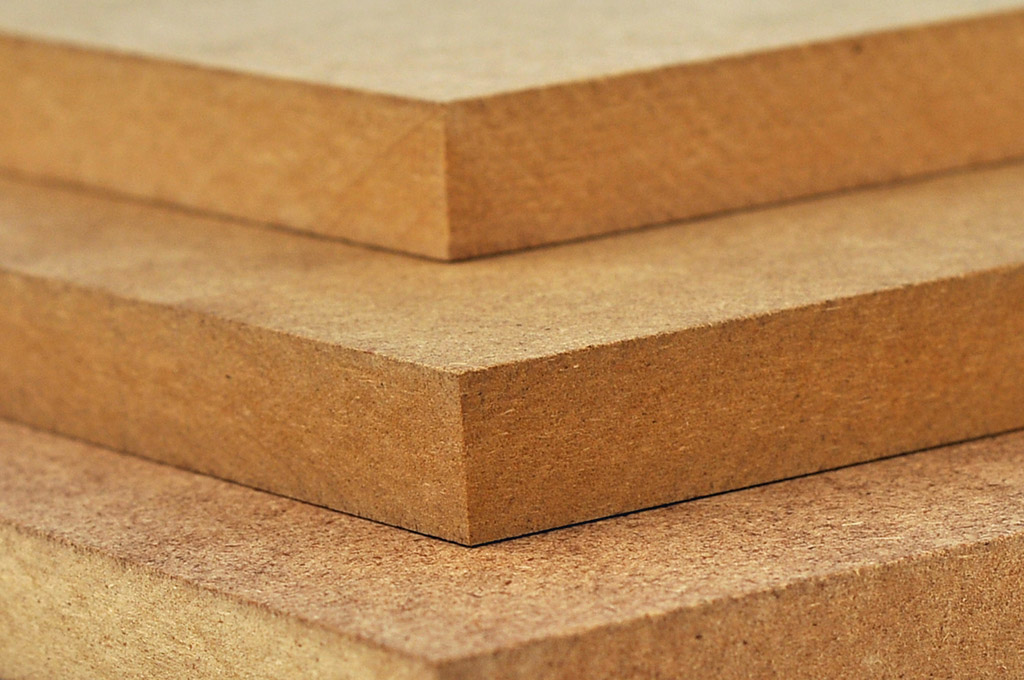
Century Plyboards Ltd, the largest Indian manufacturer that sells plywood and decorative veneers, has recently announced that they will set up a medium density fibreboards manufacturing unit in Hoshiarpur, Punjab. This will be Century Ply’s first attempt into the MDF space, according to the Hindu Business Line.
The US $66 million project will be completed by the end of the current financial year and will occupy 32 acres of private land. Its capacity will reach 198.000 m3 per year of MDF and it will also have a plywood and block board unit with an initial capacity of 17,000 m3.
By the middle of 2017-2018, the company plans to enhance the plywood manufacturing capacity at the Hoshiarpur project to 51,000 m3. One of the issues that will give Century Ply a hard time is the sourcing of raw material or wood, which is crucial for plywood manufacturing.
As the Hindu Business Line reported, Century Plyboards has also set up a US $8.18 million greenfield particleboard unit in Chennai. This unit, housed in the company’s existing pre-lamination board units in Chennai, will start commercial production shortly.
At the moment, Century Ply imports the processed raw material from South-East Asia, because of a ban on logging and the prohibition of unprocessed timber exports. The company also has 5 timber-processing units in Laos and one in Myanmar and plans to establish 2 more units in Indonesia and one in Vietnam.
[gravityform id="1" title="true" description="true"]
[gravityform id="2" title="true" description="true"]
Article archive
Canfor completes Wynndel Box & Lumber acquistion

Canfor Corporation has completed the acquisition of Wynndel Box & Lumber Ltd., located in Creston Valley, British Columbia. The information comes to complete the news release dated back on January 21, 2016. Now, Canfor has finished buying all of Wynndel Box & Lumber assests.
The acquisition of assets includes a sawmill located in Wynndel, BC, with an annual production capacity of 65 million board feet, and approximately 65,000 cubic metres of annual harvesting rights in the Kootenay Lake Timber Supply Area.
Wynndel Box and Lumber produces premium boards and customized specialty wood products, sold under the brand name WynnWood. It has access to high-quality fibre, and will advance Canfor’s ability to produce a broader mix of higher value specialty products.
As Don Kayne, Canfor Corporation President and CEO, stated, this acquisition will increase the company’s attention to specialty markets all over the world.
[gravityform id="1" title="true" description="true"]
[gravityform id="2" title="true" description="true"]
Canfor completes Wynndel Box & Lumber acquistion
Canfor Corporation has completed the acquisition of Wynndel Box & Lumber Ltd., located in Creston Valley, British Columbia. The information comes to complete the news release dated back on January 21, 2016. Now, Canfor has finished buying all of Wynndel Box & Lumber assests.
The acquisition of assets includes a sawmill located in Wynndel, BC, with an annual production capacity of 65 million board feet, and approximately 65,000 cubic metres of annual harvesting rights in the Kootenay Lake Timber Supply Area.
Wynndel Box and Lumber produces premium boards and customized specialty wood products, sold under the brand name WynnWood. It has access to high-quality fibre, and will advance Canfor’s ability to produce a broader mix of higher value specialty products.
As Don Kayne, Canfor Corporation President and CEO, stated, this acquisition will increase the company’s attention to specialty markets all over the world.
[gravityform id="1" title="true" description="true"]
[gravityform id="2" title="true" description="true"]
China’s forest industry output more than doubled in five years

The total value of China’s forest industry output has been increasing and the structure and size of the sector changed during Twelfth Five Year Plan period.
The total output value of China’s forest industry grew to RMB5.81 trillion in 2015 from RMB2.28 trillion in 2010 representing an annual growth of over 20%. It is forecast that the total value of China’s forestry industry output will exceed RMB9 trillion by 2020.
In the period of the 12th 5 year plan the structure of the primary, secondary and tertiary forest industry sectors changed from a ratio of 39:52:9 in 2010 to 33:51:16 in 2015. In 2015 it is estimated that over 52 million of employees were depending on the forestry sector for work.
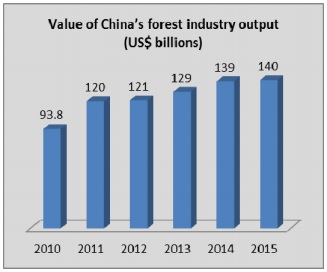
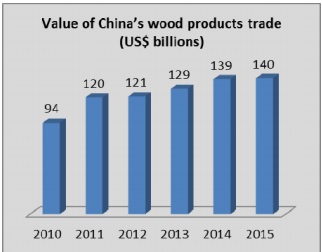
The value of China’s wood products trade has increased to US$140 billion in 2015 from US$93.8 billion in 2010.
The government has prepared plans to upgrade the country’s wood products industry. Enterprises will be encouraged to accelerate transformation to added value production, to upgrade machinery and equipment and adopt high-tech, environmentally sound practices.
[gravityform id="1" title="true" description="true"]
[gravityform id="2" title="true" description="true"]
Most sustainable wooden office building is in the Netherlands
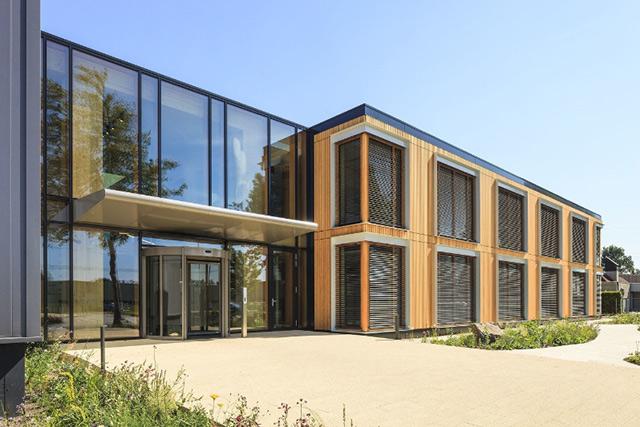
The Netherlands has become home to the most sustainable office building in the world. The dryer and cooler manufacturer Geelen Counterflow in Haelen will use it as its new head office, after the building received 99.94% score from the BREEAM certification system.
According to E&T, the building has been designed for 50 office employees and generates 50% more solar energy than it needs for heating, air conditioning, lighting and computers. The energy that remains is then used in the factory for laser cutting of stainless steel and recharging electric forklift trucks.
Moreover, the building materials have been certified, so they don’t do any harm to the environment, while they can also be re-used when their lifetime period expires. The most important thing about the building is that it’s made out of wood, having the lowest CO2 amount. Thus, there is permanent control of the daylight infiltration, the air quality and the indoor lighting.
"In our never-ending quest to build the best dryers and coolers for food and feed we apply the laws of nature around gravity, aerodynamics and thermodynamics. So when we build a new office it only makes sense to respect these laws and the limits of nature, too,” said Geelen Counterflow managing director Sander Geelen.
As E&T reported, wooden buildings and the use of timber in larger structures has been attracting increasing interest from architects in recent years.
[gravityform id="1" title="true" description="true"]
[gravityform id="2" title="true" description="true"]
French Schmidt Group orders two batch size 1 lines from German Anthon

French SCHMIDT Group (previously SALM), the country’s largest kitchen furniture manufacturer, has ordered two Batch Size 1 lines from German company Anthon GmbH.
The two new lines are intended for the new production unit in Selestat where 7000 parts per shift per line will be produced. SALM project leader Cyrille Holota and Anthon sales director Bernd Jochims agree that this project sets new standards in Batch Size 1 plants.
The SCHMIDT Group employs approximately 1,450 people and operates five plants in France; three in Sélestat and one each in Lièpvre and Bergheim.
Anthon sales director Bernd Jochims said, "We will use this opportunity to support the SCHMIDT Groupe on their further expansion. This is just the beginning of a long-term partnership."
Anthon is a globally operating machine building company with an export quota of more than 80% and is based in the north of Germany. Since its founding in 1865 the family firm in Flensburg has increasingly developed itself to become a general contractor. With a competence-mix of heavy mechanical engineering and software solutions Anthon, manufactures complete production lines for the panel processing industry worldwide.
[gravityform id="1" title="true" description="true"]
[gravityform id="2" title="true" description="true"]
Ghana: Latest prices for exported wood products

Prices for Ghana's exported wood products are the following as of 30 March, 2016:
Boule Export prices
| Euro per m³ | |
| Black Ofram | 380 |
| Black Ofram Kiln dry | 446 |
| Niangon | 481▲ |
| Niangon Kiln dry | 490 |
Export Sawnwood Prices
| Ghana Sawnwood, FOB | US$ per m³ | |
| FAS 25-100mm x 150mm up x 2.4m up | Air-dried | Kiln-dried |
| Afrormosia | 860 | 925 |
| Asanfina | 492 | 564 |
| Ceiba | 203 | 368 |
| Dahoma | 442▼ | 504 |
| Edinam (mixed redwood) | 537 | 580 |
| Emeri | 477 | 515 |
| African mahogany (Ivorensis) | 676▲ | 1025 |
| Makore | 660 | 830 |
| Niangon | 687 | 873 |
| Odum | 685▲ | 900 |
| Sapele | 610 | 791 |
| Wawa 1C & Select | 371▼ | 416 |
Export Rotary Veneer Prices
| Rotary Veneer 2mm and up, FOB |
€ per m3 | |
| CORE (2mm & up) | FACE (2mm & up) | |
| Ceiba | 380▲ | 433 |
| Chenchen | 462 | 555 |
| Ogea | 474 | 537 |
| Essa | 511 | 561 |
| Ofram | 350 | 406 |
Export Sliced Veneer Prices
| Sliced Veneer, FOB | € per sq. m | |
| Face | Backing | |
| Afrormosia | 1.19 | 0.91 |
| Asanfina | 1.40 | 0.75 |
| Avodire | 1.60▼ | 0.34 |
| Chenchen | 1.00▼ | 0.36 |
| Mahogany | 1.80▼ | 0.92 |
| Makore | 1.00 | 0.80 |
| Odum | 1.75▲ | 0.40 |
Export Plywood Prices
| Plywood, FOB | € per m3 | ||
| Ceiba | Ofram | Asanfina | |
|
4mm
|
482 | 510 | 641 |
|
6mm
|
487▼ | 535 | 615 |
|
9mm
|
407 | 450 | 613 |
|
12mm
|
369 | 463 | 475 |
|
15mm
|
443▼ | 436 | 400 |
|
18mm
|
353 | 358 | 370 |
Grade AB/BB would attract a premium of 10%, B/BB 5%, C/CC 5% and CC/CC 10%.
Export Added Value Product Prices
| Parquet flooring 1st | FOB € per sq.m | ||
| 10x60mm | 10x65-75mm | 14x70mm | |
| Apa | 12.00 | 14.47 | 17.00 |
| Odum | 9.00 | 11.33▲ | 13.00▲ |
| Hyedua | 13.00▼ | 18.22 | 16.30 |
| Afrormosia | 13.72 | 13.93 | 17.82 |
Grade 2 less 5%, Grade 3 less 10%.
Source: ITTO
[gravityform id="1" title="true" description="true"]
[gravityform id="2" title="true" description="true"]
Pöyry: ‘Are decorative surfaces ready to meet the circular economy challenge?’

The circular economy has become a highly discussed topic in European industry, leading to Pöyry Management Consulting choosing the theme ‘Sustainability driven innovation in decorative surfaces value chain’ for its Executive Session during the 16th Decorative Surfaces Conference organized by Technical Conference Management, held April 6-7 2016 in Leipzig. The event gathered over 230 participants, some coming from adjacent industries as proof of the sector’s growing attractiveness.
In circular economy waste does not exist, only resources. Materials are based on renewable resources and given back to the environment in a naturally regenerative process. Pöyry created the discussion panel with the aim of providing perspectives from different parts of the value chain and to answer the pertinent question: ‘are decorative surfaces ready to meet the circular economy challenge?’
The panel discussion was preceded by short presentations. Tomi Hartikainen from Pöyry Management Consulting gave an overview of the key challenges and opportunities that the bio-economy brings for the wood panel and decorative surfacing industry. He also presented thought-provoking case studies showing cradle-to-cradle laminates, biomimicry and bacterial remediation as tools to achieve the circular economy principles.
Wolfgang Gutting, BASF Vice President for Glues and Impregnating Resins, showed that sustainability is a reality, not a marketing gimmick for BASF, by sharing the statistic that 6% of raw materials used by the chemical giant are from renewable sources. He stressed the need to use of the ‘right’ bio-based feedstocks i.e. 2G bio-feedstocks which do not compete with arable land. Finally, he presented a MFC panel concept based on BASF glues and impregnating resins from renewable feedstock. Whilst the panel is ready to be produced, Mr. Gutting asked the audience about the market readiness for such a product.
Paul Clegg, Chief Executive Officer of Accsys Technologies and Chairman of Tricoya Technologies Ltd, presented a success story of acetylation technology which allows the production of formaldehyde-free and fully recyclable Accoya solid wood and Tricoya MDF panels. Accoya has already been accredited with Cradle-to-Cradle certificate, while Tricoya is in the process of achieving it. Accsys Group’s revenues have been growing at double digits annually in the last five years.
Peter Clifton, Product Manager for Medite Tricoya Extreme of Coillte Panel Products, stressed the need for exterior surfaces that are non-toxic, long lasting (up to the 50 year warranty of Medite Tricoya Extreme), with minimal maintenance required and a low carbon footprint. Medite Tricoya Extreme is 100% recyclable in its raw panel form, can be re-used in panel production and utilised by any biomass facility to generate energy.
These USPs are not leveraged if decorative surfaces do not match them. Mr Clifton encouraged the decorative surfaces industry to work together with Medite Tricoya Extreme to ensure that not only the substrate, but finished products are 100% recyclable.
Naci Güngör, Brand and Communications Manager of Kastamonu Entegre, presented the Turkish wood panel and decorative surfaces producer’s initiatives to become a more sustainable company that grows in harmony with the environment, its employees and community.
Anders Pettersson, Flatline Material & Technique Specialist of IKEA Sweden, gave an inspirational talk, praising the 90-year old IKEA founder Ingvar Kamprad as an innovative entrepreneur driving company growth through creativity and sustainability ideas. He also quoted Jack Welch ‘If the rate of change on the outside exceeds the rate of change on the inside, the end is near’ and stressed the urgency for innovative solutions. Anders gave examples of how IKEA makes furniture from waste, saving materials, time and creating the opportunity to reinvent materials.
An engaging panel discussion followed with audience participation. One of the key conclusions was that in the absence of a strong consumer push and willingness to pay the premium for more sustainable products, the decorative surfaces industry should take the lead in accelerating the adoption of circular economy principles, designs and solutions.
In the picture above- From right: Ania Krolak, Senior Consultant (Pöyry Management Consulting); Wolfgang Gutting, VP Glues and Impregnating Resins (BASF); Paul Clegg, CEO (Accsys Group); Peter Clifton, Product Manager Medite Tricoya Extreme (Coillte Panel Products); Naci Güngör, Brand and Communications Manager (Kastamonu Entegre); Anders Pettersson, Flatline Material & Technique Specialist Purchase Development (IKEA),Tomi Hartikainen, Principal (Pöyry Management Consulting)
[gravityform id="1" title="true" description="true"]
[gravityform id="2" title="true" description="true"]
UK company invests 600 million pounds in prefabricated houses made of CLT
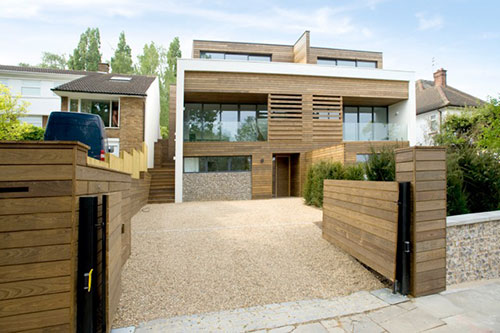
L&G (Legal & General) has recently announced they it will invest up to £600 million in factories that will make pre-fabricated houses, out of Cross Laminated Timber (CLT). At the moment, £55 million has already been allocated to the first site near Leeds, which will make 3,000 houses annually. They will be able to be installed in a single day.
The CLT is an extremely strong engineered timber product that can be used instead of concrete or steel. CLT has already been used in the UK to construct buildings that are up to 11 storeys high.
This is a highly significant announcement, which should help to reduce the housing shortage in the UK, whilst also increasing demand for timber.
The UK’s housing supply is in crisis, according to L&G. This is a chronic production problem; there aren't enough houses to meet the demand by customers, both young and old. The UK has an annual output of around 130,000 homes, with a requirement for 250,000.
Legal & General is aiming to build thousands of modular houses to help tackle this long term problem. Legal & General Homes has signed a long-term lease with Logicor on a 550,000 sq ft warehouse in Sherburn-in-Elmet, 15 miles east of Leeds, representing the largest modular homes construction factory in the world. Initially employing 400 to 500 local people, it expects to deliver its first houses from the factory in June.
[gravityform id="1" title="true" description="true"]
[gravityform id="2" title="true" description="true"]
US: Biewer Lumber starts construction of US$85 million state-of-the-art sawmill

Biewer Lumber started construction of the new $85 million sawmill in Newton, Mississippi, US. The mill production is set to start in the 2Q of 2017 and it will create 125 jobs once it becomes operational, according to a press release issued by the Mississippi Development Authority.
The Newton facility, which will officially be known as Biewer Sawmill-Newton LLC, will expand Biewer Lumber’s mill production into the South. The company currently operates four sawmills in the Midwest, as well as three lumber treating/distribution centers.
Mississippi Development Authority provided assistance in support of the project for site preparation and rail and road improvements. Newton County and the city of Newton are also providing assistance for the project.
BID Group was selected by Biewer Lumber to deliver the state-of-the-art turnkey mill for the Newton facility. The Newton sawmill will feature state-of-the-art technologies specifically designed, supplied, and installed by the BID Group including a Comact optimized log bucking system, a Comact saw line with profiling systems, and a fully-automated mill outfeed. The planer mill will be equipped with the all-new Miller high speed planer, a Comact GradExpertTM and a fully-automated mill outfeed specialized in cut-in-two handling. Lumber drying will utilize continuous kiln technology provided through two Deltech dual path kilns.
About
Headquartered in St. Clair, Mich., Biewer Lumber manufactures and distributes lumber and building materials for use by contractors, builders, and do-it-yourselfers. Biewer customers include retail lumber yards, home centers, and manufacturers throughout the eastern U.S. Products include lumber for construction, secondary manufacturing, and packaging; treated lumber for outdoor projects such as decks, patios, and docks; deck essentials and accessories; fencing; poles and pilings; fire retardant treated lumber for commercial construction; and more.
[gravityform id="1" title="true" description="true"]
[gravityform id="2" title="true" description="true"]
SmartPly orders machinery from Schwabedissen for its OSB plant upgrade

SmartPly Europe Ltd will invest €59 million in upgrading its production site at the UK Waterford location. Also, the Irish OSB manufacturer will invest part of this money to upgrade its production facilities with sustainable OSB solutions, such as new sizes and thicknesses according to the European market demand.
As WBPI online reported, part of this process will see SmartPly replace its multi daylight press with a new up-to-date continuous production line. Moreover, the company will invest in tenoning equipment, supplied by Schwabedissen to replace an existing American production line, as to process the OSB panels to tongue-and-groove panels.
The high quality of the t&g profiles will be acquired through the new double end tenoners, which will be upgraded with 4 processing motors per each side. Also, this new machine combination will have 40 servo motors to serve the automatic positioning of all tool positions, with the help of the latest Siemens S7 PLC technology, including Intouch Wonderware operator surface.
The machinery is aimed to be up and running this year and the order from SmartPly forms part of five bigger orders for double-end-tenoner combinations to be supplied in 2016 by Schwabedissen, as WBPI online reported.
The Schwabedissen machines are produced at the company’s facility in Hertford, Germany and its production is made in a 9000 m2 production hall. Other machinery concepts as the one to be built for SmartPly have already been implemented last year, for machines in Russia and Poland.
[gravityform id="1" title="true" description="true"]
[gravityform id="2" title="true" description="true"]
Stora Enso CEO elected chairman of the Swedish Forest Industries Federation

Karl-Henrik Sundström, the CEO of Stora Enso, was elected new chairman of the Swedish Forest Industries Board, during an election that took place next to Sweden's Forest Industry Week. The event is now under way in Stockholm.
Sundström has a wide international experience in the manufacturing industry and has been dealing with innovation issues during his long professional life. He is now succeeding Per Lindberg of BillerudKorsnäs in the role of Chairman of the Swedish Forest Industries Federation.
“I am delighted to have been chosen to be the Chairman of the Federation. It is an honor and at the same time responsible task. The forest industry is of great significance for the Swedish economy and welfare. Our industry has unique opportunities to drive development towards a more sustainable and bio-based world. It is important that we increase our understanding of the forest industry is part of the solution to today's climate problems and that we demonstrate the power of innovation and the future of the industry,” said Karl-Henrik Sundström.
About
The Swedish Forest Industries Federation is the organisation for Swedish pulp, paper and woodworking industries. The Swedish Wood department and the secretariat for BioInnovation are parts of the Federation. The Swedish Forest Industries Federation represents some fifty pulp and paper manufacturers owned by some twenty groups of companies and about 120 wood mechanical companies owned by some 60 companies, as well as about 40 companies that have close ties with the production of pulp and paper or sawn timber manufacture.
The Swedish forest based industry is the employer of close to 70 000 people and the value of the export was SEK 124 billion in 2014.
[gravityform id="1" title="true" description="true"]
[gravityform id="2" title="true" description="true"]
Chinese Fenglin Group puts massive New Zealand sawmill plan on hold
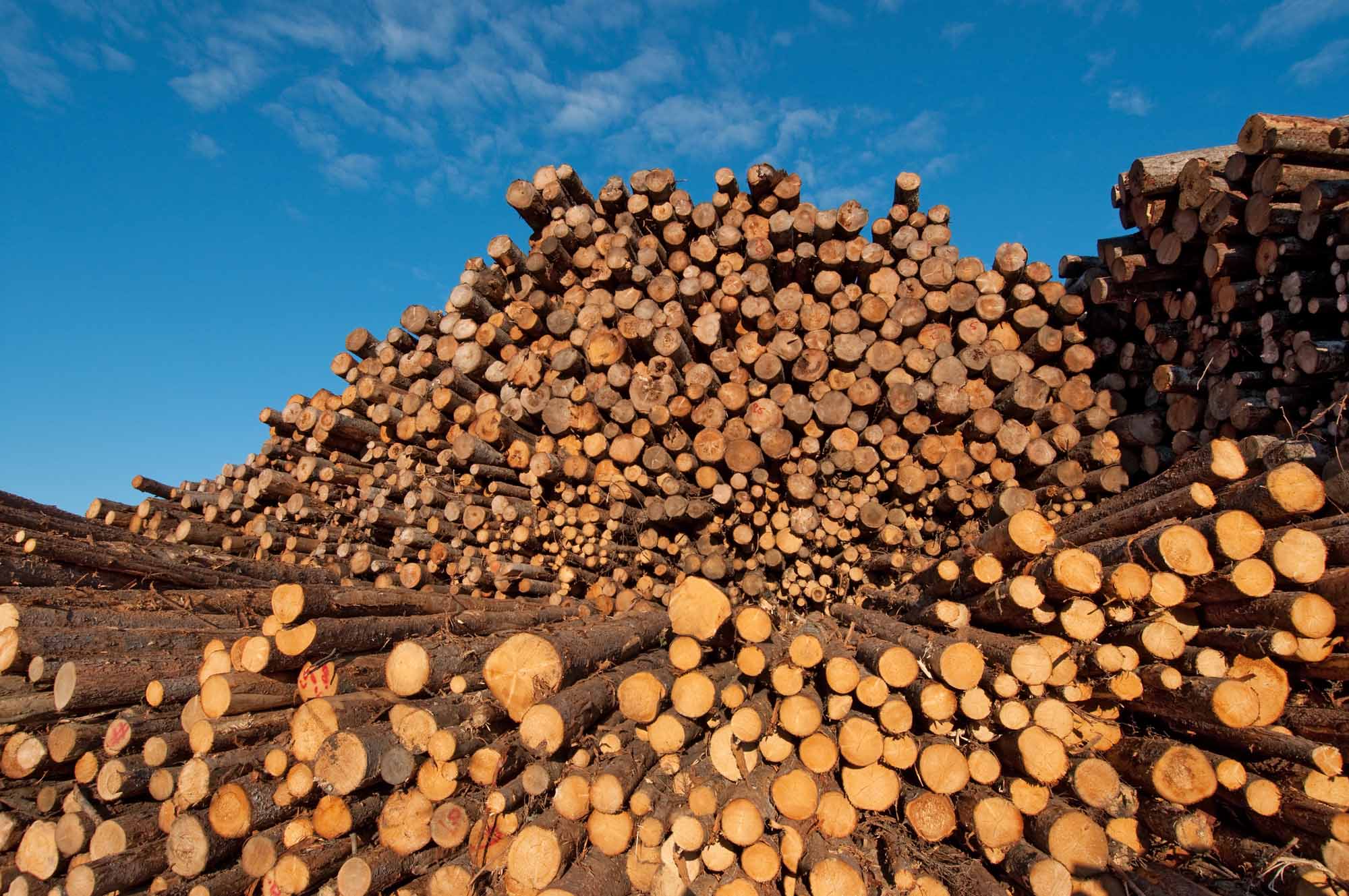
Chinese Fenglin Group planned an investment of $250 million to build a sawmill and wood-processing plant in Taupo, New Zealand, last year. At the moment, the China-based company has put the project on hold, as they became interested in buying a competitor, as Rotorua Daily Post reported.
Fenglin Group was initiating a study on the possibility of moving part of its operations near Taupo after they had been appealed to by the economic development agency Enterprise Great Lake Taupo (EGLT) in January 2015.
EGLT has been searching for a company to do a feasibility study on constructing, owning and operating a sawmill, laminated veneer lumber and medium density fibreboard plant near Taupo, for two years. According to the initial plan, radiata pine logs would be processed using geothermal energy before being shipped to China, as Rotorua Daily Post stated.
In September 2015, the Chinese group sent a delegation to Taupo as to see about the case and they also appointed a project director. The Taupo business option was very attractive, as it had easy access to forestry, geothermal heat, central location and labour force. The Enterprise Great Lake Taupo general manager Fritz Frohlke stated that there $1 million invested for Fenglin Group to do the feasibility study.
Frohlke added that the payback would come between 4 to 6 years. Money from the Strategic Investment Fund of New Zealand Trade and Enterprise were also invested in the project. Yet, the Taupo study was stopped in March 2016 because the Fenglin Group’s board of directors decided to go for the purchase of Weihua Corporation competitor.
Guangxi Fenglin Wood Industry Group Co.,Ltd. is principally engaged in the production and distribution of middle and high density fiberboards, plywood, shaving boards, as well as forest management and restoration business. The company's fiberboards are mainly applied in furniture, wood floors, buildings, decorations, middle and high cars and ship fitments, handicraft products, high grade loudspeaker boxes, instruments and electronics, among others. Its plywood are primarily used in furniture, floor boards, decoration materials and buildings, among others. The company mainly distributes its products under the brand name of Fenglin. The company's forest management and restoration businesses include growing trees planting, stock growing, as well as woods and stocks distribution.
[gravityform id="1" title="true" description="true"]
[gravityform id="2" title="true" description="true"]
ANDRITZ to supply evaporation plant to Södra Cell Mörrum
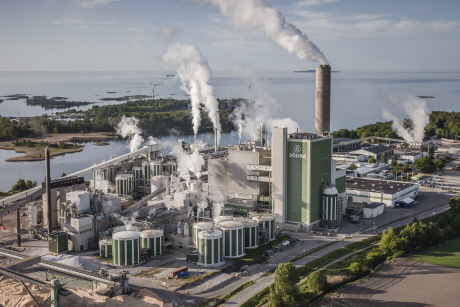
In February 2016, Södra's Board of Directors decided to invest SEK 1 billion in a new evaporator and modernisation of the brown stock washing system in the dissolving pulp line, where textile pulp is produced.
During the 2014-2020 strategy period, Södra Cell Mörrum will gradually begin to offer larger volumes and increase production capacity from 380,000 tonnes to 500,000 tonnes, of which 200,000 tonnes will consist of high-quality dissolving pulp.
On 18 March, Södra awarded ANDRITZ Oy, a subsidiary of the international technology Group ANDRITZ, the contract to supply a new evaporation plant for the pulp mill in Mörrum. The start-up is planned for the fourth quarter of 2017.
A new evaporator will make it possible for Södra to increase its production rate while also enabling larger deliveries of energy products, such as electricity, district heating and biofuels. The new investment will increase production capacity by 45,000 tonnes, bringing the total production of paper and dissolving pulp to 470,000 tonnes.
The new 7-effect evaporator represents an important step in Södra Cell Mörrum's strategy plan to expand its production capacity. The evaporation plant will produce lye with a high content of dry solids, and both replace the existing evaporation lines while considerably improving the energy efficiency of the mill. This will lead to a significant energy surplus at the mill, in turn enabling increased energy supplies.
[gravityform id="1" title="true" description="true"]
[gravityform id="2" title="true" description="true"]
Drop in US hardwood flooring imports

Both US hardwood flooring and assembled flooring panel imports declined in January. Hardwood flooring imports declined month-on-month to US$3.3 million in January. But US imports were 25% higher than in January 2015.
Indonesia was the only major source of imports with higher shipments to the US in January.
Hardwood flooring imports from Indonesia were worth US$806,440 in January, followed by China with US$743,100. Malaysian shipment fell to US$547,150 in January. Imports from Vietnam halved from December to US$280,950 in January.
US imports of assembled flooring panels declined 12% to US$8.9 million in January, down 22% from January 2015.
The drop was mainly in imports from China. China’s shipments fell 30% from December to US$3.2 million. Imports from Canada and Indonesia increased.
Imports from Indonesia were valued at US$851,767 in January, up 61% from the same time last year.
Higher US moulding imports from Brazil and Malaysia
US hardwood moulding imports were worth US$16.7 million in January, up 3% from the previous month.
US imports from Brazil and Malaysia recovered after declining towards the end of 2015. Imports from Brazil were US$5.2 million in January, up 40% from December and one third higher than the same time last year.
China was the second-largest source of mouldings at US$4.9 million. Imports from China declined month-onmonth as well as compared to January 2015.
Imports from Malaysia were worth US$1.1 million in January, up 21% from December and 10% up from last January. Moulding imports from Indonesia increased to US$748,956 in January.
[gravityform id="1" title="true" description="true"]
[gravityform id="2" title="true" description="true"]
Brazil: Export of wood-based products falls slightly in value

In February 2016 Brazilian exports of wood-based products (except pulp and paper) fell slightly (-0.8%) in value compared to February 2015, from US$213.6 million to US$211.8 million.
Year on year February Brazil's pine sawnwood export values rose by 63%, from US$16.8 million to US$ 27.4 million at the same time export volumes rose over 95% from 71,400 to 140,900 cu.m.
Brazilian tropical sawnwood exports in February 2016 increased 13.2% from 24,200 cu.m in February 2015 to 27,400 cu.m but export earnings fell almost 14% from US$ 13.7 million in February last year to just US$11.8 million this February.
Brazil's pine plywood exports in February were down 4.2% year on year in value from US$35.9 million to US$34.4 million. However, export volumes were up almost 40% from 95,600 cu.m to 132,800 cu.m during the same period.
As for tropical plywood, export volumes in February rose sharply year on year, from 7,600 cu.m in February 2015 to 11,000 cu.m. In contrast to other export products above, the value of tropical plywood exports rose 7.5%.
Wooden furniture exporters did well in February increasing sales from US$32.6 million in February 2015 to US$34.1 million in February 2016, an almost 5% increase.
[gravityform id="1" title="true" description="true"]
[gravityform id="2" title="true" description="true"]
Vietnam and EU agree on timber export regulations

Vietnam and the European Union have agreed that the Timber Legality Assurance System of Vietnam (VNTLAS) will be applied for wood and wood products exported to the EU, and also to other countries and in the domestic market.
According to the Vietnamese media, the two sides reached the agreement during their sixth negotiating session on the Voluntary Partnership Agreement (VPA) on Forest Law Enforcement, Governance & Trade (FLEGT), said Deputy Minister of Agriculture and Rural Development Ha Cong Tuan at a press conference in Hanoi, on April 13.
Tuan stated that during this session, Vietnam and the EU also reached a consensus on applying the licensing mechanism FLEGT to timber exported to the EU.
The two sides entered into negotiations on FLEGT-VPA in October 2010. All FLEGT-licensed timber and timber products from Vietnam will be considered legal and as such not subject to the requirements of the EU Timber Regulation.
The EU, which makes up about one fourth of world consumption, is now the fourth largest importer of Vietnam’s timber and wood products, after the US, Japan and China.
[gravityform id="1" title="true" description="true"]
[gravityform id="2" title="true" description="true"]
Swedish wood strong position confirmed at Dubai WoodShow

The Dubai Wood Show was held on 4-6 April this year. The event is the biggest trade fair for timber products in the Middle East and North Africa region, although it also attracts visitors from India, Pakistan and East Africa. The MENA region is a key market for Swedish sawmill exports and Swedish Wood attended the trade fair for the third time, together with representatives from Swedish sawmills.
Sweden is the largest exporter of pine and spruce to the MENA region. Russia is in second place and Finland third. In 2015, Sweden exported 3.2 million cubic metres of pine and spruce to the MENA region, worth more than SEK 5.5 billion. That is around 20 percent of all the conifer wood imported to the region in 2015.
“Players in the MENA region see Sweden as an important import market for sawn conifer wood products. They choose to work with Swedish sawmills because they deliver high-quality sawn timber, are reliable trading partners and offer advanced logistical solutions,” reports Charlotte Dedye Apelgren, Director of Interior and Design at Swedish Wood.
Most of the Swedish sawmill companies that export to the region were represented on Swedish Wood’s stand at the Dubai Wood Show. The stand hosted a talk on the quality, moisture content and dimensions of Swedish sawn timber, and on sustainable Swedish forestry. Environmental issues are attracting growing attention in the United Arab Emirates, as confirmed by a visit to the Swedish Wood stand from the Climate and Environment Minister, His Excellency Dr. Thani Ahmed Al Zeyoudi.
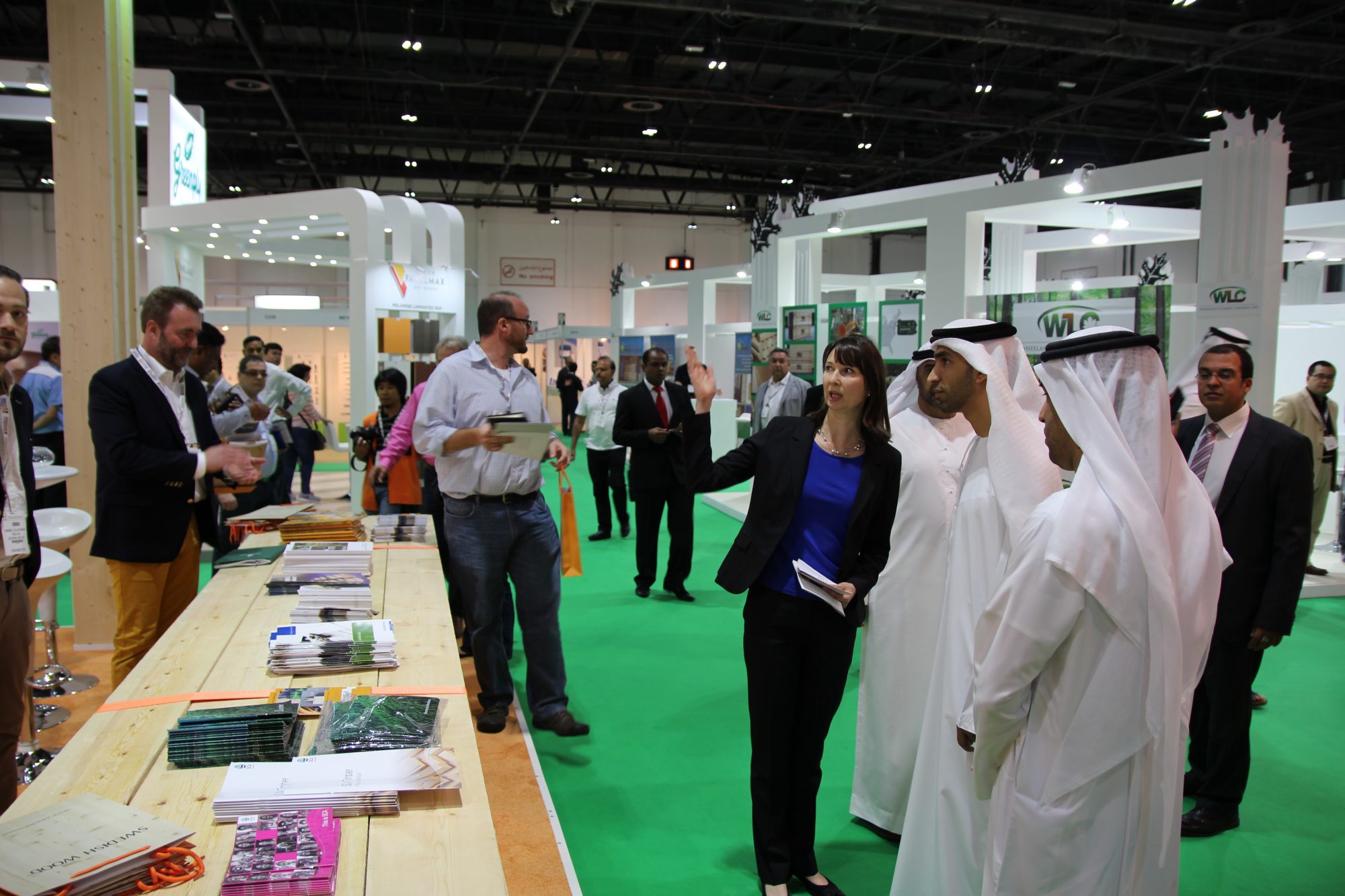
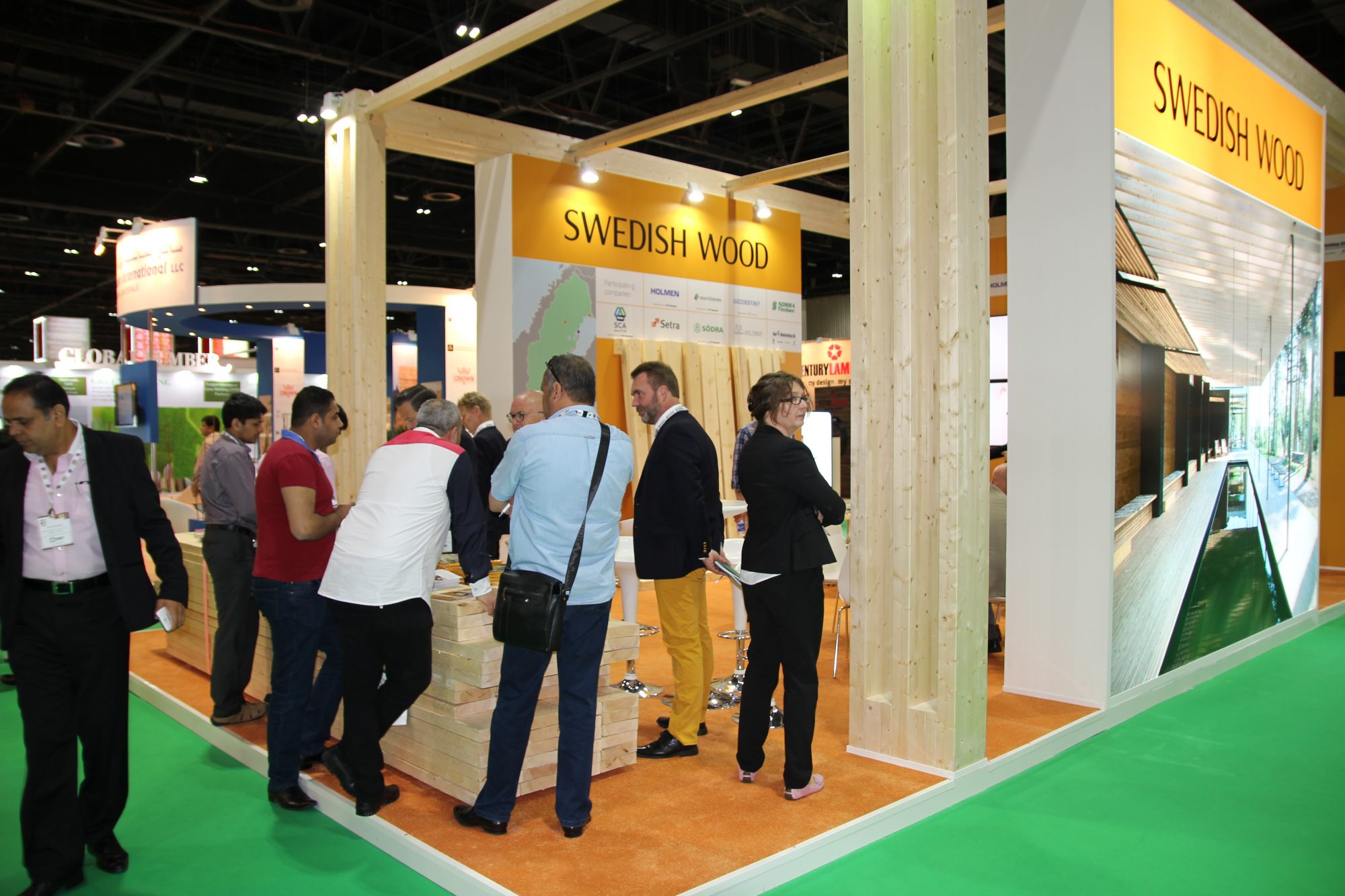


Another core message on the Swedish Wood stand was the versatility of the material, which is used for everything from high-rise buildings to pine lamps, and also for furniture, joinery, pallets and formwork in construction.
“The main export to the MENA region is pine for furniture, windows, doors and other joinery, but we are also beginning to see a certain amount of interest in wooden construction, particularly using glulam,” relates Charlotte Dedye Apelgren.
With its 3.2 million cubic metres of imports, the MENA region is by far the most important export market for Swedish sawmills after Europe. Sales to the region have risen significantly over the years and Swedish sawmills see the region continuing as a strategic market for the future.
Historically, Iran has also been an established market for Swedish sawmill exports. The relaxing of the trade embargo now opens up new opportunities for collaboration.
“We’re very positive about this and, on behalf of our member companies, we’ve launched a study into trading patterns, sawn timber use and logistics in Iran,” says Mikael Eliasson, Director of Swedish Wood.
Swedish Wood appeared at the Dubai Wood Show with the following Swedish companies:
Ara Timber
Holmen Timber
Martinsons
Moelven Timber
Norra Timber
SCA Timber
Setra Group
Södra Wood
Facts
In 2015, Sweden exported 3.2 million cubic metres of conifer wood to the MENA region. Within the region, Egypt is the largest importer of Swedish wood at over 1.3 million cubic metres, followed by Algeria at 600,000 cubic metres, Morocco at 450,000 cubic metres and Saudi Arabia at 405,000 cubic metres.
[gravityform id="1" title="true" description="true"]
[gravityform id="2" title="true" description="true"]
Japan wants to increase lumber exports

The Japan Wood Products Exports Association has set up a committee as to organize specifications of the lumber exported to other countries. The JWPEA has also planned to open a permanent display station in Vietnam, the “Japan Wood Station”, where all kinds of Japanese wood products are to be exhibited. This will also help the Vietnamese market develop.
In 2015, the total wood products exports reached $240.3 million, going 24.8% up, compared to 2014. The initial target to be reached by 2020 was $228.5 million, so it has been already achieved ahead of the mentioned time. Of the total wood exports, 690,000 m3 were logs, whereas only 60,000 m3 was lumber.
As to increase the lumber exports, the committee set up by JWPEA will prepare export specifications on lumber, including quality and size, as to give more reliability of Japanese made lumber on foreign markets. Two major export targets are China and Taiwan, excluding Korea, which was also a main market for Japanese exports.
Another target is now Vietnam, so the exhibition of wood products should advertise the use Japanese lumber. Vietnam has a large whitewood furniture processing industry for export, so the demand for Japanese softwood such as cedar and cypress should be large enough. These materials are used for exports to the U.S.A. and European countries, and also for interior finishing materials for Vietnamese housing.
The JWPEA also wants to invite the Vietnamese furniture manufacturers to Japan as to introduce them the type of material they can supply for Taiwan. At the moment, the main items are the logs, but the association hopes that, in the future, there will be greater demand for plywood and LVL for windows and door frames.
[gravityform id="1" title="true" description="true"]
[gravityform id="2" title="true" description="true"]
US softwood lumber production down by 4.1% in January

The US sawmills registered a 4.1% decline of softwood lumber production in January 2016, going from 2.624 billion board ft. in January 2015 and reaching 2.517 bbf. Also, this represented a 1.3% decrease from December 2015 (2.550 bbf), as the Western Wood Products Assn. reported in April.
Only 1.107 bbf were produced by the Western US sawmills, which added up to January’s total. This was a year-over-year decrease of 5.6% from 1.173 bbf, but a 2.9% increase from the 1.075 bbf in December 2015. Also, the South US sawmills produced 1.299 bbf for January 2016, a 2.7% drop from the 1.335 bbf from last year. Also, the production was 3.1% lower than the 1.341 bbf produced in December 2015.
The softwood lumber consumption in the US reached 3.612 bbf in January, going up 4.2%, compared to the 3.468 bbf consumed in January 2015, but only 0.3% higher compared to the 3.601 bbf consumed in December 2015.
As the WWPA reported, the softwood lumber production by Canadian sawmills in January was 2.285 bbf, up 14.2% from January last year (2.001 bbf), and up 4.2% from 2.193 bbf in the previous month. Thus, the sawmills from BC accounted for 1.121 bbf of the January 2016 total, an increase of 7.4% from 1.044 bbf in January last year, and up 3.0% compared with December 2015’s 1.089 bbf.
The production by Canadian sawmills east of the Rockies was 1.163 bbf in January, up 21.5% from 958 million board ft. (mmbf) last year, and 5.4% higher than December’s production volume of 1.104 bbf.
The softwood lumber consumption in Canada was 696 mmbf in January, up 1.1% from 688 mmbf a year earlier, and 7.8% higher than 645 mmbf in the previous month.
As a total, according to WWPA statistics, the US production as a percentage of practical capacity averaged 84% in January, up from 83% in January 2015 and level with the full-year average for 2015 of 84%. Canadian mills operated at 94% of capacity, up from 79% in January last year and higher than the previous year’s average of 86%.
Also, the US inventories edged up 0.4% to 3.011 bbf from 3.000 bbf last year, while Canadian inventories were up 10.9% to 3.025 bbf in January 2016 from 2.728 bbf a year earlier.
[gravityform id="1" title="true" description="true"]
[gravityform id="2" title="true" description="true"]

