Article archive

Rise in US tropical sawnwood imports

US imports of sawn hardwood recovered in February following the steep but brief decline in the previous months. Temperate and tropical sawnwood imports were 96,307 cu.m. in February worth US$39.4 million.
Us tropical sawnwood imports from India soared to 1,218 cu.m. in February. A small portion of the imports were teak (80 cu.m.) while the majority was ‘other tropical’ species.
Both the decline in imports and last month’s rise were primarily in temperate species.
Tropical sawnwood imports increased 13% in February to 16,346 cu.m. However, year-to-date imports were one third lower than in February 2015.
The value of all US tropical imports was US$16.4 million with ipe imports (US$3.9 million) accounting for almost one quarter of the total.
Ipe sawnwood imports grew 50% month-over-month to 1,962 cu.m. in February. Year-to-date imports were down 45% from February last year. Balsa remained the largest tropical import by volume. The US imported 3,925 cu.m. of balsa sawnwood in February, down 9% year-to-date from February 2015.
Imports of sapelli (2,001 cu.m.) and acajou d’Afrique (1,400 cu.m.) declined in February. Sapelli imports were also significantly down on a year-to-date basis, but with only two months of imports in 2016 volumes can still improve significantly.

Feb-15 Feb-16 Change
Total sawn imports 22.472 16,346   ↓
Ecuador 3,967 3,930   
Brazil 3,194 2,842   
Cameroon 4,065 1,987   
Malaysia 2,367 1,119   
Congo (Brazzaville) 1,285 817   
Peru 3,030 61   
Indonesia 796 830   
Ghana 1,098 540   ↓
Cote d'Ivoire 122 359   
Other 2,548 3,861   

Data source: US Department of Commerce, US Census Bureau, Foreign Trade Statistics

Mahogany imports (1,027 cu.m.) were up in February, both month-over-month and year-to-date. Imports of keruing sawnwood (948 cu.m.) declined again after a brief increase in January.
Brazil increased the volume of sawn hardwood shipments to the US by 37% in February, helped by a favorable exchange rate. The largest increase was in ipe shipments, but US imports of jatoba and virola from Brazil also grew. Despite the overall decline in US imports of sapelli in February, Cameroon’s sapelli shipments increased to 1,210 cu.m.
Sawnwood imports from Malaysia were down more than one third in February to 1,119 cu.m. Imports of keruing from Malaysia fell from 1,336 cu.m. in January to just 689 cu.m. in February.


Helen Ltd builds the largest pellet heating plant in Finland

Finnish utility Helen Ltd reported plans for building a pellet-fired heating plant, with fuel capacity of about 100 MW. The project is part of their new renewable energy commitments and is expected to be completed in 2018, according to SeeNews Renewables.
Valmet Corp was selected to build the plant on a EUR 20 million contract, starting late 2016. The location for the facility was chosen at the site of a dismantled oil-fired heating plant in the Salmisaari power plant area and is due to combust almost 21 tonnes of wood pellets per hour when working at full capacity. Also, the heating plant will use 40,000 tonnes per year.
The energy which will be produced by the plant will heat around 25,000 one-bedroom apartments, with a district heat output of about 92 MW, as reported by SeeNews Renewables.

“The project will support the development of Finnish energy technology and increase the level of employment in pellet manufacture and logistics,” Helen director, Heikki Hapuli, noted.

This would be the largest pellet boiler in Finland and one of the largest renewable energy investments by now. Also, the company’s plan is to achieve climate-neutral energy production by 2050.
 
[gravityform id="2" title="true" description="true"]


70% increase in Brazilian wood-based panel exports

According to the Brazilian Tree Industry Association (IBÁ), the volume of wood-based panels exported from Brazil in the first two months of 2016 amounted to 124,000 cu.m, a 70% increase over the same period last year.
Brazilian pulp exports grew to 2.2 million tonnes, a 25.6% increase over the same period in 2015. On the other hand, paper exports remained unchanged at 316,000 tonnes for January and February 2016.
Total earnings from the export Brazil's wood-based panels, pulp and paper in the first two months of 2016 amounted to US$1.4 billion, a 19.7% increase compared to the same period in 2015. Pulp production reached 3 million tonnes for the two months of January and February 2016, a 9.4% increase year on year.
The volume of paper productionin Brazil increased 1.4%, reaching 1.7 million tonnes compared to the same period in 2015. Domestic sales of wood-based panels totaled 961,000 cu.m in the first two months 2016, 8% lower compared to the same period last year. First two months’ domestic sales of paper totalled 866,000 tonnes, 3.6% higher year on year.
 
[gravityform id="2" title="true" description="true"]

US lumber prices stable last week

Price trends in US framing lumber were mixed last week. Southern Pine was the primary exception to a wider weakening trend. A number of SYP mills were off the market as they caught up on late shipments. Torrential rains and floods preoccupied traders in East Texas, but other key markets picked up the slack. In other species, trading was generally liquid, but producers usually had to trim prices to entice buyers. Strength in Southern Pine offset weakness in the other species, and the Random Lengths Framing Lumber Composite Price was unchanged.

Week
Apr 22
Last Week
Apr 15
Year Ago
2015
Random Lengths Framing Lumber Composite Price* $346 $346 $332
KD Western S-P-F #2&Btr 2x4 R/L Mill Price 284 294 249
KD Eastern S-P-F #1&2 2x4 R/L, delivered Great Lakes 370 384 361
Green Douglas Fir Std&Btr 2x4 R/L (Portland) 320 325 290
Southern Pine (Westside) #2 2x4 R/L 421 411 408
KD Coast Hem-Fir #2&Btr 2x4 R/L 380 382 305
Ponderosa Pine (Inland) #2&Btr 1x12 R/L 690 685 670
* Weighted average of 15 key items

 
Random Lengths Panel Market Report
Structural panel trading and price trends were mixed. In most regions, OSB sales were quiet as buyers digested recent purchases. Trading was most active in Western Canada. Southern Pine plywood mills went after orders on rated sheathing more aggressively staring Wednesday. Producers opened to sharp counters or lowered quotes to draw in customers. Most western Fir plywood producers reported an increase in sheathing sales. However, several cut quotes and opened to hefty counters to build order files through next week.

(f.o.b. mill prices) This Week
Apr 22
Last Week
Apr 15
Year Ago
2015
Random Lengths Structural Panel Composite Price* $355 $359 $364
Southern (west-east) 15/32-inch 3-ply rated sheathing plywood 353-370 360-385 423-470
Southern (west-east) 15/32-inch 4-ply rated sheathing plywood 353-372 363-390 425-475
Western 1/2-inch 4-ply rated sheathing plywood 345 363 418
North Central 7/16-inch Oriented Strand Board 247 247 175
*Weighted average of 11 key items

Source: Random Lengths


EU and Indonesia agree on FLEGT licensing

Indonesia’s President Joko Widodo, together with European Commission President Jean-Claude Juncker, and European Council President Donald Tusk agreed on the 21st of April 2016 to start reducing illegal logging and promoting trade in legally produced timber between the EU and Indonesia through the Forest Law Enforcement, Governance and Trade (FLEGT) licensing scheme, according to Tempo.Co.
Indonesia is now ready to implement the Indonesia-EU Voluntary Partnership Agreement (VPA), as agreed on a joint assessment. Considering this step forward, Indonesia is the first country to pass this final obstacle.

"Today's announcement is a signal to markets that it is possible to promote sustainable forest management by buying verified legally produced timber," said Karmenu Vella European commissioner for environment, maritime affairs and fisheries.

He added that both Indonesia and its EU partners could offer stimulus for ending the illegal logging issues. The FLEGT VPA has helped the legal trade, with a lot of assistance from the European Commission and EU Member States. It also modernized and formalized Indonesia's forest sector, and improved business practices, enabling many thousands of businesses to meet market demand for legal timber, as Tempo.Co reported.
It all started in 2002, when only 20% of the timber in Indonesia was legal. At the moment, 90% of the timber exports in Indonesia come from independently audited factories and forests. This percent covers more than 20 million hectares of forests and more than 1,700 forest industries.
 
[gravityform id="2" title="true" description="true"]


Rising North American structural panel production and consumption

North American structural panel production and apparent consumption increased by 3.1% and 3.4% in the Q1 of 2016, compared to the Q4 of 2015, according to APA - The Engineered Wood Association.
As opposed to the Q1 of 2015, the structural panel production in Q1 2016 was up 4.1%, while apparent consumption rose 5.3%. OSB production increased 3.5% in the first quarter and apparent consumption increased 3.5%. Plywood production in North America increased 2.2%, while apparent consumption was up 3.3%.
Compared to the Q4 of 2015, North America glulam production rose 7.6% in the Q1 of 2016.       I-joist production increased 5.2% and LVL output was up 11.1%. On a year ago quarter basis, glulam production was up 8.9%, I-joist production increased 16.8% and LVL production rose 14.6%.
 
[gravityform id="2" title="true" description="true"]
 

EU: Tropical wood imports recover in France and Benelux countries

The rise in EU tropical sawn hardwood imports was owing to recovery of demand in the three largest importing markets: Belgium (+19% to 299,100 cu.m), Netherlands (+14% to 210,700 cu.m) and France (+10% to 147,800cu.m). Together these three markets accounted for 62% of the EU’s tropical sawn hardwood imports in 2015 (see chart below), ITTO reported.
By far Belgium’s largest supplier of tropical sawn hardwood is Cameroon, from where the country imported 124,500 cu.m last year, 22% more than in 2014 and 304% more than in the crisis year of 2009.
Belgian imports from Gabon have also grown dramatically in the last six years, from just 3,800 cu.m in 2009 to 53,800 cu.m in 2015. As early as 2011, Gabon ousted Malaysia as Belgium’s second most important supplier of tropical sawn hardwood. Malaysia is the only one among the seven top suppliers to have delivered less sawn timber to Belgium in 2015 than in 2009.
EUtropicalwoodimportsData on sawn hardwood volume imports provided by the Netherlands authorities to Eurostat is inconsistent and difficult to interpret. The data shown here has been heavily amended, based on (simplistic) assumptions that import value recorded by the Dutch authorities is accurate and unit values are likely to have remained reasonably consistent. The adjusted Netherlands data suggests a rise in tropical sawn hardwood imports in 2015, largely driven by increased trade with Malaysia.
There are reasons to believe that there might have been an increase in Netherlands imports from Malaysia in 2015. After several very depressed years, the Dutch construction sector is growing again. Meanwhile the Dutch government in 2014 finally recognised the Malaysian Timber Certification System (MTCS) as meeting their criteria for sustainable timber after many years of effort by the MTCS and Malaysian Timber Council.
This at a time when the Netherlands timber trade has made very far-reaching commitments to procurement of only certified timber products in recent years, claiming that 74% of all wood imported into the country is certified. The Dutch EUTR enforcement regime also appears to be relatively more rigorous than in some other EU countries.
In short, all these factors may have encouraged Dutch importers to buy more Malaysian timber at the expense of imports from other tropical countries less capable of delivering certified product.
It’s notable that the recent apparent rise in Dutch imports of Malaysian sawn timber has been matched by a decline in imports from Cameroon.
However these comments in relation to the Netherlands are still speculative. The Malaysian export data, which seems more consistent than the Dutch import data, recorded no increase in exports of sawn hardwood to the Netherlands in 2015.
Imports of tropical sawn hardwood into France increased 9.7% to 147,800 cu.m in 2015. As in the Netherlands, there were signs of improving economic performance in France in 2015. Important market players in the French tropical timber sector, such as the tropical sawn hardwood, logs and plywood producer Rougier, reported improving demand, although still in a very competitive environment.

Cameroon and Brazil were the primary beneficiaries of the rise in French imports of sawn tropical hardwood last year.

Imports from Cameroon jumped 48.9% to 46,100 cu.m,, cementing the country’s position as France’s leading supplier. French imports from Brazil increased 29.1% to 36,400 cu.m but are still far below the volume of 61,100 cu.m delivered by Brazil in 2009.
The Italian market for tropical sawn hardwood is still in the doldrums. Italian wood importers had started to be a little more optimistic again in 2014, but this trend did not last.
After a 2% rise in 2014, the first increase since 2010, imports fell back again last year by 1% to 129,000cu.m.
The share of tropical in Italy’s total imports of sawn hardwood fell from 21% to 18%. This was mainly due a significant rise in Italian imports from other EU countries, a development partly due to the fashion for oak in furniture production. Also, due to the weakness of the euro, beech and other pale European hardwoods are likely being used for mouldings in place of tropical wood and American tulipwood (imports of which also declined in 2015).
Italy’s imports of tropical sawn hardwood increased from both leading supply countries in 2015. Imports were up 9.5% from Cameroon to 61,200 cu.m and 6.2% from Côte d’Ivoire to 26,500 cu.m. However these gains were offset by a sharp fall in imports from Gabon, the third most important supplier, down 29% at 23,200cu.m.
After rising in 2014, UK imports of tropical sawn hardwood fell 23% to 76,500 cu.m in 2015. Total UK imports of sawn hardwood, both temperate and tropical, declined 7.6% to 428,000cu.m in 2015. The share of tropical countries in total UK sawn hardwood imports fell from 22% in 2014 to 18% in 2015. Cameroon replaced Malaysia as the UK’s largest supplier of tropical sawn hardwood in 2010 and maintained this position until 2014.
However, last year imports from Cameroon fell by 41.4% to 20,800 cu.m. In 2015, Malaysia overtook Cameroon to become the largest tropical sawn hardwood supplier to the UK despite a 17.5% decline in imports to 20,900cu.m.
The rebound in Spain’s imports of tropical sawn hardwood continued last year, with imports rising 19% to 64,400 cu.m. This follows a similar gain in imports in 2014 and suggests the recovery in Spain’s crisis-stricken market is becoming more sustainable.
Tropical wood also seems to be maintaining market share in Spain: in 2015 sawn hardwood from tropical countries accounted for 40% of total sawn hardwood imports up from 39% in 2009. Spain imports tropical timber primarily from Cameroon and Brazil, both of which showed growth last year, by 25.2% to 38,400cu.m and 26.9% to 10,700cu.m, respectively.
[gravityform id="2" title="true" description="true"]

Price of wood pellets in Austria drops by €10/t in April

In April 2016, the price of wood pellets in Austria continued to drop compared to the previous month. Moreover, the price was lower than the previous year too.
Thus, this month, Austrian Enplus A1 pellets cost on average € 225 per tonne, or -4.4% (or  €10/t) compared to March and -3.4% cheaper than in April 2015.
Austrian wood pellets presently offer a price advantage of 18.2% as opposed to extra light heating oil and 45.8% as opposed to natural gas.
Wood pellets in bags cost an average of 3.83€ per 15 kg sack (when ordered by the pallet).This represents a -0.3% decrease over April 2015, and a -4.0% drop as compared to March 2016.

Austrian Wood pellets
Create line charts


Setra announces lower profits for Q1/2016

The Swedish wood products company Setra has registered lower earnings in their Q1 2016, compared to the same period in 2015. Their reported operation profit was of SEK 9 million or EUR 983 thousand (Q1 2015: SEK 24 million or EUR 2,62 million) and their net sales reached SEK 1,028 million or EUR 112,3 million (Q1 2015: SEK 1,041 million or EUR 113,7 million).
“The lower earnings compared with the first quarter in the previous year was mainly explained by lower selling prices. The market for wood products improved somewhat during the first quarter. We see a considerably better balance for whitewood products and a slight improvement for redwood, although there are still large stocks of redwood products at producers. Price increases could be implemented in local currency in a number of markets,” says Hannele Arvonen, President and CEO of Setra.
“Due to the strained market situation last autumn we decided to implement production cutbacks during the fourth quarter. As an effect of these we have good control of our stocks and our cash flow. Now when the market situation looks a little better, we are back to our normal production rate,” says Arvonen.
The cash flow from operating activities for the Q1 2016 reached EUR -4,588 million (Q1 2015: EUR 4,807 million), but Setra’s financial position is strong. The net debt/equity ratio at the end of the period was 21% (Q1 2015: 24%).
 
[gravityform id="2" title="true" description="true"]
 

F&W buys London-based O.C.S. Group Ltd.’s forestry and land subsidiaries

F&W Forestry Services, Inc. announced today that it has acquired London-based O.C.S. Group Ltd.’s forestry and land subsidiaries. The acquisition includes three companies with forest management and real estate operations in North America and the United Kingdom.
For the Albany, Ga.-based F&W, the acquisition is a major expansion of its operations in the Northeast and Mid-Atlantic regions of the U.S. and its first entry into the U.K. F&W currently maintains a network of 25 offices in the U.S., Uruguay, Brazil, and France.
The companies included in the purchase are Fountains Forestry Inc., a forest management firm, Fountain Lands Inc., a retail forest real estate firm, both located in the Northeastern U.S., and Fountains Forestry UK, Ltd., a forest management and real estate firm operating in England, Scotland, and Wales.
The purchase includes the acquisition of seven offices in North America that have an operating footprint covering Tennessee, Kentucky, Virginia, West Virginia, Ohio, Pennsylvania, Connecticut, New York, Massachusetts, Vermont, New Hampshire, Maine, and western Ontario near Lake Superior. The U.K. offices, which serve landowners in England, Wales, and Scotland, are located at Banbury (Oxfordshire), Inverness (Scotland), Exeter (Devon), and Bedale (North Yorkshire). Combined, the three companies have more than 50 employees and manage more than 535,000 acres of forests and woodlands.
Founded in 1962, F&W is one of America’s premier forest resource management and consulting, real estate, and timberland investment firms. The company has more than 185 employees and manages more than 1.6 million acres of forestland in the U.S. and internationally. In the U.S., the company maintains a network of 18 offices in 11 states comprising the Southern pine belt, the Central and Appalachia regions, Upstate New York, and Oregon in the Pacific Northwest. F&W also manages private forestlands in Uruguay, Brazil, and France.
 
[gravityform id="1" title="true" description="true"]
 
[gravityform id="2" title="true" description="true"]

F&W buys London-based O.C.S. Group Ltd.’s forestry and land subsidiaries

F&W Forestry Services, Inc. announced today that it has acquired London-based O.C.S. Group Ltd.’s forestry and land subsidiaries. The acquisition includes three companies with forest management and real estate operations in North America and the United Kingdom.

For the Albany, Ga.-based F&W, the acquisition is a major expansion of its operations in the Northeast and Mid-Atlantic regions of the U.S. and its first entry into the U.K. F&W currently maintains a network of 25 offices in the U.S., Uruguay, Brazil, and France.

The companies included in the purchase are Fountains Forestry Inc., a forest management firm, Fountain Lands Inc., a retail forest real estate firm, both located in the Northeastern U.S., and Fountains Forestry UK, Ltd., a forest management and real estate firm operating in England, Scotland, and Wales.

The purchase includes the acquisition of seven offices in North America that have an operating footprint covering Tennessee, Kentucky, Virginia, West Virginia, Ohio, Pennsylvania, Connecticut, New York, Massachusetts, Vermont, New Hampshire, Maine, and western Ontario near Lake Superior. The U.K. offices, which serve landowners in England, Wales, and Scotland, are located at Banbury (Oxfordshire), Inverness (Scotland), Exeter (Devon), and Bedale (North Yorkshire). Combined, the three companies have more than 50 employees and manage more than 535,000 acres of forests and woodlands.

Founded in 1962, F&W is one of America’s premier forest resource management and consulting, real estate, and timberland investment firms. The company has more than 185 employees and manages more than 1.6 million acres of forestland in the U.S. and internationally. In the U.S., the company maintains a network of 18 offices in 11 states comprising the Southern pine belt, the Central and Appalachia regions, Upstate New York, and Oregon in the Pacific Northwest. F&W also manages private forestlands in Uruguay, Brazil, and France.


[gravityform id="1" title="true" description="true"]


[gravityform id="2" title="true" description="true"]

Norske Skog reports good financial results for the first quarter

Norske Skog's gross operating earnings (EBITDA) in the 1Q 2016 were NOK 242 million ($29.7 million), a slight seasonal decrease from NOK 260 million ($32 million) in the 4Q 2015, but a substantial improvement from NOK 192 million ($23.6 million) the 1Q of last year.

European sales prices increased in the quarter, whereas the cost of energy decreased. It was somewhat offset by more low-margin Asian newsprint export from Australasia.
"The market looks brighter. We are currently running at full capacity at our mills, but will continue to perform active portfolio management of our machine capacity when necessary. The announcements of large permanent capacity cuts and machine conversions in Europe and North-America in the last years in our product segments have been supportive to the market balance, and thus future price levels," says Sven Ombudstvedt, President and CEO of Norske Skog.
The net profit of NOK 11 million ($1.3 million) in the 1Q 2016 compared to a loss of NOK 828 million ($102 million) in the previous quarter, which was heavily impacted by a write-off of tax-assets amounting to about NOK 500 million ($61.5 million)and unrealized, non-cash, currency loss of about NOK 100 million ($12.3 million).
Total annual production capacityfor the group is 2.7 million tonnes. In Europe, the group capacity is 2 million tonnes, while in Australasia the capacity is 0.7 million tonnes. Capacity utilization for the group in the 1Q was 95% compared with 89% in the 4Q, as a result of active capacity management.
Norske Skog is a Norwegian pulp and paper company. The corporation is the world's largest producer of newsprint and magazine paper.

Södra invests in new research projects

At its last Board meeting, the Södra Foundation for Research, Development and Education decided to grant funding of SEK 2.5 million (EUR 272,000) to support new research projects.
"Finding solutions for tomorrow's forestry and forest industry is a very serious matter for us. Stable funding for long-term research paves the way for our success in this area," said Laila Rogestedt, Senior Vice President of Innovation and New Business at Södra, and Board member of the Foundation.
One of the projects that received funding from the Research Foundation is focused on driverless vehicles. The project will evaluate the technical, safety and financial conditions for introducing autonomous forklifts for the handling of timber packages at sawmills.
"Research into autonomous vehicles is highly topical and I see major potential in the forest industry for using this kind of technology to handle timber packages," commented Erik Johansson, researcher at the SP Technical Research Institute of Sweden in Skellefteå.
He continued: "The idea is that autonomous timber forklifts will perform simple tasks totally automatically, while more complex tasks are handled by an experienced operator sitting in a control room. This will reduce salary costs because a forklift operator will be able to handle several forklifts simultaneously, and it could also reduce the risk of injury, since fewer people are needed in and around the forklifts."
The mission of the Södra Foundation for Research, Development and Education is to promote research and education of significance to forestry, and forest industry operations, in Southern Sweden.
[gravityform id="1" title="true" description="true"]
 
[gravityform id="2" title="true" description="true"]

Overview of China’s furniture industry in 2015

According to the China Furniture Association, the value of China’s furniture output increased 0.4% year on year and the 2015 income generated by the main enterprises rose 9% with a corresponding rise in profitability (+14%).
In 2015 the value of China’s furniture exports rose 2% year on year to US$54.28 billion and there was an 11% decline in furniture imports.
According to Chinese analysts, bamboo and rattan furniture will play greater role in the development of the furniture industries in China. These raw materials are easier to source than timber and they are fast growing, they mature early and generate high yields of a raw material that is easy to process.
Listed Chinese furniture companies performed well in 2015. They have significantly improved corporate behavior and have developed to such a level that they can secure development finance from the established financial sector. The expansion of on-line sales as a new business platform is transforming the Chinese wholesale and retail furniture sector.
Outstanding achievements had been made in the development of custom-made furniture. Homekoo, a Chinese custom-tailor furniture enterprise, was featured as one of China’s most innovative companies by an American magazine. Homekoo is a model of integrated operations.
Another recent feature of China's domestic furniture industry is the growth in across-industry cooperation aimed at brand establishment. Chinese furniture enterprises have worked with household appliances, audio equipment, electronic equipment enterprises to achieve cross-industry cooperation and provide one-stop supporting services and meet the needs of consumers.
China's furniture stores have provided consumers with supporting services such as home decoration design, interior furnishing, furniture, bathroom, electrical appliances, furnishings. The integration of cross-industry resources had been achieved.
 
[gravityform id="1" title="true" description="true"]
 
[gravityform id="2" title="true" description="true"]

Main tropical producer countries extend their market dominance in EU

Cameroon, Malaysia, and Brazil, Europe’s top three suppliers of sawn tropical hardwood, each recorded significant growth in deliveries to the EU last year.
Cameroon was by far the largest single supplier of tropical sawn hardwood to the EU in 2015, accounting for almost one-third of all imports. EU imports from Cameroon were 339,000 cu.m last year, 12% more than in 2014.
EUtropicalimportsThere was solid growth in sales of Cameroon sawn hardwood to several EU markets in 2015 including France, Belgium, Spain, and Italy. These gains were sufficient to offset a decline in sales to the Netherlands, Germany and the UK.
EU imports from Malaysia were up 7% to 206,000cu.m in 2015, the rise being entirely due to much higher imports by the Netherlands. Most other EU countries recorded low or declining sawn hardwood imports from Malaysia last year.
European imports of sawn tropical wood from Brazil increased 14% to 128,000 cu.m in 2015. The main driving forces behind this increase were France, Belgium and, to a lesser extent, Germany.
Of other significant producer countries, there was doubledigit growth in tropical sawn hardwood imports into the EU in 2015 from Ghana (+15% to 55,000 cu.m), Indonesia (+22% to 29,000 cu.m), and the Democratic Republic of the Congo (+27% to 26,000 cu.m).
However EU imports from Gabon fell 5% to 85,000 cu.m and imports from Congo declined 4% to 28,000cu.m.
 
[gravityform id="1" title="true" description="true"]
 
[gravityform id="2" title="true" description="true"]

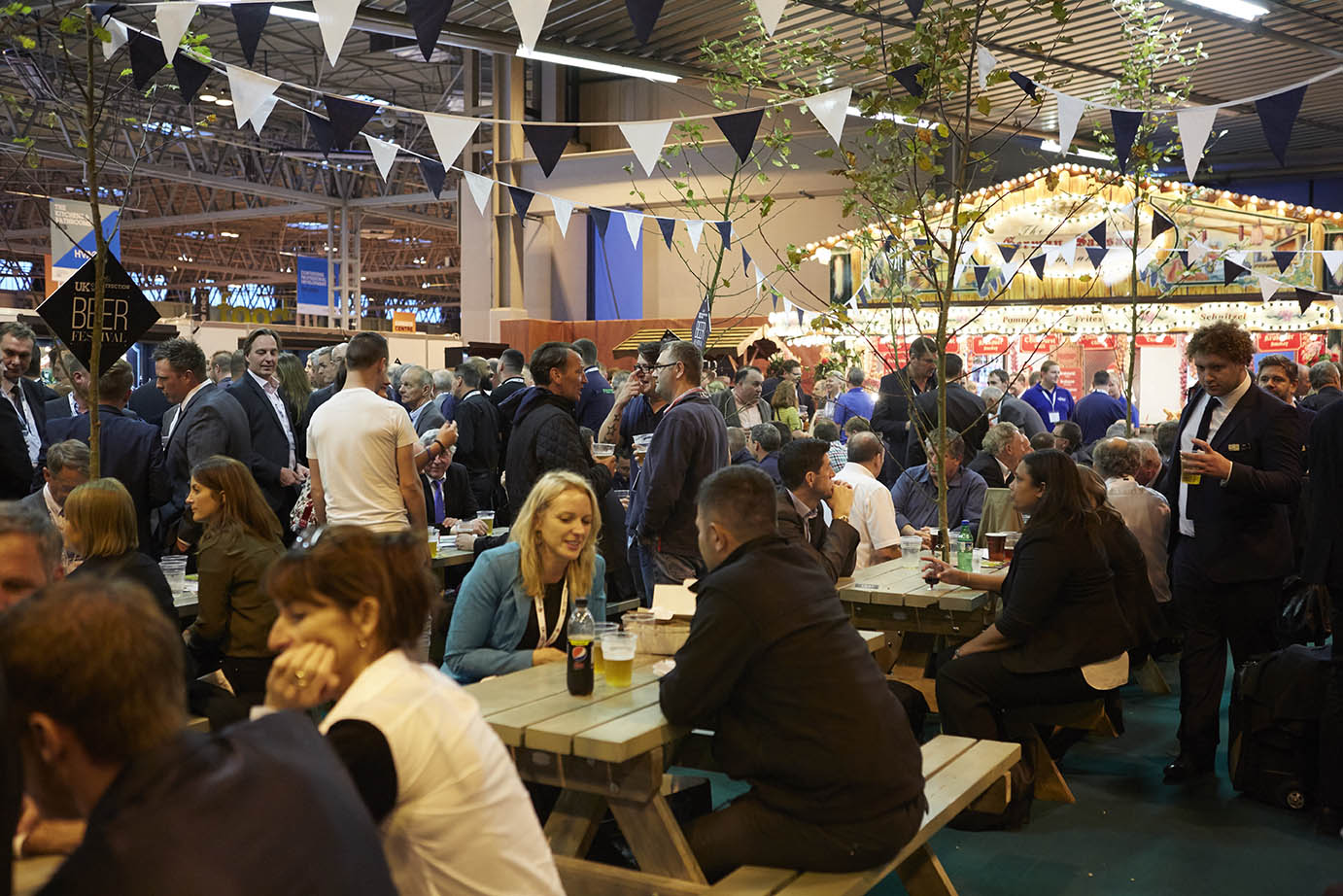
Timber Expo 2016: a promising event for the industry

With some of the timber industry’s biggest names already on-board including Steico, W Howard Group and Jagram, as well as additional support from leading timber trade associations such as The Timber Research and Development Association (TRADA), visitors to Timber Expo 2016 will not want to miss the landmark event.
The event will take place between the 18th and 20 of October 2016, in Birmingham.
Exhibitors will cover the breadth of timber applications from timber frame, sawmills, merchants, glulam, SIPs, CLT, fixings and fastenings, timber cladding, doors/windows, mouldings, skirtings and flooring. Providing the perfect opportunity for individuals in the industry to network with fellow professionals and develop new business. In 2015, Timber Expo attracted more than 6,000 visitors, with 60% of the UK’s top 100 architectural firms represented.
The event will be brimming with the latest products, innovations and developments across the sector. An informative educational seminar programme led by TRADA will also be held, along with a discussion of the key issues currently facing the industry.

Nathan Garnett, Show Director, commented: “As the UK’s only dedicated timber event, Timber Expo 2016 provides a fantastic opportunity for the collective industry to converge on one location, network together and build new avenues for business. What’s more, with the continued support from TRADA this year, we’ve developed an educational seminar programme guaranteed to benefit professionals at every level within the industry.”

Visitors to Timber Expo will also have wider access to the other events being held at UK Construction Week. With some of the UK’s biggest names in construction attending such as Wilmott Dixon, Travis Perkins, Redrow Homes and Saint Gobain, as well as local councils and over 7,000 individual companies, all to discuss current and future projects with numerous high value orders being placed at the show.


[gravityform id="1" title="true" description="true"]
 
[gravityform id="2" title="true" description="true"]

UFPI reports improved revenues in Q1/2016

Universal Forest Products Inc. reported Q1 net earnings attributable to controlling interest of $19.2 million, up by 89% over the same period of 2015. UFPI also reported increased net sales of $682.2 million, up 7.8% over the Q1 of 2015.
“While the milder winter contributed to improved quarter-over-quarter results, we also benefitted from increased new product sales, operational efficiency improvements, and a better sales mix,” stated CEO Matt Missad.
The 17% and 9.3% increase in UFPI’s retail and construction market generated the big sales growth, despite a 12% decline in year-over-year lumber prices in the first quarter.
There were $270.7 million gains in retail, which means a growth of 17% over the same period of 2015 and $204.2 million industrial gains, which dropped 3%, compared to the Q1 of 2015. $218.9 million came from the construction sector, which also increased by 9% over the same period of 2015.
Universal Forest Products, Inc. is a holding company with subsidiaries throughout North America and in Australia that supply wood, wood composite and other products to three markets: retail, construction and industrial.
 
[gravityform id="1" title="true" description="true"]
 
[gravityform id="2" title="true" description="true"]


Canadian lumber giants affected by slow US housing market

The US housing market is stumbling, which makes two of Canada’s top lumber producers, West Fraser Timber Co. and Canfor Corp., to suffer from a lower demand from the US.
According to Bloomberg, the US housing starts dropped 8.8% in March and its weakness can’t support the lumber prices at its current levels. The US is the biggest market for Vancouver-based Canfor and West Fraser, which manage timberlands in British Columbia that supply softwood such as Spruce-Pine-Fir, a widely used material used to construct house walls and roofs.
Moreover, the south Canadian producers are already facing lower demand from China and suffer from the impact of the mountain pine beetle on the forests in BC. Thus, West Fraser declined by 15% in Toronto this year and Canfor was affected by a 24% drop. None of the companies commented on the lumber outlook, but are due to report Q1 earning next week.
As Bloomberg reported, Canfor Chief Executive Officer Don Kayne, said in February that there would be an 8% growth in US’s demand for 2016 thanks to the housing improvements. Yet, Chris McIver, sales and marketing vice president of West Fraser, said that the US housing recovery won’t be as good as expected.
The low supply of available land and the prices that rose faster than the wages affected the American, causing the US housing market to drop. The residential housing starts from March dropped to an annual rate of 1.09 million, which is poorer than economists’ estimates. Also the issuance of private housing permits declined in March.
Moreover, lumber May delivery closed at $282.60 per 1,000 board feet in Chicago and it will remain unstable for the rest of 2016, according to Bloomber. The American companies will be able to file trade cases against the Canadian importers only once with a trade agreement between the two nations, after the 2006 SLA expired in October last year and holds a standstill period until October 2016.
 
[gravityform id="1" title="true" description="true"]
 
[gravityform id="2" title="true" description="true"]


Canadian wood pellet producer Viridis is for sale

Viridis Energy, a Canadian wood pellet producer with a total annual production capacity of 300,000 tonnes of pellets, has announced that the company and its subsidiaries are for sale. The company had earlier failed to meet a lender's deadline to pay debts owed by one of its subsidiaries, Argus media reported.

US biomass industry consultancy firm, FutureMetrics, was appointed as the sales representative of Viridis and its three subsidiaries. Argus reported, quoting FutureMetrics, that the company will be sold entirely through a stock purchase or by each individual subsidiary.

Viridis is comprised of the following subsidiaries: Okanagan Pellet plant (OPC), Scotia Atlantic Biomass and trading arm Viridis Merchants.
As reported by GWMI earlier, Viridis ceased operations at BC Okanagan pellet plant (OPC) this month. It seems that Viridis' lender, Royal Bank of Canada, demanded that OPC pay in full outstanding debts totalling over CA$2mn by 18 April. Viridis was unable to make the payment, so now Viridis will try to sell OPC's assets in order to pay the debt, Argus reports.
Scotia Atlantic Biomass owns a 120,000 t/yr industrial-grade pellet plant in Nova Scotia, but the plant ran below nameplate capacity in 2015 because of challenges in securing affordable wood fibre, says Argus.
Including Viridis Merchants' contracted volumes, Viridis' saleable volume is over 300,000t/yr of wood pellets.
 
[gravityform id="1" title="true" description="true"]
 
[gravityform id="2" title="true" description="true"]

Ghana: Sawnwood dominates exports of wood products in 2015

Ghana's Timber Industry Development Division (TIDD) has released its Timber Export Report for the first 10 months of 2015. During the period January to October 2015 a total of 229,207 cubic metres of wood products were exported from Ghana at a value of Euro 151.91 million.
Sawnwood, comprising kiln dried (approx. 40%) and airdried (17%) accounted for the bulk of Ghana's exports to international and regional markets. Exports of sawnwood (57%), plywood (14%), billets (8%) and sliced veneer (5%) together accounted for over 80% of total exports. The balance was distributed over a further ten wood products.
Between January and October Ghana's export of poles and billets accounted for 16% of the total export volume compared to 14% in 2014, earning Euro 13.64 million.
Secondary wood products comprising sawnwood, plywood, veneer, boules, briquettes and kindling accounted for 80% of the total export volume (compared to 82% in 2014) and earned Euro 133.63million.
Finally, tertiary products comprising moulding, dowels, furniture parts and flooring contributed around 4% of the total export volumes, slightly up on 2014 and earned Euro 4.63million.
The top species utilized were teak, rosewood, ceiba, wawa and gmelina.
In the period of the TIDD review Ghana’s primary products were shipped mainly to Asian markets (58%), regional African markets (19%), Europe (14%) and America (4%).
Short-term prospects for increasing production in Ghana are not bright. Many producers are operating well below capacity because of a shortage of raw materials and power outages.
Ghana's manufacturers complain of rising production costs due to high utility prices, tax increases and high interest rates. Over the past 12 months there have been several mill closures which is adding to the unemployment situation.
 
[gravityform id="1" title="true" description="true"]
 
[gravityform id="2" title="true" description="true"]

Newsletter

Subscribe to our digital newsletter for your daily digest of essential news, views and analysis from the international wood industry delivered directly to your inbox.


0