

RusForest AB announced preliminary Q2 2016 production and sales results for its Magistralny and Ust-Ilimsk units in Russia. In Q2 2016, RusForest harvested 31,770 m3 of logs, compared with 29,704 m3 in Q2 2015 (+7%), which included 24,636 m3 of own harvesting in Ust-Ilimsk. Harvesting operations in Magistralny decreased by 76% in Q2 2016 to 7,134 m3. The main reasons for lower harvesting volumes were an early wet spring and therefore problems with hauling in the beginning of April, as well as planned lower harvesting volumes in Q2 due to strong Q1 2016 harvesting. Harvested volumes in Magistralny for the first half 2016 only decreased by 4% compared with the first half 2015.
Sawmilling
In Q2 2016, RusForest produced 17,838 m3 of sawnwood, compared with 18,467 m3 in Q2 2015 (-3%). Lower sawnwood production volumes were caused by sawlogs shortage in June. At the same time sawmilling volumes for the first half 2016 increased by 2% compared with the first half 2015.
Wood pellets
In Q2 2016, RusForest produced 6,658 tonnes of pellets.
Sales
In Q2 2016 RusForest sold 20,651 m3 of sawnwood compared with 21,572 m3 in Q2 2015 (-4%). Northern African market environment remained difficult with low prices and the share of this market in total RusForest’s sales decreased from 39% in Q2 2015 to just 6% in Q2 2016. At the same time, the share of Japanese market in total sales increased from 31% in Q2 2015 to 38% in Q2 2016. Relatively large volumes of sawnwood were also sold to China, 6,830 m3 in Q2 2016 compared with 2,203 m3 in Q2 2015.
In Q2 2016 RusForest sold 11,364 m3 of sawlogs from Magistralny compared with 11,476 m3 in Q2 2015 (-1%). In Q2 2016 RusForest also delivered 18,868 m3 of sawlogs from own harvesting in Ust-Ilimsk to local Russian market.
A total of 6,269 tonnes of wood pellets were sold from Magistralny in Q2 2016.
Article archive
US lumber prices $6 up at the end of July

Last week, trade in framing lumber was active, even though traders expected a low demand. Despite intense heat and humidity in the Southeast and portions of the Atlantic Seaboard, there was a steady to strong consumption registered in the areas. A lot of mill shutdowns in Eastern Canada had a serious effect on the lumber supplies and the producers tried to rise the prices. Thus, the Random Lengths Framing Lumber Composite Price rose $6, capping four weeks of gains through July.
| Week Jul 29 |
Week Jul 22 |
Year Ago 2015 |
|
| Random Lengths Framing Lumber Composite Price* | $363 | $357 | $340 |
| KD Western S-P-F #2&Btr 2x4 R/L Mill Price | 329 | 329 | 295 |
| KD Eastern S-P-F #1&2 2x4 R/L, delivered Great Lakes | 431 | 427 | 380 |
| Green Douglas Fir Std&Btr 2x4 R/L (Portland) | 353 | 353 | 351 |
| Southern Pine (Westside) #2 2x4 R/L | 410 | 399 | 325 |
| KD Coast Hem-Fir #2&Btr 2x4 R/L | 350 | 352 | 335 |
| Ponderosa Pine (Inland) #2&Btr 1x12 R/L | 705 | 705 | 665 |
| * Weighted average of 15 key items | |||
Random Lengths Panel Market Report
Structural panel trading and the price tends were mixed during the end of July. Prices of OSB edged higher than in previous weeks, while northern producers were allowed by solid order files to hold firm to quotes or push them slightly higher.
Yet, there was a lower demand registered last week, even if producers had enough supplies. Southern Pine plywood producers sought trading levels more aggressively Wednesday and Thursday, while in western Fir plywood, discounts on thicker sheathing panels gave the market pause early in the week, but the discounts were gone by Friday.
| (f.o.b. mill prices) | Week Jul 29 |
Week Jul 22 |
Year Ago 2015 |
| Random Lengths Structural Panel Composite Price* | $397 | $396 | $347 |
| Southern (west-east) 15/32-inch 3-ply rated sheathing plywood | 372-400 | 378-407 | 375-415 |
| Southern (west-east) 15/32-inch 4-ply rated sheathing plywood | 370-405 | 378-415 | 375-415 |
| Western 1/2-inch 4-ply rated sheathing plywood | 421 | 421 | 389 |
| North Central 7/16-inch Oriented Strand Board | 310 | 306 | 192 |
| *Weighted average of 11 key items | |||
Global hardwood chips prices fall to record low
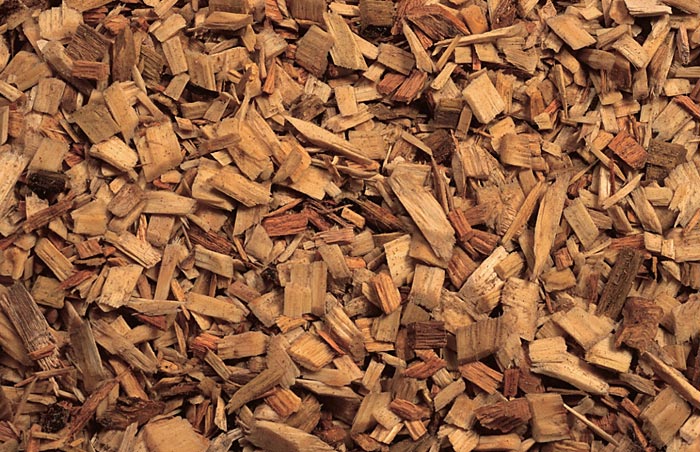
The prices for globally traded hardwood chips fell to a record low in May 2016, while softwood chip prices reached the highest level in seven months, according to the latest FOEX Chip Price Indexes.
Global trade of hardwood chips have trended upward for six years and totaled almost 24 million tons in 2015. By far, the two largest wood chip-importing markets are Japan and China, both countries with limited forest resources to supply the pulp industry with sufficient wood fiber.
The general price trend for hardwood chip traded overseas have been downward since late 2011 when the FOEX price index (PIX-HCG) reached a record high of almost $207/odmt. In May of this year this Index was $167.29, representing a 19.1% decline in 4 ½ years. Some of the biggest price declines the past 12 months have been for hardwood chips shipped from Australia to China, from South Africa to Japan, and from Uruguay to Portugal.
The FOEX softwood chip price index (PIX-SCG) has also fallen from a peak almost five years ago, but the price decline has been less dramatic than that of hardwood chips. During 2016, the SCG index has actually increased to reach $165.55/odmt in May, which was the highest level in seven months. The major price increase so far this year has been for softwood chips exported from the US to Turkey. A majority of global softwood chip trade is in Europe, as opposed to the hardwood chip trade, which is concentrated to Asia.
Swiss Krono Swiss Krono Group breaks ground on HDF facility in Barnwell
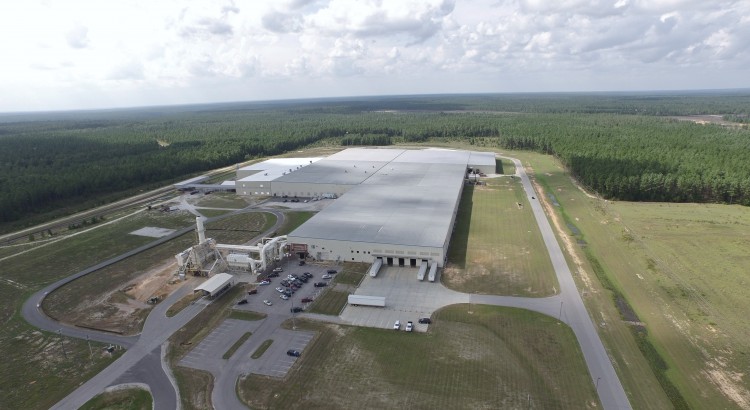
Swiss Krono Group and its American subsidiary, Swiss Krono SC, have recently celebrated their $230 million investment in a high-density fiberboard (HDF) mill and laminate flooring production expansion. Continue reading "Swiss Krono Swiss Krono Group breaks ground on HDF facility in Barnwell"
US: Pike Lumber to double lumber production
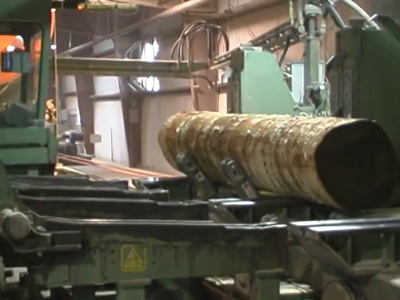
Pike Lumber Co., Indiana, has recently announced a $3.4 million investment to expand its Milan manufacturing facility. This expansion will double the company’s lumber production and create 15 jobs by 2020. Continue reading "US: Pike Lumber to double lumber production"
Rising North American structural panel production and consumption in 2Q/2016

North American structural panel production and apparent consumption rose 6.0% and 6.6%, respectively, in the second quarter compared to the first quarter of 2016, Continue reading "Rising North American structural panel production and consumption in 2Q/2016"
Finland: Westas group increases sawn timber production capacity
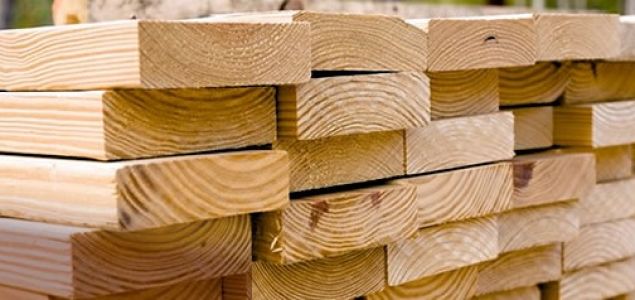
The Finnish sawmiller Westas Group has invested about EUR 3 million in its Finnish Pihlava sawmill. Through the investment, the production of the sawmill grows to 230,000 cubic metres per year. The sawmill will thus need more logs, and the company will acquire two new harvesting areas.
Managing Director of Westas Group Pekka Kopra says that the group aims with the acquisition to harvest more pine logs to satisfy the needs of the sawmill. Continue reading "Finland: Westas group increases sawn timber production capacity"
Ghana: June prices for exported wood products

Prices for Ghana's exported wood products are the following between 16-30 June, 2016:
Boule Export prices
| Euro per m³ | |
| Black Ofram | 380 |
| Black Ofram Kiln dry | 444▼ |
| Niangon | 489 |
| Niangon Kiln dry | 540 |
Export Sawnwood Prices
| Ghana Sawnwood, FOB | US$ per m³ | |
| FAS 25-100mm x 150mm up x 2.4m up | Air-dried | Kiln-dried |
| Afrormosia | 860 | 925 |
| Asanfina | 492 | 564 |
| Ceiba | 297 | 368 |
| Dahoma | 419 | 455 |
| Edinam (mixed redwood) | 537 | 599 |
| Emeri | 480 | 535 |
| African mahogany (Ivorensis) | 810 | 970 |
| Makore | 710 | 831 |
| Niangon | 610 | 873 |
| Odum | 755 | 862 |
| Sapele | 680 | 763 |
| Wawa 1C & Select | 395 | 440 |
Export Rotary Veneer Prices
| Rotary Veneer 2mm and up, FOB |
€ per m3 | |
| CORE (2mm & up) | FACE (2mm & up) | |
| Ceiba | 375 | 433 |
| Chenchen | 490 | 522 |
| Ogea | 478 | 556 |
| Essa | 503 | 561 |
| Ofram | 350 | 406 |
Export Sliced Veneer Prices
| Sliced Veneer, FOB | € per sq. m | |
| Face | Backing | |
| Afrormosia | 2.00 | 0.91 |
| Asanfina | 3.00 | 0.75 |
| Avodire | 1.60 | 0.34 |
| Chenchen | 1.40 | 0.36 |
| Mahogany | 1.80 | 0.72▼ |
| Makore | 1.80 | 0.80 |
| Odum | 1.13▼ | 0.40 |
Export Plywood Prices
| Plywood, FOB | € per m3 | ||
| Ceiba | Ofram | Asanfina | |
|
4mm
|
415 | 590▲ | 641 |
|
6mm
|
487 | 535 | 610▼ |
|
9mm
|
407 | 450 | 613 |
|
12mm
|
369 | 463 | 480▲ |
|
15mm
|
400 | 397 | 430 |
|
18mm
|
282▼ | 417 | 370 |
Grade AB/BB would attract a premium of 10%, B/BB 5%, C/CC 5% and CC/CC 10%.
Export Added Value Product Prices
| Parquet flooring 1st | FOB € per sq.m | ||
| 10x60mm | 10x65-75mm | 14x70mm | |
| Apa | 12.00 | 14.47 | 17.00 |
| Odum | 9.00 | 11.33 | 13.00 |
| Hyedua | 13.00 | 18.22 | 16.30 |
| Afrormosia | 13.72 | 13.93 | 17.82 |
Grade 2 less 5%, Grade 3 less 10%.
Source: ITTO
UPM Plywood reports 39% increase in EBITDA

UPM Plywood division reported 39% increase in EBITDA for the second quarter of 2016, as compared to the same period of last year. EBITDA for Q2/2016 was €25million, against €18 million in Q2/2015. UPM's Plywood EBIT increased due to higher delivery volumes. Continue reading "UPM Plywood reports 39% increase in EBITDA"
UK's BSW Timber builds biomass boiler
BSW Timber might be now the first sawmiller in the UK to generate electricity from biomass fuel from a £2.5m combined heat and power (CHP) boiler.
The state-of-the-art 3.2 MW CHP boiler at BSW Timber’s Carlisle mill is now operational and forms the latest phase of BSW’s £11m investment programme in biomass energy across its mills in the UK and Latvia, according to BMN.
The British company has empowered 7 biomass boilers at sawmills in the UK and Latvia. The 7 boilers have a 38 MW total heat capacity, while the Carlisle plant will supply heat for kilns, treatment plant, and offices. The plant will also produce electricity for sawmill production process.
Dallol Energy, a biomass expert company, helped to deliver the Carlisle CHP plant.
“BSW’s current investment in biomass technology means that we are now saving more than 12,500 tonnes of CO2 (3,421 tonnes of carbon) each year, across the business,” said BSW Timber’s chief executive officer Tony Hackney.
The Carlisle biomass plant has been delivered on time and within the company’s budget.
UK’s BSW Timber builds biomass boiler
BSW Timber might be now the first sawmiller in the UK to generate electricity from biomass fuel from a £2.5m combined heat and power (CHP) boiler.
The state-of-the-art 3.2 MW CHP boiler at BSW Timber’s Carlisle mill is now operational and forms the latest phase of BSW’s £11m investment programme in biomass energy across its mills in the UK and Latvia, according to BMN.
The British company has empowered 7 biomass boilers at sawmills in the UK and Latvia. The 7 boilers have a 38 MW total heat capacity, while the Carlisle plant will supply heat for kilns, treatment plant, and offices. The plant will also produce electricity for sawmill production process.
Dallol Energy, a biomass expert company, helped to deliver the Carlisle CHP plant.
“BSW’s current investment in biomass technology means that we are now saving more than 12,500 tonnes of CO2 (3,421 tonnes of carbon) each year, across the business,” said BSW Timber’s chief executive officer Tony Hackney.
The Carlisle biomass plant has been delivered on time and within the company’s budget.
Most European countries comply with EUTR obligations

In July, the European Commission has updated the table with information on the state of implementation of the European Union Timber Regulation (EUTR) by the EU Member States. The table regards whether the member countries have complied with their obligations provided under the EUTR.
Since last year, significant progress was made by some countries. Now, the only countries with obligations in the process of fulfilment are Greece, Romania and Spain. All other countries are considered to have fulfilled all their obligations under EUTR.
The table does not include an assessment whether the penalties applicable to infringements of the provisions of the regulation laid down by the Member States are effective, proportionate and dissuasive.
For the full table here
Recently, a Dutch company and some UK companies have been sanctioned for EUTR violation. For more info here and here
Canfor announces CA$36 million net income for Q2 2016
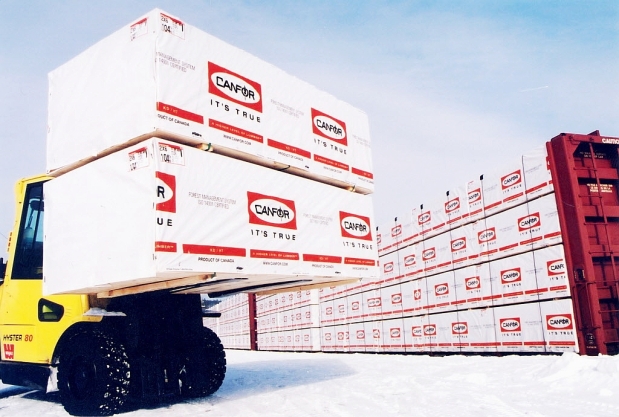
Canfor Corporation today reported net income attributable to shareholders of CA$36.0 million for the second quarter of 2016, compared to shareholder net income of CA$26.0 million for the first quarter of 2016 and shareholder net income of CA$11.1 million for the second quarter of 2015. For the six months ended June 30, 2016, the company’s shareholder net income was CA$62.0 million compared to CA$40.4 million for the six months ended June 30, 2015.
Canfor reported adjusted operating income of CA$54.1 million for the second quarter of 2016, down CA$11.0 million from operating income of CA$65.1 million for the first quarter of 2016, with a solid improvement in lumber segment operating earnings more than offset by lower operating earnings in the pulp and paper segment, which reflected significant scheduled maintenance downtime in the quarter. Adjusted operating income excludes a one-time pre-tax gain of $15.5 million related to the settlement of a legal claim with respect to logistics services for its pellet business.
Canfor's lumber segment results principally reflected higher Western Spruce/Pine/Fir (“SPF”) and Southern Yellow Pine (“SYP”) benchmark lumber prices and to a lesser extent, the contribution from the Company’s Wynndel Box and Lumber Ltd. (“Wynndel”) acquisition on April 15, 2016. These factors were offset in part by a 5 cent, or 7%, stronger Canadian dollar, and slightly lower planer production at the Company’s Houston sawmill following a kiln fire in May. Pulp and paper segment operating earnings were lower than the previous quarter primarily due to scheduled maintenance outages at all three of the Company’s NBSK pulp mills as well as lower Canadian-dollar NBSK pulp unit sales realizations.
North American lumber demand was solid across all segments of the market in the second quarter of 2016, with US housing starts in line with the previous quarter, averaging 1,160,000 units on a seasonally adjusted basis. Canadian housing starts were also broadly in line with the previous quarter, at an average of 198,000 units on a seasonally adjusted basis. Offshore lumber demand remained steady during the quarter.
The average benchmark North American Random Lengths Western SPF 2x4 #2&Btr price was US$311 per Mfbm in the second quarter of 2016, up US$39 per Mfbm compared to the previous quarter, with similar price increases seen across most other dimensions and grades, with the exception of Western SPF 2x6 #2&Btr price which showed a more modest increase. Western SPF unit sales realizations benefitted from the higher US-dollar benchmark lumber prices as well as a higher-value sales mix. Partly offsetting these factors was the 7% stronger Canadian dollar during the quarter. SYP unit sales realizations also increased compared to the previous quarter reflecting both a US$30 per Mfbm increase in the SYP 2x4 #2 price and more pronounced price increases in most wide-dimension SYP lumber products which represent a significant proportion of the Canfor’s product mix in the US South.
Canfor's total lumber shipments and production were in line with the first quarter of 2016 as the recent acquisition of Wynndel offset slightly reduced production in Western Canada as a result of the Houston sawmill’s kiln fire. Unit manufacturing costs in the second quarter of 2016 were in line with the previous quarter. Positive pricing momentum in global softwood pulp markets during the secondquarter of 2016 was due mostly to the impact of industry spring maintenance outages and solid demand, particularly from China.
Discussions between the Canadian and US Governments regarding the Softwood Lumber Agreement continued through the second quarter of 2016. The one-year stand-still period, during which no trade actions may be imposed, expires in October 2016. While discussions have been progressing, it remains uncertain as to whether a new Softwood Lumber Agreement will be in place by the end of the stand-still period. Looking ahead, the US housing market is forecast to continue its gradual recovery through the balance of 2016.
North American lumber consumption is forecast to improve reflecting steady demand in the residential construction market and continued strength from the repair and remodelling sector. For Canfor’s key offshore lumber markets, demand is anticipated to remain stable through the third quarter.
American Hardwood CLT used for at London Design Festival

The American Hardwood Export Council has collaborated with Alison Brooks Architects, Arup and the London Design Festival to present a cross-‐laminated tulipwood structure on the Rootstein Hopkins Parade Ground of the Chelsea College of Arts from 17 September until 12 October.
Brooks has designed ‘The Smile’, an urban installation that showcases the structural and spatial potential of cross–laminated hardwood using American tulipwood. The Smile is one of the Festival’s Landmark Projects; a timber structure that can be inhabited and explored by the public. With expertise from top engineering firm Arup, and using construction sized panels of hardwood CLT for the first time, Alison Brooks' concept is a spectacular 3.5m high, 4.5m wide and 34m long curved rectangular tube – the first ever hardwood ‘mega-‐tube’.
Alison Brooks says, “The Smile is a huge curved hollow tube made of cross-‐laminated
tulipwood. It touches the ground at one point, like a wheel. Entering The Smile through an opening where the curved form meets the ground, the visitor can walk from end to end of the 34-‐metre-‐long tube to discover a new kind of space that gradually rises toward light. All four sides of The Smile's interior will be made of same beautiful hardwood panels as the structure. It will offer a complete sensory experience of colour, texture, scent and sound. The Smile's two open ends will illuminate the funnel-‐like interior space and act as balconies to the city."

Along the walls, perforations will allow sunlight to draw changing patterns on the floor throughout the day. The perforations will also give the visitor an understanding of how the structure performs as they're located in positions where there are fewer structural stresses. At night the interior will be illuminated by linear light strips that trace its dynamic curving floor.
For AHEC, The Smile is one of the most important developments in a decade of research and development into structural timber innovation with Arup, and one that could broaden the use of CLT in the construction industry. Andrew Lawrence, Associate Director, Arup says, "The Smile is the most challenging structure ever constructed in CLT. Every aspect is pushed to the absolute limit. It really shows the potential for hardwoods in construction."
 This creation of a brand-‐new product and a new use of hardwood will transform the way architects and engineers approach timber construction.
“This structure proves that hardwoods have a role to play in the timber construction revolution,” says David Venables, European Director of AHEC. “All our previous LDF projects – Timber Wave, Out of the Woods, Endless Stair and The Wish List – have been significant projects.
“But The Smile, designed by Alison Brooks Architects, is the most significant advance because it will create the first-‐ever use of industrial-‐sized panels of hardwood CLT. These panels will be produced by Züblin Timber in Germany, one of the pioneers of this manufacturing process. They believe in the potential of tulipwood CLT as bringing a revolutionary new element to wood construction.”
Arup's engineering team is working to derive the most efficient structural form, using only 60 cubic metres of wood to create a 150 square metre enclosed space. The forces of tension and compression working in the CLT walls will be expressed by perforations in its elevations. ABA has used these to generate patterns of light across The Smile's interior spaces during the day, it will become an urban lantern at night.
“The Landmark Projects are a key part of the Festival’s commissioning programme. They are at a scale that gets noticed and are always in major public places reaching a very wide audience,” says Ben Evans, the Director of LDF. “The choice of architect is key and Alison Brooks Architects are known for their innovative use of materials. Alongside a strong commitment to ambitious ideas they made an ideal choice for this year’s Landmark project with AHEC.”
LOCATION: Chelsea College of Arts 16 John Islip Street London SW1P 4JU
DATES: 16 September – 12 October
About AHEC
For over 20 years the American Hardwood Export Council (AHEC) has been at the forefront of wood promotion in Europe, successfully building a distinctive and creative brand for U.S. hardwoods. AHEC’s support for creative design projects such as The Wish List, Endless Stair, and now The Smile, for the London Design Festival demonstrate the performance potential of these sustainable materials and provide valuable inspiration. www.americanhardwood.org
Lithuania: Roundwood prices keep the descending trend in May

During May 2016, roundwood prices in Lithuania kept the descending path, as compared to 2015. Except for birch pulpwood, which remained stable, and pine pulpwood, whose price increased by 4.34%, all the other pulpwood and sawlog prices registered a sharp decline.
On a yearly basis, small-sized softwood decreased by -18.8%, registering the highest decrease, followed by pine sawlog, which went down by -11.3%. Also, alder, spruce and birch are cheaper by -5.35%, -4.76% and -4.16% respectively. Continue reading "Lithuania: Roundwood prices keep the descending trend in May"
US: EPA issues final rule on formaldehyde emissions
The U.S. Environmental Protection Agency (EPA) has moved to reduce exposure to formaldehyde vapors from certain wood products produced domestically or imported into the United States. The agency worked with the California Air Resources Board to help ensure the final national rule is consistent with California requirements for composite wood products.
The Formaldehyde Emission Standards for Composite Wood Products Act of 2010 established emission standards for formaldehyde from composite wood products and directed EPA to finalize a rule on implementing and enforcing a number of provisions covering composite wood products.
One year after the rule is published, composite wood products that are sold, supplied, offered for sale, manufactured, or imported in the United States will need to be labeled as TSCA Title VI compliant. These products include: hardwood plywood, medium-density fiberboard, particleboard as well as household and other finished goods containing these products.
EPA is also setting testing requirements to ensure that products comply with those standards, establishing eligibility requirements for third-party certifiers, and establishing eligibility requirements for accreditation bodies to be recognized by EPA that will accredit the third-party certifiers. The new rule includes certain exemptions for products made with ultra-low formaldehyde or no-added formaldehyde resins and new requirements for product labeling, recordkeeping, and enforcement provisions.
Formaldehyde is used as an adhesive in a wide range of wood products, such as some furniture, flooring, cabinets, bookcases and building materials including plywood and wood panels. Exposure to formaldehyde can cause adverse health effects including eye, nose and throat irritation, other respiratory symptoms and cancer.
For more information visit: https://www.epa.gov/formaldehyde/formaldehyde-emission-standards-composite-wood-products-0
Crisis in New Zealand's log supply
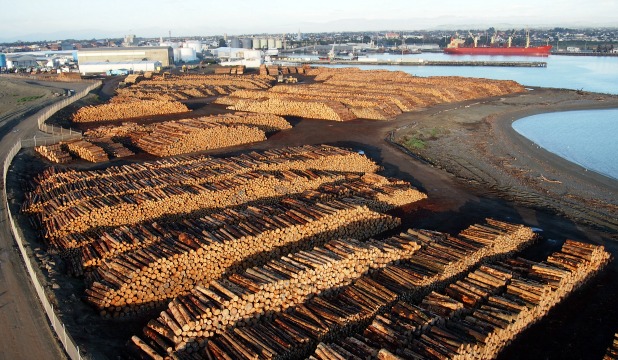
New Zealand wood processing leaders held a hui with senior government officials and political leaders in Whangarei yesterday to assess the acute log supply shortage to local mills in Northland.
The joint industry/government meeting saw statistics that clearly show: the completely unsustainable forest harvest rate in New Zealand's Northland; Continue reading "Crisis in New Zealand's log supply"
Crisis in New Zealand’s log supply
New Zealand wood processing leaders held a hui with senior government officials and political leaders in Whangarei yesterday to assess the acute log supply shortage to local mills in Northland.
The joint industry/government meeting saw statistics that clearly show: the completely unsustainable forest harvest rate in New Zealand's Northland; Continue reading "Crisis in New Zealand’s log supply"
Current logs and sawnwood prices in China

The report below contains the latest prices of logs and sawnwood from main timber markets in China.
1 Yuan=0.14 EUR
1 Yuan=0.15 US$ Continue reading "Current logs and sawnwood prices in China"
Indonesia: Furniture industry stressed by SVLK certification

Many micro, small and medium enterprises in Indonesia, which are selling export-oriented furniture, haven’t received the Wood Legality Verification System (SVLK) due to the inconsistency of the regulation.
Only 25 furniture-based association members, out of 125, have obtained the SVLK certification, Continue reading "Indonesia: Furniture industry stressed by SVLK certification"

