Article archive

Weyerhaeuser completes liquid packaging board business sale to Nippon Paper

Weyerhaeuser Company announced on August 31st the completion of the sale of its liquid packaging board business to Nippon Paper Industries Co., Ltd. for $285 million in cash. Weyerhaeuser expects to use a substantial portion of the approximately $225 million of after-tax proceeds for repayment of debt.

The liquid packaging board business consists of one mill located in Longview, Washington, with an annual capacity of 280,000 tons.

"Nippon Paper Industries is acquiring a strong portfolio of high quality products and a well-regarded employee team that has contributed much to Weyerhaeuser over the years," said Doyle R. Simons, president and chief executive officer. "This transaction further focuses our company as we work together to be the world's premier timber, land, and forest products company."

Weyerhaeuser Company, is one of the world's largest private owners of timberlands, which owns moe than 13 million acres of timberlands monstly in the US, while managing additional timberlands under long-term licenses in Canada. Weyerhaeuser is also one of the largest manufacturers of wood and cellulose fiber products.

Holtec sorting line installed at Klenk in Baruth

Only 4 months went between the order and the start of the installation in Baruth.
For the first time, HOLTEC was chosen as supplier by KLENK because they convinced us with their innovative solutions,” – says Bernd Ebert, plant manager in Baruth.
HOLTEC supplied a completely new log yard for short logs up to the remaining sorting conveyor. Integral part of the line is a double shaft butt-end-reducer and a crosscut saw for overlength.
The separation system is equipped with the HOLTEC chain-less conveying system – a double acting step conveyor which can separate and allocate 30 logs/min. Acceleration and dynamical gap optimization are accomplished by V-rollerways. All these units are working completely without chain drives and stand out due to their low operating costs.

Turkey to impose anti-dumping tariffs on Vietnamese plywood

The Turkish Ministry of Economy has finally taken a decision regarding the anti-dumping tariffs on Vietnamese plywood. Thus, the Vietnamese companies failed in complying with the Turkish investigators, which led to higher tariffs.
The Vietnam Competition Authority under the Ministry of Industry and Trade announced on August 30 that just the two Vietnamese businesses that provided information to investigating agencies on time and proved that their products were not bought from a third party will be exempt from the anti-dumping tax, according to VN Express.
All the other companies will be forced to pay a $240 tax for each m2 of plywood, which is the same amount that was imposed on Chinese plywood imported by Turkey since 2006. Though, the Turkish authorities will be opened to listen to any feedback received from the Vietnamese companies until the 2nd of September.
Turkey also looks to apply the anti-dumping duties on polyester textured yarn imported from other countries, including Vietnam. Yet, the the dumping margins for Vietnamese enterprises will be from 34.81-72.56 percent, while Thai firms will pay 8.48-37.69 percent. The decision is expected to be released in October
 

Stable US wooden furniture imports

Wooden furniture imports were unchanged in June at US$1.44 billion. Year-to-date imports were up 4% from June 2015.
US furniture imports from China were unchanged monthover-month, but imports from Vietnam and declined 3% in June. Malaysia, Mexico and India increased shipment to the US in June.Imports from most countries were up in the first half of 2016, except for Malaysia (-2%) and Indonesia (-4%).
Imports of bedroom furniture and wood furniture for other uses increased in June, while office furniture, upholstered and non-upholstered seating declined. Kitchen furniture imports were unchanged from the previous month.
In May, US imports of wooden furniture grew 13% imonth on month to US$1.44 billion. Year-to-date imports were up 5% from May 2015. As was the case in April much of the month-on-month growth was due to rising imports from China (US$691.4 million, +25%) and Vietnam (US$268.9 million, +33%).

Wood domestic sector in Vietnam loses ground over foreign companies

Vietnam’s domestic wood production sector has lost the local and export forestry markets to the foreign sector.
Foreign sector companies from Malaysia, China, Taiwan and Thailand have swooped in and taken control of production in Vietnam and now have at least a 60% market share of all local and export sales, said Huynh Van Hanh, general director of the Handicraft and Wood Industry Association of Ho Chi Minh City, according to News VietNam Net.
Several Chinese companies set up in Vietnam and hired local people to act as owners on behalf of the true Chinese owners. Thus, the foreign sector controls much of the production together with more than 60% revenue from the market share.
The three main forest industry segments in the local Vietnam market: forestry and logging segment, which harvests timber; the pulp and paper manufacturing segment, which produces newsprint, writing paper and hygiene products and the solid wood product manufacturing segment, that produces outdoor and indoor furniture, handicrafts, decorations and accessories.
As Hanh explained, as other nations have better conditions to invest in research and development, the domestic sector in Vietnam doesn’t have the money to invest in better technologies and improvements.
Another contributing factor is that the forest industry’s profitability track record has been poor. The domestic sector failed to invest in developing employees’ expertise and skills to increase worker productivity. In the seven months leading up to August of 2016, total revenues for the forest industry jumped 0.8% on-year to US$3.8 billion, with in excess of 60% of the revenues going to the foreign sector, as reported by News VietNam Net.
Apparently, the foreign sector controls nearly 80% of the market share in the local and export forestry sectors, because the domestic sector companies aren’t in the position to compete as they lack in investment in research and development, marketing, and establishing a distribution network, said Nguyen Ton Quyen, vice president of the Vietnam Timber and Forest Product Association.
Almost 93% of the companies in Vietnam lack the necessary funds to invest in modern equipment. Yet, the Ministry of Agriculture and Rural Development currently works on a legislation to provide financing for the small holders to develop domestic distribution networks and marketing as to help the competitiveness.

British Columbia sets agenda to increase forests competitiveness

The British Columbia’s government released a report on the 31st of August as to improve the competitiveness of the forest sector as to maintain the investments and provide family-supporting jobs in communities throughout the province.
As reported by Price George, the agenda, called “Strong Past, Bright Future” contains 49 strategic actions to address three key inter-related goals: healthy, resilient forests; diverse, globally competitive industry; and stable communities and First Nations.
It is known that BC produces high-quality wood products from sustainably managed forests, yet the government has to address the challenges that may undermine the industry’s ability to compete, due to the mountain pine beetle which affects the interior of the forests and because of the uncertainty from the market.
Other programs made by the government include the maximization of BC’s forests and the improvement for a competitive position. Programs such as the three-year $75-million Rural Dividend and the $85 million plan for the newly created Forest Enhancement Society of B.C work on tapping the innovation on the forests in BC.

“Government is focused on maintaining the forest sector’s position as a driving force in B.C.’s economy, especially in rural communities. This will sustain jobs, provide a secure future for resource communities, and deliver benefits to all British Columbians,” said Forests, Lands and Natural Resource Operations Minister Steve Thomson.

According to Prince George, the agenda also includes:

  • Enhancing the promotion of B.C. wood products globally, focusing on the province’s strong regulatory environment and the benefits of B.C.’s wood products.
  • Through Forestry Innovation Investment, promoting new wood-construction technology to global markets and developing non-traditional uses of wood and wood-pulp fibres.
  • Advancing opportunities for forest carbon management and promoting greater use of lower-value wood and wood residue in support of the province’s climate leadership goals.
  • Investing in timber supply and restoring forests impacted by the mountain pine beetle and wildfire.
  • Strengthening timber-supply data using state-of-the art technology to provide a completely updated forest inventory by 2023.
  • Maintaining healthy forest ecosystems that support values such as fish and wildlife ecosystem biodiversity, clean water, recreation, fibre for forest products, and forest carbon storage.
  • Continuing to enhance First Nations’ participation in the forest sector, and encouraging business-to-business relationships between First Nations tenure holders and forestry firms.
  • Creating more trades and training seats at post-secondary institutions, targeting funding for occupations in demand.

The Value-Added Sector Action Plan, and British Columbia Pulp and Paper Sustainability: Sector Challenges and Future Opportunities are also supporting the plan, which follows the Province’s Forest Fibre Action Plan released in September 2015.

Chinese sawnwood imports drop sharply in value

China‘s sawnwood imports totalled 15.61 million cubic metres valued at US$3.82 billion in the first half of 2016, down 2% and 17% respectively over the same period of 2015. The average landed price for imported sawnwood was US$245 per cubic metre, a year on year drop of 17%.
Of the total, sawn softwood imports amounted to 9.02 million cubic metres, or 58 % of all sawnwood imports, a year on year increase of 24%. Sawn softwood imports were mainly from the top 10 countries, namely Russia (5.40 million cu.m, up 51%), Canada (2.09 million cu.m, down 14%), Finland (0.49 million cu.m, up 80%), Chile (0.34 million cu.m, down 1%), Sweden (0.32 million cu.m, up 33%), New Zealand (0.17 million cu.m, up 14%), Germany (0.06 million cu.m, down 50%), the US (0.03 million cu.m, down 6%), Australia (0.02 million cu.m, up 66%) and Latvia (0.01 million cu.m, down 45%). Sawn softwood imports of these above-mentioned countries make up 99% of all sawn softwood imports, just sawn softwood imports from Russia and Canada make up 83%.
Sawn hardwood imports totaled 6.05 million cubic metres, or 42% of all sawnwood imports, a year on year increase of 11%. Sawn hardwood imports were mainly from the top 10 countries, namely Thailand (1.89 million cu.m, up 31%), the US (1.29 million cu.m, down 7%), Russia (1.17 million cu.m, up 17%), Canada (0.72 million cu.m, up 24%), Vietnam (0.16 million cu.m, up 42%), Gabon (0.14 million cu.m, down 16%), Indonesia (0.131 million cu.m, up 9%), Philippine (0.130 million cu.m, down 16%), Malaysia (0.113 million cu.m, down 15%) and Brazil (0.25 million cu.m, up 90%).
Sawn hardwood imports of these above-mentioned countries make up 89% of all sawn hardwood imports, just sawn hardwood imports from Thailand, the US, Russia and Canada make up 77%.
Tropical sawnwood imports rose 8 % to about 4.77 million cubic metres, accounting for 17% of all sawnwood imports and 40% of all sawn hardwood imports.
Ranked top 10 countries for China’s tropical sawnwood imports in the first half of 2016

Tropical Sawnwood imports 2015/16 %Change
Thailand 1.890.000 31%
Gabon 142.000 -16%
Indonesia 131.000 9%
Phillipines 130.000 -16%
Malaysia 113.000 -15%
Laos 55.000 -17%
Cameroon 42.000 -33%
Ecuador 31.000 38%
Peru 26.000 0%
Cambodia 18.000 8%
Data source: China Customs

The average prices for imported sawn softwood, sawn hardwood and tropical sawnwood were US$171, US$346 and US$371 per cubic metre, down -18%, -13% and -17% respectively. However, the prices for sawn hardwood imports from Indonesia rose 6%.

LIGNA 2017: Robots a major growth area for the sawmilling industry

With automation on the rise across the economy, robots are increasingly finding their way into manufacturing technology. Their roles range from parts handling to component processing and assembly. High-performance controls ensure short throughput times and high plant utilization rates.
System partnerships between industrial robot manufacturers, programming specialists and mechanical engineers play a decisive role in the implementation of robotics solutions. Interested businesses will find representatives of all these sectors at LIGNA.
In its Factory Automation showcase, Siemens demonstrates with its open, modular Sinumerik architecture how easily controls can be adapted to an existing machine’s operational philosophy. Beckhoff Automation promotes its unified automation platform for all robot types. B&R Industrie Elektronik is presenting the Power Panel 500, computer-based controls that cover even the most complex robot applications whilst ensuring the highest security standards.
On the end-user side, Homag is exhibiting as one of the leading specialists for robot-supported construction of production cells. Our robotic colleagues are also increasingly found in woodworking. The world's first building with a robot-manufactured hardwood beech frame was erected in Gmünd, Germany in 2015. Minda sorting robots are working successfully in glued laminated timber manufacturing. With its cleverly designed, modular PUR laminate building set, Bürkle shows how widespread robot applications have become. Möhringer uses vacuum robots for automatic stacking in sawmill engineering.
Robots have also gained permanent footholds in painting, grinding, polishing and assembling. LIGNA exhibitor MAKA, in collaboration with Siemens, demonstrates how easily robots can be integrated into manufacturing: The "Run my Robot" option enables complete programming and operation of the robot using the CNC interface.
A host of innovations like these await visitors at LIGNA 2017, both in the new "Machine components and automation technology" display and in the many other sections of the show. Everyone – whether from industry or the skilled trades – gets the full picture at LIGNA.

Poyry gets technical services assignment for the 299-MW UK biomass project

Finnish consulting and engineering firm Poyry Plc said it has won a technical services contract for the 299-MW biomass-fuelled combined heat and power (CHP) project developed by MGT Power Ltd in northeastern UK.
Previously, Poyry provided front end engineering design for the same project and was involved in the negotiation of the engineering, procurement and construction (EPC) contract. Its new tasks include assistance in design review and construction supervision along with technical support during erection, commissioning, testing and hand-over, and support during the warranty period. The value of the new deal was not given.
The GBP-650-million (USD 854m/EUR 754m) Tees Renewable Energy Plant, as the project is called, reached financial close earlier in August. It will be equally owned by Australian investment bank Macquarie Group Ltd and Danish pension fund PKA. The plant in Teesport will use wood pellets and chips from certified sustainable forestry sources in the US and Europe, including the UK.

MGT Teesside Limited announced on the 11th of August the construction of the biggest biomass combined heat and power plant in the world.
The plant will be built in Middlesborough in northeast England and the preparation for the site will begin in a few weeks. The Teesside biomass CHP plant at Teesport has invested £650 million in the project. The main construction works is due to start a few months later and the commercial operations are planned to start in 2020.
Back in July, MGT Power announced a partnership with Macquarie Capital and Macquarie Commodities and Financial Markets to deliver the project. Macquarie and Danish pension fund PKA, will now become the joint owners of MGT Teesside, which will own and manage the Tees Renewable Energy Plant (Tees REP).
The project will be built under a turn-key “engineering, procurement and construction” contract by a consortium of Tecnicas Reunidas of Spain and Samsung Construction and Trading (SCT) of South Korea.

“The Tees REP project has had to overcome many hurdles in development but we have now successfully reached the next stage despite the difficult financing environment,” said Ben Elsworth, CEO of MGT Teesside.

At least 600 jobs will be created during construction and about 100 full time jobs sustained on site once operational plus several hundred more in the supply chain – many in the local region. Biomass discharge services will be provided by PD Ports through the port of Teesport.
Tees REP will be fuelled by wood pellets and chips from the United States and Europe that will be delivered directly via ships arriving at Tees Dock adjacent to the plant. It will generate enough electricity to supply approximately 600,000 households as well as heat for supply on site and for nearby users. Biomass fuel will be delivered directly to the CHP plant from ships arriving at the adjacent Tees Dock.
The CHP plant will be compromised of one “circulating fluidised bed” boiler, which will produce steam which will be driven by a single steam turbine generating electricity that will be exported directly to the high voltage national grid system.

SCA: Decision to split hygiene from forest products business is not taken yet

SCA gave a clarification for the recently announced split of the group into two listed companies: the hygiene business and  the forest products business. According to the clarification, SCA wishes to underline the fact that no decision has been made on how to handle creditors, future capital structure, allocation of debt, etc. in relation to the contemplated separation. Continue reading "SCA: Decision to split hygiene from forest products business is not taken yet"

Tafisa expands its production capacity with $15 million new TFL press line

Tafisa Canada has recently expanded its capacity. The company started its 5th TFL (thermally fused laminate) press line for the production of two-sided embossed and in-register textured composite panels in 4-foot by 8-foot and 5-foot by 9-foot sizes.
According to Wood Working Network, Tafisa, a subsidiary of the Sonae Industria Group, invested more than $15 million for the new TFL press line.
“Our fifth TFL press is yet another example of our company’s ability to provide unprecedented flexibility and impressive production capabilities attuned to the market’s growing demand for high quality, value added products,” said Louis Brassard, Tafisa Canada CEO.
The Canadian panel producer announced that the TFL press line will help the production of its new VIVA panels, which utilize embossed and in-register (EIR) technology, that give the panels the “look and feel of wood”.
For use in residential and commercial furniture and casework, VIVA is currently offered in three distinct wood structures: Elegant, Rustic and Planked Effect, and in 10 colors. The company also offers complementary products include high-pressure laminates, edgebandings, doors, 3D laminates and mouldings, Wood Working Network reported.
“I am very proud and impressed at how the Tafisa team pulled together to implement this new technology and achieve our objective of having Viva orders ready for delivery at the end of August. This marks a new milestone in our company’s history,” Brassard added.
Tafisa has quadrupled its production since 1992, when it was founded. The company invested more than $400 million in process improvements.
 

Latest export prices for sawnwood, plywood, veneer and panels in Peru

Between January and May 2016, Peruvian imports of fibreboard amounted to US$10.24 million, a decline of almost 5% compared to the same period in 2015.
Chile remained the main supplier despite seeing a 12% decline in exports to Peru. Shipments from Brazil increased by 93% to US$ 1.,96 million compared to the same period in 2015. Turkey remained the third ranked supplier with shipments worth for US$1,24 million.
Arauco Peru was the largest importer accounting for just over 52% of all fibreboard imports.
Masisa Peru and the Martin Group each imported around US$1.7 million. Fibreboard imports by the local subsidiary of Duratex, Duratex Andina totaled US$434,000 representing around 4% of total fibreboard imports. Duratex is a major manufacturer of fibreboard in Brazil.
Export Sawnwood Prices

Peru Sawnwood, FOB Callao Port US$ per m3
Mahogany S&B KD 16%,
1-2” random lengths (US market)
1570-1655
Spanish Cedar KD select
  • North American market
958-977
  • Mexican market
946-965
Pumaquiro 25-50mm AD Mexican market 545-598


Virola 1-2" thick, length 6'-12' KD
  • Grade 1, Mexican market
474-564
  • Grade 2, Mexican market
426-467
Cumaru 4" thick, 6’-11’ length KD
  • Central American market
875-917
  • Asian market
919-973
Ishpingo (oak) 2" thick, 6'-8' length
  • Spanish market
509-549
  • Dominican Republic
623-653
Marupa (simarouba) 1”, 6-13 length Asian market 465-519↑

Domestic Sawnwood Prices

Peru sawnwood, domestic US$ per m3
Mahogany -
Virola 209-244↑
Spanish Cedar 316-368↑
Marupa (simarouba) 179-196↑

Export Veneer Prices

Veneer FOB Callao port US$ per m3
Lupuna 3/Btr 2.5mm 221-249
Lupuna 2/Btr 4.2mm 234-266
Lupuna 3/Btr 1.5mm 219-228

Export Plywood Prices

Peru plywood, FOB Callao (Mexican Market) US$ per m3
Copaiba, 2 faces sanded, B/C, 15mm 328-365
Virola, 2 faces sanded, B/C, 5.2mm 466-489
Cedar fissilis, 2 faces sanded.5.5mm 759-770
Lupuna, treated, 2 faces sanded, 5.2mm 389-412
Lupuna plywood
  • B/C 15mm
421-451
  • B/C 9mm
366-385
  • B/C 12mm
350-360
  • C/C 4mm
389-425
Lupuna plywood B/C 4mm Central Am. 370-393

Domestic Plywood Prices (excl. taxes)

Iquitos mills US$ per m3
122 x 244 x 4mm 508
122 x 244 x 6mm 513
122 x 244 x 8mm 528
122 x 244 x 12mm 523
Pucallpa mills
122 x 244 x 4mm 503
122 x 244 x 6mm 511
122 x 244 x 8mm 513

Domestic Prices for Other Panel Products

Peru, Domestic Particleboard US$ per m3
1.83m x 2.44m x 4mm 282
1.83m x 2.44m x 6mm 230
1.83m x 2.44m x 12mm 204

Export Prices for Added Value Products

Peru, FOB strips for parquet US$ per m3
Cabreuva/estoraque KD12% S4S, Asian market 1296-138
Cumaru KD, S4S
  • Swedish market
962-1095
  • Asian market
1069-1112
Cumaru decking, AD, S4S E4S, US market 1188-1222
Pumaquiro KD Gr. 1, C&B, Mexican market 479-554
Quinilla KD, S4S
  • 2x10x62cm, Asian market
493-519
  • 2x13x75cm, Asian market
732-815

 
Source: ITTO

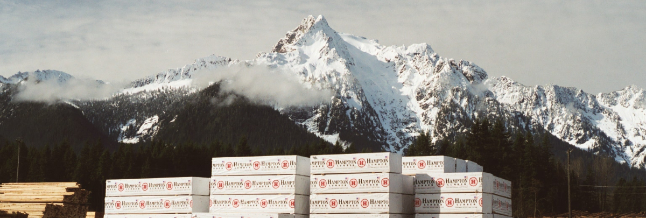
Hampton Affiliates acquires Banks Lumber sawmill in Oregon

Hampton Lumber announced its acquisition of the Banks lumber mill assets in Banks, Oregon. The Banks lumber mill, which employed roughly 60 people, had been in operation since 1961 producing high quality green Doug fir narrow dimension lumber. Continue reading "Hampton Affiliates acquires Banks Lumber sawmill in Oregon"

RusForest reports 7% increased harvesting production in Q2/2016

RusForest AB announced its Q2 2016 report, with increased sawmilling and harvesting production.
The Swedish forestry company with operations in Russia reported increased harvesting production, of 31,770m3 of logs in Magistralny and Ust-Ilimsk in Q2 2016 (Q2 2015: 29,704 m3), representing almost 7% increase. Also, the company harvested 714 m3 of logs in Ust-Ilimsk subcontracted forest lease areas in the mentioned period, compared to the 82,816 m3 in the same period last year.
RusForest produced 17,838 m3 of sawnwood in Magistralny in Q2 2016, compared to the 18,467 min the Q2 2015.

“RusForest is happy to report a financially very strong second quarter, largely due to the successful sales of non-core forest leases and recognition of profit thereto. Both new business activities performed as expected and short term focus is mainly on further improvement of the Ust-Ilimsk harvesting performance to increase revenue and profitability further" said Anton Bogdanov, CEO of RusForest Management Company.

The company's generated revenue amounted to USD 5.8 million, compared to the USD 4.9 million in the Q2 of 2015, an 18% increase. Also, the EBITDA reached USD 3.0 million in Q2 2016, including income from non-core forest lease sales (Q2 2015: USD 0.3 million). The profit for the mentioned period was of USD 1.4 million in Q2 2016, compared to the Q2 2015, when there was a net loss of USD 1.6 million recorded.
In the first six months of the year, RusForest harvested 152,891 m3 of logs in Magistralny and Ust-Ilimsk (6M 2015: 104,008 m3) and 274,647 m3 of logs in Ust-Ilimsk subcontracted forest lease areas (6M 2015: 345,231 m3).
The generated revenue was of USD 13.2 million (6M 2015: USD 10.5 million) and the profit for the first half of the year amounted to USD 2.6 million (6M 2015: net profit of USD 0.2 million).
RusForest is a Swedish forestry company operating in Eastern Siberia. The Company controls long-term timber leases and utilizes these resources to produce a wide range of sawnwood products.
 

Tallest timber building in the world was topped off in Vancouver

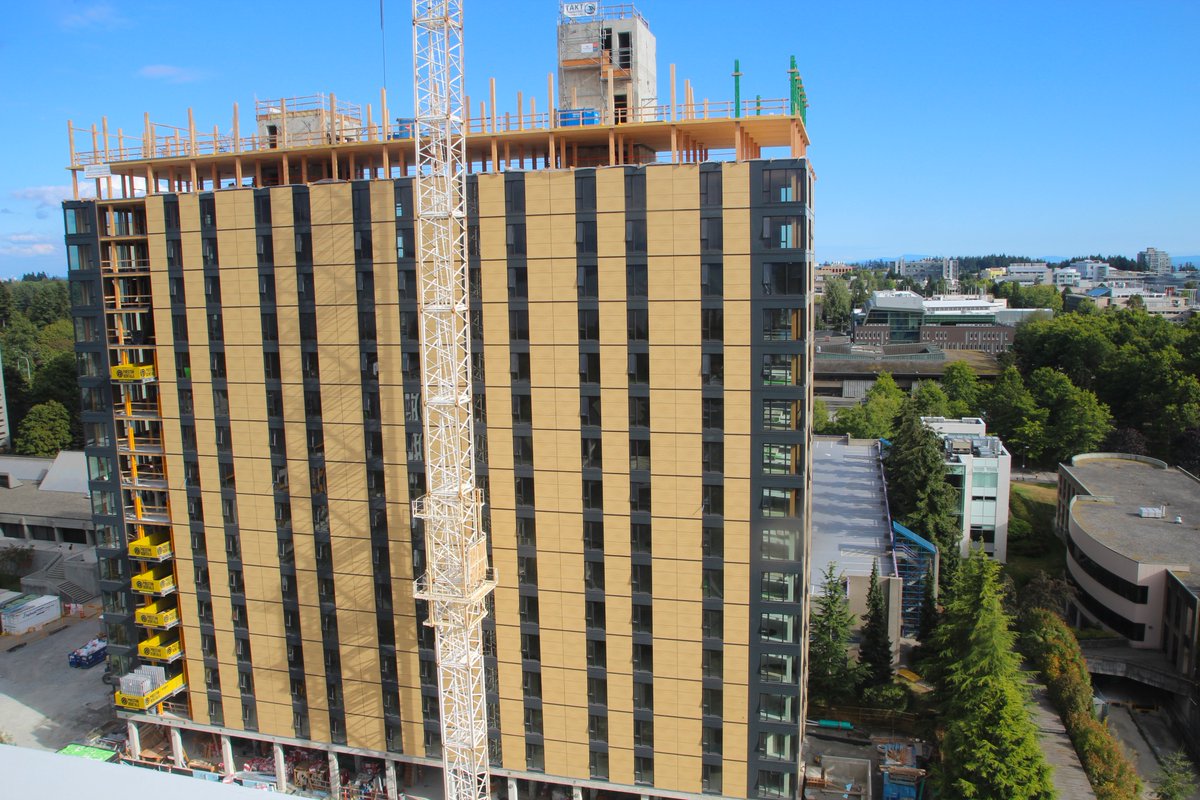
Brock Commons, the tallest timber building in Vancouver, Canada, just had its last panel installed.
The exterior of the building was designed by Acton Ostry Architects and was ready in just 66 days, ahead of the original scheduled timeframe. This could bump up the projected fall 2017 completion date to next year’s spring semester, according to Proud Green Building.
Brock Commons will host the University of British Columbia and the housing structure was lifted and installed at the beginning of August. The construction began in November 2015 and the building’s freestanding concrete cores were erected earlier this year.
“Construction just went really smoothly. It was well designed and the construction sequence went smoothly,” said John Metras, managing director of UBC Infrastructure.
To ease fire safety fears of an 18-story timber structure, Brock Commons is outfitted with a sprinkler system and the wood is encapsulated in drywall and concrete. The lighter weight of the building also allows for better energy dissipation during an earthquake, making it proficient at withstanding all kinds of disasters, as reported by Proud Green Building.
Brock Commons will be used by the students next year, possibly in the spring semester.

Prices for logs, sawnwood and plywood in Brazil

Brazilian logs, mill yard, domestic US$ per m3
Ipê 176
Jatoba 97
Massaranduba 102
Muiracatiara 104
Angelim Vermelho 96
Mixed redwood and white wood 83
Source: STCP Data Bank

Export Sawnwood Prices

Sawnwood, Belem/Paranagua Ports, FOB US$ per m3
Ipe 1412↓
Jatoba 913↓
Massaranduba 729↓
Muiracatiara 707↓
Pine (KD) 195↓
FOB Belém/PA; Paranaguá/PR; Navegantes/SC and Itajaí/SC Ports. High quality wood (no cracks / without knots) / Measuring 2,50 m in length; 15 cm wide; and 30 mm thick. Source: STCP Data Bank

Domestic Sawnwood Prices

Brazilian sawnwood, domestic (Green ex-mill) US$ per m3
Ipê 810↑
Jatoba 396↑
Massaranduba 373.↑
Muiracatiara 381↑
Angelim Vermelho 334↑
Mixed red and white 218↑
Eucalyptus (AD) 193↑
Pine (AD) 138↑
Pine (KD) 156↑
Source: STCP Data Bank

Export Plywood Prices

Pine Plywood EU market, FOB US$ per m3
9mm C/CC (WBP) 305↓
12mm C/CC (WBP) 276↓
15mm C/CC (WBP) 274↓
18mm C/CC (WBP) 270↓
Source: STCP Data Bank

Domestic Plywood Prices (excl. taxes)

Parica US$ per m3
4mm WBP 531↑
10mm WBP 412↑
15mm WBP 364↑
4mm MR 471↑
10mm MR 350↑
15mm MR 324↑
Domestic taxes include taxes and may be subject to discounts. Source: STCP Data Bank

Prices For Other Panel Products

Domestic ex-mill Prices US$ per m3
15mm MDParticleboard 233↑
15mm MDF 313↑
Source: STCP Data Bank

Export Prices For Added Value Products

FOB Belem/Paranagua Ports US$ per m3
Decking Boards
Ipê 2,613↓
Jatoba 1,525↓
 Source: STCP Data Bank

Price source: ITTO

BSW Timber to double capacity at sawmill in Wales

New investment by BSW Timber in its sawmill in Newbridge-on-Wye, Powys will double the mill’s production capacity.
BSW says its investment shows renewed confidence in the Welsh timber market and is the next phase of the company's £4m investment programme for the mill, which started in 2013.
New investment will include a high-speed edging line, a high-tech small log profiling line as well as cross-cut, stacking and handling equipment, complemented by new a multi-leads system.
"The increased investment in our Newbridge mill allows us to plan for the future with a strong focus on market needs and requirements, enabling us in turn to invest with confidence," said BSW Timber's chief executive Tony Hackney.
Mr Hackney added that thanks to improved efficiencies gained from increased investment, BSW was now producing more home-grown timber than ever before, leading to increased sustainable usage in expanding UK markets such as timber frame houses and the repairs, maintenance and improvements sector.
"This increased usage is dependent on there being an appropriate level of woodland expansion across Wales to meet the future needs of our industry and our plans for ongoing investment reinforce the importance of the forestry sector to both local and national economies, creating a positive knock-on effect throughout the supply chain," he said.
The Newbridge mill now employs 149 staff, making it the largest single site sawmill in Wales.

Chinese furniture companies move production to Vietnam to avoid US antidumping duties

Vietnamese firms are worried that the tax spotlight could be turned on them. Continue reading "Chinese furniture companies move production to Vietnam to avoid US antidumping duties"

Newsletter

Subscribe to our digital newsletter for your daily digest of essential news, views and analysis from the international wood industry delivered directly to your inbox.


0