
Article archive

Declining trend for Russian softwood timber prices reversed in 2016

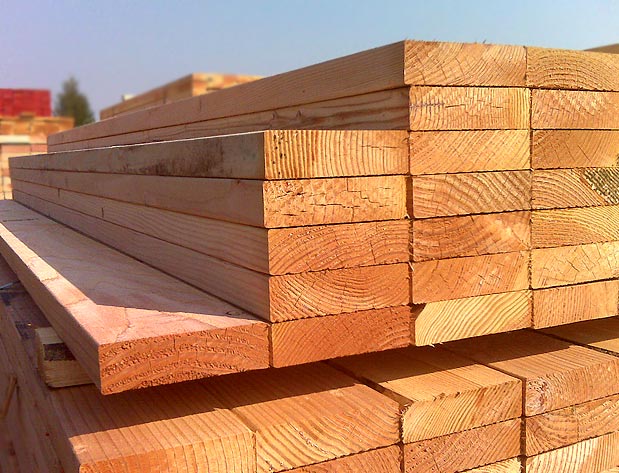
The price for Russian softwood lumber, denominated in US dollars, began to decline starting 2014, following the devaluation of the Russian ruble and the fall in world oil prices.

The decline in world market prices of lumber consumption continued throughout 2015 and at the end of 2015 the decline was 25% in average prices in 2014, while the Russian ruble depreciated by 69% against the US dollar during the same period. Continue reading "Declining trend for Russian softwood timber prices reversed in 2016"
US Trade Commission goes on with the potential import duties on Canadian lumber

The US International Trade Commission (USITC) will keep on with its investigation into antidumping and countervailing duties on imports of softwood lumber products from Canada after concluding that the country's imports harm US producers.

Thus, a countervailing duty determination will be made around Feb. 20, and a preliminary antidumping duty determination is scheduled on or before May 4. The probe comes after leaders of the U.S. lumber industry called on the commission to slap import duties on Canadian softwood lumber amid claims it is subsidized and being sold in the U.S. below fair market value, as reported by Construction Dive.

The US Lumber Coalition together with a group including Weyerhaeuser and Potlach as well as the Carpenters Industrial Council claim that the duties are needed as to offset the harm that was done to the US lumber mills by the Canadian softwood subsidies and dumping of that product in the US.

During January-August 2016, the imports of Canadian softwood lumber increased by 33% as compared to the same period of 2015.

According to Construction Dive, the decision to call for the probe was sparked by a deadlock in negotiations between lumber leaders in the U.S. and Canada last summer, with the two sides unable to strike a new softwood lumber agreement following 100 days of negotiations. Discussions reached a stalemate over the U.S.'s aim to reduce Canada's market share to 22% over a four-year period.

During the softwood trade disputes between Canada and the US, the homebuilders met higher lumber costs. Thus, the National Association of Home Builders held talks with public and private interests in Chile last fall as to discuss the posibllity of rising the exports of softwood lumber and other lumber products to the US. At the moment, Chile represents about 1.22% of the U.S. lumber market.

Sweden to compete with Russia on softwood timber exports to China?

As the rapid growth in softwood timber exports to China is showing no signs of slowing down, the Swedish Forest Industries Federation has predicted a 40% increase in 2016.

Imports of timber products into China has really taken off in recent years, far exceeding our expectations,” said Magnus Niklasson, “The indications are that the growth rate will be sustained, which is extremely positive for the future of Swedish sawmills.Continue reading "Sweden to compete with Russia on softwood timber exports to China?"

Wood pellets price in Switzerland kept on increasing at beginning of 2017

The average retail price for wood pellets in Switzerland went up in January 2017, reaching 375.1 CHF/t (349.53 EUR/t). This represents a 1.65% increase over December 2016 (369 CHF/t), but a 3.07% decrease as compared to January 2016. Continue reading "Wood pellets price in Switzerland kept on increasing at beginning of 2017"

DOMOTEX 2017: Innovations, trends and inspiration for wooden floors

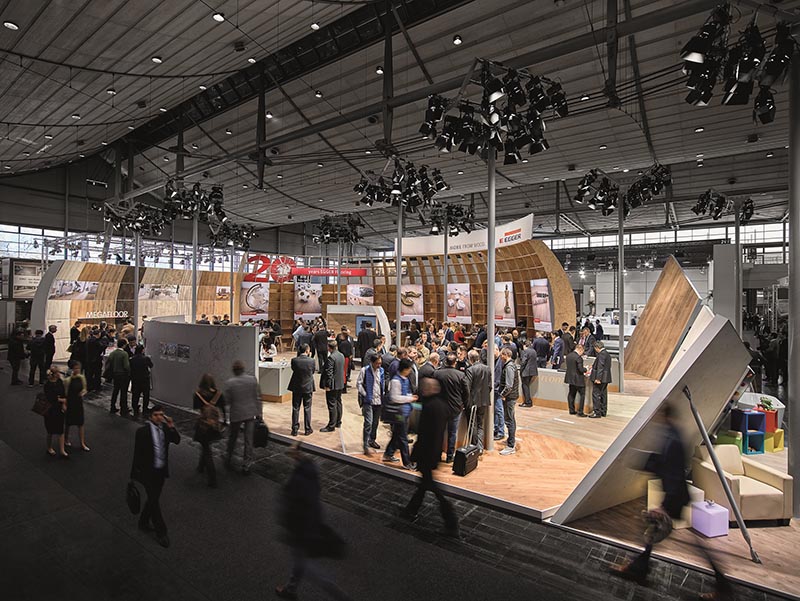
Spread across 12 exhibition halls, DOMOTEX 2017 will feature the world's biggest offering of carpets and floor coverings. The innovations on display span multiple product categories, including machine- and hand-made carpets, textile and resilient floor coverings, parquet, laminate and wood flooring, outdoor flooring solutions, and application and installation technology. DOMOTEX gives front and center stage to exhibitors' latest and greatest innovations, helping them get all the attention they deserve. "Thanks to the popular Innovations@DOMOTEX showcase, trailblazing materials, creative solutions and impressive designs are sure of attracting major attention at the show. Another highlight is the Young Designer Trendtable, where five up-and-coming European design studios are presenting their visions for the future of flooring while engaging in dialogue with interested attendees," said Dr. Andreas Gruchow, the Managing Board at Deutsche Messe in charge of DOMOTEX. "DOMOTEX serves as an early indicator of the trends preparing to sweep the market, thus generating valuable impetus and making innovations tangible," he added.

An overview of the leading must-see highlights of the show will be on display in the Innovations@DOMOTEX areas in halls 6, 9 and 17. These areas are artistically designed showcases that lend added prominence to specially selected product innovations submitted by DOMOTEX exhibitors. They function as a quick guide to DOMOTEX, giving visitors a good overview of what's hot at the show. Many of the 38 highlights selected by the jury this year feature highly authentic natural surface textures, materials and motifs. All of the products in the Innovations@DOMOTEX areas also score highly on sustainability.

Hitting our floors this season...

When it comes to wood flooring, natural is in. The in-vogue natural look comes in many shapes and forms, including vintage styling, complete with knot holes and shakes. The trend towards individuality is also still going strong, with multiple colors, shapes and textures available to create a whole range of exciting and distinct looks. There's also a trend towards longer and wider element dimensions and herringbone patterns. Meanwhile, laminate flooring is moving towards ever-more authentic-looking prints. The laying systems used for these products are also getting smarter, opening up a wider range of applications. Other key trends include authentic surface textures in the LVT segment and nature-inspired patterns in fitted carpets. Carpeting in tile and plank-form also continues to gain in popularity. In the carpets and rugs segment, there is strong demand for natural tones in understated shades of sand and stone, while, at the other end of the spectrum, vibrant colors and exuberant patterns are also on the up. In terms of installation and application technology there is a strong focus on sustainability, with many products boasting lower solvent levels, reduced environmental impacts and improved speed and ease of use.

Young designers on the hunt for tomorrow's trends

DOMOTEX takes in the future as well as the present. A case in point is a special showcase dubbed the "Young Designer Trendtable". In the lead-up to this event, five up-and-coming designers from Germany, France, the UK, the Netherlands and Turkey took up the challenge to sniff out tomorrow's trends in flooring. They will be presenting their visions of the future in Hall 9 at DOMOTEX from 14 to 17 January. Among other things, they will show how traditional craftsmanship can be integrated into modern manufacturing processes and how materials like marble and stone can be put to unusual uses. They will explore ways of combining hard and soft surfaces and map out flooring solutions for temporarily used spaces and rooms.

Big-name speakers, hot industry topics

As well as being a display platform for pioneering new creations, the Innovations@DOMOTEX area in Hall 6 is a stage for lectures and discussion groups (Innovations@DOMOTEX Dialogues) featuring high-power architects, interior designers and creatives. These experts will debate burning questions, such as "How can home living be made more human?" "What flooring solutions does tomorrow's world need?" "What sorts of settings do service providers need for their work?" and "How can optimized spaces set new standards in interior design?" Experts from Büro Caramel (Vienna), Sauerbruch Hutton (Berlin), Peter Haimerl. Architektur (Munich), Plajer & Franz Studio (Berlin) and the Stuttgart-based online shop InteriorPark will explore the flooring perspectives, prerequisites and opportunities that arise from these questions.

The Innovations@DOMOTEX Dialogues will kick off on Saturday, 14 January, with a richly informative keynote by multiple-award-winning Swiss designer Alfredo Häberli on "Future Living – the case for a human architecture". Each day's Dialogues will be followed by tours of DOMOTEX that will take in products and solutions relevant to the themes covered by the Dialogues. The program also includes guided tours of the displays of selected exhibitors. Offered twice daily, the guided tours will be led by experts in architecture and design.

Japan’s wood pellet demand to more than double in the next years

Japan reached the highest volume of wood pellet imports in July 2016, amounting to 52,000 tons. The previous high had been established in December 2015, when the imports’ volume rose up to 51,500 tons.

As a result, Japan is expected to finish 2016 having imported between 350,000 and 400,000 tons of wood pellets and producers around the world are optimistic that Japan’s wood pellet demand is set to rise steadily to 1 million tons per year within the next handful of years, Continue reading "Japan’s wood pellet demand to more than double in the next years"

China to boost wood biomass consumption in a move to replace coal

China plans to expand the upgrade of biomass energy in the next 5 years as to reduce coal consumption and improve the air quality. Continue reading "China to boost wood biomass consumption in a move to replace coal"

Barlinek plans to double production in Ukraine

Polish wood flooring producer Barlinek announced plans to double its production in Vinnitsa Ukraine with an investment of approximately EUR 30 million.

Thus, the number of employees should grow next year by about 300 people. To do this, Barlinek plans to double capacity at the site by developing 24 new species of wood flooring coatings.

"Now, our company is the largest parquet producer in Ukraine. With this increase capacity, it will be the largest in Europe", - said the General Director of "Barlinek Invest" Vinitsiush Ivanski.

Chairman of the Vinnytsia Regional State Administration Valery Cow says that a major drive for such a significant investment was the decision by the government to limit the export of roundwood. According to him, the company's decision to invest in this development is a response to the decision of the Ukrainian government aimed at striking the illegal timber trade in the market.

About Barlinek Invest

Ltd "Barlinek Invest" is a member of the Barlinek group, which is one of the world's largest manufacturers of three-layer parquet. In Vinnitsa, the company began its work in October 2007 and is an example of the effective use of investment capital. Investments in the construction of the plant in Vinnitsa was about $ 75 million. Today the company employs 761 people.

Illegal teak from Myanmar invades the European market

There has recently been released a report on the illegal importation of Burmese teak from Myanmar to the EU. Many of the companies have failed to show the source of the teak they were importing.

The Environmental Investigation Agency (EIA) has led a two-month undercover investigation during which they approached 9 importers working in 5 EU countries. The companies accused of not being able to show the source of the teak called the allegations unfounded.

The companies also argued that they cannot be held accountable for problems in a supply chain controlled by the Myanmar government, as reported recently by Mongabay.

The EU lift a ban on the timber exported from Myanmar in 2012 and the EIA acclaimed the government in August when leaders imposed a moratorium on all logging until March 2017 to allow the country’s forests to recover. Thus, all the wood going from Myanmar to the international markets must be from the existing stockpile.

The EU companies must trail back the timber to where it purchased and harvested, as to the comply with the EU Timber Regulation (EUTR). The EUTR is a set of laws intended to stop the flow of illegal wood into the EU that came into full effect in 2013.

According to the investigation, businesses operating in the Netherlands, Italy, Belgium, Denmark and Germany have failed to meet this obligation, but EIA forests campaigner Peter Cooper said that the problems don’t stop there. Cooper said it wasn’t only 9 companies involved in the issue and he cited a 2013 WWF report that found that 85% of timber leaving Myanmar should be considered illegal.

As reported by Mongabay, the EUTR requires that companies doing business with “high risk” countries that have systemic issues affecting their logging industries make sure that they are buying from legitimate sources. EIA did acknowledge that the importers they met with appeared to be trying to follow the rules, but that they had stopped short of looking further upstream in the supply chain than the chokepoint at which the Myanmar Timber Enterprise (MTE) controls all timber for export.

Yet, importers argued that this type of upstream investigation in Myanmar just isn’t possible, or appropriate.

In August Keflico “admitted to EIA that it is aware the Myanmar Timber Enterprise is providing it with parcels of teak claimed to originate from a single location when in fact these comprise logs from multiple areas with fake origin documents,” according to the EIA release.

We have no control over what the MTE offers for sale. We must assume that they are from the area they say and that they are legally cut,” said an agent of Teak Solutions.

Moreover, Crown Teak, a small Belgian firm that provides teak for “high-end” use in building cruise ships, yachts and resorts make monthly visits to sawmills in Asia to verify that all of the documentation is legally in order and that the logs they buy have been properly marked and graded, according to Mongabay.

Gold Teak Holdings, another company mentioned by EIA that provides teak to the Dutch market, insists that they obtain proper legal certification in the form of a “green book,” which includes export documentation from the Myanmar Forest Products Merchant Federation and certifies that the timber had been legally procured.

But EIA contends that these companies still aren’t doing enough, and the evidence they have gathered calls into question all teak from Myanmar. The agency believes that the teak from Myanmar can’t be legally on the EU market due to the high risk of illegality associated with timber from that country and the lack of transparency by its Government to allow access to information that might demonstrate compliance.


Hardwood pulpwood prices on the rise

The two Global Wood Fiber Price Indices were close to parity in the 3Q/16. The Hardwood Wood Fiber Price Index (HFPI) has rebounded by 5.6% from the 1Q/16 when it reached an 11-year low. The biggest price increases this year have been in Brazil, Indonesia, Australia and Chile where prices have gone up despite the strengthening of the local currencies. However, hardwood fiber prices have not gone up in all markets this year. Hardwood pulplog prices were lower throughout Europe, Eastern Canada and the US South.
Except for Russian pulpmills, which have by far the lowest hardwood fiber costs in the world, hardwood pulp-producing regions throughout North America, Europe and Latin America currently have wood costs ranging in a fairly narrow range between US$75/odmt to US$100/odmt. Five years ago, when the HFPI reached its all-time-high, this range was substantially wider at US$75/odmt to US$175/odmt.
Softwood chip and pulplog prices fell in the local currencies in much of Europe and North America which, together with a stronger US dollar against the Canadian dollar and the Euro, resulted in a decline of the Softwood Wood Fiber Price Index (SFPI) in the 3Q/16. The SFPI is currently close to the lowest level in over ten years. During the past 12 months, softwood fiber costs in US dollar terms have fallen the most in the US Northwest, British Columbia, France, Norway and Germany, while they have gone up the most in Brazil, New Zealand and Japan.

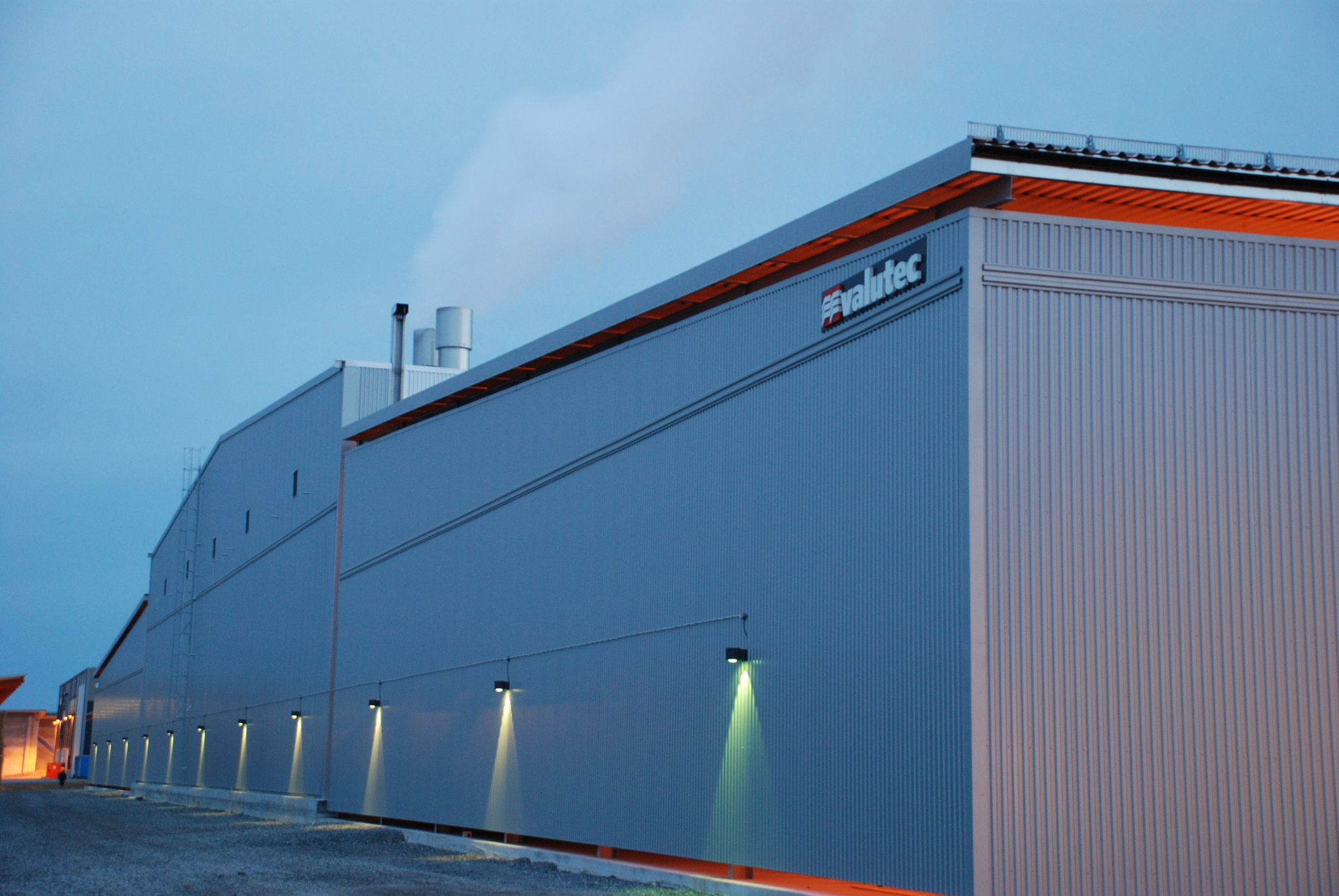
Valutec is expanding in the UK

Scottish sawmill Adam Wilson has invested in a new timber kiln from Valutec. The mill is located in Troon, Ayrshire. The Irish sawmill group Glennon Brothers purchased the sawmill three years ago and initiated an overhaul of the kilns. 

“This may usher in a trend similar to that in Central Europe, where we are seeing more and more companies choosing continuous kilns,” says Jon Lindberg, Sales Manager at Valutec.

“We have a tradition of collaboration with Glennon Brothers and so it’s great to get involved and be instrumental in their venture in Scotland. It’s an important delivery for us,” says Jon.

The kiln is an OTC continuous kiln and has a capacity of approximately 50,000 cubic metres per year. It is equipped with a heat recovery system, pressure frames and Valutec’s Valmatics control system. It will be used to dry boards and planks to a target moisture content of 20 per cent.

“The capacity of sawmills is increasing and continuous kilns are often a sensible choice for medium-sized and large sawmills, thanks to their high capacity and good operating economy,” says Jon.

Annual production in the UK is 3.8 million cubic metres of sawn lumber, compared with 2.5 million in Norway and 18 million in Sweden.

Softwood timber prices on the rise in Austria

Prices for softwood lumber in Austria rose slightly for almost all assortments. There are some exceptions: edged and rough boards, and boards in 28 mm. For the other products, prices have increased over December 2016 up to a maximum of 2 euros. The highest rise was registered for boards in 4-6 m length.
As compared to January 2016, prices are higher by 1 to 5 euros. Edged boards, however, are a bit cheaper. The lower price limit also stands above last year levels. But in general softwood lumber prices in Austria rise at the beginning of the year.

Softwood Lumber Spruce/Fir January 2017 December 2016 January 2017 Change Jan. '17 to '16
€ / cbm EXW
Edged Boards, 0-IIIa, 23 mm + 229-244 231-243 230-241 +1 / -3
Rough boards in fixed dimensions, 18-22 mm 228-240 231-240 230-240 +2 / -
Squared timber, standard dimensions, I/II, 4-6 m 206-216 209-216 210-217 +4 / +1
Reserve squared timber, II/III 150-158 153-160 154-161 +4 / +3
Boards, III-IV, 8-16 cm, 4-6 m 145-151 146-150 147-154 +2 / +3
Boards, III-IV, 8-16 cm, just 4 m 147-153 147-154 149-155 +2 / +2
Boards, III/IV, 23 mm, 4-6 m 146-152 149-154 150-155 +4 / +3
Boards, III/IV, 28 mm +, 3-6 m 151-158 157-164 155-163 +4 / +5

Sveza looks into North Africa for new plywood markets

Sveza is exploring opportunities in the North African market. The company took part in SIB-2016, the International construction fair in Casablanca, Morocco at the end of November 2016.

According to the announcement, the company presented standard plywood with interior and exterior glue, and the Sveza Deck 350, Sveza Paint, and Sveza Color plywood.

Olga Milovanova, Sveza’s Manager for Construction Segment Product Development, commented:

“We had an exhibition booth together with our distributor, Сomarbois. When we gave our presentation on Sveza products before the exhibition, people were interested most of all in the properties of birch. For North Africa, birch plywood is a relatively unknown product. Local construction companies most often handle either plywood from mixed species of wood, or plywood from Latin America. Our task has been to show that birch is a strong, durable material that has unique physical and mechanical properties.”

Earlier Sveza established a new plywood standard for a concrete construction.

About Sveza:

The group is one of the leading players in the woodworking market. It produces high-quality plywood of natural Russian birch and hold a global leadership in this area. It is reported to be the world’s largest producers of natural Russian birch plywood.

HMS Holzindustrie invests into a new pellet production in Germany

HMS Holzindustrie, a German wood processing company, plans to invest EUR 6  million into a new wood pellet production facility at the company’s sawmill in Hagenow, Mecklenburg-Western Pomerania, Germany. Continue reading "HMS Holzindustrie invests into a new pellet production in Germany"

Stable Swedish softwood timber exports in Jan.-Sep. 2016

During January-September 2016, Sweden has exported about 9,7 million m3 of softwood timber.

As compared to the same period of 2015, this represents a 1% increase. Most of the exports to the world decreased or stagnated.

Main export markets for the Swedish softwood timber were the United Kingdom and Egyptfollowed by Germany and Denmark.

The exports to Egypt dropped the most, by -10% over January-September 2015, down to a volume of 872,619 m3. Also, the exports to Germany dropped by -4%, to 739,509 m3. Exports to the UK remained the same, at 2 million m3, while the exports to Denmark rose by 12%.

Swedish softwood timber exports increased in countries such as China (+40%), reaching a volume of 540,013 m3, and Japan (+16%) where they rose to 551,223 m3.

The Swedish timber shipments to the European Union countries increased by 3%, with 5 million m3 exported during January-September. Yet, the exports to North Africa and the Near and Middle East decreased by -10% and -11%, respectively.

TOP 10 Destinations

Softwood Timber exported from Sweden to... (in m3 )

Destination January-September 2015 January-September 2016 Change in %
United Kingdom
2,058,934 2,063,240 0 %
Egypt
965,480 872,619 -10 %
Germany
770,975 739,509 -4 %
Denmark
638,937 712,768 12 %
Norway
710,848 700,713 -1 %
Netherlands
651,671 674,074 3 %
Japan
475,361 551,223 16 %
China
386,940 540,013 40 %
Algeria
449,587 407,056 -9 %
Morocco
342,915 297,753 -13 %
European Union  5,128,034  5,298,391  3%
NORTH Africa  1,884,644  1,699,441  -10%
NEAR and MIDDLE East  463,268  411,674  -11%
TOTAL  9,595,512  9,737,169  1%

Metsä Wood sells its wood element business to Lapwall Oy

Metsä Group's Wood Products Industry Metsä Wood sells its wood element business located in Pälkäne, Finland, to Lapwall Oy. The transaction is expected to be finalized by the end of January. Personnel of the wood element business will in its entirety transfer to the new owner's payroll.

In connection with the transaction the parties agreed on a multiyear contract concerning Kerto® LVL and spruce plywood deliveries. "Lapwall is an important partner for us, with whom we develop the wood construction ecosystem," says EVP Esa Kaikkonen from Metsä Wood. T

The divestment does not have a material financial impact on Metsä Group, as the company stated.

As reported by GWMI, recently Metsä Wood sold its Hartola glulam factory to Versowood.

Arauco plans large lumber shipments to Japan in 2017

Arauco, the largest Chilean radiate pine lumber supplier, announced 2017 plan of bulk ships for green lumber for Japan. It plans eight ships in 2017, the same as 2016 with the volume of 144,000 cbms. It has two additional ships as option in case the demand picks up. Continue reading "Arauco plans large lumber shipments to Japan in 2017"

Newsletter

Subscribe to our digital newsletter for your daily digest of essential news, views and analysis from the international wood industry delivered directly to your inbox.


0