

The 25th European Biomass Conference and Exhibition (EUBCE) will be co-chaired by Lena Ek (Sweden), President of Södra, and Henrik Ehrnrooth (Finland), Chairman of the Board of Pöyry, helping to ensure an optimum combination of Swedish and Finnish influences in the production and utilisation of biomass.
The event takes place from the 12 to 15 June 2017 at Stockholmsmässan in Stockholm and the Nordic countries have much to gain and to offer when it comes to boosting the potential of biomass.
Lena Ek is the President of Södra Skogsägarna, an economic association with 50000 members that together own 36000 forest farms. Lena Ek will be the first woman to be co-chair of the EUBCE conference and is also Chairperson of the Board of the Forest-based Sector Technology Platform. She has for many years been a leading figure within the political scene in Sweden and Europe and is well respected by all political parties for her in-depth knowledge on the bioeconomy and on environmental and economic issues.
Previous to her role as President at Södra Skogsägarna, she served as the Swedish Minister of the Environment and Energy while a member of the Swedish Parliament, representing the Centre Party. She has also been a member of the European Parliament, representing the Centre Party. Lena also serves as a Board Member at the Royal Institute of Technology (KTH).
Henrik Ehrnrooth is currently Chairman of the Boards of Pöyry PLC and a Chairman of the Climate Leadership Council since 2016. Pöyry is an international consulting and engineering firm that serves clients globally across the energy and industrial sectors and provides local engineering services in its core markets. Its focus sectors are power generation, transmission and distribution, forest industry, chemicals and biorefining, mining and metals, transportation and water.
He is also, since 2014, Chairman of the Board of Otava Group Ltd. He previously served as Chairman of the Board of Caverion Corporation as well as Board Member of APSD AS and has also been Chairman of the Board of YIT Corporation. Henrik has been a Member of the Board of the Marcus Wallenberg Foundation, Sweden, since 2008.
Swedish partners of the EUBCE are KSLA (The Royal Swedish Academy of Agriculture and Forestry) and SLU (Swedish University of Agricultural Sciences) in collaboration with the think-tank Global Challenge (Global Utmaning).
EUBCE is a major international conference for the biomass sector, combined with a technology exhibition. For more than 30 years, it has been serving as the annual meeting point for biomass experts from research, development and the industry. With presentations addressing the latest technologies, the policy framework, and the medium and long-term strategies and potentials, EUBCE acts as the interface between science, industry and policy makers.
The EUBCE programme has been established by its Scientific and Industry Committee comprising 140 international biomass experts. At 2016 EUBCE more than 3,700 authors and co-authors from 80 countries around the world were involved in preparing abstracts for contributions while 780 keynote, plenary, oral and visual presentations were held during the event. The EUBCE Conference programme is coordinated by the European Commission Joint Research Centre.
Article archive
Planting restrictions in South Africa lead to timber shortage

South Africa's government’s stringent restrictions on the issuing of forestry and planting permits caused timber shortage. Continue reading "Planting restrictions in South Africa lead to timber shortage"
UK timber imports at highest peak for the last 9 years
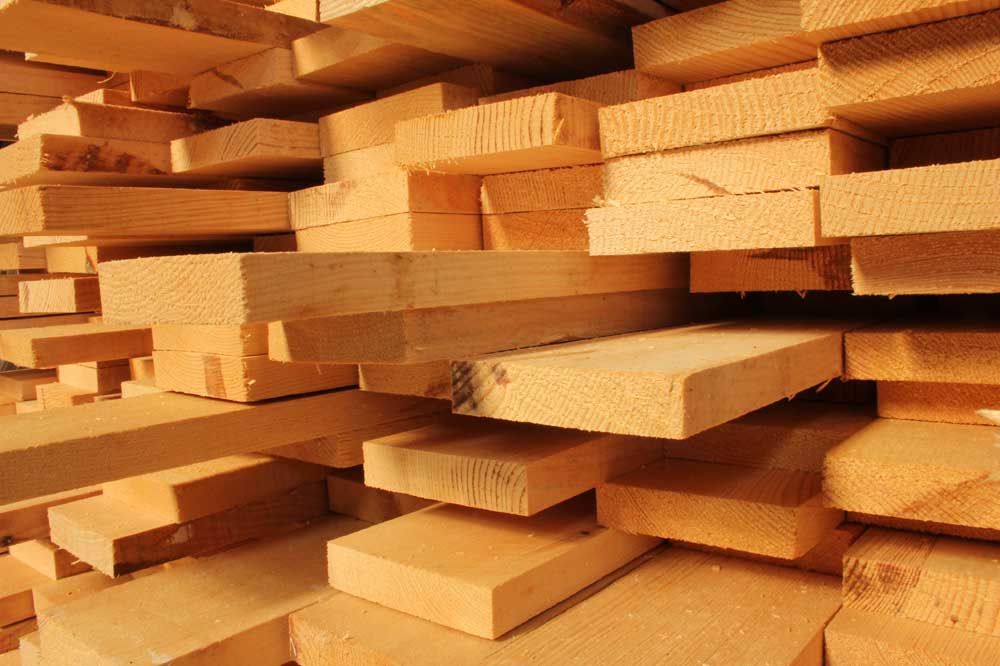
UK's imports of timber and panel products are at their highest level for the last 9 years. The provisional amounted to a volume of 9.8 million cubic metres of the main timber and panel products in 2016. Continue reading "UK timber imports at highest peak for the last 9 years"
Swiss wood pellets prices slightly decrease during March

Wood pellets' average price in Switzerland decreased in March 2017, as compared to last month and the same period last year. Continue reading "Swiss wood pellets prices slightly decrease during March"
Woodworking machinery industry in Germany back to pre-crisis levels

Germany’s woodworking machinery manufacturers had a record year in 2016, topping the all-time high of 2007. Provisional figures indicate that the industry surged past the forecast 5 percent mark to achieve double-digit sales growth. Continue reading "Woodworking machinery industry in Germany back to pre-crisis levels"
European lumber gains market shares in China and Japan

Over the past year, European sawmills have continued to take market share in China, Japan and other countries in East Asia. Continue reading "European lumber gains market shares in China and Japan"
New record for the US hardwood exports to China
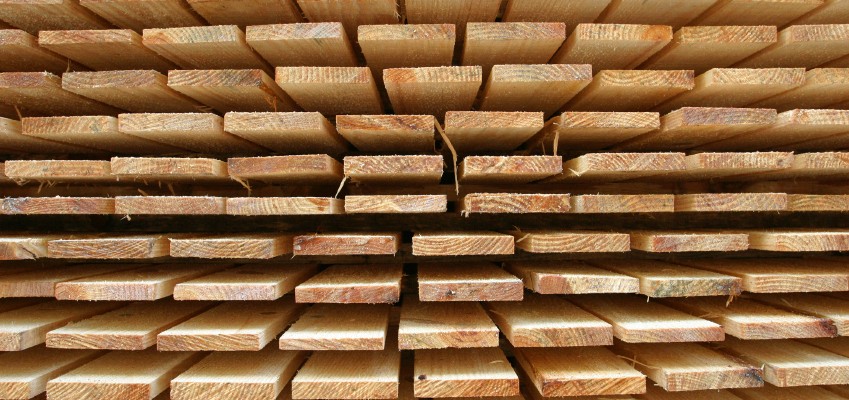
The period from January-November 2016 showed another record for US hardwood exports to SEA & Greater China, which increased by 18.1%, as compared to the same period of 2015. The uptick was mainly driven by Mainland China. Continue reading "New record for the US hardwood exports to China"
Germany: Wood pellet production falls below 2 million tonnes in 2016
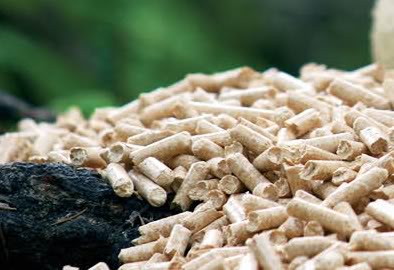
The German wood pellet industry fell short of expectations during 2016, due to the low oil price, which has slowed down the advancement of wood pellets as a solution for heating in Germany. Continue reading "Germany: Wood pellet production falls below 2 million tonnes in 2016"
FLEGT license offers big opportunities for Indonesian plywood on the EU market

The Global Timber Forum has published an interview with the CEOs of two European importing companies, Alexander de Groot of Fepco and Koen de Witte of Altripan, that were among the first to receive FLEGT licensed wood from Indonesia.
The interview highlights both the market opportunities and remaining challenges of FLEGT licensing from the perspective of two of Europe’s largest plywood importing companies.
According to Alexander de Groot, FLEGT licensing offers a significant market opportunity for Indonesian plywood in Europe as due diligence is no longer required and buyers can be absolutely certain that all Indonesian wood comes from legal sources.
Koen de Witte said that a large group of customers in Europe have been afraid of buying tropical wood because of possible EUTR problems and related negative publicity but that FLEGT licensing means importers can now start promoting tropical wood to these companies again.
Koen de Witte noted that products from Indonesia are rather expensive compared to competing materials from China or Malaysia and that logistics can be a challenge, however FLEGT licensing offers an opportunity to promote Indonesian plywood as a legal and high quality, sustainable product. He said that Indonesia will also have an increasing advantage over time as EU Competent Authorities are getting stricter and there are more checks on operators.
Koen de Witte said that there has yet to be any perceptible increase in demand from their own customers for FLEGT licensed timber, but “arrivals of wood from Indonesia have increased over the last few weeks as importers and traders are stocking up on FLEGT licensed material”.
He also emphasised that it is early days and companies like Fepco and Altripan will now push to increase sales with active promotion and by making the more product available in the market.
Koen de Witte reckoned that Indonesian wood products are competitive in Europe and their market share will increase - although this will be partly dependent on developments in competing products which, for Indonesian plywood, are mainly from Russia and China.
He suggested that “the great variety of products from China – in very different qualities and not always correctly declared – is making life difficult. But there are initiatives now to increase transparency and show customers how the plywood is made and what the differences are. This will improve Indonesia’s position”.
Alexander de Groot emphasized that European governments also have a responsibility now to help promote FLEGT licensed wood. He suggested that FLEGT should, for example, immediately be incorporated in public procurement rules and given the same status as FSC or PEFC.
He noted that “one of our customers just had a case in Luxembourg, where authorities would not accept FLEGT licensed wood on a bid for a public building project – they only wanted FSC. This situation cannot continue - if European governments are not behind FLEGT this will sabotage the process”.
Both CEOs confirmed that of their own customers, the larger distribution groups and merchants in Europe are already familiar with the FLEGT process, but as large corporations their decision-making processes are fairly slow so it might take some time before they start purchasing more FLEGT licensed wood. Smaller merchants are generally less aware of FLEGT.
At present importers are still more inclined to prefer FSC and PEFC, particularly in the UK and the Netherlands, but here merchants are quickly becoming aware of the importance of FLEGT licenses. France, Belgium and Germany are more difficult as companies there use less certified wood in general and interest in FLEGT is perceptibly lower.
While recognizing that their Indonesian suppliers had to work extremely hard to achieve FLEGT licensing, both CEOs said that from the perspective of European importers the process has been very simple. The importers only had to register to obtain a FLEGT license number and the rest was pretty much what they always had to do when importing wood.
For them it basically comes down to uploading some information on a website and is much simpler than having to conform to EUTR due diligence requirements.
Overview of the Russian market of wooden I-beams

Russia has two types of production for wooden I-beams: industrial formwork and frames/floor slabs in the private and agricultural construction.
According to What Wood, kiln-dried softwood lumber is used for the production of wooden I-beams, which is glued with a slab made out of OSB, plywood, particleboard or LVL.
In the industrial formwork, the consuming sector uses rougher and cheaper I-beam. Also, complete sets of formwork are rented to construction companies through dealers. The production lines of this kind are owned by large holding companies who are in the construction industry (PERI, Promstroykontrakt), where the demand is linked to the volumes of industrial construction.
PERI has made the largest investment in the sector, once with the launch of a I-beams production plant in September 2015, in Noginsk (Moscow region). The plant has a capacity of 2.15 million linear metres of I-beams per year. Investors are already planning to replace some equipment and to install additional machinery. The company uses press of its own design, as What Wood reported.
In the segment of frames and floor slabs in the private and agricultural construction, including long-span structures, I-beams are produced by housing construction companies most of the time. A lot of manufacturers use homemade equipment and thus they don't certify the I-beams.
The demand in this sector has increased in the past five years, because the product has the ability to use long-span structures, light weight, and ease of installation.
As What Wood reported, with increasing awareness of the product, the demand will follow, and the Ibeam will be able to occupy some niches, according to industry players. On the other hand, the market of housing construction in Russia sank in response to the crisis (as much as by 50%, according to some players), and numerous companies have stopped production.
This makes the demand for construction I-beams postponed: consumers already know about the product, but the consumption will be able to grow only with the restoration of the construction dynamics.
“We have two direct competitors in the region, one company in the North and another on the Riga highway direction: production load of the first one in 2016 amounted to 65%, of the other - to 27%. The downfall of the industry as a whole, of course, is obvious: in the first half of the year, the market has lost 1160 construction companies and associations. The purchasing power is down in the private housing”, as said the manager of one of the companies producing I-beams in the Moscow region.
| Company | Region | Annual rated capacity, thousand linear metres |
| PERI | Moscow | 2150 |
| PromStroyKontrakt (PSK) | Moscow | n/a |
| Attik-Kirov | Kirov | n/a |
| InterCity | Moscow | 250 |
| TD Platforma | Perm | n/a |
| GBS Company | Moscow | 180 |
| RION | Moscow | 1460 |
| SipDomstroy | Moscow | 200 |
| Karkas Komplekt | Moscow | 600 |
| DARN | Moscow | 500 |
Weyerhaeuser plans to invest US$ 300 million in its wood products business in 2017

Weyerhaeuser Co. is planning capital expenditure on its wood products business of some US$300 million in 2017, with US$135 million planned for timberlands.
The company’s CEO Doyle Simons told analysts in a financial conference call on Feb. 3 the $300 million “is in line with what we've done over the last couple of years,” adding that the primary focus in the wood products operation “is low-risk, high-return projects that drive down our overall cost structure. . . . With that said, some of those projects do in fact result in de-bottlenecking and additional capacity.”
Simons noted Weyerhaeuser is in the process of rebuilding two sawmills, Dierks, Arkansas, and Millport, Alabama. The mills, he said, had been “really good mills for us historically. But in order to significantly drive down the cost structure of those mills, we essentially needed to rebuild them in place. That will result in some additional capacity as well.”
While the primary focus is on the cost side, Simons said, “We will be increasing capacity as a result of some of the projects that we put in place.”
Simons said, in response to a question about the level of capital expenditure: “I don't want to give you the sense that this $300 million of capital is going to be the level forever. We think there's a couple more years of spending at this level to get our mills fully positioned to where they need to be from a cost perspective, and then you would see capital fall off to a more normalized level in the $200 million to $250 million range.”
Asked whether Weyerhaeuser was taking steps to rebalance capacity between the U.S. and Canada in its system, in light of the threat of lumber duties against Canadian lumber imports, Simons said no.
About one third of Weyerhaeuser’s Canadian production is sold in Canada, and one-third is sold offshore, with one third going to the US, he noted. “Overall, our Canadian lumber operations is roughly 20% of our overall lumber operations, so you take that 20%, times one third, it's not a big part of the driver for our lumber operation,” he said.
Wood products contributed $99 million to Weyerhaeuser’s fourth-quarter earnings, and $512 million to full-year 2016 earnings, the segments’ strongest annual earnings since 2005.
Mohawk Industries to close wood flooring plant due to poor market conditions
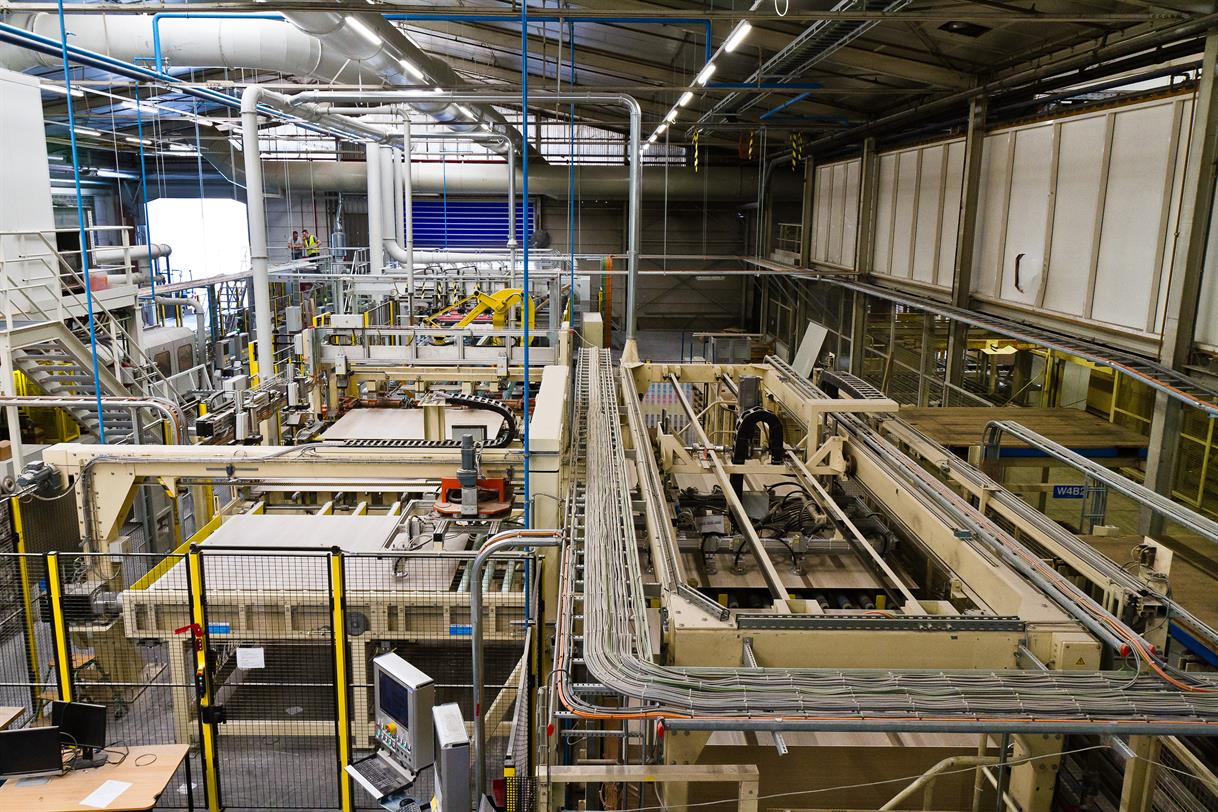
US flooring giant Mohawk Industries will permanently close its manufacturing plant in Holden, West Virginia on May 6 - laying off the plant's 111 employees. The company cited a reduced solid wood flooring market and a desire to consolidate operations as reasons for the closing.
“Mohawk has a comprehensive product offering, and we align our operations with changing consumer preferences,” said Gary Lanser, president of Mohawk’s laminate and hardwood business. “As the style and performance of our engendered wood, laminate and luxury vinyl tile collections have improved, consumers are gravitating to those innovative products, which has reduced market share for solid wood flooring.”
Mohawk produces floor covering products for residential and commercial applications in North America and residential applications in Europe. The company manufacturing portfolio consists of soft flooring products (carpet and rugs), hard flooring products (ceramic tile, natural stone and hardwood flooring), laminate flooring, sheet vinyl and luxury vinyl tile. Mohawk employs over 34,000 in operations in Australia, Brazil, Canada, Europe, India, Malaysia, Mexico, New Zealand, Russia and the U.S.
Already focusing on solid wood production, Mohawk’s facility in Melbourne, Australia was recently expanded to manufacture engineered wood flooring. Lanser said that the Melbourne facility would satisfy Mohawk’s solid wood demand and anticipated no interruption of service to Mohawk’s customers.
Despite the plant closing, Mohawk's sales are up, with net earnings of $234 million in the fourth quarter. Hard surface sales, which includes laminate, wood and vinyl, as well as the hot category of luxury vinyl tile (LVT), are dramatically expanding.
US softwood lumber prices drop but still way higher than last year

Prices of framing lumber weakened by varying degrees. Trading ranged from a standoff between buyers and sellers, such as in green Douglas Fir, to a free-fall, as was the case in Western S-P-F. A second week of sharp double-digit drops in the latter left some key prices at about at 50% retracement from the peaks of their recent run. Continue reading "US softwood lumber prices drop but still way higher than last year"
Strong growth in US engineered wood flooring imports

Strong growth in engineered wood flooring imports US imports of hardwood wood flooring decreased in 2016, while assembled flooring panel (engineered flooring) imports were up.
Hardwood flooring imports fell 15% to US$40.5 million in 2016. The largest drop was in imports from Malaysia, which were down almost 40% from 2015.
Imports from Malaysia were worth US$6.3 million in 2016, compared to US$9.1 million from Indonesia and US$9.7 million from China.
Imports from Indonesia were also lower than in 2015, while China’s shipments grew 11%.
Engineered flooring imports were worth US$164.6 million in 2016, up 21% from 2015. Imports from China were up 25%, and China accounted for 46% of US assembled flooring imports.
Most other suppliers also benefited from higher US imports in this wood flooring category. Assembled flooring imports from Indonesia increased 21% to US$8.1 million in 2016.
Engineered wood flooring imports
| 2016 | Year on year Change |
| Total imports | 21% |
| China | 25% |
| Canada | 1% |
| Indonesia | 21% |
| Thailand | 30% |
| Brazil | 2% |
| Other | 41% |
Sweden exports more softwood lumber in 2016

Swedish sawmills have increased their exports of sawn and planed softwood lumber by 1%, to just under 13 million cbm in 2016. Continue reading "Sweden exports more softwood lumber in 2016"
US sawmills increased their softwood lumber output y-o-y

U.S. softwood sawmills increased production by 3.4% in 2016 to 32.722 billion board ft. (bbf), up from a full-year total of 31.643 bbf in 2015.
Of the 2016 total, Western U.S. sawmills accounted for 13.884 bbf, an increase of 2.6% from 13.531 bbf in 2015, while sawmills in the South contributed 17.342 bbf – up 4.1% from 16.661 bbf, according to data released on March 8 by the Western Wood Products Assn. (WWPA) of Portland, Oregon.
In December alone, U.S. sawmills produced 2.459 bbf, a decline of 2.4% from 2.521 bbf in December 2015, and down 7.3% from output in November 2016 of 2.653 bbf, WWPA reported.
Western sawmills contributed 1.055 bbf to December’s production, a year-over-year increase of 0.7% from 1.047 bbf, but down 6.3% from production in November of 1.126 bbf.
Sawmills in the South produced 1.292 bbf in December, down 4.9% from 1.358 bbf in December 2015, and down 8.1% from November’s production volume of 1.406 bbf.
Apparent U.S. softwood lumber consumption increased by 9.7% to 48.341 bbf in 2016 from 44.082 bbf in 2015. In December, consumption was 3.614 bbf - up 1.2% from 3.572 bbf in December 2015, but down 4.9% from 3.801 bbf in the month before.
Canadian softwood lumber production/consumption
Canadian sawmills produced 28.335 bbf of softwood lumber in 2016, up 6.2% from 26.687 bbf in the previous year.
Sawmills in British Columbia accounted for 13.559 bbf of the year’s production, an increase of 2.6% from 13.214 bbf in 2015. Sawmills East of the Rockies contributed 14.775 bbf, up 9.7% from 13.473 bbf in 2015.
In December 2016, Canadian sawmills produced 2.023 bbf, a year-over-year drop of 7.8% from 2.193 bbf, and down 18.9% from November’s production volume of 2.493 bbf.
Sawmills in British Columbia produced 937 million board ft. (mmbf) of softwood lumber in December, a 13.9% drop from 1.089 bbf in December 2015 and down 18.1% from 1.145 bbf in the previous month. Sawmills East of the Rockies produced 1.085 bbf in December, a year-over-year drop of 1.7% from 1.104 bbf, and down 19.5% from 1.349 bbf in November.
Apparent Canadian softwood lumber consumption advanced 8.8% to 9.557 bbf in 2016, up 8.8% from 8.787 bbf in 2015. Consumption in December at 569 mmbf was down 11.8% from 645 mmbf a year earlier, and down 39.9% from 946 mmbf in November.
U.S. and Canada utilization/inventories
U.S. production as a percentage of total capacity averaged 86% in 2016, up from 83% in 2015, while the percentage in Canada rose to 90% from 86%.
U.S. inventories dropped 1.6% in December 2016 to 3.009 bbf from 3.060 bbf in December 2015, while Canadian inventories fell 4.0% to 2.840 bbf from 2.957 bbf.
Trade envoy for British Columbia says the US still needs time for new softwood lumber talks

British Columbia announced that the province is ready to fight for its lumber producers in the trade war on softwood lumber with the US. Continue reading "Trade envoy for British Columbia says the US still needs time for new softwood lumber talks"
Oregon lawmakers want to reintroduce the Timber Innovation Act

Oregon lawmakers have joined Senate and House for reintroducing the bipartisan Timber Innovation Act. Continue reading "Oregon lawmakers want to reintroduce the Timber Innovation Act"
After Hornbach and Leroy Merlin, Brico Depot ends collaboration with Holzindustrie Schweighofer

Brico Depot Romania has announced on the 9th of March that it stopped the timber products supply from the Austrian manufacturer Holzindustrie Schweighofer. Continue reading "After Hornbach and Leroy Merlin, Brico Depot ends collaboration with Holzindustrie Schweighofer"
New Zealand’s exports of logs to India dropped by 62% due to currency issues

New Zealand's exports of logs to India have decreased by 62% year-on-year, for fear of falling demand in India.
Continue reading "New Zealand’s exports of logs to India dropped by 62% due to currency issues"

