

British Columbia's forestry companies are currently facing a long-term decline in annual allowable cut in the Interior, due to the mountain pine beetle infestation. Yet, companies on the coast have reached record volumes in raw logs exports, especially to China. Continue reading "British Columbia log exports to Asia reach record levels"
Article archive
Resolute files lawsuit against Greenpeace for false claims

Resolute Forest Products is filing a lawsuit against Greenpeace, stating the environment conservation group has been slanderous in its claims against the forestry company.
The new public relations offensive by Montreal-based Resolute Forest Products focuses on free-speech arguments Greenpeace has advanced as it seeks to have a $300-million lawsuit tossed without a hearing on its merits.
“This is the most significant development in the four-plus years of this saga,” Resolute vice-president Seth Kursman told The Canadian Press. “Greenpeace has admitted that they were lying about our forestry practices. Their campaign has been peddling falsehoods.”
In its fight to stop the company’s lawsuit in Georgia, Greenpeace argues in a recent court filing that its criticism of Resolute’s logging practices in Canada’s boreal forests should be viewed through the prism of free speech rather than taken literally.
RFP has deliberately ignored the context and tried to take the criticism as “absolute” statements of scientific fact rather than as advocacy, Greenpeace argues.
“Speakers who engage in protected expression on matters of public controversy _ like Greenpeace here _ often use forceful language to make their point,” Greenpeace states.
“They do not hew to strict literalisms or scientific precision, but regularly use words ‘in a loose, figurative sense’ to express ‘strong disagreement’ … and attack their intellectual opponents through ‘rhetorical hyperbole’.”
Tom Wetterer, Greenpeace general counsel in the U.S., said in an interview from Oregon on Monday that Resolute’s “lying” claim was “absolutely not true.”
In a years-long campaign, Greenpeace publicly accused Resolute of unsustainable logging in northern Ontario and Quebec that threatens endangered and other wildlife, contributes to climate change, and ignores indigenous peoples.
Growth of US wood pellets exports to the European Union slows down in 2016

After years of booming growth, US wood pellets exports to the European Union countries were still on the rise in 2016 but at a slower pace as compared to the previous years.
The EU countries imported 15% more wood pellets from the US during the mentioned period, as compared to the corresponding time of 2015.
The UK is the top importer of US wood pellets and its imports increased by 16% during 2016 amounting to 3.3 million tonnes.
According to the Eurostat latest statistics, Belgium's wood pellets imports from the US reached 515,482 tonnes.
Belgium's imports dropped by -6% as compared to 2015, when the country imported 548,958 tonnes of wood pellets from US.
France increased its wood pellets imports from the US up to a total volume of 72,987 tonnes, as opposed to the 12,917 tonnes from the mentioned period of last year.
Wood pellets imported from USA by... (in tons )
| Importing Country | 2015 | 2016 | Change in % | |||
Total |
3,930,597 | 4,512,544 | 15 % | |||
|
3,253,463 | 3,789,984 | 16 % | |||
|
548,958 | 515,482 | -6 % | |||
|
28,367 | 94,395 | 233 % | |||
|
12,917 | 72,987 | 465 % | |||
|
37,351 | 22,091 | -41 % | |||
|
49,542 | 17,604 | -64 % |
EU’s energy consumption from renewable sources doubled in 2015

In 2015, the share of energy from renewable sources in gross final consumption of energy reached 16.7% in the European Union (EU), nearly double 2004 (8.5%), the first year for which the data are available.
The share of renewables in gross final consumption of energy is one of the headline indicators of the Europe 2020 strategy.
The target to be reached by 2020 for the EU is a share of 20% energy from renewable sources in gross final consumption of energy.
However, renewables will continue to play a key role in helping the EU meet its energy needs beyond 2020. For this reason, Member States have already agreed on a new EU renewable energy target of at least 27% by 2030. These figures come from an article issued by Eurostat, the statistical office of the European Union.
Highest share of renewables in Sweden, lowest in Luxembourg, Malta and the Netherlands
Since 2004, the share of renewable sources in gross final consumption of energy grew significantly in all Member States. Compared with a year ago, it has increased in 22 of the 28 Member States. With more than half (53.9%) of energy from renewable sources in its gross final consumption of energy, Sweden had by far in 2015 the highest share, ahead of Finland (39.3%), Latvia (37.6%), Austria (33.0%) and Denmark (30.8%). At the opposite end of the scale, the lowest proportions of renewables were registered in Luxembourg and Malta (both 5.0%), the Netherlands (5.8%), Belgium (7.9%) and the United Kingdom (8.2%).
The Netherlands and France: furthest away from their goals
Each EU Member State has its own Europe 2020 target. The national targets take into account the Member States' different starting points, renewable energy potential and economic performance.
Among the 28 EU Member States, eleven have already reached the level required to meet their national 2020 targets: Bulgaria, the Czech Republic, Denmark, Estonia, Croatia, Italy, Lithuania, Hungary, Romania, Finland and Sweden. Moreover, Austria and Slovakia are about 1 percentage point from their 2020 targets. At the opposite end of the scale, the Netherlands (8.2 percentage points from reaching its national 2020 objective), France (7.8 pp), Ireland and the United Kingdom (both 6.8 pp) and Luxembourg (6.0 pp) are the furthest away from their targets.
Peru: Latest prices for exported wood products

Below there is a list of the latest prices for Peru's exported wood products, available between 16 to 28 February 2017.
Continue reading "Peru: Latest prices for exported wood products"
Chinese logs and sawnwood prices in main timber markets
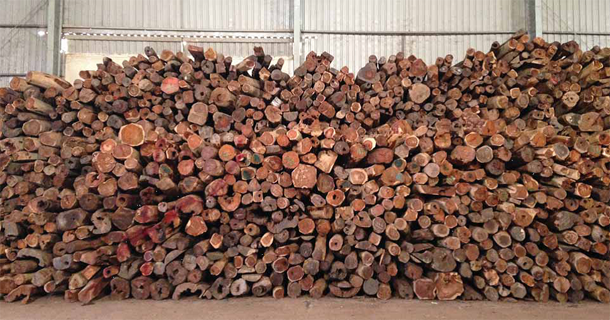
The report below contains the latest prices of logs and sawnwood from main timber markets in China (16-28 February 2017)
Continue reading "Chinese logs and sawnwood prices in main timber markets"
Quebec, Ontario press Ottawa for loan guarantees to help sawmills pay expected US softwood lumber duties

Canada's lumber industry is in a stronger position to weather a U.S. trade battle than it was during the last major clash a decade ago, but smaller Quebec and Ontario producers would be particularly vulnerable to duties that may arrive within weeks, industry observers say.
B.C. producers such as West Fraser Timber, Canfor and Interfor have hedged their bets, purchasing sawmills in the U.S. primarily in the years when there was a truce over softwood. They've also seen softwood exports to China grow, giving them some degree of protection against tariffs that the U.S. could impose as early as May. Continue reading "Quebec, Ontario press Ottawa for loan guarantees to help sawmills pay expected US softwood lumber duties"
Hardwoods Distribution to acquire Eagle Plywood and Lumber
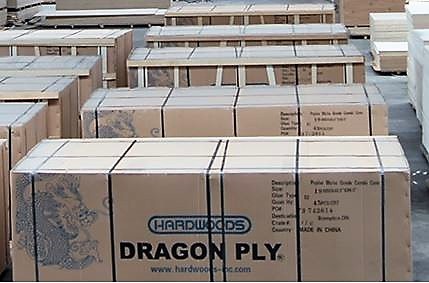
Hardwoods Distribution Inc. announced that it has, through its' subsidiary Rugby Holdings LLC purchased substantially all of the assets and assumed certain liabilities of Eagle Plywood and Lumber for a total value of US$0.4 million plus up to an additional US$0.2 million.
Eagle is a single site wholesale distributor located in Dallas, Texas, with estimated annual sales of US$5.0 million, distributing non-structural architectural grade building products to customers that supply end-products to the commercial, industrial, retail, residential and institutional construction end-markets. The assets and sales associated with the Eagle acquisition will be consolidated into the company's existing Rugby distribution facility in Dallas.
"This acquisition is a good example of our ability to leverage the robust pipeline we acquired as part of the acquisition of Rugby Architectural Building Products last year," commented Rob Brown, Hardwoods' President and CEO. "Dallas is a significant market and the addition of Eagle to our existing operations in the region adds customers and bench strength to our team."
The transaction purchase price was financed by a draw on the Company's existing US credit facility.
About Hardwoods Distribution Inc.
Hardwoods is North America's largest distributor of non-structural architectural grade building products to the residential and commercial construction markets. The Company operates a North American network of 60 distribution centres, as well as 1 sawmill and kiln drying operation.
Anxiety over US lumber prices and supply likely to persist for years

Headaches over the supply and price of North American lumber likely will persist for several years, the CEO of the National Association of Home Builders told lumberyard executives this week, adding that one solution he's working on is to promote imports from Chile and perhaps Brazil. Continue reading "Anxiety over US lumber prices and supply likely to persist for years"
Current prices for Ghana's exported wood products
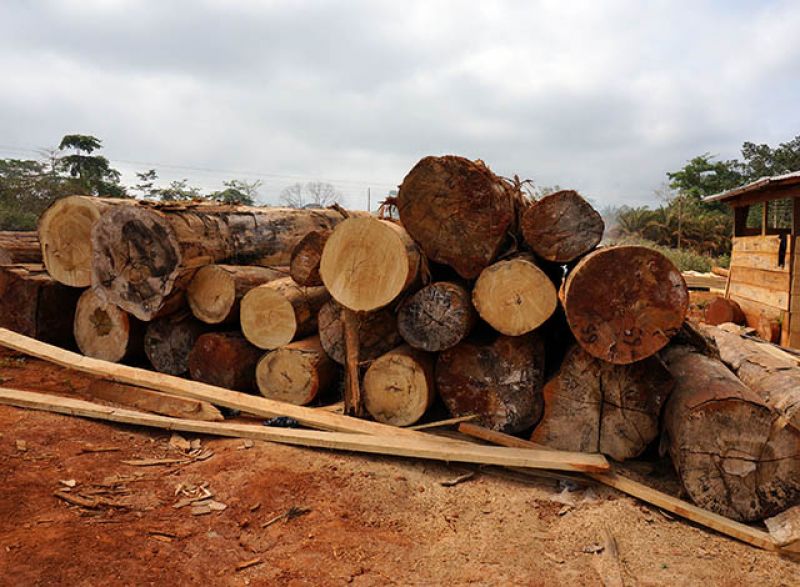
Prices for Ghana's exported wood products are the following between 16-28 February 2017: Continue reading "Current prices for Ghana's exported wood products"
Current prices for Ghana’s exported wood products
Prices for Ghana's exported wood products are the following between 16-28 February 2017: Continue reading "Current prices for Ghana’s exported wood products"
India: Latest prices for teak, sawnwood and plywood
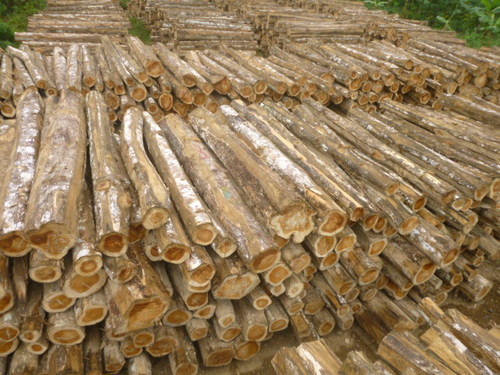
The price list for teak, sawnwood and plywood between 16-28 February 2017. Continue reading "India: Latest prices for teak, sawnwood and plywood"
UK’s TTF consents third party to test for non-EU hardwood plywood

The Timber Trade Federation’s (TTF) National Panel Products Division agreed mandatory third party species testing and third party product performance testing for all the panels on the market, which come from outside the EU.
This decision comes as to ensure the product performance in hardwood plywood, following on from last year’s agreement to enact mandatory third-party verification of marine plywood for TTF members, TTJ reports.
There are some concerns regarding the hardwood plywood being imported to the UK, especially the products made in Chine. The TTF said that this latest decision would eliminate the unfairness of many manufacturers in the EU and reduces the tensions about the “unjust” effect within the plywood market.
Switzerland could get more energy out of used wood

Almost 173,000 tonnes of used wood could be re-used in Switzerland as to produce valuable heat and power energy today, in addition to the 644,000 tonnes of used wood already being used.
The Swiss Federal Research Institute for Forest, Snow and Landscape Research (WSL) together with 567 companies in the construction, waste management and transport sectors reached the conclusion by conducting a nationwide survey.
Nearly 1 million tonnes of used wood (accumulated on construction or demolition sites, arising from building renovations or conversions or in the form of packaging or crushed wood waste), were produced in Switzerland in 2014. Sustainable energy could have been generated out of 817,000 tonnes of this wood, but only 644,000 tonnes of used wood were actually used producing heat or electricity. The additional used wood available would suffice to supply heat, at 80% efficiency, to some 80,000 average households during the cold season (from September to May) and provide enough power for 40,000 average homes, Science Daily reported.
All the information is based on a nationwide survey in Switzerland. A team of WSL researchers led by Oliver Thees ascertained how much dis-used wood accrued in 2014 in all regions of Switzerland and which quantities were used in order to produce energy, were disposed of or were sold abroad. In the published report, it's shown how much energy could be used from wood.
According to the findings in the report, the canton of Bern has the greatest potential for sustainable re-using wood to generate energy. In the area, so much used wood is already converted into heat and electricity there that the current total could only be increased by 7%.
The greatest quantities, in absolute terms, of additional used wood that could be exploited as an energy source are produced in these cantons: Basel Land (a potential increase of 95%), St. Gallen (43%), Solothurn (38%), Lucerne (27%) and Zurich (13%), as reported by Science Daily.
"Energy production from used wood in these cantons could have been markedly increased in 2014, the year covered by the survey," says project team member Matthias Erni.
Although there is sufficient interest in the energy use of wood which has already been used in Switzerland, in 2014 roughly one-third of the used wood was exported. The wood's end users process it into particle board or use it to generate energy.
The need for so many shipments of timber abroad would be eliminated if more used wood were re-used in Switzerland for the production of heat and power. This would also save energy, lead to lower costs and to cut emissions of greenhouse gases.
Dieffenbacher to supply full particleboard plant for Arauco’s North American project

Chile-based Arauco is investing in the construction of a particle board plant with a planned capacity of 800,000 m³ per year in Grayling, Michigan. Continue reading "Dieffenbacher to supply full particleboard plant for Arauco’s North American project"
Brazilian prices for logs, sawnwood and plywood in February

Latest prices for Brazilian logs, sawnwood and plywood prices (16-28 February 2017) Continue reading "Brazilian prices for logs, sawnwood and plywood in February"
Recovery expected for global construction equipment industry in 2017

Global sales of construction equipment are expected to increase seven per cent this year, according to updated forecasts from specialist market intelligence company Off-Highway Research. The number of machines sold in 2017 is expected to reach 695,142 units worldwide, compared to the 650,133 pieces of equipment sold in 2016, which represented the bottom of the industry’s economic cycle.
David Phillips, managing director of Off-Highway Research said, “Sales of construction equipment last year were affected by weak economic growth worldwide and low global prices for many commodities. These factors had a knock-on effect for the demand for most types of machinery, particularly equipment used in mining and other extractive industries. However, with commodity prices rising as 2016 went on, sales picked up in a number of key markets.”
Of particular significance this year is the expected return to growth for the Chinese market, which bottomed-out in 2016 after five years of steeply falling sales. However, even with the 13 per cent rise in sales forecast for 2017, demand in China will still only be some 30 per cent of what it was in the boom years of 2010 and 2011.
Meanwhile, the robust Indian market is forecast to go from strength to strength. Equipment sales grew a remarkable 40 per cent last year thanks to increased investment and a pick-up in project implementation in the country’s infrastructure market. This is expected to drive consistent and steady growth in Indian construction equipment sales for the next five years, and as the industry matures India could emerge as a significant regional manufacturing hub.
Meanwhile, the mature markets of Europe, Japan and North America suffered a three per cent fall in sales last year, with factors such as uncertainty in the run up to the US presidential elections and the UK’s Brexit referendum harming business confidence. Growth is expected to return this year, particularly in Japan and North America, while the outlook in Europe is for a flatter market.
The long-term outlook for the global construction equipment market is for a period of moderate growth, which should see sales rise from the low point of 650,133 units in 2016 to around 810,000 machines being sold in 2020 and 2021 – a 25 per cent increase in total.
In value terms, the market is expected to rise 28 per cent over the same period, with sales increasing from US$69.8 billion in 2016 to US$89.3 billion in 2020. This reflects an expected resurgence in some higher value types of equipment over the coming years, most notably crawler excavators and rigid dump trucks.
Growing markets for modular multilayer flooring

The market success of modular multilayer flooring has resulted in an increase in membership for the MMFA, the Multilayer Modular Flooring Association, Bielefeld. As of 1 January 2017, it has a total of 40 European producers, suppliers and institutes working together towards the worldwide implementation of high quality standards for these innovative products. The MMFA anticipates that the recently-formed North American MFA Association will provide positive impetus for the interests of the industry. Continue reading "Growing markets for modular multilayer flooring"
Almost 50% of the fiber feedstock for wood pellet plants in the US South was industry and forest residues
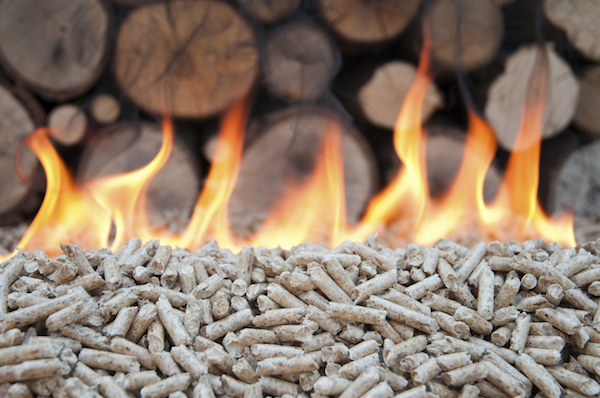
Almost 50% of the fiber feedstock for wood pellet plants in the US South was formed of industry and forest residues in the 1Q/17, up from 33% five years ago. Continue reading "Almost 50% of the fiber feedstock for wood pellet plants in the US South was industry and forest residues"
Vietnam concerned about timber shortage as China closes natural forests

Many Chinese businesses have hurried to Vietnam to buy wood because their government closed the natural forests in 14 provinces. Thus, almost 90% of the timber in the Central Highlands has been sold to Chinese. Continue reading "Vietnam concerned about timber shortage as China closes natural forests"

