Article archive

Belgium’s Beaulieu Group acquires two flooring companies in Canada and Australia

Beaulieu International Group (B.I.G.) announces the acquisition of two privately-owned companies, Beaulieu Canada and Beaulieu Australia, which will be integrated into its Flooring Solutions business unit. The transactions closed end of June.

Beaulieu Canada and Beaulieu Australia are flooring manufacturers with well-established positions in their respective home markets. They have a combined turnover of more than €150 million.

The acquisitions represent important steps in B.I.G.’s ongoing international growth strategy resulting in a more than €2 billion Group of which €1 billion is in the flooring business.

Both Beaulieu Canada and Beaulieu Australia will benefit from the size and scale of an international player with global resources in order to further strengthen their ambitions and growth plans.

The individual company names, product ranges and brands will continue to be used by the acquired companies.

With the addition of the two companies, B.I.G. will have more than 5,000 employees worldwide.

Beaulieu Canada has a carpet manufacturing plant in Quebec, from which it supplies a broad range of carpet, laminate, engineered wood, cushion vinyl / sheet vinyl, and vinyl planks to Canadian retailers and distributors. It recently began supporting the US market through its Peerless brand. The acquisition adds a second manufacturing plant to Beaulieu Flooring Solutions’ operations in the North American market, next to its new Beauflor cushion vinyl / sheet vinyl plant in Cartersville, Georgia. Beaulieu Canada’s purchasing office based in China will also become part of B.I.G..

Beaulieu Australia is a successful carpet manufacturer based near Brisbane. It opened a new state-of-the-art manufacturing plant in 2017. The current Chief Executive Officer, Bob Vos, retires upon closing but will stay on as a non-executive Member of the Board. Chief Operating Officer Allan Russell will take over the CEO position.

James Neuling, Vice President of Beaulieu Flooring Solutions, comments: “We are very enthusiastic about these acquisitions. Our complementary product portfolios and ‘customer first’ ethos create great opportunities in these two important markets. B.I.G.’s strong financial position will enable us to provide the investment needed to grow the businesses, while allowing distributors and retailers access to an even broader product range.”

Benoit Leclair, Chief Executive Officer of Beaulieu Canada, adds: “The management and employees of Beaulieu Canada are delighted to be joining the Beaulieu International Group for this next phase in our growth. We are looking forward to combining our local market expertise with B.I.G.’s strong financial position, global reach and product lines, to enhance the support we offer to customers in the future.”

Kronospan to double OSB production capacity at Ufa plant in Russia

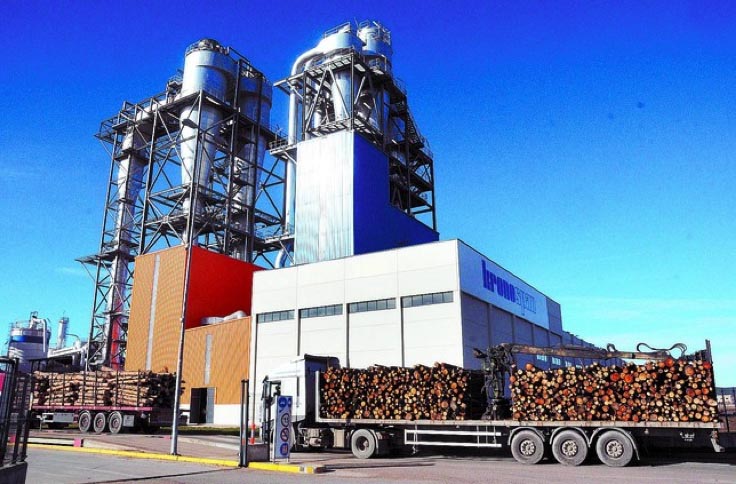
Kronospan will increase its OSB manufacturing capacity for the Russian market.

According to the announcement, the investment in the extension of the Ufa OSB plant will nearly double its production capacity and meet the growing demand for OSB in the building and construction markets across Volga, Siberia, Ural, Central Asia, China, Korea, Japan and South America.

The plant will have an annual capacity of 1 000 000 m3 and will produce OSB boards in 4 different formats.

Kronospan’s plant in Ufa was opened in 2013. It is one of the largest factories for particleboards with a capacity of over 1 million m3 per year. The company owns the largest continuous press for OSB in the world, with the impressive length of 65 meters. The new production line will foster the export of OSB material and reduce the cost of the material for the end users.

About Kronospan:

The company is a leading global producer and distributor of wood-based panels, including Particleboard (PB), Medium density fibreboard (MDF), Laminate flooring, oriented strand board (OSB), as well as other products like UF, MUF and MF resins for wood-based panels and also other associated value added products, such as melamine-faced panels, worktops, wall panels, window sills, lacquered HDF, compact boards, high pressure laminates (HPL) and others. Kronospan manufactures wood-based panels at more than 40 sites employing over 14,000 people.

EUTR having a significant impact on purchasing decision

Much timber trade policy discussion in the EU now focuses heavily on developments in the EU Timber Regulation (EUTR) which, given its scope covering nearly all timber products and importing companies in the EU, is having a significant effect to influence purchasing decisions, particularly in relation to tropical timber products.

The latest European Timber Trade Federation newsletter is said to includ details of the European timber trade’s views on the implementation and enforcement of EUTR.

Information on the latest EUTR developments is also provided in a regular briefing note issued by UNEPWCMC in its capacity as a consultant to the European Commission and based on information provided by the Member States Competent Authorities (CAs).

Drawing on a survey of 20 CAs in the second half of 2017, the latest UNEP-WCMC briefing provides details of EUTR compliance checks performed and penalties imposed to enforce EUTR implementation.

The respondents reported conducting checks on more than 467 domestic operators, 388 importing operators, 300 traders dealing with domestic timber, 177 traders dealing with imported timber and three monitoring organisations, over the period June-November 2017.

The report also includes a summary of the latest FLEGT/EUTR Expert Group meeting in Brussels during April where it notes that “some Member States reported substantiated concerns regarding companies placing timber from high-risk countries on the EU market, including from Myanmar and Brazil.

The conclusion of the EUTR Expert Group meeting of 20 September 2017 was reiterated and it is still not possible for operators to demonstrate compliance with EUTR due diligence obligations as regards timber imports from Myanmar”. According to WCMC-UNEP, the FLEGT/EUTR Expert Group meeting in April also included a presentation on a TAIEX mission to Ukraine which reported that “a substantial corruption risk can be found in every supply chain and is widespread throughout the country however, there was not enough public information available to convince EU operators of the risks”.

Eurostat data shows that in 2017 the EU imported EUTR regulated products with a total value of €950 million from Ukraine, which compares to €554 million in 2013 when the EUTR was first introduced, a 72% increase.

EU timber imports from Ukraine comprise a wide range of products, led by sawn hardwood and softwood and veneers, mainly destined for Poland, Germany, Romania, Hungary and Italy.

Estonia: Roundwood prices in May significantly higher than last year

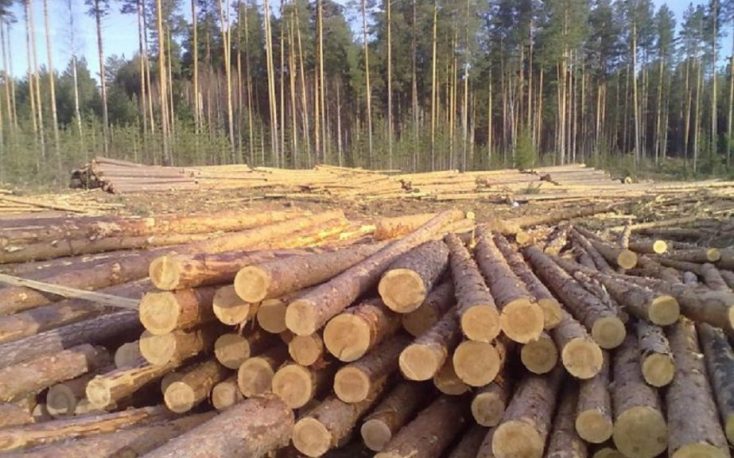
Roundwood prices in Estonia reached record-highs during the beginning of 2018, and especially in April. The prices increases amounted to more than 20% during May, as compared to the same monthof 2017.
Since the beginning of the year there have been several price increases for pulp. One of the main reasons for this development, apart from the generally high global demand, is obviously a change in Chinese environmental policy. China is no longer importing heavily colored or soiled waste paper, so China's fresh fiber needs have increased significantly.
The price for spruce is currently higher than the price for pine, contrary to the prevailing trend. Also, the price for aspen has risen sharply.

 May 2017 €/m3 April 2018 €/m3 May 2018 €/m3 Change % May 2017/May 2018 Change % April/May 2018
Pine 62,92 77,18 75,45 19,91% -2,24%
Pine d<18cm 49,12 64,11 62,14 26,51% -3,07%
Spruce 63,30 77,77 78,07 23,33% 0,39%
Spruce d<18cm 48,77 62,56 62,03 27,19% -0,85%
Birch veneer 111,52 115,39 121,29 8,76% 5,11%
Birch 58,07 67,71 69,07 18,94% 2,01%
Aspen 31,55 46,07 41,96 33,00% -8,92%
 Pine pulpwood 24,87 42,06 45,26 81,99% 7,61%
Spruce pulpwood 24,90 43,12 40,96 64,50% -5,01%

Kronospan starts construction for new plywood plant in Belarus

On May 24, 2018, in the Belarusian city of Smorgon, Kronospan holding laid a foundation stone of a new plant for the production of plywood.

Plywood production is a new direction for the holding, which will strengthen the company's presence in Eastern Europe markets.

In Belarus, the holding is already represented by two production sites in Mogilev-Kronospan OSB LLC and in Smorgon-Kronospan LLC.

On January 5,2018, two companies were registered as residents of the Grodnoinvest FEZ-Kronospan NT LLC and the LLC Ultra Ply LLC company (both of which are part of Kronospan). It is expected that the first company will be engaged in the production of MDF/HDF, laminated flooring, painted HDF.  The second will build a plant for the production of plywood, laminated plywood and veneer.

The cost of the Ultra Ply investment project is estimated at 100 million euros.

European softwood lumber exports to China drop sharply in the first four months

The European softwood lumber exports to China have decreased during January-April 2018, as compared to the same period last year.

The shipments went down by 17%, reaching a volume of 762,883 m3, as compared to the 919,641 m3 exported during Jan.-Apr. 2017.

Finland was the biggest exporter, even if the shipments to China went 17% down, to 387,025 m3. Sweden and Germany came in second and third place, by sending 249,316 m3 and 35,063 m3 of softwood lumber to China during the mentioned period.

Thus, the value of the European softwood lumber exports to China went down by -16%, to EUR 145 million.

Exporting Country Jan.-Apr. 2017 Jan.-Apr. 2018 Change in %
European Union 919,262 762,646 -17 %
Finland
466,659 387,025 -17 %
Sweden
259,932 249,316 -4 %
Germany
69,207 35,063 -49 %
Austria
32,407 20,824 -36 %
Estonia
20,241 15,756 -22 %
Others 70,816 54,662 -23 %
Other European countries 379 237 -37 %
Croatia
379 237 -37 %
TOTAL 919,641 762,883 -17 %

Global pulp prices jump to record high levels

Strong pulp markets and record high prices for both softwood and hardwood market pulp resulted in upward price pressures on wood fiber throughout the world in the 1Q/18.
The Global Softwood Fiber Price Index (SFPI) was up by 3.4% from the 4Q/17 to the 1Q/18, the second highest quarter-toquarter increase in seven years. Softwood prices rose in all 20 regions covered by the WRQ (Wood Resource Quarterly) with the exception of Eastern Canada, where chip prices fell 16% q-o-q (in US dollars).
Hardwood pulplogs saw a more modest price increase than softwood pulplogs, with prices rising the most in Russia, Spain and Finland. The Global Hardwood Fiber Price Index (HFPI) reached a three-year high in the 1Q/18 and was 8.0% higher than in the 1Q/17. Profit margins continued to improve for pulp companies in the 1Q/18 as pulp prices increased faster than the wood fiber costs. Northern Bleached Softwood Kraft Pulp (NBSK) pulp prices jumped in the 1Q/18 to new record highs, while the crucial wood costs were only slightly higher. This resulted in a record low wood fiber cost percentage of 22.5% of the pulp price. With the wood fiber costs accounting for 40-60% of the total manufacturing costs, market producers can expect healthy returns in 2018.
The wood costs share for Southern Bleached Softwood Kraft Pulp (SBSK) price was also down, dropping to 16.2% . This is the lowest it has been in 25 years, and is mainly due to sharply increasing pulp prices. The SBSK pulp is produced in the US South, Iberia, Latin America and Oceania.
For Eucalyptus Bleached Kraft Pulp (EBK), the wood fiber share fell to 16.1% in the 1Q/18, the lowest cost share since 2003, according to the WRQ. As with the other major pulp grades, it was mostly the result of higher pulp prices rather any substantial changes in wood costs.

Volatility in the UK timber trade due to Brexit and currency fluctuations

The UK Timber Trade Federation (TTF) reports that the last two years’ have been volatile due to uncertainties over Brexit and subsequent currency fluctuation. The timber trade had weathered this until now, but into 2018 conditions have worsened, with wood and wood products imports declining 3.2% in the first quarter compared to the same period in 2017.

Imports from within the EU fell 1.5% to €1.11 billion while those from outside the EU fell 4.7% to €1.15 billion. Continue reading "Volatility in the UK timber trade due to Brexit and currency fluctuations"

Russia expanding its timber partnership in Asia at Sylva Wood trade show in Shanghai

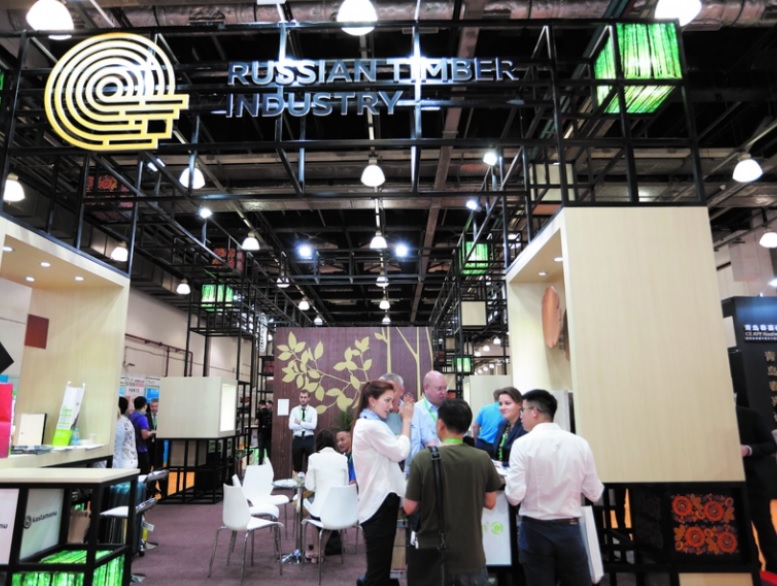
The International Wood Products SYLVA WOOD 2018 exhibition has finished. The event was held in Shanghai from June 25 to 27 and brought together 116 timber processing companies from China, the USA, Canada, Sweden, Malaysia, Thailand, France and other countries.

From Russia, eight large companies took part in the Trade Show: Latat LLC, Eco-Group LLC, Ilim Timber LLC, Segezha Group LLC, Co. Ltd. WPM Kalevala, EcoHouse LLC, Ustyanskiy Timber Industry Complex LLC (RusTimber™), Italmac Timber Company Ltd. Continue reading "Russia expanding its timber partnership in Asia at Sylva Wood trade show in Shanghai"

Swedish softwood lumber deliveries to China and Japan drop considerably in Jan.-Apr. 2018

The Swedish sawmills exported 3.2 million m3 of sawn and planed lumber during the Jan.-Apr. of 2018, 3% more than in the same quarter last year. 

Exports to the European countries have went up by 3%, to 1.8 million m3 of softwood lumber, while the shipments to North Africa and Asia dropped by -1% and -8%, respectively, amounting to volumes of 472,148 m3 and 117,353 m3.

1.000 m3 Jan.-Apr. 2017 Jan.-Apr. 2018 % Change-Yearly
Europa 1,784,888 1,836,804 3%
North Africa 478,585 472,148 -1%
Middle East 127,101 117,353 -8%
Other Asian countries 557,398 522,660 -6%
America 122,993 82,877 -33%
Oceania 9,725 27,022 178%
Total 3,343,387 3,282,919 -2%

The main destination for Swedish lumber is, as usual, the UK, followed by the Netherlands and China. While the exports to the UK amounted to 668,169 m3 (-1%), the Netherlands increased their Swedish lumber imports by 11%, to 275,120 m3.

Exports to China and Japan dropped considerably, by -4% and -10% during the first quarter of 2018.

1.000 m3 Jan.-Apr. 2017 Jan.-Apr. 2018 % Change - Yearly
UK 673,418 668,169 -1%
Netherlands 248,657 275,120 11%
China 259,932 249,316 -4%
Germany 232,759 223,492 -4%
Denmark 219,464 219,745 0%
Egypt 245,533 217,408 -11%
Norway 230,359 192,130 -17%
Japan 208,278 187,980 -10%
Algeria 118,141 121,196 3%
France 95,190 103,929 9%

India: Greenply starts production at new MDF plant

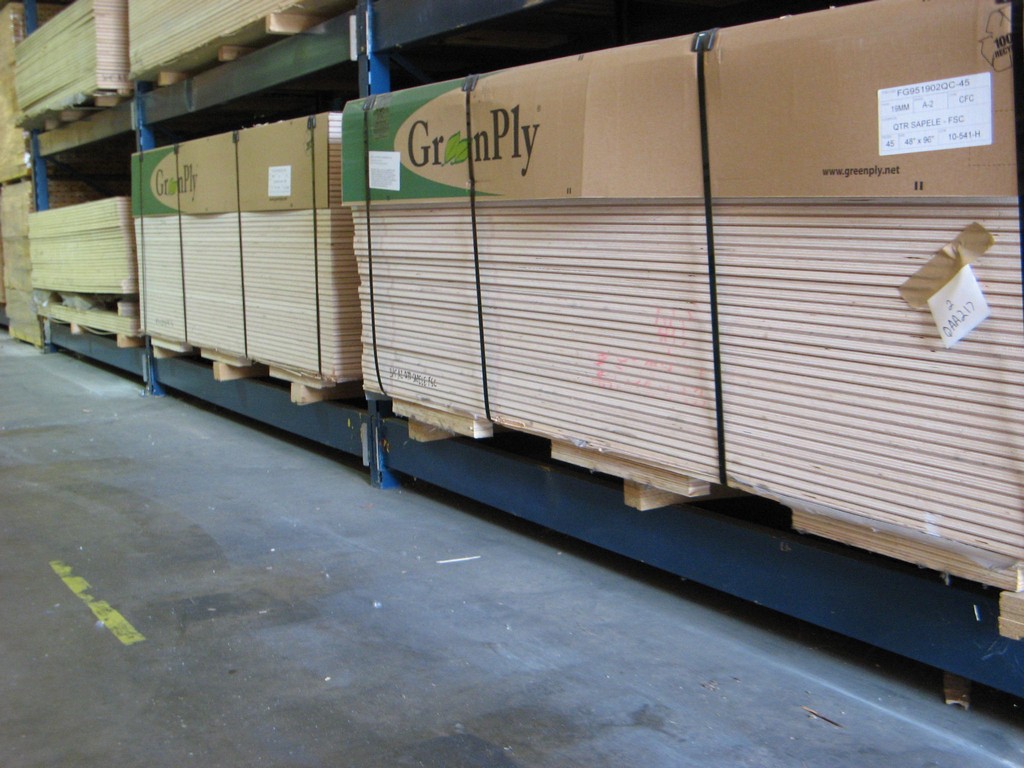
Greenply's plant in Chittoor, Andhra Pradesh started commercial production of MDF on July 1. The plant has an annual capacity of 360,000 cubic meters.

For FY19, the new MDF production unit is aiming at an annual capacity utilization of 45 per cent. The plant is situated at Routhu Suramala, Thottambedu, Chittoor, Andhra Pradesh.

On the financial front, for Q4FY18, the company's net sales were down by 6 per cent YoY at Rs. 420 crore. While gross margins were lower by 310 bps YoY to 44.8 per cent due mainly to lower realisations in plywood and losses in wallpaper and others category. The company's EBITDA margins were down by 290 bps YoY to 13.9 per cent. PAT was down by 22.1 per cent YoY to Rs. 32.6 crore. The reduction of MDF prices due to competition adversely impacted MDF volumes in Q4FY18.

Greenply Industries Limited (GIL) is a major organized player in the plywood and MDF market with 26 per cent market share in the plywood and 30 per cent share in the MDF market in India.

On Monday, the stock of Greenply witnessed volatility, the stock open at Rs. 234.50 per share and closed at Rs. 229.95 per share, down by 3.02 per cent on BSE. The company's filing announcing the commencement of production at the new plant came in the closing hours of trade.

The Russian timber sector is in buoyant mood

The Russian timber sector is in buoyant mood and increasing capacity, including in wood-based construction, after a robust performance in 2017. In 2017 Russia GDP grew 1.5%, successfully taking the country out of economic recession.

The woodworking industries were part of this success, contributing 1.9% to GDP, with the sawmill sector achieving 2.2% growth and its further expansion reflected in a 60.7% increase in production and processing equipment imports.

Sawlog production rose 4% to reach 79 million m3, while exports contracted 1.5% to 11 million m3, with the bulk going to China. Meanwhile market prices for Russian sawn softwood exports grew an average of 10% in Asia, Europe and the Middle East and North Africa (MENA), driven by a number of factors, including demand on the domestic market.

China overall accounted for 58% of sawn timber and 95% of log exports from Russia in 2017. The former percentage represented 21% volume growth to a total of 15.5 million cu.m.

Reflecting the migration to processed timber exports, Manzhouli, the major land port for Russian timber exports to China, achieved a record high volume of sawn timber handled, at 8 million m3 and saw a record low volume throughput of saw logs at 3.8 million m3. In 2017, Russian exporters also started to explore railway connections to China’s Sichuan province using container block trains.

At the same time the reorientation of lumber exports away from CIS and MENA markets continued, resulting in these accounting for just 20% of the total.

In this buoyant market, all major Russian producers reported that they were increasing production volumes, adding shifts and also modernizing technology. Capital investment was estimated to have increased sawn goods capacity by 600,000cu.m in 2017, with a further 500,000cu.m forecast for 2018.

Due to demand, sawmillers in the North West region started to experience some saw log shortages, while Siberia reported record high harvest volumes.

Further reflecting production growth, a number of mills in Siberia and eastern regions have started fuel pellet production to manage by-products output, increasing overall industry capacity by 31%.

Annual plywood production, primarily birch, has been stable at 3.7 million m3 for three years, with 50% exported, mainly to the US, UK and rest of the EU, but an estimated 200,000cu.m of new capacity is forecast to be added this year.

FSC certification has grown to cover 48.3 million hectares of Russian commercial forest. Russia now accounts for 25% of the FSC certified forest area worldwide.

Kronospan improves profits in Latvia

During its last fiscal year lasting from October 1, 2016 to September 30, 2017, Kronospan Riga particleboard producer turned over EUR 186.822 million, up 5.7% year-on-year, and made a profit of EUR 89.332 million, which was 2.5 times higher than in 2016. Continue reading "Kronospan improves profits in Latvia"

French timber trade benefits from rising construction trend

In France, the importers association Le Commerce du Bois reports that trade was buoyed by 2%-plus GDP growth last year and continues to benefit from a rising trend in construction, with housing starts in March at the 427,000 per annum level which compares to 360,000 starts in 2016.

The French timber trade also expects to benefit increasingly from government measures to improve building energy performance and incentivise wood use in construction and from the new €10 million promotional programme, ‘Pour mois, c’est le bois’”.

This campaign is led by the French national wood association France Bois Forêt and supported by other trade and industry bodies. It aims to “increase the volume of wood consumption in France and increase market share for domestic production”.

To date, signs are that the revival in French demand and the promotion campaigns are benefitting mainly European suppliers. The total value of French imports of wood products increased 4.4% to €6.99 billion in 2017. However, imports from inside the EU increased 6.3% to €5.52 billion while imports from outside the EU declined 2.3% to €1.48 billion.

In the first quarter of 2018, French imports increased 5.4% compared to the same period in 2017, with imports from inside the EU rising 6.3% to €1.47 billion and imports from outside the EU up 2.2% to €402 million.

Lumber prices in the US still rising

Framing lumber prices in the US have started to regain stability last week, after steep double-digit losses the previous two weeks.
However, while some prices firmed, and even bounced off a bottom, a number of trends continued to point downward. Weakness was unabated in Southern Pine in particular, as buyers failed to absorb ample mill offerings.
Losses in key commodities overall well outnumbered any gains, and the Random Lengths Framing Lumber Composite Price shed $7, a third straight weekly decline.

Week
Jun 29
Week
Jun 22
Year Ago
2017
Random Lengths Framing Lumber Composite Price* $547 $554 $397
KD Western S-P-F #2&Btr 2x4 R/L Mill Price 590 582 374
KD Eastern S-P-F #1&2 2x4 R/L, delivered Great Lakes 680 686 470
Green Douglas Fir Std&Btr 2x4 R/L (Portland) 565 560 425
Southern Pine (Westside) #2 2x4 R/L 544 568 388
KD Coast Hem-Fir #2&Btr 2x4 R/L 600 615 400
Ponderosa Pine (Inland) #2&Btr 1x12 R/L 775 770 700
* Weighted average of 15 key items

Random Lengths Panel Market Report
Prices of structural panels softened, led by steep declines in OSB. Mills took a more aggressive approach to OSB sales at quarter-end, and prices of sheathing tumbled $20-40 in most regions.
Weakness in the West bled into the South, where producers opened to deeper counters. Another week of subdued trading in Southern Pine plywood led some producers to negotiate steeper cuts, and rated sheathing prices dropped as much as $20. One western Fir producer took steeper discounts to sell volume east.

(f.o.b. mill prices) Week
Jun 29
Week
Jun 22
Year Ago
2017
Random Lengths Structural Panel Composite Price* $553 $565 $420
Southern (west-east) 15/32-inch 3-ply rated sheathing plywood 510-545 530-565 355-380
Southern (west-east) 15/32-inch 4-ply rated sheathing plywood 515-550 535-570 360-385
Western 1/2-inch 4-ply rated sheathing plywood 547 567 460
North Central 7/16-inch Oriented Strand Board 445 445 345
*Weighted average of 11 key items

EGGER to expand capacity in Germany

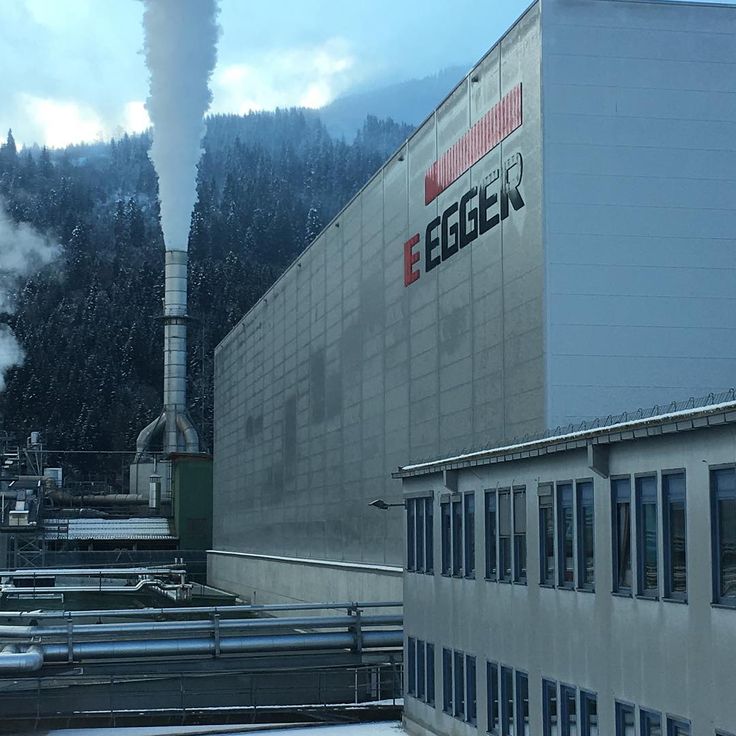
The Austrian wood-based material manufacturer Egger will start polypropylene edge production in July 2018 on its new and third calender line in Brilon, Germany.

With this investment, the company is expanding its capacities and is offering the entire decor portfolio on polypropylene edging since May.

Since the summer of 2016, Egger has been successfully producing and marketing polypropylene edgebandings (PP edge bands) at the Brilon site for its entire product portfolio of laminated wood panel and flooring. As of July 2018, the third calender line will be put into operation.

Alongside the Turkish edgeband plant in Gebze, the edge competence and capacity will be further expanded at the German edge location in Brilon.

With the third calendering line, Egger offers smaller, market-conforming minimum production quantities. The focus is clearly on the Central European furniture industry, which can be ideally served by the customer structure and the regional location of the plant in Brilon.

According to the company, the third edgebanding line will start operating at the same time as the second digital printing line. With this technology, Egger is able to offer quick, easy and suitable edge solutions for all surfaces in the decor panel segment.

IKEA ready to open its first store in India

IKEA, the world’s leading furniture retailer and manufacturer announced the opening of a store in Hyderabad, India sometime in the spring, if the monsoon season allows it.

“When you come to India you have to adapt. India is India. Here, you do things on her terms”, pointed out the Swede company in statements to the press.

During the preparations to enter this vast market, IKEA has learned that home furnishing is not a priority for most Indian people. They also discovered that virtually nobody in India has heard of them, none the less IKEA sees an enormous potential for change here. They’re looking forward to sharing the home furnishing knowledge they’ve pick up over the years, and to showing the people of India that making their homes more functional, beautiful and personal, needn’t be complicated nor expensive.

According to various Indian media reports, the exact opening date has not yet been determined. In the future, 850 employees will be employed in Hyderabad on a sales area of 37,160 m².

Further locations in Mumbai, Bangalore and New Delhi are to follow. At a later date could also be added to branches in Pune, Chennai, Ahmedabad, Surat and Kolkata. In total, Ikea is planning to invest EUR 1.5 billion in India.

“It’s important however, that we approach with respect and humility”, says Mia Lunstrom, Creative Direcor of Ikea India. “India has a lot to teach us too. Take the fluid home for example” she says, referring to the supposedly modern, western trend where homes are made up of multi-purpose spaces rather than traditional rooms. “I used to think that was something new and cool. But in India, that’s just everyday life.”

Central/West Africa: Prospects improving logs & sawnwood FOB price increases

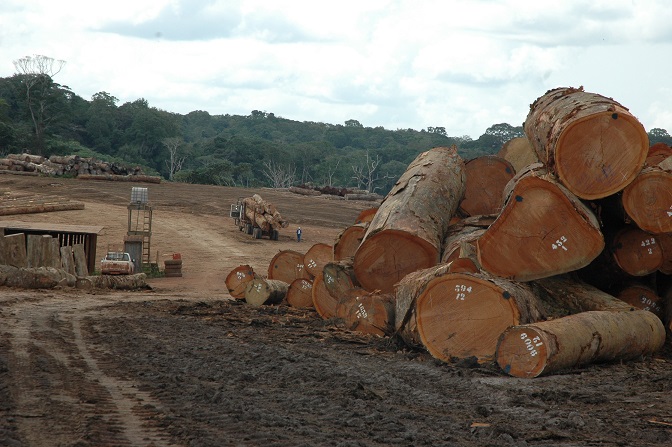
Producers in West and Central Africa are generally optimistic that the present stable market conditions will be maintained through the third quarter. The improving demand could deliver an opportunity for FOB prices increase especially for the favoured species such as okoume.
Okume sawnwood is currently in high demand in almost every market sector except Europe. A major okoume plywood manufacturer in Gabon has plans to increase production now that it has a more secure supply of peeler logs, an arrangement brokered by OLAM with Rougier.
As of mid June there was no news of how the Gabon government will address the sale of kevazingo logs and sawnwood. The kevazingo harvesting ban remains in place. Continue reading "Central/West Africa: Prospects improving logs & sawnwood FOB price increases"

Central/West Africa: Prospects improving logs & sawnwood FOB price increases

Producers in West and Central Africa are generally optimistic that the present stable market conditions will be maintained through the third quarter. The improving demand could deliver an opportunity for FOB prices increase especially for the favoured species such as okoume.

Okume sawnwood is currently in high demand in almost every market sector except Europe. A major okoume plywood manufacturer in Gabon has plans to increase production now that it has a more secure supply of peeler logs, an arrangement brokered by OLAM with Rougier.

As of mid June there was no news of how the Gabon government will address the sale of kevazingo logs and sawnwood. The kevazingo harvesting ban remains in place. Continue reading "Central/West Africa: Prospects improving logs & sawnwood FOB price increases"

Newsletter

Subscribe to our digital newsletter for your daily digest of essential news, views and analysis from the international wood industry delivered directly to your inbox.


0