Article archive

Rising optimism in Danish timber industry

According to the Danish Timber Trade Federation, Denmark is enjoying 2% annual GDP growth and its construction sector is optimistic again after several years of crisis.

The timber sector is benefitting accordingly with a rise in both import and consumption of wood products, both from within and outside the EU. Prices are also trending upwards in softwood, hardwood and certain panel products.

In 2017, Denmark imported wood and wood furniture products to a total value of €2.37 billion, nearly 10% more than in 2016. Imports increased 9% to €1.88 billion from other EU countries and 13.5% to €490 million from outside the EU.

Denmark’s imports increased a further 16% in the first quarter of 2018 comparted to the same period in 2017, rising 10% from inside the EU and over 37% from outside the EU.

A large proportion of the increase in Danish imports from outside the EU comprises biomass from Russia and the US, however there was also an increase in wood furniture imports from Vietnam and, to a lesser extent, Indonesia.
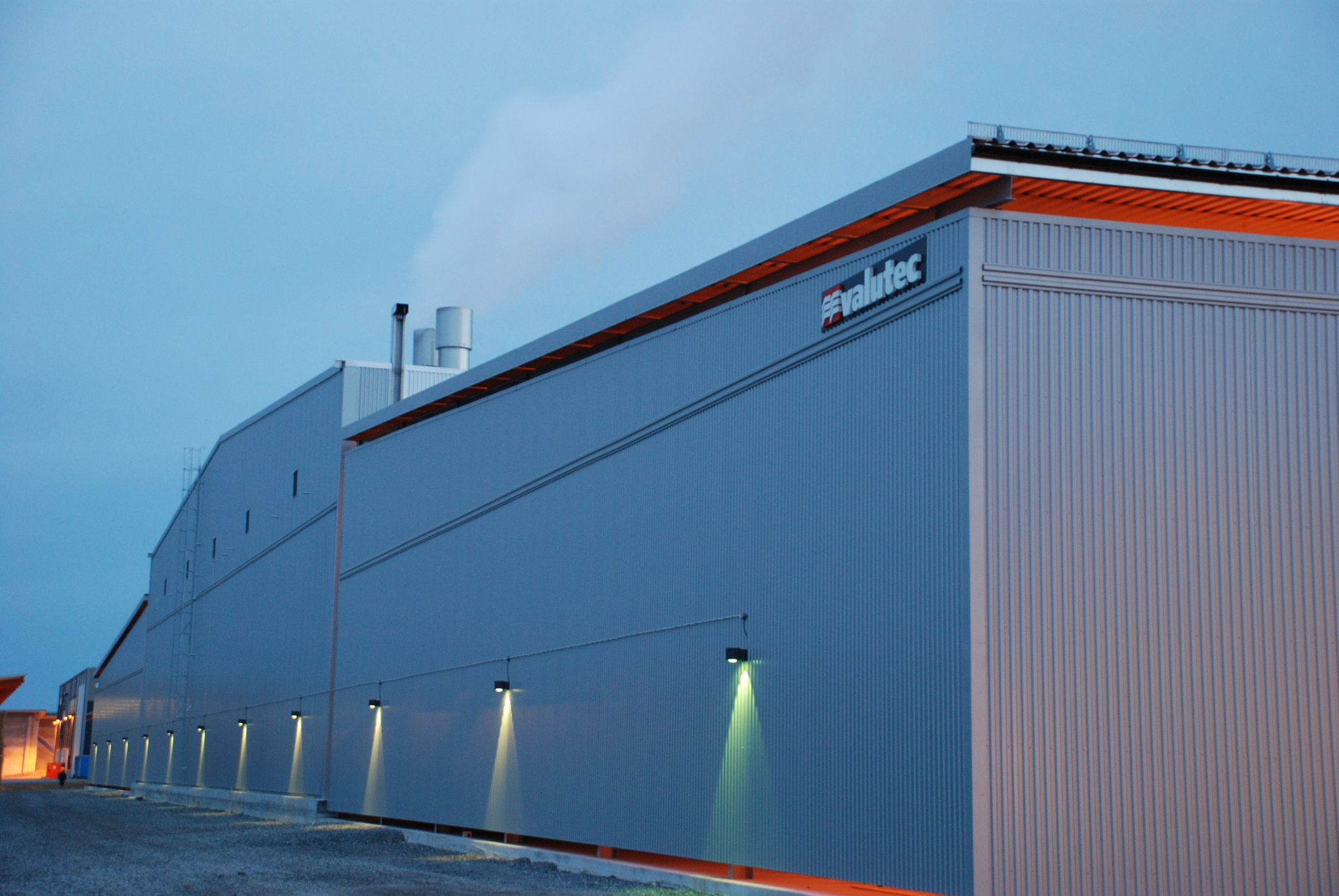
Valutec enters US market

Pleasant River Lumber of Maine, USA, is the first company in North America to invest in TC continuous kilns from Valutec. Since it was founded, Valutec has delivered more than 4,000 lumber kilns to sawmills around the world and with this new agreement, TC continuous kilns will be installed and operational on three continents.

During the past 12 months, kilns manufactured by Valutec have been installed or sold to customers throughout Europe and Russia. Many leading sawmill groups are customers of Valutec, the largest of which is the German company, Holzwerke Ladenburger, with a total annual production of over 800,000 cubic meters (340,000 MBF).

“We visited several Swedish sawmills that were using Valutec products and they exceeded our highest expectations in terms of the details, quality of design and energy efficiency. At the end of the day, it was a very easy decision. Valutec has a product that will position us at the leading edge throughout North America when it comes to drying technology,” says Jason Brochu, owner of Pleasant River Lumber.

Pleasant River Lumber primarily serves its domestic market and the two continuous kilns it has purchased will be used at two facilities, throughout the entire sawmill production process.

According to Valutec, TC continuous kilns use cross-circulation. In this process, the wood is inserted lengthwise, with air circulating across the longitudinal direction of the kiln.

Chinese forestry sector hits record

The total output value of China's forestry industry exceeded 7.1 trillion yuan (1.1 trillion U.S. dollars) in 2017, the Chinese National Forestry and Grassland Administration said  on Sunday.

The output was only about 134 billion yuan in 1994, not more than one fiftieth of the latest figure, officials from the administration said during the three-day Eco Forum Global Annual Conference that closed in southwest China's Guizhou Province on Sunday.

Trade volume of forest products topped 150 billion U.S. dollars last year, according to the administration.

China is home to 306.7 million hectares of forest, 400 million hectares of grassland, 53.3 million hectares of wetland and another 53.3 million hectares of governable sand land, which constitutes a huge resource potential and market advantage, said Peng Youdong, deputy head of the administration.

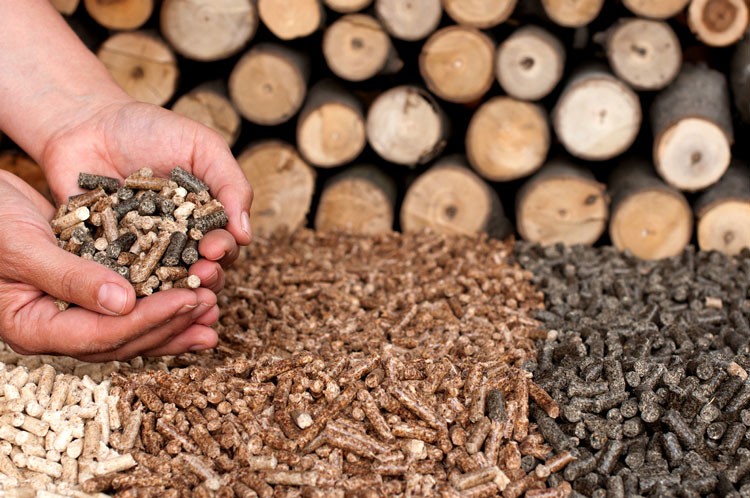
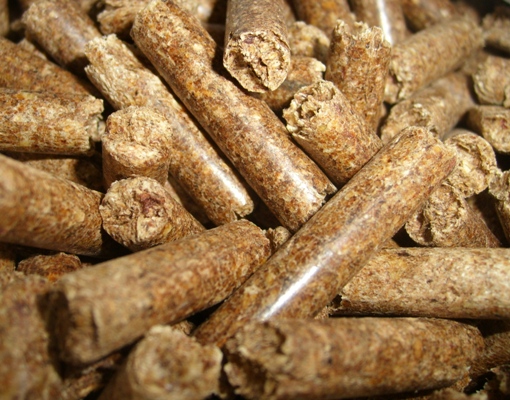
France: Européenne de Biomasse to build 120,000 t/yr wood pellet plant

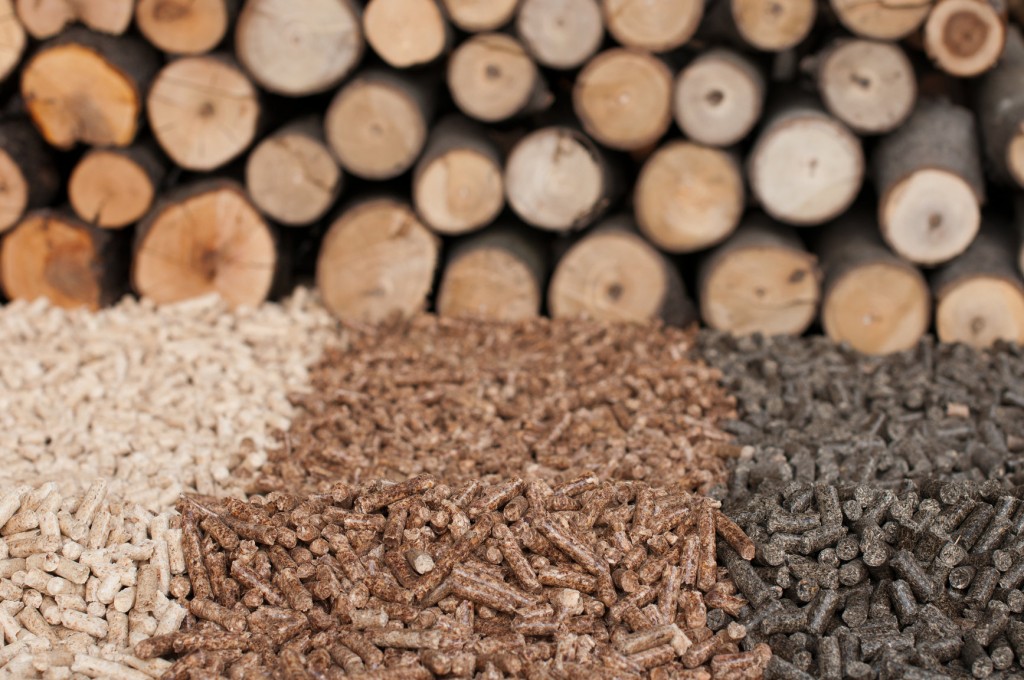
On 21 June Moret Industries signed a contract worth approximately €50 million to supply a reversible plant for white and black pellets to Européenne de Biomasse.

The unit, with an annual production capacity of 120,000 tonnes per annum, will be located in Pomacle-Bazancourt, Champagne-Ardenne, France.

As well as the pellet plant, the Européenne de Biomasse project also includes a separate 12MWe biomass cogeneration facility, although this is not included in the Moret Industries contract.

According to a statement, the project will contribute to circular economy in France, with waste feeding the biomass plant whose heat will be used in the pellet production process. The project is financed by Meridiam.

Three companies within the Moret Industries group are included in the contract. De Smet Engineers and Contractors have signed the engineering, procurement and construction (EPC) contract. Promill will provide the granulation unit, while MK Energies will supply and install distribution to the units as well as the electrical works and controls.

Start up of the facilities is planned for 2020.

European construction industry loses momentum

The construction industry in Europe is losing some momentum. The rise is expected to increase by 2.7% this year. In the previous year, the increase was 3.9%, as calculated by Euroconstruct. As a result, the pace of growth should continue to slow in the medium term, reaching only 1.4% by the end of the decade. Continue reading "European construction industry loses momentum"

Myanmar to allow exports of raw timber produced in plantations

Raw timber produced from Myanmar's private forest plantations can now be exported, U Zaw Min, deputy director general of the Department of Forestry in Myanmar, said.

The development comes after the Ministry of Resource and Environmental Conservation in April 2014 suspended the export of raw timber produced from natural forests. Continue reading "Myanmar to allow exports of raw timber produced in plantations"

Rising North American wood pellet feedstock prices driven by higher demand for pellets in Europe and Asia

Wood fiber costs for pellet producers in both Canada and the US were slightly higher in the 1Q/18 than in the previous quarter, continuing an upward trend that started in early 2017. In Western Canada, the difficult weather conditions during the winter months hampered harvest operations, forcing multiple sawmills to either slow production or take limited downtime in the first quarter.
The lower sawmill operating rates resulted in reduced supplies of residues for pellet manufacturers, forcing some to use more costly forest biomass in their feedstock mix. The total fiber cost for Canadian pellet producers has slowly moved upward during 2017 and early 2018 to reach a three-year high in the 1Q/18.
The Pellet Feedstock Price Index for Canada (PFPI-CA), reported in US dollars, rose by 8.1% y-o-y to reach US$44.21/odmt in the 1Q/18, according to the North American Wood Fiber Review. Much of this increase was the result of a strengthening of the Canadian dollar against the US dollar.
Pellet feedstock costs in Western Canada are likely to increase overall in 2018 because of the shrinking availability of sawlogs for the region’s sawmills, a crucial source of biproducts for the pellet industry.
In the US, the Pellet Feedstock Price Index (PFPI-US) also inched up from the previous quarter, reaching US$63.60/odmt. However, as compared to the same quarter in 2017, the PFPI-US index was down 3.0% as there were incremental changes in the feedstock mix, with a higher share of lower cost shavings and microchips and a lower share of high cost roundwood. As 2018 continues, U.S. South lumber production and its impact on sawdust and shavings supplies will influence the index. With sawmill residual supply expected to increase, pricing for sawdust and shavings will likely fall and thus benefit those pellet mills able to handle residuals

Canadian retaliatory tariffs include US made plywood and wooden furniture

Starting July 1 Canada imposed a 10% import duty on plywood and upholstered seating furniture made in the U.S. The duty will apply to the following HS codes: Continue reading "Canadian retaliatory tariffs include US made plywood and wooden furniture"

Tourist industry starting to revive Greece’s timber industry

In Greece, the level of timber trade is still restricted following the financial crises which came to a head in 2010 and led to a 25% reduction in total national GDP and an estimated 85% contraction of the wood sector. In 2017, Greek wood and wood furniture imports declined 2% to €420 million, after a 10% rise the year before. Continue reading "Tourist industry starting to revive Greece’s timber industry"

Conifex Timber completes acquisition of US South sawmills; increases capacity by 50%

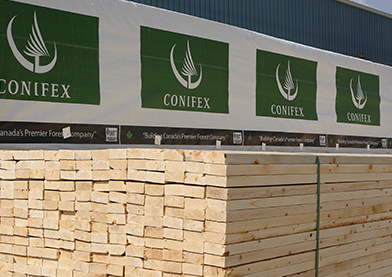
Conifex Timber, publicly listed softwood forest products company operating in the Northern Interior region of British Columbia, Canada, has completed the previously announced acquisition of the Suwannee sawmill in Cross City, Florida and the Caddo River sawmill in Glenwood Arkansas, USA.

The company says the two mills have a combined dimension lumber capacity of 370 million board feet and will triple its U.S. southeast capacity.

Conifex says the mills have seen recent upgrades and modernization, and are complimentary to its sawmill in El Dorado, Ark.

The purchase comes as lumber producers benefit from elevated prices buoyed by rising U.S. housing starts, tight supply and softwood lumber duties applied by the United States government.

Canfor Corp. announced in February that it was also expanding capacity in the U.S. southeast with the construction of a $155-million sawmill in Washington, Ga.

Chinese wood companies relocate to Vietnam to avoid US duties

Wood and wooden products manufacturers in China have been imposed 25% tariffs on all exports on the US market, as it was informed by the Office of the United States Trade Representative on the 15th of June 2018. 

According to Vietnam News, due to the impacts of trade with the US, several Chinese enterprises planned to invest in Vietnam’s timber industry to take advantage of cheap labour and preferential policies.

At the end of 2016, Chinese enterprises snapped up materials from timber plantations in the Central Highlands and southeastern region of Vietnam, causing concerns over a lack of raw materials among domestic firms.

Although there are no detailed statistics, in southern Bình Dương Province where 600 enterprises are operating in the wood processing industry, one-third are from China and Taiwan.

This move is understandable as Chinese products are subject to high anti-dumping duties in the US, which spends $30 billion per year on wooden products from China.

Pressure on raw material supplies, changes in US trade policy, and an investment shift in the wood industry from China had affected and would continue to impact Vietnam, said Vifores, as quoted by Vietnam News.

Anti-dumping duties on 1300 Chinese products

At the moment, the US began collecting 25% tariffs on some 1300 products imported into the US from China valued at about US$50 billion. Analysts in China say inclusion of HS84193250, 84412000, 84413000, 84414000, 84418000, 84419000, 84209920, 84399910, 84399950 and parts of seats (94019015) and parts of seats of cane, osier, bamboo or similar materials (94019025), as well as kiln dried wood (84193210) are causing great concern.

It is said that this list might further include more consumer products, including furniture (that ranks no. 6 among the top 10 imports from China to the US).

Moreover, the US imposed the anti-dumping duties because the country spends approximately $30 billion per year on wooden products from China. Thus, the changes in the US policy, together with the pressure on raw materials supply and the investment boom from China seriously affects Vietnam’s wood industry.

China’s wood products trade with the US already on a downward trend

In March 2018, the value of the wood products trade between China and the US went 16% down, to $1.90 million. Imports from China went 5% down to $840 million, while the exports to the US declined by 23%, to $1.050 million, as reported by China’s Customs. Yet, during January-March, the value of wood products trade between the two countries increased by 9%, to $6.26 billion.

At the same time, China’s imports went 6% up, to $2.28 billion and the value of exports increased by 10%, to $3.98 billion.

China’s log imports from the US increased by 7% during January-March 2018, amounting to 1.41 million m3, while the imports of sawnwood rose 5%, to 709,600 m3. Also, the exports of fiberboard from China to the US went 11% down, to 71,200 .

Regarding the plywood exports to the US, China has been imposed countervailing duties by the US Commerce Department late last year, after various analysis showed that engineered panels were being sold at its cost below the manufacturing cost. Thus, China’s plywood exports to the US dropped 31%, to 360,000 m3 during the Q1/2018.

CatchMark Timber completes acquisition of 1.1 million acres timberland in East Texas

CatchMark Timber Trust, Inc. completes acquisition of 1.1 million acres of prime East Texas timberlands for approximately $1.39 billion in a joint venture with a consortium of institutional investors, including BTG Pactual Timberland Investment Group, Highland Capital Management, Medley Management Inc., and British Columbia Investment Management Corporation.

The property was sold by Campbell Global, on behalf of the institutional owners of the property, in one of the largest U.S. timberlands transactions of the past decade. The joint venture - operating as Triple T Timberlands - is a CatchMark-managed affiliate.

Jerry Barag, CatchMark's President and CEO, said: "Building off our existing East Texas presence, we intend to move quickly and efficiently to integrate operations under CatchMark with our former chief operating officer John Rasor, who became President of Triple T upon closing. Our intention is to maximize value for our stockholders and partners by executing on a carefully designed operations plan and implementing best management practices."

For an investment of $200 million, CatchMark has tripled the number of acres under its control and management to approximately 1.6 million acres and significantly expanded its fee-based asset management business. The innovative transaction fits CatchMark's profile for acquiring interests in properties which can provide sustainable growth for its stockholders. The acquired timberlands have a highly productive site index and are projected to grow from the current 2.8 million tons of annual harvest volume to more than 5 million tons by 2028.

Forest Resource Consultants and American Forest Management are performing land management and accounting functions, respectively, on the Triple T Timberlands properties as they do at other CatchMark-owned properties.

About CatchMark Timber

CatchMark Timber Trust, Inc. is a self-administered and self-managed, publicly-traded REIT that strives to deliver superior risk-adjusted returns for all stakeholders through disciplined acquisitions, sustainable harvests and well-timed sales.

Kronospan to increase investment in Alabama expansion project to US$463 million

Austrian wood-based panel producer Kronospan plans to increase the investment in their Oxford, Alabama expansion by US$101m to a total of US$463m.

The expansion was originally announced in mid-2016. The 2016 expansion project was supposed to encompass four projects: Two laminate flooring and decorative paper impregnation lines; that is, the base upon which decorative paper is placed to manufacture laminated flooring; a particleboard and thermally-infused laminate line; an expansion of its resin plant; development of the furniture cluster.

The project was originally slated to begin late 2016 and continue through 2018. No new timeline was announced.

Kronospan came to Oxford in 2008, producing wood-based panels and laminated flooring.

Enel Group sells its biomass plants in Italy for EUR 335 million

The Enel Group has reached an agreement with F2i SGR for the sale of the entire portfolio of biomass generation plants in Italy, with a total net installed capacity of around 108 MW.

The sale involves the operational Mercure and Finale Emilia plants, located respectively in the regions of Calabria and Emilia Romagna, 50% of Powercrop - the Enel-Maccaferri joint venture - which owns the plants under construction at Russi and Macchiareddu located respectively in Emilia Romagna and Sardinia, as well as the project for the construction of the Casei Gerola plant in Lombardy, for which authorisation is currently pending.

The completion of the transaction is subject, among others, to the authorisation of the Antitrust Authority and may also take place through individual transfers of the various plants between 2018 and 2019.

The sale of the plants, which is part of the Group strategy for the active management and asset rotation, has a total value of approximately 335 million euros.

Latvijas Finieris to invest EUR 200 million in boosting birch processing and birch plywood production capacity

Latvijas Finieris Group reached a turnover of 229.1 million euros in 2017, which is 7% more than in 2016. With stable demand continuing in 2017, Latvijas Finieris exported a total of 185 million euros of products, mostly to cooperation partners on the European continent (83%) and the Asia region.

In 2017, Latvijas Finieris Group invested 21 million euros into the development of products and production processes as well as increasing work productivity and quality, while this year a 200 million euro investment programme for 2018 - 2023 is being finalized. Within its framework, three important projects are implemented to develop birch processing capacity in Kurzeme, the Lithuanian mill Likmere and the Finnish mill Sastamala; investments are also planned into expansion of birch plywood product range and growth of production volumes within the Group. Regional development and stabilization of resource availability allows to look positively into the future, estimating turnover growth of up to 10% in 2018.

The total number of employees of the Latvijas Finieris Group in 2017 was 2 700 of which 2 200 worked in Latvia. In total, the business units of the Group in Latvia paid 19.3 million euros in taxes in 2017 (11.2 million of which were mandatory social insurance contributions and 6.4 million personal income tax). An additional 2.3 million euros were paid in the form of the electricity mandatory procurement component.

It should be mentioned that the business volume of Latvijas Finieris in the second half of the previous year was affected by untypically warm and moist weather, prohibiting the forestry sector to ensure full deliveries of wood resources. Therefore, in December 2017 and January 2018, for the first time in the company history, labour costs of the Group were partially covered by the Income Security Fund. This is a stability tool established by Latvijas Finieris in 2011, whereby regular savings are made with the purpose to maintain work places and trained specialists, ensuring compensation stability for employees during a time of significant, sustained, but temporary market drops or non-availability of wood resources.

Italy: Housing sector drives growth wood products imports

Italy’s rise in timber imports in 2017 is a key indicator of the sector’s recovery. Overall, Italy’s wood and wood furniture imports increased 1.8% to €4.6 billion in 2017. Imports from within the EU increased 2.3% to €3.53 billion and imports from outside the EU increased by 0.2% to 1.06 billion.

Italy’s imports also picked up pace in the first quarter of 2018, rising 8.9% to €1.22 billion, increasing 9.9% from inside the EU and 5.9% from outside the EU.

One market driver in Italy is an upswing in the housing sector since 2017, which resulted in rising imports of sawn timber, wood flooring, and joinery products.

While the signs in Italy are encouraging, the recovery has yet to extend to tropical wood. Imports from the largest suppliers of tropical timber into Italy – Cameroon and Indonesia – fell during 2017.

Italian imports from Brazil increased, but this was mainly plantation softwood plywood rather than tropical hardwood.

From within the EU, there was a significant increase in imports from Austria, Italy’s largest external wood supplier, together with Poland and Slovenia.

Much of the recent gain in Italian imports from outside the EU has comprised furniture from China – which may be seen as a negative by Italy’s large and still dominant domestic furniture sector – together with sawnwood from Ukraine and birch plywood from Russia.

Sampsa Auvinen leaves Bergs Timber

Swedish sawmiller Bergs Timber has announced organisational changes following its acquisition of Norvik Timber Industries’ Baltics and UK operations earlier this year.

Sampsa Auvinen will leave Bergs Timber at the end of september. He was the CEO of Norvik Timber Industries since 2009. After Bergs acquisition of Norvik’s business in the Baltic and UK, Auvinen has been involved in the integrations of the companies to Bergs Timber. Sampsa was a Board member in Bergs Timber since 2016 until may 2018.

He is followed by Jan Liljegren, who will move from Södra Wood to Bergs Timber in the course of 2018. There he becomes Production Manager of Bergs Timber and Deputy Managing Director of Bergs Timber Production.

He was a board member in Bergs Timber from 2016 until May 2018. Bergs has thanked Mr Auvinen for his service with the company.

Yacht industry calls for co-operation with Myanmar on teak

An international alliance of yacht sector and associated organisations has cautioned against a ban on trade in Myanmar teak. Instead it urges industry, governments and NGOs to support the country’s efforts to reform forest management and improve legality assurance.

The Large Yacht Cluster (LYC) comprises shipyards, teak importers and suppliers, national and international trade bodies and NGOs. Its core aim is a ‘sustainable teak value chain’.

The organisation says teak is prized in yacht making, not just for aesthetics, but also its durability and anti-slip characteristics and the fact that it does not warp, attract insects, or absorb moisture.

At the same time the cluster says it is “fully aware of the fragile status of teak and the consequences of unlawful traded timber”.

However, it warns that banning trade in the timber will only promote exports to less environmentally concerned markets, reduce support for Myanmar to strengthen environmental controls and undermine its ability to tackle illegality.

The cluster says the requirements on legality assurance of the EU Timber Regulation, US Lacey Act and Australian Illegal Logging Prohibition Regulation are promoted in the industry, as well as 'certification references such as FSC and PEFC'.

But it also urges greater international harmonisation of market legality requirements 'to ensure a global approach, a level playing field and harmonised enforcement'.

It additionally backs development of alternative materials to partly spare teak and is working on guidelines for using less teak per vessel to reduce pressure on stock.

The core appeals in the position paper are for: international support for Myanmar’s efforts to create a sustainable teak value chain; endorsement of this stance from national and international institutions and trade bodies; support for education of the yacht industry on teak issues; national enforcement agencies to work collaboratively – 'taking a constructive approach and refraining from unconstructive and unequal measures and penalties against those that do their utmost’.

German wood products imports rise in 2018 after stalling last year

In 2017, total German imports of wood products (including all those in HS 44 and wood furniture in HS 94) declined 0.7% to €11.88 billion. Germany’s imports from inside the EU fell slightly, by 1.7%, to €9.17 billion in 2017, while imports from outside the region increased 2.6% to €2.71 billion.

Most of the gains in German imports during 2017 were from Russia, Belarus and Ukraine. However, trade also increased 5% with Indonesia, Germany’s largest tropical supplier, to €158 million. In the first quarter of 2018, German imports were up 6% to €2.28 billion, with nearly all the gains in imports from other EU countries.

According to GD Holz, German sales of lumber and planed timber slowed in the first quarter of 2018, but flooring and building products sales were very robust.

From a tropical perspective, a decline in garden and outdoor products sales was a concern in the first quarter, but this trend is likely to have reversed as the weather has improved. Construction is also set for a strong year in Germany.

German importers report some shortages in certain timber categories, including tropical plywood and decking, but with woodworking order books full, traders are expecting further growth in overall demand for timber products.

Newsletter

Subscribe to our digital newsletter for your daily digest of essential news, views and analysis from the international wood industry delivered directly to your inbox.


0