
Article archive

The Italian woodworking machinery industry reports a positive 2018

All economic variables analyzed by the Studies office of Acimall,  the Italian Woodworking Machinery and Tools Manufacturers' Association, indicate that 2018 was another positive year.

Production reached 2.487 billion euro (resulting into the 9.5 growth figure, from 2.27 billion in 2017) and also export sales increased (1.694 billion euro, up by 6.5 percent).

Another sign that the Italian industry using technology for wood and wood-based materials is going through a good season comes from imports, at 239 million euro, 27.9 percent more than 187 million in 2017.

The trade balance is also positive (1.455 billion euro, plus 3.8 percent). In general, Acimall said that the woodworking machinery industry closed another year of consolidation, certainly supported by government incentives to investments in production technology and Industry 4.0.

Optimism seemed to fade out partially in the final quarter 2018, with figures indicating a slight slowdown in orders of Italian equipment and technology. The Italian market was still lively, scoring 17.9 percent growth over Q4 2017, but this performance was offset by foreign orders decreasing by 13.6 percent, which means that the grand total for the October-December 2018 period is minus 3.2 percent.

Recovery in EU wood imports continues in 2018

The total value of EU imports of wood products was 19.44 billion euro in 2018, 5.1% more than in 2017. This followed an increase of 2.4% to 18.49 billion euro in 2017. In 2018 EU import value was at the highest level since 2008 just before the global financial crises.

The rise in imports into the EU occurred despite slowing economic growth during 2018. According to the EU Winter 2019 Economic Forecast published on 7 February, economic activity in the EU moderated in the second half of last year as global trade growth slowed, uncertainty sapped confidence and output in some Member States was adversely affected by temporary domestic factors, including social tensions and uncertainty over fiscal policy and Brexit.

As a result, GDP growth in both the euro area and the EU likely slipped to 1.9% in 2018, down from 2.4% in 2017. Slowing economic growth fed through into a fall in the value of the euro and the British pound last year, both of which weakened against the U.S. dollar by around 8% during 2018. However, EU currencies remained strong relative to currencies in several key Eastern European supply countries, including Ukraine, Russia, and Turkey.

Both the euro and British pound strengthened by around 7% against the Russian rouble in 2018 and by over 25% against the Turkish lira. These exchange rate fluctuations generally favored EU imports from Eastern Europe and acted as a drag on imports from North America and Asia.

Considering individual products, the value of EU imports of wood furniture decreased by 1% to 6.35 billion euro in 2018 after a 7% rise in 2017. A dip in EU imports of wood furniture from China and Norway was offset by rising imports from Ukraine, Belarus, Bosnia, Serbia, Russia and Turkey. Continue reading "Recovery in EU wood imports continues in 2018"

SCA plans to boost production capacity at Tunadal sawmill from 600,000 m3 to 900,000 m3

SCA is applying for a new environmental permit for the Tunadal Sawmill. Instead of the currently permitted maximum of 600,000 cubic meters of solid-wood products per year, SCA wants to continue expanding the sawmill’s capacity to a maximum of 900,000 cubic meters per year. The application also includes new driers, more storage space and the possibility to generate energy.

The new saw line was inaugurated at the Tunadal Sawmill in 2016, and the new planing mill in 2018. Over the past ten years, SCA has invested more than SEK 1bn in increased production capacity, a higher degree of processing and environmental improvements at the Tunadal Sawmill.

The Tunadal Sawmill is now one of the largest and most modern sawmills in Sweden.

“We have gradually increased production capacity at the Tunadal Sawmill and will soon reach the maximum volume allowed by our current environmental permit,” says Jerry Larsson, President of SCA Wood. “We would now like to be able to continue developing the plant.”

Production can be increased by utilizing the existing plant more efficiently, but this would require investments in additional drying capacity and more space for handling raw material, finished products and by-products. Energy generation could also become relevant for the sawmill. At present, bark and dried wood chips are transported to the Ortviken paper mill where they are used for fuel.

“A higher rate of production will create more jobs,” says Jerry Larsson. “But exactly when and by how much is difficult to say with any certainty, because we envisage a gradual increase.”

There is enough space for the expanded operations. At the sawmill, new land is being established within the embankment that was constructed a few years ago. The new saw line stands on land that was sea just ten years ago, and as the embankment is filled with recycled materials from Östrand and Ortviken, more space will become available for the previously cramped sawmill.

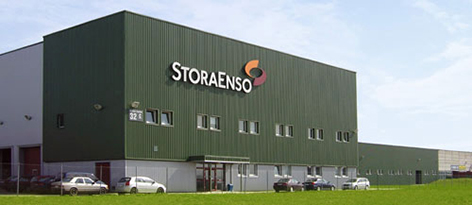
Stora Enso plans massive lay-offs in Finland due to lumber oversupply and high log prices

Stora Enso prepares for temporary lay-offs in its Wood Products division in Finland. The provisional lay-off plans concern Stora Enso's sawmills in Lappeenranta, Uimaharju, Kitee, and Varkaus.

In addition, Stora Enso is planning temporary lay-offs at its LVL mill in Varkaus. If implemented, the lay-offs of up to 90 days will be completed by the end of October 2019.

According to Stora Enso, the lay-off plans are due to market volatility that is expected to persist in 2019. Supply seems to exceed demand in the sawn timber market. In addition, high log prices weaken the profitability of the sawmill industry.

Stora Enso previously announced that is implementing a cost-cutting programme of Euro 120 million targeting reductions in variable and fixed costs, as market uncertainty increases. Stora Enso estimates that some effects will be visible already during 2019 with full impact by the end of 2020.

As part of the programme, Stora Enso is planning to close paper machine 6 at Imatra Mills in Finland and to start co-determination negotiations at the mill related to this plan. With annual production capacity of 90,000 tonnes, PM6 is a small machine that has reached its end-of-life.

Fibreboard market to experience high revenue growth through 2028

The progress experienced in the setup of urban infrastructures has significantly promoted the demand for fibreboard. This trend is not confined to developed nations, but the contribution of developing nations towards the overall market growth for fibreboard has been impressive in the past few years. 

Fact.MR has published a new research report, “Fibreboard Market Forecast, Trend Analysis and Competition Tracking – Global Market insights 2018 to 2028,” with information associated to the future development of the global fibreboard market.

Based on research insights, the revenue growth estimated in the global market is likely to surpass 6 percent during the forecast period between 2018 and 2028. This advancement can be attributed to the rising preference for fibreboard over other alternatives like solid wood and cheap plywood, especially in emerging countries.

Building and construction sector paving solid path for fibreboard market

The overwhelming demand for fibreboard due to the escalating count of single person households is becoming a major driver. The bourgeoning number of new household as well as construction projects is expected to steer the global fibreboard market to higher milestones. Rapid urbanization experienced across countries such as India and China is proving favourable for the concerned market. In addition, roofing applications and renovations in relation to flooring and paneling are projected to supplement the growth range of fibreboard market.

Medium Density Fibreboard to deliver compelling growth during forecast period

The study compiled by Fact.MR highlights the dominance of the Medium Density Fibreboard (MDF) segment during the coming years. The MDF segment will offer three times the revenue as compared to other segments in its category. Interestingly, MDF has acquired a major market share in India due to its versatility and cost-effectiveness. Presently, the MDF segment is projected to deliver 6 per cent CAGR during the stated forecast period. The rising demand for this board type in the APEJ region is anticipated to boost growth opportunities for major players.

Competitive landscape and manufacturer share

With innovations and high-end trends circulating at the global level, the fibreboard market displays significant potential to be channelized by manufacturers who are constantly striving to fulfill demands from various geographical regions. Currently, the industry is geared to observe a steady growth which could result in a dynamic market by the end of the forecast period. Key market players are expanding their product portfolios across leading markets, which is proving to be a major advantages for the overall fibreboard market.

Many of the active companies are working to enhance their product capabilities with the introduction of new functionalities aiding fresh production activities. Global presence has become the primary aim and utilization of lucrative regions like the Middle East and Africa, as well as Asia Pacific. Some of the leading players from the global fibreboard market discussed are Evergreen Fibreboard Berhadm, Kastamonu Entegre Agac Sanayi ve Ticaret A.S., UAB Grigeo Baltwood, Georgia Pacific Building Products LLC, Jining Best Star Wood Co Ltd., Proteak Uno SAB de C.V., Coillte Group and Norbord Inc.

Destabilising effect of Brexit on the EU plywood market

The destabilising effect of Brexit for the UK and Europe more widely is expected to grow as the deadline date of March 29 for the UK to leave the EU approaches.

In the event of a no-deal Brexit, plywood trade between the UK and the rest of the EU would become subject to duty equivalent to the current external tariff on EU imports – that is between 6% to 10% depending on the product.

UK customs have said they will allow cargo to be temporarily ‘waved through’ 20 ports without checks in the event of a no-deal Brexit to avoid hold-ups, with importers then having to complete an electronic customs declaration within 24 hours. But businesses are clearly concerned there will still be at least medium-term disruptions as systems adapt to new trading arrangements and an importer saw signs of the UK plywood trade preparing.

“The European softwood plywood import quota reached a balance of 275,000 m3 several weeks earlier than in 2016 and 2017,” they said. “One factor could be UK buyers building up stocks to hedge against anticipated import disruption.”

Overall plywood companies said they were less optimistic for business than at the start of 2018. “There are already many uncertainties affecting consumers and businesses and I think the plywood market will be a lot more volatile,” said one. “Importers as a result may become more cautious about holding stocks. And profit margins will be under pressure for sure.”

Finland: Log prices overview for January 2019

In January 2019, the Finnish pine log stumpage price came up to EUR 60.0 per m3, and the spruce log price was EUR 63.2 per m3.
These prices decreased by more than 3% over the previous month. In real terms the Finnish log stumpage price level remained 4% higher then the whole 2018 average reports Natural Resource Institute Finland (Luke).
The Finnish pine pulpwood stumpage price was EUR 17.8 per m3, while the spruce pulpwood price was EUR 19.4 per m3. In January 2019, the Finnish pulpwood stumpage price was 5% higher in real terms than the previous year’s average.
Luke mentions that felling method affects the stumpage price. The price of logs harvested from regeneration fellings was 3% higher than the average stumpage price paid for logs. In thinnings, the price of logs was 13% below the average price. In case of pulpwood, the price difference was the following: price of pulpwood harvested from regeneration fellings +11%, from thinnings –6% and in first thinnings –26%.
The roadside price of the Finnish pine pulpwood was EUR 32.1 per m3. The price of spruce pulpwood was EUR 34.9 and that of birch pulpwood EUR 32.7 per m3.

Siempelkamp to deliver a new OSB plant in China

Siempelkamp will deliver a production plant for OSB to the wood-based materials manufacturer Jiangsu Hui Dian New Materials Co., LTD. The location for the new plant is Shuyang in the Chinese province of Jiangsu. One of the two plants of the Siempelkamp Group is situated approximately 350 kilometers north of this location - in Qingdao.

The production line includes a 8.5’ x 38.8 m ContiRoll® press of the 8th generation. The special feature of this plant will be the ability to produce OSB that can be laminated. Similar to OSB, this new product has a fine particleboard surface layer comparable to particleboards used in furniture production. The specially-equipped forming line will have five mat-forming machines. The scope of supply also includes the screening system and the EcoPulser for secondary size-reduction of chips, the resin dosing and blending system, the double diagonal saw as well as the SicoScan quality measurement system, the thickness gauge and control, the blow detector, and the weight scales. The production management will be controlled by Siempelkamp’s Prod-IQ® process control technology.

The installation of the plant is scheduled to start in spring of 2020. After becoming fully operational the new plant will be manufacturing approximately 300,000 m3 of OSB annually.

Bergs Timber to cease operations at two sawmills

Bergs Timber made a review of all production facilities during the autumn and as a result, the Board has decided to cease operations at two sawmills, one in Sweden and one in Estonia.

In the Swedish operations, the sawmilling will be ceased at the plant in Broakulla. Continue reading "Bergs Timber to cease operations at two sawmills"

Around 500 Chinese-owned sawmill firms are currently operating in Russia

Russia’s softwood lumber production and exports have risen dramatically in recent years. Russian softwood lumber production, estimated at 39 million m3 in 2018, has increased by 55% over the past ten years. Softwood lumber exports, at 29.3 million m3 in 2018, have nearly doubled over the same period.

Russian softwood lumber exports to China were a whopping 15.65 million m3 last year. This is more than double exports in 2014 and now represents a 63% market share of all softwood lumber imports.

The nearly 10% increase in Russian softwood lumber exports in 2018 is despite slowing market conditions in China and Russia is aggressively displacing many other countries, including Finland (-32%; -550,000 m3); Sweden (-22%; -200,000 m3); and Canada (-15%; -824,000 m3).

There major capital investments and expansions by Russian-owned companies, at the same time with a major growth of Chinese-owned sawmills companies in Russia. As many as 500 Chinese companies are operating in Russia and benefit from an in-depth understanding of the Chinese market, integrated supply chains, and greater access to credit and financing. There are current problems in Russia’s ability to continue increasing timber harvests due to rising log costs, longer procurement distances and inadequate markets for lower quality logs are current problems.

Norbord plans a further EUR 40 million investment at Inverness plant in Scotland

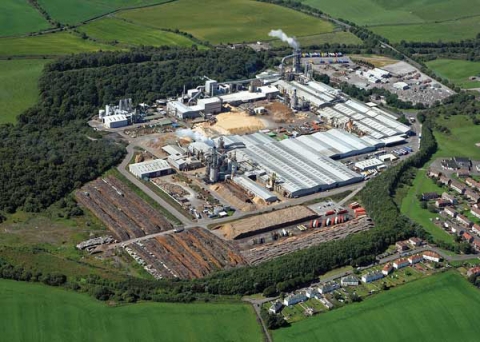
Wood-based panel manufacturer Norbord is investing around EUR 40 million into the second phase of development of its Inverness factory (in the photo above) in Scotland – taking overall investment in the past two years to EUR 169 million.

Almost a year after a EUR 128 million expansion programme to significantly increase capacity, the company will now invest a further EUR 40 million in a second wood room, heat plant and a dryer at the Morayhill mill.

The development, due to be completed by 2021, will enable the mill to meet increased consumer demand for OSB across the UK and Europe.

“The plan was always to invest further and we are pleased that the market has enabled us to make this investment much earlier than originally anticipated,” said Alan McMeekin, Norbord Europe MD.

“The EUR 40 million investment will increase capacity and will deliver an increased level of support to our strategic customer base.”

The Inverness plant opened more than 30 years ago and was the first OSB mill in Europe. Last year, Scotland’s First Minister Nicola Sturgeon unveiled the new manufacturing line at the plant following the investment.

UPM and IKEA sign contract to secure wood supply in Russia

On 25 February 2019, Hasslacherles, UPM Chudovo, IKEA Industry Novgorod and the Administration of the Novgorod region have signed a 4-parties letter of intent aiming at securing wood sourcing for UPM, IKEA Industry and Hasslacherles sites located in the Novgorod region in Russia.

HASSLACHERLES will lease a forest from the Novogod region and use coniferous species to increase the production volume of glued timber beams and agrees to sell other wood species to UPM and IKEA Industry. The commercial terms of the sale will be subject to separate agreements between the relevant parties.

"We are happy to make a big step in deepening our successful partnership with UPM and IKEA. This allows for all sorts of lumber being processed in the region - from high quality birch veneer to low-grade Aspen," comments Franz Meliessnig, CFO of Hasslacherles Norica Timber.

"UPM is actively seeking partnerships to develop its business everywhere we operate. This letter of intent is a great example of a win-win cooperation," says Mika Kekki, Vice President, Production and Operations, UPM Plywood. "I am sure it will play an important role in securing wood supply for our expanded Chudovo mill," he continues.

LIGNA 2019: Future showcase for the woodworking and timber processing industries

This May, over 1,500 companies will be gathering in Hannover, Germany, to showcase the future of the woodworking and timber processing industries. Whether it's about digitization, automation, IoT platforms or collaborative systems, LIGNA is where innovations are shown for the first time – and on an unrivalled scale. 130,000 square meters (nearly 1.4 million square feet) is the total net display area that will be occupied by exhibition stands featuring the latest woodworking and timber processing plant, machinery and tools.

"From 27 to 31 May 2019, exhibitors from over 50 countries will gather here at the Hannover Exhibition Center to showcase state-of-the-art processing solutions, applications and concepts for the entire forestry & wood industry. The presence of all the world's leading technology providers will make Hannover the global hotspot for the wood-based industries during those five days. No other fair compares in terms of international appeal", asserted Dr. Andreas Gruchow, Managing Board member at Deutsche Messe, during the LIGNA Preview press conference on 5 February in Hannover, adding: "Once again in 2019, LIGNA will serve as the industry's showcase of choice for unveiling their innovations, with a great many exhibitors even timing their development cycles to coincide with the show's staging every two years."

Visitors can expect to see innovations across all display categories, from forestry technology, furniture and window manufacturing, through to tooling systems and surface technology. They will also see live demonstrations of fully functional furniture production plants, learn about IoT platforms for Industry 4.0 plants and the latest R&D projects, and be able to participate at networking events throughout the show. Dr. Andreas Gruchow: "One of the big challenges is the ever greater trend to product individualization – a trend that is putting pressure on manufacturers to deliver customized products at least as quickly, profitably and efficiently as with series production. It's these sorts of challenges for which LIGNA exhibitors will be presenting solutions."

LIGNA 2019 has three focus themes: "Integrated Woodworking – Customized Solutions", "Smart Surface Technology" and "Access to Resources and Technology". The latter is also the keynote theme of the Wood Industry Summit .

"Integrated Woodworking – Customized Solutions"

In the wood industry, there is keen interest in IoT application scenarios, such as condition monitoring and predictive maintenance, as a means of further boosting production plant efficiency. In such scenarios, humans remain an integral part of the production process but are supported by cyber-physical assistance systems, such as collaborative robots, automated guided vehicles and smart worker support technologies. The trend is thus towards hybrid human-machine production systems in which the product is inextricably linked to the production plant and the humans who operate it. "Visitors to the next LIGNA will gain captivating insights into what the future has in store for the furniture and woodworking industries", explained Gruchow.

Smart Surface Technology

Themed "Smart Surface Technology", the surface finishing exhibits at LIGNA 2019 will span all the intelligent processing solutions needed to cater for today's surging demand for haptic, matt and reflective surfaces. That's digital printing and decorative gravure printing systems, inspection systems, the latest generation of spray coating machines, robotics systems, and much more besides. Here, too, digitization and automation are the key to achieving greater flexibility while keeping costs to a minimum. The full range of the latest surface technologies, applications, innovations and solutions will be on display in halls 16 and 17.

"Access to Resources and Technology" at the Wood Industry Summit

Providers of technology for the forestry and/or primary wood processing industry, in particular, will have an unrivalled opportunity to tap into new growth markets at next year's Wood Industry Summit, which is themed "Access to Resources and Technology". Complete with forum, lounge and exhibition area, the summit is all about international communication and technology transfer. Among much else, its focus will be on ways of optimizing the entire forest-wood-logistics value chain – from standing trees through to final processing in the factory – as well as on protecting forests from biotic and abiotic damage, and on climate and environmentally friendly harvesting processes and the future of the forest and wood industry. Digital technologies, such as drone-based data capture systems, mobile applications, laser scanners and highly sophisticated IT programs, now span the entire forestry value chain, from forest information and integrated harvesting systems right through to modern forest management systems. And in each case, the focus is squarely on efficiency and productivity. Digitization will therefore be a prominent theme at the discussion forms and throughout the exhibits at LIGNA 2019.

Main display categories

The last LIGNA featured a restructured site layout featuring seven main display categories – a layout well received by exhibitors and visitors, alike, and thus to be continued in 2019:

  • – Tools and Machinery for Custom and Mass Production in halls 11 to 15 and 27
  • – Surface Technology in halls 16 and 17
  • – Wood Based Panel Production in Hall 26
  • – Sawmill Technology in Hall 25
  • – Energy from Wood in halls 25 and 26, and in Pavilions 32, 33 and 35 on the open-air site
  • – Machine Components and Automation Technology in halls 15 and 16
  • – Forestry Technology on the open-air site and in Pavilions 32, 33 and 35

Guided Tours

In order to help visitors get the most out of next year's show, the organizer is offering Guided Tours on "Smart Surface Technology", "Integrated Woodworking – Customized Solutions" and "Sawmill Technology – Innovations and Trends".

Canfor’s lumber shipments drop 14% in Q4 /18

Canfor Corporation generated strong financial results in 2018 with reported operating income of $608.6 million, the highest operating earnings in over 10 years, and up $51.2 million, or 9 per cent, from 2017. Reported annual results include record-high pulp and paper segment earnings and solid lumber segment operating income. The latter was achieved despite major challenges presented by significant log supply constraints and log cost increases in British Columbia, severe transportation issues in the first half of the year, extreme weather across North America and one of the worst forest fire seasons in B.C., as well as significant market volatility during the year. Continue reading "Canfor’s lumber shipments drop 14% in Q4 /18"

Finnish Pölkky Oy to invest EUR 30 million in its wood production facilities

Finnish Pölkky Oy has announced a major investment program, targeting its production facilities in northern Finland. The investment program is executed according to the company’s new strategy. The value of the first phase in the investment program is 30 million euros. In the first phase, Pölkky will modernize the production technologies at its sawmill in Kajaani, enabling more effective usage of the high-quality raw material in the Kainuu region.

Pölkky has been operating in Kajaani since 2012. The company has found the raw timber in the Kajaani region to be a good source for the company’s high-quality wood products. The quality raw timber from the Kajaani region combined with a highly competent production facility enables the strong development of sawn timber processing across the Pölkky corporation.

“The global growth trend in timber construction is increasing the need for high quality processed wood products in all markets. Meanwhile, the value of raw timber in the forest is growing. With our new investment program we aim to significantly increase the use of raw timber, generating new jobs in all phases in our production chain in northern Finland.” says Petteri Virranniemi, Chief Executive Officer of Pölkky Oy.

Pölkky Oy uses 1 400 000 m3 of raw timber annually, across its four sawmills in Finland. The company’s turnover is 180 million euros. Pölkky has 420 employees in wood procurement, sawing and processing. Pölkky is a family company, now in the third generation.

About Pölkky Oy

Pölkky Oy is the largest private wood processing company in northern Finland. The sawmills and further processing facilities run by Pölkky Oy are located in Kuusamo, Taivalkoski and Kajaani. Pine represents 75% and spruce 25% of our production. Pölkky also has a pressure treatment facility in Oulu.

Vietnam aims to reach US$11 billion in wood products exports this year

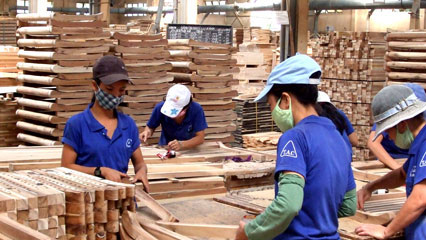
Vietnam aims to push wood export value beyond US$11 billion this year and to develop a production chain and value-added export products.

Prime Minister Nguyễn Xuân Phúc made the statement at a forum on the Vietnamese wood processing and export industry in 2018 and seeking breakthrough solutions for 2019 held in Hanoi on Friday.

According to the Prime Minister, wood export value growth had exceeded the target set for last year thanks to new designs, value-added product and branding.

The quality of the industry’s sustainable development would depend on the processing and export stages this year and beyond, Phúc said.

The PM said that in the next 10 years, Vietnam must join the top 15 nations in terms of agricultural development and become a leading centre for processing and exporting wooden products to the world.

By 2030, Vietnam is expected to hold 30-50 percent of the global wooden product market worth $580 billion, instead of the 6 percent it held now, he said.

In addition, Phúc said corporate and national brands for wooden products had not received enough attention so export value was not as high as expected due to the need to export via partners instead of directly.

Nguyễn Quốc Khanh, chairman of AA Construction Joint Stock Company, said branding could increase value of a company by up to 50 times. However, corporate branding in the local wood industry was still very weak.

PM Phúc said the timber industry was still unstable and needed a long-term strategy for market development.

Vietnam had many timber enterprises but no major players capable of building a large-scale value chain. Finally, the industry needs to continue focusing on designs and models as well as scientific research.

To achieve the goal of over $11 billion, Vietnamese Minister of Agriculture and Rural Development Nguyễn Xuân Cường said the sector would effectively implement the Forest Law and compile regulations to implement new international commitments such as CPTPP and FLEGT-VPA for stable and sustainable development of the wood and forestry product processing industry.

The industry would also ensure a supply of about 37.5 million cu.m of materials for the wood processing industry by continuing to develop large forests according to international practices and criteria; and limit exports of raw wood, Cường said.

Slower pace in US softwood lumber prices

Softwood lumber trading geared down from a faster pace earlier in the month, with traders citing inclement weather as the primary factor.
Another snowstorm sweeping across the Midwest and Northeast kept those regions in the deep freeze, while rain continued to drown out demand in the South. Holidays Monday in both the U.S. and Canada got the week off to a slow start, and trading failed to gain momentum. The Random Lengths Framing Lumber Composite Price held, putting an end to a five-week run of gains.

This Week
Feb 22
Last Week
Feb 15
Year Ago
2018
Random Lengths Framing Lumber Composite Price* $377 $377 $509
KD Western S-P-F #2&Btr 2x4 R/L Mill Price 398 410 540
KD Eastern S-P-F #1&2 2x4 R/L, delivered Great Lakes 469 471 619
Green Douglas Fir Std&Btr 2x4 R/L (Portland) 297 302 600
Southern Pine (Westside) #2 2x4 R/L 429 422 567
KD Coast Hem-Fir #2&Btr 2x4 R/L 405 405 560
Ponderosa Pine (Inland) #2&Btr 1x12 R/L 820 815 740
* Weighted average of 15 key items


Random Lengths Panel Market Report

Frigid, rainy weather stifled structural panel trading through most of North America. Equilibrium between supply and demand remained intact in OSB, and prices were unchanged. Winter weather dulled demand in key consuming regions. Southern Pine plywood trading was muted, but some mills commanded modest premiums on rated sheathing. Diminished production also kept some prices on a slight upward trajectory. A stagnant sales pace prevailed in western Fir plywood.

(f.o.b. mill prices) This Week
Feb 22
Last Week
Feb 15
Year Ago
2018
Random Lengths Structural Panel Composite Price* $378 $377 $534
Southern (west-east) 15/32-inch 3-ply rated sheathing plywood 385-407 380-405 530-575
Southern (west-east) 15/32-inch 4-ply rated sheathing plywood 390-417 385-415 535-580
Western 1/2-inch 4-ply rated sheathing plywood 379 379 549
North Central 7/16-inch Oriented Strand Board 215 215 395
*Weighted average of 11 key items

Finland: Roundwood prices up 6% in 2018

For the Finnish wood industry, the year 2018 was characterized by a clear rise in the real stumpage prices of roundwood from non-industrial private forests.
The real stumpage price level of roundwood rose by six percent compared with the previous year. Pine logs fetched EUR 60.5 per cubic meter and spruce logs EUR 64.3 per cubic meter in standing sales. The stumpage price for pine pulpwood was EUR 17.6 and for spruce pulpwood EUR 19.6 per cubic meter Continue reading "Finland: Roundwood prices up 6% in 2018"

China plans to boost its forestry industry output by 50% until 2025

China's top forestry authority has made plans to boost the forestry industry and set development goals. The industry pledges to improve its gross output by 50 percent by 2025, according to a recent guideline by China's the National Forestry and Grassland Administration (NFGA).

The output of economic forest products will reach 250 million tonnes by 2025, with total imports and exports of forest products expected to hit 240 billion U.S. dollars.

The NFGA said by 2035, the country will see further expansion of the industry with more improved structure and sufficient supply of high-quality forest resources.

To achieve such targets, continued efforts will be made to increase the supply of wood and establish more demonstration bases for the industry.

Apart from supporting the diverse development of the forest economy, the NFGA will be dedicated to promoting forest tourism while conserving natural resources.

The administration added it would maximize the use of e-commerce platforms to promote the online-offline integration of forest product sales.

China's forestry industry output reached 7.33 trillion yuan (about 1.1 trillion U.S. dollars) in 2018, a 2.88-percent growth from 2017, the NFGA data showed.

Newsletter

Subscribe to our digital newsletter for your daily digest of essential news, views and analysis from the international wood industry delivered directly to your inbox.


0