
Article archive

Current trends in the Central European wood pellet market

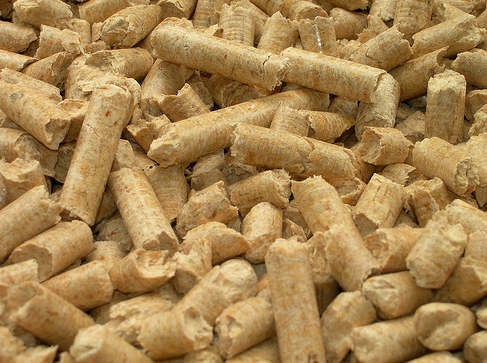
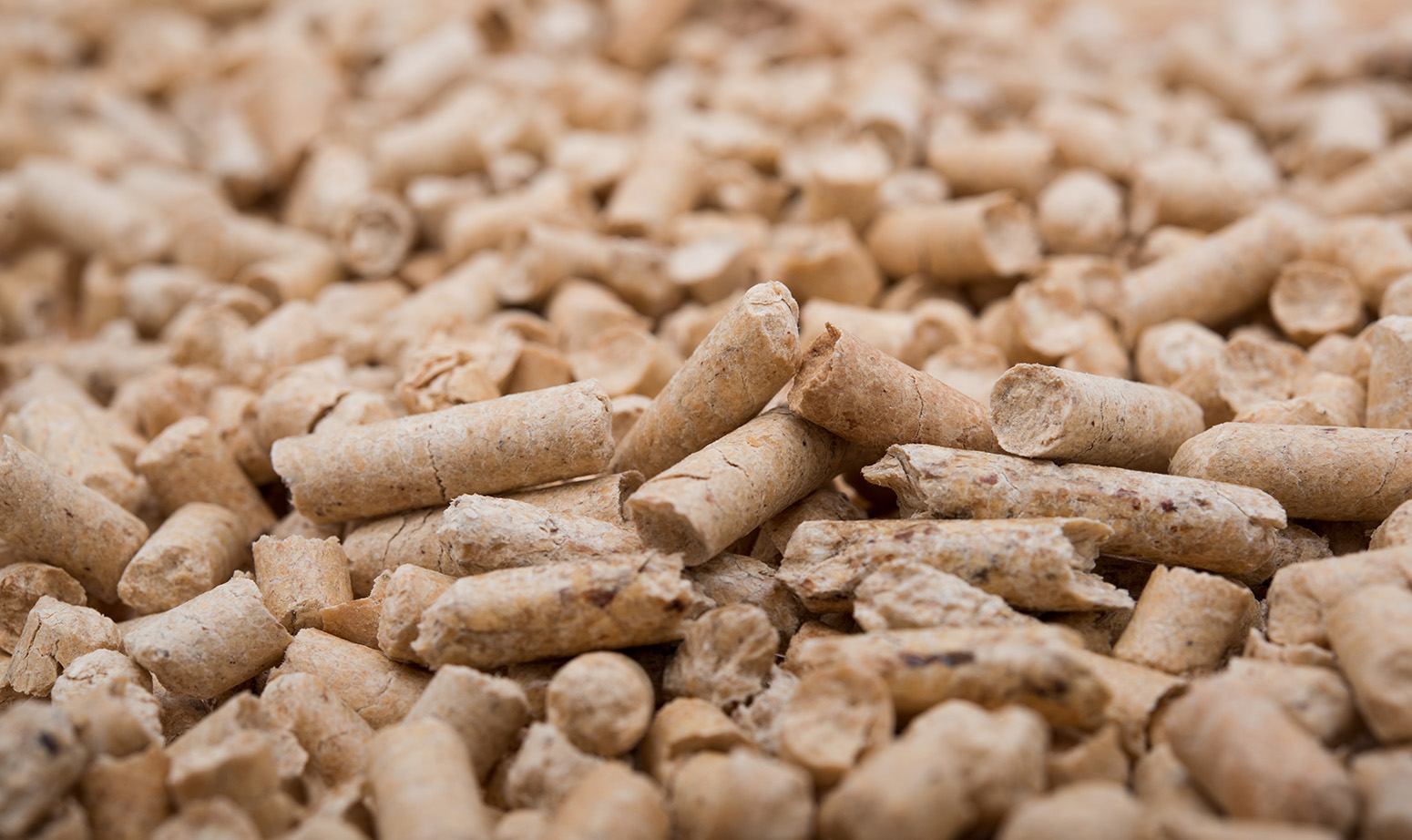
On February 27th and 28th, 2019, the European Pellets Conference took place in Wels, Austria. Around 660 participants came to the event over the two days. As always, there was an overview of the global pellet markets. Europe is characterized by rising production and a simultaneous fear of supply shortages. In the DACH countries (Germany, Austria, Switzerland), wood pellet production is rising steadily, although there are several problems in the future development of the pellet market. 

Austria: Wood pellet production rising

Christian Rakos from proPellets Austria reported a 10% increase in production, and even 11% for ENplus pellets. A total of 1.35 million tonnes of pellets were produced in Austria in 2018, including 1.17 million tonnes of ENplus pellets. Consumption, however, stagnated at 960,000 tonnes.

Exports have been rising rapidly since 2014 and are estimated at 740,000 tonnes in 2018. By far the largest customer is Italy with about 650,000 tons.  Continue reading "Current trends in the Central European wood pellet market"
Kalesnikoff Lumber to invest in a mass timber facility in Canada

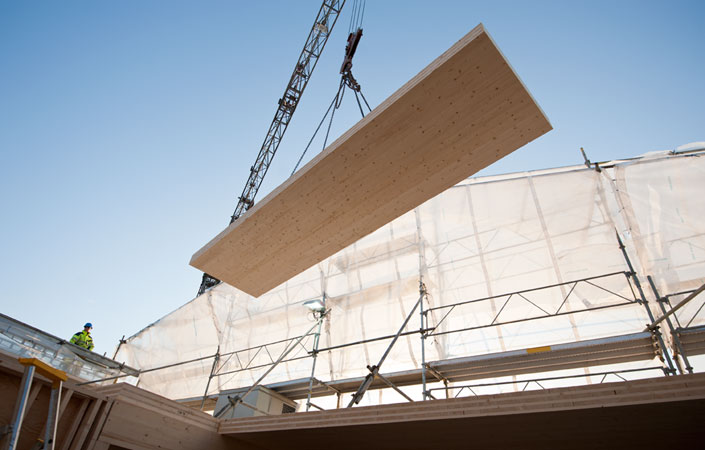
Kalesnikoff Lumber announced plans for construction of a multi species mass timber manufacturing facility in South Slocan, BC, Canada.

According to the announcement, the facility will be North America’s most advanced, fully integrated, multi-species mass timber manufacturing facility and create 50 full-time, technology-centered local jobs.

The $35 million investment will encompass construction of a new 110,000 sq ft. building, and the purchase of state-of-the-art processing equipment and technology from leading companies including Denmark-based Kallesoe Machinery and Canadian-based Conception RP.

About Kalesnikoff Lumber:

The company is located in Thrums, British Columbia (BC), Canada. It operates a modern, multi-species mill with a capacity of 75 million fbm.

Kronospan achieves record profits in Latvia

Kronsopan Riga, the company's Latvian subsidiary, has achieved record profits in its financial year (October 2017/September 2018), with a net profit of EUR 119.8 million.

Kronospan Riga's profit after tax for the last financial year (1 October 2017 to 30 September 2018) has increased by 34.2% or EUR 30.5 million year-on-year. In turn, the company's turnover reached EUR 231.4 million, an increase of 23.9% or EUR 44.643 million compared to the 2016/2017 financial year.

The turnover of Kronospan Riga has grown as the company has increased its production - sales of various types of particleboards and higher prices.

Last year, the company invested EUR 12.5 million in development, used for the purchase of hot gas generators, a thermal oil heating system and the recyclate preparation line.

Kronospan Riga employed in the financial year 2017/2018 an average of 271 employees, with two employees less than a year earlier.

Kronospan Riga, formerly Bolderaja Ltd., was founded in 2005. The company's share capital is EUR 40.999 million, the Cyprus-registered Kronospan Baltic Holdings LTD is the sole owner of the company.

China: Latest prices for logs and sawnwood across main timber markets

The report below contains the latest prices of logs and sawnwood from main timber markets in China, between 16-28 February 2019.

1 Yuan=0.13 EUR
1 Yuan=0.15 US$
Guangzhou Yuzhu International Timber Market

Logs yuan/cu.m.
Merbau Dia. 100 cm+ 4-6000
Bangkirai Dia. 100 cm+ 3200-4200
Kapur Dia. 80 cm+ 2700-3000
Ulin All grades 6500
Lauan Dia. 60 cm+ -
Kempas Dia. 60 cm+ 2000-3000
Teak Dia. 30-60 cm+ 8500-8600


Logs yuan/cu.m.
Greenheart Dia. 40 cm+ 2300-2400
Purpleheart Dia. 60 cm+ 3000-4500
Pau Rosa Dia. 60 cm+ 2800-3000
Ipe Dia. 40 cm+ 2800-3000
Yuan per tonne
Cocobolo All grades 40-70000

 
Sawnwood

Sawnwood yuan/cu.m
Makore Grade A 9800-11800
Zebrano Grade A 9500-12500
Walnut Grade A 9500-15000
Sapelli Grade A 5000-7500
Okoume Grade A 3700-4700
Padauk Grade A 15000-18000
Mahogany Grade A 6500-7500


Sawnwood yuan/cu.m
Ulin All grade 9000-10000
Merbau Special grade 7500-9500
Lauan Special grade 4300-4700
Kapur Special grade 5000-6000
Teak Special grade 14000-22000


Sawnwood yuan/cu.m
Maple Grade A 9000-9500
Beech no knot 9000-9500
Ash no knot 5600-6300
Basswood no knot 2800-3300
Oak no knot 5300-5700
Scots pine no knot 2100


Sawnwood yuan/cu.m
Cherry Fas 2 inch 9000-10000
Black walnut Fas 2 inch 15000-18000
Maple Fas 8200-10000
White Oak Fas 7500-13000
Red Oak Fas 6500-8300
Finnish pine Grade A 2600-2900

Zhangjiagang Timber Market Wholesale Prices

Logs, all grades  yuan/tonne
Sapelli 3000-4000
Kevazingo 8000-32000
Padouk de africa 2400-3100
Okoume 1400-1800
Okan 2400-2800
Dibetou 2200-2500
Afrormosia 5500-6500
Wenge 4700-5500
Zingana 3400-4800
Acajou de Africa 3000-3500
Ovengkol 3100-3600
Pao rosa 5900-6600


Logs, all grades  yuan/tonne
Merbau 3500-5800
Lauan 1800-2020
Kapur 2020-2500
Keruing 1700-2200
Geronggang 1600
Kauri 1700-1850


Logs, all grades  yuan/tonne
Amoora 1900-2080
Calophyllum 2150-2350
Red Ganarium 1300-1400

(Source: ITTO)

Georgia-Pacific to expand lumber production by 20% at Rome, Georgia facility

Atlanta-based Georgia-Pacific announced it will spend approximately $30 million to purchase and install new equipment at its Rome Lumber facility in the coming months. The company said the investment will enable the facility to produce 20% more lumber at a higher quality and with more variety. Continue reading "Georgia-Pacific to expand lumber production by 20% at Rome, Georgia facility"

Western Forest Products to temporarily close sawmill in Alberni

Western Forest Products has announced that Alberni Pacific Division Sawmill in Port Alberni will be closing for a month starting on March 18.

“We are temporarily suspending operations for a four-week period starting on March 18,” WFP director of communications Babita Khunkhun confirmed late Friday, March 8, as quoted by local media.

“This decision is directly related to market conditions. Our APD facility mainly produces products for the Japanese market, so it’s related to market demand for that product.”

Western Forest Products owns another mill in Port Alberni, the Somass Sawmill. The company announced on July 27, 2017 that they were closing the mill indefinitely. Work at the mill had been curtailed since the previous February; it has never reopened.

Read our latest news on the Canadian lumber industry:

  1. Canada: Sawmill production falls into a lower gear

  2. Canadian lumber giants face huge forestry sector crisis

  3. Trump administration’s lumber tariffs forces Canadian producers to idle sawmills

  4. Canadian lumber companies in trouble: high log prices and low supply cause production curtailments

The European solid biomass sector continues steady growth

According to the recently released Eurobarometer, in 2017 the European solid biomass sector came close to 100 Mtep (Million tons of oil equivalent) of primary energy, deriving from wood, wood chips, pellets, black liquor from the paper industry and lignocellulosic agricultural waste. The "Top five "of the European ranking are: Germany (12.4 Mtep), France (10.8 Mtep), Sweden (9.3 Mtep), Italy (9 Mtep) and Finland (8.6 Mtoe). All self-sufficient in the production of biomass, except Italy and Germany, which import 1.3 and 0.4 Mtep respectively.

The most virtuous countries in the use of solid biomass for the generation of electricity, or those where only cogeneration is used, are: Sweden, Poland, Denmark, Latvia, Lithuania, Slovenia, Croatia and Luxembourg. UK is instead the first producer of electricity from biomass, but 100% of its production takes place by wasting heat, for the simple reason that biomass is used to replace coal in old power plants, which was preferred to convert rather than dismantle. Continue reading "The European solid biomass sector continues steady growth"

New Zealand's export prices for logs negatively impacted by higher ocean freight costs

At Wharf Gate (AWG) prices for logs delivered to ports around New Zealand decreased on average -NZ$5 per JASm3 in March from the highest February prices. This decrease in AWG prices is due to increased ocean freight costs for export log cargo.
Most CFR log prices in China were flat to a modest increase of +US$1 per JASm3. ‘A’ grade export now sells for up to US$143 per JASm3 in China and US$155 per JASm3 in India. Continue reading "New Zealand's export prices for logs negatively impacted by higher ocean freight costs"

New Zealand’s export prices for logs negatively impacted by higher ocean freight costs

At Wharf Gate (AWG) prices for logs delivered to ports around New Zealand decreased on average -NZ$5 per JASm3 in March from the highest February prices. This decrease in AWG prices is due to increased ocean freight costs for export log cargo.

Most CFR log prices in China were flat to a modest increase of +US$1 per JASm3. ‘A’ grade export now sells for up to US$143 per JASm3 in China and US$155 per JASm3 in India. Continue reading "New Zealand’s export prices for logs negatively impacted by higher ocean freight costs"

Italy: Imports of wood pellets up 27% in 2018

After a 9% increase in 2017, wood pellets imported by Italy showed a much more consistent trend growth in 2018. An increase of 27% from Jan.-Dec. 2018 proves that Italy’s demand for pellets is still high as manifested in the last 7-8 years. 

In quantity, the imports jumped to over 2 million tonnes in Jan.-Dec. 2018 (Jan.-Dec. 2017: 1.6 million tons). At the same time, in value, the increase was as well of 27% (EUR 368 million in Jan.-Dec. 2018).

Austria remains the main source of imports: +56%; from 425 thousand tons in Jan.-Dec. 2017, to 663 thousand tons in Jan.-Dec. 2018. Imports from Germany grew 66% (up to 174 thousand tons) and those from Slovenia by 5%.

Read our latest information on the wood pellets market:

More than two thirds of the total quantity of wood pellets imported by Italy comes from the EU countries (1.4 million tons and a 26% increase in Jan.-Dec. 2018).

According to the Italian heating market growth expectations and the national Renewable Energy Action Plan, Italy’s use of wood pellets is forecast to reach 5 million metric tons (MMT) in 2020.

However, only 15 percent of domestic demand is met by domestic production, with the remaining 85 percent being covered by imports. Lombardia is the main production area, accounting for 45 percent of total supply, followed by Veneto (18 percent), Friuli Venezia Giulia (16 percent), and Trentino Alto Adige (8 percent).

In Italy, wood pellets are mainly used in small-scale private residential and industrial boilers for heating. According to the Italian Association of Wood Energy Chain (AIEL), bagged pellet (15 kilograms) represents almost the total consumption. Bulk pellet transported with silo trucks is no more than 20,000 metric tons (MT).

Wood pellets are mainly distributed through retail shops (i.e. hardware stores) and fossil fuel retailers.

Wood pellets imported by Italy from... (in tons )

Origin 2017 2018 Change in %
EUROPEAN Union
1,169,632 1,469,719 26 %
Austria
425,327 663,336 56 %
Germany
105,029 174,522 66 %
Slovenia
94,606 99,630 5 %
Czech Republic
73,077 90,644 24 %
Poland
73,191 84,794 16 %
Others
398,402 356,793 -10 %
OTHER European Countries
297,874 363,914 22 %
Croatia
139,683 126,674 -9 %
Russia
60,844 94,357 55 %
Ukraine
42,873 62,353 45 %
Bosnia - Herzegovina
27,830 27,748 0 %
Albania
13,599 22,896 68 %
Others
13,046 29,886 129 %
NORTH Africa
24,551 37,498 53 %
Egypt
17,010 25,147 48 %
Tunisia
7,441 12,351 66 %
Morocco
100 - -100 %
OTHER African Countries
429 78 -82 %
Ghana
429 78 -82 %
NORTH America
88,018 131,174 49 %
USA
40,147 85,732 114 %
Canada
47,871 45,442 -5 %
SOUTH America
51,473 72,460 41 %
Brazil
43,743 67,972 55 %
Argentina
2,735 2,980 9 %
Chile
4,616 1,401 -70 %
Uruguay
379 108 -72 %
NEAR and MIDDLE East
177 - -100 %
United Arab Emirates
- - %
Iran
20 - -100 %
Israel
157 - -100 %
OTHER Asian countries
76 292 284 %
China
43 189 340 %
Indonesia
33 89 170 %
Vietnam
- 15 %
OCEANIA and Polar region
- 24 %
Tuvalu
- 24 %
TOTAL 1,632,230 2,075,159 27 %

Russian Ilim Group plans to develop a supply chain in the South-West of China

On February 28, a joint conference of the top management of Ilim Group was held with major manufacturers of packaging and paper products in the southwestern provinces of China - the Sichuan, Yunnan and Guizhou regions.

In 2019, the Ilim Group plans to increase the production and supply of pulp to the Chinese market. With the launch of the new pulp-and-cardboard plant in Ust-Ilimsk and its output at full capacity by 2025, deliveries to China will increase by another 600 thousand tons of packaging products per year and total 2.4 million tons of finished products per year (in 2018 shipments amounted to 1.5 million tons).

In 2018, Ilim Group started to supply its products to Sichuan region on a regular basis, and over the next few years the supply volume will grow. Chengdu Paperboard company is the key partner of Ilim Group in Sichuan region.

“The South-Western provinces are a new direction for us, where we come along with our long-time Chinese distributing partners. Therefore, I am sure that the development of the client network in this region will develop at a good pace , ”said Timofey Sokolenko, vice president of sales and supply chain management at Ilim Group.

BC San Group to start construction of a new sawmill in Port Alberni

B.C.-based San Group is starting construction on a new mill and associated re-manufacturing plants in Port Alberni.

The San Group is investing $70 million to build the mill, which will produce high-value engineered wood products from smaller logs.

“We will be processing with special sizes, and all species, and turn it into finished product right in Port Alberni. That is what our plan is,” San Group CEO Kamal Sanghera said to Canadian media.

San Group is a Canadian-based producer of forest products with its roots in the industry since 1979. The company has evolved from a small lumber remanufacturing facility to a multi-level forest products corporation with more than 30-years of exporting experience to a global community.

Japan’s huge demand for wood pellets to be satisfied with North American supplies

Japan's consumption of wood pellets continues to increase significantly in the wake of the Fukushima Daiichi nuclear disaster in 2011, as its government has targeted a “best energy mix” of roughly 4 GW of biomass-fired capacity by 2030. By then, Japanese demand for wood pellets will be upwards of 15 million tons per year—a staggering 3,000% increase from its consumption of roughly 500,000 tons in 2017.

Where will these millions of tons of wood pellets come from in the future?

In 2018, Japan was home to 145 operating pellet facilities that produced just 125,000 metric tons annually; most facilities produce between 100 and 1,000 tons annually, which is a very small quantity compared to modern export wood pellet facilities in North America and Europe. Continue reading "Japan’s huge demand for wood pellets to be satisfied with North American supplies"

Arauco reports a 33% drop in EBITDA as US-China trade war impacts wood products and pulp markets

Arauco´s fourth quarter net income was US$70.1 million, a decrease of 68.2% compared to the third quarter, driven by lower revenues mainly in the pulp segment, and higher other expenses. This lower income explains the decrease by 33.2% in the company's Adjusted EBITDA compared to last quarter, reaching US$342.6 million. Arauco's Adjusted EBITDA margin was 24.9%, down from 33.0% in the previous quarter.

In general, for Arauco all markets showed a stable demand, however, the pulp industry was affected by the uncertainty of the trade war between United States and China. Pulp division and wood products sales decreased compared to the last quarter, due to a slight fall in prices and sales volume. This was mainly as result of the delayed impact of the trade war between China and U.S. and seasonality effects that decrease demand, the company reported. This result was slightly offset by an increase in forestry products sales.

Arauco's revenues reached US$1,377.6 million during the fourth quarter of 2018, a decrease of 11.3% compared to the US$1,553.3 million in the previous quarter. This is explained primarily by a decrease in our pulp sales and, additionally, by lower wood products sales, which were partly offset by an increase in our forestry segment sales. Pulp revenues decreased by 16.4% compared to the previous quarter, resulting from a decrease in sales volume of 11.6% and average prices of 4.2%, because of a lower demand in our main market, China. Wood products sales fell by 7.3% compared to the third quarter, due to lower panel sales volume, Arauco says.

Arauco's composite panel sales decreased compared to the previous quarter, with sales volume going down by 7.1% (including both MDF and PBO products) and average price increasing by 1.2%. Chile and Mexico showed an increase in sales volume compared to the third quarter while Argentina remained weak in the local market.

The North American market showed sales volume slightly lower than expected for Arauco and some adjustments in prices due to oversupply as well as the stable housing market index, not to mention the seasonality effects on the MDF and PB sales during the fourth quarter.

For Arauco, Latin America showed a positive trend during the fourth quarter, with good demand specially in Colombia and Peru. Brazil showed a positive signal after elections with the economy expected to start improving, which allows us to maintain sales volume and increase prices.

Arauco's sawn timber sales volume decreased during the fourth quarter with a slight decrease in prices by the end of the year. This decrease is a consequence of the oversupply, the lower demand from China and less consumption because of seasonality. China, as it was expected, showed an unstable demand because of the uncertainty of the duties from U.S. This general situation was offset by the relocation of some products in the Middle East and Japan, where Arauco saw a healthy demand, which has been positive to keep the prices in a good level.

Plywood demand remained slow with some price adjustments. In Europe the demand remained low due to the seasonality effects during the fourth quarter, but it is expected to be stable in the coming months, even though there are higher supply levels from South America and Asia. Same trend was seen in United States and Canada.

Chinese importers in search for lower-quality, cheaper logs

Total softwood log stocks increased across China during the Lunar New Year holiday period to just over 4.1 million m3. Daily uplift from the ports has steadily increased since this holiday period with current estimates between 60-70,000 m3 per day. The rate of offtake over the next month will likely determine the market direction for the next three to six months. Over 2018 the total softwood log market remained balanced with the number of days inventory supply in the 40-50 range. Log exporters expect a similar balanced position to be sustained through 2019.
The China log market is currently sitting at a sensitive point. Based on current CFR log prices and the China retail prices the log buyers cannot make a profit from New Zealand radiata logs. This does make Chinese log buyers quite discerning in log quality to ensure they are getting the quality of the grade they purchase. Continue reading "Chinese importers in search for lower-quality, cheaper logs"

Russia might ban raw timber exports by 2035

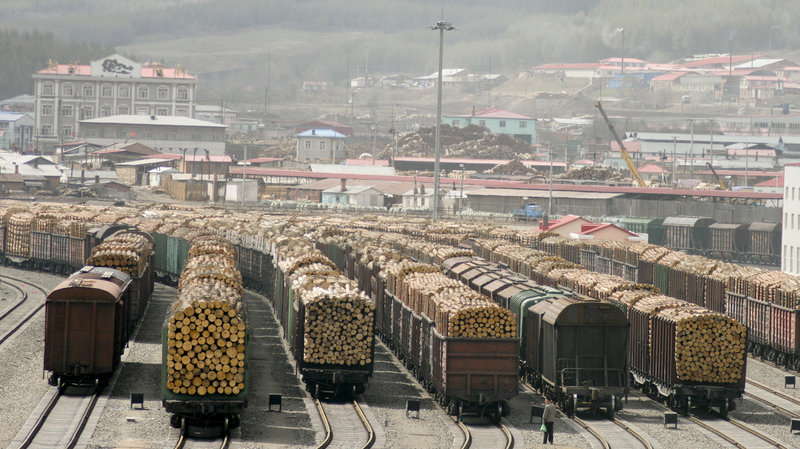
The Russian State Duma was submitted a law-in-draft on a long-term moratorium on raw timber exports until December 31, 2035.

The bill does not provide for a direct ban on raw timber exports, as this would contradict with the rules of the World Trade Organization as well as of the international treaties of the Russian Federation, but a ban on harvesting for exports. It is proposed to amend the Law ‘’On Fundamentals of State Regulation of Foreign Trade’’. Continue reading "Russia might ban raw timber exports by 2035"

Spain: Wood pellet market in transition

The Spanish pellet market is growing rapidly,. Production capacity in Spain currently stands at 1.87 million tonnes per year and is estimated at 2.5 million tonnes in 2022. The trend is towards larger systems. The actual production is only around one third of the capacity, currently at 684,000 tonnes. For the year 2022, a production of 1.2 million tons is expected with probably 100 installed plants as well as a consumption of about 1 million tons of pellets. Continue reading "Spain: Wood pellet market in transition"

The European Parliament votes on VPA with Vietnam

Members of the European Parliament will vote today, March 12 on a resolution to consent to the EU’s Voluntary Partnership Agreement (VPA) with Vietnam, aimed at improving the legality of wood and wood products flowing from the country into the EU.

Observers expect the vote to pass in favor of the VPA but have voiced concerns that Vietnam doesn’t yet have adequate enforcement capacity to guarantee that the exported wood comes from legally harvested sources, especially with wood that Vietnam imports from other countries.

“If there aren’t rigorous import controls in Vietnam, then there’s no guarantee that illegal timber won’t be running through that supply chain,” Jo Blackman, the head of forests policy and advocacy for the London-based watchdog NGO Global Witness, told Mongabay.

Representatives from Vietnam and the EU signed a VPA on Oct. 19, 2018, after nearly eight years of negotiations. VPAs are a step toward licensing under the Forest Law Enforcement, Governance and Trade (FLEGT) Action Plan, with the goal of ending the flow into the EU of wood that has not been harvested in accordance with the laws of the country where it originated. The EU has signed or is negotiating VPAs with 14 other countries around the world.

The agreements include timber harvested domestically and abroad.

“The EU welcomes the progress Vietnam has made in preparing to implement the VPA and initial steps in strengthening controls of the timber it imports,” Federica Mogherini, the EU’s high representative and vice president, said in an October statement from the EU. “However, more needs to be done.”

Mogherini said the success of the VPA would hinge on Vietnam’s ability to make sure that the wood it imports from other countries is legally harvested and that EU officials would work with their Vietnamese counterparts to accomplish that goal.

Vietnam exports more processed wood products, such as furniture, flooring and plywood, than all but five countries in the world.

Nguyen Xuan Cuong, the country’s agriculture and rural development minister, said businesses, civil society and the government backed the VPA.

“Vietnam is fully committed to ensure that no illegally harvested timber will enter the Vietnamese market and will take all necessary steps to tackle these through effective enforcement,” Cuong said in the statement.

In step with the negotiations, Vietnamese lawmakers passed a new forestry law that went into effect in January 2019 making it illegal for companies to import timber that was not harvested legally, according to the EU.

“I think that’s where the VPA has really played a role in Vietnam, because it’s definitely got the issue on the political agenda,” Global Witness’s Blackman said. “In that respect, the VPA’s been really positive.”

Once Vietnam has met the requirements of the VPA, which include the development of a “timber legality assurance system,” the country will be able to issue FLEGT licenses to operators that comply with Vietnamese forestry laws.

Currently, only Indonesia has reached that stage. Now, buyers in the EU no longer have to ensure that licensed products from Indonesia are legal through their own due diligence.

The European Parliament’s vote is the next step for Vietnam in the process toward achieving that licensing capability.

Global softwood lumber trade fell 7% in 2018

In 2018, global trade of lumber fell for the first time in five years, with total trade down seven percent y-o-y to an estimated 115 million m3.
US lumber prices have gone through a historical roller-coaster ride over the past 12 months. Average prices for pine in the US South were at about $420/m3 in January 2018, peaked at $554/m3 in June and fell to $372/m3 in early 2019.
Softwood lumber exports from Canada were down 5% y-o-y in 2018, with the biggest decline being in shipments to China.
Sawmills in the Nordic countries had a very good second half of 2018, with lumber prices in the local currencies in the second half reaching their highest levels since 2007.
Lumber imports to China fell for two consecutive quarters to reach 5.9 million m3 in the 4Q/18.
Russia’s share of total imports to China has moved up from 55% in the 4Q/17 to 63% in the 4Q/18 as the sawmilling sectors in Siberia and the Far East continue to expand and deliver competitively priced lumber.
Despite substantial declines in the gross margins for sawmills in the US South, profits were still above the ten-year average in the 4Q/18.

Newsletter

Subscribe to our digital newsletter for your daily digest of essential news, views and analysis from the international wood industry delivered directly to your inbox.


0