
Article archive

Current prices for Chinese logs and sawnwood imports at main timber markets

The report below contains the latest prices of logs and sawnwood from main timber markets in China, between 16-30 April 2019.

1 Yuan=0.13 EUR
1 Yuan=0.15 US$
Guangzhou Yuzhu International Timber Market

Logs yuan/cu.m.
Merbau Dia. 100 cm+ 4-6000
Bangkirai Dia. 100 cm+ 3200-4200
Kapur Dia. 80 cm+ 2700-3000
Ulin All grades 6500
Lauan Dia. 60 cm+ -
Kempas Dia. 60 cm+ 2000-3000
Teak Dia. 30-60 cm+ 8500-8600


Logs yuan/cu.m.
Greenheart Dia. 40 cm+ 2300-2400
Purpleheart Dia. 60 cm+ 3000-4500
Pau Rosa Dia. 60 cm+ 2800-3000
Ipe Dia. 40 cm+ 3200-3400
Yuan per tonne
Cocobolo All grades 40-70000

 
Sawnwood

Sawnwood yuan/cu.m
Makore Grade A 9800-11800
Zebrano Grade A 9500-12500
Walnut Grade A 9500-15000
Sapelli Grade A 5000-7500
Okoume Grade A 3700-4700
Padauk Grade A 15000-18000
Mahogany Grade A 6500-7500


Sawnwood yuan/cu.m
Ulin All grade 9000-10000
Merbau Special grade 7500-9500
Lauan Special grade 4300-4700
Kapur Special grade 5000-6000
Teak Special grade 14000-22000


Sawnwood yuan/cu.m
Maple Grade A 9000-9500
Beech no knot 9000-9500
Ash no knot 5600-6300
Basswood no knot 2800-3300
Oak no knot 5300-5700
Scots pine no knot 2100


Sawnwood yuan/cu.m
Cherry Fas 2 inch 9000-10000
Black walnut Fas 2 inch 15000-18000
Maple Fas 8200-10000
White Oak Fas 7500-13000
Red Oak Fas 6500-8300
Finnish pine Grade A 2600-2900

Zhangjiagang Timber Market Wholesale Prices

Logs, all grades  yuan/tonne
Sapelli 3000-4000
Kevazingo 8000-32000
Padouk de africa 2400-3100
Okoume 1400-1800
Okan 2400-2800
Dibetou 2200-2500
Afrormosia 5500-6500
Wenge 4700-5500
Zingana 3400-4800
Acajou de Africa 3000-3500
Ovengkol 3100-3600
Pao rosa 5900-6600


Logs, all grades  yuan/tonne
Merbau 3500-5800
Lauan 1800-2020
Kapur 2020-2500
Keruing 1700-2200
Geronggang 1600
Kauri 1700-1850


Logs, all grades  yuan/tonne
Amoora 1900-2080
Calophyllum 2150-2350
Red Ganarium 1300-1400

(Source: ITTO)

FSC disassociates from the Brazilian forestry company, Jari Group

The Forest Stewardship Council (FSC) has disassociated from the Brazilian forestry company, Jari Group (Jari), after an investigation carried out by an independent panel of environmental, social and economic experts concluded that the company had breached FSC’s Policy for Association.

After analyzing all the evidence and conducting a field visit and in-depth stakeholder interviews, the panel determined that Jari had been involved in illegal logging or the trade in illegal wood or forest products and had also failed to formally and consistently recognize the existence of traditional communities within its forest management area, leading directly to the violation of traditional and human rights in forestry operations.

FSC’s Policy for Association specifies six unacceptable activities that companies are required to avoid, including illegal logging or the trade in illegal wood or forest products and violation of traditional and human rights in forestry operations.

To be readmitted to the FSC system in the future, Jari must address a set of requirements aimed at correcting the identified failures and improving their systems, preventing future Policy for Association violations, as well as compensating for the social and environmental damages caused. Jari must, among other measures, develop and implement robust due diligence and traceability systems, as well as compensate for environmental damage.

In addition, Jari must also improve its systems and processes for stakeholder engagement and consultation, to ensure the formal recognition and respect of traditional and human rights. This includes a stakeholder mapping exercise to verify the existence and location of traditional communities within Jari’s operations and neighboring areas, as well as consultation with traditional and local communities about its management practices following the principle of free, prior and informed consent.

European company looks to expand supply of acetylated wood in Asia

Accsys Technologies PLC has announced that its subsidiary, Tricoya Technologies Limited , has now entered into an agreement with Petronas Chemicals Group Berhad to evaluate the feasibility of jointly funding, designing, building and operating an integrated acetic anhydride and Tricoya wood elements production plant in Malaysia.

It is envisaged that Tricoya wood elements produced at the plant would use acetic acid from PCG’s existing joint venture in Malaysia. The plant would then supply the wood panel industry within South East Asia, under licence, as the key raw material for the formation of Tricoya panels for the use in the construction industry in the region.

The Malaysia feasibility study forms part of a wider strategy to develop markets for products manufactured using Accsys technology. Accsys Technologies PLC has recently made multi-million dollar investments in a Tricoya plant for annual production of up to 30,000 tonnes per year of acetylated wood chips in Hull, England, and to increase capacity of its Accoya production plant in Arnhem, Netherlands, by 50% to 60,000 cubic metres.

India: Latest prices for imported and domestic wood products

Latest prices for Indian teak, plywood and sawnwood - 16-30 April 2019
Plantation teak prices
C&F prices for plantation teak landed at Indian ports are within the same range as shown in the previous report.

US$ per cu.m C&F
Angola logs 389-574
Belize logs 350-400
Benin logs 290-714
Benin sawn 530-872
Brazil logs 344-540
Brazil squares 333-556
Cameroon logs 405-616
Colombia logs 478-743
Congo D. R. logs 450-761
Costa Rica logs 357-780
Côte d'Ivoire logs 289-756
Ecuador squares 333-454
El-Salvador logs 320-732
Ghana logs 294-452
Guatemala logs 324-646
Guyana logs 300-450
Kenya logs 515-876
Laos logs 300-605
Liberia logs 265-460
Malaysian logs 225-516
Mexican logs 295-808
Nicaragua logs 402-505
Panama logs 335-475
PNG logs 443-575
Sudan logs 358-556
Tanzania, teak, sawn 307-613
Thailand logs 511-700
Togo logs 334-590
Trinidad and Tobago logs 603-753
Uganda logs 411-623
Uganda Teak sawn 680-900
Price range depends mainly on length and cross section

Prices for locally sawn imported hardwoods
Prices for imported sawn hardwoods remain unchanged.

Sawnwood, (Ex-mill) (AD) Rs. per ft3
Merbau
4000-4200
Balau
2500-2700
Resak
1750-1950
Kapur
2200-2400
Kempas
1550-1750
Red Meranti
1450-1550
Radiata pine AD
850-950
Whitewood
850-950
Price range depends mainly on length and cross section

Myanmar teak prices
Prices continue as previously reported.

Sawnwood (Ex-mill) Rs. per ft3
Myanmar Teak (AD)
Export Grade F.E.Q.
14000-20000
Plantation Teak A grade
9000-10000
Plantation Teak B grade
7000-8000
Plantation Teak FAS grade6
4000-6000
Price variations depend mainly on length and cross section.

Prices for imported sawnwood
Shipments of US sawn hardwoods to India are rising and this, along with a steady flow of European hardwoods, is keeping market prices stable. Indicative prices for some imported timbers are shown
below.

Sawnwood, (Ex-warehouse) (KD) Rs per ft3
Beech 1650-1800
Sycamore 1800-2000
Red oak 1900-2000
White Oak 2500-2600
American Walnut 5000-5500
Hemlock AB grade 1500-1600
Western Red Cedar 2000-2200
Douglas Fir 1800-2000
Price variations depend mainly on length and cross section.

Prices for WBP marine grade manufactured by domestic mills

Plywood, Rs per sq.ft
Ex-warehouse. (MR Quality)
4 mm 69
6 mm 92
9 mm 115
12 mm 143
15 mm 190
18 mm 201

Domestic ex-warehouse prices for locally manufactured MR plywood

Locally Manufactured
Plywood “Commercial
Grade”
Rs per sq.ft
Rubberwood Hardwood
4mm Rs.35 Rs.50
6mm Rs.52 Rs.66
8mm Rs.66 Rs.81
12mm Rs.81 Rs.95
15mm Rs.95 Rs.115
19mm RS.111 Rs.132
5mm Flexible ply Rs.70

Source: ITTO

Lumber prices in US rise for the 2nd consecutive week

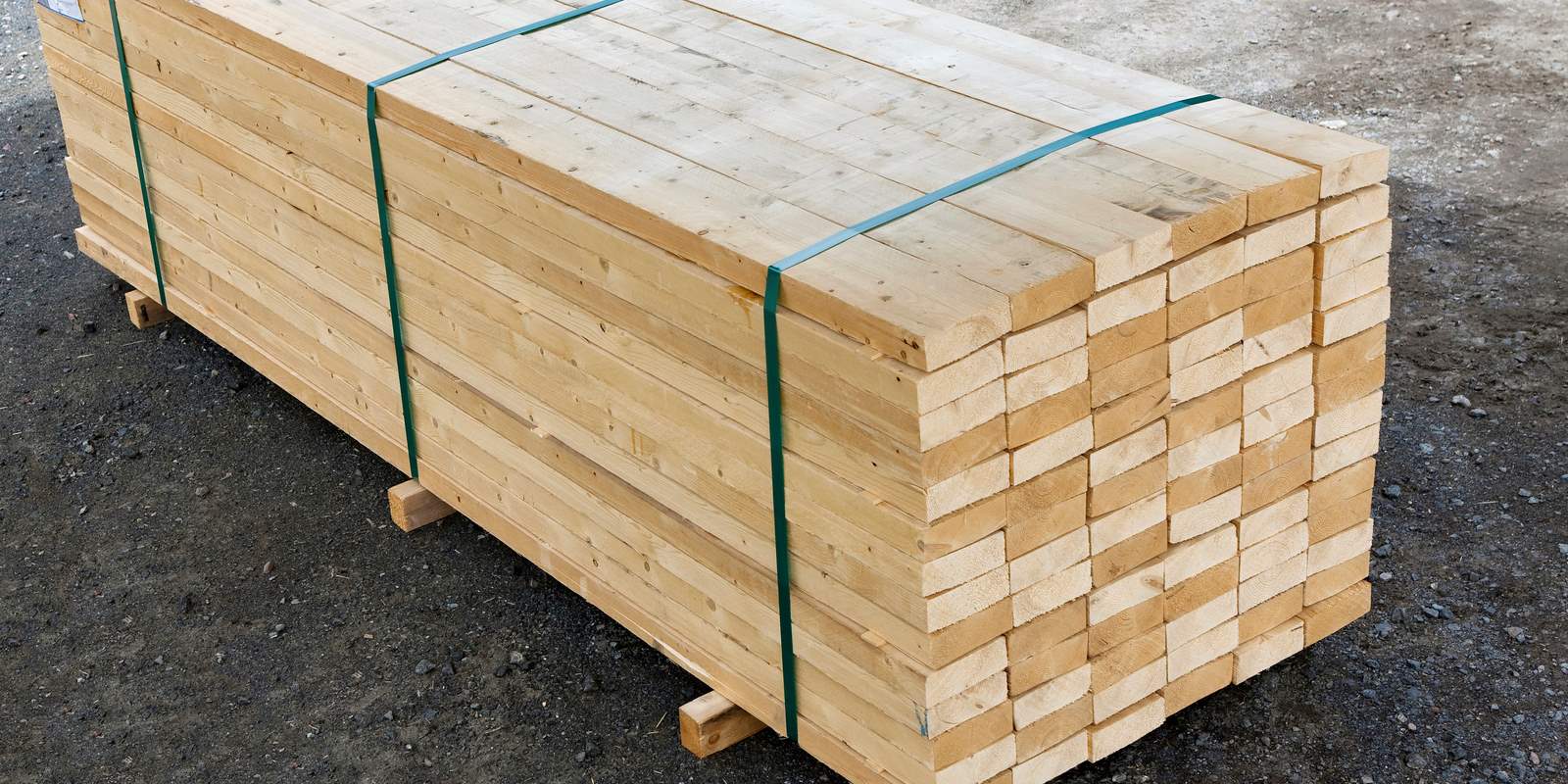
Trading in framing lumber took a step back from the prior week’s more active pace. Price trends covered the gamut. Green Douglas Fir led the upside, posting double-digit increases on some dimension items. Southern Pine was most vulnerable to price cuts.
In the West, trends were mostly flat to higher, while Canadian S-P-F prices were flat to narrowly mixed. All told, gains outdistanced losses, and the Random Lengths Framing Lumber Composite Price edged up a second consecutive week.

This Week
May 3
Last Week
Apr 26
Year Ago
2018
Random Lengths Framing Lumber Composite Price* $353 $351 $525
KD Western S-P-F #2&Btr 2x4 R/L Mill Price 329 323 598
KD Eastern S-P-F #1&2 2x4 R/L, delivered Great Lakes 413 410 654
Green Douglas Fir Std&Btr 2x4 R/L (Portland) 310 302 543
Southern Pine (Westside) #2 2x4 R/L 401 405 570
KD Coast Hem-Fir #2&Btr 2x4 R/L 357 355 590
Ponderosa Pine (Inland) #2&Btr 1x12 R/L 860 860 755
* Weighted average of 15 key items


Random Lengths Panel Market Report

Structural panel prices firmed amid a moderately faster sales pace. Solid carryover from last week’s faster pace led to double-digit price increases in western markets for OSB sheathing for the first time since last August. Most of the week’s volume in Southern Pine plywood traded below last week’s reported prices. But traders noted subsiding downward price pressure in rated sheathing after mills sold prompt loadings and extended order files. Truckload buyers of western Fir plywood sought only small concessions from producers when filling inventory holes. Despite an uptick in demand late last week, Canadian plywood volumes available for quick shipment remained in play early.

(f.o.b. mill prices) This Week
May 3
Last Week
Apr 26
Year Ago
2018
Random Lengths Structural Panel Composite Price* $353 $354 $536
Southern (west-east) 15/32-inch 3-ply rated sheathing plywood 360-395 367-400 520-560
Southern (west-east) 15/32-inch 4-ply rated sheathing plywood 365-400 372-407 525-565
Western 1/2-inch 4-ply rated sheathing plywood 355 355 527
North Central 7/16-inch Oriented Strand Board 185 180 410
*Weighted average of 11 key items


Dropping roundwood prices in Lithuania, but higher than a year ago

After rising prices registered in March, Lithuanian roundwood prices went down or remained stable in April. Pine, spruce and birch sawlogs recorded minor price decreases over March, while alder's price declined by EUR 1,45.
However, on a yearly basis, in April, almost all prices of roundwood in Lithuania are higher, except alder and birch pulpwood. Pine and spruce sawlogs are more expensive by 12,13% and 15,65%, meanwhile pine and spruce pulpwood prices have increased by more than 25%.

Roadside prices of roundwood in state forests of Lithuania EUR/m³ under bark

April 2018 March 2019 April 2019 Change
April/2018
to April/2019
SAWLOGS
Pine 59,66 67,19 66,90 12.13%
Spruce 62,85 72,98 72,69 15.65%
Birch 63,72 64,59 64,30 0.91%
Alder 54,16 51,55 50,10 -7.49%
Small-sized softwood 48,95 52,71 52,71 7.68%
PULPWOOD
Pine 25,78 33,02 33,02 28.08%
Spruce 26,65 33,02 33,02 23.90%
Birch 30,41 30,41 30,12 -0.95%

The above prices are collected from metla.fi. Prices are converted from Lituanian Litas (LTL) to Euro for each specific month at ECB conversion rates.

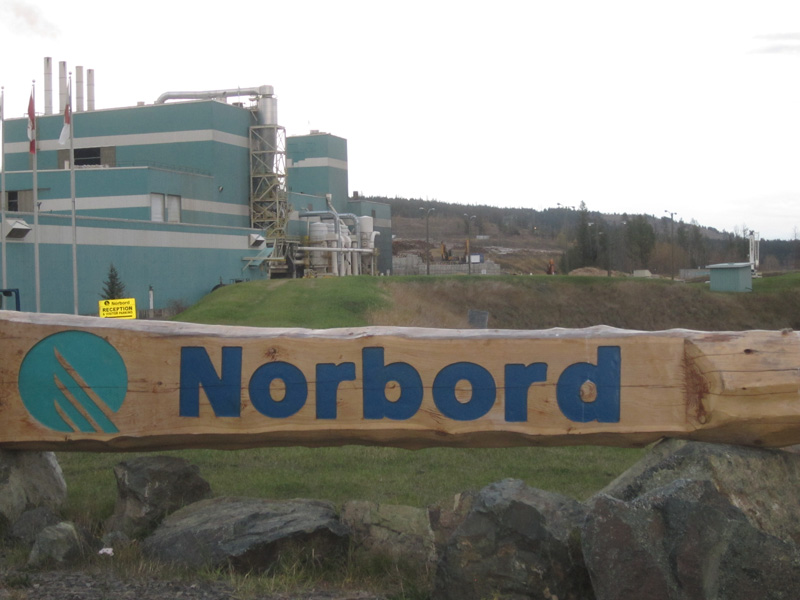
Norbord’s European panel mills post a 17% growth in Q1/2019

Wood-based panels producer Norbord’s European operations reported a 17% growth in Q1, 2019 adjusted earnings before interest, tax, depreciation and amortisation (EBITDA) to €18.75m, compared to a year ago.

“In Europe, our panel business had another good quarter, delivering 17% more adjusted EBITDA year-over-year due to continued strong OSB demand in our key markets and the ramp-up of our modernised and expanded Inverness, Scotland mill,” the company said.

“In Europe, panel markets remained strong, driven by continued OSB demand growth in Norbord's core geographies.”

Norbord said average panel prices in Europe (in local currency terms) were down a modest 3% from the prior quarter due to seasonality and sales mix, but up 5% versus the same quarter last year. Norbord’s shipments were 15% higher than the prior quarter and 13% higher than the same quarter last year.

The European mills produced at 89% of stated capacity in the quarter, unchanged from the prior quarter and compared to 86% in the same quarter last year.

Capacity utilisation was unchanged quarter-over-quarter as the new finishing line at the Inverness was being commissioned during Q1. Capacity utilisation increased year-over-year due to the continued ramp-up of the reinvested Inverness mill following its start-up in the fourth quarter of 2017.

Earnings group-wide for Norbord reduced to US$42m in Q1 (Q1, 2018: US$170m) due to lower North American OSB prices.

“The pace of US housing construction began to decelerate in the second half of last year and this trend carried over into the first quarter," said Peter Wijnbergen, Norbord's President and CEO.

Year-to-date US housing starts were down 10% versus the same period in 2018, with single-family starts, which use approximately three times more OSB than multifamily, decreasing by 5%. Wet weather exacerbated a seasonal slow time of building activity. As a result, Norbord took extensive downtime across its North American mills.

“US housing demand has clearly pulled back in the last nine months and the market has yet to recover in terms of volume,” the company said. “We remain of the view that this is a pause rather than a directional shift.”

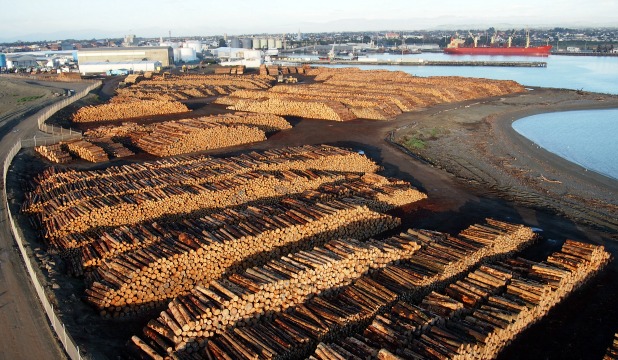
The price of New Zealand's logs dropped in April as uncertainty in the Chinese market grows

The price of logs transported to the ports around New Zealand dropped by an average of NZ$7 in April. The reason for the decline in AWG prices is the increase in ocean freight costs and the uncertainty in the Chinese log market.
Although the demand for logs has reached a record level, there is an imbalance between logs and domestic wholesale prices. In the absence of a confirmed letter of credit (LCS), there are several log ships from New Zealand to China, and Chinese log buyers are using this opportunity to try to reduce the price of logs.
By 2019, the New Zealand log market has maintained a very stable start. On average, sawmill sales have increased by about 5% compared to last year.
Due to the fall in AWG log prices, the PF Olsen log price index fell by $3 in April to $131. The index is currently $2 higher than the two-year average, $5 higher than the three-year average and $13 higher than the five-year average.
The total reserves of China's softwood logs are about 4.2 million - 4.3 million cubic meters. The daily lifts at China's ports reached a record daily of 90,000 cubic meters. Since the Chinese New Year, wood stocks of have remained high.
In recent months, New Zealand's log exporters have achieved a small but sustained increase in the CFR price of logs, while domestic wholesale prices have remained unchanged.
Many Chinese log buyers  want to lower the price of New Zealand logs. The number of logs imported from New Zealand is by far the largest and most stable and stable, so the Chinese log market depends on this quantity.

The price of New Zealand’s logs dropped in April as uncertainty in the Chinese market grows

The price of logs transported to the ports around New Zealand dropped by an average of NZ$7 in April. The reason for the decline in AWG prices is the increase in ocean freight costs and the uncertainty in the Chinese log market.

Although the demand for logs has reached a record level, there is an imbalance between logs and domestic wholesale prices. In the absence of a confirmed letter of credit (LCS), there are several log ships from New Zealand to China, and Chinese log buyers are using this opportunity to try to reduce the price of logs.

By 2019, the New Zealand log market has maintained a very stable start. On average, sawmill sales have increased by about 5% compared to last year.

Due to the fall in AWG log prices, the PF Olsen log price index fell by $3 in April to $131. The index is currently $2 higher than the two-year average, $5 higher than the three-year average and $13 higher than the five-year average.

The total reserves of China's softwood logs are about 4.2 million - 4.3 million cubic meters. The daily lifts at China's ports reached a record daily of 90,000 cubic meters. Since the Chinese New Year, wood stocks of have remained high.

In recent months, New Zealand's log exporters have achieved a small but sustained increase in the CFR price of logs, while domestic wholesale prices have remained unchanged.

Many Chinese log buyers  want to lower the price of New Zealand logs. The number of logs imported from New Zealand is by far the largest and most stable and stable, so the Chinese log market depends on this quantity.

Finland: Rising sawn timber production in Q1/2019

Pulp and sawn timber production in Finland increased during the first quarter of the year. On the other hand, the production volumes of paper, board and plywood were lower compared to January-March of the previous year.

In January – March, strong growth continued also in sawn timber production, as its production volume rose to 3.0 million cubic meters. Compared to the previous year, 2.9 per cent.

In January – March, the pulp industry produced 2.1 million tonnes. The figure was 6.3 per cent more than in the corresponding period last year, according to the statistics of the Finnish Forest Industries Federation.

“Production grew specifically in volume products, although the forecasts for the declining growth in the global economy have increased,” says Timo Jaatinen, Managing Director of the Finnish Forest Industries Federation.

“With political decisions, Finland should not start to limit the success of the forest industry, especially now that there is a willingness to invest in the industry. The next government should encourage additional use of forests, secure a competitive supply of energy and ensure the financing of traffic information, says Jaatinen.

In the forest industry, megatrends were reflected, such as the middle-ranking of emerging countries, the growth of individual economies and urbanization. Wood-based products can increasingly replace products that use fossil raw materials. On the other hand, demand for printing and writing paper is weakening in Europe, North America and Asia.

Finland's total production volume of paper in January – March was 1.6 million tonnes. This is 6.1 per cent less than in the corresponding quarter of the previous year. The invoice included production volumes for both printing and writing papers and other papers.

Cardboard production in the first quarter was less than one million tonnes, up 0.9 million tonnes. This is 1.8 per cent less than in the first quarter of 2018.

The January-March figures for plywood production show a 3.5% drop compared to last year's production. The production volume in January – March was 0.3 million cubic meters.

SCA and Martinsons deliver Swedish pine to the world’s longest bridge in China

Pine from the northern parts of Sweden has been used at the world's longest bridge over water. The 55-kilometre-long bridge, which crosses both under and over water, connects Hong Kong, Macau and China. SCA has in collaboration with Martinsons delivered 300m3 of pine which has been used as decking at two lookout points.

The interest and use of wood is increasing in Asia in general, and in China in particular. From having used the material mostly in packaging and furniture production, wood is increasingly being used in house and building production. With this development, China’s timber imports have also increased from three million cubic metres to about 25 million cubic metres over the past ten years, says Håkan Persson, CEO of SCA Wood Hong Kong.

The latest example of the increasing use of wood is the 55-kilometre-long bridge linking China with Hong Kong and the casino city of Macau. The bridge is the world's longest bridge over water. In cooperation with Martinsons, SCA has delivered a total of 300 cubic metres of pine to the building of the bridge. The material has been used for the two lookout points that are located on the bridge and serves as gates for the tunnel.

Approximately 23 kilometres of the bridge runs across the sea, and in the middle is a seven-kilometre-long tunnel for ships to pass by. With the bridge, what used to be a four-hour drive between Hong Kong, Macau and China now takes half an hour. 420,000 tonnes of steel have been used for the building, which is about the equivalent of 60 Eiffel Towers. According to official data, the bridge has cost over $18 billion to build.

Bark beetle destroying Central Europe’s forests

Hot, dry summers are fanning an unprecedented outbreak of bark beetles that are destroying vast swathes of central Europe’s spruce forests which define the region’s landscape.

Draught brought on by climate change has weakened trees’ natural defences and helped spawn the insects, creating an infestation that has forced landowners to chop down broad patches of forest across the Czech Republic, northern Austria, Bavaria and Slovakia.

While the bark beetle is natural to conifer forests and has a role in their ecosystem, climate change has helped it spread especially through single-variety spruce woods planted over the past two centuries.

The Czech Republic has been worst hit. Last year, the beetle infested 18 million cubic metres of spruce, more than 10 times amounts seen in most previous years, according to Agriculture Ministry estimates. Continue reading "Bark beetle destroying Central Europe’s forests"

Canadian lumber giants in trouble: major production curtailments announced for this May

Major Canadian forestry products companies have announced sawmill production curtailments for the month of May. All complain about the surge in log prices and the drop in lumber prices. 

Conifex Timber Inc. announced that commencing May 6, 2019, it is temporarily curtailing operations at its Fort St. James, British Columbia sawmill for four weeks and its Mackenzie, British Columbia sawmill for three weeks, due primarily to continued high log costs and lumber market conditions. The temporary curtailment is expected to reduce Conifex's British Columbia lumber output by approximately 24 million board feet.

Canfor Corporation announced it will be temporarily curtailing operations at all British Columbia dimension mills effective April 29 due to low lumber prices and the high cost of fibre. The curtailment will reduce Canfor’s production output by approximately 100 million board feet. Canfor has 13 sawmills in Canada, with total annual capacity of approximately 3.8 billion board feet.

Interfor Corporation announced plans to temporarily reduce production across its operating platform in the BC Interior during the month of May 2019 due to a combination of weak lumber prices and continuing high log costs. The curtailment is expected to reduce production in the region by approximately 20 million board feet for the month of May and will be taken by way of reduced operating days at each of the three BC Interior mills. Interfor has three sawmills in the BC Interior, with total annual capacity of approximately 750 million board feet.

Also, Tolko Industries’ OSB mill in Meadow Lake, Saskatchewan, Canada, will be down for maintenance from May 7-13, as Random Lengths reports.

Vietnam doubles share in Japanese wood pellet imports

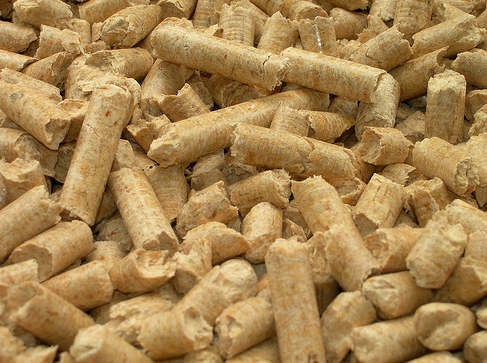
Vietnam has increased 253.6% y-o-y pellet exports to Japan in first quarter of 2019 to 192.5 thousand tones with exports value has jumped 253,6% to $32.5 million. The share of Vietnam in Japan’s pellet imports has increased 25.5 pp to 53.1% while Canada’s share has fallen 26.4 pp to 39.5%.
The total Japan’s pellet imports have soared 84% to 362.5 thousand tones in first quarter with imports value has jumped 88.2% to $7.18 million.

Japan's consumption of wood pellets continues to increase significantly in the wake of the Fukushima Daiichi nuclear disaster in 2011, as its government has targeted a “best energy mix” of roughly 4 GW of biomass-fired capacity by 2030. By then, Japanese demand for wood pellets will be upwards of 15 million tons per year—a staggering 3,000% increase from its consumption of roughly 500,000 tons in 2017.

Where will these millions of tons of wood pellets come from in the future?

In 2018, Japan was home to 145 operating pellet facilities that produced just 125,000 metric tons annually; most facilities produce between 100 and 1,000 tons annually, which is a very small quantity compared to modern export wood pellet facilities in North America and Europe. To make up the deficit, Japan must rely on imports for most of its biomass. Canada has consistently been Japan’s largest supplier of wood pellets, accounting for approximately 71% of the imports in 2017. Asian suppliers Malaysia and Vietnam both claimed larger market shares in 2017.

While both Malaysia and Vietnam can compete on a cost-per-ton basis, Japanese buyers maintain strict criteria for pellet sustainability and quality. In total, Japan imported over 12.6 million metric tons of wood feedstocks in 2017, a 4% increase over 2016. Because the Japanese have high quality standards and must therefore source more biomass from Canadian producers, its overall average prices are significantly higher than those paid in other developing biomass markets.

In 2017, Japan primarily used non-coniferous wood chips as an energy source: 86% of its wood feedstocks were sourced from this category. And while its use of both coniferous and non-coniferous wood chips has remained relatively steady, its total expenditures on wood chips fell in 2017, a result of lower prices. Japan’s use of wood pellets increased by 46% between 2016 and 2017, however, and as new capacity is added to utilize this particular feedstock, new opportunities are developing for foreign suppliers.

Demand for sawnwood in Germany is “red hot” at present

Germany is Europe’s largest economy with GDP likely to have exceeded US$4 trillion for the first time in 2018 (according to IMF), over 40% more than the UK, Europe’s second largest economy. Germany is Europe’s largest producer of sawnwood and wood-based panels, with output of 22 million m3 and 11 million m3 respectively in 2017.

Germany is also Europe’s largest consumer (annually €9.4 billion) and second largest producer (annually €7.3 billion) of wood furniture. Germany’s annual per capita consumption of wood furniture is €118, second only to Luxembourg amongst European countries.

Germany weathered the economic storms of the last decade better than most other European economies.

Although GDP growth slowed in the second half of last year as Germany’s large export-oriented manufacturing sector came under pressure from cooling demand in overseas markets, domestic consumption in Germany has been very resilient.

Germany’s domestic market has benefited from strong consumer confidence, which has remained much higher than in other European countries in recent years, bolstered by a low and declining unemployment rate (which fell to only 3.1% in February 2019) and the expansionary policy of the European Central Bank which has combined low interest rates with quantitative easing.

In 2019, domestic consumption in Germany is expected to remain high, particularly as the German government has introduced further fiscally expansionary measures, including a higher minimum wage to help offset an anticipated slowdown in export demand for German products. Economic indicators this year have revealed further rises in consumer sentiment and the composite Purchasing Managers Index showing better business conditions.

Feedback from hardwood traders in Germany indicates that there is good activity in the door and kitchen sectors.

Furthermore, German importers continue to sell significant volumes of hardwood into the expanding furniture and joinery manufacturing sectors in Eastern European countries, notably Poland and Lithuania. Continue reading "Demand for sawnwood in Germany is “red hot” at present"

Global trade of wood pellets jumps more than 21%; US, Canada, Vietnam as major suppliers

Global trade of wood pellets jumped more than 21% year-over-year in 2018 when a new record of 22.3 million tons was shipped. The five major pellet exporting countries (the US, Canada, Vietnam, Latvia, and Russia) have remained the top exporters for over five years. They accounted for about 69% of the world’s export volume in 2018.

Following the “big five” in 2018 were Estonia, Austria, Malaysia, Denmark and Germany, in descending order. Pellet production in the US South continued at record pace in, driven by a European move away from fossil fuels and towards renewable energy. From the 1Q/18 to the 4Q/18, exports from the region were up almost 50%, further manifesting US’s role as the world’s largest producer and exporter of wood pellets. The United States ships practically all its pellets to three countries: the United Kingdom, Belgium and Denmark. Only a small share of the pellet production in the US is consumed domestically.

Demand for imported pellets in Japan and South Korea continued a three-year growth trend in the 4Q/18 when import volumes reached new record highs of 339,000 tons and 993,000 tons, respectively. In 2018, the total annual import volume for the two countries was just over 4.5 million tons, more than doubling in just two years. With the increased trade, prices for pellets landed in both Japan and South Korea have moved upward over the past three years.

In the 4Q/18, the price for pellets imported to Japan averaged $182/ton, up almost six percent from the 4Q/17. Pellet import prices to South Korea, which were nominally lower than those in Japan, rose almost 25 percent during the same period. The lower average cost for South Korea can be explained by that country’s reliance on pellets from low-cost countries in nearby Vietnam and Malaysia. This is unlike Japan, whose major pellet supplier is British Columbia, a more expensive producer of high-quality FSC and SFI certified pellets.

Interfor curtails lumber production at three of its sawmills in BC

Interfor Corp., one of Canada's leading lumber producers and among the largest lumber companies in the world, will curtail production at three of its sawmills in British Columbia.

The temporary reduction is the result of weak lumber prices and high log costs, said Interfor. Production will be reduced by around 20 million board feet over the month of May.

Many Canadian lumber leaders have taken a hit - including West Fraser, Canfor, and Conifex - and restricted lumber production, with West Fraser and Canfor curtailing production more than once.

Interfor operates five sawmills in British Columbia, five mills in the U.S. Pacific Northwest, and seven sawmills in the U.S. Southeast. Total manufacturing output reaches more than 3 billion board feet of lumber each year. Interfor employs 3,400 workers.

Interfor has three sawmills in the B.C. Interior, with total annual capacity of approximately 750 million board feet.

Metsä plans to invest EUR 200 million in a new pine sawmill

Metsä Fibre will launch a pre-engineering phase for the construction of a new pine sawmill with approximately 750,000 cubic meters of annual capacity in connection with Rauma pulp mill in Finland.

The size of the investment would be approximately Euro 200 million and the sawmill line, when realised, would be the most modern and efficient in the world, according to the company. The aim is to increase the utilisation of new technology and data of the sawmill to a clearly higher level compared to existing sawmills.

The final decision on Metsä Fibre’s investment is estimated to be made in the beginning of 2020.

Metsä Fibre is a leading producer of bioproducts and bioenergy. Metsä Fibre is part of Metsä Group.

US lumber prices pick up after weeks of downfall

Market-related curtailments in British Columbia served as signs that framing lumber markets were oversold and downside risk was waning. A curtailment announced Wednesday stemmed the slide in Canadian S-P-F and ignited a buying rally in futures.
While defined by some traders as a “Spruce event,” trading perked up in western species as well. Softening prices early in the week firmed and rebounded, and a $1 uptick in the Random Lengths Framing Lumber Composite broke an eight-week string of losses.

Week
Apr 26
Last Week
Apr 19
Year Ago
2018
Random Lengths Framing Lumber Composite Price* $351 $350 $506
KD Western S-P-F #2&Btr 2x4 R/L Mill Price 323 312 565
KD Eastern S-P-F #1&2 2x4 R/L, delivered Great Lakes 410 418 640
Green Douglas Fir Std&Btr 2x4 R/L (Portland) 302 295 530
Southern Pine (Westside) #2 2x4 R/L 405 405 560
KD Coast Hem-Fir #2&Btr 2x4 R/L 355 365 570
Ponderosa Pine (Inland) #2&Btr 1x12 R/L 860 860 755
* Weighted average of 15 key items

Random Lengths Panel Market Report

Structural panel trading was mixed. Languishing OSB sales came to life in western markets, and heavy volumes were traded. The deepest discounts were reported on Wednesday. Southern Pine plywood prices eroded amid steady demand that failed to match or surpass supply. Western Fir plywood producers noted a mild pickup in sales Wednesday after sluggish activity early. After a lackluster start, Canadian plywood producers reported an uptick in sales Thursday, some owing it to heightened lumber and OSB activity.

(f.o.b. mill prices) Week
Apr 26
Last Week
Apr 19
Year Ago
2018
Random Lengths Structural Panel Composite Price* $354 $357 $532
Southern (west-east) 15/32-inch 3-ply rated sheathing plywood 367-400 372-400 510-550
Southern (west-east) 15/32-inch 4-ply rated sheathing plywood 372-407 377-412 515-555
Western 1/2-inch 4-ply rated sheathing plywood 355 357 520
North Central 7/16-inch Oriented Strand Board 180 185 405
*Weighted average of 11 key items


Newsletter

Subscribe to our digital newsletter for your daily digest of essential news, views and analysis from the international wood industry delivered directly to your inbox.


0