Article archive

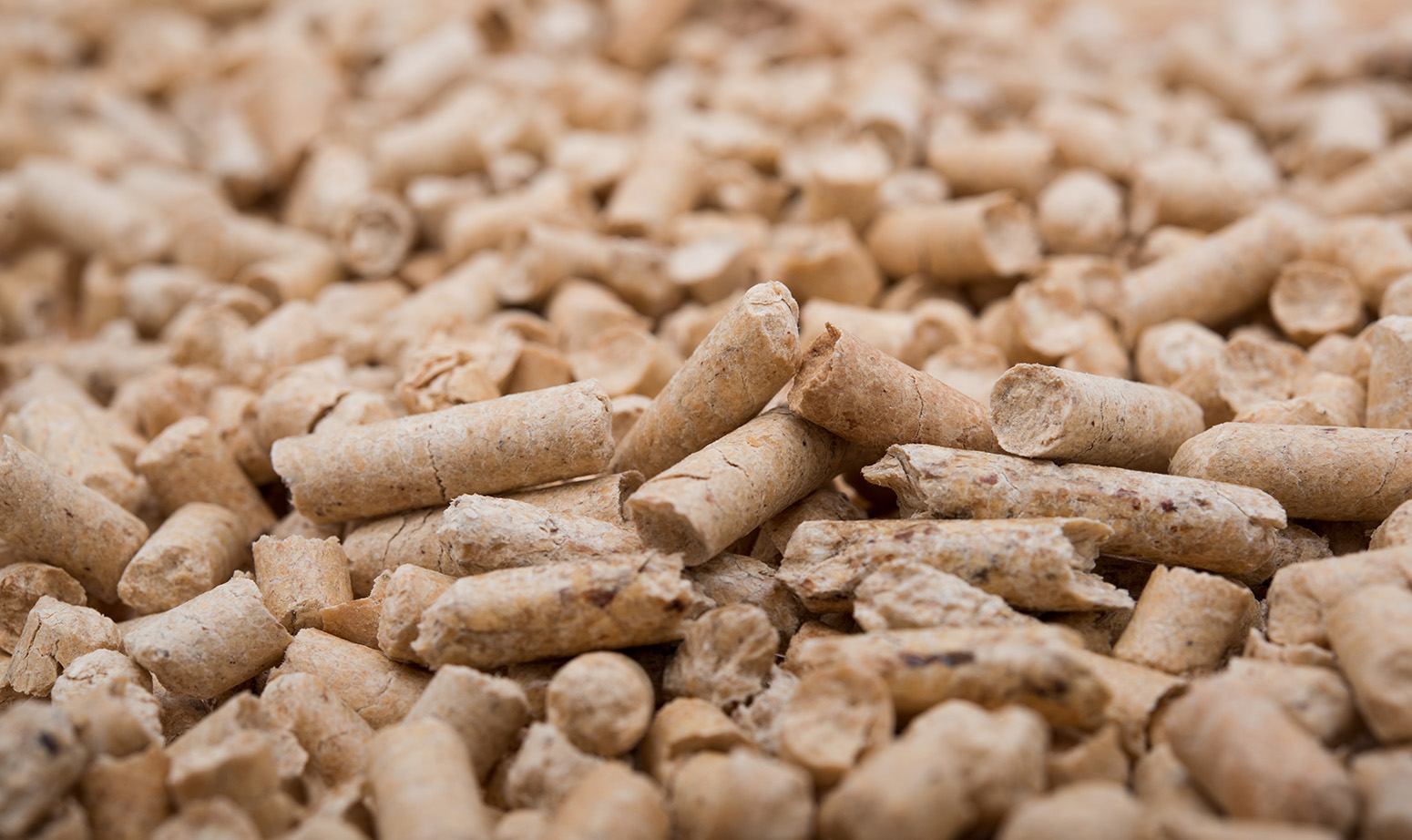
Record pellet production in Germany; new plants, expansions and rising wood stocks as main reasons

Due to increasing wood stocks in the German forests, the production of wood pellets has been steadily increasing for years. At 1.299 million tonnes, the first half of 2019 is the best half in history for the production of pellets than ever before in six months.

Compared to the same period of the previous year, this growth once again increased by 150,000 t (just under 13%). Continue reading "Record pellet production in Germany; new plants, expansions and rising wood stocks as main reasons"

Finland’s softwood lumber exports move from China to Egypt

Finnish softwood lumber exports to the world increased by 5% in the first five months of 2019. The softwood lumber volumes reached 3,1 million m3 during the mentioned period, a rise by more than 142,000 m3 as compared to the same period of 2018.

The softwood lumber exports to the European Union grew slightly by 1%, Continue reading "Finland’s softwood lumber exports move from China to Egypt"

China: Wood-based panel prices at a low level in July

At present, the market trend of plywood in China is relatively bleak, and there are very few shipments.
Some merchants reported that the plywood market is affected by the off-season; on the other hand, the sales of commercial housing decreased significantly compared with the same period of last year, which led to a decrease in the demand for decoration, which in turn dragged down the market demand for plywood. At present, the market price of 1220×2440×12mm plywood in Guangdong market is 93-137 yuan/sheet.

product name specification Quote
Plywood 1220×2440×12mm 93-137 yuan / piece

Particleboard market Continue reading "China: Wood-based panel prices at a low level in July"

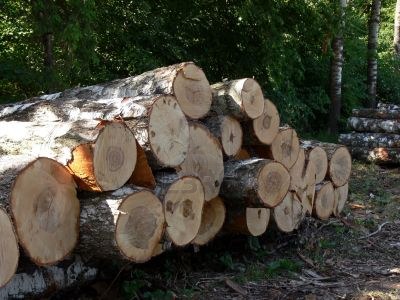
Russia might cease birch logs export quota

Recently, the Russian Federal Government's Committee on Foreign Trade and Tariff Policy Protection Measures has submitted a proposal to stop the implementation of the birch log export quota system.

In 2017 alone, China imported a total of 1.917 million cubic meters of birch logs, with an import value of 244.425 million US dollars. In December 2017 alone, it reached 203,000 cubic meters, of which 81.9% came from the Russian Federation, Russia. If the quota system is continued, the export of birch logs will be greatly reduced, and the supply in Russia will overflow.

At the same time, the Russian Ministry of Industry and Trade also believes that the continuous implementation of the birch log quota system is untimely, because the Russian producers now fully guarantee the demand of the Russian domestic market and the domestic market is saturated.

Metsa Group attributes poor Q2 result to low price in Asia

The profit of the major Finnish forest industry company Metsa Group worsened remarkably in April-July, as prices in China and in Asia dropped sharply.

The result was 128 million euros, while last year in Q2 was 210 million.

The group's CEO Ilkka Hamala said the main reason was the low prices at the Asian pulp market.

Metsa Group concluded that the development of world wide pulp markets remains uncertain in the short term. Metsa noted that the production cutbacks announced by several producers and the annual summer maintenance breaks would balance the supply and demand.

Metsa Group is not publicly listed. Metsa Board, which is part of the group, experienced a drop of share price by 11 percent at the B series of the Helsinki exchange.

Business daily Kauppalehti reported that the price of pulp in China has dropped 30 percent this year. Reserves stored in China still exceed the demand, the newspaper said.

New production curtailments in BC announced by Sinclar Group

In another hit to the B.C. forest industry, the Sinclar Group announced temporary production curtailments at lumber operations in Fort St. James, Vanderhoof and Prince George.

In a July 31 release, Sinclar Group Forests Products Ltd. announced it will curtail its sawmill operations for two weeks at Lakeland Mills in Prince George, Nechako Lumber in Vanderhoof and Apollo Forest Products in Fort St. James for two weeks, effective August 19th.

Sinclar Group president Greg Stewart said, "As a long-standing, family-run company, rooted and operating in North-Central B.C., the decision we've had to make today was not an easy one. We've deferred the decision as long as possible, due to our commitment to our employees and communities."

The release states the reason for the decision being high log costs and challenging global market conditions. Production is going to be reduced across the three operations by approximately 25 million board fleet.

Stewart said that the company is committed to long-term sustainability of the company.

"I am confident that we will emerge from this difficult period even stronger and more resilient," he said.

Premium Pellet in Vanderhoof which is also run by the Group will not be affected by the curtailment.

EU construction market a mixed picture; hardwood sector still strong

According to latest Eurostat figures, building construction contracted by 0.2% in May over April 2019, while civil engineering output was down 0.5%. Sharpest decreases in construction output were reported in Romania, down 7.6%, Finland 3.1% and Sweden 2.9%. Best performance was in Slovenia, with output up 4.1%, France 1.9% and the Netherlands 1.4%.

However, overall construction was still ahead year on year, with the May figure for the euro area 2% up on the same month in 2018 and 2.5% for the EU 28. Strongest improvements were reported from Hungary, with annual output 26.2% up, followed by Romania, up 23.8% and Slovenia 11.1%. The biggest output falls were in Finland, down 1.6% and Belgium 1.5%.

According to trade media coverage, the EU timber seems so far to be broadly benefiting from the continuing robust domestic consumption reported by ECFin, and as yet largely unaffected by the more cautious economic forecasts.

One leading continental Europe-based international hardwood trader told the UK magazine Timber Trades Journal that it had experienced a robust first half, with business underpinned by construction sector consumption.

It was also heading into the second six months ‘in a good position’ and, underlining its confidence in the market longer term, had significantly expanded warehousing.

Quoted in the same publication, French hardwood suppliers said that they were investing in production and storage capacity to meet anticipated demand.

In the latest European Timber Trade Federation Newsletter, Germany’s timber trade federation GD Holz said that the country’s timber sector generally had a strong first four months of the year, despite the country’s wider economic deceleration reported by ECFin, notably in manufacturing. German timber sales were up 6.4%, with planed goods and garden products performing especially well, ahead 13% and 18% respectively on 2018.

With German construction forecast to grow 8.5% this year, GD Holz expressed confidence in the timber sector’s prospects for the second half. Interestingly, it also detected increasing market awareness of timber’s climate change and wider environmental benefits, which it said had potential to boost demand further.

Belgian trade federation Fedustria reported a dip in business confidence in 2019 to the ETTF Newsletter, but this followed 3.6% growth in turnover to €3.135 billion in 2018 and two years of significant capital investment, which hit a record €156 million in 2017. The key Belgian furniture sector, meanwhile, reported an 18% rise in capital spending last year to €96 million.

The UK is the main exception in the ‘broadly stable and satisfactory’ European timber market, as one importer described it. It is more downbeat and reports its outlook worsening as the year has progressed. Importers say customers are ordering on an increasingly just-in-time basis, with forward and speculative buying ‘virtually nonexistent’.

Companies attribute difficult trading conditions almost uniformly to UK-EU Brexit negotiations and the related domestic political upheaval and uncertainty.

As one leading importer told the UK TTJ: ‘’UK market fundamentals are still reasonably strong; jobs growth is continuing, average earnings are forecast to rise 3.6% this year and inflation is steady at 2%,” he said. “But businesses and consumers just aren’t buying, and it has to be due to Brexit. The evidence is across the market place.

UK retail sales saw their sharpest fall in May for a decade.

The Construction Products Association has also downgraded its 2019 forecast for building output growth to just 0.4%. Especially concerning for hardwood sector are bleak prospects in retail construction, forecast to contract 10% this year and next.”

UK hardwood companies said it was also difficult to know how best to prepare for the UK leaving the EU, given continued lack of clarity on their future trading relationship. Some importers had increased stocks ahead of the original target date for Brexit of March 29 against potential customs and port bottlenecks.

They were reported subsequently left with surplus stocks, which efforts to sell since are said to have contributed to price cutting. Now companies are more cautious about hedging tactics.

“The hardwood import trade is also generally less well equipped than say the softwood sector to build up its stock position,” said an importer. “You need the timber availability, somewhere to keep it and the funds to buy it.

As generally small to medium sized businesses, and with our longer lead times, it’s less of an option for us on all three counts.”

UK companies are concerned too about the operation of the EUTR and FLEGT regulations post Brexit. Both are being adopted into UK law, but UK importers will have to undertake due diligence on all purchases from the EU and, it seems, validate FLEGT licences on EU imports. The anticipated increase in administrative cost and time is reported already to be persuading smaller businesses that import intermittently to buy instead via larger UK-based importers and agents.

Importers in the rest of the EU have also voiced concerns over their UK business after Brexit and reported that the related market uncertainty was already proving disruptive for them too.

“Our UK hardwood trade has become very competitive, with construction projects put on hold and some companies offering timber at low rates, particularly African,” said one company. “And we’re still unclear on some key issues, such as whether UK customers after Brexit will become ‘operators’ under the EUTR, even if the timber is EUTR compliant when arriving in mainland Europe.”

Highlighting EU-wide concerns, Fedustria reported that it took part in a Federation of Belgian Business mission to London to discuss Brexit trade impacts. It also ran a special seminar for members on prospective changes in customs processing for UK-Belgian trade and the possible impacts on VAT.

On a more positive note, the UK and Indonesia have underlined their continued mutual commitment to their trade in FLEGT licensed timber post Brexit as part of wider business and development cooperation. This included development of a UK-Indonesian [FLEGT] Partnership Agreement to succeed the EU FLEGT VPA in any new bilateral relationship.

Concerns on the risk of US anti-dumping investigations of Vietnamese wood products exports 

In the first 6 months of 2019 the US continued as Vietnam’s top export market for wood products with exports totalling nearly US$2.25 billion, accounting for 47% of total wood product exports. 

Analysts in Vietnam’s Ministry of Industry and Trade anticipate total 2019 wood product exports of US$4 billion to the US. Furthermore, the US is the biggest suppliers of timber raw material utilised by Vietnamese manufacturers. In the first 6 months of 2019 imports of wood products from the US were worth over US$160 million, a rise of almost 25% year on year.

It is forecast that the US will become the major supplier of timber raw material for industries in Vietnam because large volumes are available the quality is good and the origin is traceable.

On the downside, there are growing concerns on the risk of US anti-dumping investigations of Vietnamese exports and also the risk that not all timber raw material entering the export supply chain can be verified legal especially from wood processing industries that have recently relocated to Vietnam.

Mexican Proteak reports record MDF production

The MDF producer Pro MDF, which belongs to the Mexican Proteak Uno, produced a total of 57,400 m³ of MDF in the second quarter.

The record level of 56,600 m³ achieved in the same quarter of the previous year was thus exceeded by 1%.

Capacity utilization at the Huimanguillo / Tabasco site, which was commissioned in the first quarter of 2016 and has an annual capacity of 280,000 m³, has increased at the same time by one percentage point to 82%.

In contrast, sales fell by 7% to 51,900 m³ compared to the same period of the previous year.

This decline was partially offset by higher average selling prices, which included 86% higher volumes of coated sheet delivery. As a result, MDF sales of Peso 271.4 million, or around US $ 14.1 million, almost reached the level of the same period of the previous year.

According to Proteak, the MDF exports to the USA, which were started at the end of 2016, contributed around 16% of the total volume, and 13.5% of total sales. Considering energy sales of around 11 million pesos, the "MDF" business unit generated total revenues of 282.2 million pesos in the second quarter.

Calamity-wood from the Italian Alps sold to China

Between 27 and 29 October 2018, the Vaia storm destroyed 41,491 hectares of woods in North Eastern Italy. Millions of felled trees that must now be harvested and used in some way. It is not easy: it is estimated that the gusts at 200 kilometers per hour have made available something like eight million cubic meters of timber, which is enough to suddenly saturate the market. The damage, according to an estimate by the University of Padua which also takes into account the loss of value for the productive sector and the environment, is 630 million euros.

Duferco Biomasse, a Piedmont company, has purchased Continue reading "Calamity-wood from the Italian Alps sold to China"

New Zealand’s Spectrum Group plans to build sawmill on former Waverley Sawmills site

While Waverley Sawmills is closed for business its new owner has been working towards a modern state-of-the-art sawmill on the site. Spectrum Group bought the mill and closed it in March this year. But managing director Wade Glass said its resource consent and surrounding forest maturing in 10 to 12 years made it an ideal site for a modern, automated mill that would process higher volumes of timber.

His focus for this year was acquiring more local forests to supply the mill with timber.

Also, he said, the second Arbor shareholder vote on forests was forthcoming.

And, he had identified a promising new product line.

“We’ve identified a new product line which we intend to trial at our Gisborne mill first, with a view to rolling out at Waverley in one to two years,” he said.

He had earlier told Radio New Zealand that he was looking to raise $20 million to $30 million to build a new mill at Waverley in two to three years’ time. Equity investors could be involved, as could the Provincial Growth Fund.

Any sale of forests has to be agreed to by 75 per cent of shareholders.

Glass said forest owners needed to work in tandem with the sawmill industry to prevent the failure of more New Zealand sawmills.

“Otherwise in future there won’t be much in the way of domestic lumber supply for certain products, and we will be importing most of our lumber — some of it made from the very logs we have exported. If that’s not economic suicide, I don’t know what is.”

Spectrum Group owns Far East Sawmill in Gisborne, RH Tregoweth Sawmillers in Te Kuiti, forests, logging trucks and a log trading business.

Singapore’s Sudima to split planned US$200M wood processing complex in Russia’s Far East

Singapore's Sudima International, which announced earlier that it would build a wood-processing complex in the Primorye Territory worth $200 million, has decided to split the project into two parts due to a potential lack of timber.

The second facility will be located in the Transbaikal Territory.

"Originally the plan was to create a new production facility in Primorye, but due to the potential lack of timber for such a big project, it's been split into two parts, and the second will be implemented in Transbaikal. Investors have already held talks on this issue in Transbaikal. Now the Far East Investment and Export Agency [FEIEA] is helping the investor choose a site," the agency's press service quoted its head, Leonid Petukhov, as saying.

The second facility will produce floorboards, furniture boards, sawn lumber, and fuel pellets.

Total investment in the project will remain at about $200 million, according to the press service.

India's KGK is acting as a co-investor.

"Projects involving the deep processing of lumber [in Russia's Far East] will be discussed during Indian companies' visit to Vladivostok in the middle of August of this year," the FEIEA said.

A company, KGK Sudima Evergreen, has been created to implement the Primorye project. It is planning to submit an application to the Corporation for the Development of the Far East to become a resident of the Free Port of Vladivostok.

Sudima was founded in Singapore in 1994. It focuses on agriculture and on the storage and production of wood products. It owns wood-processing complexes in Indonesia, Myanmar, and Vietnam.

The Czech Republic grants EUR 100 million to forest owners to mitigate beetle calamity

The Czech Ministry of Agriculture is planning to promote non-state forest owners with up to 2.5 billion crowns, or just over 97 million euros, to mitigate the effects of bark beetle calamity. The new funding program was approved on 30th July. 

According to it, up to 1.5 billion kroner should be paid out in 2019, and again in 2020 up to 1 billion kroner. The funding program still has to be registered at the EU Commission.

The funds are intended to enable forest owners, despite the collapse in round timber prices, to continue to properly manage their forests and reforest the bare areas.


Read more on the bark beetle calamity which is ravaging Europe's forests


Forest owners can apply for funding from the end of October, according to a forest law amendment, which should have taken place by that time. Depending on the volume of funding raised, up to CZK 1.5 billion will be paid out this year and up to CZK 1 billion in the first quarter of next year.

According to the Ministry of Agriculture, in 2018, 23 million cubic meters of calamity wood were produced, of which 13 million were due to bark beetles, twice as much as in 2017. At least the same amount is expected for 2019. The affected area is up to 50,000 ha, ie just under 2% of the total forest area in the Czech Republic.

The total volume of support for forest management, including the new support program, will amount to around 4 billion kroner in 2019.

Brexit bites, but EU hardwood buoyed by new marketing moves

While uncertainty surrounding Brexit may be casting a shadow over the UK market the wider EU hardwood sector reports generally steady, in some cases strong, trading in to date including in tropical timber. This is despite some slowdown in economic activity and increased downside concerns about the medium-term outlook. Businesses report some issues with supply, but overall consumption is said to be holding up, while hardwood prices are steady to firm.

There have been interesting developments in hardwood promotion. New moves in marketing and communication have come from the Sustainable Tropical Timber Coalition (STTC), the International Tropical Timber Technical Association (ATIBT), the American Hardwood Export Council (AHEC), FSC and the UK Timber Trade Federation (TTF). Continue reading "Brexit bites, but EU hardwood buoyed by new marketing moves"

Recovery in EU softwood lumber exports to China, as Germany pushes deliveries

Following a -32% drop in exports last year, European softwood lumber deliveries to China have recovered in the first five months of the year. While Nordic exports continued the negative trend recorded in 2018, the German deliveries are responsible for the overall 21% in rise the overall EU exports. 

The European Union countries sent 1.1 million m3 of softwood lumber to China, during the mentioned period, as compared to the 935 thousand m3 that they've sent in the first five months of 2018.

The biggest exporter was still Finland, although its shipments decreased by -3% as compared to January-May 2018. The country sent 457 thousand m3 of softwood lumber to China. Swedish exports dropped by -24%, down to only 229 thousand m3.

On the other hand, the German softwood lumber exports to China had a great 2019 start, and increased by 337%, up to 189 thousand m3. Austrian deliveries, though at a lower volume, hiked by 202%, up to 79 thousand m3.

Softwood lumber exported to China from... (in cbm )

Exporting Country 2018 2019 Change in %
EUROPEAN Union
934,782 1,130,424 21 %
Finland
471,107 457,457 -3 %
Sweden
303,371 229,173 -24 %
Germany
43,272 189,221 337 %
Austria
26,266 79,218 202 %
Latvia
18,945 35,831 89 %
Others
71,821 139,524 94 %
OTHER European Countries
237 278 17 %
Croatia
237 278 17 %
TOTAL 935,019 1,130,702 21 %

EGGER reports record sales figure for its financial year; outlook positive

The wood-based panels giant recorded sales of EUR 2.84 billion and adjusted EBITDA of EUR 425.0 million.

The key performance indicators showed a stable development: Group turnover increased by +5.6%, while adjusted EBITDA declined slightly by -4.7%. The record total investment of EUR 489.1 million had a strong impact on this result. One of the flagship projects was recently completed: The 19th EGGER plant in Biskupiec, Poland, started operations at the end of June.

EGGER Group Management is satisfied with the sales of EUR 2,841.5 million achieved in the 2018/2019 financial year (+5.6% compared to the previous year) and the adjusted operating result (EBITDA) of EUR 425.0 million (-4.7% compared to the previous year). The adjusted EBITDA margin amounts to 15.0% and is thus in line with the long-term average. The equity ratio remains at the high level of 36.8% (previous year: 40.8%). The quantity of rawboards (including timber) increased to 8.8 million m3 (+3.5%), which means the full utilisation of all primary production capacities. Across the Group, EGGER employed an average of 9481 employees last year.

In the second half of 2018, global economic growth slowed, particularly in the eurozone.

The construction industry is growing slower than forecast. For EGGER, environments in the key markets in Europe and Russia were satisfactory in the past financial year and enabled stable development. The most important geographical market for the company is Western Europe, and above all Germany with the furniture industry strongly represented there. The Western European market with a turnover of EUR 1,672 million (+4.7%) also grew in the 2018/2019 financial year and thus generated 58.9% of the sales revenues. The Central & Eastern European and Russian markets also achieved a stable sales share of 29.5%, with declining sales of flooring products in Turkey and falling demand for OSB having a negative impact. However, this was offset by an increase in sales of flooring and interior design products in Russia and sales growth in other sales territories of the region.

Non-European countries are playing an important role for EGGER. In 2018/2019 they accounted for EUR 330 million (+10% compared to the previous year) or 11.6% of total sales. Sales at the new plant in Argentina fell short of expectations: "The Argentine market, which is new to us, was very challenging, as it was characterized by very high inflation and the currency decline of the Argentine peso and the associated economic recession," explains Ulrich Bühler, EGGER Group Management Sales/Marketing.

Record amount invested

In the 2018/2019 financial year, EGGER invested EUR 489.1 million in property, plant equipment and intangible assets (previous year: EUR 483.8 million). Of this amount, EUR 78.1 million was attributable to maintenance investments and EUR 411.0 million to growth investments. The two greenfield projects in Biskupiec (PL) and in Lexington, NC (USA), accounted for the largest investments.

Positive outlook for 2019/2020

In the current financial year, EGGER aims to exploit the earnings potential of the investments made. Thomas Leissing is confident about this: "Although weaker economic development has been noticeable in some of our markets in recent months, our outlook for the 2019/2020 financial year is positive. With our competitive industrial base, we will be able to build on our current results. In addition, we will launch our new EGGER Decorative Collection 2020–22 in the market at the turn of the year, continuing the great success of the first edition of this collection". EGGER also anticipates a positive development in demand for the OSB and timber product areas. Laminate flooring will continue to be under market pressure in Western Europe. Due to the stable development in the core area of furniture and interior design, growth in Russia and the shift of volumes from weaker regions to alternative markets, EGGER anticipates sustained sales growth and stable earnings for the Group as a whole in the 2019/2020 financial year.

EGGER Group brings the 2018/2019 financial year to a close with sales and investment highs

→      Turnover: EUR 2.84 billion (+5.6%)

→      Sales growth in all divisions

→      EBITDA: EUR 425.0 billion (-4.7%)

→      Investments: EUR 489.1 billion

→      Biggest projects: Biskupiec (PL) was put into operation on 6/28/2019; construction work started in Lexington, NC (US) in November 2018

→      EGGER employs around 9600 people across 19 locations worldwide

→      Outlook 2019/2020: sustained sales growth and stable earnings

→      Future focus on sustainability and digitisation solutions

Europe could be a future destination for American softwoods

American Softwoods Consultant, Charles Trevor, was interviewed by AEIM (Spanish Association of Wood Trade and Industry) and the article appeared in two publications, Interempresas and Madera-Sostenible. Europe is a mature market which continues to offer niche opportunities for U.S. softwood companies. Spain is now the third largest market for U.S. softwood exports, behind Italy and the United Kingdom. In the interview, Charles discussed sales of American Softwoods to the European Union of $26.8 million in 2018 and the first quarter of 2019 has seen $5.8 million (2018 = $5.9 million).

He also reported “Europe has the potential to grow in importance for us, particularly for sales of pressure treated wood for use in outdoor/garden applications. No other softwood takes treatment as well as Southern Yellow Pine or looks as good.” Continue reading "Europe could be a future destination for American softwoods"

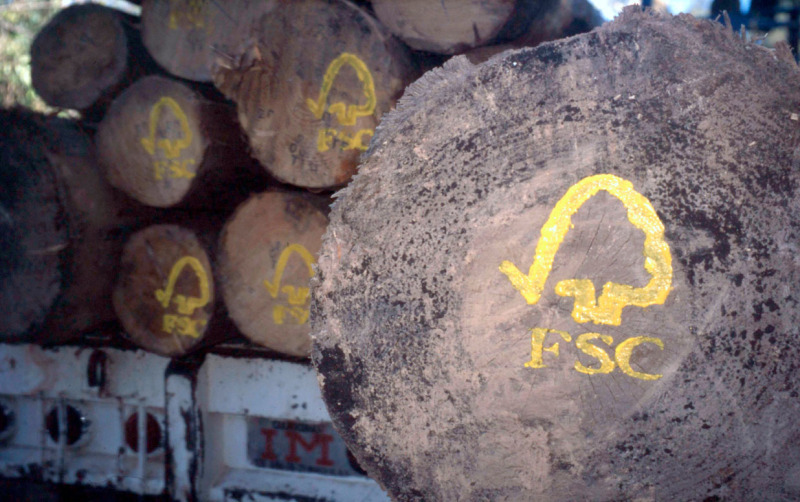
FSC sanctions Korean-Indonesian company for clearing tropical forests

The Forest Stewardship Council (FSC) has sanctioned Korean-Indonesian conglomerate Korindo for clearing tropical forests in Indonesia to produce palm oil. Although the Korindo Group isn’t being expelled from the certification scheme, the company must rapidly improve its forestry operations to meet FSC standards.

FSC’s investigation was prompted when the environmental nonprofit group Mighty Earth filed a complaint two years ago saying that the Korindo Group companies violated the FSC’s Policy of Association by exceeding the 10,000 hectares deforestation threshold across its oil palm operations over the previous five years.

Satellite imagery analysis that Mighty Earth commissioned for eight Korindo concessions in Papua and North Maluku, Indonesia found more than 30,000 hectares of deforestation and 900 fire hotspots since 2013.

“By carrying out large scale deforestation, destroying critical wildlife habitat and violating traditional and human rights, Korindo was flouting FSC standards and threatened to make a mockery of the FSC’s prestigious label,” said Deborah Lapidus, senior campaigns director at Mighty Earth.

Last week the Forest Stewardship Council said that the company’s activities weren’t in full compliance with FSC’s Policy for Association, and Korindo’s practice of free prior and informed consent (FPIC) didn’t align with the council’s requirements for FPIC.

Korindo agreed to collaborate with FSC to improve environmental and social performance, and to remedy their effects on the forests, according to the council. “The process resulting from this commitment will be as rigorous as any process for ending disassociation from FSC, but faster in achieving positive change,” the council concluded.

Mighty Earth criticized the council’s decision not to release investigation details. “Only a full, unbiased disclosure of Korindo’s wrongdoing can make it possible for the effectiveness of their remediation measures to be assessed,” the nonprofit argued.

FSC indicated that they plan to monitor the company’s progress closely.

US lumber prices keep to fall as no major production curtailment in BC announced

The measured pace in US framing lumber trading that began in early July persisted into the latter part of the month. Some traders called it the summer doldrums, but many agreed a general malaise engulfed the market, with overall production outstripping demand. Traders looked for more production curtailments to help balance supply and demand, but little developed this week on that front.
Soft prices in various species pushed the Random Lengths Framing Lumber Composite Price down another $5, to $351. Continue reading "US lumber prices keep to fall as no major production curtailment in BC announced"

Overview of the current trends in Europe’s industrial wood pellet market

In markets such as the United Kingdom, Belgium, and the Netherlands residential use is negligible and the demand for wood pellets is dominated by large scale power plants. The governments of these countries opted to fulfill their obligations for renewable energy use in 2020 mainly by the use of biomass for the generation of electricity. As these countries lack a sufficient domestic production of pellets they are largely dependent on imports.

The conversion of large electricity plants to fire biomass instead of coal is a key factor in the UK Government’s plans to reach renewable energy targets. The main support mechanism within the UK’s energy policy that has enabled the conversions is under the Levy Control Framework and called ‘Contracts for Difference’. This involves the government paying a premium above the market price of the electricity generated by the biomass power plant. The largest user of pellets in the United Kingdom recently converted a fourth unit of their plant from coal to biomass combustion. Each of these four units combusts 2.3 mmt of wood pellets per year. The second largest user was scheduled to start their operations in May 2018, but this plant is not operational yet. At full capacity the power generation of this plant will utilize about 1.4 mmt of pellets.

Another company is schedule to start using pellets early 2020. The expected maximum use of this plant is about 1.0 mmt. It should be noted that for power generation, these three plants use wood pellets as their main feedstock but other biomass such as elephant grass and willow also may be used. For 2019, the total use of pellets in the United Kingdom is forecast at 8.5 mmt. Continue reading "Overview of the current trends in Europe’s industrial wood pellet market"

Newsletter

Subscribe to our digital newsletter for your daily digest of essential news, views and analysis from the international wood industry delivered directly to your inbox.


0