
Article archive

EU countries to benefit from the US-China trade war

The additional tariffs on US imports from China threatened by US President Donald Trump would damage China, while giving the US, Europe and Germany moderate advantages. But: By Chinese counter-duties, the US advantage could turn into a disadvantage, while China's losses would fall slightly. The benefits for the EU would increase as a result of the countermeasures. 

Continue reading "EU countries to benefit from the US-China trade war"

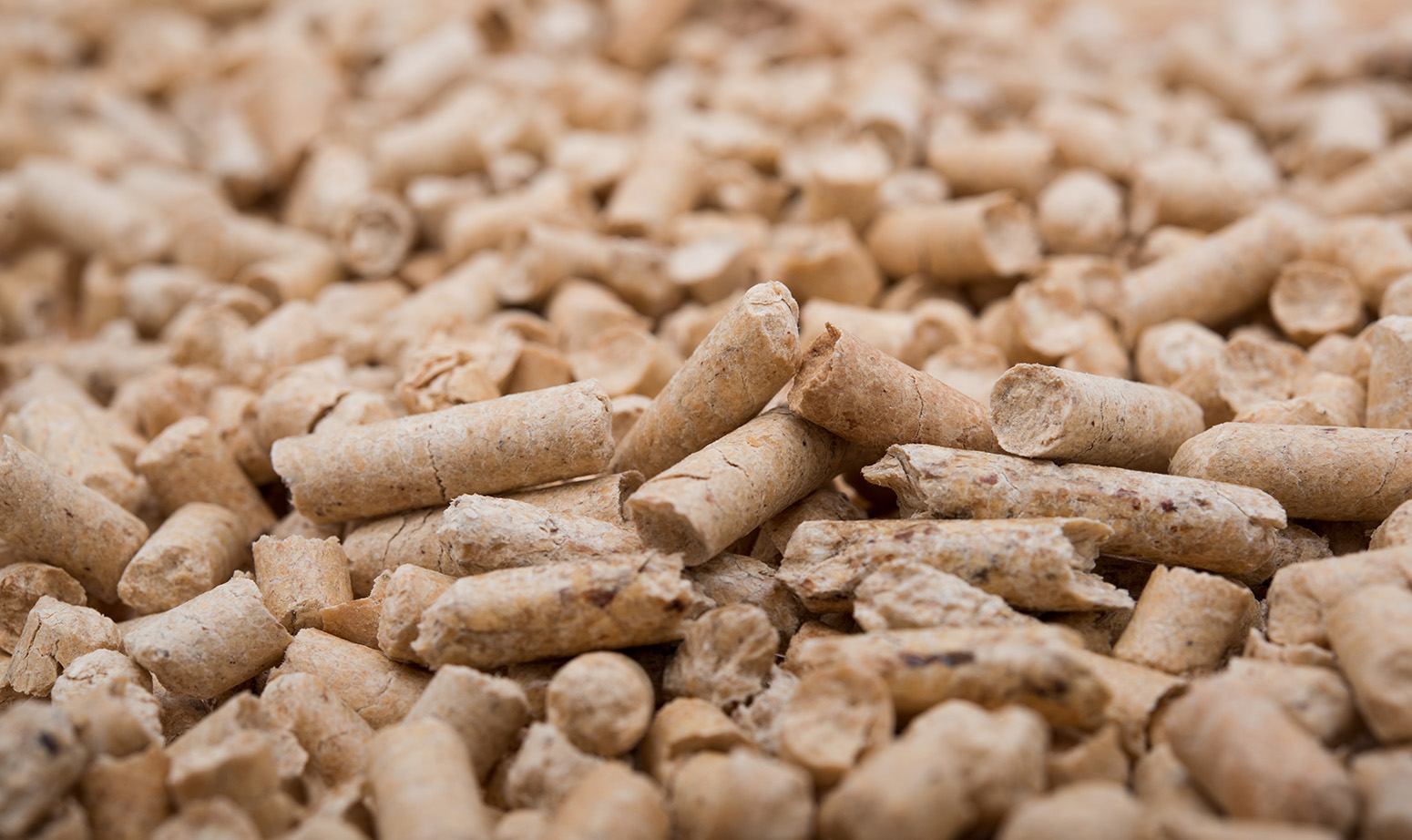
Main Russian wood pellet suppliers and foreign buyers in H1/2019

Exports of wood pellets from Russia are growing at the highest rate in recent years. In H1/2019, exports grew by 27% (YoY) to 854,000. The biggest contribution to the growth was provided by the plants of ULK Group (+23,000 tons), Sawmill 25 (+12,000 tons),Novoyeniseskiy Wood Chemical Complex (+15,300 tons), Lesosibirsky LDK No 1, (+23,300 tons), Pik-Bio (+6,700 tons) and others. The number of wood pellet suppliers over the year also increased- from 160 to 215. 

Continue reading "Main Russian wood pellet suppliers and foreign buyers in H1/2019"

Vietnamese company to supply 300,000 t/yr of wood pellets to Japan

Eastwood Energy Joint Stock Company signed a long-term contract with CellMark, a global supply chain service company, to sell a minimum of 300,000 tonnes of wood pellets a year from 2021 for export to Japan.

Continue reading "Vietnamese company to supply 300,000 t/yr of wood pellets to Japan"

Italian woodworking machinery industry sees sharp fall in orders

In the second quarter of 2019 the orders of wood and furniture machinery and equipment in Italy have decreased by 14.4% compared to the second quarter 2018. Foreign demand has decreased (down by 7.1%, versus minus 10.2% in the previous quarter), and domestic demand even worse (minus 36.3%, versus 14.5% down in January-March 2019).

According to the periodical survey by the Studies office of the Italian Acimall, the book of orders is at 2.8 months (it was 3.7 months at the end of March), while prices have been growing by 1.2% since the beginning of 2019. In the first and, again, in the second quarter, however, revenues are increasing, up by 3.3% (but in the January-March 2019 period the increase rate was 10.3%).

The quality survey in the second quarter 2019 reveals that 12 percent of the interviewees in Italy expect a positive production trend (versus 7% in the previous quarter.), 47% predict a stationary situation (versus 60% three months earlier), and 41% believe the trend will go down (they were 33% in the previous quarter).

The forecast survey confirms the recent climate of poor confidence due to the negative trend of German economy. 18% of the interviewees still believe that foreign orders will bring good news (optimists were “just” 13% last quarter), while 53% expect a stationary trend (60% in January-March 2019) and 29% see decreasing orders ahead (versus 27% three months ago). The balance is negative by 11 points.

Billionaire Jim Pattinson makes offer to take over Canfor private for almost US$ 1 billion

Jim Pattison's Great Pacific Capital Corp. has made an offer to buy the rest of Canfor Corp. it does not already own for $16 per share, an offer that values the lumber, plywood, pulp and paper company at about $2 billion.

Vancouver-based Continue reading "Billionaire Jim Pattinson makes offer to take over Canfor private for almost US$ 1 billion"

US to set countervailing duties of up to 229.24% for Chinese wooden cabinets

The U.S. Commerce Department said on Friday it has made a preliminary determination that wooden cabinets and vanities imports from China are being subsidized, and set countervailing duties of up to 229.24%.

From 2016 to 2018, imports of wooden cabinets and vanities from China to U.S. increased 21.7% to $4.4 billion, according to the department.

A final determination in the countervailing duty investigation is scheduled to be announced on December 17, 2019, it said.

The department said it assigned a preliminary subsidy rate of 10.97%, 16.49%, and 21.78% to mandatory respondents The Ancientree Cabinet Co., Ltd. (Ancientree), Dalian Meisen Woodworking Co. Ltd. (Meisen), and Rizhao Foremost Woodwork Manufacturing Company Ltd. (Foremost), respectively. Commerce assigned a preliminary subsidy rate of 229.24%, based entirely on adverse facts available, to Deway International Trade Co., Ltd. and Henan AiDiJia Furniture Co., Ltd.

The preliminary subsidy rate for all other Chinese producers and exporters is 16.41%.

US softwood lumber prices flat, as trade stalls

Framing lumber prices were flat to mildly mixed amid measured follow-through from last week’s more active finish in some species. Some traders reported a modestly stronger tone to the market, but sales volumes were not heavy.

Trading was often described as a persistent grind. Moderate gains in Western S-P-F were offset by losses in other species, including Southern Pine. The Random Lengths Framing Lumber Composite Price slipped $1, a fourth consecutive weekly decline.

Week
Aug 9
Previous Week
Aug 2
Year Ago
2018
Random Lengths Framing Lumber Composite Price* $345 $346 $440
KD Western S-P-F #2&Btr 2x4 R/L Mill Price 336 324 477
KD Eastern S-P-F #1&2 2x4 R/L, delivered Great Lakes 424 422 588
Green Douglas Fir Std&Btr 2x4 R/L (Portland) 360 355 450
Southern Pine (Westside) #2 2x4 R/L 362 373 433
KD Coast Hem-Fir #2&Btr 2x4 R/L 360 365 485
Ponderosa Pine (Inland) #2&Btr 1x12 R/L 850 850 775
* Weighted average of 15 key items


Random Lengths Panel Market Report

Sales were a grind in structural panels, which led to price erosion in a number of markets. Reported prices of OSB spanned a wide range. Mills in the South took a firmer approach in late trading, but sales at higher levels were minimal. Buyers of Southern Pine Plywood replenished sporadically, but amid a lack of urgency prices tumbled. An imbalance between supply and demand kept downward pressure on western plywood. Traders of Canadian plywood sensed the market was near a bottom, but sales remained elusive.

(f.o.b. mill prices) Week
Aug 9
Previous Week
Aug 2
Year Ago
2018
Random Lengths Structural Panel Composite Price* $331 $335 $461
Southern (west-east) 15/32-inch 3-ply rated sheathing plywood 310-335 320-345 475-515
Southern (west-east) 15/32-inch 4-ply rated sheathing plywood 315-340 325-350 480-520
Western 1/2-inch 4-ply rated sheathing plywood 345 350 522
North Central 7/16-inch Oriented Strand Board 218 218 415
*Weighted average of 11 key items

North American lumber production on a downward trend; Canadian output drops by 10%

U.S. sawmills produced 14.647 billion board ft. (bbf) of softwood lumber in the first five months of 2019, down 1.1% from output in the same period last year of 14.807 bbf.

Continue reading "North American lumber production on a downward trend; Canadian output drops by 10%"

15% rise in prices for hardwood chips exported from Latin America

Tight supply of hardwood fiber in the Pacific Rim have pushed prices for Latin American hardwood chips upward during the first half of 2019. However, a decline in chip consumption in China is expected to occur in the second half of the year, which would likely end the most recent price rally that started in mid-2018. Continue reading "15% rise in prices for hardwood chips exported from Latin America"

Prices for Vietnamese wood pellets falling sharply

As demand in South Korea is slowing down, Vietnamese wood pellets prices are falling relative to the rise seen this spring and are basically at the levels of the autumn 2018. Prices are expected to fall below $130/t.

Wood Continue reading "Prices for Vietnamese wood pellets falling sharply"

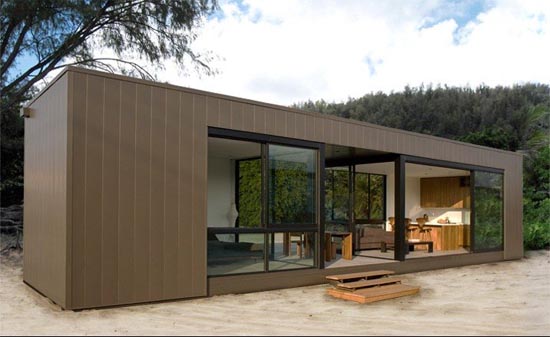
Major boom in prefabricated wooden houses in Czechia

The market with prefabricated wooden houses in the Czech Republic is experiencing a major boom. While ten years ago, there were around one thousand prefabricated wooden houses built in the country, last year it was nearly three thousand.

“Over the past year, the demand has grown by one fifth,” Martin Fojtíko of the company Bidli, which specializes in low-energy wooden buildings, told the website ihned.cz.

While the price of bricks keeps growing, the price of spruce timber is at a record low, as a result of the bark beetle infestation, making wooden houses more accessible.

Compared to brick houses, prefabricated wooden houses are also considerably faster to build. The assembling of the prefabricated wooden blocks usually takes only about three months. However, providers are not able to meet the growing demand and clients have to wait at least half a year to place their order.

The biggest supplier of wooden buildings, Bruntál-based company RD Rýmařov, produces around 400 houses a year.

“The demand is so huge that we are no longer able to cover it. We had to stop accepting orders for the next two years,” the company boss Jiří Pohloudek told the website ihned.cz.

The biggest interest in wooden prefab houses is in the vicinity of large cities, including Prague, Brno and Ostrava, where prices of flats are often out of reach for most people.

An average wooden house with an area 150 square meters costs around three million crowns, while in Prague, that it is price of a small one-room apartment.

Besides traditional family houses, Czechs are also increasingly interested in log cabins, which make up about 12 percent of all the overall production of wooden houses. According to real estate agents, there is also a growing interest in old wooden houses.

According to real-estate agents, most clients interested in purchasing wooden houses are people between the ages of 30 to 40, who are mainly interested in low-energy houses of up to three million crowns.

The average life-span of a wooden house is currently around 50 years. After this period, the house usually needs to undergo some major renovation.

US antidumping rates to rise significantly for Chinese wood flooring imports

The antidumping rates for Chinese engineered wood flooring imports have increased significantly for nearly all Chinese producers, who were previously paying zero antidumping duties.

Now, as a result of the Commerce Department's final determinations, Continue reading "US antidumping rates to rise significantly for Chinese wood flooring imports"

Norbord’s Q2/2019 results negatively impacted by lower OSB prices

Norbord Inc., the world’s largest producer of oriented strand board (OSB), reported Adjusted EBITDA of USD 36 million in the second quarter of 2019, a sharp drop compared to USD 273 million in the second quarter of 2018.

The decrease was primarily due to lower North American OSB prices.

North American operations generated Adjusted EBITDA of USD 18 million compared to USD 256 million in the same quarter last year.

European operations delivered Adjusted EBITDA of USD 21 million, unchanged versus same quarter last year.

Norbord recorded an Adjusted loss of USD 8 million in the second quarter of 2019, compared to Adjusted earnings of USD 167 million in the second quarter of 2018.

“US homebuilding demand continued to be held back by affordability concerns and persistent recordbreaking wet weather,” said Peter Wijnbergen, Norbord’s President and CEO. “For the third quarter in a row, we took extensive downtime across our North American mills which negatively impacted our production volumes and manufacturing costs. We also made the difficult decision to indefinitely curtail our 100 Mile House, BC mill starting in August as the mill is no longer viable due to a lack of wood supply at economic prices.”

Cheaper roundwood in Estonia

At a price of EUR 73.84/m3 and EUR 76.54/m3 respectively, pine and spruce sawlogs have decreased in June 2019 as compared to the same month of 2018. 

In June, roundwood prices continued to decline in Estonia. In comparison to the previous year, only small-diameter pine and energy wood were able to grow.

Firewood in June shows an increase of almost 22% compared to the previous year. On the other hand, small-diameter pine exceeded only marginally the previous year's level at + 0.71%. All other values ​​have decreased. The strongest loss with over 21% was reported by aspen pulpwood. This is followed by the other pulpwood assortments with price declines of around 12-14%. Also, birch plywood fell by around 6.5%. In the case of sawlog assortments, small-diameter spruce shows the strongest downward trend with a minus of more than 3%.
Compared to May, pine and aspen pulpwood as well as energy wood have increased slightly while small-diameter spruce and pine sawlogs increased slightly. By contrast, birch as the starting material for plywood and spruce pulpwood with a minus of over 13% each show the largest losses. Pine sawlogs are down by almost 4%.

Jun'18 € / m3 May € 19 / m3 Jun'19 € / m3 Change% Jun 18 to Jun 19 Change% May to Jun 19
Pine sawlogs 75.05 76,77 73.84 -1.61% -3.82%
Pine logs d<18cm 63.81 64.14 64.26 0.71% 0.19%
Spruce sawlogs 77.34 75.82 76.54 -1.03% 0.95%
Spruce logs d <18cm 62.19 64.65 60.13 -3.31% -6.99%
Birch veneer 113.53 122.2 106.1 -6.54% -13.18%
Birch logs 68.74 70.31 66.52 -3.23% -5.39%
Aspen logs 41.82 42.56 41.15 -1.60% -3.31%
Pine pulpwood 46.91 39.2 41.11 -12.36% 4.87%
Spruce pulpwood 41.86 41.24 35.84 -14.38% -13.09%
Birch pulpwood 44,00 45.78 42.72 -2.91% -6.68%
Aspen pulpwood 29.47 22.03 23.26 -21.07% 5.58%
Firewood 20.84 24.6 25.38 21.79% 3.17%

EU imports of tropical sawn hardwood up 14%

Total EU tropical sawn wood imports for January to May were ahead 13.9% on the 2018 figure at 405,000 tonnes. The biggest volume rise from January to May came in Belgium, with a sharp jump in imports from Brazil taking its total to 134,000 tonnes.

French imports rose 14.6% to 50,000 tonnes and Spanish 26.1% to 35,000 tonnes. Probably due to increased forward buying ahead of the originally anticipated Brexit date of March 29, UK imports moved ahead 18.1% to 25,000 tonnes.

According to the Eurostat figures, Portuguese tropical sawn imports for the January to May period were up 72.5% at 17,000 tonnes and Denmark’s increased 16% to 11,000 tonnes, while Ireland’s more than doubled to 6,500 tonnes. Continue reading "EU imports of tropical sawn hardwood up 14%"

Trump to set 10% tariff on remaining Chinese products

The stock market sold off last week after President Donald Trump tweeted more tariffs are coming in September on the $300 billion in Chinese imports yet to face the charge.

The administration will impose a 10% tariff Sept. 1 on the remaining goods and products coming from China, he said. The Dow Jones Industrial average was off nearly 300 points in mid-afternoon trading on the news.

In his Twitter thread, Trump first noted that the U.S. trade representatives are back from China, “where they had constructive talks having to do with a future Trade Deal.”

However, he then went into the previous breakdown. “We thought we had a deal with China three months ago, but sadly, China decided to re-negotiate the deal prior to signing. More recently, China agreed to … buy agricultural product from the U.S. in large quantities but did not do so. Additionally, my friend President Xi said that he would stop the sale of Fentanyl to the United States — this never happened, and many Americans continue to die!”

Trump tweeted that the trade talks are continuing, but during the process, the new tariff will go into effect.

Overview of the Canadian wood pellet industry

The Canadian wood pellet industry is export-oriented with high production capacity and exports far exceeding domestic demand. Overseas demand growth for Canadian wood pellets in recent years was largely fueled by the United Kingdom and Japan as these countries seek to increase their use of renewable energy in heat and power plants.

Government spending on renewable energy for power generation is expected to stimulate market development in this sector.

Consumption

Wood pellet consumption in Canada shows linear growth averaging 13 percent average annual increases since 2013. Consumption for 2018 is estimated at 315,000 MT in 2018 rising to 380,000 MT in 2019.

The is potential for a large future expansion in domestic demand depends on the success of Canada’s goal to phase out coal-fired power plants by 2030 and the cost of alternative renewable energies.

Production

Pellet production in Canada has also achieved linear growth averaging 12-percent average annual increases from 2013 thru 2018 and post forecasts an increase in 2019. Increases in nameplate capacity were also steady over the same period, but have not kept up with demand growth as capacity use rate has risen from 57 percent to an estimated 67 percent in 2018 and further increase to 71 percent in 2019.

Canada has a current capacity at 4.66 MMT, however some projects are underway and this will likely increase by 2020.

Since 2015, Aurora Wood Pellets proposes to build a 200,000-ton capacity wood pellet production facility in Hay River on the south end of Great Slave Lake in the Northwest Territories. Construction on the project is currently being held up while necessary approvals are received from the Hamlet of Enterprise, the local administrative authority.

Another pellet plant is being proposed by Northern Energy Solutions Ltd in Mirimichi, New Brunswick.

The proposal would expand the already existing Miramichi Wood Pellet Plant and increase total production to 275,000 MT. The operation is proposing to export to Europe in 2021.

Trade

Global industrial wood pellet demand is projected to continue growing at 2.7 MMT per year through to 2025. Canada has significant forest resources and potential to capture some of this growing demand.

In 2016, the United Kingdom and Japan accounted for roughly 85 percent of Canada’s total wood pellet exports. The United Kingdom has planned a phase-out of coal fired power generation by 2025, which helps to explain the demand. Many coal boilers can be converted to use wood pellets.

The Czech Republic boosts exports of logs to China

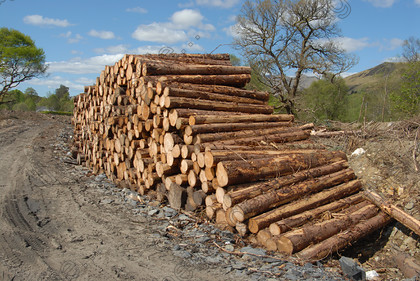
Logs exported from the Czech Republic to China have increased significantly this year, as a result of a record harvesting in the country caused by the bark beetle infestation.

More than 350,000 tons of timber was sold to China in January-May alone, almost three times more as compared to last year, with exports reaching nearly 1.1 billion kronor (about $48 million).

According to data from the Czech Statistical Office, this year China became the second largest Czech timber export destination after Germany.

It seems that Czech timber exporters are satisfied with the trade with China, and the Czech Forestry Bureau also said that the Chinese market has a large demand and a broad prospect for cooperation.

The Czech Ministry of Agriculture said earlier this year that in order to cope with the excessive timber harvest caused by the bark beetle infestation, it hopes to expand timber exports, including exports to China.

Considerable drop in US lumber prices

Sales picked up late in the week in some framing lumber species, amid a limit-up move in futures Thursday and a pair of curtailment announcements in Western Canada. Market fundamentals, however, were unchanged.

This was reflected in the Continue reading "Considerable drop in US lumber prices"

Newsletter

Subscribe to our digital newsletter for your daily digest of essential news, views and analysis from the international wood industry delivered directly to your inbox.


0