

The spruce beetle infestation in Central Europe has continued during the summer and the situation is serious in several parts of the Czech Republic, Austria and Germany. The damaged forests in Sweden have also increased and a large part of the harvesting in Småland, Östergötland and Sörmland is concentrated on damaged forests. Continue reading "Bergs Timber to reduce production at its Swedish sawmills; bark beetle and oversupply blamed"
Article archive
Largest US hardwood supplier to close a sawmill due to trade war with China
US softwood lumber prices down slightly last week
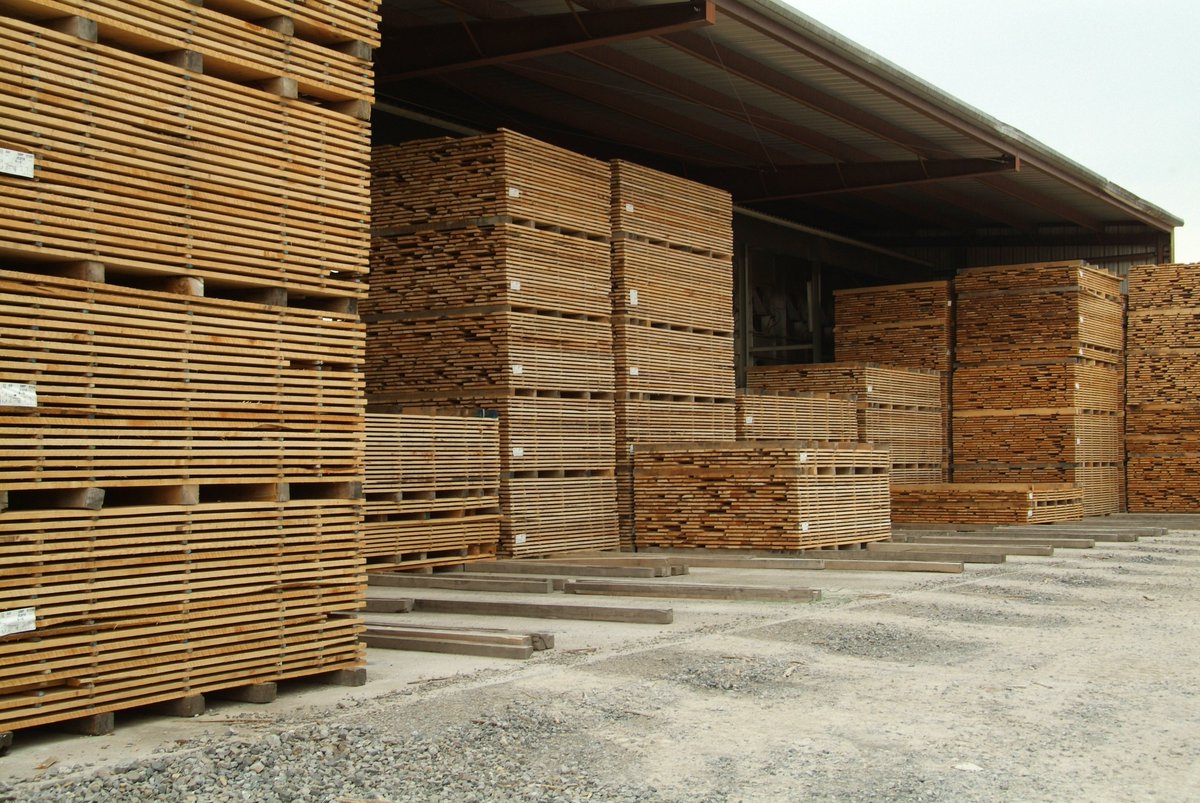
Drama unfolded large in downtown Vancouver last week, where was being held the Union of British Columbia Municipalities annual meeting. Mayors and political leaders from across the province were greeted by a convoy of 230 unloaded logging trucks arriving Friday morning to large crowds of surprised, and cheering, onlookers.
The issue of reduced timber supply is hitting especially rural areas hard, so log truck operators decided to make a statement directly in the faces of decision-makers. At the same time, the BC Ministry of Forests, Lands, Natural Resource Operations and Rural Development released the “State of British Columbia Forests 2018”, which provides full data update for the harvest, manufacture, and export of BC wood fibre resource: Economic State of B.C.'s Forest Sector 2018. Continue reading "US softwood lumber prices down slightly last week"
SmartLam aims to become North America’s largest CLT producer
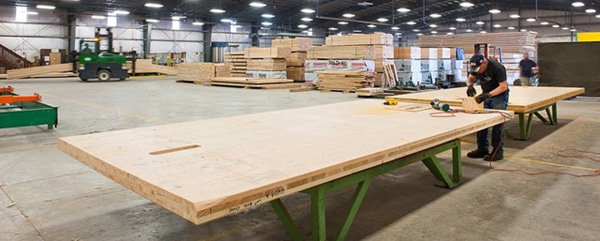
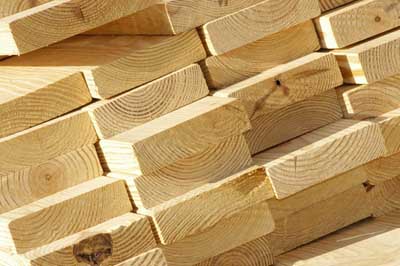
SmartLam aims to produce 17.2 million cubic feet of annual CLT production by 2022. Smartlam says that it has reorganized as SmartLam North America to better serve the needs of the rapidly expanding mass timber market via intelligent and integrated cross-laminated timber (CLT) and mass timber building solutions.
SmartLam announced that it will “significantly expand” its sustainable model of timber harvesting, mass timber product manufacturing, and cutting-edge project delivery model, to establish a dominant position in the North American mass timber and building industries. Continue reading "SmartLam aims to become North America’s largest CLT producer"
Here are all of the Chinese wood products that are set to face a 30% tariff this month

On Oct. 15, the US administration will raise tariffs on Chinese wood and paper products to 30% from 25%, as Chinese counter-measures take their toll on US hardwood producers. Continue reading "Here are all of the Chinese wood products that are set to face a 30% tariff this month"
Rise in EU imports of tropical sawnwood

EU imports of tropical sawn wood increased 12% to 405,600 MT in the first half of 2019 compared to the same period in 2018. Import value increased 7% to €388.4 million. This aligns with market commentary earlier in the year, with sawn hardwood importers reporting generally steady, in some cases strong trading in 2019 including in tropical timber, despite some slowdown in economic activity and increased downside concerns about the medium-term outlook.
During the first half of 2019, EU businesses reported some issues with supply, but overall consumption was holding up while sawn hardwood prices were steady to firm with demand underpinned by construction sector consumption. Imports from Cameroon, particularly slow in the first half of last year, increased 20% to 141,000 MT during the first six months of 2019.
Imports also increased sharply from several other countries including Brazil (up 47% to 77,600 MT), Gabon (up 20% to 58,600 MT), Congo (up 38% to 30,200 MT), Ghana (up 17% to 8,800 MT) and DRC (up 32% to 7,300 MT). These gains offset a 29% decline in imports from Malaysia, to 40,900 MT, and a 4% decline from Côte d'Ivoire, 14,200 MT.
The trend towards increased concentration of tropical sawn wood imports into the EU by way of Belgium has continued this year. In the first half of 2019 compared to the same period in 2018, imports into Belgium increased 21% to 145,900 MT. Imports also increased in France (up 9% to 48,200 MT), the UK (up 21% to 29,800 MT), Spain (up 67% to 27,570 MT) and Portugal (+53% to 15,200 MT). However, imports fell 14% to 67,100 MT in Netherlands, 8% to 32,500 MT in Italy, and 7% to 12,600 MT in Germany.
The decline in EU imports from Malaysia this year was attributed by some importers to a decline in the availability of PEFC certified product following the suspension of MTCS certification in Johor and Kedah states led to the total certified area in Malaysia to fall by around 25%. According to MTCS, both states are now working to regain their MTCS certificates.
There was a 40% fall in imports of Malaysian sawn hardwood in the Netherlands, the leading EU destination for Malaysian timber where there is also a particularly strong emphasis on sourcing certified product.
Republic of Congo increasing focus for EU log imports
After recovering a little ground in 2018, EU imports of tropical logs maintained the level of the previous year in the first half of 2019. Imports of 54,400 MT during the first half of the year were 0.3% more than the same period in 2018. Import value fell 3% to €26.2 million during the period.
While EU imports of tropical logs increased by 41% to 17,400 MT from Congo, the leading supplier, and by 48% from Liberia, to 5,300 MT, these gains were offset by falling imports from the Central African Republic (-7% to 9,500 MT), DRC (-29% to 7,100 MT), Cameroon (-14% to 7,000 MT), Equatorial Guinea (-49% to 2,900 MT), and Suriname (-19% to 1000 MT).
After a slow start to the year, tropical log imports picked up pace in France and Belgium in the second quarter of 2019. By the end of the first half, France had imported 22,800 MT of tropical logs, 3% more than the same period in 2018, while imports into Belgium were up 9%, at 14,600 MT.
However, in the first six months of 2019, imports were down 15% to 6,800 MT in Portugal, 12% to 4,800 MT in Italy and 78% to 1,700 MT in the Netherlands.
European softwood logs exports to China triple as the bark beetle infestation ravages forests
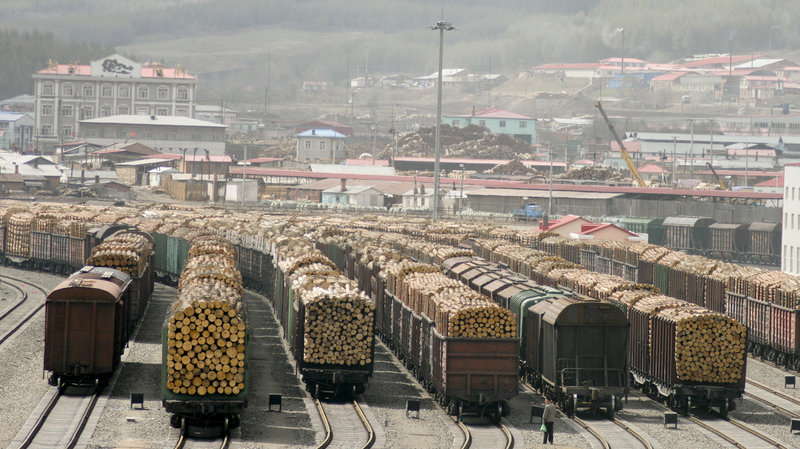
As the bark beetle infestation ravages European forests and consequently the supply of logs has increased sharply, exports are exponentially increasing this year. Thus, due to a massive boost of exports from Belgium and Germany, total European softwood logs and softwood lumber deliveries to China expanded by 277% and 35% respectively in the first seven months of 2019. Continue reading "European softwood logs exports to China triple as the bark beetle infestation ravages forests"
The 67th International Softwood Conference 2019 to be organized in Antwerp

Antwerp, on the crossroads of international trade and a major harbour for wood and wood products, will be the host city of the 2019 International Softwood Conference from 16 to 18 October.
Organised by the European Organisation of the Sawmill Industry, EOS, the European Timber Trade Federation, ETTF, and the softwood import section of Fedustria, the Belgian federation of the Textile, Wood and Furniture Industries, the conference will gather representatives of leading softwood producing and importing companies for two days of inspiring presentations and contacts.
In addition to the “technical” meetings, participants will be able to get to learn Antwerp better with a welcome reception and official conference dinner at famous landmarks such as the MAS (Museum aan de Stroom) and the Antwerp Zoo. All meetings will be held at the Radisson Blu Astrid Hotel.
Full details on the conference are available at https://ettf.info/isc2019
US wood pellet produces to increase wood pellet prices; Canadian prices stable

For September 2019, Canadian wholesale and retail wood pellet prices are as-yet unchanged from the summer low-season. However producers in the US northeast have already posted price increases this month.
In perhaps an indication of price movement for winter 2019, wholesale suppliers of heating wood pellets in Maine, Massachusetts, New York, and Pennsylvania raised prices in September from July: ME +7%, MA +3%, NY +12%, PA +16%. Continue reading "US wood pellet produces to increase wood pellet prices; Canadian prices stable"
EU tropical wood trade up 16% in the first half of 2019
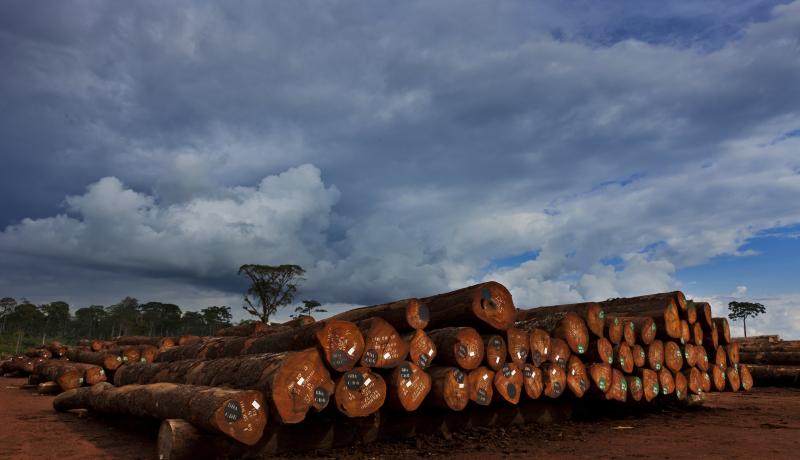
The EU’s trade in tropical wood products was more buoyant in the first half of this year compared to the same period in 2018.
Total imports of all wood products (classified in HS Chapter 44) from tropical countries in the first half of 2019 were 1.24 million metric tonnes (MT), 16% more than the same period in 2018. Import value increased 15% to €1.26 billion.
This growth is surprising given that the wider economic situation in the EU has continued to deteriorate this year. In the European Central Bank (ECB)’s latest projections, published in September 2019, the euro-area is forecast to grow only 1.1% in 2019 and 1.2% in 2020. This compares to the ECB’s December 2018 forecast of 1.7% growth in both 2019 and 2020.
According to ECB, “recent data and forward-looking indicators – such as new export orders in [eurozone] manufacturing – do not show convincing signs of a rebound in growth in the near future and the balance of risks to the growth outlook remains tilted to the downside….The longer the weakness in manufacturing persists, the greater the risks that other sectors of the economy will be affected by the slowdown”. Continue reading "EU tropical wood trade up 16% in the first half of 2019"
China: More wood panel mills closed due to environmental regulations
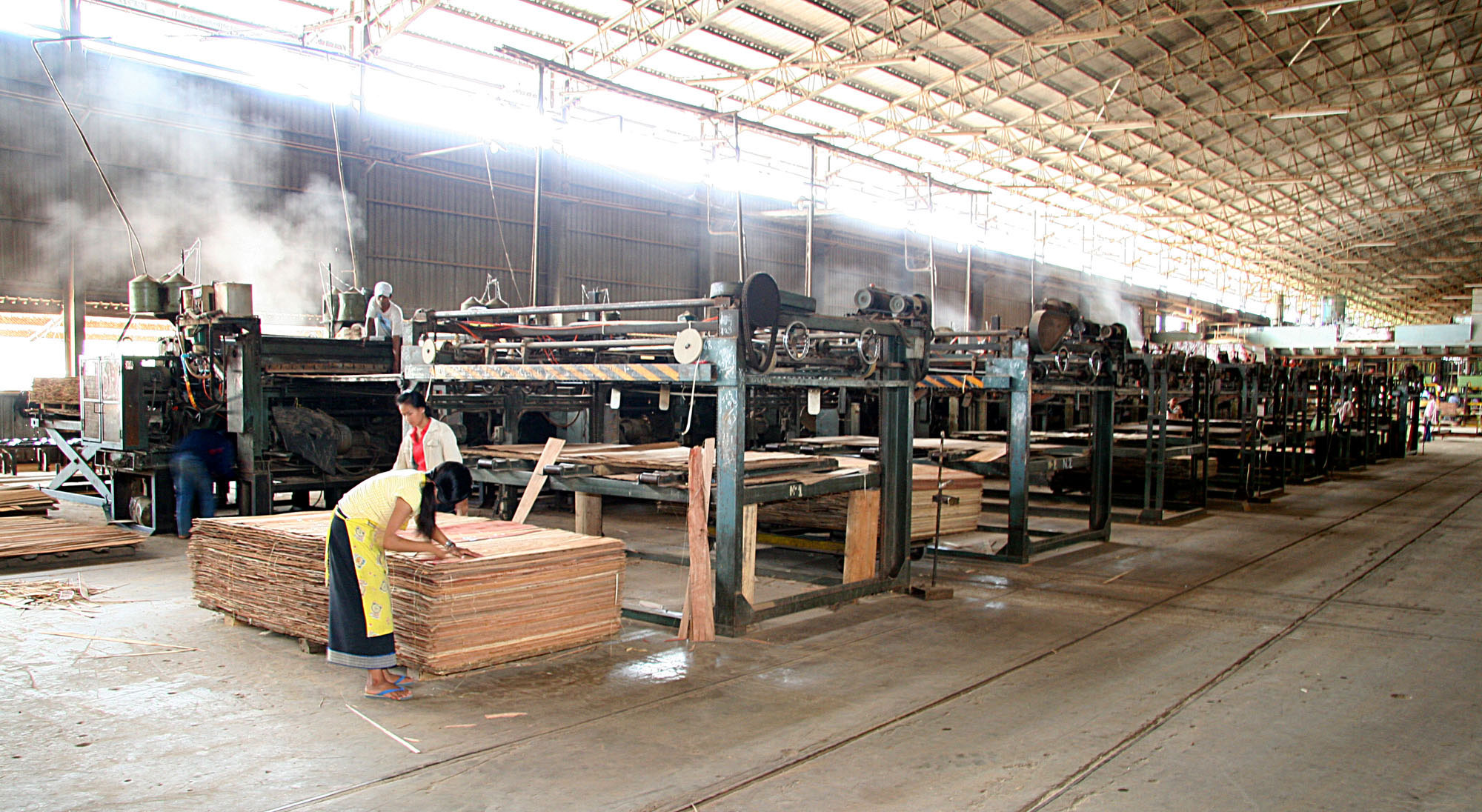
Because of the new environmental regulations many wood processing mills in the Manzhouli, Suifenhe and Erlianhot areas have stopped production. Some have closed their business entirely while others have relocated and this has altered wood product distribution channels.
The focus of attention of the environmental regulators has, according to media reports, turned to cabinets and panel factories in 34 provinces, municipalities and autonomous regions. Nearly 3,000 panel factories in Wenan County, Langfang City, Hebei Province have been told to cease operation. This will seriously affect the domestic panel market and the jobs for the around 10, 000 employees.
At present, Hebei Province is investigating the many small scattered and polluting enterprises. Small panel factories are given the option of relocating or upgrading to satisfy the environmental regulations. It is reported that 1,274 panel enterprises were told to cease operation.
Local experts have confirmed that a large number of small and medium-sized panel factories across Jiangsu and Zhejiang Provinces have closed because they could not afford to retool or relocate.
Raute to deliver plywood mill to Russia’s Segezha Group
Raute Corporation has received orders worth approximately EUR 58 million from Segezha Group to Russia. Continue reading "Raute to deliver plywood mill to Russia’s Segezha Group"
Steady rise in prices of Russian wood pellets sent to Europe; exports up by 32%

The average price of Russian wood pellets sent to the European Union countries in January-July has increased by almost 10% as compared to the previous year, following several quarters of sharp rise. On average, Russian wood pellets sent to the European Union increased by 10% as compared to the same period of 2018, while the overall exports rose by 32% in quantity and 45% in value.
The most expensive Russian wood pellets were sent to the United Kingdom (an average of €163/ton), a 10% increase as compared to January-July 2018. Continue reading "Steady rise in prices of Russian wood pellets sent to Europe; exports up by 32%"
The European Panel Federation criticizes VOC requirements introduced in Germany

The European Wood-based Panel Federation (EPF) raises the alarm against the current threat to European harmonisation and progress posed by countries seeking to add new national rules on top of existing European regulations.
In May 2019, EPF called on regulators to support common standards for wood-based panels. EPF retains this level playing field position as a core principle of its members. Now, it resubmits this view, specifically regarding new VOC (Volatile Organic Compound) requirements being introduced in Germany. These are about to be imposed by certain Federal States as of 1 October 2019, in conflict with the harmonized rules of the European Construction Products Regulation (CPR), of CE marking.
Germany’s proposed Model Administrative Rules on Technical Building Regulations (MVVTB) version 2019/1 seeks to require manufacturers and sellers of panels to meet new national requirements. A Member State adding new demands, on top of those currently allowed, infringes CPR. This argument was upheld by the European Court of Justice in April. In addition, multiple new court cases are now underway against MVVTB in Germany, and one Federal State, Baden-Württemberg has already ruled the new VOC requirements to be illegal, as there is no proven need for them.
In the light of MMVTB 2019/1 being both potentially illegal and certainly detrimental to the Single Market, EPF urges:
Germany’s Federal States to immediately suspend any action to introduce the VOC requirements for panels expressed in MVVTB 2019/1 into their own state building codes;
The European Commission to accelerate the finalization of a Delegated Act (already in process in DG GROW), to harmonize the classification of VOC performance in construction products.
According to EPF, Europe’s panel producers stand resolutely behind a harmonized set of European rules, and firmly against the fragmentation of Europe’s Single Market driven by solo actions of Member States, such as the current one. EPF calls for these urgent actions for the welfare of Europe’s half a billion citizens.
Rising costs for North American wood pellet producers

Many pellet manufacturers in North America have had to increase the usage of logs for their feedstock in 2019 because of reduced availability of lower-cost sawmill residues. This has resulted in higher total wood fiber costs and increases in the pellet feedstock price indices for both Canada and the US in the 1H/19. Continue reading "Rising costs for North American wood pellet producers"
Finland: Prices for pine and spruce sawlogs on a falling trend
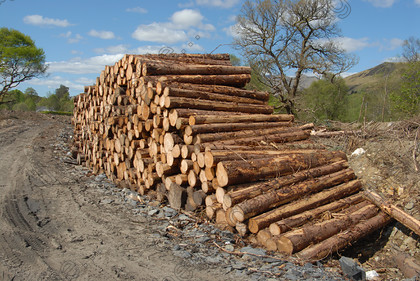
Pine and spruce sawlog prices in Finland are on a falling trend in August 2019, both as compared to the previous month as well as compared to August 2018. Pine sawlogs currently cost €60.94/m3, while spruce sawlog price is €62.84/m3 in August 2019.
Continue reading "Finland: Prices for pine and spruce sawlogs on a falling trend"
US hardwood sees collapse in demand and drop in prices due to trade war with China

Lumber mills in the U.S. have been a casualty of President Trump's trade war with China, as a significant dip in demand has pushed hardwood lumber prices down.
Many US hardwood lumber firms have seen reduced demand, and have had to make cutbacks and eliminate jobs. Gutchess Lumber, Baillie Lumber, and Northland Corp. all told the Wall Street Journal that demand has decreased from the same time last year.
Baillie and Northland have been forced to lay off workers. Gutchess reduced overtime and suspended 401(k) contributions.
China helped hardwood exporters during the 2008 financial crisis, writes WSJ, as Chinese customers kept buying oak and ash in large quantities. It remains the top export market, particularly for higher-grade wood like oak and cherry. Now, as the Chinese economy slows, US firms are feeling it.
“Were we relying too much on East Asia and China? Of course we were,” Northland chief executive Orn Gudmundsson said. “But there were no viable alternatives.”
The tariffs are polarizing. Northwest Hardwoods chief Nathan Jeppson and other executives believe they've been disastrous for the U.S. economy. Others acknowledge they're hurting right now, but believe they're necessary long-term. 67 percent of recently-polled Wisconsin manufacturing executives said they support the tariffs even though tariffs are hurting their businesses, WSJ reported.
Kronospan enters plywood production: Completes first plywood plant in Belarus

A little more than a year has passed since the moment when the first stone was laid in the foundation of Kronospan's new plywood factory in Smorgon, Belarus. Now, the construction of Kronospan's plywood plant called Ultra Ply LLC has been completed and it specializes in the production of plywood from spruce and pine. In full mode plywood production will reach 250,000 m3 per year. Continue reading "Kronospan enters plywood production: Completes first plywood plant in Belarus"
Stora Enso to close Kitee sawmill by the end of the year
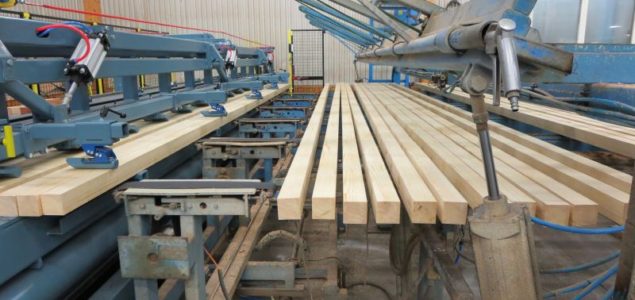
Stora Enso will consolidate its spruce timber production at its mill in Varkaus, Finland, where spruce timber production has synergies with the existing LVL (laminated veneer timber), pulp and paperboard mills.
According to Stora Enso, the target is to improve long-term competitiveness, the consolidation is part of the company’s profit protection programme. As a result of this consolidation, the Kitee sawmill will be shut down.
“Consolidation of spruce timber production to Varkaus creates the opportunity for utilising the full potential of a sawmill and processing plant as an integrated facility that produces high value timber products, such as LVL veneers and processed timber. This gives us a larger range of products, enhanced R&D and innovation work, and more efficient production”, says Jari Suominen, Executive Vice President of Stora Enso’s Wood Products division.
With this consolidation, Stora Enso will permanently close the Kitee sawmill by the end of this year, leading to making 73 employees redundant. Of these, up to 20 can be handled by pension arrangements. The increase in production at the Varkaus Mill will create 20 new jobs and Stora Enso’s employees affected by co-determination negotiations will be given priority when filling these and other internal positions.
“During the co-determination negotiation process for Kitee sawmill, we were unfortunately unable to find any measures that would significantly improve the profitability of the sawmill”, says Jari Suominen.
Timber skyscrapers hold the key to green cities, says top Japan architect

Recent studies have shown the environmental benefits of timber residential developments and in future wooden skyscrapers could hold the key to more environmentally-friendly cities, said senior officials of top Japanese architect group Nikken Sekkei.
They were addressing a key gathering on the opening day of Cityscape Global real estate expo in Dubai.
One of the world’s largest architectural and engineering design firms, Nikken Sekkei employs over 2,770 professional staff in six group companies offering comprehensive design, engineering, management, consulting and R&D services.
The company's portfolio consists of over 25,000 projects in 250 cities, in 50 countries.
At the ongoing event, the Japanese architect is showcasing its recent study on sustainability and wooden structures and the multi-billion-dollar W350, the tallest wooden skyscraper when completed.
Nikken, which will be exhibiting a range of tall buildings and sustainable projects they have been instrumental in designing, will also be underscoring the positive environmental impact the use of timber in construction could have around the world.
Dr Fadi Jabri, Nikken’s Executive Officer, Principle responsible for Mena, CIS, India, Australia and Europe regions, said: "There are far reaching benefits beyond reduced carbon emissions. In Japan for example, where W350 will be built, by engaging the use of wood for high-rise urban buildings and increasing demand for timber, there is an excellent opportunity to revitalise the country’s forestry industry and make it more sustainable."
"Increased demand for timber at local level requires greater management of the country’s forest, the management in turn ensures their health, which then promotes the absorption of CO2 and ultimately creates a greener environment for every citizen – this is our commitment to sustainable urban living," he added.
The $5.5 billion W350 mixed-use design project, is progressing with several concept studies already taken place to make the development a reality and to create a blueprint that will eventually see timber structures hundreds of metres tall common place throughout Japan and the rest of the world.
"One drawback of building with wood is the high cost, almost double what a conventional high-rise would be," stated Dr Jabri.
"However, Nikken believes research and technological advancement in wood construction will make the project more economically feasible," he added.
Dr Jabri said while working on this project one of the goals it had was to develop innovation to make large-scale wood constructions a reality and more affordable.
"We envisage in the years to come a raft of new materials and methods that will make this a reality and cities around the world more environmentally friendly," he added.

