

With the arrival of the peak season, China's particleboard market in September has slightly accelerated, and the business pressure on Chinese manufacturers has also eased.
However, some merchants said that the current inventory of particleboard is still too much, Continue reading "China: Particleboard and MDF market recovering in September"
Article archive
Russia doubles export tariffs for Far Eastern softwood species
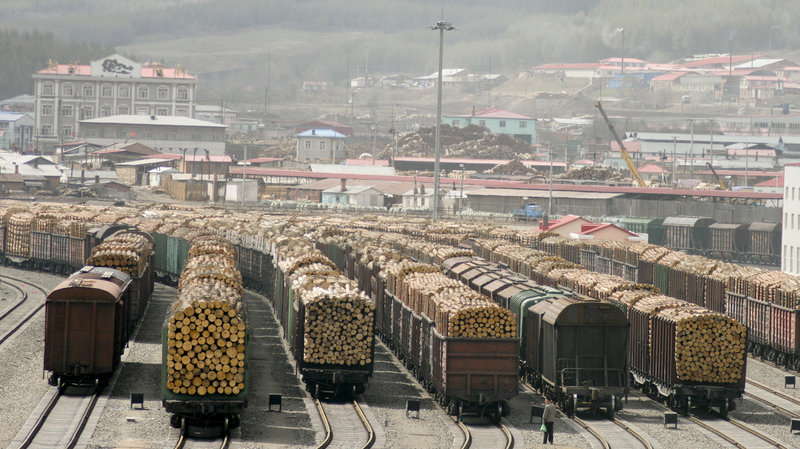
By Decree No. 1169 of September 7, 2019, the Government of the Russian Federation doubled (from 6.5% to 13%) the tariffs of export customs duties on unprocessed softwood of Far Eastern species (Yezo spruce, Khingan fir, and Dahurian larch) exported within tariff quotas under licenses issued by the competent authorities. The Decree will enter into force on October 12, 2019.
Moreover, by Decree No. 1124 of August 31, 2019, the Government of Russia added a new requirement to the rules of the allocation of tariff quotas for exports of unprocessed softwood, originally established by Governmental Decree No. 779 of July 30, 2012.
The amendment implies that from now on, entities applying for a tariff quota to export unprocessed softwood with the minimum export duty will have to indicate in the application for the issuance of a corresponding license the numbers and dates of submitting declarations of wood transactions in the Unified State Automated Information System (USAIS) for timber accounting.
This will help to track the origin of the exported forest products. Based on these data, it will be possible to track the wood supply chain from the place of harvesting to the buyer.
Finnpulp to raise its investment into a new bioproduct mill in Finland to EUR 1.6 billion

Finnpulp increases its investment assessment in bioproduct mill in Sorsasalo, Kuopio to EUR 1.6 billion, or nearly 200 million more than previously announced.
According to the announcement. The increase is based on technical studies completed during the basic design that ended in summer 2019. The amount has been updated now as the project is progressing towards investment decision and implementation. The previous estimate was made in 2016.
In addition to the increase in overall construction costs, the new cost estimate also includes a refinement of the plant plan, such as the preparation for the construction of a large bio-coal plant. With the need for Finnpulp’s 6.7 million cubic meters of raw wood, the mill will have a large amount of bark, about 10% of the amount of wood. The bark produced during the summer season cannot be optimally utilized in energy production.
Finnpulp’s new cost estimate has also prepared for tertiary cleaning to ensure compliance with permit conditions set by the Vaasa Administrative Court.
The plant will produce a maximum of 1.2 TWh of bio-electricity for the market. This is twice the amount needed by the city of Kuopio per year, or alternatively the amount of electricity needed by all the electric cars planned by the country’s government for 2030, a total of 250,000 vehicles.
The Finnpulp emission limit values previously issued by the Regional Government Office and confirmed by the Vaasa Administrative Court are below or even below the BAT limits for discharges into waterways.
Finnpulp’s water emissions per tonne produced will be about 40% lower compared to modern Finnish pulp mills.
Finnpulp’s bioproduct mill will be the world’s largest softwood pulp mill. The mill is scheduled to start operation in 2021. The EUR 1.4 billion euro investment will create the annual production capacity of 1.2 million tons of pulp. Additionally, the facility will produce 60,000 tons of tall oil and one terawatt hour (TWh) of bioelectricity for the national electricity grid. The facility will use 6.7 million cubic metres of raw wood material per year.
About Finnpulp:
The company is a project initiated by private persons with a background in the forest industry. After the first financing phase, the project has gained support in the form of solid forest and industrial expertise. Finnpulp’s objective is to bring to the markets a new operator that will build the world’s most modern and efficient softwood pulp mill to Finland.
France: Lumber prices for the Q2/2019
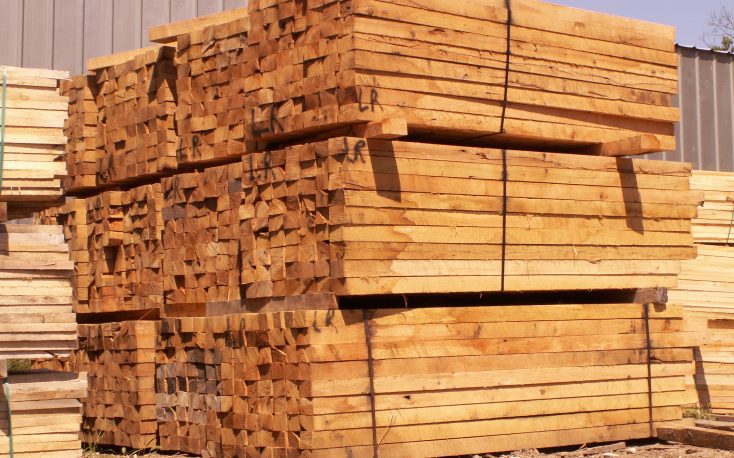
FRANCE LUMBER PRICES for the 2nd quarter 2019
| Prices 2018-Q2 | Prices2019-Q1 € | Prices2018-Q3€ | Prices2019-Q2€ | Index | Change 2019-Q2/2019-Q1 | Change 2019 Q2-2018-Q2 |
| OAK Lumber Index base 100 : Oct 2006 S20 | ||||||
| UNEDGED LOGS - QBA - Logs, joinery, (KD), length 3 m + | ||||||
| Diameter 40 to 49cm (thickness 34mm) m3 | 1234 | 1194 | 1197 | 138,2 | 0,3% | -3,0% |
| Diameter 50cm et + (thickness 50mm) m3 | 1387 | 1414 | 1433 | 147,7 | 1,3% | 3,3% |
| LOGS - QB1 - High-value joinery work, 6 months open air drying, length 3 m + | ||||||
| Diameter 40 to 49cm (thickness 27/34mm) m3 | 948 | 942 | 941 | 134,7 | -0,1% | -0,7% |
| Diameter 50 to 80cm (thickness 54mm) m3 | 1054 | 1080 | 1081 | 139,8 | 0,1% | 2,5% |
| SELECTED LOGS - QSA/QS1- (KD) | ||||||
| Thickness 27 to 54mm - length 2m + | ||||||
| Bare 18cm (tolerance 10cm +) m3 | 973 | 965 | 975 | 146,2 | 1,0% | 0,2% |
| SELECTED LOGS - QS2 - 6 months open air drying | ||||||
| Thickness 27 to 54mm - length 2m + | ||||||
| Bare 18cm (tolerance 10cm +) m3 | 733 | 701 | 719 | 159,1 | 2,6% | -1,9% |
Shrinking EU demand for tropical flooring

Total imports of real-wood flooring into the EU increased 6.2% to 29.52 million sq.m in 2018. Tropical countries accounted for only 9.2% of total imports in 2018, down from 11.1% the previous year and close to 50% before the financial crises.
After nearly two decades of almost continuous decline, the real-wood flooring sector in the EU is now a negligible market for VPA partner timber products.
 EU imports of real-wood flooring from China increased 10% to 18.04 million sq.m in 2018. China’s share of total imports increased from 59.2% in 2017 to 61.1% in 2018, regaining some of the share lost between 2012 and 2016.
This trend continued in the first half of 2019; imports from China, at 9.68 million sq.m, were 11% more than the same period last year.
The biggest increase in EU flooring imports in 2018 was from other temperate countries, notably Ukraine.
Imports from Ukraine increased 19% to 5.02 million sq.m last year. Ukraine’s share of total imports increased from 15% in 2017 to 17% in 2018.
Imports from Ukraine and several other temperate countries have continued to rise in 2019. In the first six months, total imports from temperate countries other than China were 4.83 million sq.m, 13% more than the same period in 2018. Imports from Ukraine increased 17% to 2.91 million sq.m. Continue reading "Shrinking EU demand for tropical flooring"
Falling wood raw-material costs for lumber producers in Europe and N. America
Wood raw-material costs for many lumber producers in Europe and North America have fallen over the past year both because of increased timber harvests and reduced log demand, particularly in North America and Asia. Some of the biggest price changes in the 1H/19 have been seen in the Western US, Central Europe and New Zealand. Continue reading "Falling wood raw-material costs for lumber producers in Europe and N. America"
Merkel promises half a billion euros to revitalise German forests

Angela Merkel’s government has promised more than half a billion euros to revitalise the country’s crisis-hit forests in the fight against climate change. At the emergency forest summit, which took place yesterday at the invitation of the Federal Ministry of Food and Agriculture in Berlin, Federal Minister of Agriculture Julia Klöckner has pledged funds amounting to 547 million euros. Combined with the co-financing by the federal states this results in a sum of approximately 800 million euro. These funds are to be used within four years for the clearance of damaged wood and for reforestation.
Hans-Georg von der Marwitz, President of the umbrella organization AGDW said: ''The forest owners, assesses this support as a clear commitment to the forest and to sustainable forest management.''
The ministry has also updated the figures on damage in the forest. It estimates that more than 180,000 hectares of forest land have been damaged since the beginning of 2018 and around 105 million solid cubic meters of damaged wood have been damaged. Federal Minister Julia Klöckner therefore spoke at the forest summit of a "crisis summit".
Von Marwitz said that the variety of other relief measures presented by the Minister is positive: These include a national forest protection monitoring program for the systematic recording of the damage, beyond the expansion of research on climate-resilient tree species; the review and adjustment of the Forest Liability Compensation Act; tax relief in particular for heavily impacted forestry operations; facilitating the transport of the damaged timber from forests and strengthening the use of wood.
From the point of view of the AGDW President, three things are important: First, everything must be done to ensure that the measures are implemented. This includes breaking down various hurdles, says Marwitz, with a view to the Conference of Ministers of Agriculture Ministers meeting in Mainz on Thursday and Friday. The focus should be on simplifying support (including producing short and understandable grant applications) and on a solution to the de minimis rule, for example through a notification in Brussels. The promotion of forestry associations as a self-help institution of the small-scale private forest also needs to be brought into focus. The minister also raised these issues.
Second, the rewarding of the ecosystem services brought into the debate by the AGDW and promised by the ministry must remain on the agenda. This includes a CO2 tax, which benefits the forest for its climate protection performance.
And thirdly, the president called for the implementation of a timber construction initiative to increase the use of existing wood as a raw material. These include, for example, the changes to state building regulations and a wood quota for public buildings.
Sweden: New large player in the forest industry emerges

Norra Skogsägarna and Norrskog plan to merge into a joint forest owners' association, which is described as the biggest event in 90 years.
”Together we will become a hugely powerful player, says Maria Broman, Vice President of Norra.
The boards of Norra and Norrskog have unanimously decided to propose their meetings to form a new large forest owners' association. Together, Norrskog and Norra have approximately 28,000 members and geographically the operations cover the four northernmost counties in Sweden, with the exception of the Härjedalen landscape. Continue reading "Sweden: New large player in the forest industry emerges"
IKEA reports record sales on booming online revenues

IKEA reported annual sales above 40 billion euros ($44 billion) for the first time on Wednesday as the Swedish furniture group’s push into e-commerce produced another surge in online revenue.
IKEA was slow to embrace online services but since 2017 the world’s biggest furniture retailer has invested heavily to adapt to new shopping habits and competition from digital rivals such as Amazon and made.com.
In the 12 months to the end of August, IKEA said it sold goods and services worth 41.3 billion euros, a 6% rise from 38.8 billion last year including a 43% jump in online revenue to 2.9 billion euros. The addition of new stores also boosted sales. Continue reading "IKEA reports record sales on booming online revenues"
German producer prices for wood products impacted by the bark beetle infestation
The German producer prices for commercial wood products in July now clearly show the consequences of the bark beetle infestation for the prices of lumber. As the construction industry continues to enjoy robust growth, the cause of the fall in prices remains only the cheap raw materials that depresses the markets.
Continue reading "German producer prices for wood products impacted by the bark beetle infestation"
US-China trade dispute impacts Rayonier’s timber segment as harvest guidance is revised downwards

Rayonier Inc.’s New Zealand and Pacific Northwest timber segments faced challenging conditions during Q2, according to the company’s CEO David Nunes.
Nunes said the southern timber segment had delivered a strong quarter, as markets benefited from increased demand from new mill facilities and constricted supply due to wet weather.
But the company’s Pacific Northwest and New Zealand timber segments had to contend with less favorable conditions.
In the Pacific Northwest, pricing dynamics were impacted by the U.S.-China trade dispute and challenging lumber end-markets. In New Zealand, challenges included weaker demand from China and competition from alternative supply sources, particularly Europe, which resulted in lower harvest volumes and declining export sawtimber prices.
Pricing dynamics in the Pacific Northwest and New Zealand continue to be unfavorable relative to Rayonier’s expectations, Nunes said, leading the company to lower its full-year guidance. Continue reading "US-China trade dispute impacts Rayonier’s timber segment as harvest guidance is revised downwards"
US softwood lumber prices strengthen further
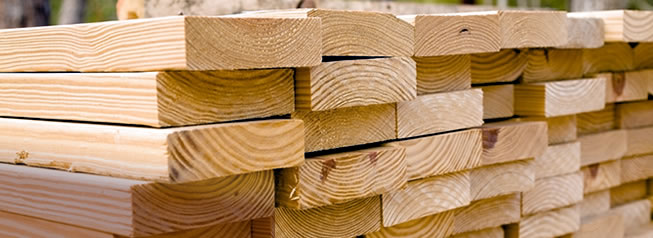
The mix of different types of building that make up the critical U.S. housing market have changed drastically since the epic U.S. home building crash of September 2006. While all acknowledge that the statistics will not soon — or ever — again be at 2.5 million housing starts annualized, there are many and varied interpretations of this new mix of U.S. home building data. Continue reading "US softwood lumber prices strengthen further"
Katerra inaugurates the largest cross-laminated timber plant in North America

Engineered wood and building development giant Katerra's new cross-laminated timber (CLT) and glulam plant is now open in Washington. Katerra says the 270,000 square foot facility is the largest of its kind in North America.
Citing "off the charts" demand for its CLT, the $150 million manufacturing plant will produce up to 13 million board feet of timber per year. CLT is being hailed by environmentalists and many engineered wood firms have added it to their product lineups, as CLT buildings are faster to construct, more energy efficient, and are comprised completely of renewable materials.
Katerra's CLT will be made from 2x6 lumber boards - sourced mainly from Canada - compressed and glued together in layers that form structural panels and beams. Company head of architecture Craig Curtis told The Spokesman-Review the company hopes to transition to material from Washington soon.
Katerra’s near-term manufacturing expansion plans for the U.S. includes three more building components factories to serve the South and East Coast markets, as well as another mass timber production facility to be located in the Southeast. The company is worth around $3 billion.
In June 2018, Katerra bought Michael Green Architecture, who's behind two of the continent's largest CLT structures: the T3 220,000-square-foot office building in Minneapolis and the Wood Innovation and Design Centre in British Columbia.
Stora Enso appoints new CEO

Annica Bresky will become chief executive of Finnish pulp, paper and packaging board giant Stora Enso Oyj from December, taking over from Karl-Henrik Sundstrom.
Bresky, 44, said on Wednesday that her main focus areas will be delivering an ongoing profit protection programme and the revamp of Stora Enso’s Oulu site.
Stora had flagged the departure of Sundstrom, who will turn 60 next year, in August.
“She has a proven track record of driving growth and operational excellence and has a strong focus on customers and innovations,” Jorma Eloranta, head of Stora Enso’s board, said of Bresky, who has led Stora’s Consumer Board division, one of its main business units, since 2017.
“She is well equipped to lead the transformation of our sustainable renewable materials company,” Eloranta said.
Stora Enso warned of slowing demand in many markets in July and raised its cost-cutting target to 200 million euros (£176.44 million) from an originally planned 120 million. It also said 60 million of the savings had already been achieved.
In May, Stora Enso said it will invest 350 million euros at its Oulu mill to boost output of packaging board and reduce glossy magazine paper production.
China: Top wood-based panel producing companies
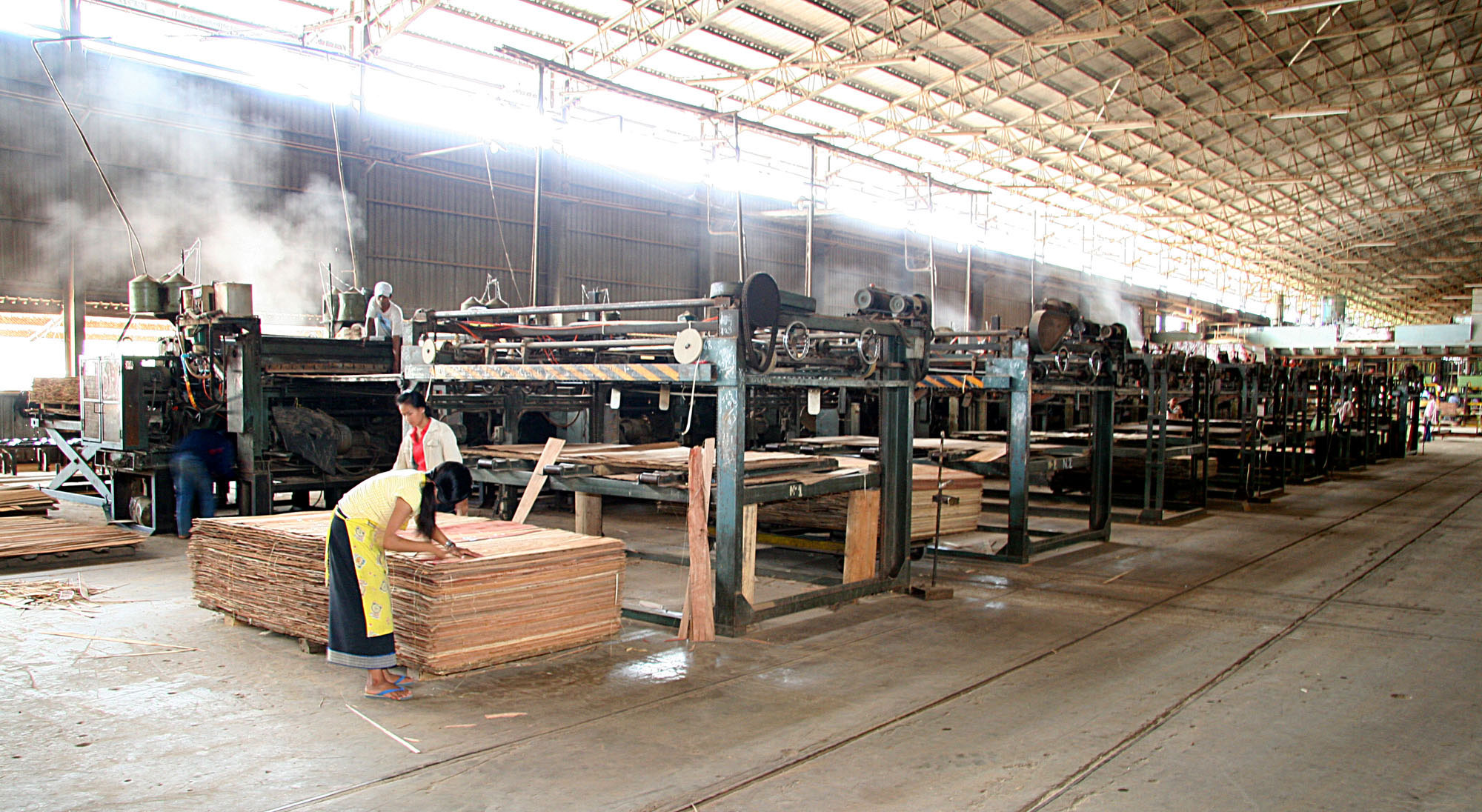
With a total production of 1,490,000 m3/year, Jilin Sen Workers' Forming Group Co., Ltd., is China's top wood based panel producer followed by Daya Shengxiang Home Co., Ltd. and Ningfeng Group Co., Ltd, on the second and third place.
In 2018, the national consumption of wood-based panel products in China was about 290.32 million cubic meters, a slight decrease of 0.5% over the previous year. The consumption was negative for the first time in the past decade. The average annual growth rate of national wood-based panel consumption in the past 10 years was close to 13.1%. Continue reading "China: Top wood-based panel producing companies"
Germany: Sawmills’ profits booming, as forests are ravaged by insects and drought

Sales of German sawmills, planing mills and wood impregnators have increased nominally by around 33% over the past ten years. Revenues reached 6.4 billion euros in 2018 as compared to 4.8 billion euros in 2008. In the exceptionally dry and warm year of 2018, industry sales increased by 8% year-on-year, exceeding the 6 billion euro mark for the first time.
The industry relies on local wood, but also on imports of raw materials. Exports represent just under one third of the overall sales (or 2 billion euros). The number of companies decreased from 435 to 324 between 2008 and 2018.
2018 large logging volumes of softwood from heat-damaged forests
The German forests suffered in 2018 from water scarcity and heat. The proportion of trees with clear crowns increased to 29% (2017: 23%). Softwood trees such as spruce and pine are especially prone to drought and become more susceptible to pests such as the bark beetle. According to the logging statistics of the German Federal Statistical Office, a total of 65 million cubic meters of wood were felled in 2018. In particular, wood from spruce and other conifers such as firs and Douglas firs (39 million cubic meters) as well as pine and larch wood (12 million cubic meters) were extracted intensively from the forest. Continue reading "Germany: Sawmills’ profits booming, as forests are ravaged by insects and drought"
US-China trade war hits the French oak market: prices for logs at auctions down sharply this year
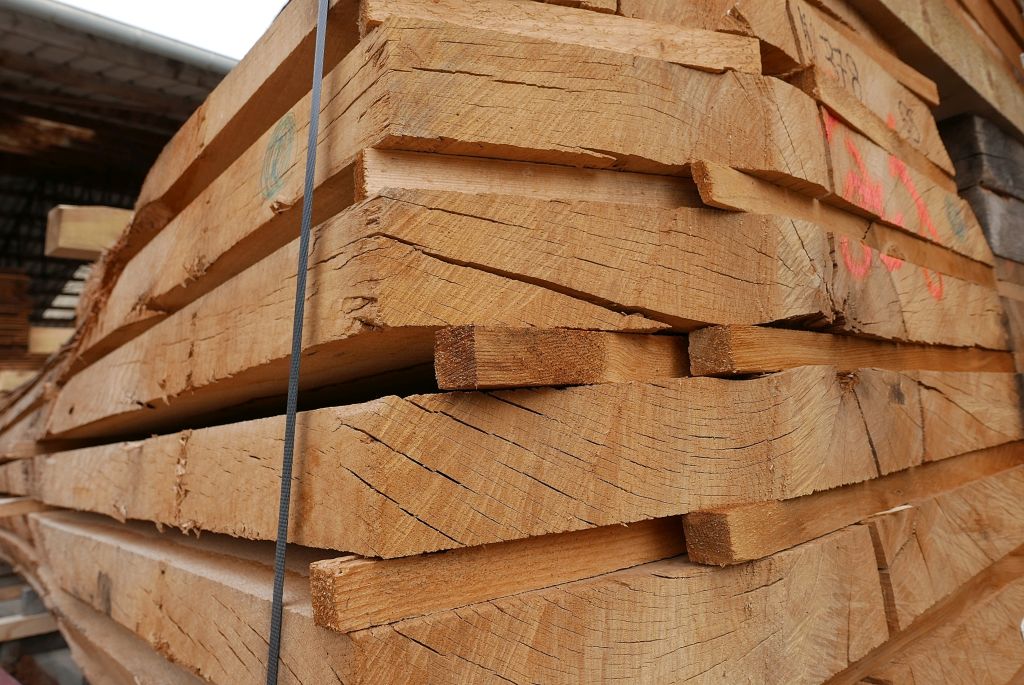
The euphoria that characterized France's oak market in 2017-2018 is now about to end. This is one of the conclusions of the public sale of Beaune (Côte d'Or) in Burgundy, organized by the French National Forest Office (ONF).
The results of the Burgundy auction clearly confirm the tendencies of weakening in demand which already were noticeable at the end of this spring's auctions.
It's a already a fact, since the beginning of the year, the market has turned. The slowdown in economic activity in China has had the effect of curbing trade with the outside world. By the end of the first quarter of 2019, the exporters of oak logs found themselves with stacks of containers stuck in ports or with heaps of wood waiting in parks or roadside.
But at the same time, oak logs sold in the fall continued to emerge from forests due to the last mild winter. And as the private owners wanted to take advantage of the highest prices of oak, they sold a lot during the winter. This rather brutal gap between supply and demand was further aggravated by the US-China trade conflict, resulting in large increases in US customs duties on certain commodities (flooring, window frames, windows, etc.). This lifting of barriers at the US borders also had negative effects on the demand for sawnwood, especially on second-choice products. Continue reading "US-China trade war hits the French oak market: prices for logs at auctions down sharply this year"
Weak market for US hardwoods in China

In September, the market trend of US hardwood still shows no obvious improvement in the Chinese market.
Some Chinese merchants said that although the popularity of the US hardwoods has rebounded recently, with exports such as ash, red oak and other market slightly increasing compared with the same period of last month, the business pressure is still huge, in part due to huge inventories but also because of the trade war between the two countries
Unprofitability has become the norm, many Chinese buyers complain. Continue reading "Weak market for US hardwoods in China"
Bark beetle emergency: The current situation on the European roundwood market is unprecedented

The forest emergency in Europe is at the beginning of a hard battle campaign against Bark Beetle and other parasites attacking forests.
Global warming is accelerating the reproduction of Bark Beetle from normal twice a year to three times a year, causing infestations in all central Europe. And this problem is evolving rapidly. Continue reading "Bark beetle emergency: The current situation on the European roundwood market is unprecedented"
Stora Enso establishes a new Forest division
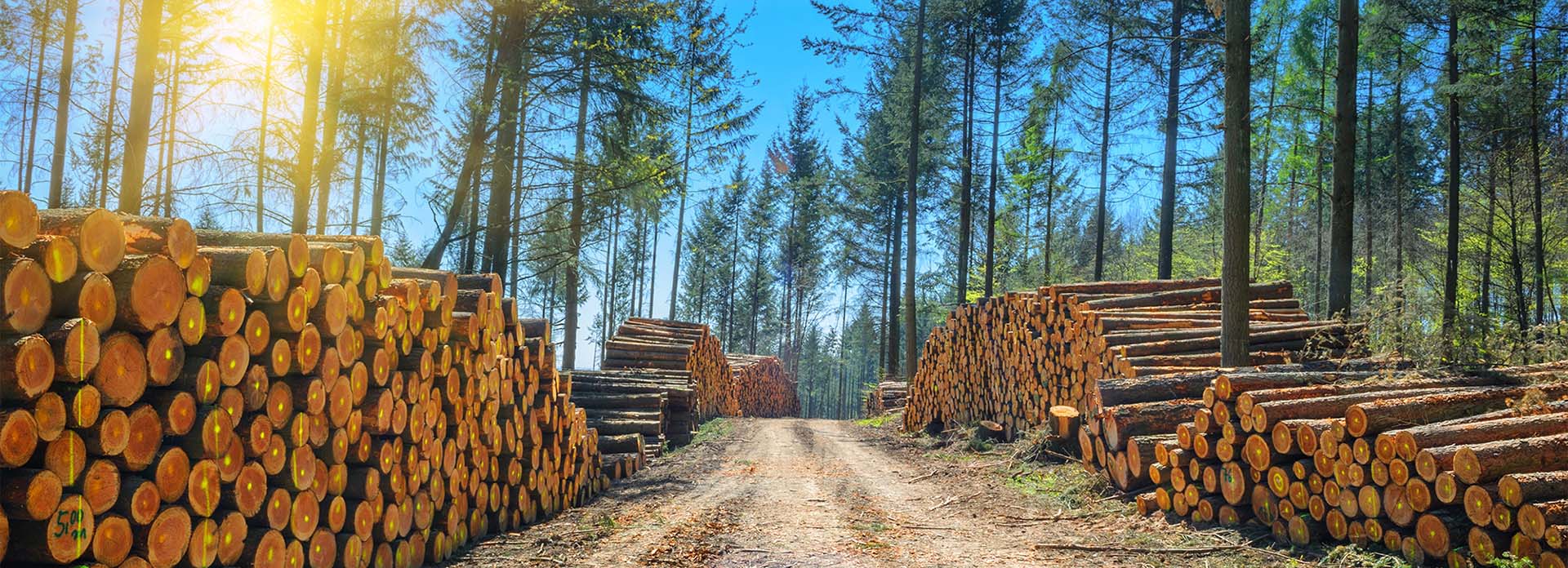
Stora Enso announced establishment of a new Forest division to manage the recently acquired Swedish forest assets.
According to the announcement, the new division is created also to increase transparency. The company will start reporting it separately at the beginning of 2020.
The new Forest division will include Stora Enso’s Swedish forest assets (including the recently-acquired Bergvik Skog Väst AB) and its 41% share of Tornator with the majority of its forest assets located in Finland.
The Forest division will also include wood supply operations in Finland, Sweden, Russia and Baltic countries. Tree plantations in the southern hemisphere linked to local pulp mills continue to be reported as before under the Biomaterials and Consumer Board divisions.
After establishing the new Forest division, segment Other reporting will include Group functions, logistics and other operations.
Today, Stora Enso has forest assets valued at more than EUR 4.1 billion (land and biological assets) in its balance sheet, the highest value being of biological assets of EUR 3.6 billion among Nordic companies. In Sweden, Stora Enso owns 1.4 million hectares of forest, of which 1.14 million hectares are productive forest land with standing stock of 143 million m³.
The new division will begin its segment reporting on January 1, 2020. The restated historical figures will be published in the first quarter of 2020. Stora Enso is now disclosing an illustrative statement of income and operating capital for the new division for 2018 and first half of 2019.

