

In May, the average price of pellets in Switzerland has recorded the fourth consecutive decline, stressing a declining trend which started in February. Thus, if in January the average price for a tonne of pellets was CHF 420.3 (EUR 345,19), in May the price stands at CHF 408.8 (EUR 335.38). On a monthly basis, the price dipped by 2,2% over April. Yet, as compared to May 2013, the pellet price is 4,65% higher.
In May 2014, for orders of 3 tonnes, the current price is CHF 422.85 (EUR 346.91); for 5 tonnes purchases CHF 407.27 (EUR 334.13), meanwhile for larger quantities (8 t) one can pay CHF 396.35 (EUR 325.17).
Article archive
Global particleboard market to boom in the next 3 years
The recovery in U.S. housing construction, an expanding global furniture industry, and strong growth in housing construction in rapidly developing countries in Eastern Europe and Russia will lead to a boom in particleboard production by 2017.
According to Australian industry analyst BIS Shrapnel’s latest Particleboard in the Pacific Rim and Europe 2013-2017 report, Europe – which is still struggling to return to growth following the global financial and economic crisis – will be the main beneficiary of the boom, with exports set to more than double during the forecast period as production expands in Belarus, Bulgaria, Hungary, Latvia, and Russia.
But the report warns that price growth may be limited as consumption is forecast to significantly lag behind production, unless non-producing regions increase their demand.
Particleboard is used mainly for furniture and cabinet manufacturing in most regions. In 2012, particleboard used for furniture and cabinet making ranged from a low of 18 per cent to 20 per cent of total particleboard consumption in Australasia and South Africa, to a high of 80 per cent to 90 per cent in China, India, Malaysia, Vietnam and South American countries.
Western Europe (excluding Russia and Turkey) remains the dominant particleboard producing region, accounting for 38.9 per cent of the world’s production in 2012, or 28.7 million cubic metres. This will increase slightly by 2017. Based on forecasts, Europe, including countries such as Belarus, Bulgaria, Hungary and Latvia, will produce 34.8 million cubic metres, accounting for 39.3 per cent of global production.
The greater European region, including Russia and Turkey, is by far the largest producing region with 53.4 per cent of the world’s production in 2012. This will increase to 53.9 per cent by 2017.
“The economic crisis hasn’t ceased for Western Europe, and in 2012 it was the only region with a GDP close to zero,” said report author and senior manager, Bernie Neufeld. “However, if there is one industry that has remained stable in the greater European region, it’s the particleboard production industry – and times are only expected to get better over the forecast period.
“Net exports from Europe (excluding Russia and Turkey) are projected to increase substantially over the forecast period, from 2.3 million cubic metres in 2012 to 5.6 million cubic metres in 2017.
“With prices also expected to increase over the forecast period it’s a good time to be in the particleboard industry in Europe, and you can’t say that about too many industries in the region, sadly.”
Economic Prospects, and Global Production and Consumption Forecasts
The downturn in housing construction in the United States reached the bottom of the cycle in 2009. Housing construction began to recover in 2010, and is well on the way to much stronger growth over the next five years.
“This recovery will drive economic growth not only locally but in many of its key trading partners around the world,” said Neufeld. “It will also drive renewed demand for furniture, and ultimately the demand for particleboard. Housing construction in other key regions such as South America and Asia will also drive demand.”
Production of particleboard by major producing countries is projected to increase from 73.6 million cubic metres in 2012 to 88.6 million cubic metres in 2017, based on current expansion plans and estimated capacity utilisation rates.
But production at current plans is forecast to outnumber consumption globally, leading to a potential surplus. Consumption in the major producing countries is projected to increase from 72.2 million cubic metres in 2012 to 84.8 million cubic metres in 2017.
“Given the projected increase in production to 88.6 million cubic metres over the same period, consumption in non-producing countries and regions such as the Middle East, Africa, and other South American countries will need to be in the order of 3.8 million cubic metres by the end of the forecast period for a surplus to be avoided,” said Neufeld. “Therefore, price increases will be constrained somewhat by the expected surplus in supply.”
Particleboard prices declined in 2009 immediately following the global financial and economic crisis, and increases have been modest over the past five years. Prices in 2012 across all regions -- which are estimates -- averaged US$296 per cubic metre.
Prices are projected to increase by five per cent in 2014 and six per cent in 2015, as global economies strengthen. Slower growth is projected for 2016 and 2017 in response to the next cyclical downturn.
Europe
The greater European region including Russia and Turkey is by far the largest producing region, and production is forecast to increase from 53.8 million cubic metres in 2012 to 56.7 million cubic metres in 2017.
North Asia
North Asia was the second largest producing region in 2012, with 19.9 per cent of the production, or 14.6 million cubic metres. The region’s share of production is projected to decline to 17.8 per cent by 2017, although production will actually increase to 15.8 million cubic metres. Production in Japan and Korea is projected to remain flat, and all of the increase in production will be in China.
South Asia
South Asia was the fourth-largest producing region in 2012, when it produced seven million cubic metres of particleboard with a 9.5 per cent share of global production. This is projected to increase to 7.8 million cubic metres in 2017, but the region’s share of production is projected to decline to 8.7 per cent in 2017.
South America
Significant new addition to capacity will increase production from five million cubic metres in 2012 to 7.3 million cubic metres in 2017, resulting in an 8.2 per cent share of global production. Strong growth in the economies of this region, especially Brazil, will be a significant driver of production.
Australasia and South Africa
Australasia has around a 1.2 per cent share of global production and South Africa has less than one per cent. This is not expected to change significantly over the forecast period.
Central Africa: Timber producers anticipate firmer prices for ‘redwoods’p
Recent price rises for the most frequently demanded timbers have been consolidated as demand is now as firmer, a term that has not been used by producers in the region for several years. Producers are convinced from current developments that demand will remain firm stretching into the third quarter of the year.
Producers anticipate firmer prices for the premium red timbers. Exporters in Cameroon are particularly well placed and order book positions are said to be extending into the last quarter of the year. The biggest problem faced by producers is finding sufficient logs to meet shipping schedules.
Cameroon log exports, limited to only secondary species, are reported very strong and this level of demand is supporting overall market prices.
Sapele millers fall behind on shipments
Demand for sapele sawnwood substantially higher than supply. Some producers say they are falling behind with deliveries and are still contracted to supply orders taken at previous lower prices.
As reported mid-month, the current higher demand is spread over several markets including some European countries and the USA. Demand in Asian and Middle East markets has been consistent over the past months and producers report good prospects in China, Vietnam and India.
South African market, once a star, unlikely to revive soon
The only disappointment is that West and Central African exporters have not yet been able to regain business in South Africa. The IMF has said growth in South Africa continues to decelerate owing to sluggish private investment, weak consumer and investor confidence, tense mining sector relations and tight electricity supply, all of which are undermining growth prospects. The IMF expects South Africa's economy to grow 2.3% in 2014 as exports grow but domestic consumption will add liitle to overall growth.
Delayed reimbursement of VAT hurting timber companies in Gabon
Producers in Gabon report that, in spite of government assurances, repayments of the taxes sur la valeur ajoutee (value added tax) are more than one year overdue and this is putting a considerable financial burden on timber exporters.
Mills under construction in Congo
Companies recently granted forest concessions in Congo Brazzaville are now establishing processing plants, a condition of the concession agree ment. The concession agreement allows for limited log export during the mill construction phase and exporters of okoume logs are very busy.
Overall, export market prospects are expected to remain good and prices firm with likelihood of some further increase over the coming months for the most popular „redwoods‟.
Log Export Prices
| West Africa logs, FOB | € per m³ | ||
| Asian market |
LM
|
B
|
BC/C
|
| Acajou/ Khaya/N'Gollon |
220
|
220
|
155 |
| Ayous/Obéché/Wawa |
225
|
225▲
|
150
|
| Azobe & Ekki |
235
|
230
|
150
|
| Belli |
235▲
|
235▲
|
-
|
| Bibolo/Dibétou |
150
|
145
|
|
| Iroko | 280 |
265
|
235
|
| Okoume (60% CI, 40% CE, 20% CS) (China only) | 340 | 340 | 260 |
| Moabi | 290 | 280 | - |
| Movingui | 220 |
220
|
180
|
| Niove |
160
|
155
|
-
|
| Okan |
270
|
270 |
-
|
| Padouk |
300
|
275 |
210
|
| Sapele |
295
|
295
|
190
|
| Sipo/Utile |
325
|
300 |
200
|
| Tali | 300 | 300 |
-
|
Sawnwood Export Prices
| West Africa sawnwood, FOB |
€ per m³
|
|
| Ayous | FAS GMS | 345 |
| Bilinga | FAS GMS | 520 |
| Okoumé | FAS GMS |
480
|
| Merchantable | 270 | |
| Std/Btr GMS | 350 | |
| Sipo | FAS GMS |
520
|
| FAS fixed sizes | 590 | |
| FAS scantlings | 600 | |
| Padouk | FAS GMS | 800 |
| FAS scantlings | 820 | |
| Strips | 450 | |
| Sapele | FAS Spanish sizes | 590▲ |
| FAS scantlings |
590▲
|
|
| Iroko | FAS GMS | 590 |
| Scantlings | 630 | |
| Strips |
440
|
|
| Khaya | FAS GMS |
450
|
| FAS fixed |
470
|
|
| Maobi | FAS GMS |
560
|
| Scantlings |
560
|
|
| Movingui | FAS GMS |
420
|
Interfor increases lumber production by 27%
Interfor reported net earnings of $27.5 million in the first quarter of 2014, compared to net earnings of $11.4 million and $15.2 million in the fourth and first quarters of 2013, respectively.
EBITDA, adjusted to exclude the effects of long-term incentive compensation and other items, was $39.2 million compared with $36.2 million and $37.1 million in the fourth and first quarters of 2013, respectively.
Interfor's lumber production in the first quarter was a record 495 million board feet, up 27% over the same period of 2013. This growth reflects a realization on strategic capital investments made by Interfor over the past several years and production capacity added through the acquisition of six mills in the US Southeast over the past 14 months.
The company's lumber sales were 439 million board feet, including wholesale and agency volumes, lagged production by 11% during the quarter due to transportation bottlenecks, including a strike in the Port of Vancouver and limited availability of both trucks and railcars. Consequently, the Interfor held excess lumber inventory of approximately 70 million board feet at the end of the first quarter.
On March 14, 2014, the Company completed the acquisition of Tolleson Ilim Lumber Company from Ilim Timber Continental, S.A. The operations acquired include two sawmills in Perry and Preston, Georgia, plus a remanufacturing facility in Perry. This acquisition is consistent with Interfor's strategy of adding capacity in attractive regional markets and brings Interfor's annual capacity to more than 2.6 billion board feet.
European parquet industry recovers slowly
 The Board of Directors of the European Federation of the Parquet Industry met on 28 April 2014 and discussed amongst others both the parquet situation and recent economic indicators on the European market.
Though it is yet too early to give a reliable forecast for the current year, the information provided by the individual country representatives indicates that the European parquet producers continue to face important challenges.
However, the lights are (slightly) back on green in some countries, whereas the situation is back to a level of stabilisation in some others. In the south, the markets remain difficult.
The lack of consumer confidence, a weak European construction sector as well as an ever increasing competition are the daily challenges of industry. A brief per country recap is provided in the table below.
Market overview
| Austria | The harsh winter conditions of last year are now behind in Austria and a small increase of around 1% is foreseen in consumption in the first quarter of 2014 compared to Q1/2013. The market is moreover evolving towards more competition from LVT. |
| Belgium | After a stabilisation in the past few months, the first quarter of 2014 seems to be following the same path. The total construction output fell by 1.3% in 2013, with non-residential construction being the only segment to improve both in the new (+2.2%) and the renovation subsectors (+1%). |
| Denmark | Parquet sales remain flat in the first three months of 2014 when compared to the same period in 2013. When it comes to the annual evolution, a positive tendency of a few percent is forecast. |
| Finland | The consumption of parquet remains stable in Q1/2014. The market is relatively small at the moment, with an estimated 1.000.000 square meters being sold a year. |
| France | The first quarter of 2014 showed a decrease of an estimated 8 to 10% in parquet sales. Consumer confidence is still lacking. Traditional dealers do not necessarily see parquet as a priority. Competition is getting fiercer. |
| Germany | The volume of consumption remains virtually unchanged. As in the past, the planks tend to become increasingly popular. The DIY stores are moving towards new products, e.g. LVT. Despite the good economic situation in Germany, the parquet market remains stable at around 0% with more competition from other products. |
| Italy | The parquet market did not start too badly this year, but soon lost some ground. The consumption is estimated to have decreased by 10% in Q1/2014 compared to the same quarter in 2013. Moreover, the yearly consumption for 2013 is expected to follow the same development compared to 2012. There are a lot of new competitors on the market and some confusion at the moment. |
| Netherlands | The negative trend witnessed at the end of 2012 was put to an end in 2013. The market remains now stable in terms of consumption. The results of Q1/2014 are in line with those of Q1/2013. It is also forecast the 2013 will be very comparable to 2014. |
| Norway | Just like its Swedish neighbour, the Norwegian parquet market is estimated to have gained a couple percent in Q1/2014 compared to Q1/2013. Also worth mentioning is that the imports of building materials have increased by 18% in the first 3 months of 2014, which shows that there is an active market. |
| Spain | Parquet sales in the first quarter of 2014 went down by approximately 5% compared to the same period of last year. However, optimism seems to come back slowly. Some macroeconomic indicators are recovering but do not translate into reality at the microeconomic level. |
| Sweden | Parquet consumption is slightly better in Q1/2014 compared to Q1/2013, with a small rebound of +/-2%. The housing sector is also starting to recover, which makes the market a little more active than in the previous months |
| Switzerland | The mood in Switzerland remains sound. The non-existing winter enabled to record positive parquet sales in the order of +5%. |
Debates over lifting log export ban in Indonesia
A group of Indonesian wood product manufacturers is strongly opposed to the government's plan to resume log exports fearing this will result in a shortage of raw materials for local companies.
The chairman of the Indonesian Furniture and Handicraft Association (AMKRI – Assosiasi Mebel & Kerejinan Indonesia) Soenoto said logs contributed about 40 percent of the total production cost so a shortage leading to higher log costs would push up production costs significantly. He stressed that at the end of 2011 the export of raw rattan was banned to support local companies and that this resulted in a sharp increase in exports of rattan products.
Data from Sucofindo, an independent surveyor in Indonesia , shows that between January and March this year rattan product exports grew by around 30 percent year-on- year to US$48 million Indonesia's log export ban followed the massive outflows of logs between 1998 and 2001 when the export tax was sharply reduced and the ban has helped domestic industry.
While the proposal to lift the log export ban has met opposition from several ministries concerned on the impact on domestic manufacturers discussions on the issue continue. Industry minister Mohammad Suleman Hidayat, has revealed that timber companies in Papua are in favour of lifting the ban which, they say, is part of the reason why unempl oyment in the province is high.
Costs and shortage of assessors hindering SVLK implementation
At a recent gathering to discuss the implementation of Indonesia‟s timber legality assurance system (SVLK), Bibi Fatmawati of Yogya Indo Global exports said securing SVLK certification costs at least US$2,000 and that this bars many smaller enterprises from applying for certification.
Costs are one issue said WWF Indonesia's director of policy and transformation, Budi Wardhana, but the lack of a standard cost structure for the certification is another hurdle. He said the charges for SVLK assessment vary widely with no clear rationale for the various price structures.
According to Budi, the low number of SVLK assessors is also a stumbling block for the government as it pushes ahead with SVLK. Several analysts have said that Indonesian officials need to focus on developing consistent st andards for the SVLK and FLEGT - VPA, on capacity building for local officials and businesses and on developing a complete chain of accountability.
Tropical hardwood market promotion in Europe revives
The EU Sustainable Tropical Timber Coalition (STTC) was launched in November last year. Since then it has acquired new members to expand the network of private, public and civil society players committed to promoting European demand for certified and FLEGT licensed timber products. It has also constituted several working groups which are developing and coordinating a communications and technical program, ITTO reported.
STTC has a target to contribute to the achievement of sustainable management of up to 10 million hectares of tropical forest by 2015 by making the business case for certification more attractive for concession holders.
According to STTC, the aim is "to accelerate demand for certified or licensed timber from sustainably managed tropical forests to the tipping point of 30% and to put a halt to declining use of tropical timber in front-running countries in the EU, through creating momentum in legality and sustainability efforts."
The organisations constituting STTC are categorised into 3 groups:
- "Partners" provide financial support and are committed to engagement with participants and contributing to working groups. Partners include: the Netherlands Ministry of Economic Affairs; IDH, an agency jointly funded by the Dutch, Swiss and Danish Governments which brings together public and private partners in pursuit of sustainable trade; ICLEI, an association of local government organisations promoting sustainability; the European Timber Trade Federation; and FSC Europe.
- "Participants" are trading and procuring organisations committed to preparing and implementing an action plan to increase the market share of FLEGT - licensed and sustainably produced tropical timber. It is early days so the list of participants is still short and narrowly focused – particularly in the Netherlands and Spain - but it contains some big names in the retailing and importing sectors and numbers are rising.
- "Supporters" are other organisations supporting the objectives of STTC and that contribute through information exchange such as ITTO, ATIBT, and PEFC.
The European STTC now has four working groups:
- "Promotion and communication" which is tackling the decrease of tropical timber on the European market.
- "Legality and sustainability" which is considering issues surrounding tropical forest certification and communication about the difference between legality and sustainability.
- "Business encounters" which is organizing trade and other business-to-business events where buyers and suppliers can meet.
- "Technical" which is considering issues such as the introduction of Lesser Known Timber Species (LKTS) on to the European market, life cycle analysis, and due diligence.
Discussion at initial meetings has highlighted the need to focus on communication of technical qualities of tropical hardwood as well as the legality and sustainability issues. The need to build on existing communication tools has also been emphasised, for example the new technical procurement guide for African species now being developed by ATIBT and the database of lesser known wood species (LKWS) properties and applications now being developed by FSC in the Netherlands and Denmark.
A key principle in support of LKWS will be to encourage procurement agencies in Europe to specify on the basis of timber technical properties rather than known species names. STTC now plans to set up meetings between relevant national government authorities in the EU to co-ordinate efforts in support of STTC goals.
Efforts are also being made to facilitate business encounters in the most important EU countries for tropical timber in Europe (identified as the UK, Netherlands, Denmark, Germany, Belgium, France, Italy, and Spain) and to adjust communication programs depending on issues specific to each.
Business encounters will focus first of all on a few big events notably BAU and Interzum in Germany, Carrefour du Bois in France and the Timber Expo in the UK. A large general European STTC meeting is also proposed, likely to be held in January 2015.
Lithuanian roundwood prices lower in February
The upward trend in Lithuanian roundwood prices registered in January has slowed down in February. Pine, spruce and birch sawlogs have become cheaper as compared to January by between EUR -0,29, down to EUR -1,15 per cubic meter. However, alder and small-sized softwood have gained a small price increase.
Year-on-year, in February, almost all prices for roundwood in Lithuania are higher, except birch and alder. Pine and spruce sawlogs are more expensive by 9,5% and almost 14% respectively, meanwhile pine and spruce pulpwood prices have increased by more than 20%. Only alder and birch prices have declined as compared to the same month of 2013.
Roadside prices of roundwood in state forests of Lithuania EUR/m³ under bark |
February 2013 | January 2014 | February 2014 | Change February/2013 to February/2014 |
| SAWLOGS | ||||
| Pine | 60,53 | 66,61 | 66,32 | 9,56% |
| Spruce | 63,14 | 72,12 | 71,83 | 13,7% |
| Birch | 64,59 | 65,16 | 64,01 | -0,89% |
| Alder | 53,87 | 51,26 | 52,13 | -3,22% |
| Small-sized softwood | 49,53 | 52,71 | 53,29 | 7,59% |
| PULPWOOD | ||||
| Pine | 26,07 | 31,86 | 32,44 | 24,4% |
| Spruce | 26,36 | 33,02 | 33,02 | 25,2% |
| Birch | 31,86 | 29,83 | 30,12 | -5,46% |
The above prices are collected from metla.fi
Rentech buys US largest wood pellet producer
Rentech, Inc. today announced that it has acquired New England Wood Pellet (NEWP), the largest producer of wood pellets for the U.S. heating market.
NEWP, established in 1992, operates three wood pellet facilities with a combined annual production capacity of 240,000 tons. The facilities are strategically located in the U.S. Northeast, which is the largest domestic market for consumption of wood pellets for heating.
Known for its high quality products, NEWP commands an approximate 15% share of the market for heating pellets in the U.S. Northeast. The company is one of the largest suppliers of wood pellets to major retailers including Home Depot, Lowe’s, Tractor Supply and Wal-Mart.
Approximately 1.5 million tons of wood pellets are consumed annually in the U.S. Northeast. According to independent forecasts, wood pellet consumption in the region is expected to increase at an annual growth rate of 7% through 2018. Customer demand for wood pellets in this market exceeds available regional production.
The acquisition is immediately accretive to Rentech’s wood fibre processing business. Consistent with its 2013 performance, NEWP’s business is forecasted to have revenues of approximately $44.8 million and an operating income of approximately $4.6 million.
Rentech acquired all of the equity interests of NEWP for $34.5 million in cash, funded from proceeds of Blackstone/GSO’s recent $150 million investment in Rentech. Rentech will assume NEWP’s cash of $2.4 million and debt of approximately $13 million, for a total initial purchase price of $45.1 million.
Malaysia sawnwood exports rise
The Malaysian Timber Industry Board (MTIB) released data on exports from January 2013 to January this year. Exports of sawnwood, fibreboard and particleboard picked up in the early part of the year while exports of plywood and mouldings remained flat throughout the year.
At the beginning of the third quarter sawnwood, fibreboard and particleboard exports fell away and January 2014 exports of these three products were well below levels a year earlier.
January 2014 wood product exports from Peninsular Malaysia totalled 145,971 cu.m out of which Port Klang, the closest port to Kuala Lumpur, handled the most at 87,851 cu.m (60% of all exports). Kuantan Port handled 9,352 cu.m; Pasier Gudang 15,770 cu.m; Tanjung Pelepas 10,180 cu.m and Penang 22,818 cu.m.
Brazil's tropical wood product exports continue to fall
In March 2014, Brazil's wood product exports (except pulp and paper) increased 9.7% in terms of value compared to March 2013, from US$199.3 million to US$218.6 million.
Brazil's pine sawnwood exports increased 44.6% in value in March 2014 compared to March 2013, from US$12.1 million to US$17.5 million. In terms of volume, exports rose 38%, from 54,700 cu.m to 75,500 cu.m over the same period.
In contrast, Brazilian tropical sawnwood exports fell 29% in volume, from 31,900 cu.m in March 2013 to 22,600 cu.m in March 2014. In terms of value, exports dropped 15.3% from US$15.7 million to US$13.3 million, over the same period.
In March, Brazilian pine plywood exports increased almost 13% in value year on year, from US$32.8 million to US$37 million. Export volumes increased 14%, from 86,500 cu.m to 98,800 cu.m, during the same period.
However, tropical plywood exports continue to fall and in March this year exports declined 11% from 4,500 cu.m last year to 4,000 cu.m this year. Better results were posted for wooden furniture exports which increased from US$35.7 million in March 2013 to US$40.7 million in March this year, a 14% increase.
Brazil’s tropical wood product exports continue to fall
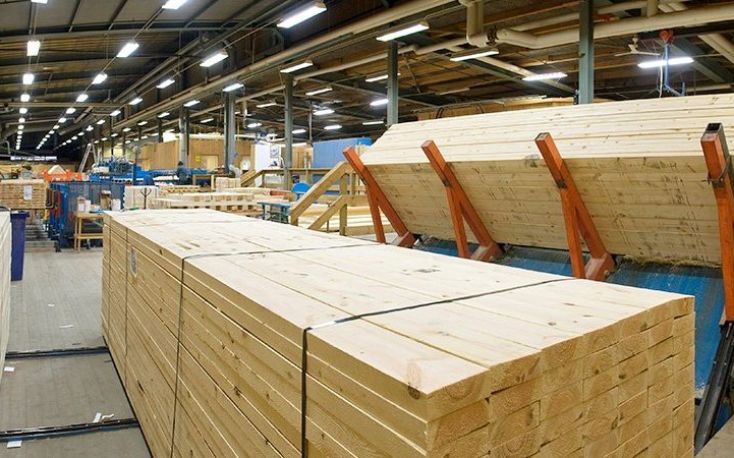
In March 2014, Brazil's wood product exports (except pulp and paper) increased 9.7% in terms of value compared to March 2013, from US$199.3 million to US$218.6 million.
Brazil's pine sawnwood exports increased 44.6% in value in March 2014 compared to March 2013, from US$12.1 million to US$17.5 million. In terms of volume, exports rose 38%, from 54,700 cu.m to 75,500 cu.m over the same period.
In contrast, Brazilian tropical sawnwood exports fell 29% in volume, from 31,900 cu.m in March 2013 to 22,600 cu.m in March 2014. In terms of value, exports dropped 15.3% from US$15.7 million to US$13.3 million, over the same period.
In March, Brazilian pine plywood exports increased almost 13% in value year on year, from US$32.8 million to US$37 million. Export volumes increased 14%, from 86,500 cu.m to 98,800 cu.m, during the same period.
However, tropical plywood exports continue to fall and in March this year exports declined 11% from 4,500 cu.m last year to 4,000 cu.m this year. Better results were posted for wooden furniture exports which increased from US$35.7 million in March 2013 to US$40.7 million in March this year, a 14% increase.
Canfor upgrades BC sawmill
Canfor Corporation announced today that the company will proceed with capital investments totaling approximately $30 million to improve infrastructure, productivity and cost performance at its Polar sawmill in the community of Bear Lake, British Columbia.
The project will include upgrades to log processing, lumber handling and residual systems, as well as replacing electrical components and the sawmill building structure. The capital improvement scope includes design and technologies to enhance the mitigation of combustible dust.
Work related to these capital projects will commence in May 2014.
EGGER makes new investments at St. Johann parent plant
In order to continue expanding its strong position on the international stage, EGGER is undertaking three major construction projects: The parent plant in St. Johann in Tirol is being expanded with a new short-cycle press, a high bay racking warehouse and an office building for a total of approximately EUR 50 million.
The new short-cycle press, which will support the production of deep textures, and especially the synchronised pore that is in high demand, commenced operation in December of 2013. Construction work on a fully-automated central high bay racking warehouse for rawboard began in the spring of 2014. It is being built on an area of 4,500 m2 (48,438 square feet) and will have 3,040 storage spaces for up to 32,000m³ (1,130,000 cubic feet) of wood-based materials.
The planned office and administration building is being built on a 10,000 m2 (107,639 square feet) plot at the front of the plant premises. With the first stage of expansion, it will be home to more than 250 employees and the plant cafeteria.
Wood pellet exports from North America to Europe doubled in two years

North America exported wood pellets valued at over 650 million dollars in 2013, a dramatic increase of more than 250 percent in just two years, according to data compiled by the North American Wood Fiber Review. The US South shipped almost three million tons last year, which was almost two-thirds of total export volume from North America.
With no slowdown in sight, North American wood pellet exporting companies keep building new facilities to manufacture pellets for the European market. Export volumes hit a new record high in the 4Q/13 and the total shipments for 2013 were up almost 50% from the previous year and more than double that in 2011. The total value of wood pellet exports reached over 650 million dollars last year.
A rapid expansion of pellet production capacity in the US South during 2012 and 2013 has resulted in a tripling of pellet production in the region in just two years. The expansion, which is entirely driven by demand for biomass in Europe, has increased pellet exports from 800,000 tons in 2011 to 2.9 million tons in 2013 according to data compiled by WRI.
Many of the recent investments in pellet capacity in the US South have occurred along the Atlantic coast, with Enviva and Fram Renewables expanding production in the states of Georgia, North Carolina and Virginia.
The expansion in Canadian pellet export has been less dramatic than that of the US, but 2013 volumes were still over 50% higher than in 2011, with British Columbia shipping a majority of the volume. In Canada, there have been two recent developments of interest, 1) the first regular shipments of pellets to South Korea started in the second half of 2013 and, 2) exports from Eastern Canada from Quebec, Nova Scotia and New Brunswick increased during this same time period.
Eastern Canada will see additional pellet export volumes later in 2014 when Rentech begins operation at its two pellet facilities now underway in Ontario. As reported in the NAWFR, a Quebec pellet export facility under construction at the Port of Quebec is the first dedicated infrastructure for pellet exports along the St. Lawrence Seaway. Its presence, when completed, reduces the heretofore, substantial entry barrier for a number of smaller pellet companies which are interested in the international market.
In the 4Q/13, export volumes from the Eastern provinces accounted for 25 percent of Canada’s total pellet exports, a share that is likely to increase in 2014 and 2015.
Chinese plywood demanded by Europe in 2014
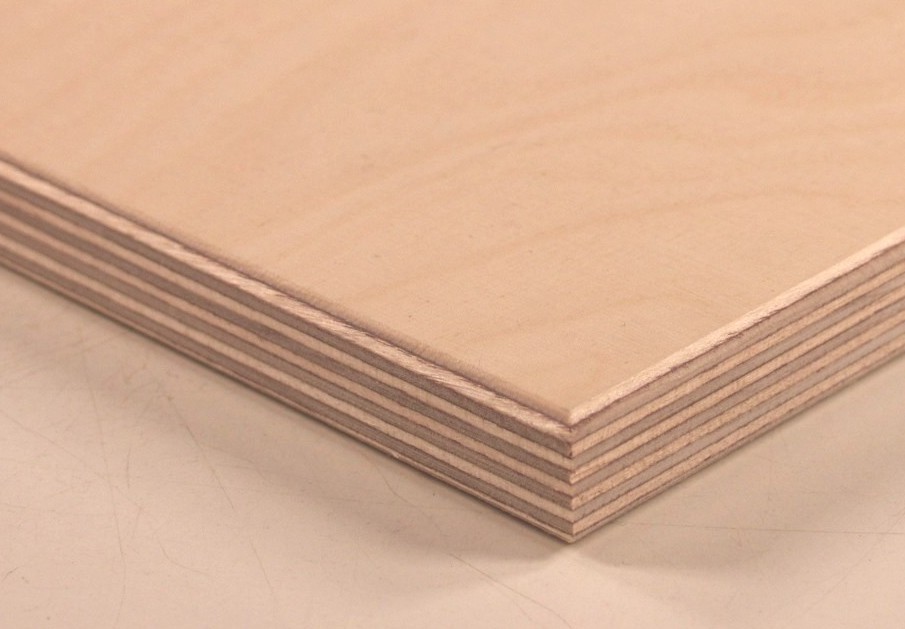
EU imports of Chinese hardwood plywood dipped again 2013 in December, due partly to the European Christmas holiday season and partly to a sharp rise in freight rates.
However, by early 2014, there were signs that European buyers had been overly cautious. Improved construction activity in the UK, boosted by mild winter weather, created good demand for Chinese plywood in January and rising concern about potential supply shortages.
The problem of short supplies in Europe intensified because of delivery delays during the Chinese New Year holidays in February. Chinese mills supplying the European market returned from their vacations with a two month backlog of orders. Demand for FSC certified products has been particularly high, with delivery times extending to 10 weeks and more.
Some European importers also delayed orders during January in the hope that substantial increases in freight rates in the run-up to Chinese New Year would be short-lived.
However, timing shipments to coincide with low rates has become a lottery as the freight market has become extremely volatile in recent times. As it turns out, freight rates did indeed fall sharply during February and March, but have since rebounded.
The Shanghai - North Europe freight index peaked at close to $1800 per TEU in mid-January, fell to below $900 at the end of March, but then increased again to $1250 by mid-April.
With volatile CIF prices and lengthening delivery times from China, larger plywood importers with existing stock holdings in Europe report increased demand from smaller importers and merchants unable or unwilling to buy direct from Chinese manufacturers.
While freight rates have led to volatile CIF prices, European importers report that FOB prices for mixed light hardwood plywood from China were holding steady in the three months before the Chinese New Year.
However, exporters have been pushing through increases in FOB prices in recent weeks to accommodate rising prices for eucalyptus and poplar veneer.
They are also responding to improved US demand, particularly since the US International Trade Commission decided against implementing anti-dumping measures on Chinese plywood at the end of the last year.
Weakening of the US dollar relative to the Chinese yuan in the months before Chinese New Year also encouraged Chinese exporters to push up FOB prices quoted in dollars. However this pressure subsided in March as the dollar regained ground against the Chinese yuan during the month.
Metsä wants to invest €1,1 billion in next-generation bio-product mill

Metsä Fibre, part of Metsä Group, is planning to build a bio-product mill in the existing mill area in Äänekoski, Finland. When materialized, the approximately EUR 1.1 billion investment would be the largest ever investment in the forest industry in Finland. The new mill with an annual pulp production capacity of 1.3 million tonnes is planned to be operational in 2017.
Metsä holds that the new mill will be the world's first next-generation bio-product mill that can convert wood raw material into a diverse range of products. In addition to high-quality pulp, the mill will produce bio-energy and various bio-materials in a resource-efficient way. A unique bio-economy ecosystem of companies will be built around pulp production, the company says in a press release.
The annual impact of the investment on the Finnish economy will be over EUR 0.5 billion and it will provide 2,500 jobs in the forest industry value chain. The annual increase in the value of exports is estimated to be EUR 0.5 billion.
'Our new mill will be the most efficient and modern bio-product mill in the world. The global increase in the demand for high-quality softwood pulp is the most important driver for the investment, and our aim is to strengthen our leading position in this market. The investment will support Metsä Fibre's growth and improve profitability in the long term,' says Kari Jordan, President and CEO of Metsä Group. 'In addition to the Environmental Impact Assessment (EIA) and environmental permit processes, the development of the world economy and especially the economic development in Asia, market outlook and decisions related to for example wood supply, permits and logistics, will affect the final decision'.
Moreover, Metsä says that the bio-product mill will contribute to achieving renewable energy targets in Finland through increasing the share of renewable energy by approximately two percentage points, as the company says. Furthermore, the mill will not use any fossil-based fuels; all of the energy required for it will be generated from wood. The wood raw material and side streams will be utilised 100 per cent as products and bio-energy.
The mill will increase the consumption of fibre wood in Finland by approximately 4 million cubic metres (some 10 per cent) per year. The annual harvesting of softwood can be increased sustainably by approximately 7 million cubic metres, and birch fibre by 4 million cubic metres. The fibre wood will be procured mainly in Finland.
Metsä Fibre will launch the EIA and environmental permit processes immediately with the aim to have them completed during the first quarter of 2015. The final investment decision is planned to be made in early 2015, in which case the new mill would become operational during 2017.
China invests big in Russia’s timber processing industry

During 2014, Chinese investors will launch the first phase of a major Siberian timber complex, 'part of a push by Beijing to cement business ties with Moscow amid strained relations between Russia and the EU', a senior manager of the venture said last week, quoted by the Russian news agency Ria Novosti.
Boris Kaznacheyev, Deputy Director General of Roskitinvest, said that the first phase of the project includes a timber processing park in Tomsk region (Western Siberia) with three mills and a power plant for industrial needs. The investment in the project has already reached 9 billion rubles (US$ 250 million) and the overall investment 'in timber logging, processing and related infrastructure is expected to reach 30 billion rubles (US$ 830 million) by 2020', according to Ria Novosti.
Back in 2011, the Russia-China joint venture opened a timber mill and venner plant in Asinovsky region, near Tomsk. Now, the continuation of the project is going to speed-up as economic relations between Russia and the European countries are affected by the recent escalations in Ukraine. Russian top officials, including president Vladimir Putin and prime-minister Dmitry Medvedev, have outlined the necessity of closer economic ties between the two countries.
Leonid Reznikov, the region's deputy governor who oversees the industrial and fuel-and-energy sectors, said a working group would be set up to speed preparations for the Tomsk timber processing park: 'We want the project to be launched in the shortest time possible, that's why we need to boost joint work,' he said to Ria Novosti.
China’s Luyuan buys complete MDF plant from Siempelkamp
Siempelkamp Maschinen-und Anlagenbau GmbH & Co. KG managed to sell a a complete thin MDF/HDF production plant to Luoding Luyuan Wood Based Panel Co. Ltd.
The 8' x 25.5 m continuous ContiRoll® press of the latest generation, which is included in the scope of supply, is characterized by its improved pressure distribution, as Siempelkamp describes its product. With an optimized pressure system and many other benefits, the plant meets the high demands of thin board production.
Luyuan is a long-term Siempelkamp customer that already operates two 8' thin board plants as well as a standard 4' MDF plant. For its Luoding location, in the Guangdong province in China, the plant operator ordered a complete MDF plant from Siempelkamp for the production of boards with a thickness ranging from 2 to 12 mm.
The scope of supply includes a Büttner fiber dryer, fiber sifters, a resin preparation and dosing system and, for best in class forming accuracy, Siempelkamp's fibermat forming system. The heart of the new plant is the forming and press line including a 8' x 25.5 m Generation 8 ContiRoll® press. An additional row of cylinders ensures improved thickness tolerances and excellent product quality of the thin MDF which will be primarily sold as unfinished MDF. The scope of supply for Luyuan is completed with a cooling and stacking line in the finishing area.
The thin board plant is expected to reach its full daily capacity of 700 m3 by October 2015.
Wood pellets' prices in Poland: 2013 and Q1/2014
Poland has produced about 600,000 tons of wood pellets in 2013. Along with imports, the Polish wood pellets market was somewhere around 1 million tons in 2013, says a report of the Ukrainian Biofuel Portal . The report notes that due to the collapse of the green certificate market, the recent years strong developments in the Polish pellet market has suddenly stopped in 2013, with a significant decline in the second half of last year. 'In this unstable certificate situations further development of the wood pellet market is impossible, as the wood pellet market is a part of the biomass market,' said Marek Cecerko, head of the thermal power plant of Mondi Swiecie company and member of Board of Directors of Polish Biomass Chamber.
According to the Ukrainian Biofuel Portal the following average wood pellets prices were registered across Poland in 2013:
| Wood pellets | Other types of pellets | |||
| 2013 Average Price of Wood Pellets in Poland | For domestic use (including 23% VAT) | For industrial use (excluding VAT) | For domestic use (including 8% VAT) | For industrial use (excluding VAT): |
| -wholesale purchases: 145-185 EUR/t; | wholesale purchases: 105-120 EUR/t | wholesale purchases: 95-130 EUR/t; | wholesale purchases: 90-105 EUR/t | |
| -in big bags: 155-185 EUR/t; | in big bags: 110-135 EUR/t; | |||
| -in sacks of 15/20/25 kg: 170-220 EUR/t. | in sacks of 15/20/25 kg: 120-155 EUR/t. | |||
In the first quarter of 2014 the actual prices оn the Polish pellet market are as follows (gross price):
- West Poland: from 800 – 1050 PLZ/t (190 – 250 EUR/t);
- East: 680 – 1100 PLZ/t (162 EUR/t – 262 EUR/t);
- North: 740 – 1107 PLZ/t (176 EUR/t – 264 EUR/t);
- South: 550 – 1200 PLZ/t (131 EUR/t – 286 EUR/t).
The pellet price has increased in Poland as a consequence of 'conjuncture changes of supply and demand, toughening imports of solid biofuel and reducing volume of foreign deliveries'. The cheapest pellets can be found in southern and eastern parts of Poland, mainly because of the proximity to two major exporting countries, such as Poland and Belarus. The most expensive pellets are in the western region.
The report notes that without changes in the green certificate policies no improvement should be expected in the Polish pellet market.
Source: Ukrainian Biofuel Portal

