

Article archive

Setra to close Valbo planing mill

The Swedish wood products company Setra will invest in the processing unit in Skutskär in order to meet new customer demands. Negotiations will be initiated under the Co-determination at Work Act (MBL) on closure of the planing mill in Valbo.
“In order to optimise the flows in each business – from raw material to customer – we will have more efficient production in fewer units and increase our total capacity utilisation,” says Hannele Arvonen, President and CEO of Setra.
“A new structure, where we think “One Setra” and place marketing expertise in one organisation and production expertise in another, will provide conditions for improved efficiency, stronger competitiveness and a clearer customer focus throughout the value chain,” says Arvonen.
In order to optimise capacity utilisation at existing units, Setra has decided to initiate negotiations under the Co-determination at Work Act (MBL) on closure of the planing mill in Valbo during 2016 and relocating these operations to the Group’s other units. Setra Valbo is located in Gävle municipality and has some 25 employees who are affected.
At the same time, in order to develop its processing business, during the autumn Setra will start an investment in strength grading and cutting to exact lengths at the processing unit in Skutskär.
Setra Group has a total of nine sawmills (two of which have integrated further processing), three specialised processing units and two modular building factories.
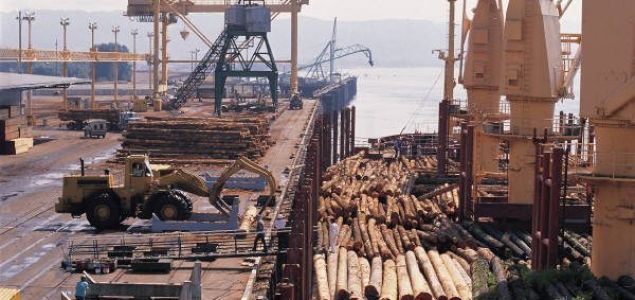
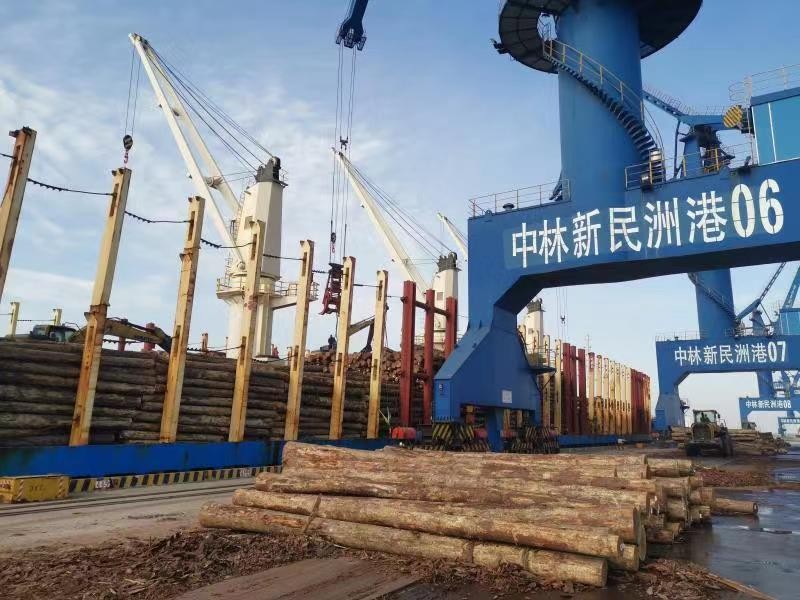
Brazil's wood products exports projected to rise 30% in 2015

The value of Brazilian wood products exports (including timber, wood chips, sawnwood, plywood, door, mouldings, and flooring) is expected to reach US$3 billion in 2015, 30% above 2014 exports.
So far this year exports of the two main products, pine sawnwood and plywood, increased 21% and 16% respectively as a direct result of the appreciation of the US dollar against the Brazilian real.
According to the Brazilian Association of Mechanically Processed Timber Industry (ABIMCI), pine sawnwood went mainly to the USA, Mexico, Saudi Arabia and China.
These four countries accounted for nearly 70% exports of pine sawnwood. Between January and July this year exports pine sawnwood amounted to 721,000 cu.m, a 35% year on year increase.
Pine plywood exports in July 2015 were destined mainly to the UK, USA, Germany and Belgium which together accounted for slightly over 50% of the total volume exported.

Brazil’s wood products exports projected to rise 30% in 2015

The value of Brazilian wood products exports (including timber, wood chips, sawnwood, plywood, door, mouldings, and flooring) is expected to reach US$3 billion in 2015, 30% above 2014 exports.

So far this year exports of the two main products, pine sawnwood and plywood, increased 21% and 16% respectively as a direct result of the appreciation of the US dollar against the Brazilian real.

According to the Brazilian Association of Mechanically Processed Timber Industry (ABIMCI), pine sawnwood went mainly to the USA, Mexico, Saudi Arabia and China.

These four countries accounted for nearly 70% exports of pine sawnwood. Between January and July this year exports pine sawnwood amounted to 721,000 cu.m, a 35% year on year increase.

Pine plywood exports in July 2015 were destined mainly to the UK, USA, Germany and Belgium which together accounted for slightly over 50% of the total volume exported.

Switzerland and Norway to regulate timber imports

Although not an EU member state, Norway has decided to implement the EU Timber Regulation (EUTR) with effect from 1 May 2015.
According to a press release issued by the Norwegian government, Norway has operated “on the same level as the EU countries regarding the timber regulation” since that date.
Norway has become a significant financier of REDD and other climate-related forest protection policies in tropical countries – but is not generally recognised as a significant player in the tropical wood industry.
The country remains the only one in the world where the national government bans the use of all tropical timber in public sector buildings and construction works. As noted by Chatham House, the UK-based policy and research organisation, this policy is unlikely to be consistent with WTO procurement rules but has never been challenged, possibly because it has had limited impact.
Nevertheless, Norway's direct imports of wood related products from tropical countries are not negligible, in the region of $80 to $90 million each year, dominated by wood furniture from Vietnam, Thailand and Malaysia, and charcoal from Indonesia.
Norway has already appointed two Competent Authorities for enforcement of the new timber regulation: the Agricultural Authority will be in charge of checking on timber and timber products of Norwegian origin and the Norwegian Environmental Agency is responsible for imported timber.
Plans by Switzerland to introduce an equivalent to the EUTR will also impact on the tropical wood trade. Although Switzerland imports only around 4.3% of timber and timber products from outside the EU, the country imported in excess of US$100 million of products containing wood fibre direct from tropical countries in 2014. Much of this consisted of furniture and other added value products, notably from Thailand, Vietnam and Indonesia.
The Swiss Federal Council had hoped to have the new regulation in place this year or early in 2016. However, consultation is taking longer than expected and introduction of the EUTR may now be delayed until the second half of next year or even into 2017.

UPM wants to sell Tilhill Forestry to BSW Timber

UPM has concluded the sale of 100% of its shares of Tilhill Forestry Ltd to BSW Timber Ltd in the United Kingdom. The transaction does not have an effect on the employment contracts of the employees of Tilhill Forestry.
“Despite the sale, our close relationship with Tilhill Forestry continues and the company is fully committed to supply wood and biomass for UPM Caledonian and Shotton mills in the UK,” says Kurt Wurster, Vice President, RCP and CE Wood Sourcing, UPM Paper ENA.
Tilhill Forestry will continue to supply home-grown timber to the UK market, UPM states in a press release.
“This is an exciting step in the development of Tilhill Forestry. This change of ownership will allow the company to continue to grow while maintaining the professional standards that forest owners have come to expect from Tilhill,” saysGeorge McRobbie, Managing Director of Tilhill Forestry.
Tilhill Forestry Ltd
Established in 1948 and headquartered in Stirling, Scotland, Tilhill Forestry provides professional forestry management and timber harvesting and marketing services to forestry owners through its nationwide network of offices. Tilhill employs approximately 200 people.
The BSW Group
BSW Timber is the largest sawmilling business in Great Britain and the company's foundations go back to 1848. BSW sawmills are located throughout the UK and Riga, Latvia. Today the firm employs 1,000 people in the UK and Latvia, turnover is in excess of £220 million.

China: Välinge signs a new 2G/5G wood license for wood flooring

Chinese company Jiangsu Mingle Flooring Co., Ltd has signed a non-exclusive license agreement with Välinge for the use of the 2G/5G locking system for their engineered wood flooring.
By signing a license agreement for the use of Välinge's 2G/5G locking system, Mingle will now be able to meet the growing market demand for a faster and stronger installation method.
Mingle Flooring, located in the Jiangsu province, China, was founded in 2011. Up until today, the company has produced engineered flooring with T&G. Mingle Flooring started with engineered wood flooring production in the beginning of 2013 and today has a product range that includes oak, walnut, acacia and maple floors. The main market is Australia, followed by US and Europe.
About Välinge
Välinge is a world leading R&D and IP company in the flooring industry. 

Välinge Innovation, founded in 1993, pioneered the concept of glueless click together floorings and changed the way people install and use floorings. Välinge has a portfolio in the flooring industry comprising about 1.000 granted patents, a license base of 140 licensees and the most advanced R&D centre in the world related to laminate and wood flooring technology.

German Pellets mends turnover in the first half of 2015

In the first half year of 2015, the German Pellets Group managed to improve market position and make investments for future growth. As the group states in a press release, the price downturn in the market was compensated, and once again turnover growth was attained. In the first six months of 2015, the group’s overall result amounted to EUR 293.6 m. (previous year: EUR 263.5 m.). At the same time, German Pellets improved its operational earnings in relation to the previous-year period. EBITDA rose to EUR 26.3 m. in the reporting period (previous year: EUR 24.9 m.).
To expand the end-customer business in northern Germany, German Pellets took over the pellets business of Nord Energie GmbH & Co. KG in February of this year. Moreover, German Pellets launched its own sales subsidiary in France in the first half of this year. At the Urania site in the US, paralleling the launch of operations for the first construction phase, the works began on the second construction phase. As a result, the site’s capacity will double, so as to reach 1.156 m. tonnes per annum. In the first months of this year, substantial steps were also undertaken in bringing about the planned construction of sawmilling and sorting capacities at the Woodville site in the US. The work towards getting these resources operational is proceeding. The timber quantities to be produced there were already able to be sold in the US dollar currency area on a long term basis.
Furthermore, German Pellets is at a well-advanced stage of negotiations with the German energy provider E.ON regarding the takeover of a coal-fuelled power-station in Belgium. Currently German Pellets Holding Belgium NV is being formed for this purpose. The aim is to convert the plant from coal to wood pellets.

Finland: Versowood decreases sawmills capacities

Versowood is commencing statutory co-operation negotiations concerning the adjustment of capacity to the current demand and order backlog. The negotiations cover all of its Finnish sawmill units (Vierumäki, Otava, Riihimäki and Hankasalmi).
Restrictions are primarily targeted at the production of spruce timber, but there is also uncertainty regarding the production of pine timber. The statutory co-operations will be held according to the so-called shorter procedure, involving lay-offs of a maximum of 90 days and employment termination of a maximum of 10 employees. The negotiations cover both blue- and white-collar employees.
"The market situation has remained uncertain and challenging since last autumn. The prices of sawn timber have gone down, while timber prices have not been reduced accordingly, which has deteriorated profitability in this industry. These negotiations aim at adjusting our production to the current situation," says Ville Kopra
The co-operation negotiations will be completed by the end of September and the lay-offs are scheduled for late 2015 and early 2016.

New particle board at Kronospan's Menznau production site

Kronospan Switzerland AG has decided to invest approximately CHF 80 million at its Menznau production site in Lucerne. A completely new particleboard production plant, a new administration building and a modern showroom are part of the investment. Moreover, in the future, Kronospan plans a research and development center at the site. For Ines Kaindl, daughter of the company founder and chairman of the board, this investment is a clear sign of the importance of Menznau for Kronospan:

With its 440 employees, Menznau plays an important role for the future of our company,'' she said.

The largest in the nearly 50-year history of the Menznau site, the renovation project includes the construction of a new particleboard line, including an efficient logistics solution with integrated high-bay warehouse for raw boards. The total investment in facilities and infrastructure amounts to approximately CHF 80 million. "This investment allows us to meet the current and future customer needs across the entire range of products, efficiently and qualitatively at the highest level,'' Ines Kaindl added.
In addition, R&D, which was previously distributed at various locations within the Swiss Krono Group, can now be concentrated at Menznau. The administration building is already under construction, while production facilities will be installed next year and put into operation in 2017.

With this investment, we send a clear message. We are still convinced of the production site Menznau. We are planning long-term, regardless of the current challenging currency situation," Ines Kaindl says.

New particle board at Kronospan’s Menznau production site

Kronospan Switzerland AG has decided to invest approximately CHF 80 million at its Menznau production site in Lucerne. A completely new particleboard production plant, a new administration building and a modern showroom are part of the investment. Moreover, in the future, Kronospan plans a research and development center at the site. For Ines Kaindl, daughter of the company founder and chairman of the board, this investment is a clear sign of the importance of Menznau for Kronospan:

With its 440 employees, Menznau plays an important role for the future of our company,'' she said.

The largest in the nearly 50-year history of the Menznau site, the renovation project includes the construction of a new particleboard line, including an efficient logistics solution with integrated high-bay warehouse for raw boards. The total investment in facilities and infrastructure amounts to approximately CHF 80 million. "This investment allows us to meet the current and future customer needs across the entire range of products, efficiently and qualitatively at the highest level,'' Ines Kaindl added.

In addition, R&D, which was previously distributed at various locations within the Swiss Krono Group, can now be concentrated at Menznau. The administration building is already under construction, while production facilities will be installed next year and put into operation in 2017.

With this investment, we send a clear message. We are still convinced of the production site Menznau. We are planning long-term, regardless of the current challenging currency situation," Ines Kaindl says.

India to rely on hardwood chips imports because of lack in forest resources

India has limited domestic forest resources to supply its forest industry, and with growing domestic demand for forest products, the country’s pulp mills and sawmills have found it necessary to increase importation of wood raw-material both in the form of wood chips and logs.
Over the next five years, demand for paper is expected to increase by between 2-12% annually, depending on paper grade. Over the past decade, the domestic pulp industry has steadily increased its usage of pulpwood because of higher pulp production, less usage of bamboo and because several pulp mills switched from recycled fiber to wood fiber.
The share of imported wood fiber for the pulp industry accounted for almost ten percent of total consumption of wood fiber in 2014, and this share is expected to increase in the coming years.
The shortage and high cost of local pulpwood in India has resulted in increased interest in sourcing wood chips from overseas despite logistical difficulties both at the ports and when transporting the chips from the ports to the pulp mills long.
Importation of chips is fairly new and Indian pulpmills did not import any wood chips until 2013 when the first shipments of hardwood chips from South Africa, Australia and Thailand arrived. The total imports reached just over 200,000 odmt in 2013, then rose to approximately 370,000 odmt in 2014, according to the Wood Resource Quarterly. South Africa has been the major supplier of chips, with shipped volumes accounting for about 70% of the total import volume in 2015.
During the first six months of 2015, India imported an estimated 180,000 m3, or about 30% more than in the same period in 2014. So far in 2015, three countries have exported wood chips to India, South Africa, Brazil and Vietnam. South Africa has been the dominant supplier to date, and is likely to continue to be the major supplier for the foreseeable future.

Pellets price stable for Austria in August

The price of pellets in Austria seems to be stable in August. One tonne of pellets has declined by an insignificant -0.1% as compared to July. The price currently stands at € 229.2/t for a purchase of 6 tonnes. As compared to August 2014, the price is still lower by -5.7%.
Wood pellets in bags cost an average of 3.85€ per 15 kg sack (when ordered by the pallet), an increase of +0.1% as compared to July and a -3.8% decline over August 2014.
Propellets Austria calculates a current average price advantage of pellets over fuel oil of about +30.8%. As opossed to natural gas, the price advantage is of +44.7%.

Lumber demand in Japan is expected to decrease

The Japanese Forest Agency made up demand projection of major wood products for the second half of this year. On domestic wood, demand for lumber increases while that for plywood declines and total year figures would be less than last year.
Imported lumber in Japan is expected to decline in the third quarter but is set to increase in the fourth quarter, while imports of logs should increase. Imported products will be less than last year. While Japan's housing starts are estimated to increase, total wood demand will decline.
Domestic logs for lumber will increase by December but less than last year. Logs for plywood will decrease because of plywood mills' production curtailments and rebound of large volumes of last year. Imported logs will increase in the second half of the year as they were low in the first half of the year.
Imported lumber volumes will decline in the third quarter, but demand will increase in the fourth quarter as inventories have declined.
Plywood declines because of market slump and mills production curtailment programs plus decline of imported plywood from South East Asian countries. Laminated lumber domestic production is expected to decrease in the second half while imports are set to increase for both third and fourth quarters.

Eon sold 556 MW coal-fired power plant to German Pellets

German power company Eon has reached an agreement with German Pellets to sell its Belgium 556 MW Langerlo coal-fired power plant. According to Argus media, it seems that already a share sale and purchase agreement has been signed by Eon and German Pellets. As Argus reports, Eon expects the deal to close in the upcoming months. Financial details were not disclosed.
German Pellets plans to convert the coal-fuelled power plant into biomass. Eon has been trying to convert the plant for several years, but in October 2014 decided to sell it.
German Pellets initiated last month the second phase of its wood pellet plant in Urania (Lousiana). Upon completion of the plant, German Pellets will have an annual production capacity of around 1.7 million tonnes of wood pellets in the USA, which will be mainly exported to Europe.

Sawlog prices in Sweden go down, while pulpwood prices rise

Swedish sawlog prices decreased by 1 percent in the second quarter of 2015 compared to the prior quarter while pulpwood prices increased by 1 percent. According to the Swedish Forest Agency (Skogstyrelsen), sawlog prices decreased in all Swedish regions: in the Northern Region by 2 percent and in the Central Region and in the Southern Region by 1 and 3 percent respectively.
Pulpwood prices rose by 1 percent in the Central Region while the pulpwood prices in the Northern Region and in the Southern Region were unchanged.
When comparing the second quarter of 2015 and the same quarter of 2014, sawlog prices in Sweden rose by 5 percent and pulpwood prices increased by 2 percent.

Russian hardwood plywood exports to EU vary

Russian hardwood plywood deliveries to the EU totalled 323,198 cu.m in the first five months of this year, down 5.3% compared to 341,328 cu.m in the same period of 2014. Deliveries to Germany, the largest single market, declined 18% to 70,320 cu.m.
German imports fell particularly sharply in the first quarter due to stock build up at the end of 2014 when several companies ordered extra volumes to fulfil their purchasing quotas and receive related bonuses. However German consumption has remained stable and imports recovered a little in the second quarter.
In the first five months of 2015, Italy (+14.7%), Latvia (+22.7%), and Poland (+10.7%) all imported more plywood than in the same period in 2014. In contrast, deliveries to the UK (-4.9%), Estonia (-5.4%), Finland (5.5%) and the Netherlands (-9.8%) were all lower than one year ago.
European importers report that availability of Russian birch plywood has been good this year. There were widespread reports of overstocking at Russian mills earlier in the year. However the supply situation is gradually becoming better balanced as some smaller producers have reduced production and demand has picked up in export markets.
This has been boosted by price concessions of up to 20% granted by Russian producers and the sharp loss in value of the rouble against the euro. Prices are now beginning firm again, according to importers.

China: plywood almost available, at lower prices

European importers report that Chinese plywood has been readily available during 2015 and that delivery times to Europe currently stand at around 4 to 5 weeks. The dominant issue for traders in the Eurozone is the rising cost of imports, especially since December 2014, due to the dramatic loss in value of the euro against the US dollar.
Against this background, Chinese producers lowered their prices by an average of US$5-10/cu.m earlier this year. FOB prices have now stabilised at this new level.
However, CIF prices for delivery of Chinese plywood to Europe have continued to fall due to an unexpected slump in freight rates in March/April after a slowdown in China‟s overall trade. According to information from importers, freight costs per 40ft container from China to Central Europe temporarily fell to less than US$500, before stabilising at around US$700 in July.
By contrast, rates in July 2014 stood at more than US$1200 per 40ft container. Shipping companies are currently pushing to increase prices to more than US$1000 per container for shipments in August.

Roundwood prices go down in Finalnd in June

Roundwood prices in Finland have declined in June as compared to May, with only one exception. Pine sawlogs' price is lower by EUR -1.51/cbm, while spruce sawlogs are cheaper by EUR -1.79/cbm. On contrast, birch sawlogs have continued the recent upward price trend and have become more expensive by EUR +1.50/cbm. Pulpwood assortments prices have also trended downwards and are cheaper on average by -1.50%.
On a yearly basis, Finnish roundwood prices show the same decreasing tendency. Only birch sawlogs are more expensive by +5.59%. Spruce and pine sawlogs are both cheaper compared to May 2015, and pulpwood assortments have lost in price terms between -2.09% down to -3.87% for pine.

Roadside prices of roundwood in Finland EUR/m³ over bark

June 2014 May 2015 June 2015 Change
June/2014
to June/2015
Change
May/2015
to June/2015
LOGS
Pine 56.57 56.88 55.37 -1.41% -2.65%
Spruce 56.68 56.80 55.01 -2.94% -3.15%
Birch 45.38 46.42 47.92 +5.59% +3.23%
PULPWOOD  
Pine 28.68 27.72 27.57 -3.87% -0.54%
Spruce 29.50 29.46 28.52 -3.32% -3,19%
Birch 29.53 29.09 28.91 -2.09% -0.61%

Price source: Metla.fi

Kährs group states higher sales for the second quarter

The Swedish flooring manufacturer Kährs has finished the second quarter of 2015 with an increase in net sales of 4%, up to 681 million SEK. The group's EBITDA in Q2 amounted to 76 million SEK an improvement of 17%. The profit for the period amounted to 24 million SEK in the second quarter.
The CEO of Kährs, Christer Persson, attributes the favourable results to the higher net sales in the Hardwood flooring segment but also to the Other segment for the period. Most of Kährs' sales regions contributed to the improvement with strong underlying sales development in Sweden, Germany, Switzerland, UK and the US, said Mr. Persson.
During the summer, Kährs Group has agreed on a new financing to create a more efficient capital structure. This new financing means that Kährs Group transfer to a traditional bank financing and that Kährs had an early redemption of the bonds listed on Nasdaq OMX Stockholm. The transaction was completed on August 3 by the repayment of the issued bonds.
 

Europe continues to recover in laminate flooring sales

According to final figures published by the European Producers of Laminate Flooring (EPLF) association, laminate flooring sales by EPLF members increased slightly by around 1% to 467 million sq.m last year. Final sales were thus slightly higher than initial figures published earlier this year, which put total sales in 2014 at 465 million sq.m.
Market conditions for laminate flooring manufactured in Europe have varied widely by sales region. The chart illustrates the importance of the different sales markets for EPLF members.
Sales in Germany, the largest single market, fell 4% to 69 million sq.m in 2014. EPLF believes that much of this decline is due to a shift towards LVT flooring in Germany.
Sales to Turkey - the second largest target market for EPLF members - fell by 13% to 57 million sq.m in 2014. EPLF attributes this development to a weaker economic situation, shortages in the supply of raw materials and the temporary shutdown of production plants in Turkey.
EPLF member sales of laminate flooring in the important French market stabilised at 39 million sq.m in 2014, the same amount as the year before. However sales in the UK increased by 10% to 32 million sq.m in 2014, boosted by growth in construction sector activity and improving consumer confidence. There was also a 4% increase in sales in Spain to 14 million sq.m.
In Eastern Europe, EPFL members saw a much better trend than in the west. Combined sales in this region rose by 6.8% to 110 million sq.m. Growth in Eastern Europe was primarily owing to strong development in Russia, where sales increased by 19% to 28 million sq.m and Poland, which showed an improvement of 6% at 26 million sq.m. Sales volumes in Romania and Hungary were also higher than the year before.
In North America, the positive trend that started in 2013 continued into 2014. Most of this growth was attributable to the USA, where sales rose from 16 to 18 million sq.m. Sales in Canada were practically unchanged in 2014 at 11.2 million sq.m.
In Asia, EPLF members booked a strong 15.4% increase in sales to 15 million sq.m. EPLF member sales to China increased by around 25% in 2014, but at 5 million sq.m are still very small compared to the overall size of the market.

Newsletter

Subscribe to our digital newsletter for your daily digest of essential news, views and analysis from the international wood industry delivered directly to your inbox.


0