Article archive

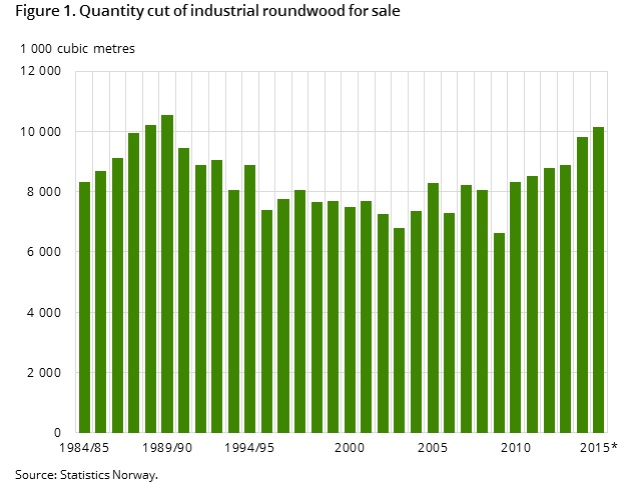
Norway: Highest roundwood cuts in 25 years; prices fall

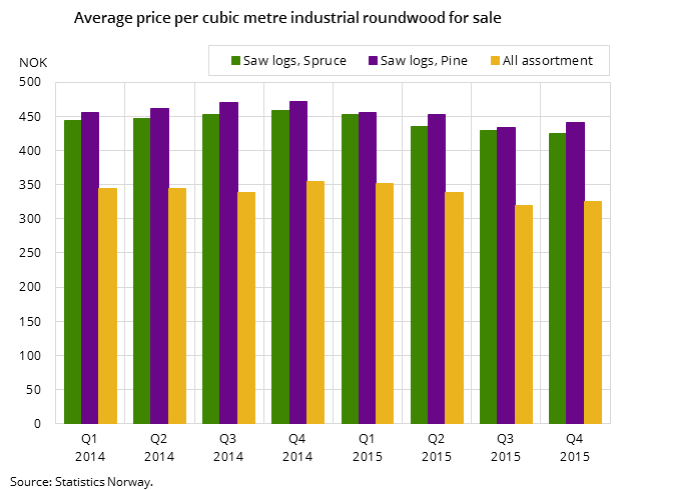
A total of 10.2 million cubic metres of commercial roundwood were cut for sale in 2015 in Norway; an increase of 390 000 cubic metres from 2014. In the same period, the average purchase price decreased by 4 percent.

Redwoods distribution and trade in China

In China’s national standard of ‘redwood’ (GB18107- 2000) 5 genera, 8 categories and 33 species are recorded. Five species are distributed in China namely the native scented rosewood, black rosewood and kamagony and two species, Siamese senna and Bupadauk which have been introduced, ITTO reports.
The distribution of ‘redwoods’ in China:

  • Scented rosewood (Dalbergia odorifera T. Chen) Hainan
  • Black rosewood (Dalbergia fusca pierre) Yunnan
  • Kamagony (Diospyros philippensis Gurke) Taiwan P.o.C
  • Siamese senna (Cassia siamea Lam.) Yuannan, Guangdong
  • Burmacoast padauk (Pterocarpus indicus Willd) Guangdong, Guangxi, Hainan and Yunnan

Scented rosewood is endemic to China’s Hainan province and is categorised as a national protected plant. It is mainly distributed in the west, southwest and south of Hainan province.
Currently the introduction and cultivation of scented rosewood is going ahead in Hainan, Guangdong and Guangxi provinces. Large-scale cultivation of scented rosewood in Hainan province has developed rapidly.
Black rosewood is also a protected plant and is mainly distributed in Xishuanbanna and Simao in Yunnan province there are also reports of scattered occurrence in Luchuan county and Yuanjiang county of Yunnan province. Kamagony is mainly distributed in Taiwan P.o.C.
Siamese senna and Burmacoast padauk has been introduced and cultivated in Yunnan, Guangdong, Guangxi, Hainan, Fujian and in Taiwan P.o.C..

Australian company to invest €50 million in Irish forestry assets

SLM partners, an agri-investment management firm, wants to procure €50 million to invest in forestry riches from Ireland. The firm has its headquarters in London and is led by Irishman Paul McMaho. According to reports from the European Investment Bank, SLM’s plan is to have more sustainable forests from clear-fell plantatons, by introducing native broad-leaf species.
The firm wants to get finance from EIB in Luxembourg and they hoped for a first close in the first quarter of this year. The bank is now assessing the application for the €13 million.
According to information from EIB’s website, “the fund will invest in forest assets in Ireland with the aim of transforming clear-fell plantations to more sustainable continuous cover forestry. This will also involve the introduction of native broadleaf species in what today are monoculture forests of Sitka spruce. This will be supplemented by afforestation on new land when the opportunity is available."
The SLM Australia Livestock Fund, SLM's first fund, is now investing in deteriorated land for cattle and beef and they hope to improve sustainability and production of those assets with better management. Improvement of sustainability of agriculture and forestry land, capitalising on the trend toward stronger global environmental regulation and more consumer awareness about sustainability and food production are the main goals of SLM’s investment.
[gravityform id="1" title="false" description="true"]


Construction of 215 MW biomass plant begins this year in Belgium

Belgian Eco Energy (Bee) will begin construction for its biomass-fired power plant in early 2016 in the port of Ghent, Belgium, on an area of nearly 5ha. The plant will produce 215 MW of electricity, which will make it biggest biomass-fired power plant in Belgium and one of the world's biggest biomass power plants.
Operations for the plant will begin in 2018 and it will cost more than €315 million.
The supply, which will consist 100% from raw material biomass (wood pellets, woodchips and agro-residues) will come from Atlantic basin, Western Africa and Northern and Southern Europe. According to power-technology.com, some of these materials will also come from the Mediterranean and Eastern Europe
The storage facilities include a 5,000m³ silo for the wood pellets, a 2,500m³ silo for the agro pellets and a 15,000m³ covered storage facility for woodchips, all of them delivered via the Ghent-Terneuzen canal.
As power-technology.com reports, the €150m contract to operate the power plant for 15 years was awarded to Veolia in October 2015 and in November 2014, Abengoa received the award for the engineering, design and construction contract.
Generating 215 MW of clean energy, the plant doesn’t work on fossil fuel and is free from carbon dioxide, which will instead be used for the power supply industry. Also, the city of Ghent’s industries and households will be supplied heating by the “district heating” system, which will produce approximately 100 MW of thermal energy.
[gravityform id="1" title="false" description="true"]

More CoC-certified timber companies in Malaysia

59 new certified timber companies have been recorded in 2015 by the Malaysian Timber Certification Council (MTCC). The registrations were made through the Chain of Costody (CoC) certification. Compared to 2014, this represented a 21% increase and scores the third year in a row with the highest increase globally in the number of CoC-certified companies, according to The Edge Markets.
Yong Teng Koon, MTCC chief executive officer, stated that the council awarded the Programme for the Endorsement for Forest Certification for this achievement. He added that the CoC certification help protect the forest, increases the market position, together with positive brand image for their products and better access to the global market.
The importance of putting in force sustainable forest management practices is to make sure that they cover the social, environmental and economic aspects, which are now regarded in a balance manner.

"Sustainable forest management provides multiple benefits, not only in terms of mitigating climate change, but also in safeguarding biodiversity and other ecological and social services," he added.

MTCC is recognized under the Malaysia Green Building Index and other Green Building Systems in Singapore, Australia, Italy, the Netherlands, the United Kingdom, Canada, Japan, United Arab Emirates and the United States.
The certification scheme is also recognized by the national government procurement policies in Denmark, the United Kingdom, Germany, Finland, Belgium, Switzerland, France, the Netherlands and New Zealand.
[gravityform id="1" title="false" description="true"]

EC to analyse UK state aid for Drax third unit conversion to wood pellets

Drax Group Plc’s planned UK subsidy contract for a 645-MW biomass-fired unit is being investigated by the European Commission. The EC wants to determine if the contract follows the EU state aid rules. The power plant received a £1.7 billion subsidy contract from UK’s government for the third of its six units.
Now, the power plant wants to change three of its units from coal to biomass, according to ConBio.
The “Contract for Difference” (CfD) implies compensations from the moment when the average wholesale price of electricity decreases below a determined strike price. Thus, Drax would be paid £105 for every megawatt-hour (MWh) of biomass-fired power the unit generated until 2027.
The unit now runs on approximately 85% biomass, which qualifies it for less subsidies estimated to be about £80-£85/MWh. Still, the CfD indicates that it has to work at a 100pc conversion, a thing that is now under EC analysis.
The EU already made Drax shares fall 5% after it stated that the rate of return from the subsidies “could be higher than the parties estimate and could lead to overcompensation”.
This third unit will operate until 2027, according to UK reports. It will generate about 3.6 TWh of power annually and consume about 2.4 million tonnes of wood pellets annually. The wood pellets will be imported from the USA and South America.
 
[gravityform id="1" title="false" description="true"]
 

Housing starts, permits unexpectedly fall in U.S.

Construction in U.S. unexpectedly dipped in December despite the unusually mild winter, according to new data of the Commerce Department.
Housing starts fell by 2.5 percent over a month earlier to a seasonally adjusted annual rate of 1.15 million. This brought the annual rate to 1.149 million units compared to November's revised pace of 1.179 million. Starts had climbed in November by 10.1 percent.
Building permits, an indication of future building activity, also had a weaker showing, falling 3.9% to 1.23 million in December. However, permits rose 12 percent in 2015 to an estimated 1.18 million units, and the outlook for 2016 is somewhat optimistic.
Housing construction last year had its best year since 2007, when the housing bubble burst and triggered a recession. However, new building permits are still running at roughly half their 2005 peak, and signals from the sector have been mixed in recent months.


Tolko to curtail small log line; low Chinese demand one of the reasons

Tolko Industries Ltd. is to curtail the 8 in. canter line at its Lakeview Mill in Williams Lake, British Columbia, from March 4, the Williams Lake Tribune reported on Jan. 18.
The decision is a response to increasing log costs, an ongoing degradation in log fiber quality, and reduced demand for the mill's number three and economy lumber due to the continued downturn in the Chinese market, the company said.
Troy Connolly, senior general manager of lumber, said the curtailment may affect up to around 30 people and could result in a change to the mill’s schedule. He said employees had been informed and the company was working with union representatives to mitigate the impact on any potentially affected employees.
Connolly said the curtailment was a result of market conditions and did not reflect staff commitment. He said it was simply not affordable to produce low-grade lumber from low-grade logs, and that the company had to reconfigure to ensure the mill remained competitive and operational.
[gravityform id="1" title="true" description="true"]

Brazil: Improved transparency required to tackle illegal logging

Low impact and verified legal harvesting of Brazilian native forests can strengthen the tropical timber market and through this provide opportunities for landowners and forest communities, ITTO reported.
The Brazilian Coalition for Climate, Forestry and Agriculture has proposed that the area of forest under SFM in Brazil should be expanded tenfold from the current level to reach 30 million hectares (around 7% of the Amazon forest) by 2030.
The main challenge to convert this proposal into reality is the elimination of illegal activities in the supply chain.
The Brazilian Coalition has proposed measures such improved transparency in the forest management plan approval process and points out that strengthening the tropical forest economy depends on traceability across harvesting, transport and processing as consumers are increasingly requiring evidence of the origin of wood products.
The Coalition has said traceability should be considered as a condition for public procurement.
[gravityform id="1" title="true" description="true"]

Norvik's Jarl Timber increases sawmill efficiency

Jarl Timber, part of Norvik Timber industries, has made a decision to start an investment program to increase the sawmill’s efficiency. The program will start in January 2016 and during the first year will total about Euro 1.0 million, Norvik Timber Industries announced in a press release.

‘The investments planned for 2016 will be made to open bottlenecks in the production line and we estimate the efficiency to improve by about 20-25%, says Egil Freitag, Managing Director at Jarl Timber.

‘This investment project is part of our long-term plan to improve the company’s competitiveness. South Sweden has been and is a challenging region to operate sawmills and we need to continuously develop the company’, says Sampsa Auvinen, CEO of Norvik Timber Industries.
Jarl Timber, founded in 1946, is located in the region of Småland, which is at the very heart of Sweden's timber country. The sawmill processes and distributes about 110 000 m3 of sawn and planed timber. Around 85% of the production is sold for exports to Europe, North Africa, Middle East  and Far East.

Norvik’s Jarl Timber increases sawmill efficiency

Jarl Timber, part of Norvik Timber industries, has made a decision to start an investment program to increase the sawmill’s efficiency. The program will start in January 2016 and during the first year will total about Euro 1.0 million, Norvik Timber Industries announced in a press release.

‘The investments planned for 2016 will be made to open bottlenecks in the production line and we estimate the efficiency to improve by about 20-25%, says Egil Freitag, Managing Director at Jarl Timber.

‘This investment project is part of our long-term plan to improve the company’s competitiveness. South Sweden has been and is a challenging region to operate sawmills and we need to continuously develop the company’, says Sampsa Auvinen, CEO of Norvik Timber Industries.

Jarl Timber, founded in 1946, is located in the region of Småland, which is at the very heart of Sweden's timber country. The sawmill processes and distributes about 110 000 m3 of sawn and planed timber. Around 85% of the production is sold for exports to Europe, North Africa, Middle East  and Far East.

North America: OSB production goes up, plywood decreases in 2015

Structural panel production and apparent consumption in North America decreased by 4.9% and 4.5% from the third quarter in the fourth quarter of 2015, as The Engineered Wood Association reported. Structural panel production increased by 1.0%, compared to the fourth quarter of 2014, and apparent consumption went up by 1.6%. Numbers from 2015 show that structural panel production increased 1.2% and apparent consumption rose 2.9%.
Still, the OSB production decreased in North America by 4.8% in the fourth quarter of 2015, as APA states, but was up by 3.0% from the fourth quarter of 2014. For 2015, 20.357 billion square feet came from production, which wsa up by 2.4% from 2014.
In the fourth quarter, North America’s production decreased by 6.4% and Canada’s production went the same way, dropping 1.6%. 13.283 billion square feet was the total US production for 2015, which was actually 2.1% more than 2014. Canada also increased production by 2.9% from 2014, to 7.074 billion square feet in 2015.
[gravityform id="1" title="false" description="true"]

New study approves hygienic properties of wood

Investigations conducted in Spain and France confirm that wood is perfectly suitable in contact with fruit, fish and cheese, due to its antibacterial properties. These reports refer especially to wood from black poplar and pine trees.
The results were introduced at European scale at the 66th FEFPEB conference in Cork (Ireland) and at the 29th conference of the European Federation of Food Science and Technology (EFFoST) held in Athens (Greece).
The research presented in Cork was guided by F. Aviat and M. Federighi and their conclusions were carried out by the French consortium EMABOIS, according to FEDEMCO.
These conclusions came in accordance with the work on fish crates, carried out in Spain by José Juan Rodríguez Jerez from the Faculty of Veterinary Medicine of Barcelona. His work was presented in Athens.
Many French research authorities (such as Actalia, ESB, ESI Reims, FCBA, and ONIRIS) participated at the EMABOIS project. They were useful to validate specific methods and protocols of microbiological and chemical analysis on wood, as FEDEMCO states.
The results of the project showed how harmless the wooden surfaces are. Moreover, they are microbiological hygienic when they come in contact with fresh produce such as fruit, vegetables, fish and dairy products.
The wood from black poplar, pine and fire trees has a strong antibacterial effect in different cases because of the physical inhibition. Conclusions of the study have shown that the porosity of wood is, in this sense, an advantage in comparison to “smooth” materials.
Professor Rodríguez Jerez stated that, due to the antibacterial properties of wood, it’s the least contaminated material after being in contact with fish. Also, he added that wooden crates help preserve its quality.
Aviat and Federighi’s conclusions also showed that the migration of molecules of wood is harmless to the consumer.
[gravityform id="1" title="false" description="true"]

New Zealand: Export log prices still go up on higher Chinese demand

Log prices for export in New Zealand increased to a 9-month high from steady inventories and a stronger request from China. At the moment, China is New Zealand’s largest market. The A-grade logs jumped to $104 a tonne in December 2014 from $92 a tonne in November, the same year. According to AgriHQ's monthly survey of exporters, forest owners and sawmillers, this increase represented the topmost level since March 2014.
As the request from China increased, New Zealand’s A-grade log prices began to rise, until a third straight month. The CFR (cost and freight) price of A-grade logs in China increased to US$117/JAS from US$109/JAS last month, according to Friday Off Cuts.
Although price have increased, the winter season, which is a slower period, might cause a price decline, as exporters say.
AgriHQ analyst Emma Dent, states that "prices once again rose sharply on the back of reduced inventories and strong demand for the beginning of December. However exporters are reporting that CFR prices are starting to experience downward pressure. Despite inventories remaining at lower levels, approximately 2.5 million tonnes, winter conditions in China is seeing demand soften. We are expecting CFR prices to drop back for January and the Chinese market is expected to be tough going for the first half of next year."
Dent also added that the shipping rates, being very low, together with the decline of the dollar in New Zealand, will attenuate the impact of the lower market prices in China.
Since last month, prices for New Zealand logs haven’t changed. Pruned logs could be bought at $167 a tonne and structural logs at $103 a tonne, according to AgriHQ. As Dent predicts, domestic log prices may increase in the first quarter of 2015, especially for pruned logs. This comes as a result for the fact that demand outweighs supply in the Central North Island.

Tvilum to establish production facilities in Poland

The Danish board furniture manufacturer Tvilum has decided to establish production in Poland. The move is a result of the company’s aggressive growth strategy in several new global markets, which has led to an increasing demand for the manufacturers furniture.

“The reason for the establishment in Poland is that we come closer to our customers in Europe, who account for more than 60 % of our revenue. This will ensure our competitiveness and make us a more sustainable, financially strong and profitable business,” says CEO Andrew Long, Tvilum.

The new production facilities are scheduled to be ready in the town of Szczecinek in western Poland in the second half of 2016 and expected to create 80 jobs.
The production plant will be placed close to a Kronospan plant, which is Tvilum’s largest raw material supplier of chipboard, and this proximity is expected to reduce transport costs even further.
Andrew Long emphasized that the Polish expansion should be seen as a proactive action and an investment in future growth, and that the company will also maintain production in Denmark in the coming.

Euroconstruct expects growth in EU construction this year

At their 80th conference in Budapest in December, the independent research organisation Euroconstruct projected that total construction output in Europe increased 1.6% during 2015. This compares to their more optimistic forecast of 1.9% growth made at the previous Euroconstruct Conference in June 2015.

However Euroconstruct is now more optimistic about prospects for 2016, forecasting 3% growth during the year (compared to their June forecast of only 2.4% growth).

Euroconstruct also forecast growth of 2.7% in 2017 and 2% in 2018.

Euroconstruct estimate European construction output will have a value of €1412 billion in 2016, €1450 billion in 2017 and €1478 billion in 2018. This compares to a peak of €1532 billion just before the financial crises.

Euroconstruct forecast that the construction sectors of all 19 countries represented by the organisation will grow between 2016 and 2018. They note that during 2015, growth was particularly rapid in Ireland (+10.6%), Slovakia (+10.3%), Czech Republic (+7.4%), and the Netherlands (+6%).

In 2016-2018, annual construction growth is expected to exceed 7% in Poland and Ireland. However, the five largest construction markets in Europe – Germany, UK, France, Italy, and Spain - are also expected to grow more strongly and together will contribute more than two thirds of the forecast market expansion in 2016.

In recent years, much of the growth in European construction activity has been in repair, renovation and maintenance. These activities were responsible for 60% of the total residential market in 2015.

However, Euroconstruct suggest that much increased growth in construction activity in 2016-2018 will be in the residential new build sector. This will be driven by the massive influx of migrants arriving in Western European countries such as Germany, the Netherlands, and to Nordic countries of Denmark, Finland, Norway and Sweden.

Using conservative assumptions, it has been calculated that in the next three years, excess demand for social housing will be at least 900,000 people, for whom the current social housing capacity is insufficient. Euroconstruct suggest that the non-residential market will also grow in all 19 Euroconstruct countries during 2016 and that this growth will stall iin only two countries – Finland and Sweden - in 2017.

[gravityform id="1" title="true" description="true"]

Japan: Projects to replace coal with wood pellets in power plants

The Japanese maker of heavy equipment, IHI Corp., is advancing a proposal for a new method to expand the ratio of wood biomass that could be burned at coal-fired power plants through increasing the pressure to curb the carbon dioxide emissions that result from power generation, according to Bloomberg Business.

IHI Corp., based in Tokyo, predicts that the machine is able to boost the ratio of biomass to nearly 25% by retrofitting the mills that grind coal when they prepare for burning, as to be able to use more wood pellets. Also, when the wood biomass decreases, the mills can easily switch back to grind coal.

This wouldn’t be the first machine to mix wood pellets by using mills intended to grind coal.  These machines use some 10% biomass for the generated heat, with the contribution of coal, as Bloomberg Business states.

Last year the United Nation’s COP21 meeting in Paris proposed a more clean energy and this led to building machines which could use more biomass to generate electricity.

33 other biomass power plants to open in 2016

Japan plans to open another 33 plants starting this year, while 18 facilities are already set off by April 2016, ITTO reported.

This comes after the surge in biomass power plants influenced by the FIT (feed in tariff) system that was launched bank in 2012. The biomass consumption in Japan has risen since 2014, when it overcome 2013 with 6.7% to 2 mn tons, according to a Japan Biomass Power Market (JBPM) report.

Green Hatsuden Aizu, Green Hatsuden Ooita, Nagano Forest Resources Utilization Co-op., Woody Kawai, Nakagawa Biomass and Miye Enewood are some of the biomass plants that already set off in Japan.

[gravityform id="1" title="false" description="true"]


COP21: Germany, UK and Norway invest US$5 billion in tropical forests preservation

During the Climate Change Conference in Paris (COP21), the governments of Norway, Germany and UK stated that they would invest US$5 billion starting this year to 2020 in the tropical forests’ protection and restoration. The three countries will actually pay to fight against greenhouse gas emissions and it will be the biggest investment in international forest protection, as the German Ministry of Environment (BMUB) stated in a press release.
The benefactors expect that the emerging nations will also come up with different plans to protect their forests, according to Global Timber Forum (GTF). Moreover, they would also have to maintain the social and ecological standards.
Germany, Norway and UK want to make a partnership with Columbia, as part of the planned project. As GTF states, Columbia wants to start a project to stop forest loss by 2020. The three countries decided to help it while at the conference in Paris.
According to the press release from Paris, Germany ministries of environment and development will donate approximately US$100 million for the project, bearing in mind the idea that forests are the one to reduce greenhouse emissions.

Barbara Hendricks, Minister of the Environment, stated that “saving the forests is an important component of our strategy to tackle climate change.”

The three benefactors also released a joint statement to the conference, on 30 November, saying that “the forest and land-use sectors can deliver as much as a third of the mitigation the world needs to 2030.” They added that the need for action comes from the major importance the forests have of our lives.
[gravityform id="1" title="true" description="true"]

China: Imports of logs&lumber fall by 25%

The reduction in house construction in China has resulted in a substantial decline in the importation of forest products during 2015, reports the Wood Resource Quarterly (WRQ). The total value of imported softwood logs and lumber has fallen 25% and import prices have declined almost 30% that past 12 months.
China imported softwood logs and lumber valued at 498 million dollars during the month of November in 2015. This was 26% lower than the same month in 2014 and the third lowest monthly level in three years. As recently as April 2014, the import value was at an all-time high of almost 900 million dollars, reports WRQ.
The reduced demand for both overseas and domestic wood products in 2015 has been a consequence of the slowdown in the Chinese economy, which has not only reduced construction activities but also consumer spending on home remodeling and furniture.
Average import prices go down
Not only have log and lumber imports plummeted the past year, but so has the price paid for imported products. In November 2015, the average costs of imported softwood logs were down 30% from their peak in April of 2014 to reach their lowest level since early 2009.
The biggest price drops during 2015 were for logs from New Zealand, Australia and Russia. According to the WRQ , domestic log prices have fallen much less than import prices during 2015, with Chinese fir sawlog prices declining less than six percent from the 1Q/15 to the 4Q/15.
Lumber import prices to China have also fallen during 2014 and 2015, but the decline has been slightly lower than for that of logs. In November of 2015, average lumber import prices were 27% lower than their peak in September 2014. The biggest price declines have been for lumber imported from Canada, Sweden, Chile and Russia, while the price fall for hemlock and Douglas-fir from the US has been quite moderate.
It is interesting to note that the Swedish and Finnish sawmills, which are selling into the high-end market in China, actually increased their shipments to China during 2015 as compared to 2014. This is in contrast to the US, Canada and Chile, which reduced their sales to China in 2015 by over 20%. The market share for the Nordic sawmills in November 2015 was almost nine percent of the total import value as compared to less than seven percent in November of 2014.
[gravityform id="1" title="true" description="true"]

China: Imports of logs&lumber fall by 25%

The reduction in house construction in China has resulted in a substantial decline in the importation of forest products during 2015, reports the Wood Resource Quarterly (WRQ). The total value of imported softwood logs and lumber has fallen 25% and import prices have declined almost 30% that past 12 months.

China imported softwood logs and lumber valued at 498 million dollars during the month of November in 2015. This was 26% lower than the same month in 2014 and the third lowest monthly level in three years. As recently as April 2014, the import value was at an all-time high of almost 900 million dollars, reports WRQ.

The reduced demand for both overseas and domestic wood products in 2015 has been a consequence of the slowdown in the Chinese economy, which has not only reduced construction activities but also consumer spending on home remodeling and furniture.

Average import prices go down

Not only have log and lumber imports plummeted the past year, but so has the price paid for imported products. In November 2015, the average costs of imported softwood logs were down 30% from their peak in April of 2014 to reach their lowest level since early 2009.

The biggest price drops during 2015 were for logs from New Zealand, Australia and Russia. According to the WRQ , domestic log prices have fallen much less than import prices during 2015, with Chinese fir sawlog prices declining less than six percent from the 1Q/15 to the 4Q/15.

Lumber import prices to China have also fallen during 2014 and 2015, but the decline has been slightly lower than for that of logs. In November of 2015, average lumber import prices were 27% lower than their peak in September 2014. The biggest price declines have been for lumber imported from Canada, Sweden, Chile and Russia, while the price fall for hemlock and Douglas-fir from the US has been quite moderate.

It is interesting to note that the Swedish and Finnish sawmills, which are selling into the high-end market in China, actually increased their shipments to China during 2015 as compared to 2014. This is in contrast to the US, Canada and Chile, which reduced their sales to China in 2015 by over 20%. The market share for the Nordic sawmills in November 2015 was almost nine percent of the total import value as compared to less than seven percent in November of 2014.

[gravityform id="1" title="true" description="true"]

Newsletter

Subscribe to our digital newsletter for your daily digest of essential news, views and analysis from the international wood industry delivered directly to your inbox.


0