
Article archive

Metso sales manager engaged in possible fraud in the Panama Papers

A Metso employee in Russia has apparently stolen money off invoices and run the money through various bank accounts and other firms, finally reaching an offshore company that he had in Panama.
According to Yle.fi, Metso and the man have since parted ways. The information was revealed as Yle has continued their coverage on the Finnish individuals and companies that have been previously mentioned in the Panama Papers data leak.
The tax haven, Panama, permitted the Russian sales manager working for the automation division of power and process company, to pass the money from the offshore company he owned to Metso and then back to the company in Panama.
Thus, the former employee of Metso used a Swiss bank account to pay an invoice to Metso Automation in Finland. The documents from the bank showed that the invoice represented a payment for valves and commissions, and that the valves were then sold to another company in Russia.
As Yle mentioned, When Metso Automation received the money the Russian company, it then sold the valves forward to a Swedish company headed up by another Russian man. As the deal progressed through the various stages, the price of the valves increased by nearly six-fold. The Metso employee then skimmed the excess money off the deal and directed it to his company account in Panama. The documents indicated that the employee had engaged in similar transactions on several occasions.
An audit from Metso Automation didn’t reveal anything out of the ordinary about the valves deals and didn’t step in on the matter. The company, which owns a 15% stake in Finland, started their own investigation already.

"We take this case very seriously. In principle payments from us to so-called tax havens are stopped and checked to see what they’re about," said Metso chief financial officer Harri Nikunen.

As the CFO added, the bank is the one that has to review the payments and that the company isn’t responsible to analyze the payments coming from countries like Panama, known to be tax havens. Also, Metso reports stated that their internal investigation didn’t reveal any signs of irregularities coming from their side.
Considering the accusations, Metso also released a press release denying any involvement in this case.
 
[gravityform id="1" title="true" description="true"]
 
[gravityform id="2" title="true" description="true"]


Masisa launches production at 220,000 m³/yr MDF plant in Mexico

Last month the new Masisa MDF plant located in Durango, Mexico produced its first board. With this milestone, Masisa completes the first phase of this USD 132 million investment.
The project includes the 220,000 m³ capacity MDF plant, a melamine lamination line with annual capacity of 110,000 m³ and the expansion of its resins plant.
"The production of the first MDF board in Masisa Mexico represents a major milestone," said Roberto Salas, president of Masisa, adding that this will allow them to "consolidate its position in this market and continue to grow as a major player in Latin America."
This investment strengthens the position of Masisa in Mexico, which entered the market in 2013 with the acquisition of Rexcel's assets and thus added to Group an annual production capacity of 600,000 m3 of particleboard.
 
[gravityform id="1" title="true" description="true"]
 
[gravityform id="2" title="true" description="true"]

Dubai WoodShow honours Canadian and European exhibitors

Dubai WoodShow 2016, the Middle East’s leading event for the wood and woodworking machinery, organised a networking event at The Armani hotel in Dubai.
The awards were presented by Dawood Al Shezawi, the chief executive of Strategic Marketing & Exhibitions, the event organiser and Walid Fargal, the director general, to Emmanuel Kamarianakis, the Consul General of Canada, and Ambrogio Delachi, the president of Eumabois, at a networking event held on the sidelines of Dubai WoodShow 2016.
“Canada has been our partner since the beginning. We hosted this event generously sponsored by the Canadian Consulate of Dubai to give a chance for all our exhibitors to network together. Our exhibitors have mainly contributed in the growth of our exhibition where we host exhibitors from more than 60 countries,” said Al Shezawi.
20160410-dwood“Eumabois is the Association of European Wood Working Machinery where it has also been a great supporter of the exhibition for more than eight years, he added.
On the future plans, Al Shezawi said: “We are aiming for a 15 per cent increase and a conference about forestry and sustainable services alongside the wood show 2017.”
“We are working on further developing the show to make it a prime location of wood work and wood industrial market in the world. The aim of this show is to help the traders of each region to see new technologies and projects,” added Al Shezawi.
On the awards, Kamarianakis said: "Our relationship in UAE is strong and it’s only growing stronger. We have had a fantastic year in trade last year significantly in the export and imports from the UAE to Canada. We think it will continue and expect it to continue, a lot of investments as well specially on the wood exports industry."
"We are a top supplier of high quality wood it’s really a significant part of our economy and our natural resource and the forestry sector in particular and we can’t to continually brand our self as a supplier of quality, value in performance in wood product. Our wood is specially selected to handle the climate of this region. We are also among the largest producers of wood globally,” he added.
Lauding the award, Delachi said: "Eumabois is the federation of putting together 14 national association of wood working machinery manufacturer. We have thousands of companies in our association and about 25,000 employees."
“As Dubai is growing up the demand is growing, buildings are being constructed on a daily basis and those buildings will need furnishing. And those furniture will require a lot of machine that is the reason Dubai is one of our most important place to market our product,” he added.
 
[gravityform id="1" title="true" description="true"]
 
[gravityform id="2" title="true" description="true"]

Switzerland: Seasonal price drop for wood pellets this month

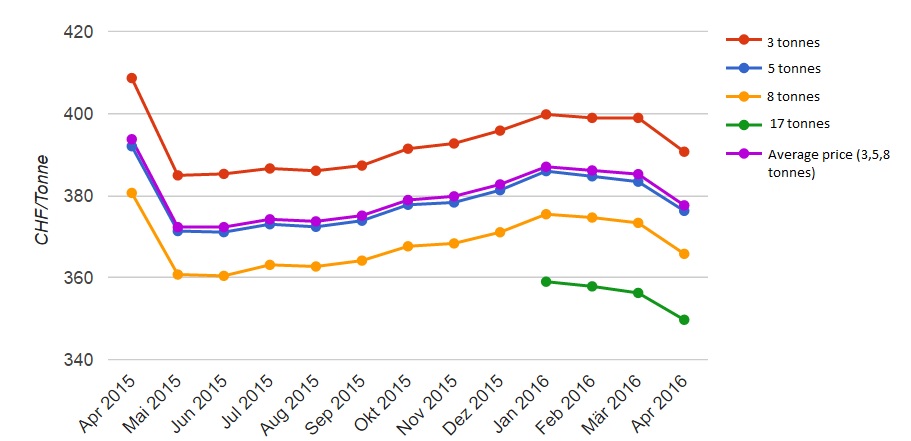
The pellet industry in Switzerland reached the end of the heating season and thus another reduction in wood pellet prices can be noticed this month. 
In April 2016, the average price for wood pellets quality ENplus A1 is 377.60 CHF per tonne, the equivalent of 346.67 EUR. Compared to March, the pellet price dropped by 1.9%, at least in Swiss francs. In Euro, it decreased by 1.1%, from 350.87 EUR/t in March. Compared with April 2015, the pellet price fell by 4.0%.
Depending on the pellet delivery amount, the price per ton varies from 349.73 CHF (17 tons) to 390.66 CHF (3 tons). Looking at last year's development, from April to May, it may be reasonably to say that in May a strong price decline will follow.

Price of wood pellets in Switzerland (CHF/tonne) April 2015 March 2016 April 2016
3 tonnes purchase quantity 408.60 398.90 390.66
5 tonnes purchase quantity 392.0 383.36 376.26
8 tonnes purchase quantity 380.63 373.33 365.79
Average price 393.70 385.2 377.60

Switzerland
 
[gravityform id="1" title="true" description="true"]
 
[gravityform id="2" title="true" description="true"]

German Rettenmeier Group buys an IKEA sawmill in Latvia

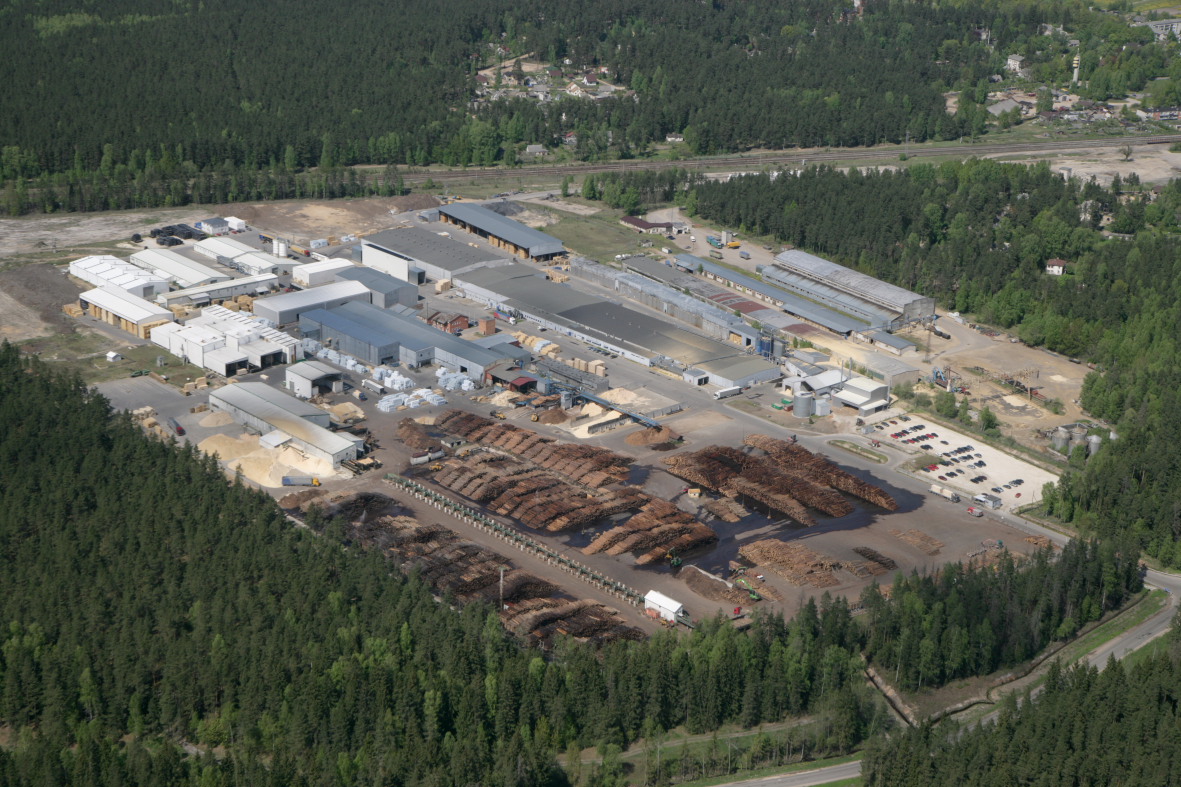
The German Rettenmeier Group will buy the IKEA sawmill located in Incukalns, Latvia. The sawmill has a processing capacity of 330.000 cubic meters of pine logs, and it's located near the Rettenmeier Baltic Timber sawmill which processes around 300.000 cubic meters of spruce. The 215 employees will be taken over by Rettenmeier.
The IKEA Incukalns site (in the picture above) also has a drying capacity of 150.000 cubic meters and produces 10.000 cubic meters of solid timber planks. With this acquisition, Rettenmeier will expand its annual sawing capacity from 2.5 million to 2.83 million cubic meters.
The acquisition includes the joint venture JSC "Incukalns Timber", owned by IKEA and Rettenmeier, which is a logging company with 49 employees. Incukalns Timber will now be fully owned by the German company, which thus aims to expand its activities in Eastern Europe with an easier access to excellent pine grades.
According to information from Lursoft business database, Rettenmeier Baltic Timber, established in 1994, is involved in wood processing, timber product export and manufacture of furniture parts. The company's share capital is EUR 4.881 million.
 
[gravityform id="1" title="true" description="true"]
 
[gravityform id="2" title="true" description="true"]
 

Hancock Lumber and Robbins Lumber join the American Wood Council

The American Wood Council (AWC) has two new members: Hancock Lumber and Robbins Lumber, both headquartered in Maine.
Founded in 1848, Hancock Lumber is a 6th generation family-owned business with retail locations in Maine and New Hampshire. Hancock Lumber also runs three eastern white pine sawmills in Maine, producing 85 million board feet each year, and owns over 12,000 acres of timberlands throughout the state.
Robbins Lumber is a 5th generation-family owned business and was founded in 1881. Robbins Lumber produces approximately 25 million board feet of white pine lumber each year. Another 3 million board feet are made into pre-cut parts and secondary manufactured products. The company also operates a wood coatings facility and owns and manages 27,000 acres of timberland in Maine.
”Wood products manufacturers make products that are essential to everyday life from a renewable resource that absorbs and sequesters carbon,” AWC President and CEO Robert Glowinski said. “Our members are committed to sustainability in their products and their use. Hancock Lumber and Robbins Lumber are a key industry companies with great people and facilities. We are excited to have them join over 50 other wood products companies supporting AWC’s efforts on behalf of wood products manufacturers,” he concluded.
 
[gravityform id="1" title="true" description="true"]
 
[gravityform id="2" title="true" description="true"]
Stable prices for US lumber in April

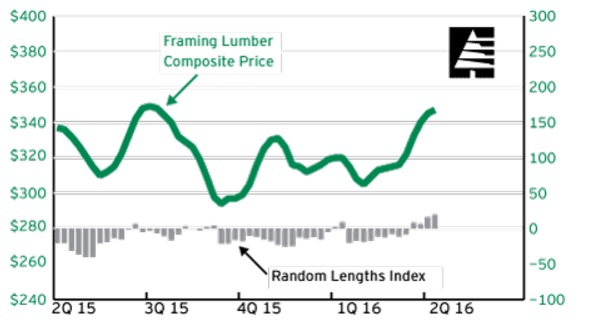
The second quarter got off to a quiet start in most US lumber species, after a brisk close to the first quarter. US traders attributed the slower pace to the need to digest March purchases, and assess market prospects going forward. Spring break, vacation absences, and a reversal in the futures market were all cited as contributing factors. While many prices flattened, residual upside momentum pushed the weekly Random Lengths Framing Lumber Composite Price mildly higher to $347.

This Week
Apr 8
Last Week
Apr 1
Year Ago
2015
Random Lengths Framing Lumber Composite Price* $347 $345 $337
KD Western S-P-F #2&Btr 2x4 R/L Mill Price 308 309 279
KD Eastern S-P-F #1&2 2x4 R/L, delivered Great Lakes 389 388 381
Green Douglas Fir Std&Btr 2x4 R/L (Portland) 335 337 300
Southern Pine (Westside) #2 2x4 R/L 400 393 402
KD Coast Hem-Fir #2&Btr 2x4 R/L 378 370 310
Ponderosa Pine (Inland) #2&Btr 1x12 R/L 685 680 670
* Weighted average of 15 key items


Random Lengths Panel Market Report
OSB sales were more active than plywood in the structural panel market. Steady sales and solid order files allowed OSB producers in most regions to keep modest upward pressure on quotes. The Southern Pine plywood market lacked energy, and prices of rated sheathing sagged. Most mills quoted shipments for the week of April 18. In western Fir plywood, the pace of sales finished at or modestly below last week’s levels, and volumes were muted. The bulk of the week’s orders came from the West.

(f.o.b. mill prices) This Week
Apr 8
Last Week
Apr 1
Year Ago
2015
Random Lengths Structural Panel Composite Price* $360 $358 $371
Southern (west-east) 15/32-inch 3-ply rated sheathing plywood 370-393 373-397 435-495
Southern (west-east) 15/32-inch 4-ply rated sheathing plywood 373-397 375-400 440-500
Western 1/2-inch 4-ply rated sheathing plywood 369 365 422
North Central 7/16-inch Oriented Strand Board 242 235 180
*Weighted average of 11 key items

 
[gravityform id="1" title="true" description="true"]
 
[gravityform id="2" title="true" description="true"]

Canada-US lumber dispute: Resolute's CEO takes position in support of free trade

Resolute Forest Products Inc. President and Chief Executive Officer Richard Garneau appeared this week in Ottawa, Canada, before the Canadian Parliament's Standing Committee on International Trade. Testifying in support of free, unencumbered access for softwood lumber exports from Central Canada (Quebec and Ontario) to the U.S. market, Mr. Garneau formally presented his perspective, drawing on over 40 years of experience in the forest products industry across Canada.

Mr. Garneau challenged the claims by some that the previous 2006 Softwood Lumber Agreement between the United States and Canada produced predictability and stability. In his formal comments, and in the question and answer period that followed, Mr. Garneau made the case that managed trade increased volatility, creating an unpredictable and unstable trade environment between the two large trading partners.

While Western Canadian softwood lumber producers benefited from China's extraordinary economic development, logistical limitations mean that Asian markets remain out of reach for Central Canadian producers, said Mr. Garneau. Additionally, Western softwood lumber producers' purchase of some 40 sawmills in the U.S., with a production capacity of some five billion board feet, afford them an important measure of insulation from future restrictive measures, he added.

"To put this capacity into context, it is over 150 percent of the total existing capacity of Ontario's sawmills. Canadian demand is simply not enough to absorb all the production of Central Canadian sawmills," stated Richard Garneau. "We need to be able to sell freely to the U.S. Indeed, that was the whole point of the Canada – U.S. Free Trade Agreement and NAFTA. Just about every industry enjoys free trade, except for softwood lumber," added Mr. Garneau.

In his formal remarks, Mr. Garneau emphasized the incredibly destructive nature, particularly for Central Canada, of the last managed trade arrangement between the United States and Canada.
"The purpose of a deal must not be simply an alternative to litigation. It must be to assure fair and equitable trade," offered Mr. Garneau.

Canadians have won every legal fight with the United States over softwood lumber, he said. Canada has played by the rules and proven according to the law that its industry is not subsidized, and does not cause injury to any U.S. industry. Softwood lumber producers in Quebec and Ontario need and deserve nothing less than free trade, Mr. Garneu said.

"If there is to be a deal, it must recall a principled purpose:  that the Canadian softwood lumber industry does compete fairly in North America and pays a fair market price for timber, and that our forestry regimes are market-based. The Government of Canada must not negotiate a deal that does not fully recognize Central Canada's right to free trade," summarized Mr. Garneau.

[gravityform id="1" title="true" description="true"]
 
[gravityform id="2" title="true" description="true"]
Canada-US lumber dispute: Resolute’s CEO takes position in support of free trade

Resolute Forest Products Inc. President and Chief Executive Officer Richard Garneau appeared this week in Ottawa, Canada, before the Canadian Parliament's Standing Committee on International Trade. Testifying in support of free, unencumbered access for softwood lumber exports from Central Canada (Quebec and Ontario) to the U.S. market, Mr. Garneau formally presented his perspective, drawing on over 40 years of experience in the forest products industry across Canada.

Mr. Garneau challenged the claims by some that the previous 2006 Softwood Lumber Agreement between the United States and Canada produced predictability and stability. In his formal comments, and in the question and answer period that followed, Mr. Garneau made the case that managed trade increased volatility, creating an unpredictable and unstable trade environment between the two large trading partners.

While Western Canadian softwood lumber producers benefited from China's extraordinary economic development, logistical limitations mean that Asian markets remain out of reach for Central Canadian producers, said Mr. Garneau. Additionally, Western softwood lumber producers' purchase of some 40 sawmills in the U.S., with a production capacity of some five billion board feet, afford them an important measure of insulation from future restrictive measures, he added.

"To put this capacity into context, it is over 150 percent of the total existing capacity of Ontario's sawmills. Canadian demand is simply not enough to absorb all the production of Central Canadian sawmills," stated Richard Garneau. "We need to be able to sell freely to the U.S. Indeed, that was the whole point of the Canada – U.S. Free Trade Agreement and NAFTA. Just about every industry enjoys free trade, except for softwood lumber," added Mr. Garneau.

In his formal remarks, Mr. Garneau emphasized the incredibly destructive nature, particularly for Central Canada, of the last managed trade arrangement between the United States and Canada.

"The purpose of a deal must not be simply an alternative to litigation. It must be to assure fair and equitable trade," offered Mr. Garneau.

Canadians have won every legal fight with the United States over softwood lumber, he said. Canada has played by the rules and proven according to the law that its industry is not subsidized, and does not cause injury to any U.S. industry. Softwood lumber producers in Quebec and Ontario need and deserve nothing less than free trade, Mr. Garneu said.

"If there is to be a deal, it must recall a principled purpose:  that the Canadian softwood lumber industry does compete fairly in North America and pays a fair market price for timber, and that our forestry regimes are market-based. The Government of Canada must not negotiate a deal that does not fully recognize Central Canada's right to free trade," summarized Mr. Garneau.

[gravityform id="1" title="true" description="true"]


[gravityform id="2" title="true" description="true"]

Central/West Africa: Stagnant logs & sawnwood prices

The ‘new normal’ of stable price structures for both logs and sawnwood in Central/West Africa has become a familiar pattern. Prices have barely moved since late last year marking one of the longest period of stability Central/West African producers have experienced in recent years.
Media hype of an impending collapse of the Chinese market has come to nothing and over past weeks producers have noticed a slight up-tick in interest from buyers for the Chinese market. A look at the residential and business construction trends provides a hint of what is behind the market conditions in China.
Overall, construction activity in most consumer countries has turned the corner and is slowly expanding if this continues producers expect to see order books firm.
While China is still firmly in the market this is still mainly for higher quality premium timbers. Demand for Central/West African logs is still quiet however.
Opening doors to private sector investments in Africa’s largest trading block
In related news, public and private sector representatives and state leaders recently met in Egypt to try and find ways to open the doors to private sector investments in Africa’s largest trading block created last year. This new trade group brings together 26 African countries with over 600 consumers and a combined GDP of more than 1 trillion US dollars.
The investment forum in Egypt “Africa 2016” focused on trade and investment as engines of growth. Heads of state and government from Ethiopia, Equatorial Guinea, Gabon, Nigeria and Sudan participated.
As Southern African News reports, participants were unanimous that governments need to put in place a business climate that will attract investors; they need to combat corruption and eliminate bureaucratic obstacles as well as reform financial systems to facilitate inward and outward flows of money.
In the words of Southern African News “The Africa 2016 Forum has marked a step further towards the implementation of the goals adopted during the January 2012 African Union Summit which focused on the theme of “Boosting Intra-Africa Trade”, as part of the heads of state and government decision to establish a Continental Free Trade Area. To boost trade the African Union identified six pillars upon which this will depend.
Log Export Prices

West Africa logs, FOB € per m³
Asian market
LM
B
BC/C
Acajou/ Khaya/N’Gollon
230
230
160
Ayous/Obéché/Wawa
260
260
180
Azobe & Ekki
230
230
160
Belli
250
250
Bibolo/Dibétou
150
145
Iroko 330
290
260
Okoume (60% CI, 40% CE, 20% CS) (China only) 200 200 160
Moabi 335 305 225
Movingui 210
210
160
Niove
160
160
Okan
250
250
Padouk
310
285
225
Sapele 315 305 220
Sipo/Utile
345
340
265
Tali 320 320

 
Sawnwood Export Prices

West Africa sawnwood, FOB
€ per m³
Ayous FAS GMS 410
Bilinga FAS GMS 500
Okoumé FAS GMS
350
Merchantable 225
Std/Btr GMS 270
Sipo FAS GMS
610
FAS fixed sizes 610
FAS scantlings 640
Padouk FAS GMS 930
FAS scantlings 1020
Strips 680
Sapele FAS Spanish sizes 610
FAS scantlings 620
Iroko FAS GMS 630
Scantlings 700
Strips
440
Khaya FAS GMS
450
FAS fixed
460
Maobi FAS GMS
610
Scantlings
630
Movingui FAS GMS
420

 
[gravityform id="1" title="true" description="true"]
 
[gravityform id="2" title="true" description="true"]

Central/West Africa: Stagnant logs & sawnwood prices

The ‘new normal’ of stable price structures for both logs and sawnwood in Central/West Africa has become a familiar pattern. Prices have barely moved since late last year marking one of the longest period of stability Central/West African producers have experienced in recent years.

Media hype of an impending collapse of the Chinese market has come to nothing and over past weeks producers have noticed a slight up-tick in interest from buyers for the Chinese market. A look at the residential and business construction trends provides a hint of what is behind the market conditions in China.

Overall, construction activity in most consumer countries has turned the corner and is slowly expanding if this continues producers expect to see order books firm.

While China is still firmly in the market this is still mainly for higher quality premium timbers. Demand for Central/West African logs is still quiet however.

Opening doors to private sector investments in Africa’s largest trading block

In related news, public and private sector representatives and state leaders recently met in Egypt to try and find ways to open the doors to private sector investments in Africa’s largest trading block created last year. This new trade group brings together 26 African countries with over 600 consumers and a combined GDP of more than 1 trillion US dollars.

The investment forum in Egypt “Africa 2016” focused on trade and investment as engines of growth. Heads of state and government from Ethiopia, Equatorial Guinea, Gabon, Nigeria and Sudan participated.

As Southern African News reports, participants were unanimous that governments need to put in place a business climate that will attract investors; they need to combat corruption and eliminate bureaucratic obstacles as well as reform financial systems to facilitate inward and outward flows of money.

In the words of Southern African News “The Africa 2016 Forum has marked a step further towards the implementation of the goals adopted during the January 2012 African Union Summit which focused on the theme of “Boosting Intra-Africa Trade”, as part of the heads of state and government decision to establish a Continental Free Trade Area. To boost trade the African Union identified six pillars upon which this will depend.

Log Export Prices

West Africa logs, FOB € per m³
Asian market
LM
B
BC/C
Acajou/ Khaya/N’Gollon
230
230
160
Ayous/Obéché/Wawa
260
260
180
Azobe & Ekki
230
230
160
Belli
250
250
Bibolo/Dibétou
150
145
Iroko 330
290
260
Okoume (60% CI, 40% CE, 20% CS) (China only) 200 200 160
Moabi 335 305 225
Movingui 210
210
160
Niove
160
160
Okan
250
250
Padouk
310
285
225
Sapele 315 305 220
Sipo/Utile
345
340
265
Tali 320 320


Sawnwood Export Prices

West Africa sawnwood, FOB
€ per m³
Ayous FAS GMS 410
Bilinga FAS GMS 500
Okoumé FAS GMS
350
Merchantable 225
Std/Btr GMS 270
Sipo FAS GMS
610
FAS fixed sizes 610
FAS scantlings 640
Padouk FAS GMS 930
FAS scantlings 1020
Strips 680
Sapele FAS Spanish sizes 610
FAS scantlings 620
Iroko FAS GMS 630
Scantlings 700
Strips
440
Khaya FAS GMS
450
FAS fixed
460
Maobi FAS GMS
610
Scantlings
630
Movingui FAS GMS
420


[gravityform id="1" title="true" description="true"]


[gravityform id="2" title="true" description="true"]

China: Encouraging housing data – has the corner been turned?

Activity in China’s real estate sector in the first two months of 2016 has been reported by the National Bureau of Statistics (NBS). China releases combined data for January and February to smooth out the effect of the slowdown in construction over the Lunar New Year holiday period.
The press release from the NBS says total investment in the first two months of 2016 was up 3% year-on-year.
Investment in residential buildings was up by 1.8% and accounted for two thirds of total investment in the sector.


Sales of residential buildings in the first two months of this year rose as the Chinese authorities eased credit requirements to encourage consumers to buy homes.
New home sales rose almost 50% year on year during the January-February period. For 2015 home sales nationwide rose almost 17% after the decline in 2014.
But, looking ahead, in the first two months of this year land purchases by real estate development enterprises fell 19.4% year on year however, the January and February performance was a considerable improvement on the steep declines recorded at the end of last year.
In the first two months of this year sales of commercial buildings increased 28%, a sharp rise on the pace of growth last year.
 
[gravityform id="1" title="true" description="true"]
 
[gravityform id="2" title="true" description="true"]

Södra to cease production at Värö mill, for equipment replacement

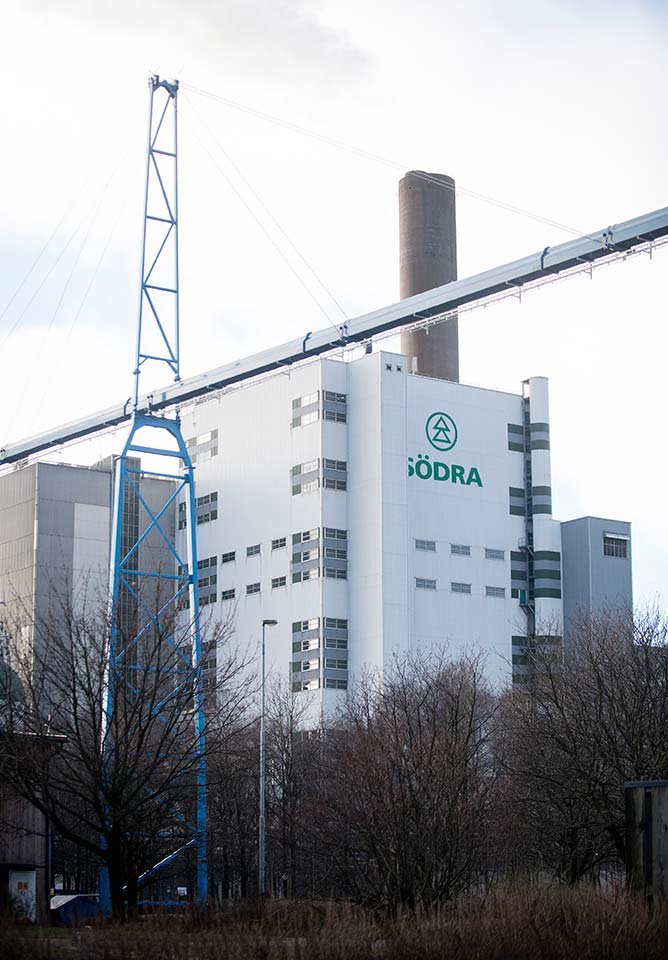
Södra announced all production cease at its Södra Cell Värö production site in Sweden on May 7, 2016. The cease will be followed by five intensive weeks of dismantling the old machinery, and installing new and larger machinery.
The company plans to temporarily shut down the entire facility to connect the new machinery and recommence production in mid of June. After completion, the mill’s pulp production capacity will increase from 425,000 tonnes per year to 730,000 tonnes. The investment agreed by Södra’s Board of Directors in February 2014 is expected to total SEK 4 billion (around USD 450 million).
Södra Cell Värö mill was built in 1972. Currently it produces 425,000 tonnes per year of high quality totally chlorine-free softwood pulp employing around 330 people. Södra runs a number of other operations in conjunction with Södra Cell Värö: Södra Cell R&D, the Södra sawmill in Värö and Södra Skog Region West. The mill is also now a supplier of electricity and district heating. At the end of 2013 it started production of wood pellets.

"The shutdown will bring two major challenges - the digester and the machine hall. Removing the old drying cabinet and installing a new one in such a short time will need a world record in advanced installation. But we're aiming for a world record," says Pasi Laine, CEO of Valmet.

Valmet is the main supplier of machinery to Värö's expansion, entailing an investment of more than SEK 4 billion, which is also Valmet's largest project in Europe right now. Valmet has several sub-projects at Värö that are progressing well, but maintaining the project schedule has proven a real challenge.
 

[gravityform id="1" title="true" description="true"]
 
[gravityform id="2" title="true" description="true"]

US wooden furniture imports higher than last year

The total value of US wooden furniture imports in January declined 2% from the previous month to US$1.40 billion, but imports were 12% higher than in January 2015.
US furniture imports from China, Mexico and Indonesia declined, while Vietnam, Canada and Malaysia shipped more in January.

US furniture imports Jan. 2016 in US$ Change in %, 2014/2015
China 686,694,310 11%
Vietnam 273,774,970 22%
Canada 108,867,113 20%
Malaysia 60,012,619 16%
Mexico 56,011,496 3%
Indonesia 49,412,790 20%
Other 170,211,500 0.1%
Total 1,404,984,798 12%
Data source: US Department of Commerce, US Census Bureau, Foreign Trade Statistics

China’s furniture shipments to US were worth US$686.7 million in January. Vietnam gained market share with US imports worth US$273.8 million. Vietnam’s share in total US wooden furniture imports was almost 20% in January. The recent gain in import share by Vietnam was not at the expense of China but largely because of reduced imports from Europe.
Furniture imports from Malaysia grew to US$60.0 million in January, surpassing Mexican shipments to the US. Imports from Mexico fell 16% month-on-month to US$56.0 million. Furniture imports from Indonesia were almost unchanged in January at US$49.4 million.
US imports of not upholstered wooden seats increased 13% in January, while upholstered seating declined 5%. Wooden bedroom furniture imports were down 4%. Other types of wooden furniture were almost unchanged from the previous month.
 
[gravityform id="1" title="true" description="true"]
 
[gravityform id="2" title="true" description="true"]

Canada: Viridis Energy closes Okanagan Pellet plant

Viridis Energy Inc. recently announced that due to recent structural concerns at its Okanagan Pellet Co. (OPC) plant and a combination of factors, including the increased capital investment necessary to restart wood pellet production at that location, it has decided to cease operations at its West Kelowna, British Columbia, plant.
Despite substantial upgrades over the past 10 months, additional requirements from local authorities regarding dust management together with the recently discovered structural challenges of the building, operating the plant safely would require significant additional capital outlays. The company has determined that such expenditures are not economically feasible in the current market environment.
The company will work with OPC’s creditors to determine the best course of action, including, but not limited to, the potential sale or joint venture of OPC, a sale or liquidation of those related assets, or the relocation of that facility in its entirety.
Viridis acquired Okanagan Pellet Company, located in West Kelowna, B.C , in April 2010. The plant has a nameplate capacity of 60,000 tons of premium softwood pellets annually, originated from spruce, pine and fir.
Viridis Energy, headquartered in Vancouver, B.C., Canada, is a manufacturer and distributor of renewable energy providing wood pellet biomass to global residential and industrial markets. Viridis Energy total wood pellet capacity is approximately 300,000 tons per year.
 
[gravityform id="1" title="true" description="true"]
 
[gravityform id="2" title="true" description="true"]
Sweden: Advanced biofuel to be produced from paper pulp byproducts

RenFuel and Nordic Paper have signed an agreement to build a production test facility in Bäckhammar in the region of Värmland (Sweden) in order to test manufacture an advanced biofuel based on lignin. The project has been granted 71 million SEK by the Swedish Energy Agency.
RenFuel has developed and patented a method to refine the lignin from black liquor, a renewable byproduct from the production of paper pulp, into lignin oil. The oil, called Lignol, can replace fossil oil and be used as raw material in the production of renewable gasoline and diesel. According to Nordic Paper, the use of black liquor also leads to an increase in production capacity and profit in the paper pulp industry.

“Our product Lignol is the key to reaching the goal of a fossil free vehicle fleet in Sweden by 2030. We are very pleased to finally being able to put the product into large scale testing, as a result of the cooperation with Nordic Paper and the financial support from the Swedish Energy Agency,” Sven Löchen, CEO of RenFuel said.

The production test facility will be built inside the Nordic Paper pulp factory in Bäckhammar, and will be ready for production by the beginning of 2017. If the production tests are successful, the next step will be large scale production of Lignol to meet the demands of the rapidly growing market for biofuel. Lignol has the potential to quickly lessen the need for fossil oil, and it’s a realistic way of reaching the goal of a fossil free vehicle fleet by 2030, Nordic Paper says.

”The paper and paper pulp industry is an important link in the bio economy. We can, through this cooperation, contribute tangibly to a fossil free future. That is incredibly gratifying,” Per Bjurbom, CEO of Nordic Paper, said.

Another important link in the chain is access to refineries that have the capacity to produce diesel and gasoline from Lignol. Preem has since 2010 gradually adjusted its production toward renewable fuels through exchanging crude oil with for example tall oil.
”Preem welcomes this initiative by RenFuel and Nordic Paper. One of the big challenges of the adjustment into independence from fossil fuels in Sweden is supply of sustainable raw materials. Byproducts from Swedish forestry, such as lignin, more than fulfill our requirements of the sustainability of the raw material, and in addition, the demand of lignin can be met in great volumes. We look forward to receiving the first volume of Lignol at our refineries and start producing the renewable gasoline and diesel of the future,” Petter Holland, CEO of Preem said.
”The RenFuel pilot project is in line of the Swedish Energy Agency strategic priorities of renewable fuels and complement the research programs that we recently initiated regarding bio fuels,” Jonas Lindmark, Program Manager at the Swedish Energy Agency said.
About RenFuel
RenFuel is a Swedish bio energy innovation company, which has patented a catalytic process that efficiently transforms lignin in byproducts from forestry into the renewable lignin oil Lignol®. RenFuel consists of dedicated researchers, staff and owners with comprehensive knowledge of forestry and green chemistry and who are driven by the idea to replace fossil fuels with sustainable gasoline and diesel.
About Nordic Paper
Nordic Paper is a global market leader within grease proof paper and selected segments of unbleached paper. The Group has an annual turnover of about 2.5 billion SEK and an export share of more than 95 percent. Nordic Paper Holding AB has factories in Bäckhammar, Säffle and Åmotfors in the region of Värmland, as well as Greåker in Norway. Headquarters are located in Bäckhammar, about 18 km south of Kristinehamn in the region of Värmland. The total number of employees is about 600.
 
[gravityform id="1" title="true" description="true"]
 
[gravityform id="2" title="true" description="true"]

Timberlink Australia invests $10 million in New Zealand sawmill

Timberlink has recently invested $10 million at the Blenheim sawmill in Marlborough, New Zealand. The company bought the site from Flight Timbers in September 2015 and started to invest in the sawmill off Battys Rd, according to stuff.co.nz.
Ian Tyson, Timberlink Australia and New Zealand chief executive, said that the upgrade built at the sawmill would make it competitive worldwide. During this financial year, Timberlink will invest more than $4 million on the upgrade and will also install two new Contra Flow Kilns.

"The improvements are being rolled out end-to-end across the whole site. Every part of the process has got some degree of investment to improve," Tyson added.

The building of the 2 kilns will help the sawmill be more effective and will also remove the drying bottlenecks. Guarding around the machinery and staff training will represent another investment made by the Australian company, regarding the health and safety of the bigger employees’ number.
Now, the sawmill processes approximately 100,000 tonnes of raw radiate pine each year and produces 55,000 m3 of processed timber. The upgrades will help it be more effective in the milling process, along with reducing the waste and increase the yield.
As stuff.co.nz reported, some kind of new scanning technology has also been acquired, as to produce maximized cutting decisions and to use the most out of the yield from the logs.
The parent company of Timberlink Australia, New Forests, is also investing in Marlborough and bought a forestry block from the Flight Group. With this, New Forests would help Timberlink with the log and timber supply.
 
[gravityform id="1" title="true" description="true"]
 
[gravityform id="2" title="true" description="true"]



Kronospan: New particleboard and MDF plants in Bulgaria

Kronospan wants to increase production at two sites from Bulgaria, where it has been investing since 1997. The Austrian manufacturer now owns three sites in the country.
The company plans to expand in Bulgaria in the next three years and it will invest approximately 300 million leva (153.4 million euros), as the Bulgarian media reports. Veliko Tarnovo, in the north of Bulgaria, and the port city of Burgas will be the two sites where the Austrian manufacturer plans to invest.
According to the Bulgarian media, the company has already got the building permit for the construction of a particleboard plant in Veliko Tarnovo, an investment which will be financed by own company and also using a bank loan. Plans are that 70% of the production will be used for export.
The second site at Burgas will be used for the construction of an MDF plant, but it will last some more time for the building permit to be issued, according to company representatives.
2014 brought 89 million euros from sales for Kronospan Bulgaria, while the Austrian company has invested approximately 130 million euros since 1997. Since 2009, Kronospan has a logistics base in Sofia, the capital of Bulgaria, alongside the two sites in Veliko Tarnovo and Burgas.
 
[gravityform id="1" title="true" description="true"]

EUTR enforcement starts to bite hard

An area of uncertainty for importers of wood products into the EU is the status of EUTR enforcement.
Indonesian manufacturers will be expecting to build on and accelerate the relatively slow growth in sales of furniture and other products to the EU in 2015 when the first FLEGT licenses are issued for Indonesian products, now expected in the third quarter of 2016, ITTO reported.
These licenses, issued as one important outcome of the VPA between Indonesia and the EU, will allow Indonesian products to be placed on the EU market without the need for any further due diligence on the part of the importer.
FLEGT licences are expected to greatly simplify and reduce the costs of EUTR conformance for individual EU operators dealing in products from Indonesia. They should also give Indonesian products an edge over competitors from non-VPA countries. However this is heavily dependent on effective enforcement of EUTR by EU authorities.
To date EUTR enforcement activities have been fairly low key, a situation partly explained by the time it has taken for EU Member States to introduce sanction regimes, and to build capacity and experience at national level. EUTR is an innovative and complex regulation and it is perhaps inevitable that there have been teething problems in implementation.
EUTR implementation has been particularly challenging during a period of austerity in the EU which has meant that in some Member States there has been unwillingness to commit resources. Indeed the European Commission was forced in late 2015 to start legal action against four Member States - Hungary, Greece, Romania and Spain – for their failure to introduce the necessary enforcement measures.
Meanwhile other Member States, while introducing the necessary legal frameworks, deliberately introduced a grace period to provide time to build understanding both in government agencies and the timber trade of the practical steps required for effective due diligence, However there are now signs that enforcement agencies in some Member States are moving out of the implementation phase and becoming more determined to take action against operators in breach of the legislation.
According to a recent article by Forest Trends, Sweden and the Netherlands have formally notified two companies that imported wood products from Cameroon and Myanmar—allegedly without undertaking effective Due Diligence—that they may be subject to sanction.
Both these actions, announced almost simultaneously in mid-March, were primarily civil enforcement measures aimed at stopping the marketing of potentially illegal wood. These are not currently criminal cases such as those which have been prosecuted in the United States under the Lacey Act.
However, if the importing companies fail to act within the given timescales, administrative sanctions can be imposed.
The Dutch case has been presented to the public prosecutor as a potential criminal case, with a decision pending.
According to Forest Trends, the Netherlands Food and Consumer Product Safety Authority (NVWA) has issued an injunction notice to Fibois BV Purmerend for importing wood from CTT Ltd, a supplier in Cameroon. If the Dutch company doesn’t stop placing the wood on the market in the Netherlands, it will face a fine.
Drawing on information from the Dutch Timber Trade Federation (VVNH), Forest Trends emphasise that Fibois plans to appeal the government’s action.
In addition, Forest Trends note that the case has been sent to the National Prosecutors’ Office, and could be brought before a judge for a potential criminal law sanction. The NVWA cited the failure of the company to mitigate the “risk of illegal harvesting” inherent in purchasing wood from Cameroon given the “political situation in the Congo Basin.”
In announcing the case, the Dutch Government also noted that its main enforcement focus in the future will be on furniture imports from China, Vietnam, and India.
With respect to the Swedish case, Forest Trends report that this involves imports of teak flooring by a Swedish company called Retlog Ltd. The flooring was processed in Thailand using logs from Myanmar.
The Swedish enforcement agency publicly referenced the high incidence of forest sector corruption in the source country as a key determinant of risk.
This was reinforced by the EUTR Guidance Document Feb 2016 issued by the European Commission in February, which explicitly noted corruption as a criterion for judging risk in an EUTR-compliant Due Diligence System.
Forest Trends observe that the Swedish case is also significant for the involvement of Bureau Veritas in its role as EUTR Monitoring Organisation. Monitoring Organisations are formally recognised by the European Commission as competent to develop and support implementation of due diligence procedures on behalf of groups of operators. They form a key part of the EU’s strategy to ensure EUTR conformance is not too burdensome on small operators in the EU.
Forest Trends suggest that Bureau Veritas considered shipments under 1,000 cubic metres to be of negligible risk. However neither the EUTR legislation nor any guidance have such a threshold, so it is unclear how Bureau Veritas arrived at this assumption.
This raises important questions about where liability lies if a Monitoring Organisation, which is formally endorsed by the EC, promotes due diligence requirements that might be viewed as non-conformant by individual EUTR Competent Authorities.
 
[gravityform id="1" title="true" description="true"]
 
[gravityform id="2" title="true" description="true"]

Swedish Court revokes Andritz's patent after dispute with Valmet

Back in February 20, 2015, Andritz Oy had filed a summons application with the Stockholm District Court against Valmet AB regarding patent infringement. In the claim Andritz is asking that Valmet under a penalty ceases to utilize the system allegedly infringing Andritz's patent and to impose royalty and damages on Valmet AB with EUR 54 million and interest for the alleged infringement. Valmet has not made any provisions concerning the claim.

The validity of Andritz's patent has been challenged by Valmet, and this matter has been awaiting a decision from the Swedish Court of Patent Appeals. The Swedish Court of Patent Appeals has on March 23, 2016 decided to revoke Andritz's patent.

An appeal of the decision now made by the Swedish Court of Patent Appeals can be filed to the Supreme Administrative Court by May 23, 2016.

[gravityform id="1" title="true" description="true"]

[gravityform id="2" title="true" description="true"]

Newsletter

Subscribe to our digital newsletter for your daily digest of essential news, views and analysis from the international wood industry delivered directly to your inbox.


0