Article archive

Asian wooden furniture manufacturers losing share in European market

There was a robust rebound in EU wooden furniture production and trade in 2014 and 2015. Wooden furniture production value in the EU (excluding kitchen furniture) was euro 31.15 billion in 2015, 4.4% more than 2014 and nearly 9% up on 2013, with gains made in all the main EU manufacturing countries.

EU imports of wooden furniture from outside the EU were worth euro 5.73 billion in 2015, 13% more than the previous year and 25% up on 2013. EU exports of wooden furniture rose to euro 8.73 billion in 2015, up 3.5% from 2014 and 6% more than in 2009. Continue reading "Asian wooden furniture manufacturers losing share in European market"


Softwood timber exports from Sweden continue to decrease

During January-August 2016, Sweden has exported about 8 million m2 of softwood timber. This represents a -5% decrease over the same period of 2015. Most of the exports to the world decreased, as compared to 2015.

Main export markets for the Swedish softwood timber  were the United Kingdom and Egyptfollowed by Norway and Germany.

Yet, exports to Egypt dropped the most, by -18% over January-May 2015, down to a volume of 754,475 m2. Also, the exports to Germany dropped by -13% and the ones to Morocco by -17%.

Swedish softwood timber exports increased in countries such as China (+40%), reaching a volume of 490,361 m2, and Japan (+16%).

Swedish timber shipments to the European Union countries decreased by -6%, with only 4.1 million m2 exported during January-August. Also, the exports to North Africa decreased by -15% over the corresponding period of 2015. North America and the Near and Middle East exports dropped by -12% and -15%, respectively.

A significant increase was recorded for the Swedish timber exports to other Asian countries, by +25%, to 1,1 million m2.

TOP 10 Destinations

Softwood Timber exported from Sweden to... (in cbm )

Destination January-August 2015 January-August 2016 Change in %
EUROPEAN Union
4,473,793 4,190,290 -6 %
United Kingdom
1,810,983 1,625,194 -10 %
Germany
669,591 583,655 -13 %
Denmark
559,508 555,597 -1 %
Netherlands
564,193 540,873 -4 %
France
205,922 217,994 6 %
Others
663,596 666,977 1 %
OTHER European Countries
660,899 656,854 -1 %
Norway
625,125 614,287 -2 %
Turkey
11,049 14,270 29 %
Iceland
5,193 7,744 49 %
Albania
5,304 6,643 25 %
Switzerland
5,512 5,738 4 %
Others
8,716 8,172 -6 %
NORTH Africa
1,740,531 1,480,115 -15 %
Egypt
917,089 754,475 -18 %
Algeria
395,036 371,115 -6 %
Morocco
312,023 257,704 -17 %
Tunisia
77,878 78,734 1 %
Libya
38,505 18,087 -53 %
OTHER African Countries
46,535 36,011 -23 %
Sudan
43,643 33,356 -24 %
Cape Verde
1,636 1,201 -27 %
Seychelles
635 904 42 %
Kenya
93 228 145 %
Ghana
91 106 16 %
Others
437 216 -51 %
NORTH America
190,943 168,663 -12 %
USA
189,379 168,308 -11 %
Canada
1,564 355 -77 %
CENTRAL America
13,851 2,807 -80 %
Virgin Islands
1,459 2,807 92 %
Panama
1,826 - -100 %
British Virgin Islands
360 - -100 %
Antigua Barbuda
10,206 - -100 %
NEAR and MIDDLE East
422,203 358,712 -15 %
Saudi Arabia
293,688 212,693 -28 %
Israel
62,066 62,827 1 %
Yemen
25,911 43,285 67 %
Jordan
34,491 34,706 1 %
Qatar
1,858 1,932 4 %
Others
4,189 3,269 -22 %
OTHER Asian countries
918,086 1,150,017 25 %
China
350,460 490,361 40 %
Japan
413,516 478,958 16 %
South Korea
46,245 47,385 2 %
Hong Kong
17,027 35,107 106 %
Vietnam
15,028 31,797 112 %
Others
75,810 66,409 -12 %
OCEANIA and Polar region
49,384 31,735 -36 %
Australia
49,137 31,494 -36 %
French Southern Territories
247 241 -2 %
TOTAL 8,516,225 8,075,375 -5 %

The product Softwood Timber consists of following HS Codes: 440710; Source: Eurostat.

SCA Timber plans to position sawmill in Tunadal as market leader in exterior cladding with SEK50M investment

SCA Timber is investing SEK 50 million (EUR 5 million) in its planing mill in Tunadal, in Sundsvall, Sweden. The investment will enable the planing mill to increase its productivity and will also create the conditions required for enabling continued product development.

"We are investing in a new intake for raw materials, a new splitting line and a new packaging line,” says Markus Henningsson, Manager of SCA Timber Supply Skandinavien. “The investment will allow us to remove bottlenecks and thereby increase productivity, while new technology means that we can increase our product innovations. This is very much in line with our strategic aims.”

One main product from the planing mill will be exterior cladding made of raw materials from the Norrland region. There is strong demand for this product among Scandinavian customers.

“Our ambition is to be the market leader in exterior cladding. As a result of this investment and the investments that have recently been made in the Tunadal sawmill, we will be able to increase the pace of innovation,” continues Markus Henningsson.

In parallel with the investment, SCA Timber is also launching the SmartTimber added value concept for the building merchants in Scandinavia. The concept involves new and innovative products and services, intended primarily for customers from the professional building trade.

An example of a product developed as part of this concept is pine heartwood decking, which has a guaranteed heartwood content of at least 99 percent and thus provides natural protection against rot. Another example is an exterior cladding with concealed fitting, which results in a more attractive facade and greater durability. SCA Timber is also investing in providing improved services, such as extended product information, training and sales support for shops.

“The building materials trade is an important market for us. With innovation and product development, we want to make it easier for our building trade customers to use wood as a material,” concludes Markus Henningsson.

US lumber prices fell $5 at the begining of November

Framing lumber markets were very cautious last week, with trading in Canadian SPF going very low last Tuesday.
Prices of the upper grades in all species finished lower. Seasonal softening was a factor, but traders also cited concern about the U.S.-Canada trade issue. Meanwhile, U.S. and Canadian traders alike looked forward to putting next week’s U.S. presidential election behind them. Continue reading "US lumber prices fell $5 at the begining of November"

Booming orders in the Italian woodworking machinery industry

Orders in the Italian woodworking machinery industry went up 21.2% in 2Q/2016. The upward trend is driven by export sales where orders went up by 17.2%. Domestic demand is also positive (+30.4%) although the industry is still recovering from poor sales during the economic crisis.

“The Italian market is growing at satisfactory rates, but we are still far from pre-crisis levels. Abroad, instead, we are already back to pre-2008 volumes and everything suggests that this trend will endure," commented Dario Corbetta, Acimall (the Italian woodworking machinery and tools manufacturers’ association) director. Continue reading "Booming orders in the Italian woodworking machinery industry"

Norbord improves earnings on higher OSB prices and demand

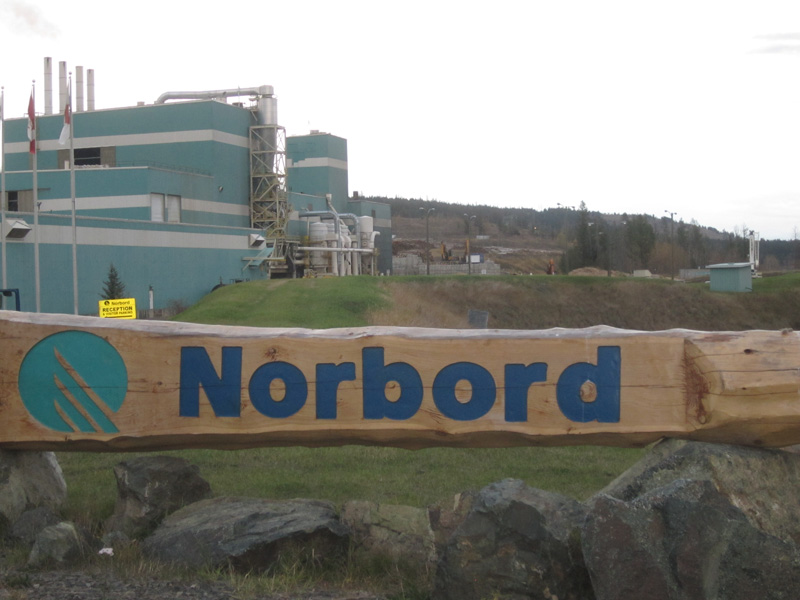
High demand and prices for OSB have allowed Norbord to post its seventh consecutive quarter of improvement. The company reports adjusted EBITDA of $114 million for the third quarter of 2016 versus $30 million in the third quarter of 2015 and $94 million in the second quarter of 2016.
The improvement versus both comparative periods is primarily due to higher North American oriented strand board (OSB) prices. North American operations generated adjusted EBITDA of $106 million in the quarter compared to $22 million in the same quarter last year and $85 million in the prior quarter. European operations delivered adjusted EBITDA of $10 million compared to $11 million in both comparative quarters. Continue reading "Norbord improves earnings on higher OSB prices and demand"

US wooden furniture imports up 3% in January-August 2016

US wooden furniture imports were almost unchanged in August at US$1.44 billion. Year-to-date imports increased 3% from August 2015.

Furniture imports from most countries changed little from July. China lost market share while Vietnam gained in August. Year-to-date China’s share in total imports declined from 47.1% in August 2015 to 46.3% in August this year, while Vietnam’s imports share grew to 18.7%.

US wooden furniture imports from Mexico gained the most in August. Imports from Mexico grew 14% to US$73.7 million. Imports from Europe also increased in August, supported by the favourable exchange rate for European manufacturers.

India, Canada and Mexico had the strongest growth in year-to-date wooden furniture exports to the US market. Wooden kitchen furniture imports grew in August. Imports of office, upholstered and seating furniture declined.

West Fraser invests $33 million in expansion sawmill operations in South Carolina

West Fraser, a diversified wood products company, is expanding its Newberry County sawmill operations. The project is expected to bring $33 million in new capital investment, as South Carolina Department of Commerce reports.

Since 2007, the company has invested millions to modernize the mill and plans to invest $33 million more to procure wood, services and goods in Newberry County. West Fraser also plans to install a log merchandiser designed to increase production by more than 37%.

West Fraser believes in making investments to improve our operations. This initiative will support our capital investment to expand production at the mill. Building a strong business supports our mill’s competitiveness so we can continue to be an active employer and a positive contributor to Newberry County,” West Fraser Newberry Lumber Mill General Manager DJ Russell said.

Established in 1955, West Fraser produces lumber, laminated veneer lumber (LVL), medium-density fiberboard (MDF), plywood, pulp, newsprint and wood chips, as well as energy through several bioenergy initiatives.

Brexit to have massive consequences for the EU wooden furniture market

Brexit is particularly significant for the wooden furniture sector as the UK is the largest single EU destination for this commodity imported from outside the EU. In 2015, the UK accounted for 36% of all EU imports of wooden furniture from outside the single market.

This is due to the relatively high degree of consolidation in the UK’s furniture retailing sector compared to other EU countries, and the UK’s relatively high level of openness to foreign trade and products, comparatively small domestic furniture sector, and longer distances from the heartland of EU furniture manufacturing in Italy, Germany and Poland.

Fears of economic fallout from Brexit have led to an immediate and large devaluation of the British pound against other currencies. Throughout October, the pound has been trading at around US$1.22 against the dollar, the lowest level for 31 years and 18% less than just before the Brexit vote.

At times during the month the pound also dropped below the psychologically important euro 1.10 level against the euro, its lowest level since March 2010 and 15% less than before the vote.

After a year of strong growth in 2015, the UK’s imports of wooden furniture had levelled off at the higher level in the first half of 2016, prior to the Brexit vote.

UK imports from other EU countries and from China had declined slightly during this period, but were continuing to grow slowly from the main tropical suppliers including Vietnam, Malaysia, Brazil and Indonesia. Continue reading "Brexit to have massive consequences for the EU wooden furniture market"

Implications of CETA for the European sawmill industry

On 30 October 2016, the EU leaders and the Canadian Prime Minister met in Brussels for the 16th EU-Canada summit in order to sign the EU-Canada Comprehensive Economic and Trade Agreement (CETA). Continue reading "Implications of CETA for the European sawmill industry"

Södra to divest Södra Wood Grimslöv to Soernsen Group

Södra is divesting Södra Wood Grimslöv to German-based Soernsen Group. Trade union negotiations have been initiated regarding the transfer of the operation. Handover is expected to take place on 1 January.

Södra Wood Grimslöv produces high-grade architectural mouldings and special moulding profiles for industrial customers and has 31 employees. The main markets for its products are the Swedish and Norwegian building materials trade.

“Grimslöv is a small-scale operation with niche specialty products. We believe that Grimslöv can develop better under the management of Soernsen, which applies a similar concept. Soernsen is currently a contract supplier of mouldings to Södra, and this situation will remain unchanged,” said Jörgen Lindquist, Business Area President of Södra Wood.

The purchaser is Soernsen Group, which was founded in 1945 and has several production sites in Germany and Estonia. The company produces a broad range of mouldings; its standard range contains more than 3,000 items in various types of wood and it delivers to countries worldwide. It has sales of EUR 50 million and 300 employees.

“We want to establish operations in Sweden to move closer to the Nordic market. Grimslöv is a well-organised production site. With its motivated and competent staff, we will be capable of producing high-quality mouldings for the Nordic market. This move will also generally enhance the business relationship between Södra and Soernsen,” said Robert Sörnsen, President of Soernsen Group.

Södra is implementing structural changes in its sawmill and interior wood products operations to strengthen the company’s long-term competitiveness. Several structural changes have been made in the sawmill operations and, with respect to the interior wood products operations, Södra Wood Rottne was sold to Ess-Enn Timber before the summer. In October, Nordingrå Trä AB was sold to Pro Unica AB and Södra Wood Föllinge to Rikard Eriksson.

US: Tropical plywood imports losing out to temperate hardwood plywood

US hardwood plywood imports declined 6% in August to 281,736 cu.m. The value of plywood imported in August was down 4% from the previous month.

The main decline was in plywood imports from China, Ecuador and Malaysia. Imports from China were 165,666 cu.m. in August worth US$99.7 million. Year-to-date import volumes from China were unchanged from August 2015.

Hardwood plywood imports from Indonesia recovered in August. Imports were 27,235 cu.m. up 40% from July. However, year-to-date imports from Indonesia remain one third below 2015 levels.

The import share of plywood made from temperate hardwoods has grown in 2016. Year-to-date plywood imports from Russia and Canada are up compared to August 2015, while imports from most tropical producers declined.

LIGNA 2017 already has 90% of the exhibition space booked

LIGNA, the world’s leading trade fair for machinery, plant and tools for the woodworking and timber processing industry, is gearing up for its 2017 season (22 to 26 May).

While the opening day is still about six months away, the organizers, Deutsche Messe and the German Woodworking Machinery Manufacturers’ Association, can already speak of an excellent turnout: 90 percent of the available exhibition space has been booked.

LIGNA is on track for success. In fact, compared with the same stage in the planning cycle for the last show, we are well ahead in terms of booked space,” commented Christian Pfeiffer, the Director in charge of LIGNA at Deutsche Messe. “For the upcoming show we are partnering with the German Woodworking Machinery Manufacturers’ Association and our regular exhibitors to develop a new thematic layout that reflects the changing ways in which customers of all sizes use woodworking and timber processing technology. And I’m pleased to say the initiative has really paid off.”

The upcoming LIGNA will see smaller providers showcasing themselves alongside major players, to the benefit of all concerned. Exhibitor locations at the show are now based on salient aspects of technology use, giving rise to completely new display clusters. Visitors, in particular, will benefit considerably from this revamped layout plan, which is designed to make their visit even more efficient by giving them quick, convenient access to the themes that matter most to them.

Exhibitors have given a resounding “thumbs up” to the new hall layout scheme, which in some cases has even led to exhibitors booking more space for enlarged presentations. Repeat exhibitors with a significantly greater footprint in 2017 include Biesse, Bürkle, Cefla, Felder, IMA, SCM and UNIMAK.

Also among their number will be Festool, which will be represented at two separate stands. But it’s not just repeat exhibitors who have put LIGNA’s organizers in an upbeat mood: LIGNA 2017 will also feature numerous first-time exhibitors, such as RS Wood from Italy, Aigner-Werkzeuge from Austria and Vector Systems from New Zealand. Newcomers in LIGNA’s surface technology display area also include many internationally renowned companies, such as Intergroup Plastik (Turkey), Unison (Poland) and IVM Chemicals (Germany).

The Wood-Based Panel Production, Sawmill Technology and Energy from Wood displays will likewise benefit from a strong showing of repeat and first-time exhibitors, many of them global market leaders. The repeat exhibitors include German companies Akzo Nobel, Brüninghaus Verpackungssysteme and Heizomat, and Italian company Itipack. Well-known first-time exhibitors include Scheuch LIGNO (Austria), Rotodecor (Germany) and Signode Industrial Group (Sweden).

The central focus of the upcoming show will be on intelligent concepts for integrated manufacturing across all links in the wood processing chain. Integrated manufacturing opens up major opportunities for companies seeking to develop new business areas, boost productivity and build their competitive edge.

LIGNA 2017 will showcase the close interplay between and ongoing integration of the virtual and real worlds – across the entire value chain of the timber processing and woodworking industries.

Other big highlights at next year’s show include a comprehensive display of solutions for processing plastics and composites, a series of training courses for joiners, cabinetmakers, carpenters, assemblers and installers, the Wood Industry Summit and the “Fibers in Process@LIGNA” showcase.

Fibers in Process@LIGNA” is a technology transfer event in two parts – one featuring processes and technologies from the pulp and paper industry that are relevant for the wood industry, and the other featuring materials made from paper, pulp and wood.

In 2017, LIGNA – the world’s leading trade fair for machinery, plant and tools for the woodworking and timber processing industry – is once again expected to attract around 1,500 exhibitors, with more than half from outside Germany.

Egger expects to start commissioning of a new TC-kiln at Brilon mill in Germany

Egger is expected to start commissioning of the new TC-kiln at the company’s Brilon mill in Germany in the late November 2016. Continue reading "Egger expects to start commissioning of a new TC-kiln at Brilon mill in Germany"

Weyerhaeuser reports 45% increase in earnings

Weyerhaeuser's sale of its Cellulose Fibers pulp mills, liquid packaging board business, and printing papers joint venture contributed to the company's 45% increase in earnings compared to the last quarter.

Weyerhaeuser also benefited from a 7% increase in average sales realizations for OSB and a slight rise in lumber sales realizations compared to the second quarter.

The company reported third quarter net earnings to common shareholders of $227 million, or $0.30 per diluted share, on net sales of $1.7 billion. This compares with net earnings of $180 million, or $0.35 per diluted share, on net sales of $1.4 billion for the same period last year.Third quarter results include after-tax earnings of $65 million from discontinued operations, which included a net gain of $41 million on the divestiture of the liquid packaging board business. Third quarter results also include net after-tax charges of $10 million from special items. Excluding discontinued operations and special items, the company reported net earnings of $172 million, or $0.23 per diluted share for the third quarter. This compares with net earnings from continuing operations before special items of $121 million for the same period last year and $130 million for second quarter of 2016.

"Our employees delivered strong results in the quarter as Timberlands drove improved performance through merger synergies and Wood Products reported its best third quarter in over a decade," said Doyle R. Simons, president and CEO. "The integration with Plum Creek continues to go very well and we are confident we will fully capture the cost and operational synergies from the merger."

Weyerhaeuser merged with Plum Creek Timber Company, Inc. (Plum Creek) on February 19, 2016. The financial statements presented within this release do not include Plum Creek financial results for any period prior to the February 19, 2016 merger date.

During 2016, Weyerhaeuser announced the sale of its Cellulose Fibers pulp mills, liquid packaging board business, and printing papers joint venture. Results for the Cellulose Fibers segment are presented as discontinued operations. All periods presented have been revised to separate results of discontinued operations from the results of our continuing operations.

Timberlands
3Q 2016 Performance - Sales volumes for Southern and Northern logs increased seasonally. Western fee harvest volumes declined and average realizations for Western logs were comparable to the second quarter, as improved domestic realizations were offset by slightly lower realizations for export logs. Silviculture and road costs increased seasonally, and the business benefited from merger-related synergies and operational excellence initiatives.

4Q 2016 Outlook - Weyerhaeuser anticipates modestly higher earnings and Adjusted EBITDA from the Timberlands segment in the fourth quarter. In the West, the company expects slightly higher realizations for domestic and export logs, partially offset by lower fee harvest volumes. In the South, the company anticipates increased fee harvest volumes and seasonally lower silviculture expense.

Wood products
3Q 2016 Performance - Average sales realizations for oriented strand board increased 7 percent and lumber sales realizations rose slightly compared to the second quarter. Lumber sales volumes and operating rates were slightly lower and log costs for Canadian and Western mills increased. Manufacturing costs for oriented strand board improved due to operational excellence initiatives and higher operating rates.

4Q 2016 Outlook - Weyerhaeuser expects seasonally lower earnings and Adjusted EBITDA from the Wood Products segment in the fourth quarter compared with the third quarter due to lower sales volumes across most product lines and seasonally weaker average sales realizations for oriented strand board. Fourth quarter Adjusted EBITDA, however, should be nearly double the fourth quarter of 2015.

Discontinued operations
Discontinued operations include the company's Cellulose Fibers segment, which consists of pulp mills, a liquid packaging board facility, and a printing papers joint venture. The sale of the liquid packaging board business closed on August 31, 2016. These results correspond to assets and liabilities that have been classified as discontinued operations on our balance sheet.

3Q 2016 Performance - Improved sales realizations for pulp were more than offset by increased maintenance expense due to additional scheduled maintenance outage days. Third quarter includes a net after tax gain of $41 million on the divestiture of the liquid packaging board business.

Finnish sawmills boost softwood lumber exports to Middle East

The import of softwood lumber in the Middle East from the main European exporters and North America was 2.62 million m³ (-14% compared to 2015) during January-August 2016.

The import from Russia during the same period was 646,000 m³ (-17%), Romania 510,000 m³ (-27%), Germany 413,000 m³ (-10%), Finland 335,000 m³ (+10%) and Sweden 296,000 m³ (-17%). Continue reading "Finnish sawmills boost softwood lumber exports to Middle East"

Arauco receives approval for its new $400 million particleboard plant in Michigan

Arauco has recently announced that the company received all the required official approvals for building its new particleboard plant located in Grayling, Michigan.  Continue reading "Arauco receives approval for its new $400 million particleboard plant in Michigan"

AHEC European Conference shows forecasts for American hardwood

At the end of October, nearly 150 European hardwood importers, architects and American hardwood exporters came together in Copenhagen to discuss the future for American hardwoods.

All the issues were discussed during the AHEC European conference, under The Future For American Hardwoods theme. The conference included a series of seminars which explored hardwoods in construction and new approaches to sustainability as two key drivers of demand for U.S. hardwood species.

Practical workshops with industry specialists focused on the technical aspects of using and specifying American hardwoods; from understanding the forest resource, the breadth of individual species, lumber grading and exterior applications. The event also provided networking opportunities.

Mike Snow, AHEC executive director, opened with an update on the globalization of the American hardwood industry, commenting on the decline in domestic demand versus the rapidly growing Chinese appetite for American hardwood.

He stated the astonishing fact that “one in every five boards of American lumber will now end up in China”. He also stressed the continued importance of high value European markets where there are opportunities for new applications.

Architect Jasmin Sohi from dRMM Architects presented the new Maggie’s Cancer Caring Centre currently under construction in Oldham, England; the first commercial building ever built using hardwood CLT, made with American tulipwood.

Timber specialist Andrew Lawrence from engineering firm Arup presented the engineering challenges behind The Smile—built for this year’s London Design Festival—using the largest ever panels of cross-laminated American tulipwood.

At a panel session chaired by AHEC European Director David Venables, Daniel Kressig  from Zueblin Timber, Jasmin Sohi and Andrew Lawrence, expressed their views on the potential for U.S. hardwoods in construction and, specifically, on the next steps for hardwood CLT as a commercial reality.

The conference followed with an Industry Panel where American hardwood exporters discussed the concerns about the devastating EAB (emerald ash borer) and its impact on long term U.S. ash supplies. Other discussion points included white oak availability, given the continued pressure on log supply from the growing barrel stave market and generally how the hardwood industry could further adapt their production to the current needs of the European market.

AHEC Consultant Rupert Oliver explained the environmental Life Cycle Assessment (LCA) and regional risk assessment. He highlighted that “around 90% of U.S. hardwood supply derives from private forest owners, of which there are 9.8 million, with an average forest holding of only 15 hectares.”

Mr Oliver also presented the American Hardwood Environmental Profile (AHEP); a very easy to use visual tool that enables American hardwood exporters to provide a comprehensive consignment-specific shipping document which satisfies EUTR requirements.

Neil Summers (Timber Dimension) explored the growth opportunities for exterior applications of American hardwoods and focused on the several U.S. species which are clearly suitable for thermal modification.

Global wood based panel market forecast to exceed $35 billion by 2023

Valued over $16 billion in 2015, the global wood based panel market size is anticipated to grow at CAGR of over 13% and exceed $35 billion by 2023. Continue reading "Global wood based panel market forecast to exceed $35 billion by 2023"

Canfor reports improved lumber sales in Q3/2016

In spite of higher market based stumpage and increased log hauling costs in Western Canada, Canfor reports a 43.3 million increase in operating income in Q3 compared to the same period last year, due mainly to improved lumber segment results driven largely by higher Western Spruce/Pine/Fir and Southern Yellow Pine unit sales realizations and solid productivity gains in the US South.

According to the company's press release, Canfor Corporation reported net income attributable to shareholders of $50.9 million, or $0.38 per share, for the third quarter of 2016, compared to shareholder net income of $36.0 million, or $0.27 per share, for the second quarter of 2016 and a net loss attributable to shareholders of $17.3 million, or $0.13 per share, for the third quarter of 2015.

For the nine months ended September 30, 2016, the company's shareholder net income was $112.9 million, or $0.85 per share, compared to $23.1 million, or $0.17 per share, for the nine months ended September 30, 2015.

Canfor's adjusted shareholder net income for the Q3 of 2016 was $51.7 million, or $0.39 per share, compared to an adjusted shareholder net income of $26.5 million, or $0.20 per share, for the second quarter of 2016, and an adjusted shareholder net income of $6.4 million, or $0.05 per share for the third quarter of 2015.

For the nine months ended September 30, 2016, the company's adjusted shareholder net income was $99.1 million, or $0.75 per share, compared to $50.9 million, or $0.38 per share, for the nine months ended September 30, 2015.

Canfor reported operating income of $97.4 million for the third quarter of 2016, up $43.3 million from adjusted operating income of $54.1 million for the second quarter of 2016.

Adjusted operating income in the second quarter of 2016 excluded a one-time pre-tax gain of $15.5 million related to the settlement of a legal claim with respect to logistics services for the Company's pellet business.

Higher earnings in the third quarter of 2016 reflected improved lumber segment results driven largely by higher Western Spruce/Pine/Fir ("SPF") and Southern Yellow Pine ("SYP") unit sales realizations and solid productivity gains in the US South, offset in part by higher market based stumpage and increased log hauling costs in Western Canada.

North American lumber demand was steady in the third quarter of 2016, with US housing starts broadly in line with the previous quarter, averaging 1,138,000 units on a seasonally adjusted basis. Canadian housing starts were in line with the previous quarter, at an average of 199,000 units on a seasonally adjusted basis. Offshore lumber demand was consistent with the previous quarter.

Lumber unit sales realizations showed a moderate improvement compared to the previous quarter largely reflecting higher average Western SPF lumber prices and a 1% weaker Canadian dollar, as well as a modest increase in average SYP lumber prices.

The average benchmark North American Random Lengths Western SPF 2x4 #2&Btr price was up US$11 per Mfbm, or 4%, compared to the second quarter of 2016, with more pronounced price increases seen across most other dimensions. While the SYP East 2x4 #2 price declined US$23 per Mfbm, or 5%, compared to the prior quarter, with larger price decreases in 2x10 and 2x12 dimensions, this effect was more than offset by improved pricing for premium SYP products, which represent a significant portion of the company's product mix in the US South, and price increases in 2x6 and 2x8 dimensions.

Total lumber shipments and production were in line with the second quarter of 2016 with increased planer production at the Houston sawmill, following a kiln fire in the previous quarter, and improved productivity in the US South, offsetting planned capital related downtime at Canfor's Polar sawmill in British Columbia and Fulton sawmill in Alabama in the current quarter.

Discussions between the Canadian and US Governments regarding the Softwood Lumber Agreement continue following the expiry of the one-year stand-still period on October 12, 2016. In the event no agreement is reached, there is a material risk of US trade action being initiated against Canadian lumber producers which could result in the imposition of duties on lumber shipments to the US.

Looking ahead, the US housing market is forecast to continue its gradual recovery through the balance of 2016.

North American lumber consumption is forecast to improve reflecting steady demand in the residential construction market and continued strength from the repair and remodelling sector. There remains a risk of market place volatility absent a new Softwood Lumber Agreement. For the company's key offshore lumber markets, demand is anticipated to show a modest improvement through the fourth quarter. In the pulp and paper segment, with new pulp capacity forecast to come on line, there is risk of downward pressure on pricing.

Outlook

Looking ahead, the US housing market is forecast to continue its gradual recovery through the balance of 2016. North American lumber consumption is forecast to improve reflecting steady demand in the residential construction market and continued strength from the repair and remodelling sector. There remains a risk of market place volatility absent a new Softwood Lumber Agreement. For the company's key offshore lumber markets, demand is anticipated to show a modest improvement through the fourth quarter.

Newsletter

Subscribe to our digital newsletter for your daily digest of essential news, views and analysis from the international wood industry delivered directly to your inbox.


0