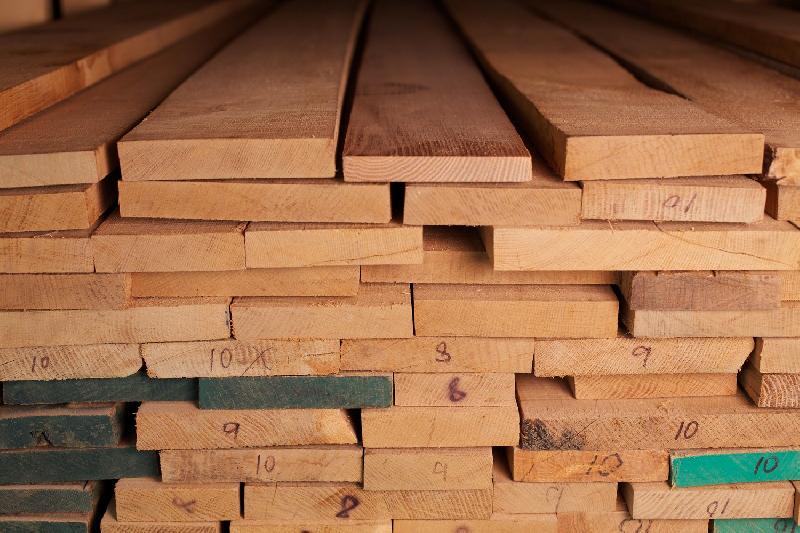
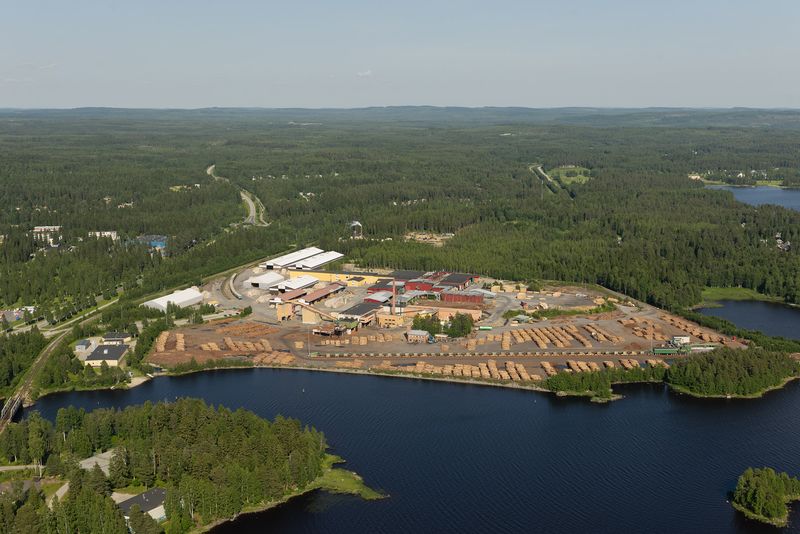
Binderholz Nordic Oy recently bought a planing mill and a glulam factory belonging to the Anaika Wood Group at the site in Lieksa, Finland.
Continue reading "Binderholz acquires planing mill and glulam factory in Finland"
Continue reading "Binderholz acquires planing mill and glulam factory in Finland"
Latest prices for Brazilian logs, sawnwood and plywood prices (1-15 February 2017) Continue reading "Latest prices for Brazilian logs, sawnwood and plywood"
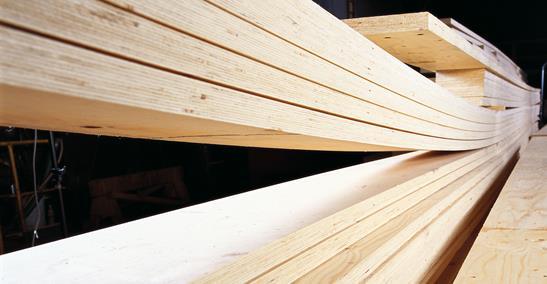
The Swedish glulam industry continues to break records. In 2016, sales increased by 13.5% as compared to 2015, which was the previous record year.
Johan Fröbel, chief of technology and distribution industry at the Swedish Wood organization is happy, but not surprised. More and more people realize that glulam is the key to combining efficient and attractive building with environmental sustainability, he said.
In 2016, Swedish glulam producers sold a total of over 77,000 cubic meters glulam. Moreover, an even more surprising tendency is that sales increased month by month throughout the year, and in December sales were 29 percent more as compared to the same month last year.
We see a steady positive trend and forecast, with continued strong increase in glulam construction. The figures and the demand we see now is no accident, but means something entirely new in the construction industry, says Johan Fröbel.
He argues that the record figures, among other things, are due to the fact that the market has begun to understand the great benefits of building with glulam. It is renewable, beautiful, easy to shape and one of the strongest materials in construction in relation to weight.
Sweden has several producers of glulam that are world leaders in this field. The positive trend is of course due to the demand in Sweden's construction market, but also a lot of glulam is sold abroad.
Johan Fröbel still believes that the record numbers in the first place is the result of a clear paradigm shift.
By using glulam as a construction material it is possible to combine exciting architecture with a reduced carbon footprint. It is particularly the young generation that realizes this , and more and more glulam construction will come, Johan Fröbel concludes.
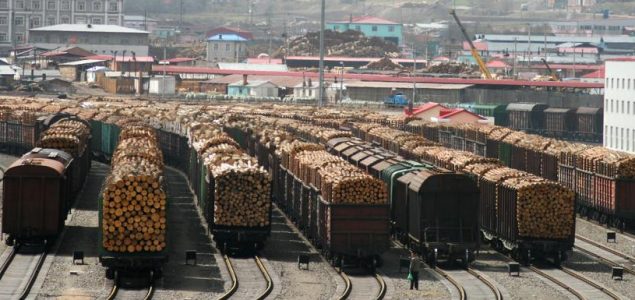
China's softwood lumber imports hit a new record of 21.58 million cubic meters in 2016, up 24 percent from a year earlier, a strong rebound after a 1% decline in total imports in 2015 and a 4% increase in total imports in 2014. Continue reading "Russia’s softwood lumber invades the Chinese market"
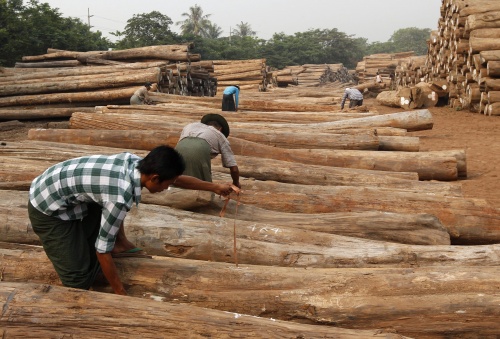
Myanmar Forestry Authority has informed in the next fiscal year (2017-18 fiscal year), Myanmar will resume teak and hardwood production. Production targets are expected to reach 270,000 tons.
Logging was halted last year following excessive deforestation in previous years. The resumption of log harvesting in the next fiscal year under certain limit is aimed at preventing entrepreneurs engaged in the industry from suffering shortage of raw materials but the volume of extraction will be reduced at about 270,000 tons, of which Myanmar teak production will reach 1,274 tons, while the production target of hardwood will reach 269,727 tons.
The Ministry of Natural Resources and Environmental Conservation will make a sustained effort at reforestation and conservation in the forest across Myanmar, officials of the ministry said.
Three schemes are being laid down with the timber extractive industry with the first one being that timber production is allowed every two years to fulfill the requirement of raw materials for the value-added export products.
The second scheme allows timber production only for self-sufficiency, while the third one permits import of products substituting wood to fulfill the local requirement for raw materials.
In July 2016, Myanmar forestry authorities announced suspension of wood logging along Bago Yoma mountain range in the central part of the country.
The number of teak trees in Myanmar has gradually declined due to illegal logging. Statistics show that forest coverage in Myanmar decreased to 45 percent in 2015 from over 57 percent in 1990. However, the ministry is planning to replant teak in Bago mountain range in a bid to protect natural resources.
Myanmar is one of the most resource-rich countries in Southeast Asia covered by 38 percent mixed deciduous forests, 25 percent hills and temperate evergreen forests.
The logging volume of teak and hardwood in the fiscal year 2012-2013 reached 925,050 tons, according to figures.
Meanwhile, Myanmar government has restricted wood logs export to encourage more export of value added wood products since 2014.
The U.S. lumber markets are already seeing some major price volatility, where W-SPF lumber prices soared by a whopping 25% (US$78/Mbf) in the three-week period between January 27 and February 17, 2017 and up US$83/Mbf over the previous five-week period.
As reported by WOOD MARKETS, this three-week price increase in U.S. lumber prices is one of the largest short-term gains over the past 20 years. This is mirroring a similar scenario back in early 2001 when countervailing duties (CVD) on Canadian lumber shipments into the U.S. moved into their 90-day retroactive period in mid-May 2001 and the anti-dumping duties (ADD) followed later. The initial combined duties of 32.3% were both in effect in November, 2001.
The largest U.S. lumber price spike ever, based on price changes in consecutive weeks, was in 2001 - before the implementation of the last U.S. duties - when lumber prices spiked higher by US$165/Mbf over a 7-week period.
This was followed by two major price collapses over the next six months: one over five weeks for a drop of US$111/Mbf; and a second over 9 weeks for US$122/Mbf.
Mercer International Inc. announced on the 21st of February that it has entered into an agreement to acquire substantially all of the assets of one of Germany’s largest sawmills and a bio-mass power plant, near Friesau, Germany for approximately $55.1 million, plus defined working capital of approximately $9.0 million. Continue reading "Mercer acquires Germany’s largest sawmill and a biomass plant from Klausner"
Annual imports of temperate and tropical sawn hardwood in North America decreased by 15% in 2016, as compared to the previous year. Continue reading "North American imports of temperate and tropical sawnwood went 15% down"
Strong supply pattern continues on both domestic and imported plywood in Japan. Active orders on domestic softwood plywood from precutting plants continues even after the New Year holidays. Continue reading "Japan: Risk for yen fluctuation might cause lower orders for imported plywood"
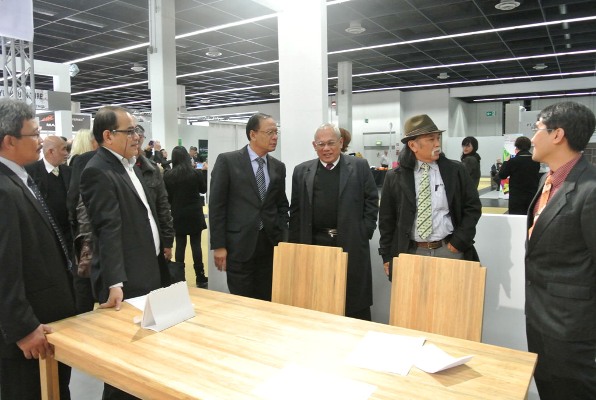
Like the Domotex show held in Hanover earlier in the month, the IMM Furniture Fair in Cologne between 16 and 22 January highlighted the challenges facing tropical suppliers looking to increase their share of the European market, as pressure continues to mount from domestic manufacturers and non-wood materials.
Demand for wooden exterior furniture, traditionally an important niche market for tropical wood products, is coming under pressure from other modern weatherresistant materials.
However, the Fair also emphasised that wood, alongside other natural materials and organic finishes, is very fashionable for interior furniture, that there is strong interest in furniture with a strong back story, and that small, well-designed products have an important role in the European furniture sector. All these trends offer new avenues to market for suppliers of tropical wooden furniture.
As if to emphasise these opportunities, the headline of the leading article on the IMM show by Decoist, a leading online magazine focused on architecture and modern design was “Wood is beyond good – it’s sensational!”.
Decoist observes that “one of the big furniture design trends of 2017 is undoubtedly the way in which top manufacturers and designers have so whole heartedly embraced wood. In a world where organic finishes and natural materials are making a rapid comeback, wood is definitely the absolute king of 2017 and this trend is likely to continue to last beyond the year as well!”
Decoist’s comment that “Indonesia made a big impact at this year’s show with their unique creations” is particularly encouraging for the tropical wood sector and an early sign of the potential of Indonesia’s market development strategy in Europe.
Indonesia had a significant presence at the show having booked just under 600 square metres for a national pavilion displaying products from a wide range of Indonesian companies, a timely investment in marketing for a national furniture industry that is the first, and only capable of delivering 100% FLEGT-licensed product.
Indonesia did well to target IMM Cologne which is now one of world’s leading furniture shows following a marketing drive to internationalise the event. The show achieved a record number of visitors this year, exceeding 150,000 for the first time.
Of the 104,000 trade visitors, around 56,000 came from Germany and 48,000 from abroad (an increase of 4%).
There were particularly large increases in visitor numbers from Spain, Russia, Italy, the UK, Netherlands, Poland, China, South Korea, India and the United Arab Emirates.
The show boasted around 1,200 exhibitors from 50 countries displaying more than 100,000 pieces of furniture and furnishing items, a third of which were shown to the international market for the first time in Cologne.
Finnish Metsä Group recently released its fourth quarter results and the “Metsä Wood” division's sales revenue fell by 1.8% to €115.3 million, while the operating result adjusted for special items fell by 1.2% to €8.3 million. Continue reading "Metsä Wood fell in sales revenue, but boosted Kerto LVL deliveries during Q4/2016"
In Brazil a Forest Products Trade and Transport System (SISFLORA) is used to monitor and control the transport of forest products. Recently, entrepreneurs and representatives of employers' unions in the forestry sector in Mato Grosso do Sul met with the State Secretary of the Environment to raise their concerns on the updated version of the system (SISFLORA 2.0).
SISFLORA 2.0 adopts a new system for the chain of custody reporting and will be applied by state environmental agencies.
Concerns have been raised that the new system involves an extremely detailed control mechanism conducted in real-time using an online system. Data at each stage of the process, including those carried out in the field, has to be logged into the system.
In addition, the authorisation process for issuing the document ‘Forest Guide’ (Guia Florestal - GF) which is required during the purchase, sale and transport of logs and primary wood products has become more bureaucratic.
One of the problems identified by producers is that the new system will demand access to high-speed internet services and will require that a technician needs to be permanently logged into the system to carry out data insertion. Another obstacle is that increasing the complexity of the system will also require more skilled manpower and this will generate new cost centres for entrepreneurs.
In addition, the new system creates legal uncertainty for producers where a simple error of data recording due to the complexity of the system could trigger penalties, suspension of the company´s activity or even lawsuits for environmental crimes.
According to timber producers the new system requires too much detail and because this must be ‘real-time’, satisfying the new requirement will be an enormous challenge.
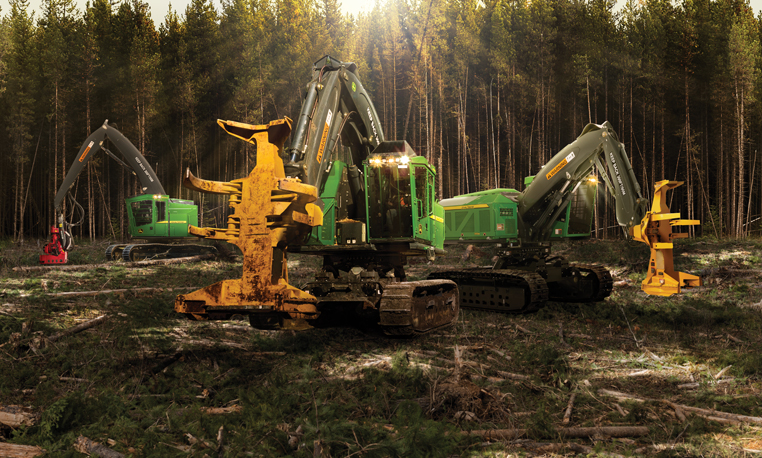
For the first financial quarter ended January 29, worldwide net sales of John Deere increased 2 percent, to $5.625 billion, compared with $5.525 billion last year.
John Deere has started out the year on a positive note in the continued face of soft market conditions, said Samuel R. Allen, chairman and chief executive officer of John Deere.
John Deere's construction and forestry sales decreased 6 percent for the quarter, mainly as a result of lower shipment volumes and higher sales-incentive costs. Operating profit was $34 million for the quarter compared to $70 million in 2016. Lower results for the quarter were mainly attributable to higher sales-incentive expenses and the voluntary separation program.
Deere's worldwide sales of construction and forestry equipment are forecast to be up about 7 percent for 2017, with no material currency-translation impact. The forecast reflects moderate economic growth worldwide. In forestry, global industry sales are expected to be flat to down 5 percent, with soft conditions in North America offsetting strength in other regions.
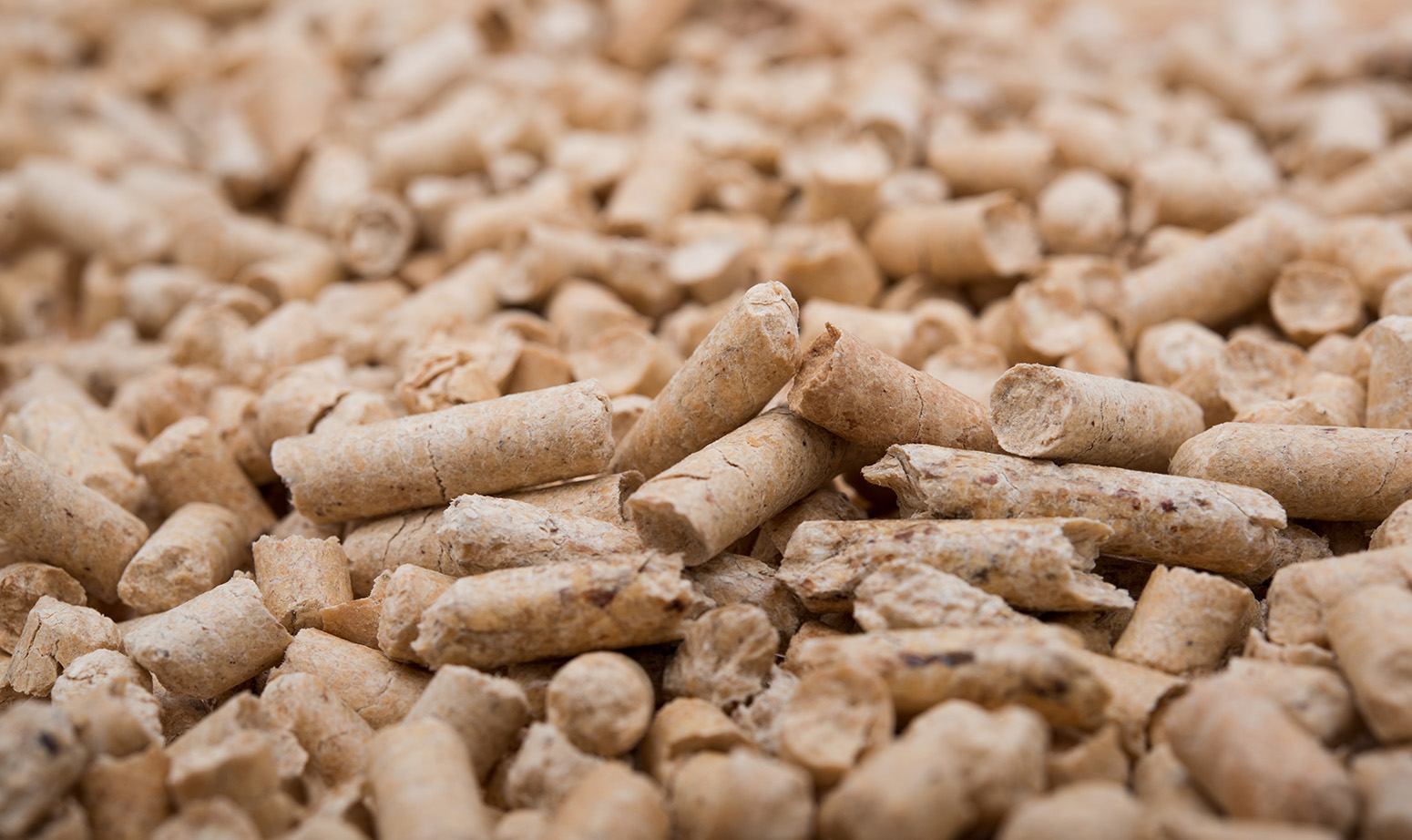
Enplus A1 pellets' price in Austria got to an average of EUR 238.5 per tonne, or 4.87 Cent per kWh in February 2017. Continue reading "Wood pellets price in Austria increased 3.7% in February"
EU trade in wood furniture has been rising slowly since December 2013. This is due partly to improving consumption of wood furniture products manufactured in the EU, and to the increasing role of manufacturing facilities in lower cost Eastern European countries such as Poland and Lithuania to supply wood furniture to other parts of the EU. Continue reading "Wooden furniture trade in Europe growing slowly"
China imported 48,724,700 cubic meters of logs during the whole year 2016. This represents a 9.33% increase over 2015 (or 415.67 million cubic meters more logs). Continue reading "China increased log imports by almost 10% during 2016"
Rumours have surfaced again on a likely 20% export tax on log exports in Cameroon. This could have implications for other log exporting countries which may decide to follow suit or enjoy the competitive advantage such a tax in Cameroon would deliver.
Continue reading "Rumours of 20% log export tax in Cameroon"
In 2016, Canada exported a total of 29.2775 million cubic meters of softwood lumber, compared with the 2015 annual growth of 11.6%; the export value reached $6.9 billion, a 19% increase. Continue reading "Canadian lumber exports to China fell 10% in 2016"
The production volumes of the Finnish plywood industry declined y-o-y by 1.1%, reaching 1,140 million m3. A similar decrease was noticed in 2015, when the volumes reached 1,160 million m3. Continue reading "Finnish plywood industry on a downward trend"

Subscribe to our digital newsletter for your daily digest of essential news, views and analysis from the international wood industry delivered directly to your inbox.
 0
0