
Article archive

Biesse records sharp rise in its Wood Division sales in 2016

The Italian woodworking machinery producer Biesse has recently released the preliminary financial statements for the year ended on 31.12.2016. 

The sales revenues of the company reached a record EUR 618.5 million, representing a 19.1% increase compared to 2015 (EUR 519.1 million). Sales of the Wood Division totaled EUR 450.9 million which were 18.7% above 2015 (EUR 380.0 million). In 2016 the Wood Division was responsible for 72.9% of the Company’s total revenues.

EBITDA for the Biesse Group in 2016 was EUR 75.8 million an increase of 18.3% compared with 2015 (EUR 64.1 million), while net profit in 2016 reached EUR 29.5 million a 39.9% higher than in 2015 (EUR 21.1 million). Biesse sales in 2016 had relevant growth in Western Europe (+34.9%), Asia (+26.1%) and North America (+20.2%).

The Biesse Group currently has almost 3,800 employees in its main production sites in Pesaro, Thiene, Alzate Brianza, Bangalore, Dongguan and its associates/branch offices in Europe, North America, Latin America the Middle East, Asia and Australasia. The Group also has no fewer than 300 resellers and agents enabling it to cover more than 100 countries.
Denmark to prohibit companies from selling Myanmar teak on European Union markets

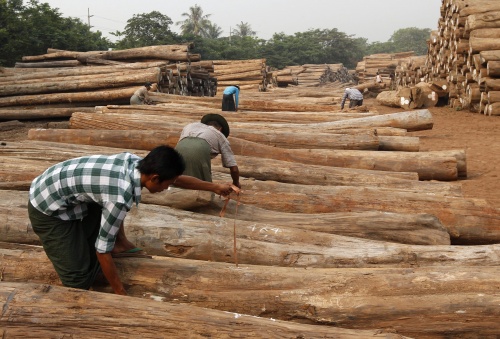
Denmark last week placed an injunction on all Danish companies that prohibits them from selling teak imported from Myanmar on European markets.

The ruling comes after evidence that Danish timber company Keflico had violated the European Union Timber Regulation (EUTR) was brought to light by the Environmental Investigation Agency (EIA), a London-based NGO, mongabay reports.

According to a statement issued by Denmark’s Environmental Protection Agency, audits were carried out at seven Danish companies that had imported teak from Myanmar in the last four years. Teak is a tropical hardwood especially prized for use in furniture and shipbuilding.

The results of the audits showed that authorities in Myanmar had not provided adequate documentation of where the timber for any given purchase came from and whether or not it was legally harvested, thereby making it virtually impossible for Danish companies to avoid importing illegal wood.

“None of the Danish timber importing companies, which the Environmental Protection Agency visited, could demonstrate that they adequately minimized the risk of importing illegally harvested timber,” the statement reads (translated from Danish). “The seven companies have now been ordered to follow timber regulation rules.”

The move by Denmark follows the precedent set by the successful prosecution in Sweden last November of the trader Almtra Nordic for violations of the EUTR. It was discovered that the company could not show who had harvested its timber or where it was cut prior to being purchased from the Myanmar Timber Enterprise, the state-operated company that is responsible for the harvest and export of timber in Myanmar. Almtra Nordic received a fine and an injunction that prevents it from importing teak from Myanmar until the company can identify and mitigate the risk of the timber it’s purchasing having been harvested illegally.

According to EIA Forests Campaigner Peter Cooper, the Danish ruling sets another precedent that other EUTR Competent Authorities must follow.

“Denmark’s leadership in EUTR enforcement underpins similar rulings already made in Sweden and leaves no doubt that anyone placing Burmese teak on the EU market under current conditions is in breach of European law,” Cooper said in a statement welcoming the decision by Danish authorities. “With Denmark setting a clear precedent on a case submitted by EIA, we now expect authorities in Italy, the Netherlands, Belgium, Spain and the UK to rapidly resolve the remaining 12 cases submitted by EIA.”

The allegations made by the EIA against numerous other European companies focus on the due diligence requirements of the EUTR, which hold importers responsible for adequately assessing and addressing the risk of illegally produced timber entering their supply chains. EIA says it has submitted cases regarding teak imported from Myanmar by Antonini Legnami, Basso Legnami, and Bellotti Spa in Italy; Boogaerdt Wood, Gold Teak Holdings, and World Wood in the Netherlands; Crown Teak and Vandercasteele Hout Import in Belgium; Teak Solutions in Germany (a case that has since been transferred to Spain); and Moody Decking, Stones Marine Timber, and DA Watts and Sons (Wattsons) in the UK.

In October 2016, when EIA’s allegations against the companies were made public, many of them repudiated EIA’s findings in statements to Mongabay. For instance, Peter Tsounis, the CEO of Crown-Teak, told Mongabay in an email that, “Our due-diligence procedures are quite strenuous and our abiding with the EUTR…is strict. There has not been one single container of teak…that has not been controlled by us and been properly and legally documented.” If a private business were to go around the Myanmar government and perform its own investigations in the field, Tsounis added, it would be “unlawful” and dangerous.

But EIA’s Cooper argues that, due to the high risk of illegality and lack of transparency in the operations of the Myanmar Timber Enterprise, it is probably not possible for any company to apply due diligence to Myanmar’s teak.

“The Myanmar Timber Enterprise needs to urgently address illegality within its operations and provide access to independent monitoring of its operations — or risk permanently losing access to Europe’s lucrative teak market,” he added.

US demand for all major tropical sawnwood species increased

Balsa, sapelli and ipe imports up in January US imports of all sawn hardwood increased by 21% from December 2016 to January 2017. Some 70,569 cu.m. of sawn hardwood worth US$41 million were imported in January.

Tropical sawnwood imports grew 16% month-on-month in January to 22,998 cu.m and tropical sawnwood imports were almost 60% higher than in January 2016.

Demand for all major tropical species increased. Balsa imports were 8,973 cu.m. in January, followed by sapelli (2,802 cu.m.) and ipe (2,438 cu.m.). On the down side imports of keruing, meranti, teak and mahogany sawnwood declined in January.

Ecuador, Cameroon and Brazil gained from higher imports of balsa, sapelli and ipe, respectively. Sawnwood imports from Indonesia grew 17% in January despite the drop in keruing and meranti imports.

The US imported more ‘other tropical’ hardwood sawnwood from Indonesia in January, but meranti remained the highest value sawnwood imported from Indonesia at US$489,000.

US imports of sawn tropical hardwoods are climbing back from the lows immediately after the 2008/9 recession.

Sapelli and balsa lead Canadian tropical imports

Canadian imports of tropical sawnwood were worth USUS$1.65 million in January, up 70% from December but slightly lower than in January 2016.

Imports of virola, imbuia and balsa (combined) were unchanged from the previous month and accounted for almost one third of all sawn tropical hardwood imports.

Imports of both sapelli and mahogany more than doubled in January to US$385,615 and US$289,916, respectively.

Ecuador was the largest source of tropical direct imports, much comes from the US. Some US$281,000 worth of balsa sawnwood was imported in January. Cameroon shipped a similar value of mainly mainly sapelli to Canada.

Brazilian hardwood shipments to Canada increased to US$123,645 in January. The species are not specified in the Canadian trade classification system, but ipe is included in the group ‘other tropical’.

Fiji, Mexico and Myanmar were among the smaller suppliers that increased tropical hardwood exports to the Canadian market in recent months.

UK conference calls for step change in hardwood marketing

To end years of decline in UK hardwood consumption, a radical step change is required to improve two-way communication between the hardwood trade and key enduser and specifier groups, including product designers, architects, manufacturers, building contractors and retailers.

There is an urgent need, on the one hand, to improve trade understanding of the constraints and opportunities in different market segments, and on the other hand, to encourage market acceptance of a wider range of hardwood species and grades and to improve recognition of their technical and environmental attributes.

These were key messages of the UK Timber Trade Federation (TTF) conference on the UK hardwood market sponsored by The American Hardwood Export Council (AHEC) held on 9 March.

The conference aimed to provide a more accurate picture of the hardwood market in the UK and to inform the activities of the TTF which aims to revitalise the market development work of their National Hardwood Division (NHD) in co-operation with AHEC and other producer associations.

TTF Director Dave Hopkins said that the TTF would draw on feedback received at the conference to develop an action plan for hardwood market development and provide the NHD with a budget for implementation.

The conference attracted around 80 participants including representatives of many of the UK’s largest hardwood importers and agencies and producer associations such as AHEC, Canada Wood French Timber, Malaysian Timber Council, and the European Sawmillers’ Organisation.

A series of presentations and a panel discussion provided insights into the current position of both tropical and temperate hardwoods in the UK and wider European market. It was noted that UK sawn hardwood consumption in 2016 was around 370,000 cu.m in both 2015 and 2016, down from 415,000 cu.m in 2014 and figures in excess of 525,000 cu.m per year prior to the financial crises.

The downward trend in UK consumption forms part of a wider trend across the EU where sawn hardwood consumption has fallen from in excess of 8 million cu.m in 2001 to around 5.5 million cu.m last year.

Recovery in New Zealand radiata log exports to China in 2016

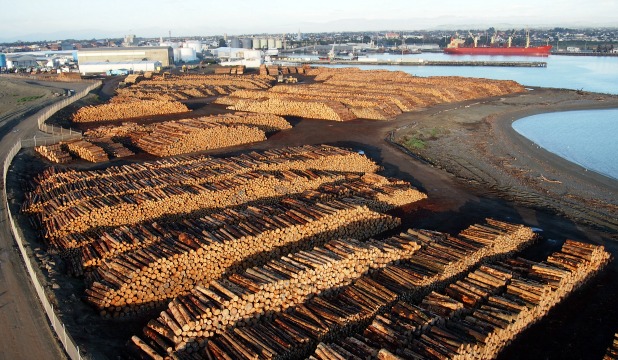
Log exports from New Zealand to China have recovered strongly following improved demand over the past year. China is New Zealand's largest market for logs and sawnwood.

The recovery in exports from New Zealand follows a slump caused by excessive inventory in 2015.

Improved demand for radiata logs in China was behind the 2016 success of Port of Tauranga in New Zealand. Log exports via the Port increased over 20% in 2016 to almost 3 million tonnes according to a reports in the New Zealand Herald .

Tauranga is New Zealand's major log export port, accounting for 30% of all log exports. In 2016 New Zealand’s log exports increased in the 2016 to around NZ$2.5 billion with the Chinese market absorbing around 75% of this. South Korea and India were the other main destinations.

The auctions for the selling of US former German Pellets plants have been delayed, Drax says

Drax has been notified that the sellers of Texas Pellets and Louisiana Pellets have delayed the processes for the sale out of bankruptcy of these assets, originally scheduled for 1 and 2 March.

Continue reading "The auctions for the selling of US former German Pellets plants have been delayed, Drax says"

Arauco North America appoints Al Murray as U.S. National Sales Manager

Arauco North America promoted Al Murray to U.S. National Sales Manager, MDF. The move comes in the run-up to the opening of the massive Grayling, Michigan, plant, as the company reorganizes sales. Murray will be reporting directly to Kevin Shotbolt, Vice President, Sales and Marketing.

Murray (in the left photo) brings a wealth of experience to this position, most recently as Mill Sales Manager for the composite plants in Moncure, NC and Bennettsville, SC. In addition to his other responsibilities, he was selected to be part of a dynamic SAP implementation team responsible for transitioning the company to its new and current operating platform; a role which utilized his other skills including, scheduling, logistics and planning.

As sales manager for North America's largest MDF producer, Murray will have responsibilities for Arauco's four U.S.-based MDF mills located in Moncure, North Carolina; Bennettsville, South Carolina; Malvern, Arkansas; and Eugene, Oregon.

Arauco is headquartered in Chile, and its North American business produces composite panels at nine mills across the U.S. and Canada, with 1,400 employees across all locations.

The North American market accounts for a little over 25% of Arauco’s total sales and this initiative is an addition to the investments made by Arauco in North America in recent years –Moncure and Flakeboard- with nine production facilities distributed in the United States and Canada. In addition, the company announced that one of its key objectives is to improve logistics throughout its production chain and support the growth of its customers located in the mid-western region.

Arauco has expaned in Argentina and Brazil in recent years and the company has achieved sustained growth in terms of wood panel production. Arauco also purchased production facilities in the United States and Canada.

The Michigan plant will have North America’s largest single continuous particleboard press (supplied by Dieffenbacher) and one of the most productive in the world. With a 750,000 ft2 facility, the particleboard plant will have an annual capacity of 452 million sq. ft. (800, 000 m3), together with full lamination capabilities.

US housing starts rise more than expected in February

US housing starts went up by 3%  to an annual rate of 1.288 million in February after slumping by 1.9 percent to a revised 1.251 million in January, according to the US Commerce Department.

Economists had expected housing starts to climb to a rate of 1.260 million from the 1.246 million originally reported for the previous month.

Meanwhile, the report said building permits tumbled by 6.2 percent to an annual rate of 1.213 million in February after surging up by 5.3 percent to a revised 1.293 million in January.

Building permits, an indicator of future housing demand, had been expected to drop to a rate of 1.260 million from the 1.285 million originally reported for the previous month.

Indonesia’s FLEGT license contributes to a 10% increase in wood exports in 2016

Certified timber exports from Indonesia have gone up nearly 10 percent from 2015 to 2016, according to the Indonesian Forest Concessions Holders.

The volume of certified wood products shipped reached 17.46 million tonnes in 2016.

Robust trade activity is attributed to Indonesia’s FLEGT-VPA license secured last year. The country is the first in the world to be able to ship domestic timber without subjecting to stringent checks required by the European Union Timber Regulation (EUTR).

In an interview with the Jarkata Globe, APHI executive director Purwadi said he is optimistic that export volume will grow in the next few years.

He said, "In 2006, our timber exports were valued at $8.46 trillion, in 2015 the number was $10.57 million, a growth of three percent."

Indonesia shipped its first FLEGT-VPA licensed timber to London and Antwerp in December last year.

The national sustainable forest management certification was launched in 2010. It saw an 89 percent rise in number of forestry participants, and 65 percent increase in number of industrial wood processing participants by 2012.

Earning the FLEGT-VPA and the SVLK licenses has helped Indonesia clamp down on illegal logging, corruption and poor forest governance, according to the Ministry of Environment and Forestry.

The ministry’s director general for sustainable forest management, Ida Bagus Putera, said Indonesia should make full use of the certification and licenses to give itself a head start in the EU market.

Elsewhere, Cambodia, Vietnam and Laos are also negotiating FLEGT licenses with the EU.

The EU ranks fourth, accounting for 11 percent of Indonesia's timber exports. China is the number one market, followed by Japan and USA.

Exports of wood pellets from Latvia on the rise in 2016

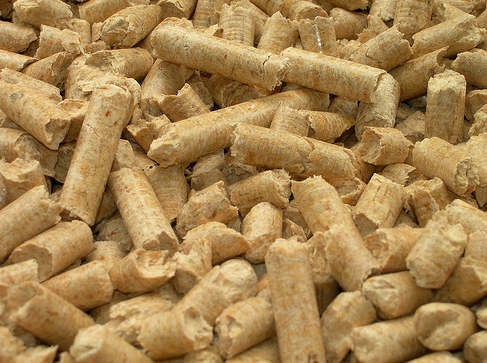
Latvia's wood pellets exports have risen by 3% in volume terms during 2016, as compared to full year 2015. Thus, the exports amounted to 1,5 million tons, from 1,4 million tons a year before.

The EU imported all of the Latvian wood pellets, with Estonia being the top importer. Thus, the EU countries received 1,516,365 million tons of wood pellets from Latvia, increasing the volume by 3%, as compared to 2015. Estonia got 18% more wood pellets, reaching 564,537 tons, up from 476,681 tons last year.

Latvia's wood pellets exports to Denmark decreased by -2%, to 474,394 tons, while the exports to the United Kingdom rose by 1%, to 380,761 tons.

Latvia's estimates for 2016 wood pellets production was 1.5 million metric tons, while the 2017 production is forecast just slightly more at 1.55 million metric tons of wood pellets.The pellet production in Latvia will continue moderate expansion in 2016-2017 as two, new large-scale pellet mills will start operating during the next year.

Latvian exports of goods grew at a growth rate exceeding 20% a year from 2010 to 2012. During this time, wood and wood products dominated export growth.

Wood pellets exported from Latvia to... (in tons )

Destination 2015 2016 Change in %
EUROPEAN Union

Total

1,477,409 1,516,365 3 %
Estonia
476,681 564,537 18 %
Denmark
484,739 474,394 -2 %
United Kingdom
377,954 380,761 1 %
Italy
29,245 45,932 57 %
Ireland
23,354 26,501 13 %
Others
85,437 24,241 -72 %
OTHER European Countries
561 378 -33 %

Germany wood pellets prices hardly change, despite high demand

As the cold weather continues, it leads to a persistently high demand for wood pellets. Thus, the price of EN plus wood pellets rose by 0.7% during March 2017, as compared to February, reaching EUR 255.18/tonne. Continue reading "Germany wood pellets prices hardly change, despite high demand"

Southern US wood products industry affected by pine beetle infestation

The southern pine beetle is an extremely threat for the wood products industry in the southeastern US. This might also represent one of the main causes for economic loss in forestry. Continue reading "Southern US wood products industry affected by pine beetle infestation"

Reasons for declining hardwood consumption in Europe

The downward hardwood consumption trend is partly due to falling availability on the supply side – with hardwood harvesting levels constrained within the EU and a large share of the better quality European logs now being exported to China and other Asian countries, a problem compounded by the very heavy focus on European oak which is also in strong demand in the barrel staves market.
Continue reading "Reasons for declining hardwood consumption in Europe"

Rising softwood lumber prices affect US home buyers

The composite price of framing lumber used in house construction increased by 15% in the first three weeks of February.
Further price increases are expected as the US is investigating whether Canada is unfairly subsidising its industry. Canada’s share in the US softwood market has been around 30% in past few years.
US home builders are absorbing the additional cost for now according to the National Home Builders Association but in the longer term the cost of new housing is likely to rise. The Association is urging US domestic sawmills to produce more sawnwood and is encouraging imports from other sources such as Chile in order to increase competition.
Canada and US have started trade negotiations, but little progress is expected until the US investigation is complete. The US Department of Commerce announced in late February that it will postpone the preliminary determination of countervailing duties to late April. Based on recent price increases by Canadian mills, producers expect duties of up to 30%.
Failure to reach a new agreement is the primary catalyst of market-wide price increases. The outlook of a new pact between the U.S. and Canada and thus, lumber prices, is highly uncertain at this point.  However, price trends in the 2001-2006 period (the last time negotiations were held) may offer clues as to what lies ahead.

Appetite for logs continues in China but not tropical logs

The firm appetite of Chinese companies for imported logs continued into 2016.

Total log imports topped 19 million cubic metres (17% up year on year) but what was startling was the decline in tropical log imports.

In 2015 tropical log imports accounted for around 40% of all log imports but this tumbled in 2016 to just 18%. 2016 imports of tropical logs amounted to just 9.3 million cubic metres from the 19 million imported in 2015.

In contrast to the trend in tropical log imports, China’s 2016 tropical sawnwood imports continued an upward trend that had been observed over the past few years. Of the 32 million cubic metres of sawnwood imported in 2016, some 20% was from tropical suppliers and the proportion of tropical to total sawnwood imports (18%) was maintained into 2016.


Myanmar: 10% tax on sawnwood exports starting April 1

The Parliament in Myanmar has now confirmed the 10% Special Commodity Tax on all sawn timber export and local sales.

This tax and the zero tax on finished products will come into force 1 April this year. It is understood that the private sector and Forestry Department are now discussing what products are included in the term sawn timber.

A domestic newspaper, Yangon Times Journal, quoted a former Secretary of a timber association as contending that teak is itself a high value product so all teak products could be deemed high value. He pointed out that the price per cubic metre for high quality sawnwood can be much higher than the per cubic metre price of wood in, for example, a teak garden chair.

As a result of the introduction of the Special Commodity Tax on sawnwood manufacturers are rushing to ship stocks of teak during March and this is putting pressure on the availability of containers.

One major exporter has said that his company has accepted the new tax as a contribution to government revenues but hopes that the authorities will be flexible in how the ruling is applied.

It is reported that both state and private sector mills are facing difficulty in securing workers and they are also having problems with log supplies. These two issues and the imposition of the new tax have prompted some foreign owned mills to consider ceasing production.

Booming 2017 start for Russian sawn timber exports

Russian sawn timber exports had a positive debut of the year.  During the first month of the current year Russia exported 1.106 tonnes of sawn timber. That is 29.53% more than during the respective period of the last year.

The total value of the exported Russian sawn timber increased as well. In January 2017 it came up to $226.3 million having gone up by 38.15%.

However, the Russian log exports went down in volume terms. In January 2017, Russian log exports came up to 1.24 million m3 while during the respective month of the last year it equalled 1.29 million m3. Therefore, the figure decreased by 3.81% y-o-y.

The total value of the Russian logs exported in January 2017 came up to $97.2 million, that is 11.08% more than in January 2016.

Newsletter

Subscribe to our digital newsletter for your daily digest of essential news, views and analysis from the international wood industry delivered directly to your inbox.


0