

This year, the representatives of the German hardwood sawmills and forestry companies met before the summer break in Kassel, Germany. Many German sawmills complained of a poor supply situation - coming from last season.
In view of the turbulent winter in 2017/18, both sides emphasized that initially the extremely wet winter and then the storm "Friederike" massively disrupted the planned process. Despite all efforts on the forest side, it was not possible to fulfill all contractual obligations or to provide the customers evenly with beech roundwood
Beech: stable to rising prices, refurbishing quality and needs for improvement
The German sawmills request a beech wood supply in amounts similar to the previous years, they ask for compensation on shortages and an early and even delivery. Due to heavily storm affected forest areas, especially in central Germany, the working capacity of the district lines to the transport companies are still predominantly busy with the damage events and their consequences.
The goals are very ambitious from the perspective of the forestry owners. Both sides assume a stable to slightly rising price development, which would have to trigger an additional motivation in forest ownership due to the announced spring delivery bonuses. As before, the quality of workmanship and the oversize measure are sometimes a nuisance to the customers.
Oak is booming, ash follows
For years, the oak is in a boom phase, which will continue in the coming season. The processors point out that an overheating of the markets is currently expected, which could cause an unplanned end of this gratifying development from any side. In order to prevent this danger, the oak sawmills must continue to secure their basic supply through the free-selling, while on the submissions the top-quality goods in quality and quantity of previous years must be kept. Both sides expect price increases.
In addition to the already high demand for oak, the sawmills are worried about the last increase in oak roundwood exports, which could further worsen the tight supply situation.
In the wake of the oak, the ash will develop on the demand side in quite a similar way. The price trend is assessed differently over the qualities and strength classes. The other types of deciduous wood, except for top quality, have no relevant sales markets.
Article archive
U.S. sawmills produce significantly more softwood lumber in the first four months of the year
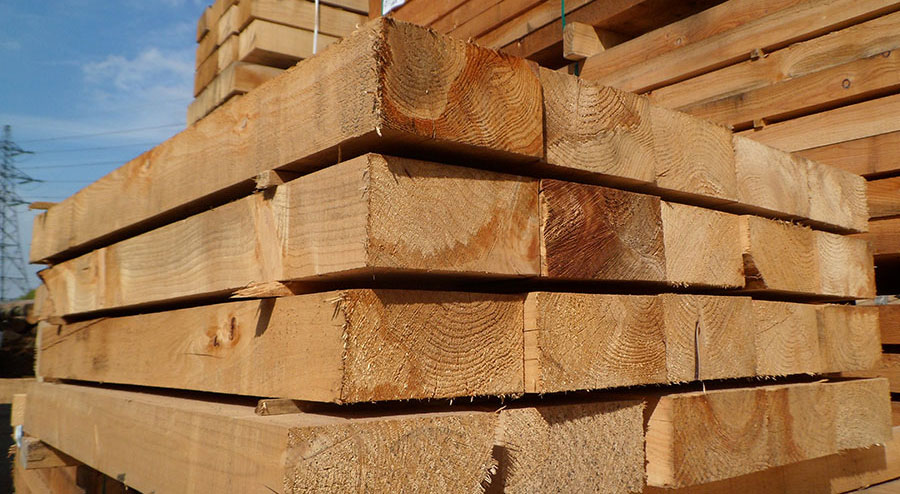
Softwood lumber production by U.S. sawmills in the first four months of 2018 was 11.579 billion board ft. (bbf), a year-over-year increase of 5.5% from 10.980 bbf in the same period last year.
Western U.S. sawmills contributed 4.899 bbf to the four-month total, up 10.0% from 4.455 bbf a year earlier, while production at southern U.S. sawmills gained 2.1% to reach 6.134 bbf, up from 6.005 bbf last year, reported the Western Wood Products Assn. in its latest Lumber Track report.
In April, U.S. sawmills produced 3.014 bbf, up 11.9% from 2.695 bbf in April 2017, and 2.4% higher than output in March 2018 of 2.943 bbf.
Of April’s total, Western sawmills accounted for 1.236 bbf – up 14.5% from last year’s 1.079 bbf, but down 1.6% from 1.256 bbf in March 2018.
Sawmills in the South contributed 1.636 bbf, an increase of 9.9% from 1.488 bbf in April 2017, and up 5.7% from the previous month’s production of 1.548 bbf, WWPA reported.
Apparent U.S. softwood lumber consumption dropped 2.1% in the four-month period to 15.682 bbf, down from 16.017 bbf in the previous year. In April, consumption was 4.173 bbf – up 2.4% from 4.074 bbf last year, and 3.5% higher than consumption in March 2018 of 4.032 bbf.
Canadian softwood lumber production/consumption
Canadian sawmills produced 9.534 bbf of softwood lumber in the first four months, a 1.2% drop from 9.652 bbf a year earlier. The decline was driven by a 4.3% dip in British Columbia’s output to 4.260 bbf in the four-month period from 4.452 bbf. Production by sawmills East of the Rockies increased, by 1.4% to 5.274 bbf from 5.200 bbf a year earlier.
Production in April alone was 2.459 bbf, a year-over-year advance of 2.4% from 2.403 bbf, and up 0.5% from 2.448 bbf in March this year.
Sawmills in British Columbia contributed 1.123 bbf to Canada’s production in April, a year-over-year increase of 0.1% from 1.121 bbf, and up 4.6% from the previous month’s volume of 1.073 bbf. Sawmills east of the Rockies produced 1.337 bbf, a 4.3% year-over-year gain from 1.282 bbf, but down 2.8% from 1.375 bbf in the previous month.
Apparent Canadian softwood lumber consumption for the four-month period jumped by 19.1% to 3.559 bbf from 2.988 bbf last year. Consumption in April was 935 million board ft. (mmbf), up 25.6% from 744 mmbf last year, and up 16.2% from 805 mmbf in March 2018.
U.S. and Canada utilization/inventories
U.S. production as a percentage of practical capacity averaged 85% in the first four months, up from 84% in the same period last year. Canada’s percentage dropped to 90% in the year-to-date compared with 92% in the first four months of 2017.
U.S. inventories were up 2.1% in April to 2.978 compared with last year’s 2.915 bbf, while Canadian inventories surged 18.0% to 3.698 bbf from 3.132 bbf.
Trump administration to extend list of products subject to tariffs

Many wood products and furniture items from China are on the latest list by the Trump administration that may be affected by a new 10% tariff.
The entire list is worth US$200 billion in imports from China. The proposed action on imports from China is now open to public comments and a public hearing is scheduled for the end of August. Continue reading "Trump administration to extend list of products subject to tariffs"
Negative outlook for the Malaysian wood products industry

As the second half of 2018 approaches, analysts have projected that the wood-based manufacturing sector will remain pessimistic as the weaker ringgit currency is insufficient to stop the negative factors such as potential minimum wage increase and high rubber wood prices.
The research arm of Hong Leong Investment Bank Bhd (HLIB Research) revealed that the new government has pledged to increase Malaysia’s minimum wage from US$247.50(RM1,000) per month to US$371.20 (RM1,500) per month.
“While it remains to be seen if the minimum wage hike would materialise, a hike is negative to the sector’s earnings, given its heavy reliance on labour.
HLIB Research said that with all things held constant, every RM100 per month increase in minimum wage is set to lower the financial year 2019 (FY19) net profit forecasts by one to 14 per cent.
With regards to the prices of rubber log wood, there have been holding up due to shortage of supply, and this does not bode well for the sector.
The research arm further noted that among the wood-based players, Evergreen Fibreboard Bhd will be hit the greatest by the persistently high rubber log wood prices.
It said that prices for Evergreen’s operations in Thailand, which makes up 40 per cent of the group’s total medium density fibreboard (MDF) capacity, has almost doubled in between the second quarter (2Q) and 3Q from supply shortage due to rainy season.
Meanwhile, oversupply of particleboards in Thailand, due to 10 additional new production lines being added since mid-2017, has resulted in prices falling since 3Q17.
The research arm believed prices of particleboard will likely continue to be lowered in the coming quarter.
The research arm also pointed out that while HeveaBoard Bhd managed to maintain prices of its particleboard as the quality of their products is superior, it may soon have to lower its prices as the price gap between premium and mass market products are narrowing significantly.
HLIB Research showed favourable predictions for the furniture players over the engineered wood players, as they are not involved in an intense price war.
“Moving forward into 2H18, the furniture makers will be facing another hurdle with the potential surge in labour cost…However, we opine that the surge in labour cost can be partially cushioned by a stronger US dollar against the ringgit, lower material prices (particleboard) and previous upward average selling price adjustment.”
No growth in European wood furniture production in 2017
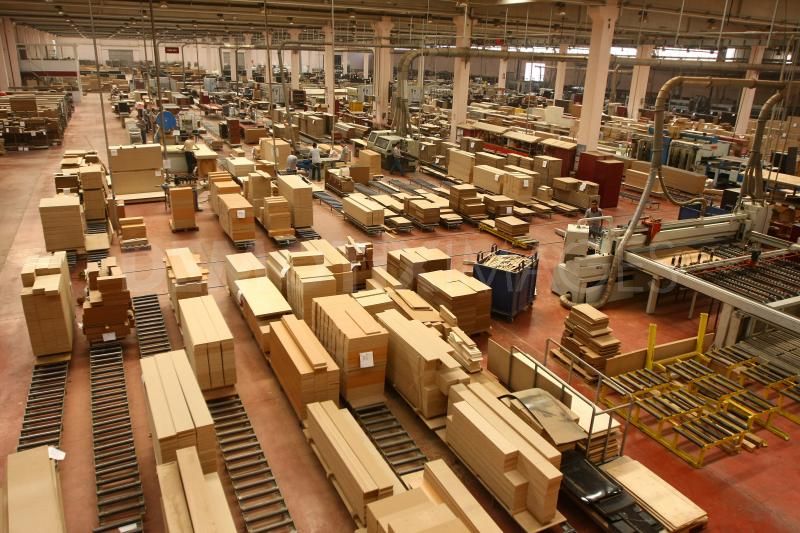
The value of EU wood furniture production was €40.3 billion in 2017, no change from the previous year and still 20% down on the level prevailing before the financial crises in 2008.
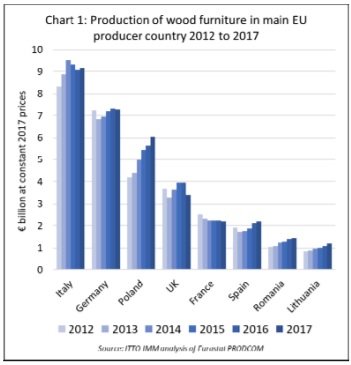 A slowdown in production in the UK offset gains in Poland, Spain, and Lithuania. Production in Italy and Germany, the two largest manufacturing countries, and in France and Romania was broadly flat in 2017 (Chart 1).
EU consumption of wood furniture was €37.6 billion in 2017, a gain of 2% compared to 2016. During 2017, consumption was stable (at €9.4 billion) in Germany, the largest market, and rising in Italy (+3% to €5.2 billion), France (+1.5% to €4.3 billion), Spain (+7% to €2.2 billion), Netherlands (+30% to €1.5 billion), Poland (+15% to €1.4 billion) and Sweden (+2.5% to €1.1 billion).
However, wood furniture consumption fell 6% to €6.5 billion in the UK and 5% to €870 million in 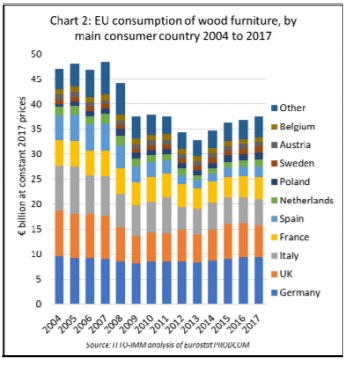 Belgium (Chart 2).
After flat lining in 2016, the value of EU imports of wood furniture from non-EU countries increased 7% to €6.16 billion in 2017. Imports from China, by far the largest external supplier fell 4% in 2016 but recovered 0.7% to 3.08 billion in 2017.
New accusations for Holzindustrie Schweighofer of purchasing illegal wood in Romania

A new investigation takes a look behind the scenes to detail how the Austrian timber giant Holzindustrie Schweighofer, one of the largest wood processors in Romania, continues to fuel the destruction of Europe’s last old growth forests, in spite of five years of pledges not to source timber from national parks or protected areas. Continue reading "New accusations for Holzindustrie Schweighofer of purchasing illegal wood in Romania"
LIGNA 2019: More than 80 % of the exhibition space booked

While opening day is still about a year away, exhibition space at the world's leading trade fair for machinery, plant and tools for the woodworking and timber processing industry is already more than 80 percent booked.
To put that in perspective: LIGNA 2017 featured 1,520 exhibitors and occupied 130,000 square meters (1,400,000 sq. ft.) of display space.
 The next LIGNA is being staged from 27 to 31 May 2019, and its organizers are Deutsche Messe and the German Woodworking Machinery Manufacturers' Association (VDMA Holzbearbeitungsmaschinen).
“I'm pleased to say we're getting lots of first-time exhibitors, not to mention plenty of repeat exhibitors, many of whom are staging bigger displays this time around,” commented Christian Pfeiffer, Deutsche Messe's Global Director LIGNA& Woodworking Events. “What's more, the outstanding response exhibitors are showing for the event serves as confirmation that we made the right move in 2017, at which time when we completely revamped the site, the layout of display categories and thus the locations of virtually every single exhibitor,” he added. “Next year, the majority of the exhibitors will be retaining the locations they had in 2017 following the big change.
The Surface Technology display launched in 2017 will be home to a number of first-time exhibitors in 2019. Companies from around the world are so eager to exhibit at LIGNA because they know it is the very best option when it comes to showcasing new products, presenting full-fledged plant and machinery in action, as well as for networking and comparing notes with industry peers.”
Segezha’s new plywood production line in Russia inaugurated

Vyatsky Plywood Mill (subsidiary of Segezha Group) launched a new premium birch plywood production. According to the announcement, the investments into new production line amounted to RUB 6.7 billion (around USD 110 million).
After the upgrade, the aggregate capacity of Vyatsky Plywood Mill has grown to 192,000 m3 of birch plywood per year including more than 70,000 m3 of a new high-margin product, large-size long-grained plywood.
Mikhail Shamolin, President, Chairman of the Board of Directors of Segezha Group, commented:
“By inaugurating the second stage of the mill we fairly inaugurate a new plant. The equipment is highly automated and the product is very competitive. The intended capacity of the mill was 170 thousand cubic metres of plywood, but we decided to change the approach and raise the efficiency of the equipment, so we are now waiting to achieve a capacity of a minimum of 192 thousand cubic metres. I’m sure we can do it, first of all due to the people who made this day possible. Segezha Group plans to produce 300-320 thousand cubic metres of birch plywood a year by 2021. It will become possible when we open a new production facility in Kostroma region in the framework of an agreement we have concluded with the regional authorities“
Segezha’s Vyatsky Plywood Mill expansion was included to the priority list of the Ministry of Industry and Trade in Russia.
Earlier Segezha announced plans to further develop its industrial site in Karelia.
About Segezha Group:
The company is one of the largest Russian forest industry holdings with the vertically integrated structure and a full cycle of logging and added-value wood processing. The holding comprises Russian and European enterprises in the forest, wood processing and pulp and paper industries, as well as paper packaging.
India: Price overview for imported teak, sawnwood and plywood

Demand for Indian imported logs continues unchanged but imports are still affected by the withdrawal of credit facilities. Another factor impacting imports has been the weakness of the rupee.
The rupee has fallen against the US dollar by around 5% over the past month making imports more expensive. Analysts write that “under these circumstances any rise in C&F prices is ruled out”. The trade feels that the normal banking facilities could be restored by the end of July. Continue reading "India: Price overview for imported teak, sawnwood and plywood"
Canadian lumber companies lose millions due to US tariffs
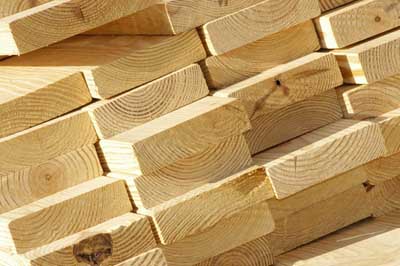
U.S. duties introduced on softwood lumber imports from Canada determined a lot of financial difficulties to Canadian lumber companies. The Canadian J.D. Irving Ltd. (JDI) says that since the start of the dispute the company lost US$ 30 million.
J.D. Irving expects that number to jump to $45 million by the end of the year, according to cbc.ca.
Jérôme Pelletier, vice-president of the sawmills division for JDI, said the tariffs are a significant additional cost to the company and have a negative impact.
While JDI was able to recieve a lower combined countervailing and anti-dumping duty rate of 9.92 per cent, all other sawmills in the province must pay a rate of 20.83 per cent.
The impact of these tariffs has been tempered by a growing need for softwood lumber, which has driven up prices of the resource by an average of 25 per cent, cbc.ca reports.
JDI owns 11 sawmills in New Brunswick, Nova Scotia and Maine. Pelletier said the tariffs have meant less modernization work at the mills.
Södra reports best first half in its history
Södra reported sustained strong operating profit of SEK 1,318 million (Q2/2017: SEK 461 million) for the second quarter, the best quarterly result ever. The market trend was positive for all of Södra’s product categories and completed investments, efficiency improvements and restructuring are reflected in the result, as the company said in a press release.
“The strong result is mainly due to the favourable global economy, with high demand and a positive price trend for our products in both market pulp and the sawn timber area. We are also seeing the positive effects of our expansion investments, with higher production volumes at our pulp mills,” said Lars Idermark, President and CEO.
“The efficiency improvements and restructuring we have achieved in our sawn timber production also generated profit effects. In the second quarter, we decided to discontinue our operations in the Interior Wood segment. We are also making aggressive investments in other areas, such as cross-laminated timber (CLT),” said Lars Idermark.
“We are seeing growing demand for liquid biofuels made from woody biomass, and our investments to increase liquid biofuel production will continue. These are key investments for our future and are helping to create new business,” said Lars Idermark
Consolidated net sales for the second quarter rose 26 percent year-on-year to SEK 6,626 million (Q2/2017: 5,244 million), and the operating margin strengthened to 20 percent (Q2/2017: 9 million).
For the first half-year, operating profit totalled SEK 2,257 million (H1/2017: 951 million) – the strongest half-year figure in Södra’s history.
In the Södra Skog business area, operating profit totalled SEK 49 million (Q2/2017: 37 million) for the period. The result was impacted by continued weather challenges. Following a cold and snowy winter that made transportation difficult, the dry conditions of recent months have increased the fire danger and significantly impacted forest operations.
In the Södra Wood business area, operating profit totalled SEK 210 million (Q2/2017: 76 million) for the period, mainly reflecting the positive price level for sawn timber but also the ongoing restructuring process. The result refers solely to the sawmill operations, since the Interior Wood segment has largely been discontinued and is now reported under Other segments.
In the Södra Cell business area, operating profit totalled SEK 1,196 million (Q2/2017: 416 million) for the second quarter. The profit trend was mainly attributable to the high price level, a favourable USD exchange rate and the higher volumes enabled by expansion of the pulp mill at Värö.
Indian building material producer acquires German flooring giant Parador

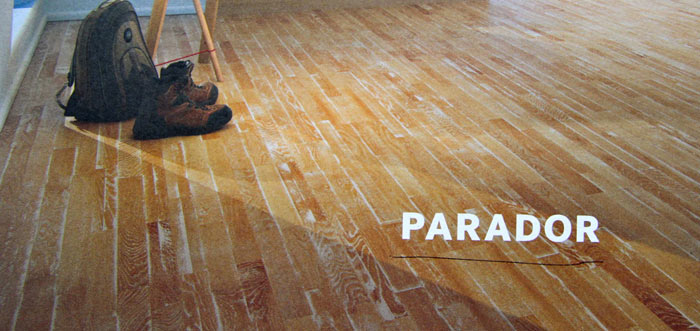
The leading Indian building material producer HIL Limited, a subsidiary of the CK Birla Group, will acquire German flooring producer Parador from the previous main owner, NORDHolding Unternehmensbeteiligungsgesellschaft GmbH, for a cash consideration of €82.8million.
The acquisition, which will be done through its wholly owned subsidiary HIL International GmbH, Germany, is subject to antitrust filings in Germany and other relevant regulatory approvals. Parador, which is a vertically integrated supplier of premium quality flooring solutions based Coesfeld, Germany and was founded in 1977, has two manufacturing facilities, one at Coesfeld in Germany and the other at Gussing in Austria.
The €142.2 million turnover Parador makes resilient flooring, laminate and engineered wood floors, wall and ceiling panels, skirtings and related accessories and has long-standing relationships with all major customers in Europe.
According to HIL, the acquisition will enable its transition into a global player in the building materials segment and facilitate its entry into the flooring solutions segment that is highly complementary to its current product portfolio while providing it a renowned brand with strong R&D and design capabilities.
The combined entity will continue to enjoy a leadership position in the building material segment in India with strong capabilities in Europe, HIL said, adding that the strong leadership team at the helm at Parador will continue to be responsible for day-to-day operations and drive the business forward.
Commenting on the acquisition, CK Birla, chairman, CK Birla Group, said:
“The acquisition of Parador fits into our strategic roadmap and is an important step towards becoming a global player in the building materials industry. It also enables us to enter into adjacent categories for future growth. Parador’s strong developmental capabilities will enable us to build flooring solution products suited to India and South East Asian markets.”
Brazil: 1.8 million tons/year wood pellet plant receives permit

Fepam, the environmental protection agency in the Brazilian state of Rio Grande do Sul, issued on Wednesday the environmental licence for a 50-MW biomass project.
The facility will be built on a 112,000-sq-m area in the municipality of Pinheiro Machado at a total cost of BRL 1 billion (USD 255.5m/EUR 219.2m). Continue reading "Brazil: 1.8 million tons/year wood pellet plant receives permit"
New investigation accuses EU sawmills of importing illegally logged wood from Ukraine

An investigation released by Earthsight revealed results of the organization’s two years work called Complicit in Corruption. According to the announcement, Complicit in Corruption reveals how illegality permeates the timber supply chain in Ukraine from harvest to export. Field investigations indicate that 40% of the timber being produced by the country’s state-owned enterprises is illegally cut through the abuse of a loophole allowing trees to be harvested to prevent the spread of disease.
Court records unearthed by Continue reading "New investigation accuses EU sawmills of importing illegally logged wood from Ukraine"
West and Central African producers ready to move on logs & sawnwood prices as demand firms
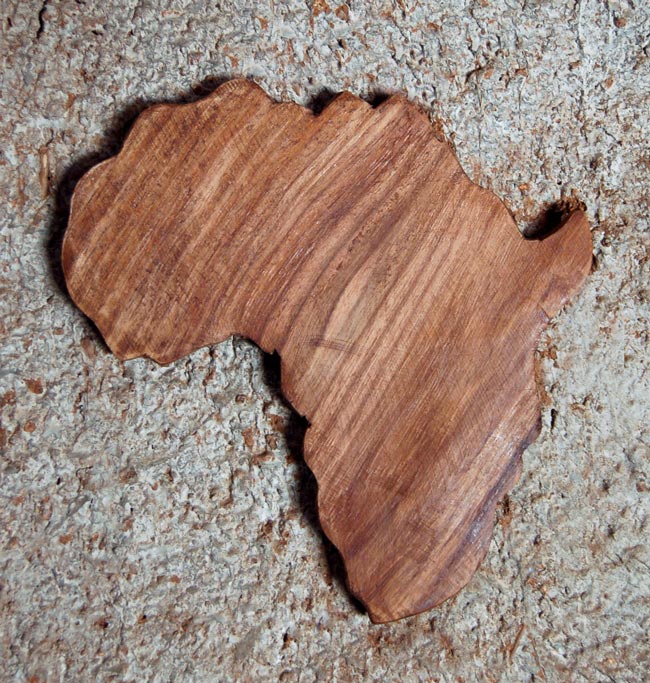
Producers in West and Central Africa report that demand is very firm and while prices are stable, sentiment is for prices to trend higher. As soon as demand improves for a particular species producers are ready to take advantage of this through a price increase.
During June log prices remained unchanged except for the sudden rise for bibolo/dibetou which is up by euro 30 per cubic metre and for ovangkol for which prices have jumped euro 35 per cubic metre and are still rising.
Sawnwood prices are unchanged from a month ago but expected to trend firmer. Analysts write “it seems likely okoume prices will move higher due to very strong demand which appears set to continue”.
Chinese shipping company may begin a service out of Douala
The major problems with shipping out of Douala are not yet resolved. The performance of operations at the new port of Kribi has improved, say exporters, but Cameroon is now refusing to accept cargo from Congo Brazzaville and Gabon on the grounds that there is no formal Customs Agreement between the countries.
At Douala Port the congestion and other problems are still causing severe difficulties especially for timber exporters but also for incoming cargo.
It has been rumoured that a Chinese shipping company may begin a fortnightly service out of Douala.In response to this some shippers are said to be unloading containers as they expect the new non-container service could be faster.
If this becomes a reality it will help towards the shortage of empty containers at Douala.
In other news from Cameroon there are rumours the government will put in place a log quota system similar to that in Congo Brazzaville, no date is mentioned, but possibly by the beginning of next year. Cameroon already has had a form of quota for prime log species but this appears not to be fully implemented.
CAR unrest – mills at a standstill
It has been reported that timber businesses in the CAR are at a standstill due to civil unrest. Also, it is rumoured that Rougier is trying to find a buyer for its concession, sawmill and other assets in the country.
Civil service shake-up in Gabon
The government in Gabon intends to slash public service jobs after cabinet approval was given for an economic revitalisation drive. Ike Ngouoni, a government spokesperson said this will check what he termed ‘the bloated Civil Service whose wage bill is 59% of State revenue’
The domestic media are reporting that public servants earning more than CFA650,000 month will have their pay cut by 5%, those earning more than CFA2 million will face a 15% cut.
Producers in Gabon believe the new Forests Minister will have a more pragmatic approach to the timber business and is prepared to listen to the views of the trade. Efforts are still underway to find an equitable formula for sale of the already harvested kevazingo and the trade hopes for a limited harvest volume of this much sought after timber.
Producers in Gabon say that, because of the high costs of compliance with the EUTR, they are now much less interested in sales to Europe. There is now very firm demand in other markets.
Log Export Prices
| West Africa logs, FOB | € per m³ | ||
| Asian market |
LM
|
B
|
BC/C
|
| Acajou/ Khaya/N’Gollon |
265
|
265
|
170 |
| Ayous/Obéché/Wawa |
275
|
265
|
245
|
| Azobe & Ekki |
275
|
275
|
-
|
| Belli |
390
|
390
|
–
|
| Bibolo/Dibétou |
195
|
175
|
|
| Bilinga |
260
|
260
|
- |
| Iroko | 370 |
350
|
270
|
| Okoume (60% CI, 40% CE, 20% CS) (China only) | 250 | 250 | 190 |
| Moabi | 345 | 340 | 275 |
| Movingui | 230 |
230
|
170
|
| Niove |
175
|
160
|
–
|
| Okan |
245
|
240 |
–
|
| Padouk |
340
|
295 |
245
|
| Sapele | 310 | 300 | 245 |
| Sipo/Utile |
335
|
315 |
245
|
| Tali | 405 | 400 |
–
|
Sawnwood Export Prices
| West Africa sawnwood, FOB |
€ per m³
|
|
| Ayous | FAS GMS | 425 |
| Bilinga | FAS GMS | 530 |
| Okoumé | FAS GMS |
430
|
| Merchantable | 320 | |
| Std/Btr GMS | 350 | |
| Sipo | FAS GMS |
540
|
| FAS fixed sizes | 560 | |
| FAS scantlings | 560 | |
| Padouk | FAS GMS | 900 |
| FAS scantlings | 1020 | |
| Strips | 640 | |
| Sapele | FAS Spanish sizes | 505 |
| FAS scantlings | 510 | |
| Iroko | FAS GMS | 630 |
| Scantlings | 710 | |
| Strips |
410
|
|
| Khaya | FAS GMS |
480
|
| FAS fixed |
480
|
|
| Maobi | FAS GMS |
625
|
| Scantlings |
630
|
|
| Movingui | FAS GMS |
440
|
Source: ITTO
West and Central African producers ready to move on logs & sawnwood prices as demand firms
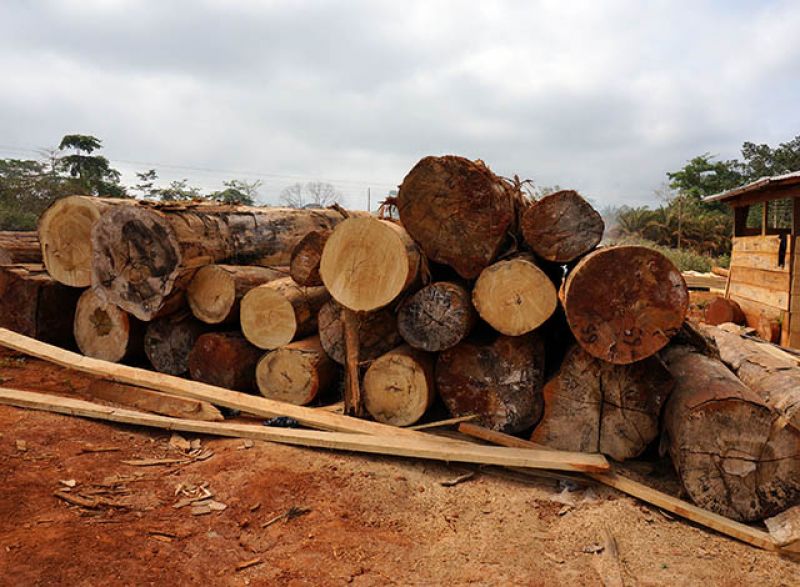
Producers in West and Central Africa report that demand is very firm and while prices are stable, sentiment is for prices to trend higher. As soon as demand improves for a particular species producers are ready to take advantage of this through a price increase.
During June log prices remained unchanged except for the sudden rise for bibolo/dibetou which is up by euro 30 per cubic metre and for ovangkol for which prices have jumped euro 35 per cubic metre and are still rising.
Sawnwood prices are unchanged from a month ago but expected to trend firmer. Analysts write “it seems likely okoume prices will move higher due to very strong demand which appears set to continue”.
Chinese shipping company may begin a service out of Douala
The major problems with shipping out of Douala are not yet resolved. The performance of operations at the new port of Kribi has improved, say exporters, but Cameroon is now refusing to accept cargo from Congo Brazzaville and Gabon on the grounds that there is no formal Customs Agreement between the countries.
At Douala Port the congestion and other problems are still causing severe difficulties especially for timber exporters but also for incoming cargo.
It has been rumoured that a Chinese shipping company may begin a fortnightly service out of Douala.In response to this some shippers are said to be unloading containers as they expect the new non-container service could be faster.
If this becomes a reality it will help towards the shortage of empty containers at Douala.
In other news from Cameroon there are rumours the government will put in place a log quota system similar to that in Congo Brazzaville, no date is mentioned, but possibly by the beginning of next year. Cameroon already has had a form of quota for prime log species but this appears not to be fully implemented.
CAR unrest – mills at a standstill
It has been reported that timber businesses in the CAR are at a standstill due to civil unrest. Also, it is rumoured that Rougier is trying to find a buyer for its concession, sawmill and other assets in the country.
Civil service shake-up in Gabon
The government in Gabon intends to slash public service jobs after cabinet approval was given for an economic revitalisation drive. Ike Ngouoni, a government spokesperson said this will check what he termed ‘the bloated Civil Service whose wage bill is 59% of State revenue’
The domestic media are reporting that public servants earning more than CFA650,000 month will have their pay cut by 5%, those earning more than CFA2 million will face a 15% cut.
Producers in Gabon believe the new Forests Minister will have a more pragmatic approach to the timber business and is prepared to listen to the views of the trade. Efforts are still underway to find an equitable formula for sale of the already harvested kevazingo and the trade hopes for a limited harvest volume of this much sought after timber.
Producers in Gabon say that, because of the high costs of compliance with the EUTR, they are now much less interested in sales to Europe. There is now very firm demand in other markets.
Log Export Prices
| West Africa logs, FOB | € per m³ | ||
| Asian market |
LM
|
B
|
BC/C
|
| Acajou/ Khaya/N’Gollon |
265
|
265
|
170 |
| Ayous/Obéché/Wawa |
275
|
265
|
245
|
| Azobe & Ekki |
275
|
275
|
-
|
| Belli |
390
|
390
|
–
|
| Bibolo/Dibétou |
195
|
175
|
|
| Bilinga |
260
|
260
|
- |
| Iroko | 370 |
350
|
270
|
| Okoume (60% CI, 40% CE, 20% CS) (China only) | 250 | 250 | 190 |
| Moabi | 345 | 340 | 275 |
| Movingui | 230 |
230
|
170
|
| Niove |
175
|
160
|
–
|
| Okan |
245
|
240 |
–
|
| Padouk |
340
|
295 |
245
|
| Sapele | 310 | 300 | 245 |
| Sipo/Utile |
335
|
315 |
245
|
| Tali | 405 | 400 |
–
|
Sawnwood Export Prices
| West Africa sawnwood, FOB |
€ per m³
|
|
| Ayous | FAS GMS | 425 |
| Bilinga | FAS GMS | 530 |
| Okoumé | FAS GMS |
430
|
| Merchantable | 320 | |
| Std/Btr GMS | 350 | |
| Sipo | FAS GMS |
540
|
| FAS fixed sizes | 560 | |
| FAS scantlings | 560 | |
| Padouk | FAS GMS | 900 |
| FAS scantlings | 1020 | |
| Strips | 640 | |
| Sapele | FAS Spanish sizes | 505 |
| FAS scantlings | 510 | |
| Iroko | FAS GMS | 630 |
| Scantlings | 710 | |
| Strips |
410
|
|
| Khaya | FAS GMS |
480
|
| FAS fixed |
480
|
|
| Maobi | FAS GMS |
625
|
| Scantlings |
630
|
|
| Movingui | FAS GMS |
440
|
Source: ITTO
Netherlands record economic growth boosts imports of wood products
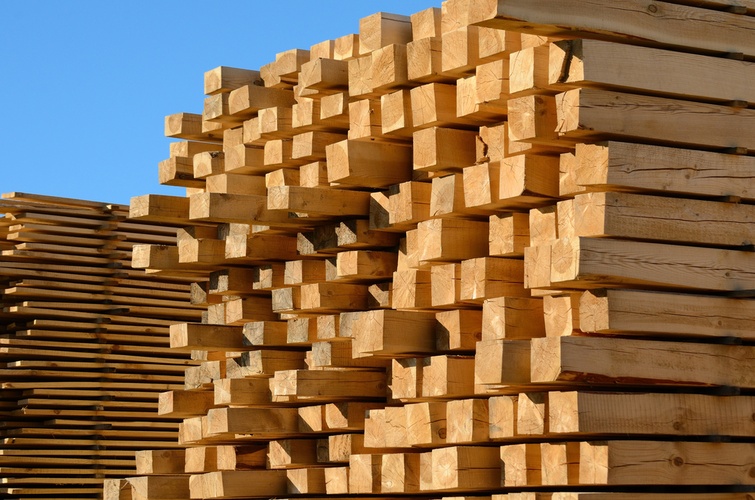
In the Netherlands, economic growth is at its highest point since 2008, consumer confidence is high, and timber trade turnover is rising. The Netherlands imports of wood products increased 5.3% to €5.03 billion in 2017.
Imports increased from inside the EU by 4.7% to €3.7 billion and from outside the EU by 7% to €1.33 billion.
These trends continued in the first quarter of 2018, with imports rising another 7.2% to €1.34 billion compared to the same period in 2017. Imports from inside the EU gained 5.6% to €975 million and from outside the EU the rise was 11.7% to €366 million.
Most of the growth in Netherlands imports from outside the EU has comprised wood furniture from China, Indonesia, Vietnam and India, and sawnwood from Russia.
While demand is expanding, the Netherlands Timber Trade Association reports that the trade is experiencing some pressures with stock prices rising and supply constraints for some products. A lack of skilled labour is also curbing construction’s growth capacity and civil works are still not back to pre-recession levels.
Trump Administration to impose 10% tariffs on imports of wood flooring from China

Wood flooring is included in a new list of 10 percent tariffs proposed for Chinese products by the Trump administration.
The proposed tariffs, announced July 10 by U.S. Trade Representative Robert Lighthizer, include solid hardwood, engineered hardwood, plywood, bamboo and cork products.
The U.S. imposed 25 percent tariffs on $34 billion worth of Chinese imports on July 6; China quickly retaliated with 25 percent tariffs of its own on $34 billion worth of U.S. products. It was this response from China that set off the latest list of tariffs, according to Lighthizer.
“Rather than address our legitimate concerns, China has begun to retaliate against U.S. products,” Lighthizer said in a statement. “There is no justification for such action.”
The United States Trade Representative will hold a hearing on the tariff proposal Aug. 20–23 as part of a public comment process that concludes Aug. 30, after which a final decision regarding the tariffs will be made.
The complete list of products, which range from seafood to gloves to shampoo, includes a total of $200 billion worth of Chinese products, according to a report by Politico.
Rex Lumber set to break ground at new sawmill in Troy, Alabama
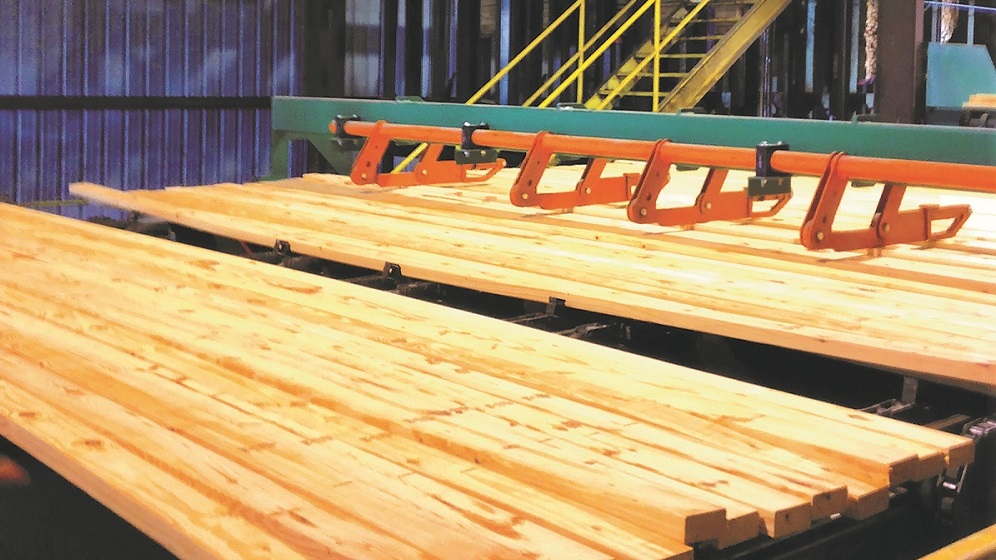
Rex Lumber, headquartered in Graceville, Florida is set to break ground on it's greenfield sawmill in Troy, Alabama on Tuesday, July 17, 2018 at 10 a.m.
Rex currently operates three sawmills, two in the Florida Panhandle and one in Mississippi, producing a total of 575 million board feet annually. This will be Rex Lumber’s third sawmill expansion in the last seventeen years.
Annual production for the new mill will be a minimum of 240 MMBF. Rex Lumber anticipates the total capital cost to be approximately $110 million, including startup and working capital. Over 110 new direct jobs are expected to be created with this new location.
Rex Lumber, founded in the 1920’s by W.D. McRae, continues to be owned and operated by the Finley McRae family of Graceville. The family looks forward to bringing a southern yellow pine sawmill to Pike County and wants to thank the Industrial Development Board of the City of Troy, Pike County, the Pike County Economic Development Corp., Governor Kay Ivey, Secretary of Commerce Greg Canfield, and the State of Alabama for their assistance.
Recent developments of the Chinese timber market
1. China’s first high-rise wood framework building
A ceremony was held recently to launch the China/Canada Green Modern Wood Framework Industrial Zone and the China/Canada Center. These events were a prelude to joint work to construct a wooden high-rise building.
Construction of China’s first multi-storey wood building will be in Youxi County, Sanming City in Fujian Province. It has been estimated that around RMB3.5 billion will be invested in a China/Canada ‘Modern Wood Framework Industrial Zone’ in Sanming City. The first high-rise wooden building will rise some 70 metres or 12 storeys.
2. Cooperation between China and Central/Eastern Europe on forestry
The first high level meeting under a forestry cooperation mechanism between China and Central and Eastern European countries, the so-called ‘16+1’, was held in Buldo, Slovenia in late May and a ‘Plan of Action for the Coordination Mechanism for Forestry Cooperation between China, Central and Eastern European Countries’ was agreed.
The Chinese government is aware that countries in Central and Eastern Europe are an emerging power in Europe and aim to link this group to China’s ‘Belt and Road’ initiative. Analysts write that there is great potential for cooperation on forestry development and economic cooperation between China and 16 Central and Eastern European countries.
The Chinese government has pledged to vigorously support the ‘16 + 1’ forestry cooperation initiative to deepen cooperation. At the same time it will encourage the development of a green economy and green industries and encourage mutual exchange and transfer of green science and technology.
3. China/Russia timber industry alliance
A China/Russia Wood Alliance was launched recently with a alliance secretariat attached to the China Forestry Property Right Exchange. In the future the two countries will cooperate in areas of forestry property rights trading and a forest products information platform and on forest product certification, financial services and areas of business interests for the Chinese and Russian timber industry.

