Article archive

EU tropical importers face rising competition for supplies

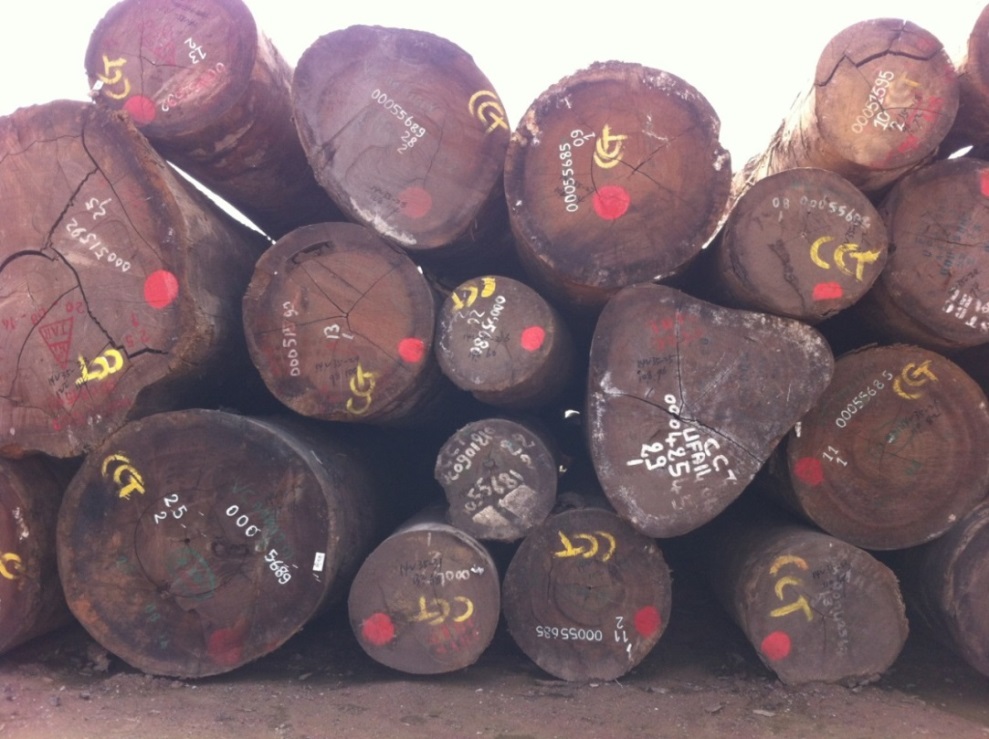
EU timber traders cited a number of factors shaping tropical import trends. These included intensifying competition for material from Chinese and other Asian buyers, which was driving up prices for tropical and temperate hardwood alike, as well as resulting in short supply in some species.

But logistical problems, the ‘deterrent effect’ of the EUTR in the tropical market on both suppliers and buyers, as one importer described it, and ever intensifying competition from rival products, including temperate hardwoods, modified timber and wood composites, also had an influence.

The restructuring of the African operations of the French-based Rougier Group, one of the EU’s key tropical producers and importers, was also felt to have impacted the market. And some companies also believe there is an underlying long term ‘slow but discernible’ decline in the EU tropical trade, although this is not a view shared by everyone.

Interestingly, however, the EU temperate sawn hardwood market has also been experiencing its own challenges, notably supply constraints, price inflation and most recently allegations of illegality and breaches of the EUTR in one of the best selling species, European oak.
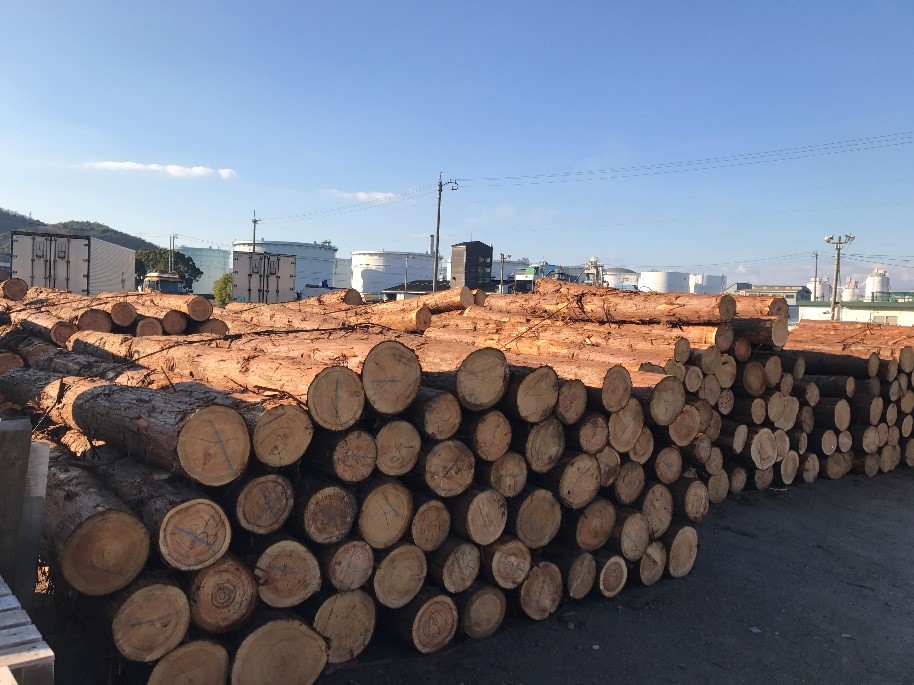
Japan’s wood exports reach highest level in 40 years on booming Chinese demand

Japanese wood exports are booming again due to higher demand in Asia, and mostly from China. In 2017, Japanese exports reached 32.6 billion yen ($293 million), up 37% from the previous year and the highest in 40 years.

The Japanese forestry industry sees growing Asian markets as having much more untapped potential Continue reading "Japan’s wood exports reach highest level in 40 years on booming Chinese demand"

Norbord achieves highest Q2 results in history

Norbord Inc. reported Adjusted EBITDA of $273 million for the second quarter of 2018 versus $165 million in the second quarter of 2017 and $170 million in the first quarter of 2018. The 65% year-over-year improvement is primarily due to higher North American oriented strand board (OSB) prices and shipment volumes, as well as higher European panel prices. North American operations generated Adjusted EBITDA of $256 million compared to $157 million in the same quarter last year and $156 million in the prior quarter. European operations delivered Adjusted EBITDA of $21 million versus $9 million in same quarter last year and $18 million in the prior quarter.

“Our second quarter results are the highest in the Company’s history,” said Peter Wijnbergen, Norbord’s President and CEO. “We generated $273 million in Adjusted EBITDA, a huge improvement over this time last year as our North American mills shipped 10% more OSB in a strong market environment. Our European business delivered $21 million of Adjusted EBITDA, its best result ever in local currency terms, as robust demand growth in our key markets supported strong prices.”

“We expect that OSB demand will continue increasing and Norbord is investing in incremental future capacity through a number of capital projects. Our 2018 capital expenditures are now forecast at $200 million and include projects at our mills in Chambord, Quebec, Grande Prairie, Alberta and Huguley, Alabama. We believe these prudent investments will ensure that we are ready to meet customers’ growing needs in the years ahead.”

Market Conditions

In North America, year-to-date US housing starts were up 8% versus the same period in 2017, with single-family starts, which use approximately three times more OSB than multifamily, also increasing by 8%. The consensus forecast from US housing economists is for approximately 1.31 million starts in 2018, which suggests a 9% year-over-year improvement.

North American benchmark OSB prices increased significantly during the second quarter of 2018 as end-use demand remained robust during the prime spring homebuilding season. Average benchmark prices were significantly higher than both the prior quarter and the same quarter last year. The North Central benchmark OSB price was steady through April, increased in May before stabilizing at its year-to-date high of $445 per Msf (7/16-inch basis) for all of June. The logistics challenges that first materialized in the Western Canadian region during the first quarter began to ease late in the second quarter. As a result, the Western Canadian benchmark price finished the quarter below the North Central benchmark, but was still 12% higher on average quarter-over-quarter. The table below summarizes average benchmark prices ($ per Msf, 7/16-inch basis) by region for the relevant quarters:

In Europe, panel markets continued to strengthen, driven by robust OSB demand growth in Norbord’s core markets. In local currency terms, average panel prices were up 27% versus the same quarter last year and up 5% from the prior quarter.

Performance

North American OSB shipments increased 9% year-over-year and 10% quarter-over-quarter due to seasonally higher productivity and uptime, as well as additional production from the Huguley, Alabama mill that restarted during the fourth quarter of 2017. Norbord’s specialty sales volume (including industrial applications and export markets) increased by 9% year-over-year and represented approximately 25% of the company’s North American OSB sales volume.

Excluding the curtailed Chambord, Quebec mill, Norbord’s operating North American OSB mills produced at 98% of stated capacity, compared to 99% in the same quarter last year and 94% in the prior quarter. Capacity utilization declined slightly year-over-year due to the inclusion of the Huguley mill, which remains in ramp-up mode following its restart in late 2017. Quarter-over-quarter, capacity utilization increased due to improved productivity and seasonally faster line speeds compared to the particularly harsh winter weather conditions in the first quarter.

In May, the company temporarily suspended production at its OSB mill in 100 Mile House, British Columbia for approximately three weeks due to a temporary wood shortage. The significant wildfires that the province of British Columbia experienced in the summer of 2017 seriously damaged logging areas surrounding the 100 Mile House mill. Further, the severe weather conditions this winter limited loggers’ ability to access the forests during the months when the mill typically builds its annual log inventory.

Norbord’s North American OSB cash production costs per unit (before mill profit share) increased 5% compared to the same quarter last year due to the stronger Canadian dollar as well as higher resin and fibre prices, partially offset by improved productivity and the timing of annual maintenance shuts and related costs. Unit costs decreased 4% versus the prior quarter due to improved productivity and raw material usage, partially offset by higher fibre prices. Higher fibre prices versus both comparative periods are primarily due to the impact of last year’s wildfire season on the 100 Mile House mill’s wood supply.

In Europe, Norbord’s shipments were 6% lower than the same quarter last year and 3% lower than the prior quarter due to shipment timing. The European mills produced at 89% of stated capacity in the quarter compared to 105% in the same quarter last year and 86% in the prior quarter. Capacity utilization increased quarter-over-quarter due to improved productivity, but decreased year-over-year due to the restated annual production capacity to reflect the new OSB continuous press line at the Inverness, Scotland mill that was substantially completed in the fourth quarter of 2017. Production from the expanded Inverness mill will not significantly increase until 2019 when the new finishing line installation and commissioning are complete.

Segezha Group’s construction of a new wood pellet plant in Siberia to be completed by November 2018

Segezha Group's construction of a wood pellet plant at the industrial site of JSC Lesosibirskiy LDK No. 1 is ongoing.

The construction is conducted by a subsidiary of the timber holding company - OOO Xylotek-Siberia. The total volume of production under the project is 70 thousand tons of fuel pellets per year.

As the company states in a press release, the new facilities will allow Segezha Group to use the forest resources in a comprehensive manner, as well as to ensure the utilization of waste by converting it into biofuel pellets and heat energy.

The launch of a pellet plant in Siberia is scheduled for November 2018. Currently, the final stages of the installation of the main pellet production sites - drying drums, ash removal system, platform and cyclone for raw sawdust, fuel conveyor for furnaces and cyclone cones for dry fiber are being completed. At the same time, work is under way to erect a factory building.

The head of the project for the construction of the pellet plant, Alexander Patarushin, stressed that the construction is proceeding according to the approved plan. Equipment from a supplier, worth more than 6 million euros, was received in full.

China announces 25% tariffs on imports of various US wood products

As the Chinese Ministry of Commerce announced, the Chinese government threatened on Friday 3rd of August 2018 to put tariffs on 60 billion USD of imports from the US if the Trump administration imposes its own new levies on Chinese goods.
The new threat comes a few days after President Trump ordered his administration to consider increasing the rate of tariffs it has already proposed on 200 billion USD of Chinese goods. Continue reading "China announces 25% tariffs on imports of various US wood products"

Vietnam’s wood products exports reach almost US$5 billion in January-July 2018

The export revenue of Vietnamese wood and wooden products was estimated at US$4.8 billion in the first seven months of this year, an increase of 11.6% compared to the same period in 2017, the Ministry of Agriculture and Rural Development of Vietnam has announced.

According to the Vietnam Industry and Trade Information Centre (Vinanet), FDI firms reported over US$1.78 billion worth of export revenue from wood and wooden products in the first six months of this year, up 4.8% over the same period last year and equivalent to 43.2% of the total export revenue of wood and wooden products.

The US, China, Japan and the Republic of Korea (RoK) were the largest wood importers of Vietnam in the first half of this year, accounting for 78.5% of the total export value of wood and wooden products.

During the six-month period, Vietnam earned US$1.6 billion from the exports of wood and wooden products to the US, an annual increase of 12.48%, which also occupied 41% of the total export revenue of wood and wooden products.

China came in second with export revenues of US$555.6 million, accounting for 13.4% of Vietnam's total export revenue, a slight rise of 0.02% over the same period last year.

Meanwhile, the markets that witnessed sharp increases in the export value included Malaysia (2.1 times higher), RoK (up 52.8%), France (up 24.8%), the US (up 12.5%), and Australia (up 14.8%).

However, the exports of wood and wooden products to Hong Kong (China) and Austria fell sharply in the first half of 2018, down 44.68% and 35.56% respectively.

Vinanet forecast that Vietnam's exports of wood and wooden products will increase by 13%-15% in the second half of 2018 due to an improved real estate market and increasing demand for the repair and replacement of furniture in the remaining months of the year.

Brazilian wood-based products up by 23% in June 2018

In June 2018 the total value of Brazilian exports of wood-based products (except pulp and paper) increased 23% compared to June 2017 from US$213.9 million to US$263.6 million.

The value of pine sawnwood exports increased 34% between June 2017 (US$34.0 million) and June 2018 (US$45.5 million). The volume of exports increased 29% over the same period, from 166,600 cu.m to 214,200 cu.m.

Tropical sawnwood exports increased 41% from 33,700 cu.m in June 2017 to 47,400 cu.m in June 2018. In terms of value, exports increased almost 27% from US$15 million to US$19 million, over the same period.

Pine plywood exports increased 63.4% in value in June 2018 in comparison with the value in June 2017, namely from US$37 million to US$61 million. Export volumes rose 34% over the same period, from 129,400 cu.m to 173,700 cu.m.

As for tropical plywood, exports fell around 10% in June 2018 from 13,300 cu.m (US$5.3 million) in June 2017 to 12,000 cu.m in June 2018.

In June 2018 there was a sharp rise in wooden furniture exports with export values rising from US$36.9 million in June 2017 to US$49.2 million in June 2018, 33% increase.

Roundwood prices in Estonia way above the levels of last year

In June 2018, the prices for roundwood in Estonia are significantly higher as compared to the same month of 2018. The prices for pulpwood ranges are at record levels.
During the mentioned period, the prices for sawlogs increased at an average of 17-33%. Thus, pine sawlogs could be bought for EUR 75.05/m3, which is 17.69% more than in June 2017. At the same time, the price for spruce increased by 31.16%, to EUR 77.34/m3.
Since the beginning of the year there have been several price increases for pulp. One of the main reasons for this development, apart from the generally high global demand, is obviously a change in Chinese environmental policy. China is no longer importing heavily colored or soiled waste paper, so China's fresh fiber needs have increased significantly.

Jun'17 € / m3 Mai'18 € / m3 Jun'18 € / m3 Change% Jun 17 to Jun 18 Change% May to Jun 18
Pine 63,77 75,45 75,05 17,69% -0,53%
Pine d<18cm 48,65 62,14 63,81 31,16% 2,69%
Spruce 63,46 78,07 77,34 21,87% -0,94%
Spruce d<18cm 46,70 62,03 62,19 33,17% 0,26%
Birch veneer 96,80 121,29 113,53 17,28% -6,40%
Birch 55,58 69,07 68,74 23,68% -0,48%
Aspen 31,11 41,96 41,82 34,43% -0,33%
Pine pulpwood 21,07 45,26 46,91 122,64% 3,65%
Spruce pulpwood 23,07 40,96 41,86 81,45% 2,20%
Birch pulpwood 22,57 43,74 44,00 94,95% 0,59%
Aspen pulpwood 17,87 23,38 29,47 64,91% 26,05%
Firewood 18,19 21,81 20,84 14,57% -4,45%

Tropical sawnwood battles for share of buoyant European market

Recent reports on European economic and construction sector health and outlook make for almost exclusively positive reading. After the EU economy enjoyed its strongest growth in gross domestic product in a decade in 2017, the overviews and forecasts for the first part of 2018 state that not only has expansion continued to date, it is set to persist through the rest of the year and into 2019.

In the Spring 2018 Forecast from the European Commission Directorate General of Economics and Financial Affairs (ECFIN), almost all the EU country summaries are strongly upbeat. The one exception is the UK, with its weaker outlook attributed to a large degree to the political and economic uncertainties surrounding its prospective departure from the EU.

Euroconstruct also stated at its conference in Helsinki in June that European construction was set for continued growth ‘in the next few years’.

“European construction is growing well on the back of low interest rates, good economic growth and pent-up needs,” the organisation stated. “Economic growth is expected to remain solid, unemployment will decrease, exports will grow, interest rates will remain low and the confidence of consumers and business and industry in the future is high.”

It added that increased tax revenues would drive public building and infrastructure projects, and that immigration and the ageing of the population would also likely boost construction.

Against this backdrop, it might be assumed that the tropical sawn hardwood sector would be among those benefitting from higher sales. Certainly the rest of the EU construction products industry is on a strongly upward curve, even in the UK.

Like much of the rest of the sector in northern Europe, businesses were was severely disrupted by poor weather in the first three months of 2018, but the UK Construction Products Association reports a strong quarter two upturn in sales and rising confidence in the country’s £56 billion industry.

European softwood logs exports to China outpace those of softwood lumber

Due to a massive boost of exports from France, total European softwood logs deliveries to China have outpaced those of softwood lumber in the first five months of 2018.

According to the latest Eurostat figures, in January-May 2018, EU's softwood logs exports to China increased more than 8 times over the same period of 2017.

Continue reading "European softwood logs exports to China outpace those of softwood lumber"

US lumber prices drop sharply at the beginning of August

Framing lumber prices in US spiraled downward, as mills searched for trading levels to little avail. Deep double-digit cuts left traders all the more uncertain about where a bottom might be found.
Futures helped set the tone for the rout, as two down-limit days threw cold water on a modest rally on the board Tuesday. The Random Lengths Framing Lumber Composite Price fell for an eighth straight week. The $28 drop for the week pushed the index to its lowest level since January, and $120 off its record high set in June.

This Week
Aug 3
Last Week
Jul 27
Year Ago
2017
Random Lengths Framing Lumber Composite Price* $463 $491 $427
KD Western S-P-F #2&Btr 2x4 R/L Mill Price 477 525 409
KD Eastern S-P-F #1&2 2x4 R/L, delivered Great Lakes 588 616 500
Green Douglas Fir Std&Btr 2x4 R/L (Portland) 450 495 485
Southern Pine (Westside) #2 2x4 R/L 433 458 385
KD Coast Hem-Fir #2&Btr 2x4 R/L 485 530 440
Ponderosa Pine (Inland) #2&Btr 1x12 R/L 775 775 685
* Weighted average of 15 key items

Random Lengths Panel Market Report

Structural panel prices found some traction in late trading. The two-month price slide in OSB remained intact, although activity picked up as buyers saw target levels come into view. Since peaking in early June, prices of 7/16-inch have tumbled as much as $200 in some regions. A more optimistic tone emerged in late trading of Southern Pine plywood, but prices eroded amid steady downward pressure. Western Fir plywood trading picked up, but lacked vigor. Some mills drew a line in the sand on further price cuts.

(f.o.b. mill prices) This Week
Aug 3
Last Week
Jul 27
Year Ago
2017
Random Lengths Structural Panel Composite Price* $462 $479 $456
Southern (west-east) 15/32-inch 3-ply rated sheathing plywood 415-455 435-475 382-405
Southern (west-east) 15/32-inch 4-ply rated sheathing plywood 420-460 440-480 387-410
Western 1/2-inch 4-ply rated sheathing plywood 480 505 500
North Central 7/16-inch Oriented Strand Board 355 370 410
*Weighted average of 11 key items


Sonae Arauco to invest in a new particleboard plant in Germany

Sonae Arauco decided to invest in a new state-of-the-art particleboard plant at the company’s Beeskow site in Germany. Continue reading "Sonae Arauco to invest in a new particleboard plant in Germany"

Netherlands: Sawmilling company Wijma ceases activities in Southwest-Cameroon

Due to the intensified conflict between opposing parties and security forces in Cameroon’s North and Southwest provinces, Dutch wood processing and trading company Wijma Kampen B.V. had to cease the activities of its subsidiary CAFECO that operates a sawmill and forest operations in Southwest-Cameroon. The company is dormant at the moment.

As Wijma states it is not possible to perceive when peace in this region will be sufficiently restored. As a procedural consequence the current FSC® certificate has also been made dormant, until operations can be resumed.

Wijma Kampen B.V. notes that it remains a supplier of FSC® certified hardwoods from stock, and other sources.

The Wijma sawmill CFK (Bidou) in the south of Cameroon will increase production at the beginning of next month to assist with the resulting reduction in timber flow of timbers like Azobé (Ekki) that the political conflict has caused.

Georgia-Pacific to invest US$ 150 million in a new lumber production facility in the US

Georgia-Pacific announced plans for construction of a new lumber production facility in Albany-Dougherty County, Georgia, USA.

According to the announcement, construction on the USD 150 million, 320,000-square foot plant is targeted to begin in 2018 with an anticipated startup in late fall 2019.

Once fully operational, the plant, located at the Albany-Dougherty Industrial Parkis, expected to employ more than 130 full-time employees and generate an estimated USD 5 million in annual payroll.

The new facility expects to receive approximately 180 log trucks a day and produce approximately 300 million board-feet of lumber a year.

Fritz Mason, vice president and general manager, Georgia-Pacific Lumber, commented:

“Albany-Dougherty County is an ideal site for the latest of three new lumber production facilities in the Southeast. The Albany-Dougherty Economic Development Commission, the Albany-Dougherty Payroll Development Authority and the Georgia Department of Economic Development have been incredibly supportive of this new venture and we look forward to a long and beneficial relationship.”

About Georgia‑Pacific:

The company is among the world’s leading manufacturers and marketers of bath tissue, paper towels and napkins, tableware, paper-based packaging, office papers, cellulose, specialty fibers, nonwoven fabrics, building products and related chemicals.

Recent developments of the European oak market

Prices across the range of temperate species are said to be firm thanks to demand levels in the EU and competition from Asian, again notably Chinese buyers, who have been taking growing quantities of logs as well as sawn timber.

At the European Oak Conference in London in March, the European Organisation of Sawmill Industries (EOS) stated that in seven years Europe’s oak lumber exports to China are up 34%, while log exports have risen 244%. This had led to demands in France in particular for some form of controls on log exports.

The recent imposition of phytosanitary restrictions on US hardwood logs by China was expected by some to alleviate demand pressure in the market. However, one importer thought that it might lead to Chinese buyers sourcing more US hardwood lumber instead.

European oak export controls

Adding price inflationary and demand pressure in the European oak market are export and transit controls on oak logs and green lumber in Croatia, ostensibly to curb the spread of oak lace beetle (Corythucha arcuata).

At the European Oak Conference a representative of the Croatian Oak Cluster said the controls might be relaxed this summer, but according to the EOS there is no news to date.

The latest is that Croatian authorities have informed the European Commission Standing Committee on Plant, Animals, Food and Feed (PAFF) that their course of action would be decided in July following consideration of a new report into the effectiveness of measures to control spread of the beetle.

The ten-year ban on unprocessed timber exports from Ukraine has also impacted on EU oak processors and has been challenged by the EU authorities.

Now, following an investigation by ENGO Earthsight, there is also added concern that lumber from Ukrainian mills entering EU supply chains may have derived from illegally felled trees, including oak.

Earthsight alleges that Ukrainian rules allowing felling of diseased trees have been illicitly used to harvest healthy forest. The subsequent timber, some of it stamped FSCcertified, was then finding its way, despite EUTR due diligence, into neighbouring EU countries, notably Poland and Romania. The NGO said corruption in Ukrainian authorities was facilitating the trade.

On July 18 Ukrainian prime minister Volodymyr Groysman, seemingly in response to the Earthsight exposé, said he was initiating a crackdown on illegal timber and appealed to the EU to provide information on imports of timber from his country. But in the meantime an importer said his company was “interrogating all European oak imports much more closely”.

Germany: Production of wood pellets at record level in H1/2018

In the first half of 2018, around 1.18 million tonnes of wood pellets were produced in Germany, more than ever before in the same period. 

According to the German Energy Wood and Pellet Association eV (DEPV), this represents an increase of 10%, or around 107,000 t more than in the previous year (1.07 million t) .97.9% of production corresponds to the quality class ENplus A1. Softwood is the main raw material source with a share of 96.8%.

Even if the market development for heating systems falter, the pellet factories continuously ensure that the production volume goes beyond supply security, according to DEPV Managing Director Martin Bentele. The raw material situation is good, the quality consistently high. The industry could supply significantly more pellet boilers on a sustainable basis, Bentele said.

In the first half of 2018, 12.8% more pellets were exported than in the same period last year, at 9.4%. For the second half of the year, the industry association continues to expect a production of this magnitude, and assumes that the annual production will reach 2.3 million tonnes of pellets.

ENplus-certified pellet producers produce wood pellets at 48 locations in Germany. More than 95% of the raw materials are sawmill by-products from the sawmill. In recent years, Germany has been a regular net exporter of pellets.

Depending on the weather, the annual production of German pellet producers is over 2 million tons per year. The raw material potential of sawmill by-products alone amounts to 6 to 7 million tons - not including alternative raw materials such as non-sawable roundwood.

Wood pellet production in Germany
1st half of 2018
Production amount of wood pellets 1,179,000 t
quality class
EN plus A1 97.90%
EN pluA2 0.00%
Industrial pellets 2.10%
commercial pellets
Loose ware 79%
Sacks 21%
Raw material use wood type
Softwood 96.80%
Hardwood 3.20%
Raw material use wood assortment
Wood Residues 94.70%
Other 5.30%
arket
inland 87.20%
foreign countries 12.80%

Arauco approves USD 2.35 billion investment, the largest in its history

Arauco’s Board of Directors recently approved the MAPA project (Spanish acronym for Modernization and Extension of Arauco Mill), a pulp production initiative that involves a USD 2,350 million investment in Chile, the largest investment in the company’s history.

Even though MAPA started in 2015 with the construction of the new wastewater treatment system, the extension stage will begin in December this year and is estimated to start operating in late March 2021.

At the production level, the project includes the termination of line 1, the modernization of current production line 2 and the construction of a new production line (line 3), with an annual capacity of 1,560,000 tons, increasing annual pulp production at the complex by an estimated 2,100,000 tons.

Also part of MAPA is the construction of a new cogeneration boiler for forest biomass. In addition to supplying clean energy to the mill, the new boiler will generate an energy surplus of 166 MW that will be delivered to the National Electrical Grid (SEN in Spanish), through a power line whose construction is part of the project.

Also included in the project is the implementation of a training and education program to support the creation of about 4,000 to 5,000 jobs during construction work, with a maximum of 8,000. Once construction is over, an estimated 1,000 jobs will be created, mainly in services and forestry activities.

Charles Kimber, Arauco’s Senior Vice-President of Commercial & Corporate Affairs said, “we’re very proud of this project’s materialization, because it accounts for the extensive and positive work that we’ve developed with the community and authorities”. “This is an enormously relevant project for the country and the Biobío Region, which will modernize and increase the production efficiency of our facilities. It will also strengthen the competitiveness and leadership of Arauco and Chile in global markets”. He added, “this project involves the largest investment program in the history of Arauco and we’ll develop it precisely in a commune where we maintain a very strong and long-lasting relationship, because this is where this company started”.

Tight supply for Swedish sawmills as forest fires limit log supply

Although consumption of wood raw-material by the Swedish forest industry has risen in 2017 and early 2018, sawmills have struggled to fill their inventories.

Softwood log imports went up more than 25 per cent during the first four months of 2018 as compared to the same period in 2017 – even though the supply of imported hardwood logs has dropped.

Meanwhile, softwood log imports to Sweden increased for the second year in a row from 4.5 million m³, with Finland’s and Estonia’s market share expanding the most. However, in the fourth quarter of17, import volumes fell to their lowest levels in two years due to weather related struggles in sourcing logs around the Baltic Sea.

When the weather improved in early 2018, shipments of softwood logs increased and in the first quarter of 2018, imports from Finland and Estonia had gone up by 88 per cent and 42 percent respectively.

However, the biggest changes in supply sourcing over the past five years include a dramatic decline in softwood logs Sweden imports from Latvia, and a steady increase in logs from Norway, with imports from Norway to Sweden increasing from two million m³ in 2013 to 2.5 million m³ in 2017, making up some 56 per cent of Sweden’s total log imports.

Finally, domestic log prices in Sweden have been on a steady upswing from 2016’s fourth quarter to the first quarter of 2018, with prices for sawlogs rising by 16 per cent.

However, forest fires that ravaged Sweden in July and destroyed over 25,000 hectares of forests have resulted in substantial restrictions in timber harvests and reduced log deliveries which have brought about widespread falling log inventories throughout the forest industry. As a consequence, it is likely that log imports will increase in the second half of 2018.

Record results for the EGGER Group

The EGGER Group again set new records in its annual results for 2017/2018.

Sales increased during the business year 2017/2018 by 12.5 per cent to reach EUR 2.6 billion (US$3.1 billion). EBITDA increased by 22.6 per cent to hit EUR 445.8 million (US$522.5 million), with the margins exceeding previous years’ levels by 16.6 per cent.

Moreover, due to a high equity ratio of 40.5 per cent, the family business continues to enjoy a good credit rating, and the quantity of rawboards, including timber, increased to 8.5 million m³ – a 6.5 per cent increase – which means the full utilisation of all primary production capacities. On average in 2017, EGGER employed 8,765 employees group-wide.

“What is particularly satisfying is that we were able to experience growth in all corporate divisions and most markets,” explained Thomas Leissing, spokesman for Group Management, refers to the overall positive trend of the economy. “The European construction industry is, for the first time ever, on a growth trajectory across all countries. The forecast for the global furniture industry is also good, worldwide trade is expected to grow by 4 per cent in 2018. This has a positive impact on production in exporting countries.”

Under the EGGER motto “Sustainable international growth”, investments in property and intangible assets as well as acquisitions of EUR 483.8 million (US$567.1 million) were posted during the business year 2017/2018 as compared to the EUR 259.2 million(US$303.85 million) seen the previous year. Out of this, EUR 70.5 million (US$82.6 million) was spent on maintenance investments and EUR 413.3 million (US$484.4 million) on growth investments.

Positive outlook for 2018/2019

Over the coming years, EGGER will focus on completing the ongoing strategic development investments. On the market side, the Group Management counts for all European sales markets on a positive development of the overall economic situation.

The framework conditions are seen as challenging due to the upcoming Brexit in the United Kingdom (U.K.), as well as the political and economic situation in Turkey, and the currency instability in Argentina.

Thanks to the commissioning of new capacities and the positive development in Europe and Russia while volumes are moved from weaker regions to alternative markets, EGGER expects turnover growth to continue across the Group for the coming business year 2018/2019.

Chinese wood products companies are facing considerable challenges in the US market

Data from China Customs shows that in 2017 total value of China’s wood products trade (imports and exports) rose 10% to US$156.4 billion. The growth in wood products imports rose 21% to US$ 52.6 billion, significantly higher than the growth in exports (1.3%).

The US is the main importer of China’s wood products but anti-dumping and anti-subsidy policies in the have resulted in a sharp fall in exports to the US.

China’s wood products enterprises are facing considerable challenges in the US market. Continue reading "Chinese wood products companies are facing considerable challenges in the US market"

Newsletter

Subscribe to our digital newsletter for your daily digest of essential news, views and analysis from the international wood industry delivered directly to your inbox.


0