Article archive

Merger to create UK’s largest independent timber distribution company

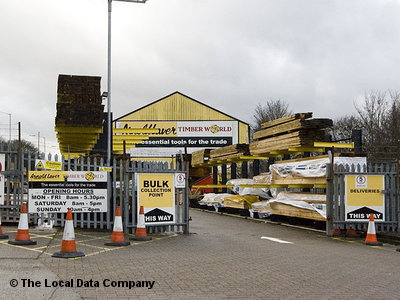
Arnold Laver & Co and The National Timber Group have merged to create a timber distribution business with combined revenue approaching £250m and 52 sites across the UK. The transaction is being supported by further investment from Cairngorm Capital Partners.

The National Timber Group is a collective of timber distribution companies, which include Thornbridge Sawmills, North Yorkshire Timber and Rembrand. Together they serve customers including joiners, regional housebuilders, commercial companies and infrastructure projects.

Headquartered in Sheffield, Arnold Laver is the timber division of Arnold Laver Holdings, a family run company first established in 1920.

Arnold Laver imports, distributes and manufactures a wide range of timber, panels, decorative surfaces and joinery products, serving public and private sector construction, house-building and commercial companies. Its customers include blue chip construction companies and it is a favoured timber supplier for major infrastructure projects that include the 2012 Olympics, Hinkley Point Power Station, HS2 and the Thames Tideway.

With its annual turnover in excess of £130m, Arnold Laver has 13 distribution and processing depots across the UK, a national production centre at Mosborough near Sheffield and a workforce of more than 750 employees.

The enlarged group will be led by group chief executive Rob Barclay, who joined The National Timber Group in June. Each of the underlying companies will retain their trading names.

Canfor comes to Europe; acquires 70% of Swedish sawmill company VIDA

Canfor Corporation announced that it has entered into an agreement to purchase 70% of the VIDA Group of Sweden for a purchase price of 3,990 million Swedish Krona (approximately EUR 388 million) on a cash and debt free basis, which includes CAD$125 million (70%) of normalized working capital. The current owners of VIDA will retain a 30% interest and continue to manage the day-to-day business.

“With the acquisition of VIDA, we are excited to become a truly international manufacturer and provider of wood product solutions for our global customers,” said Don Kayne, President and Chief Executive Officer of Canfor. “This transformational growth will allow Canfor to further diversify and secure a worldwide fibre supply to meet the growing demand of our customers for high-quality wood products.” VIDA is Sweden’s largest privately owned sawmill company, operating nine sawmills in southern Sweden with an annual production capacity of 1.1 billion board feet. All of the sawmills produce spruce and pine products, and are strategically located in high quality and sustainable fibre regions of Sweden. In addition, VIDA has nine value-added facilities that include premium packaging, modular housing, industrial products and energy.

“VIDA, a well-known brand in its current markets, is aligned with our corporate strategy of producing high-value products, providing an exceptional customer service experience and maintaining a low cost structure,” added Kayne. “We are excited that Santhe Dahl, Group CEO and Måns Johansson, Deputy CEO, of VIDA will continue to lead the company operations in Sweden. We welcome VIDA’s skilled management team, talented employees and modern operations to our Company.”

“We have known Canfor for a long time as a high-quality manufacturer and provider of wood product solutions. We are proud to announce that we are now becoming part of a global operation together with Canfor. This will allow us to continue to strengthen and develop the VIDA brand on a global scale,” said Santhe Dahl, Chief Executive Officer, VIDA Group.

In conjunction with the Elliott Sawmilling Company Inc. acquisition announced last week, this acquisition is a positive step forward in our diversification strategy for our operations, products and customers. After taking into account the full impact of VIDA and Elliott, Canfor’s annual production capacity will be approximately 7.2 billion board feet, with a highly diversified operating base in western Canada, the U.S. and Europe. The purchase price represents a 5.7 times EBITDA multiple based on VIDA’s 2018 projected EBITDA of approximately CAD$145 million, before taking account of estimated annual synergies of CAD$20 million, projected to be achieved through marketing opportunities arising from the increased global scale of our business.

The transaction is expected to close in the first quarter of 2019 and is subject to due diligence, completion of certain transaction documents and other customary closing conditions, including any required regulatory approvals.

Latvia: Forest products exports up 14.6% in the first nine months of 2018

In the first nine months of the year, Latvia exported EUR 1.925 billion worth of forestry products, up 14.6 percent against the same period last year, according to information released by the Latvian Agriculture Ministry.

Timber and timber products made up the bulk or 86.1 percent (84.1 percent a year ago) of total forestry product exports in the first nine months of 2018, accounting for EUR 1.657 billion and rising 17.3 percent year-on-year.

Timber exports in January-September 2018 included EUR 523.059 million worth of sawn timber, up 8.7 percent year-on-year. Round timber exports doubled year-on-year to EUR 207.041 million, plywood exports dropped 4.8 percent to EUR 169.828 and exports of woodchip plates rose 18.3 percent to EUR 164.668.

According to the Agriculture Ministry's data, exports of wooden furniture declined 3.7 percent from January-September 2017 to EUR 118.226 million, or 6.1 percent (7.3 percent a year ago) of total forestry product exports, and exports of paper, cardboard and their products grew 6.7 percent to EUR 88.859 million, or 4.6 percent (5 percent a year ago) of total forestry product exports.

In January-September 2018, Latvia supplied forestry products mainly to the UK (18.3 percent), Sweden (12.7 percent) and Estonia (10.4 percent). In comparison with January-September 2017, exports of forestry products to the UK grew 20.8 percent to EUR 351.834 million, exports to Sweden rose 47.7 percent to EUR 243.496 million, and exports to Estonia picked up 14.3 percent to EUR 199.537 million.

Canadian government to invest in a wood pellet and sawmill complex

The Canadian government revealed plans to invest $15 million in Granule 777 Inc. The funds will go towards helping the company build Canada’s first fully integrated industrial wood pellet and sawmill complex.

In a news release, the government also announced a repayable contribution of $5 million to help Granule 777 buy production equipment.

Once the complex is built, the mill will manufacture 210,000 metric tons of wood pellets per year; use 450,000 metric tons of biomass; and create 40 new jobs for mill operations.

“We are very excited about the construction of this innovative integrated wood pellet plant, adjacent to our Barrette-Chapais sawmill. Over the past few years, we have successfully gathered the necessary winning conditions to move ahead with this project and make it a reality,” said Granule 777 president Benoit Barrette in a press release. “We firmly believe it will be something very positive for the value-added sawmills’ co-products, the local communities and the overall forestry sector in the province.”

The funding is provided through Natural Resources Canada’s Investments in Forest Industry Transformation (IFIT) program and Canada Economic Development (CED)’s Quebec Economic Development Plan.

Södra buys 111,100 ha of forest land in Latvia

The Swedish Södra Group has this week acquired forest land from the Swedish Bergvik Skog AB. Bergvik Skog AB is 49.8% owned by Stora Enso.

The forest area covers 111,100 ha, of which 80.3% forest. The purchase price is 324 million euros. Södra already owns 15,000 hectares of forest land in Latvia and intends to secure its supply of roundwood for the future through the acquisition.

The proceeds from the sale amount to € 95 million, of which Stora Enso will receive around € 47 million, corresponding to its stake, which will be recorded as a one-off effect in the fourth quarter.

Stora Enso is currently changing its ownership structure to Bergvik Skog. The previous 49.8% stake in Bergvik Skog AB is to be converted into direct ownership of its subsidiary Bergvik Väst AB in the amount of 70%. Already in November 2017, a Letter of Intend was signed. The goal is to reach a binding agreement in the first half of 2019. Stora Enso does not expect any negative effects on its wood supply.

Swiss wood pellet prices increase in November

Prices for wood pellets in Switzerland increased slightly in November. 
The average price of wood pellets increased by 1.2% to 367.6 CHF/t from October to November. That's only 40 centimes more than in the same month last year.
Depending on the delivery quantity, the price varies by between just under 356 CHF / t (8t) and over 380 CHF/t (3t). The prices of the individual quantity classes also differ only slightly from the previous year's prices.
Large quantities of pellets for commercial customers (17 tonnes) currently cost an average of CHF 342.74 / t. This is 0.8% more than in October and 0.6% more than in November 2017.

Enviva to expand wood pellet capacity

Enviva Partners LP has released third quarter financial results, reporting increased revenue, net income and gross margin. The company also announced plans to expand its operations, including the addition of new capacity at two existing pellet plants.

During an investor call, John Keppler, chairman and CEO of Enviva, discussed expansion and growth opportunities that he said could more than double the size of the company over the next few years.

Subject to receiving the necessary permits, Keppler said Enviva plans to invest approximately $130 million to increase the aggregate production capacity at its Northampton, North Carolina, and Southampton, Virginia, pellet plants by approximately 400,000 metric tons per year. Information released by Enviva indicates the $130 million investment would include new production assets and emissions control equipment. In a statement, the company said the ability to expand capacity and improve the energy density of pellets through increased pine utilization at the two plants will create incremental, high-margin pellet sales opportunities. Construction on the expansion project is expected to be complete in early 2020, with startup shortly thereafter.

Keppler also discussed new plants under development by the partnership’s sponsor. He said the Hamlet, North Carolina, plant is currently under construction and expected to begin operations during the first half of next year. That plant will have a nameplate capacity of 600,000 metric tons per year.

The second joint venture between affiliates of Enviva’s sponsor and John Hancock is also continuing to invest in its wood pellet facility in Greenwood, South Carolina. The facility is expected to expand its capacity from 500,000 metric tons per year to 600,000 metric tons per year, subject to receiving necessary permits.

The second John Hancock joint venture is also expected to make a final investment decision on a deep-water marine terminal in Pascagoula, Mississippi, and a wood pellet plant in Lucedale, Mississippi, in late 2018 or early 2019. A statement released by Enviva also notes the joint venture continues to evaluate additional development locations.

Enviva Partners said it expects to have the opportunity to acquire these assets from its sponsor and its joint ventures with John Hancock.

Italian woodworking machinery industry’s foreign sales drop sharply in Q3/2018

For the Italian woodworking machinery sector, the July-September period reaffirmed the current industry trend, characterized by consolidation after strong growth in 2017. After major investments in Italy and abroad in recent months, woodworking and wood-based materials companies finally have a new and updated fleet of equipment. As a result, the need to invest is now decreasing.

This consideration is essential to analyze the results for the third quarter 2018 processed by the Studies Office of Acimall, the Confindustria member association that represents the manufacturers of machinery and plants. On the whole, figures indicate a slight slowdown of orders, although Italian companies achieved an expansion of domestic orders 14.7 percent higher than the same quarter in 2017.

Foreign orders were down by 10.9 percent in the July-September period of this year, compared to the same quarter of last year. On the whole, orders in Q3 2018 decreased by 7.7 percent. Such reduction, however, could be explained by the exceptional last year for the Italian exports.

It is also worth noticing that turnover in the third quarter, according to Acimall surveys, increased by 12.2 percent over the same period in 2017, thus reaffirming the good health of the industry.

The orders book has extended to 4 months (from 3.1 in the previous quarter and 3-4 in January-March), while prices as of January 1st have slightly increased by 0.5 percent (0.4 percent on June 30).

Quality survey

Looking at the results of the quality survey for the period under scrutiny, 44 percent of respondents indicate a positive production trend. The same percentage of business owners indicates a stationary trend, while 12 per cent reported a reduction.

Employment is stable according to 61 percent of the sample (versus 67 in the previous quarter), while there is no variation in the share of respondents who indicate an increase (33 per cent, the same as in April-June); unfortunately, 6 percent reported a reduction of employment (the share in the previous quarter was 0 percent).

Available stocks will remain stable according to 61 per cent of interviewed companies, while 22 percent expect a decrease and 17 per cent an increase.

Forecast survey

The survey sample offered interesting hints about the “near future”: 17 percent believes in an expansion of foreign orders (the same percentage as in the previous quarter), while 56 percent expect a stationary trend and 27 percent fear reduction (versus 11 percent three months ago). The balance is negative at minus 9, versus plus 6 in April-June and plus 29 in the first quarter of the year.

Expectations are basically the same for the Italian market: 67 percent indicated stable orders (versus 83 percent three months ago), while 27 percent expect a reduction (it was 11 percent in the previous quarter). So, the balance is negative by 21 points, compared to minus 5 in April-June and plus 11 in January-March.

“It was not difficult to imagine this situation,” said Dario Corbetta, Acimall director. “There are clear topics emerging, including the uncertain political situation in Italy and the expectations for the impact of the budget law on real economy.The confidence of companies is also undermined by the EU's rejection of the Italian fiscal law. However – Corbetta concluded – the Italian industry of wood and furniture technology is experiencing a positive season, despite big pending issues in the background, first of all a company size that does not support business expansion on the global scenario”.

West Fraser to permanently reduce lumber production at Fraser Lake and Quesnel sawmills

West Fraser announced it will permanently curtail approximately 300 million board feet of combined lumber production at its Fraser Lake and Quesnel Sawmills. The curtailment will be realized through the elimination of the third shift at each sawmill.

The reduction in lumber production is expected to impact approximately 60 employees at Fraser Lake and 75 employees at Quesnel Sawmill over the first and second quarter of 2019.

British Columbia faces a well-documented timber supply shortage owing to the devastating Mountain Pine Beetle infestation. In anticipation of this decline, West Fraser has invested in excess of $500 million in its B.C. assets to improve the safety and competitiveness of its mills to attain maximum value from the available timber resource. Today’s decision better aligns West Fraser’s production with current timber supply.

West Fraser is a diversified wood products company producing lumber, LVL, MDF, plywood, pulp, newsprint, wood chips and energy with facilities in western Canada and the southern United States.

Sweden: Rising sawlog prices in 3Q/2018

The delivery prices on Swedish sawlog and pulpwood prices rose by 5.5% and 3.4% respectively in the 3Q 2018, compared to the 2Q 2018.
The prices are increasing in all of Sweden. The price of sawlog increased the most in the region Central with 8.4%, while prices rose by 7.5% in the region South and by 2.6% in the region North.
The pulpwood prices rose most in the region South by 7.5%, 3.4% in the region North and by 2.5% in the region Central.
In comparison to the 3Q 2017 the prices on sawlog have increased by 11.3% while the prices on pulpwood have increased by 15.6%. The single largest price increase is 19.6%, on pulpwood of pine in the region South.
The delivery price statistics are also based on sold volumes, that are used for the volume weighted average delivery price. These volumes have dropped by 17% in comparison to the 3Q 2017.

Forecast: Canada still a major supplier of softwood lumber to the US in the next decade

The softwood sawmilling sector in Eastern Canada will play an increasingly important role as a key supplier to the growing US lumber market in the future, according to a new study. The increasing lumber consumption in the US will also likely result in increased investments in production capacity in the US, changes in Canadian lumber trade flows, a rise in overseas supply, and upward pressure on sawlog prices.

Consumption of softwood lumber in the US is forecasted to increase over the next decade and reach an all-time high by 2030. Canada is poised to continue being a dominant supplier of softwood lumber to the US, but there will be changes in log availability. The timber harvests on public lands in British Columbia are set to decline over the next decade and uncertainty surrounds log availability in the eastern provinces.

The two major lumber-producing regions of Canada, the Western region (British Columbia and Alberta), and the Eastern provinces (Ontario, Quebec, and the Maritimes), each face complex factors that will further decrease the Annual Allowable Cuts (AAC). However, despite declining AAC’s, there is still the possibility that softwood roundwood production will increase in the future in Eastern Canada as current harvest levels are far below sustainable levels.

The more than decade-long infestation of the Mountain Pine Beetle in Interior British Columbia is coming to an end. Harvest levels are predicted to fall over the 2016-2030 forecast period, though log supply for the local sawmills could be modestly augmented by slightly increasing harvests in Coastal BC and a likely reduction in log exports to the Pacific Rim.

Another of the study’s conclusion is that lumber exports from Eastern Canada to the US are likely to increase substantially between 2017 and 2030. The in-depth analysis showed some interesting results in terms of Canada’s role as a future lumber supplier to the US. This was particularly true in the study’s high demand scenario.

Downward trend in Sweden’s softwood lumber exports; deliveries to China and Egypt drop sharply

During January-September 2018, Sweden has exported about 7.4 million m3 of softwood lumber. This represents a -2% decrease over the same period of 2017. Most of the exports to the world decreased, as compared to 2017.

Main export markets for the Swedish softwood lumber were the United Kingdom and the Netherlandsfollowed by Norway and Denmark.

Yet, exports to Egypt dropped the most, by -28% over January-September 2017, down to a volume of 482,227 m3. Also, the exports to China dropped sharply by -18%, down to a volume of 438,430 m3.

Swedish softwood lumber exports increased to countries such as the Netherlands (+7%) and Algeria (+157%).

Swedish lumber shipments to the European Union countries were flat at 4.1 million m3 exported during January-September. The exports to North Africa increased by 4% over the corresponding period of 2017. North America and the Near and Middle East exports dropped by -10% and -4%, respectively.

A significant drop was recorded for the Swedish lumber exports to other Asian countries, which dropped by -13%, down to 1 million m3.

Softwood lumber exported from Sweden to... (in cbm )

Destination 2017 2018 Change in %
EUROPEAN Union
4,103,556 4,119,632 0 %
United Kingdom
1,575,887 1,544,964 -2 %
Netherlands
564,585 601,992 7 %
Denmark
498,075 512,627 3 %
Germany
541,729 495,703 -8 %
France
219,504 220,047 0 %
Others
703,776 744,299 6 %
OTHER European Countries
615,570 560,159 -9 %
Norway
576,438 522,596 -9 %
Iceland
8,580 10,192 19 %
Turkey
12,062 10,063 -17 %
Albania
3,851 5,805 51 %
Cyprus
5,442 5,412 -1 %
Others
9,197 6,091 -34 %
NORTH Africa
1,101,558 1,150,245 4 %
Egypt
671,713 482,227 -28 %
Algeria
140,217 360,649 157 %
Morocco
221,446 223,366 1 %
Tunisia
61,306 63,514 4 %
Libya
6,876 20,489 198 %
OTHER African Countries
35,863 27,932 -22 %
Sudan
33,951 25,565 -25 %
Cape Verde
1,432 1,740 22 %
Seychelles
199 362 82 %
Sao tome e principe
- 96 %
Kenya
- 52 %
Others
281 117 -58 %
NORTH America
241,365 218,030 -10 %
USA
238,705 214,692 -10 %
Canada
2,660 3,338 25 %
CENTRAL America
863 3,317 284 %
Panama
- 2,464 %
British Virgin Islands
600 764 27 %
Dominican Republic
- 89 %
Virgin Islands
263 - -100 %
SOUTH America
313 124 -60 %
Colombia
313 124 -60 %
NEAR and MIDDLE East
279,834 269,952 -4 %
Saudi Arabia
173,699 175,411 1 %
Israel
48,825 50,005 2 %
Jordan
29,088 25,998 -11 %
Yemen
19,575 13,332 -32 %
Qatar
1,226 1,794 46 %
Others
7,421 3,412 -54 %
OTHER Asian countries
1,205,703 1,050,944 -13 %
China
537,809 438,430 -18 %
Japan
465,181 421,997 -9 %
South Korea
69,158 54,864 -21 %
Taiwan
46,156 27,122 -41 %
Hong Kong
23,814 21,143 -11 %
Others
63,585 87,388 37 %
OCEANIA and Polar region
28,316 59,470 110 %
Australia
27,598 58,902 113 %
French Southern Territories
718 568 -21 %
TOTAL 7,612,941 7,459,805 -2 %

HS Codes: 440710,440711,440712,440719.

Moelven to build a new wood pellet plant

Moelven Pellets A/S placed an order for pellet plant equipment with Hekotek. The launch of the new factory is scheduled for October in 2019.

According to the announcement, a new, full complex pellet plant with a production capacity of 80 000 tons of wood pellets a year uses as a raw material sawing residues, sawdust, and chips, from their own sawmill.

The leading supplier of equipment is Hekotek Ltd. Stela Laxhuber GmbH delivers belt dryer for drying of sawdust, and CPM Europe B.V. delivers three pellet presses. The final product, wooden pellets, will be stored in silos, which are fitted for truck loading for end users.

About Moelven:

The company is operating its units located in Scandinavia and raw materials obtained from forests close to the production facilities. Scandinavia is also Moelven’s principal market. The Group has its head office at Moelv in Norway, and comprises 49 production units and 34 sales, service and assembly offices. Most of the production units are companies and premises with strong local roots in rural areas and small communities in south-east Norway and west central Sweden. The Group has approx. 3,400 employees and an annual turnover of NOK 9 billion (around USD 1100 million).

Trends are about to change in China’s softwood log, lumber supply chain

Ongoing developments and emerging themes in China continue to significantly impact market dynamics; these key themes are unmistakable to anyone who has traveled in the country in 2018. The economics and competitive advantage of various exporters in the supply chain to China are also changing continually — be it foreign currency exchange rates, ocean freight rates or changing domestic costs, importing and consuming regions are being affected in quite diverse ways. 

At the moment, an expanded presence of Russian lumber in China can be noticed. There has been an ongoing movement away from green lumber (produced in Russia or northern China at the border) to kiln-dried product, component lumber and specialty items. Continue reading "Trends are about to change in China’s softwood log, lumber supply chain"

Lowe’s to close 51 stores in the N. America

Lowe’s Companies, Inc. announced the wind-down of certain underperforming store locations as part of its ongoing strategic reassessment. The company will focus on its most profitable stores and improve the overall health of its store portfolio.

In the U.S. Lowe’s will close 20 stores. Most associates at these stores will be extended opportunities to transition to a similar role at a nearby Lowe’s store.

The majority of impacted stores are located within 10 miles of another Lowe’s store.

In Canada another 31 stores and other locations will be closed.

“While decisions that impact our associates are never easy, the store closures are a necessary step in our strategic reassessment as we focus on building a stronger business,” said Marvin R. Ellison, Lowe’s president and CEO. “We believe our people are the foundation of our business and essential to our future growth, and we are making every effort to transition impacted associates to nearby Lowe’s stores.”

Lowe’s expects to close the impacted stores by the end of the company’s 2018 fiscal year (Feb. 1, 2019). To facilitate an orderly wind-down, the company intends to conduct store closing sales for most of the impacted locations with the exception of select stores in the U.S., which will close immediately.

Stable softwood lumber prices in the US this month

Firm to higher prices were the rule on the heels of last week’s activity in the US. Some follow-through was evident early on, but trading faded as traders made their way to Chicago for the NAWLA Traders Market.
Buyers tended to near-term needs with more confidence that downside risk had been wrung out of the market. While some soft spots lingered, particularly in Southern Pine, gainers offset them, and the Random Lengths Framing Lumber Composite Price held at $337.

This Week
Nov 9
Last Week
Nov 2
Year Ago
2017
Random Lengths Framing Lumber Composite Price* $337 $337 $436
KD Western S-P-F #2&Btr 2x4 R/L Mill Price 330 312 490
KD Eastern S-P-F #1&2 2x4 R/L, delivered Great Lakes 391 387 561
Green Douglas Fir Std&Btr 2x4 R/L (Portland) 285 280 455
Southern Pine (Westside) #2 2x4 R/L 401 417 416
KD Coast Hem-Fir #2&Btr 2x4 R/L 315 305 485
Ponderosa Pine (Inland) #2&Btr 1x12 R/L 780 775 725
* Weighted average of 15 key items

Random Lengths Panel Market Report

Structural Panel markets were mixed. Despite a firmer tone in some markets, the Random Lengths Structural Panel Composite Price slipped $1 to $386. Sheathing prices flattened across the north and fluctuated mildly in the South, as sales slowed across North America. Southern plywood buyers stepped in to purchase more volume than in recent weeks amid a firmer tone. Trading in western sheathing was measured. Buyers sought discounts, but paid close to quoted levels for desired mixes.

(f.o.b. mill prices) This Week
Nov 9
Last Week
Nov 2
Year Ago
2017
Random Lengths Structural Panel Composite Price* $386 $387 $486
Southern (west-east) 15/32-inch 3-ply rated sheathing plywood 360-390 360-390 455-510
Southern (west-east) 15/32-inch 4-ply rated sheathing plywood 365-395 365-395 460-515
Western 1/2-inch 4-ply rated sheathing plywood 362 365 468
North Central 7/16-inch Oriented Strand Board 245 245 410
*Weighted average of 11 key items


Kährs Group to build a wood pellet plant in Nybro, Sweden

Kährs Group is constructing a pellet plant in Nybro, Sweden. The new plant is to be operational in December 2018 and will have the capacity to produce up to 60,000 tons of pellets per year.

The wood pellet plant will produce a more advanced energy product than Kährs current wood powder biofuel and will offer enhanced environmental benefits. By offering a standardised pellet product, biofuel becomes available for more users demanding fossil free fuels, Kährs reported in a press release. Wood pellets are also less bulky, resulting in reduced transports. The pellets production will to a large extent become automated and integrated with the other production activities in Nybro.

Kährs Group has signed a long-term agreement with Ekman & Co, a leading and respected global operator in biomass, paper trading and bioenergy market. Ekman & Co will be a commercial partner responsible for selling Kährs pellets and handling logistics from the plant in Nybro and from the storage in the local Kalmar, Sweden harbor.

Kährs Group is a Europe-leading flooring manufacturer in hardwood and resilient flooring.

Rising trend in EU wood pellets imports from the US continues this year

US wood pellets exports to Europe have risen by 11% during the first nine months of 2018, as compared to the same period of 2017.

The UK is still the top importer for US wood pellets and its imports increased slightly 2% during January-September 2018, rising to 2.5 million tonnes.

A surprising development could be noticed in Denmark. Danish imports of US pellets more than tripled in this period, surpassing Belgium as the second EU importer.

At the same time, Belgium's wood pellets imports from the US amounted to 292,321 tonnes, -19% less than in the previous year.

EU wood pellets imported from USA by... (in tons )

Importing Country 2017 2018 Change in %
EUROPEAN Union
3,035,971 3,380,539 11 %
United Kingdom
2,521,782 2,578,650 2 %
Denmark
133,292 474,903 256 %
Belgium
360,203 292,321 -19 %
Italy
9,019 30,283 236 %
Netherlands
33 2,382 7,118 %
Others
11,642 2,001 -83 %
TOTAL 3,035,971 3,380,539 11 %

Forecast: China to become British Columbia’s main forest products export market, surpassing the US

Canada’s key export-support organization boldly predicts China will surpass the United States as British Columbia’s top market for forest products within 12 years, if long-term trends hold.

“This is really about differential growth in the markets,” said Peter Hall, chief economist for Export Development Canada, as quoted by Vancouver Sun. “China has long and strong potential growth and the U.S. is a fully developed economy.”

That projection appears to counter a short-term decline in lumber sales to China following the country’s meteoric rise in imports over the last 15 years.

After years of a provincial hard-sell in the country, China emerged as a major customer for B.C. forestry exports following the 2008 global recession, surpassing Japan as the province’s No. 2 market for lumber in 2009, Vancouver Sun reported.

By volume, B.C.’s exports to China peaked in 2013 when timber companies sold 7.9 million cubic metres worth of processed wood to Chinese buyers, versus 13.6 million cubic metres to buyers in the U.S. market.

However, while lumber exports to the U.S. increased to 17.9 million cubic metres in 2016, exports to China slipped to 5.9 million cubic metres over the same period.

B.C.’s total exports of lumber shrank by nine per cent in 2017, a year plagued by forest fires in the province’s interior and the challenge of shrinking timber supplies in the aftermath of the mountain-pine-beetle infestation.

However, by taking exports of raw logs, pulp and paper into account, the value of shipments to China have continued to climb.

According to Vancouver Sun, raw log shipments to China in particular, by value, have risen 43 per cent over the past three years hitting $479 million in 2017. Log exports to the U.S. over the same period shrank 33 per cent to just $44-million worth of unprocessed timber in 2017.

Hall said there is no consensus among economists about Canada’s prospects for boosting exports to Asia.

In October, after the three parties concluding the U.S. Mexico Canada Agreement to re-write NAFTA, prominent University of Calgary Economist Jack Mintz argued that diversifying trade from the dominant U.S. market would be difficult.

Mintz wrote that Canada sold to the U.S. three-quarters of the $545 billion in goods and $110 million in services that it exported in 2017.

“Our next-largest export markets are fractions of that,” Mintz said, with China at No. 2 buying just 4.3 per cent of all Canada’s exports.

Hall, however, said he is in the camp of economists who believe Canada is in a position to make significant increases in trade with China, not unlike Australia.

“If there is any place in Canada that gets that more is B.C., because it’s already the most diversified in terms of merchandise trade,” Hall said.

Hall was in Vancouver this week delivering the organization’s latest short-term export forecast, which calls for a modest four-per cent increase by the end of this year and by a similar amount in 2019.

Hall said weak commodity prices for base metals such as copper, a key B.C. export, and coal used in steel making will hold back some of that export growth, as measured by value, as will a recent, sharp drop in lumber prices.

Europe’s forests in danger: 100 million m3 of wood damages caused by storms and the bark beetle

The autumn storm "Vaia", which led to large-scale damages in the forests of northern Italy and southern Austria from 28 to 30 October 2018, is part of a series of windstorm events that caused major damage in parts of Europe from August 2017 to the end of October 2018.

According to previous estimates, at least 15 million m3 were thrown in Italy alone by Vaia and in Austria about 2.8 million m3. Compared to the thunderstorm of mid-August 2017, which caused around 12 million m3 of storm wood in Poland, the Czech Republic and Austria, as well as hurricane "Friederike", which together accounted for some 13 million m3 in Germany, Vaia should be considered as the most severe storm event in Europe since storm Klaus in 2009 when 32 million m3 have been destroyed.

In addition to the various storms of the past 14 months, the forestry and timber industry in many parts of Europe is currently also confronted with a large-scale bark beetle calamity. According to the estimates available to date, the damages caused by insect infestation and drought adds up to a further 45-47 million m3 to the damages caused by storms.

The Czech Republic alone expects a 20 to 25 million m3 of bettle wood in 2018, followed by Germany with 10 to 12 million m3. For 2018 alone, the DACH region, the Czech Republic, Italy and Slovenia will be affected by storm, beetle and drought damage totaling some 80-82 million m3. Together with the wind throws in the second half of 2017, including the damages in Poland, a total loss amount of more than 100 million m3 can be sum up.

Newsletter

Subscribe to our digital newsletter for your daily digest of essential news, views and analysis from the international wood industry delivered directly to your inbox.


0