Article archive

Ghana: Rosewood harvesting, transport and export banned

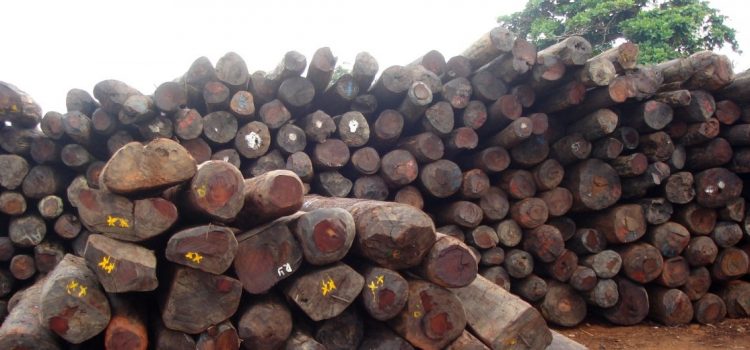
Ghana's government has placed a total ban on the harvesting, processing and export of rosewood with immediate effect.

The Ministry of Lands and Natural Resources has directed the Forestry Commission to stop processing export permits for rosewood.

The Ministry has indicated that ‘salvage permits’ would be issued for rosewood log stocks. Kwaku Asomah Cheremeh, Minister for Lands and Natural Resources, said the ban was to eliminate illegal activities that were endangering the species, especially in northern Ghana.

The minister said the illegal felling of rosewood had become an environmental threat and appealed to the public to report any illegal activities.

In 2014 the export of rosewood was banned but later a few companies secured the right to trade previously felled logs but the system was abused. The Minister reported that a taskforce has been created to assess rosewood exploitation and provide recommendations to effectively enforce the ban.

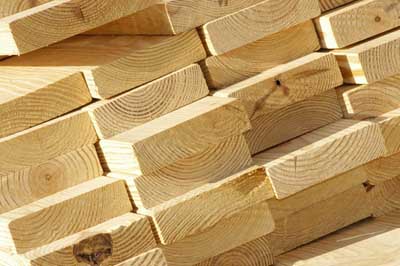
EU furniture manufacturers losing export market share

European furniture manufacturers are also strongly motivated to maintain and increase share in their home markets as they are now struggling to expand sales outside the EU. Last year there was a 1.7% fall in the value of EU wood furniture exports to €8.78 billion.

This continues a trend of flat-lining, or slowly declining exports to countries outside the EU after reaching an all-time high of just over €9 billion in 2015. Since then the competitive benefits of the relative weakness of the euro against the dollar and other cost saving efforts of EU wood furniture manufacturers have waned.

Competition for EU-based manufacturers has intensified from newly emerging producers in Eastern European countries outside the EU, such as Bosnia, Ukraine and Turkey, and from Vietnam which in the last 5 years has rapidly overtaken all other tropical countries in the global league table of wood furniture producing nations.

EU wood furniture manufacturers have suffered in higher end export markets in Asia, the CIS and Middle East from a range of factors including cooling of the Chinese economy, a sharp fall in global equity markets towards the end of 2018, extreme weakness of the Russian rouble, relatively low oil prices and political instability.

Given domestic market problems in the EU and the European Central Bank’s policy to keep interest rates at record-lows to boost demand, the euro is expected to depreciate against the dollar in 2019, which may boost EU exports a little this year.

However, while the risk of outright global recession in 2019 still seems low, a general global deceleration is widely forecast with growth falling below potential in most regions. Overall therefore, EU wood furniture exports are unlikely to rise significantly this year.

Swedish sawmills’ exports fall into lower gear

The Swedish sawmills have decreased their sawn and planed softwood lumber exports by -5%, to 12 million m3, during 2018.

Most of the softwood lumber exports from Sweden went to countries the European Union, where the shipments reached 6,67 million m3, -2% less than in 2017. Also, exports to North Africa and other Asian countries were still high, even though lower than in 2017. Thus, North Africa imported 2 million m3 of Swedish softwood lumber in 2018, -5% less than in 2017, while other Asian countries received 1,68 million m3, -18% less than in the previous year. Continue reading "Swedish sawmills’ exports fall into lower gear"

Europe building materials market to depict appreciable growth prospects over the next five years

Europe building materials market is fragmented in nature due to the presence of numerous domestic manufacturing companies catering wide product portfolio. The key companies including BASF SE, James Burrell, and Saint Gobain. Other prominent manufacturers are UPM Plywood, Kastamonu, Danzer, Gyproc Iberica, Siniat and Bituline Industries S.A. The industry exhibits a low bargaining power for suppliers owing to the presence of a large number of suppliers and dealers in the market.

Increasing government spending on renovation projects & smart cities development are the key factors fueling Europe building materials market share. Factors such as environmental concern and rapid urbanization has surged up the need for smart infrastructure solutions.

Shifting trend towards efficient construction practices with superior ability offering enhanced integration, improved planning, and advanced designing benefits will primarily drive the industry growth. Innovative energy saving building designs coupled with new product developments will offer lucrative business opportunities for future construction projects. Europe commercial construction industry have experienced strong revenue growth rate with more than 9.4% from 2013 to 2016 and projected to grow at a faster pace during the forecast time frame.

Changing consumer preference towards high performance, superior quality, and low material cost will accelerate the industry growth. Manufacturing companies are continuously focusing on development of affordable, durable and attractive product portfolio which will further fuel the business expansion. Increasing penetration of premium windows and door designs will positively impact the Europe building materials market growth.

Lumber market registered over USD 70 billion market revenue in 2017 owing to its excellent physical strength and superior support benefits. Hardwood species are ash, oak, red oak, birch, mahogany, maple, rosewood, teak, and lauan are expected to witness high demand. Superior physical hardness, stiffness, and creep resistance are the key benefits augmenting the Europe building materials market expansion.

Roofing segment was accounted for more than USD 560 million in 2017. European roof framing is mainly built from timber, logs, boards, and different types of wood species that provide excellent mechanical strength. Increasing requirement for high quality materials including wood components to provide strong structural support will foster demand for the Europe building materials.

Flooring market is projected to observe more than 5.4% CAGR from 2018 to 2024. The construction industry uses particle board in applications, such as interior lining, floor, web plate, the base material in door core, and furniture frame making process. Flooring products are mostly made from the particleboard sheets due to dimensionally stable benefits augmenting industry share. Modern architecture is gaining consumer attention, especially the new generation designs, shades, and textures, stimulating the Europe building materials market growth.

UK building materials market generated sales more than USD 8.5 billion in 2017. Growing renovation activities and new residential construction owing to the rising population and increasing count of migrants are propelling the building materials market growth. Comparatively lower interest rates coupled with improved income are among the key factors that have elevated the building components demand. In addition, European Structural and Investment (ESI) funds financial support through renovation loans and grants will provide positive business outlook.

Europe building materials market is fragmented in nature due to the presence of numerous domestic manufacturing companies catering wide product portfolio. The key companies including BASF SE, James Burrell, and Saint Gobain. Other prominent manufacturers are UPM Plywood, Kastamonu, Danzer, Gyproc Iberica, Siniat and Bituline Industries S.A. The industry exhibits a low bargaining power for suppliers owing to the presence of a large number of suppliers and dealers in the market.

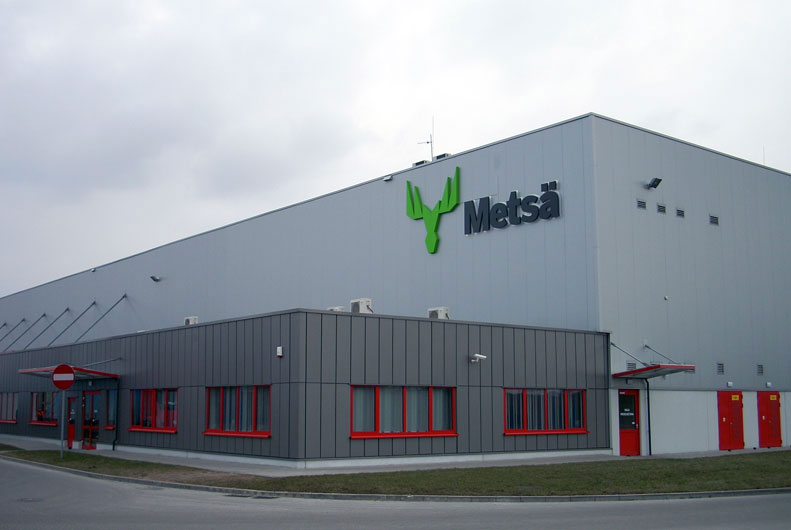
Metsä Wood’s new birch plywood mill in Estonia to enter full production mode this year

All production lines at Metsä Wood's Pärnu birch plywood mill in Estonia have now been started. More workforce has been recruited for the new lines, the mill currently employs some 170 people in production.

The factory is expected to reach its full production capacity by the end of 2019. As a raw material, the mill uses high quality Finnish birch veneer, which is produced at Metsä Wood's veneer mill in Central Finland.

With its investment, Metsä Wood is responding to the growing demand for birch plywood worldwide, especially in the construction and light transport industry.

The mill makes use of latest technology and it is also Metsä Wood's first production facility utilizing digital modeling.

The annual production capacity of the Pärnu birch plywood mill is 50,000 cubic metres. This increases Metsä Wood’s total net production capacity by around 30,000 cubic metres.

The birch plywood mill in Pärnu uses birch veneers as a raw material. The veneers are produced in Äänekoski in central Finland. The wood is acquired from Finland, mainly from the forests of Metsä Group’s owner-members.

Analysis of the Russian wood pellet market

In 2018, exports of wood pellets from Russia reached 1.5 million tons, which is 7% more than in 2017. In monetary terms, exports amounted to $ 186 million. The volume grows for the second year in a row by 30% per year. Over the past 5 years, export flows show a positive trend. Export direction increased by 72% in physical terms and 47% in value.
The difficulty of determining the volume of the market is hampered by the fact that the official statistics provided by Rosstat does not reflect the production volumes for small and medium-sized enterprises and individual entrepreneurs. Therefore, real production volumes are slightly higher than official statistics. According to WhatWood, in 2018, 1.8 million tons of wood pellets were produced in Russia, 300 thousand tons (about 17%) of which were sold domestically, and 1.5 million tons were exported outside the territory of the Russian Federation. The value of the market reached 14 billion rubles, of which only 2.3 billion rubles accounts for domestic consumption.
The total capacity of all Russian wood pellet plants is 3.6 million tons of finished products per year, but the industry average load of the plants is 50%. Most of the pellet enterprises are located in the North-West (Leningrad, Arkhangelsk, Vologda regions, Republic of Karelia). In the period 2016- Continue reading "Analysis of the Russian wood pellet market"

Current sawlog and pulpwood price dynamics in Finland

Sawlog prices in Finland increased for almost all assortments during in February as compared to the same month last year. The highest price increase was registered in spruce species. Spruce sawlogs price increased by 6.67% (up to EUR 65/m3) as compared to February 2018, while the price of small-sized spruce logs rose by 7.71%.
As for the other log prices, pine sawlogswent up by 4.36%, to EUR 61.48/m3 but birch logs dropped by-0.33%, down to EUR 50.88/m3.
For the pulpwood assortments, there are some significant upward price movements as compared to last year.  The price for birch pulpwood increased the most (+14.07) up to 33.15%.  Pine and spruce pulpwood prices increased by 12.66% and 13.92%, respectively.

Roadside prices by Price in Finland, Roundwood assortment and Month
February 2018 January 2019 February 2019 Change in %; Feb. 2018/2019
Pine logs 58.91 62.14 61.48 +4.36%
Spruce logs 60.93 63.19 65 +6.67%
Birch logs 51.05 51.27 50.88 -0.33%
Pine pulpwood 28.81 32.12 32.46 +12.66%
Spruce pulpwood 31.10 34.89 35.43 +13.92%
Birch pulpwood 29.06 32.66 33.15 +14.07%
Small-sized logs, pine 37.28 38.84 39.72 +6.54%
Small-sized logs, spruce 37.86 39.95 40.78 +7.71%

Interest in Swedish wood is growing in India

The Indian wood industry is showing strong interest in Swedish Wood.

The 6th edition of the woodworking industry's events DelhiWood 2019 was held on 13-16 March 2019 in India. Swedish association Swedish Wood was present at the show.

- We wanted to show that Swedish sawmills offer Swedish wood from a long established and sustainable forestry. Therefore, we chose to present both the sustainable forest and the processed furun's qualities in our booth. A journey from planting to plank to construction and design, said Björn Nordin, head of interior and design at Swedish Wood.

Swedish Wood exhibition stand reflected a walk from forest to finished product. The visitor could start by sitting in and hearing the forest and then being able to see and touch the end products of the processed wood. Swedish Wood left Swedish designer Marcel Max, together with furniture manufacturers in Bangalore, to create pine furniture to show the Swedish furun's potential as a natural, sustainable and malleable material.

- Swedish exports of sawn timber to India are still modest, but it is increasing. The Swedish sawmill industry sees India as a market for the future and exports to India from Sweden are expected to continue to increase, said Kenneth Wallin, CEO of Martinsons .

Swedish Wood members see great potential in India, whereupon they exchanged their presence in the country. Swedish Wood this year participates in both DelhiWood 2019 and during the Swedish lifestyle event Swedish Style Mumbai in June 2019 initiated by the Ministry of Foreign Affairs. During the DelhiWood 2019 fair, an exchange of knowledge was held during the collective name Timber Forum. Here, experts in furniture and furnishings, furniture production and retail, wood construction and trade participated in discussions focusing on opportunities and challenges in woodworking. Swedish Wood held a presentation on Swedish wood and the trend that is visible in Europe around furniture and interiors in wood.

About DelhiWood and Timber Forum

DelhiWood is an event that provides opportunities for business interactions for everyone involved in India's furniture manufacturing and woodworking, within the framework of a more technology-based wood industry. Timber Forum was introduced during IndiaWood 2018 in Bangalore and has become a knowledge-sharing forum for furniture manufacturers, designers, architects and designers.

France: Price overview for lumber and wood products in Q4/2018

FRANCE LUMBER PRICES for the 4th quarter 2018

Prices 2018-Q4 Prices2017-Q4 € Prices2018-Q3€ Prices2018-Q4€ Index Change 2018-Q4/2018-Q3 Change 2018 Q4-2017-Q4
OAK Lumber                                                                       Index base 100 : Oct 2006 S20
UNEDGED LOGS  - QBA - Logs, joinery, (KD), length 3 m +
Diameter 40 to 49cm (thickness 34mm)    m3 1156 1235 1194 137,9 -3.3% 3.3%
Diameter 50cm et + (thickness 50mm)    m3 1314 1427 1349 139,1 -5.4% 2.7%
LOGS  - QB1 - High-value joinery work, 6 months open air drying, length 3 m +
Diameter 40 to 49cm (thickness 27/34mm)    m3 895 939 942 134,8 0.3% 5.3%
Diameter 50 to 80cm (thickness 54mm)      m3 1029 1059 1063 137,5 0.3% 3.3%
SELECTED LOGS  - QSA/QS1-  (KD)
Thickness 27 to 54mm - length 2m +
Bare 18cm (tolerance 10cm +)     m3 930 981 964 144,5 -1.8% 3.6%
SELECTED LOGS  - QS2 - 6 months open air drying
Thickness 27 to 54mm - length 2m +
Bare 18cm (tolerance 10cm +)     m3 674 724 707 156,5 -2.3% 4.9%
STRIPS (80x27) OR EDGED (100x27) QF1a - 3 months AD
Length 30 to 50cm     m3 753 784 768 131,1 -2.0% 2.1%
Length 60 to 90cm     m3 1006 1062 1031 148,9 -2.9% 2.4%
Length 1m + m3 1124 1143 1095 138,4 -4.2% -2.5%
STRIPS (80x27) OR EDGED (100x27) QF1b  - 3 months open air drying
Length 1,50m +    m3 735 776 782 125,9 0,8% 6.4%
EDGED QF2- Thickness 27 mm - length 1,50 m +
Width 100 to 150mm     m3 824 870 913 153,0 5.0% 10.8%
Width 160mm +     m3 992 1134 1114 183,0 -1.7% 12.3%
EDGED QF2/QF3 X – Thickness 27 mm, length 1,50 m +, 3 months AD
Width 160mm +     m3 699 759 792 156,5 4.3% 13.3%
EDGED BEAMS QP1 - Standard beams (fresh)
Camber to max. two edges, red core and sap tolerance
Measure 15x15 - length 4 to 5m     m3 552 563 575 141,2 2.0% 4.1%
Measure 25x25 - length 4 to 5m     m3 593 662 661 145,0 -0.1% 11.6%
SPRUCE Lumber (fresh)                                                        Index base 100 : July 1990 S30
Quality 0 - Edged, in all widths
Thickness 27mm     m3 289 296 293 104,2 -1.1% 1.4%
Quality 1 - Edged, in all widths
Boards 2 to 5,50m - thickness 27mm     m3 248 271 263 119,2 -2.8% 6.4%
Quality 2
Scantlings
75x225 or 63x160 - length 3 to 5m     m3
193 197 199 169,8 0.7% 2.7%
Beams 63x75 or 50x75 - length 3 to 4,50m     m3 204 206 206 110,8 0.0% 1.2%
Mouldings 27x27 - length 2 to 5m m3 234 245 243 119,2 -0.9% 4.0%
Quality 3 - Boards edged timber all width
Unedged beams
Thickness 18/27mm     m3
150 160 158 113,6 -1.3% 5.0%
Quality 4
Scantlings     m3 144 150 151 111,2 0.9% 5.0%
Boards any widths    Thickness 27mm     m3 146 149 149 119,2 -0.2% 1.9%
Value added for extra-lengths 5 to 8 m 11 11 11 - 0.9% 2.9%
€/m
MARITIME PINE Lumber (fresh)                                            Index base 100 : July 1990 S50
Quality 0A - edged, in all widths, lengths 2 to 2,70m
3/4 Sidings     Thickness 27/32mm    m3 340 349 351 115,8 0,5% 3.2%
Quality 0 - edged, in all widths, lengths 2 to 2,70m
Thickness 27mm     m3 248 262 267 129,1 2.0% 7.8%
Thickness 32mm     m3 270 272 280 132,1 2.9% 3.7%
Quality 1 - edged, in all widths, lengths 2 to 2,70m
Thickness 27mm     m3 200 211 213 136,5 0.9% 6,5%
Thickness 32mm     m3 248 246 247 148,8 0.4% -0.4%
Quality 2
Scantlings - length 3 to 5m m3 238 242 235 141,6 -2.9% -1.3%
Quality 3 - Boards thickness 27 mm - all widths
length 2 to 5m m3 155 172 170 138,2 -1.2% 9.7%
Beams     m3 144 160 163 128,2 1.8% 13.4%
Quality 4
Boards 27mm     m3 116 125 130 138,3 4,0% 11.7%
PINE Lumber(fresh)                                                              Index base 100 : July 1990 S40
Quality 0A
Logs All thicknesss     m3 334 345 345 131,6 0.0% 3.2%
Quality OB
Logs All thicknesss     m3 289 289 288 125,2 -0.3% -0.3%
Quality OA
Edged Thickness 18, 27mm +, Width 100mm + m3 302 302 301 101,3 -0,3% -0.3%
Quality 0
Edged Thickness 18, 27mm +, Width 100mm +   m3 298 300 361 150,9 20.2% 21,0%
Quality 1
Edged
Thickness 18, 27mm +, Width 100mm + m3
258 259 231 116,6 -10.9% -10.5%
Quality 2
Scantlings 63x163 or 175, 65x175 or 180, 75x165, 80x230 Length 3 to 5m     m3 213 214 215 125,0 0,5% 0.9%
Beams : 76x76, 80x80 Length 3 to 5m m3 220 225 223 125,5 -0.7% 1.5%
Wood frame construction and glulam Price for drying and planning not included, length 2 to 4m m3 230 231 231 115,5 0,0% 0.4%
Quality 3
Boards - Thickness 27 mm - length up to 3 m All widths     m3 136 142 145 110,3 1.9% 6.2%
Scantlings : 65x165 or 80x230 m3 160 165 166 116,1 0,6% 3.8%
Quality 4
Boards 27mm     m3 138 138 135 109,9 -2.0% -2.0%
Scantlings     m3 145 150 150 116,1 -0.1% 3,3%
BEECH Lumber                                                                    Index base 100 : July 1990 S70
Logs (3 months drying)
Thickness 27/54mm , diameter 40cm +, length 3m + Quality FB1     m3 306 318 328 112,9 3.1% 7.1%
Quality FB2     m3 211 216 214 98,4 -0.9% 1.0%
POPLAR Lumber                                                                  Index base 100 : July 1990 S80
Edged
Thickness : 18, 22, 27mm, length : 1 to 2,67m (10% de 1 to 1,33m), Width : 10 to 25cm (average 17/18cm)
Grade 1 (choice and wood quality) open air drying m3 300 311 310 136,0 -0.3 3.3%
Grade 2 (bedding quality) open air drying     m3 266 267 267 116,6 0,0% 0,4%
Grade 3 (packaging-pallets quality) fresh m3 168 171 175 122,7 2.3% 4.2%
DOUGLAS FIR Lumber (fresh)                                                Index base 100 : Jan. 2005 S60
Grade 1 - Edged - length 3 to 5m
42 or 52x150 to 230 m3 262 268 264 140,7 -1.4% 1.1%
Grade 2 - Scantlings - length 3 to 5m
63x150 or 63x175     m3 211 210 213 130,8 1.7% 1,0%
63 or 75x200 to 225 m3 224 221 222 132,4 0.5% -0.7%
63 or 75x250 to 300 m3 251 250 252 131,5 0,8% 0.6%
Value added for extra-lengths 5 to 8 m 15 16 14 - -11.6% -9.7%
€/m
PALLET LUMBER (fresh)                                                        Index base 100 : Jan. 2005
All hard- and softwood species - all quality grades
Boards in fixed width – solid wood Frame timber – longitudinally sawn All thicknesss 18/27mm     m3 132,2 1.1% 5.7%
except for maritime pine     m3 - 1.1% 3.3%

US lumber prices continue downward trend at the end of March

The Random Lengths Framing Lumber Composite Price slipped $1.

Week
Mar 29
Week
Mar 22
Year Ago
2018
Random Lengths Framing Lumber Composite Price* $360 $361 $489
KD Western S-P-F #2&Btr 2x4 R/L Mill Price 350 368 515
KD Eastern S-P-F #1&2 2x4 R/L, delivered Great Lakes 445 445 602
Green Douglas Fir Std&Btr 2x4 R/L (Portland) 302 302 537
Southern Pine (Westside) #2 2x4 R/L 405 405 577
KD Coast Hem-Fir #2&Btr 2x4 R/L 393 393 525
Ponderosa Pine (Inland) #2&Btr 1x12 R/L 860 855 750
* Weighted average of 15 key items

Random Lengths Panel Market Report

Random Lengths Structural Panel Composite Price fell $4.

(f.o.b. mill prices) This Week
Mar 29
Last Week
Mar 22
Year Ago
2018
Random Lengths Structural Panel Composite Price* $370 $374 $538
Southern (west-east) 15/32-inch 3-ply rated sheathing plywood 385-405 392-407 515-560
Southern (west-east) 15/32-inch 4-ply rated sheathing plywood 390-417 397-420 520-565
Western 1/2-inch 4-ply rated sheathing plywood 365 367 534
North Central 7/16-inch Oriented Strand Board 205 210 405
*Weighted average of 11 key items


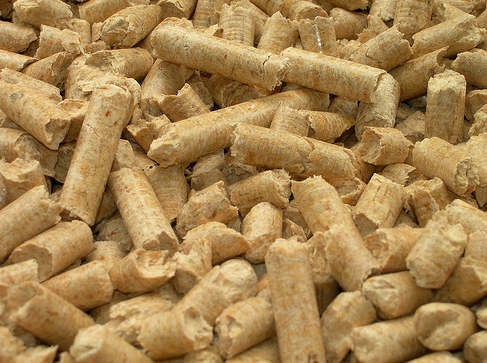
Record wood pellet production in Finland

More wood pellets were produced and imported in 2018 than ever before. In addition, the exports of wood pellets from Finland increased.

“A total of 385,000 tonnes of wood pellets were produced in Finland in 2018, which was almost one-fifth more than during the previous year, and the highest in history. The previous production record of 373,000 tonnes was reached ten years ago in 2008”, says Esa Ylitalo, Senior Statistician at the Natural Resources Institute Finland (Luke).

Imports sky-high

In 2018, a total of 95,000 tonnes of wood pellets were imported to Finland, being more than ever before. Imports increased by nearly 10 per cent from the previous year. Most pellets, more than 90 per cent, were imported from Russia.

In addition, the exports of wood pellets increased from the year before. A total of 43,000 tonnes of wood pellets were exported, one-sixth more than in the previous year. Exports directed almost entirely to Denmark and Sweden. The highest export volume was recorded in 2008 when more than five times the volume exported in 2018 was sold abroad.

Most pellets used by energy plants

Deliveries by pellet producers based on domestic pellet production decreased by five per cent from the previous year to 332,000 tonnes. The majority of this amount, 270,000 tonnes, was used at heat and power plants. The amount of pellets delivered to small-scale housing and farms remained at 62,000 tonnes. The apparent consumption, i.e. production + imports – exports, of wood pellets in Finland amounted to 436,000 tonnes.

“In small-scale housing, the use of wood pellets has not increased as much as was originally expected. It is estimated that there are roughly 27,000 pellet-heated small-scale houses in Finland. Instead, the use of wood pellets is increasing in larger units. New pellet plants are also deployed to replace fossil fuels”, Ylitalo says.

Finland is a small pellet country in Europe

“Finland is a small user of wood pellets on a European scale. According to the most recent statistics of Bioenergy Europe, the highest amount of pellets was consumed in 2017 in the UK, totalling 7.5 million tonnes. The majority of these pellets were imported from North America. The consumption of pellets was more than three million tonnes in Italy and Denmark, and more than two million tonnes in Germany, which also is Europe’s largest producer of wood pellets. France, Sweden and Belgium also consumed more than one million tonnes”, says Ylitalo.

Trends and development of the European wood pellet market in 2018

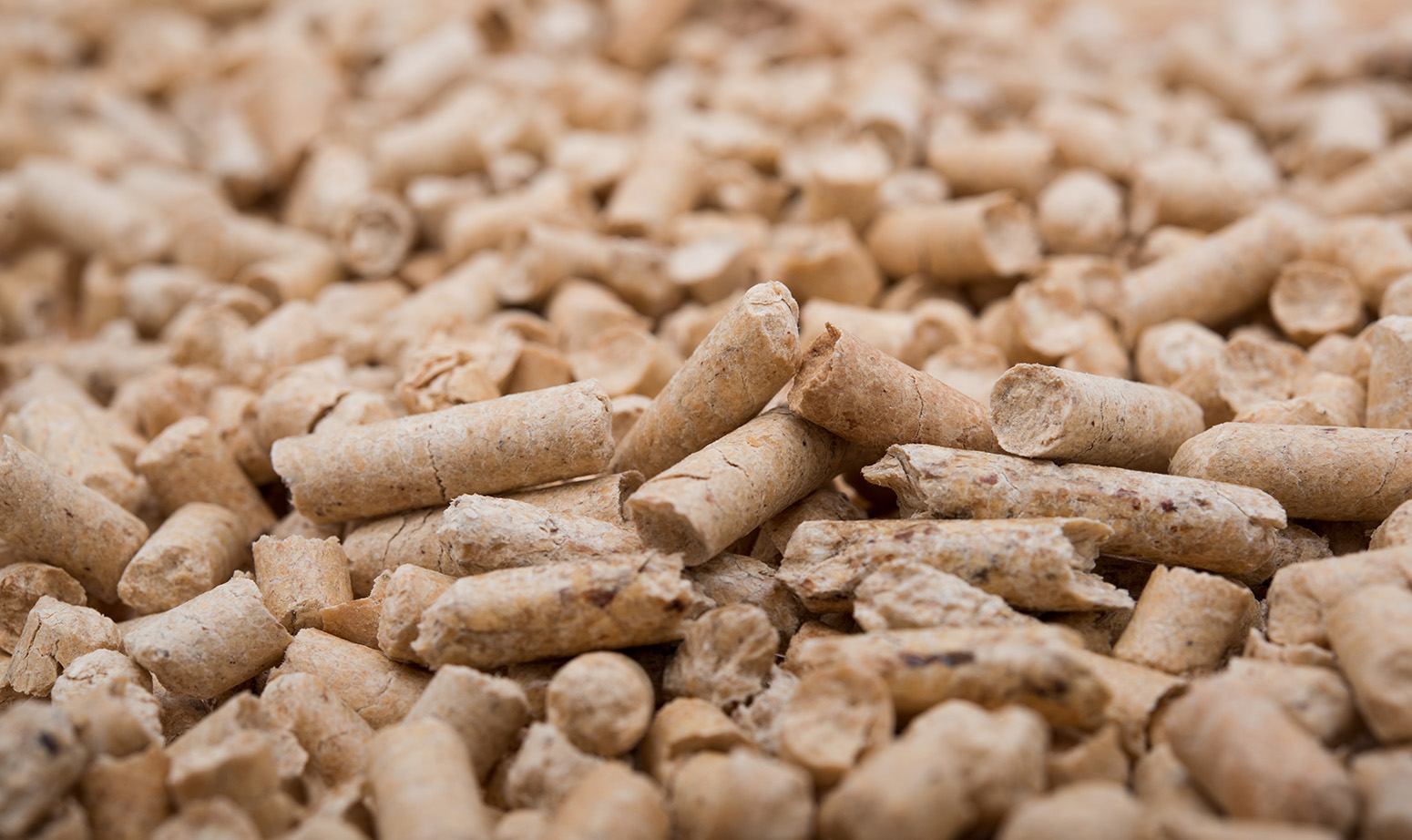
In terms of growth and pricing, 2018 was one of the strongest years for the global wood pellet market in quite some time.

From 2014 to 2016 the growth in global wood pellet trade slowed to 7% per year, accompanied by a low pricing environment and limited capacity expansion. In 2017 market conditions greatly improved and global trade increased 13% to 18.9 million tonnes. That market improvement continued in full force through 2018 as the growth in global pellet trade accelerated to 26%. FutureMetrics projects 2018 pellet trade will have increased to 23.8 million tonnes in 2018 up from 18.9 million tonnes in 2017 (Figure 1). That growth is primarily fueled by increased demand in the UK, Denmark, South Korea and Japan.

United Kingdom

In 2018, UK pellet demand increased with the commissioning of EPH’s 396 MW Lynemouth Power Station conversion and the conversion of a 4th unit at the Drax Power Station. 2019 growth will be primarily driven by a ramp up to full operation at Lynemouth and increased availability at the Drax power station. Continue reading "Trends and development of the European wood pellet market in 2018"

New record in Chinese softwood log imports; New Zealand, top supplier

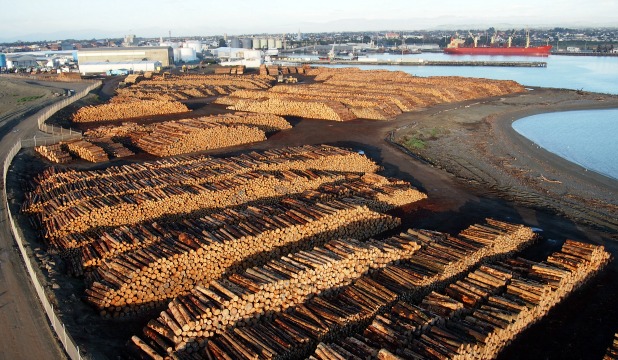
China had another record year of softwood log imports in 2018, when over 40 million m3 of logs landed at Chinese ports. This was the third consecutive year of year over-year- increases, with 2018 volumes being up 37% from 2015. Although import volumes fell slightly from the 3Q/18 to the 4Q/18, the December numbers were the second highest monthly imports on record.

Over the past five years, import volumes have declined from the key supplying regions of Russia and Canada, while they have increased from New Zealand and Australia. New Zealand continues to expand its market share, supplying 44% of the total import volume in the 4Q/18, up from 30% just three years earlier, according to the Wood Resource Quarterly (WRQ). The biggest decline in market share has been that of Russia, which has fallen from 36% to 18% in the past three years. The only other major change the past few years has been an increase in pine log shipments from Uruguay. These have increased from just a few thousand m3 in 2016 to almost 2.5 million m3 in 2018, making the country the fifth largest log supplier to China last year.

The average log import price fell three percent from the 3Q/18 to the 4Q/18, mainly because of lower costsfor logs originating from New Zealand and the US. The total average import price has gone up for three consecutive years. Although the prices have trended upward over the past few years, they are still lower than import prices in 2013 and 2014, when high-cost suppliers in the US and Canada had a larger market share.

Another interesting development is that Japan, the sixth largest softwood log importer in the world, has almost tripled log exports to China over the past few years, from just over 300,000 m3 in 2014 to almost a million m3 in 2018. Other smaller log supplying countries that have increased shipments to China in 2018 include Poland, Chile, South Africa and Germany.

North American wood pellets gain ground in EU

North American wood pellets exports to the European Union countries grew sharply in 2018, as UK's hunger for pellets, supported by the conversion of its major coal-fueled power plants, is still supporting this growth.

The United Kingdom is the top importer of US and Canadian wood pellets and its imports from the US increased by 14% during January-December 2018, amounting to 4.8 million tonnes. Imports from Canada grew at the same pace and reached 1.4 million tonnes. From the total of 7.9 million tonnes of pellets imported by the EU from North America, the UK's share is of almost 80%.

According to the Eurostat latest statistics, Denmark doubled it's wood pellets imports from the US, while Belgian imports decreased by -7%. However, Belgian imports from Canada increased by 8%, up to 182 thousand tonnes.

Wood pellets imported by EU countries from USA by... (in tons )

Importing Country January-December 2017 January-December 2018 Change in %
EUROPEAN Union
5,205,397 6,138,500 18 %
United Kingdom
4,265,670 4,879,881 14 %
Denmark
306,909 623,144 103 %
Belgium
578,407 538,375 -7 %
Italy
40,840 87,525 114 %
Netherlands
1,125 6,625 489 %
Others
12,448 2,951 -76 %
TOTAL 5,205,397 6,138,500 18 %

Wood pellets imported by EU countries from Canada by... (in tons )

Importing Country January-December 2017 January-December 2018 Change in %
EUROPEAN Union
1,478,403 1,762,256 19 %
United Kingdom
1,256,756 1,431,923 14 %
Belgium
168,552 182,309 8 %
Denmark
- 88,071 %
Italy
53,073 50,051 -6 %
Netherlands
- 9,143 %
Others
23 759 3,200 %
OTHER European Countries
- - %
Cyprus
- - %
TOTAL 1,478,403 1,762,256 19 %

Germany: Wood products prices round-up; February 2019

In February, the German producer price index for wood products has registered a high degree of stagnation as compared to January. However, compared to February 2018, most of the prices rose sharply.
Spruce lumber, roof battens and raw particle boards are significantly more expensive over January. All other wood products have registered stable prices or even recorded declines. The latter applies also for timber and pellets.
Compared with the same month last year almost all prices increased. The exceptions are beech blocks and HDF panels which are below last year's level. Energy wood assortments, roof battens and boards (width over 16 cm) and KVH have registered the highest increases. With 104 points, KVH, however, is priced much worse off than softwood lumber products that range between 110 and 120.

Germany's Producer Price Index Commercial Products
(2000=100)
Feb.
2018
Jan.
2019
Feb.
2019
Change
Feb. '18
to Feb.'19
Spruce and Fir lumber (Picea abies Karst.) 108.0 113.3 114.1 5,65%
Lumber according to DIN 4074/S10 112.4 117.3 116.8 3,91%
Finger-jointed squares and beams (KVH) 98.2 104.4 104.4 6,31%
Boards, width over 16 cm 112.5 119.2 119.7 6,40%
Boards, width from 8 to 16 cm, size from 15 to 24 mm 109.8 111.1 111.1 1,18%
Roof battens according to DIN 4074/S10 108.1 114.4 116.6 7,86%
Reserve squared timber, A/B, 10X10 - 12X12 109.0 113.8 113.8 4,40%
Softwood, size>6mm, planed, sanded, finger-jointed 108.1 112.6 112.5 4,07%
Wood chips from softwood 108.0 115.7 115.7 7,13%
Pellets and Briquets, compressed 123.2 137.8 135.6 10,06%
Hardwood lumber 105.7 107.0 107.0 1,23%
Beech blocks, A/B, size 50-60 mm, length 3m, damped 104.8 102.3 102.3 -2,39%
Beech frames, size 26-32 mm, length  3m, undamped 105.8 107.5 107.5 1,61%
Particle boards, raw or sanded 106.4 106.6 108.4 1,88%
Particle boards, laminated with decor 114.4 114.8 114.8 0,35%
HDF panels, size > 800 kg/m³, raw/sanded 112.1 110.7 110.6 -1,34%
Laminate floorings, density > 800 kg/m³ 109.5 109.9 109.7 0,18%

Austria: Wood pellets prices in March 2019

The price of wood pellets in Austria is higher in March 2019 as compared to March 2018. The price currently stands at 250.€/t  for a purchase of 6 tonnes. However, the price of wood pellets in March is at the same level when compared to the previous month (February 2019).
Bagged pellets cost on average € 4.19 per 15 kg bag (when ordering a pallet) or 27.91 cents / kg.
• Year-on-year change: + 2.8%
• Month-to-month change: -0.3%
Pellets for a purchase quantity of 17 tons and without VAT have a current price of 213.86 €/t.
• Year-on-year change: + 3.5%
• Monthly change: -0.3%
 

Wintersteiger to acquire Serra

Wintersteiger AG has purchased Serra Maschinenbau GmbH in Rimsting am Chiemsee, Germany, with retroactive effect to January 1, 2019. Serra employs roughly 40 people and develops, manufactures, and distributes machines and saw blades for mobile and stationary sawmills. Roughly 60 % of its wares are exported to over 80 countries. In 2018 the firm posted increased revenues of 6.4 million euros. Like Wintersteiger, Serra is also a specialist market leader in a niche sector.

The mobile and stationary sawmills complement the Wintersteiger product portfolio in the Woodtech business field (thin-cutting sawing machines, saw blades, automation solutions, and timber repair systems). The acquisition of SERRA has allowed the business field to add further services in the woodworking value-added chain. Logs with a diameter of up to 160 cm are split with Serra sawmills before the wood can be further processed on Wintersteiger thin-cutting sawing machines.

"With this acquisition, Wintersteiger is pursuing a two-pronged approach to growth. On the one hand there is the potential to boost sales of Serra products in markets that have either been completely or largely overlooked to date, but in which Wintersteiger has developed a mature sales structure – such as the USA. On the other hand, Wintersteiger can use the existing sales of Serra sawmills to not only grow sales of band-saw blades in particular, but also thin-cutting sawing machines," explains Dr. Florestan von Boxberg, CEO of Wintersteiger AG.

Johann Fritz, Managing Partner of Serra adds: " Wintersteiger and Serra have already enjoyed a successful relationship stretching back for 15 years; a relationship which will now be further nurtured and intensified. In addition to the complementary nature of each firm's products, we both share a similar corporate philosophy. After 20 years at the helm I am unfortunately having to stand down for personal reasons, but I know that in Wintersteiger I am leaving the company in the safest hands."

The SERRA brand and the Rimsting site will continue under Wintersteiger. Serra’s current Managing Director, Christian Mayer, will be joined by Andreas Doubrava, Authorized Officer of Wintersteiger AG, to form Serra's new management team.

Lack of demand determine SonaeArauco and Tarkett to close laminate JV in Germany

Tarkett and Sonae Arauco announced the intention to cease the operations of their joint venture LaminatePark GmbH & Co. KG., by closing its Eiweiler plant in Germany by the end of 2019.

LaminatePark was founded in 2006 and employs 230 people. The company produces fiberboards and laminate floorings for the German and international market.

This company operates in a very competitive market environment strongly impacted by declining volumes in Western Europe, resulting in a decrease in the sales volume of LaminatePark since 2007 and especially in 2018. This adverse business environment has led to an underutilization of LaminatePark manufacturing capacity, thus dramatically impacting the site’s profitability. The decision was made in the light of there being no reasonable prospects for a material recovery in its financial profitability in the medium term.

LaminatePark will handle the situation responsibly, both for its employees and customers. The company aims to cooperate closely with the Economic Committee and the Works Council in order to ensure that all employees are fairly treated.

Metsä Wood starts test phase for its new Kerto LVL line

Metsä Wood has started test runs on the new 65,000 cubic meter Kerto LVL line at the Punkaharju mill. The investment will increase the mill’s production of Kerto LVL by about 50 per cent. The installation phase of the investment project, launched at the beginning of 2018, was completed on schedule. The first products from the new line will be available for sale in April.

In 2017 to 2018, Metsä Group made its largest investments in wood products. In addition to the Punkaharju mill, there was an investment in Kerto LVL in Lohja, where a new line was introduced a year and a half ago. Since then, the Äänekoski birch veneer mill and the Pärnu birch plywood mill have also started operations.

The production capacity of the new Punkaharju line is 65,000 cubic meters, and the value of the investment is 52 million euros. At the moment, there are some 500 people working at the Punkaharju Kerto and birch plywood mills, including all operations within the mill area. In January, 43 new employees were recruited to the mill, of which 35 were recruited through apprenticeship training. Most of the new employees come from the surrounding area, Savonlinna and Parikkala.

The investment will increase the use of logs by 160,000 cubic meters per year, which adds about 40 person-years to the subcontracting chain.

For the new line, an extension was built to the Kerto mill. The construction was carried out by Rakennusliike U. Lipsanen Oy. The main equipment suppliers are Raute and Pinomatic.

China: New OSB plant to start production in 2020

Work to build a new Chinese OSB factory for wood-based materials manufacturer Jiangsu Hui Dian New Materials Co Ltd will start in 2020.

Siempelkamp has attracted a new customer in its agreement to supply the production plant to Jiangsu Hui Dian.

The location for the new plant is Shuyang in the Chinese province of Jiangsu. One of Siempelkamp Group’s plants is situated about 350km north of the location in Qingdao.

The production line will feature an 8.5ft x 38.8m 8th generation ContiRoll press. The special feature of this plant will be the ability to produce OSB that can be laminated. Similar to OSB, this new product has a fine particleboard surface layer comparable to particleboards used in furniture production.

The specially equipped forming line will have five mat-forming machines.

The scope of supply also includes the screening system and the EcoPulser for secondary size-reduction of chips, the resin dosing and blending system, the double diagonal saw as well as the SicoScan quality measurement system, the thickness gauge and control, the blow detector and the weight scales.

The production management will be controlled by Siempelkamp’s Prod-IQ process control technology.

The plant installation will start in spring 2020 and annual OSB manufacturing capacity will be approximately 300,000m3.

“For me, orders such as this one are an important confirmation of our strategy to increase our presence in China,” said Christoph Michel, spokesperson of the management of the Siempelkamp holding company.

Newsletter

Subscribe to our digital newsletter for your daily digest of essential news, views and analysis from the international wood industry delivered directly to your inbox.


0