

LIGNA 2015 is just around the corner. The international wood industry showcase, which runs from 11 to 15 May in Hannover, Germany, will put the spotlight on the growing Industry 4.0 trend of production process digitization and the shift towards intelligent, fully integrated woodworking and wood processing machines. The worldwide market for woodworking and wood processing machinery is worth an estimated nine billion euros and it’s on show in Hannover in just a few days’ time. Whether it’s kitchen cabinets, doors, windows or roof trusses – if it’s made of wood, it’s made using machines of the kind on show in Hannover at LIGNA 2015.
“Process optimization. Automation. Product individualization. They’re the big themes at LIGNA 2015,” said Dr. Jochen Köckler, a member of the Managing Board of Deutsche Messe, the company that organizes LIGNA. “Companies that work with wood are working smarter as they embrace the automated, connected world of Industry 4.0. They are looking for ways of making their production processes more efficient, and LIGNA is where they will find the innovative, highly versatile technologies they need in order to achieve this. LIGNA mobilizes visitors from all around the world by offering them what they need the most in order to stay competitive. And what they need most right now is automation and integrated production,” he said.
With a close eye on the market, Deutsche Messe has carefully developed and refined the LIGNA exhibition program. As a result, this year’s show will present machinery and equipment for all stages of the wood value chain, from forestry, sawmilling and wood energy to solid woodworking, wood panel and veneer production, right through to industrial furniture manufacturing and the woodworking trades. Home to over 1,500 exhibitors from 48 nations, LIGNA 2015 spans 120,000 square meters (just on 1.3 million sq. ft.) of display area spread across ten exhibition halls and an extensive open-air site. Among several new features, this year’s LIGNA will include a dedicated showcase on automation and integrated production.
High level of international participation
More than half of LIGNA’s exhibitors will come from nations other than Germany – primarily Italy, Austria and China, but also Sweden, the USA, Switzerland, Taiwan, Turkey, Spain and France. LIGNA is also impressively international on the visitor side of the market equation, with more than a third of the entire turnout this year once again hailing from beyond Germany.
Focus theme: integrated production
The wood industry is one of the leading users of Industry 4.0 technology. Smart, production systems that can organize, configure and optimize themselves are already taking shape in the wood processing and woodworking applications, as will be made abundantly clear at this year’s LIGNA. The show will feature entire production lines in action – living, tangible examples of digitally integrated production as an enabler of Industry 4.0. The various aspects of integrated production touched on at the exhibition stands will be explored in greater detail in the course of guided tours and a special speaking event held on site at the Robotation Academy.
LIGNA will also show that digital integration and automation are not the exclusive preserve of big furniture manufacturers; they are also opening up whole new ways for wood craftsmen to boost their efficiency and remain competitive. Cabinetmakers and joiners are increasingly turning to CNC systems in order to be able to deliver on the most exacting customer specifications and produce custom furniture and joinery quickly and at highly competitive rates. CNC technology will soon be the norm in joinery and cabinetmaking workshops – just as circular saws are now. At LIGNA, the world’s leading machinery manufacturers will demonstrate this fact with a comprehensive and highly tailored showcase that will give wood craftsmen all the information they need in order to make the right investment choices.
Premiere of the Wood Industry Summit
Premiering this year in Hall 13 at LIGNA, the Wood Industry Summit is a combined exhibition, matchmaking platform and dialogue forum that is designed to facilitate access to emerging markets for the world’s providers of forestry and primary wood processing technologies. At the heart of the Summit is an international forum featuring speakers from industry, science and government, not to mention delegates from the most important target markets for forestry and wood processing machinery, including, most notably, the timberrich regions of Asia, America, Eastern Europe and Russia. The machinery manufacturers will also present their solutions in the Summit’s exhibition area. The program is rounded out by a solid line-up of discussion panels and technical presentations. The Wood Industry Summit is organized by Deutsche Messe in association with the German Forestry Council (KWF), a long-standing and trusted partner that organized a highly successful international matchmaking event at the last LIGNA show in 2013.
Article archive
US: New pellet plant to be built by Northeast Wood Products

Northeast Wood Products, LLC announced that the first phase of installation and retrofit of its third factory in the Jasper Industrial Park, located in Jasper, Tennessee, is underway. Once operational in November, the plant will produce up to 125,000 tons of premium wood pellets. The first-phase machinery, purchased late last year is on-site, and the building’s size allows a duplicate production line that will be installed during phase II of the construction.
After slightly more than a year of operations, NWP’s annual production volume is expected to be 450,000 tons. This calculation is based on the available output of their factories in Peebles, Ohio; Ligonier, Indiana; and soon, Jasper, Tennessee, in addition to the aggregation of premium product from U.S. manufacturers.
All three of NWP’s production facilities produce high-efficiency, low-cost home heating pellet products that meet or exceed Pellet Fuels Institute and EN A1+ quality standards. NWP’s product line, ThermaGlo® Premium Wood Pellets, are created from wood fiber waste and untreated residue generated from wood processing.
Lumber Liquidators won't sell China-made laminate flooring anymore
Lumber Liquidators on Thursday announced that it has suspended the sale of laminate flooring coming from Chinese manufacturers. The decision comes after media allegations and US federal investigations which claimed that this specific laminate flooring contains excessive level of formaldehyde, a cancer causing chemical.
The company stated that it maintains confidence in China-made flooring it sells, but will pause sales while it continues to investigate the matter.
Despite the initial positive air quality testing results we have received, we believe it is the right decision to suspend the sale of these products.” said Lumber Liquidators CEO Robert Lynch in a statement. “We will work diligently to meet the needs of our customers and to ensure their satisfaction.”
Formaldehyde is commonly used in the manufacture of laminate flooring, but usually in such small levels that it dissipates quickly. If employed in excess, the chemical can remain in the flooring even after it’s been installed. Prolonged, continued exposure to formaldehyde has been linked to numerous health problems ranging from nausea to increased cancer risk. Children are more susceptible than adults to the toxic effects of formaldehyde.
Lumber Liquidators has maintained that believes its flooring suppliers are compliant with safety standards. In today’s statement, the company claims that air quality testing for some of its customers shows that “over 97% of customers’ homes were within the protective guidelines established by the World Health Organization for formaldehyde levels in indoor air.” This statistic is based on the results of approximately 3,400 testing kits received from LL customers with China-sourced flooring in recent months.
Lumber Liquidators won’t sell China-made laminate flooring anymore
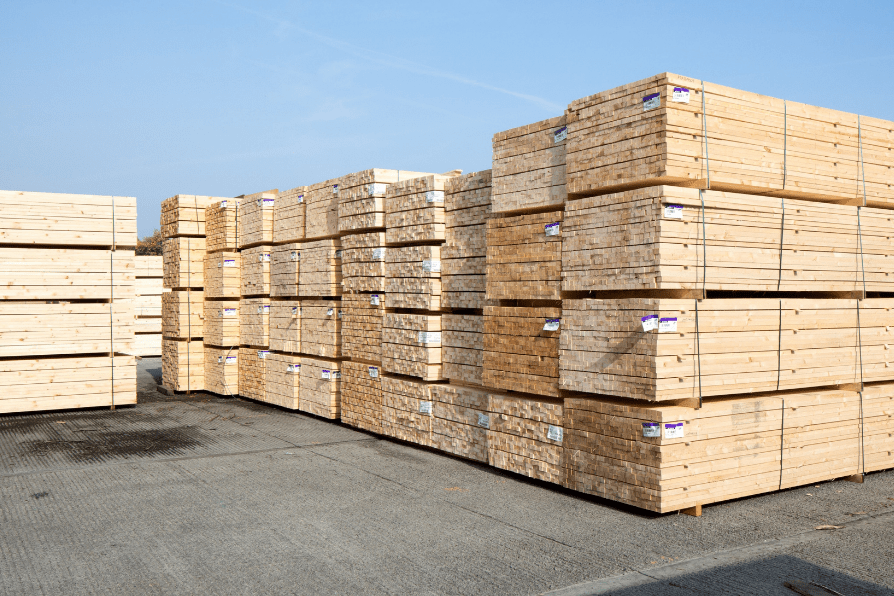
Lumber Liquidators on Thursday announced that it has suspended the sale of laminate flooring coming from Chinese manufacturers. The decision comes after media allegations and US federal investigations which claimed that this specific laminate flooring contains excessive level of formaldehyde, a cancer causing chemical.
The company stated that it maintains confidence in China-made flooring it sells, but will pause sales while it continues to investigate the matter.
Despite the initial positive air quality testing results we have received, we believe it is the right decision to suspend the sale of these products.” said Lumber Liquidators CEO Robert Lynch in a statement. “We will work diligently to meet the needs of our customers and to ensure their satisfaction.”
Formaldehyde is commonly used in the manufacture of laminate flooring, but usually in such small levels that it dissipates quickly. If employed in excess, the chemical can remain in the flooring even after it’s been installed. Prolonged, continued exposure to formaldehyde has been linked to numerous health problems ranging from nausea to increased cancer risk. Children are more susceptible than adults to the toxic effects of formaldehyde.
Lumber Liquidators has maintained that believes its flooring suppliers are compliant with safety standards. In today’s statement, the company claims that air quality testing for some of its customers shows that “over 97% of customers’ homes were within the protective guidelines established by the World Health Organization for formaldehyde levels in indoor air.” This statistic is based on the results of approximately 3,400 testing kits received from LL customers with China-sourced flooring in recent months.
New glulam plant to be built by Keitele in mid-June
Finnish sawmilling company Keitele Wood Products Oy is completing a new glulam factory next to the Lappi Timber Oy sawmill. Both are part of Keitele Group. The new factory will start production on 15 June 2015 and will have a workforce of 25 new employees. The factory is to produce glulam primarily for the Far Eastern markets. The capacity of the top modern glulam factory will be 70,000 m3 per year.
Finnish woodworking machinery producer Pinomatic Oy is delivering mechanisation equipment and automation for the new factory. The delivery includes two separate production lines: a glulam pressing line and planing line for readymade glulam. This is now the third glulam factory of Keitele Wood Products Oy.
Keitele Group is one of Finland’s largest mechanical wood processing companies and delivers timber and processed wood to 35 countries, mainly the EU and Japan. Its production plants are located in Keitele, Alajärvi and Kemijärvi. Keitele Group employs about 380 people and its revenue exceeds 170 million euros.
Pinomatic Oy manufactures production lines and equipment for the wood processing industry and has over 25 years of experience. About a quarter of its production is exported, mainly to the Baltic States, Central Europe and Scandinavia.
US lumber market turns sloppy
The plunge in North American structural lumber prices and the lack of a rebound in sight has caught many people by surprise reports International Wood Markets (IWM). There are several reasons for this, but the short-term crisis is mainly the result of U.S. demand, weak export markets and expanding lumber output. Below are some of the key drivers that may not get resolved anytime soon!
China Market — Supply/Demand:
- A slowing construction market since Q3/14 has created oversupply in logs and lumber.
- Log and lumber stocks are very high (log stocks are up 8% from a year ago, and rising).
- Currency devaluations have caused most lumber prices to drop by 10% since November, but SPF prices are down by 15% in U.S.-dollar terms.
- Weak demand in China/other export markets means soft lumber prices everywhere.
U.S. Market — Supply/Demand:
- Harsh weather throughout the eastern half of the continent has slowed overall demand.
- U.S. housing starts continue to be sluggish.
- An 8% currency devaluation since November (15% since July) has enabled Canadian exporters to lower prices more easily, as U.S. demand has eased and production is up.
- The first (temporary) surge in two years in European lumber exports began in January.
- W-SPF 2x4 lumber prices have dropped by 25% since August 2014 (but only 14% in Canadian dollars).
- The price spread between 2x4 SYP and W-SPF has widened to US$135/Mbf in April 2015 from a more normal US$40–$50/Mbf.
The U.S. market is back to a situation seen often before: too much supply chasing too little demand, says IWM in its report. Chinese and U.S. demand have been especially soft, impacting prices. For the first time in a few years, it is SPF lumber that looks particularly weak: without an opportunity to move incremental lumber outside North America, it will be a grind trying to push more volume into an oversupplied U.S. market. Canadian mills are still making money for now, but are temporarily hampered in terms of where they can ship lumber. And, with the luxury of a currency advantage, there is little likelihood that SPF mills in Canada will shut down this quarter (as is expected at higher-cost U.S. mills, particularly in the West) to help balance the market, says IWM.
Due to the new supply/demand dynamics, IWM is now forecasting subdued lumber prices in the U.S. for the rest of 2015, with Canadian duties on U.S. exports probable for most (if not all) months until October (when the SLA is set to expire)! Without a quick rebound in China or sustained 15% annual growth in U.S. housing starts each month, it going to be messy for quite some time to come.
Sawmill in Mönsterås to be expanded by Södra

Södra is to apply for a new permit for expanded production at its sawmill in Mönsterås. A permit has been sought for 800,000 cubic meters. The current permit is for 450,000 cubic meters.
We have strong confidence in our sawmill in Mönsterås. This permit application is important for the sawmill's future, growth and profitability. On 12 May, a consultation meeting will be held with local residents. The application will subsequently be submitted to the County Council in the early summer," says President of Södra Wood Håkan Svensson.
As a result of production enhancements, the sawmill has now reached the ceiling of the current environmental permit. Södra wants to continue to improve and develop the operation.
Already now, we have the capacity to process 480,000 cubic metres and in the near future, 500,000-550,000 cubic metres. At that point, new investments will be required. A successive increase will take place, but we are applying for a permit now that will allow for growth," says Håkan Svensson, President of Södra Wood.
The increased production is primarily destined for the UK and US, which are two currently expanding markets, where Mönsterås is already a large player.
We also foresee large potential in China. We have doubled our volumes to China in the past year and have a positive view of the future," says Håkan Svensson.
African plywood affected by slow French market and new tariffs
Trends in EU imports of hardwood plywood from African countries varied widely in 2014. Imports from Gabon, by far the largest African supply country, declined 3% to 40,000 cu.m. A significant proportion of this product is FSC certified derived from large European-owned operations in Gabon. Demand was impeded by slow recovery in France, traditionally the main European market for okoume plywood. EU imports in 2014 were also disrupted by occasional strikes by customs officials at Libreville port in Gabon.
Like Malaysia, Gabon's GSP status changed from 1 January 2014 leading to imposition of a 7% tariff on EU imports of hardwood plywood from Gabon.
However, under pressure from EU-based plywood manufacturers, Gabon's exports of hardwood veneers to the EU were exempt from the increase in duty. The overall effect of the new tariff regime is to favour EU-based over Gabon-based manufacturers.
EU imports of hardwood plywood from Morocco declined sharply in 2014, continuing the downward trend of the previous year.
Log export restrictions by Gabon and other countries in the Congo region have meant that Moroccan manufacturers now have limited access to logs. EU imports of plywood from Cameroon have climbed in the last two years, but were still limited at only 7000 cu.m in 2014. EU imports from Ivory Coast and Ghana were negligible in 2014.
The majority of all African hardwood plywood imported into the EU is now destined for just two countries– Italy and the Netherlands – with smaller volumes destined for France, Belgium and Greece. European consumption of okoume plywood has been in long term decline, particularly in France, formerly the leading market. Imports into France were down 40% in 2014 at only 6000 cu.m.
However imports into Italy were relatively stable, while there were small gains in imports by the Netherlands, Belgium and Greece.
Both EU manufacturers and importers reported slightly better demand for okoume plywood in 2014 than in the previous year. This was driven by slow improvements in the construction sector in the Netherlands and Belgium and by rising boat-building activity in Italy. Sales of okoume plywood – generally sold in euros unlike Asian plywood sold in US$ – also benefitted from the weak euro exchange rate during 2014.
Another advantage is relatively short delivery time. Lead times for standard dimensions may be under 2 weeks. A growing share of supply and demand for okoume plywood in the EU market is FSC certified.
With extremely tight margins in the industry, okoume plywood manufacturers were trying to push through price increases in 2014, but struggled in the face of weak European consumption and intense competition from alternative products.
However, in early 2015 the market situation has been sufficiently favourable to allow manufacturers and distributors to push through limited price increases, particularly for FSC certified products.
Softwood lumber price lowers 15% since last year
Sales of framing lumber picked up overall, but downside pressure on prices intensified in a few regions, namely the Inland West and South. A few curtailments in Western Canada drew attention, and contributed to a mildly firmer tone in the S-P-F market. But the downward price trend was unabated and grew steeper in Southern Pine. Traders in many SYP markets said this was due in part to competitively priced Canadian S-P-F. All told, the Random Lengths Framing Lumber Composite Price fell $6, to $321.
|
Week May 1
|
Week April 24
|
Year Ago
2014 |
|
| Random Lengths Framing Lumber Composite Price* |
$321
|
$327
|
$370
|
| KD Western S-P-F #2&Btr 2x4 R/L Mill Price |
252
|
249
|
342 |
| KD Eastern S-P-F #1&2 2x4 R/L, delivered Great Lakes |
348
|
350
|
433
|
| Green Douglas Fir Std&Btr 2x4 R/L (Portland) |
290
|
290
|
327 |
| Southern Pine (Westside) #2 2x4 R/L |
383
|
397
|
385
|
| KD Coast Hem-Fir Std&Btr 2x4 R/L |
300
|
300
|
397
|
| Ponderosa Pine (Inland) #2&Btr 1x12 R/L |
670
|
670
|
745
|
| * Weighted average of 15 key items | |||
Random Lengths Panel Market Report
Structural panel trading was mixed, but the pace slowed overall. Sales of OSB hit a higher gear, but activity at the mill level didn’t accelerate in all producing regions. The biggest gains of the week were reported in the North Central region. Southern Pine plywood sales were light, and most mills finished the week with loads of rated sheathing available for shipment next week. Western Fir plywood prices declined, although the cuts were less severe than they were the previous week. Activity varied by mill and among secondaries.
| (f.o.b. mill prices) | Week May 1 |
Week Apr 24
|
Year Ago
2014 |
| Random Lengths Structural Panel Composite Price* |
$358
|
$360
|
$378
|
| Southern (west-east) 15/32-inch 3-ply exterior sheathing plywood | 414-460 | 418-460 |
400-435
|
| Southern (west-east) 15/32-inch 4-ply exterior sheathing plywood |
414-465
|
420-465
|
400-440
|
| Western 1/2-inch 4-ply exterior sheathing plywood | 387 | 392 |
442
|
| North Central 7/16-inch Oriented Strand Board | 182 | 175 | 230 |
| *Weighted average of 11 key items | |||
EU: plywood imports reach highest price since financial crisis
EU28 imports of plywood increased 12% to 3.7 million cu.m in 2014, the highest level since before the financial crisis. Import value also increased 12% to €1.35 billion. The rise was driven mainly by improved consumption in several European markets, notably the UK.
Another key factor was an increase in supply of Russian birch plywood combined with a sharp fall in the value of the Russian rouble on foreign exchange markets which increased competitiveness of imported Russian product.
Another notable feature of the European plywood market in 2014 were signs that rising concern for the environmental and technical performance of plywood is having a more a significant impact on trade.
In 2014, the EU imported 2.4 million cu.m of hardwood plywood with value of €986 million, up 11% and 13% respectively compared to the previous year. EU imports of this commodity were at their highest level since 2008 (Chart 1).
Compared to previous years, in 2014 the EU market for hardwood plywood was less volatile and changes in supply sources and overall market share were relatively minor (Chart 2). EU28 imports of hardwood plywood from China increased 14% to 1.07 million cu.m in 2014.
However China's share of total EU28 imports increased only slightly from 43% in 2013 to 44% in 2014. Imports from Russia increased 10% to 785,000 cu.m in 2014 and Russia's
share of total imports remained stable at 33%.
Share of EU28 imports of hardwood plywood from tropical countries fell from 14% in 2013 to 12% in 2014.The decline in share was mainly due to a 15% fall in imports from Malaysia to 115,000 cu.m in 2014.
Imports from African countries also declined by 3% to 59,000 cu.m. In terms of tropical hardwood market share, these declines in imports were only partly offset by increases from Indonesia (+24% to 105,000 cu.m) and Brazil (+61% to 20,000 cu.m).
Simpson Lumber's Shelton sawmills to be bought by Sierra Pacific Industries
Simpson Lumber Company, LLC (Simpson) and Sierra Pacific Industries (SPI) have agreed to terms for SPI to acquire the remaining assets of Simpson’s sawmill operations in the Shelton, Washington area. SPI will purchase Simpson’s sawmilling equipment in downtown Shelton, at the nearby Johns Prairie complex, and at Dayton, Washington.
SPI separately announced that it would not operate the mills, but instead will construct at least one new, state-of-the-art sawmill and lumber planing operation on the Shelton waterfront site. SPI anticipates its new mill will be operational sometime in 2017.
Simpson will continue to own its railroad properties, tracks, tidelands and other properties in the Shelton Harbor area, and is considering options to re-purpose those facilities. Simpson Door Company also continues to operate, employing 188 people in nearby McCleary, Wash.
Simpson expects the mill operations in downtown Shelton and Dayton to wind down over the next 60 days. The company has told its employees that most of the Shelton-area jobs will be eliminated. Simpson employs about 270 people in its Shelton-area operations. In addition to paying severance, company leaders are trying to secure government economic aid or retraining support for displaced employees.
The transaction is subject to customary closing conditions. It is anticipated that the sale will be completed this summer.
Back in March, Interfor completed the acquisition of four sawmills from Simpson Lumber Company: one sawmill in Tacoma (Commencement Bay), WA; the others in Longview, WA; Meldrim, GA; and Georgetown, SC.
About Simpson Lumber Company, LLC
Simpson Lumber Company’s roots in the forest products business began in 1890. In addition to its lumber operations, the company also has a subsidiary: Simpson Door Company in McCleary, Wash.
About Sierra Pacific Industries
Sierra Pacific Industries is a third-generation, family-owned forest products company based in Anderson, California. The firm owns and manages nearly 1.9 million acres of timberland in California and Washington, and is one of the largest lumber producers in the United States. The company also produces millwork, windows, and renewable energy.
Simpson Lumber’s Shelton sawmills to be bought by Sierra Pacific Industries
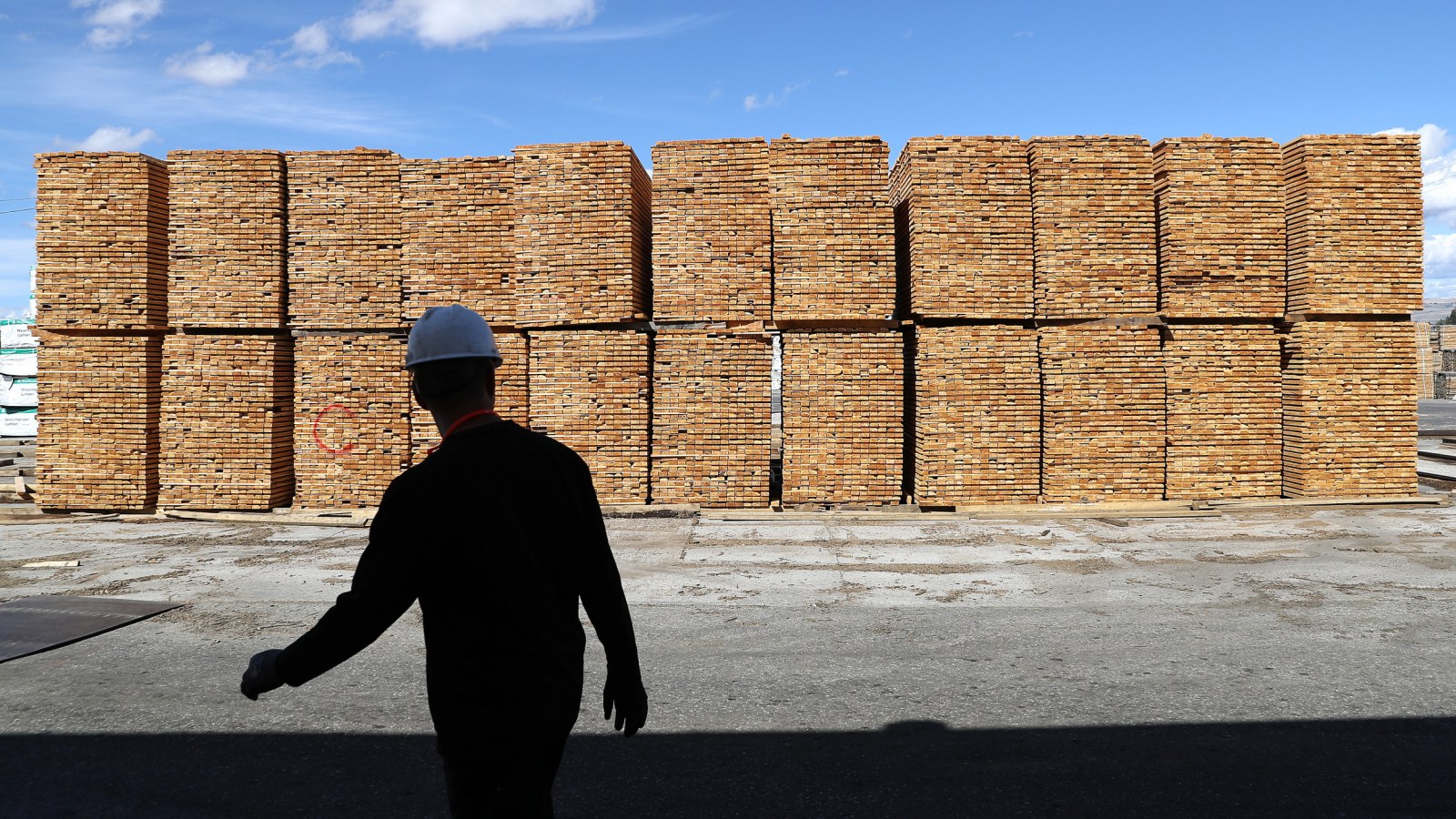
Simpson Lumber Company, LLC (Simpson) and Sierra Pacific Industries (SPI) have agreed to terms for SPI to acquire the remaining assets of Simpson’s sawmill operations in the Shelton, Washington area. SPI will purchase Simpson’s sawmilling equipment in downtown Shelton, at the nearby Johns Prairie complex, and at Dayton, Washington.
SPI separately announced that it would not operate the mills, but instead will construct at least one new, state-of-the-art sawmill and lumber planing operation on the Shelton waterfront site. SPI anticipates its new mill will be operational sometime in 2017.
Simpson will continue to own its railroad properties, tracks, tidelands and other properties in the Shelton Harbor area, and is considering options to re-purpose those facilities. Simpson Door Company also continues to operate, employing 188 people in nearby McCleary, Wash.
Simpson expects the mill operations in downtown Shelton and Dayton to wind down over the next 60 days. The company has told its employees that most of the Shelton-area jobs will be eliminated. Simpson employs about 270 people in its Shelton-area operations. In addition to paying severance, company leaders are trying to secure government economic aid or retraining support for displaced employees.
The transaction is subject to customary closing conditions. It is anticipated that the sale will be completed this summer.
Back in March, Interfor completed the acquisition of four sawmills from Simpson Lumber Company: one sawmill in Tacoma (Commencement Bay), WA; the others in Longview, WA; Meldrim, GA; and Georgetown, SC.
About Simpson Lumber Company, LLC
Simpson Lumber Company’s roots in the forest products business began in 1890. In addition to its lumber operations, the company also has a subsidiary: Simpson Door Company in McCleary, Wash.
About Sierra Pacific Industries
Sierra Pacific Industries is a third-generation, family-owned forest products company based in Anderson, California. The firm owns and manages nearly 1.9 million acres of timberland in California and Washington, and is one of the largest lumber producers in the United States. The company also produces millwork, windows, and renewable energy.
March brings 76% increase of logs imports to China
Log import volumes to China typically increase in the month of March every year and 2015 was no exception with a 76 percent jump from the previous month. The softwood log imports reached 2.9 million m3. This is the highest monthly volume since early in 2014, and incidentally, is also higher than the monthly average over the past two years.
With the Russian ruble falling in value by over 50% over the past six months, there were expectations by some market observers that Russian exporters would increase their export volumes substantially in 2015, but that has not yet happened. In the first quarter of 2015, Russia actually exported fewer softwood logs to China than in the previous quarter, and comparitively, shipments were almost 15% below the 1Q/2014.
There are numerous obstacles to Russian log exporters increasing export volumes in the short-term. These include inadequate ability to promptly increase timber harvests when opportunities arise, limited access to logging equipment, insufficient infrastructure, lack of loggers and truckers, and logistical bottle necks in the entire supply chain from the forests to the ports. As a consequence, many logging companies and sawmills have had difficulty taking advantage of the improved export market opportunities so far.
Rather than a surge in softwood logs from Russia entering the Chinese market, log exporters in New Zealand and Australia increased their shipments by 250% and 165%, respectively from February to March. Combined, the two countries supplied over 50% of Chinese log imports in March, a record high share for the Oceanian log exporters.
While log import volumes to China surged in March, prices did not. The average import price was actually at the lowest level since 2010. Prices for imported softwood logs have trended downward for almost a year and were in March of this year 15% lower than in March of 2014. North American logs have the highest costs, while Australia and New Zealand are on the lower end of the cost scale.
Dispute settled between Andritz and Stora Enso
In 2014, the Austrian machine manufacturer Andritz has initiated arbitration proceedings against Stora Enso-Arauco joint venture in Montes de la Plata, Uruguay. Andritz claimed EUR 200 million for matters that relate to contracts for the delivery, construction, installation, commissioning and completion by Andritz of major components of the Montes del Plata pulp mill project located at Punta Pereira in Uruguay.
The joint venture, Celulosa y Energia Punta Pereira (CEPP), disputed the claims and also actively pursued claims of its own amounting to USD 110 (EUR 91) million against Andritz for breach by Andritz of its obligations under the contracts. Stora Enso has reported the item as contingent liability. No provisions were made in Montes del Plata’s or Stora Enso’s accounts for these claims and counterclaims.
The parties have now signed a settlement agreement and will withdraw the case from arbitration. The settlement agreement results in a USD 44 million (EUR 40 million) cash payment to be made by Montes del Plata of which Stora Enso’s share is 50%. The payment will be recorded as capital expenditure in the Biomaterials segment in the second quarter of 2015. This settlement does not have material impact on Stora Enso’s earnings.
Prices for softwood lumber in U.S. continued to descend last week
Trends in framing lumber mostly pointed downward through the last week. However, prices in most species found a firmer footing by midday Thursday. Increased action in the cash market was attributed in part to a limit-up move in futures on Wednesday. The jump in futures was driven by reports of increased offshore sales and speculation about production curtailments. One major exception to the firmer tone was Southern Pine; prices in this species slumped amid a slow pace. The Random Lengths Framing Lumber Composite Price fell $5, to $327.
|
Week April 24
|
Week Apr 17
|
Year Ago
2014 |
|
| Random Lengths Framing Lumber Composite Price* |
$327
|
$332
|
$365
|
| KD Western S-P-F #2&Btr 2x4 R/L Mill Price |
249
|
249
|
337 |
| KD Eastern S-P-F #1&2 2x4 R/L, delivered Great Lakes |
350
|
361
|
435
|
| Green Douglas Fir Std&Btr 2x4 R/L (Portland) |
290
|
290
|
332 |
| Southern Pine (Westside) #2 2x4 R/L |
397
|
408
|
381
|
| KD Coast Hem-Fir Std&Btr 2x4 R/L |
300
|
305
|
392
|
| Ponderosa Pine (Inland) #2&Btr 1x12 R/L |
670
|
670
|
740
|
| * Weighted average of 15 key items | |||
Random Lengths Panel Market Report
Price declines outweighed gains in structural panel markets. The tone of the OSB market
showed modest firming in the second half of the week after one producer announced that it was taking steps to balance supply with demand. A moderate midweek flurry helped Southern Pine plywood producers alleviate prompt sheathing offerings. This was especially evident on the westside. Western Fir sheathing prices posted double-digit drops, as buyers in the eastern half of the U.S. generally remained absent from the market.
| (f.o.b. mill prices) |
Week Apr 24
|
Week Apr 17
|
Year Ago
2014 |
| Random Lengths Structural Panel Composite Price* |
$360
|
$364
|
$365
|
| Southern (west-east) 15/32-inch 3-ply exterior sheathing plywood | 418-460 | 423-470 |
385-423
|
| Southern (west-east) 15/32-inch 4-ply exterior sheathing plywood |
420-465
|
425-475
|
385-423
|
| Western 1/2-inch 4-ply exterior sheathing plywood | 392 | 418 |
405
|
| North Central 7/16-inch Oriented Strand Board | 175 | 175 | 218 |
| *Weighted average of 11 key items | |||
UPM's Otepää plywood mill supplied by Raute
Raute Corporation has received orders worth approximately EUR 13 million for the machinery and equipment for the expansion of UPM Plywood's mill in Otepää, Estonia.
The most important machinery and equipment included in the scope of delivery are veneer peeling, composing and patching lines, a veneer dryer and a plywood lay-up line.
The deal also includes machine vision and moisture analyzers and a management information system. The deliveries will take place during the spring and summer 2016. The machinery and equipment will be manufactured at Raute's Nastola, Shanghai and Kajaani plants.
UPM Plywood is the leading plywood manufacturer in Europe with production, in addition to Finland, in Estonia and Russia. The machinery and equipment ordered from Raute are a part of the Otepää mill investment program, through which the annual capacity of the mill will be increased up to 90,000 cubic meters.
The Otepää mill will be expanded with new plywood production line including all machinery needed for veneer and plywood manufacturing. The expansion will be realised using mainly current buildings, infrastructure and resources. New production premises will be made about 8,000 m2 by connecting exisiting buildings together.
The investments made to Otepää total to about 40 million euros. The mill’s personnel will grow with about 40 persons along with the expansion.
UPM’s Otepää plywood mill supplied by Raute
Raute Corporation has received orders worth approximately EUR 13 million for the machinery and equipment for the expansion of UPM Plywood's mill in Otepää, Estonia.
The most important machinery and equipment included in the scope of delivery are veneer peeling, composing and patching lines, a veneer dryer and a plywood lay-up line.
The deal also includes machine vision and moisture analyzers and a management information system. The deliveries will take place during the spring and summer 2016. The machinery and equipment will be manufactured at Raute's Nastola, Shanghai and Kajaani plants.
UPM Plywood is the leading plywood manufacturer in Europe with production, in addition to Finland, in Estonia and Russia. The machinery and equipment ordered from Raute are a part of the Otepää mill investment program, through which the annual capacity of the mill will be increased up to 90,000 cubic meters.
The Otepää mill will be expanded with new plywood production line including all machinery needed for veneer and plywood manufacturing. The expansion will be realised using mainly current buildings, infrastructure and resources. New production premises will be made about 8,000 m2 by connecting exisiting buildings together.
The investments made to Otepää total to about 40 million euros. The mill’s personnel will grow with about 40 persons along with the expansion.
Prices between hardwood and softwood chips show higher gap
The price discrepancy between overseas traded hardwood and softwood chips was at its greatest in February 2015 when compared to the prior twelve months, according to the FOEX Chip Price Indexes Prices for wood chips traded overseas have trended downward for much of the period since 2011 when they reached their five-year highs. In February 2015, the FOEX softwood chip price index (PIX-SCG) was 14.8 percent below its peak, while the hardwood chip price index (PIX-HCG) was 9.1 percent below its five-year high.
In just six months, the PIX-SCG index has fallen from $185.73 per oven-dry metric ton (odmt) to $169.31/odmt, a decline of almost nine percent, partly because of lower import prices by some supplying countries to Japan.
The PIX-HCG index has turned around since late last year and reached $183.93/odmt in February this year, the highest level in seven months. Some of the recent increases were the results of higher import prices in Portugal and higher volumes of lower-cost chips to China.
The price discrepancy between softwood and hardwood chip prices has widened the past year and was almost 15 Euros per odmt in February, 2015. However, the current price premium for hardwood chips is close to the average premium over the past five years.
Low price of wood pellets in Switzerland in April
After the premature decline in prices caused by the appreciation of the Swiss franc, now the pellet industry in Switzerland reached the end of the heating season and thus another reduction in wood pellet prices can be noticed this month.
In April, the average price for wood pellets quality ENplus A1 is 393.70 CHF, the equivalent of 380.67 EUR. Compared to March, the pellet price dropped by 2.5%, at least in Swiss francs. In Euro, it increased by 0.8%, since the price of the franc continues to rise and currently stands at 0.9669 euros. Compared with April 2014, the pellet price fell by 3.9%. In € it is, as in March, 13% higher.
Depending on the pellet delivery amount, the price per ton varies from 380.63 CHF (8 tons) to 408.60 CHF (3 tons). Looking at last year's development, from April to May, and the rising franc, it may be reasonably to say that in May a strong price decline will follow.
Q1 rising roundwood prices for Sweden

In the first quarter of 2015, Swedish sawlog prices increased compared to the prior quarter. Moreover, statistics released by the Swedish Forest Agency also show an upward trend for pulpwood assortments.
Overall, in SEK terms, sawlog (delivery timber) prices in Sweden increased by 2 percent, with pulpwood prices rising by 1 percent. Sawlog prices rose the most in Sweden's southern region (4 percent). In Sweden's northern and central region, sawlog prices were unchanged.
Pulpwood prices increased by 4 percent in the northern region and by 2 percent in the central region. In the southern region pulpwood prices were unchanged.
When comparing the first quarter of 2015 with the same quarter of 2014, sawlog prices increased by 4 percent while pulpwood prices were stable.

