Article archive

Central Africa: Logs&sawnwood prices start to move as new buying season begins quietly in Europe

As European companies get back to business after the summer vacation season some notable price changes for major species are beginning to emerge. This, say analysts, is most likely due to re-stocking and fluctuations in demand rather than any underlying strengthening of the market.

Continuing weak demand for padouk in India and Belgium has resulted in falling FOB prices. At the same time demand in Europe for sapelli and sipo was depressed and this is reflected in the decline reported in FOB prices. The volume traded in both timbers generally declines mid-year and if past patterns can be relied upon then demand will pick up in readiness for 4th quarter sales.

Prospects for the construction sector in most European countries have improved in the past year and there is a particular emphasis on the need for new house building in UK.

Uncertain demand prospects especially in the UK Continue reading "Central Africa: Logs&sawnwood prices start to move as new buying season begins quietly in Europe"

Germany: Price list for wood products in July 2016

The sharp decline in prices of German wood products that occurred in the May producer price index, was followed by stable June and a slight recovery in July. With a drop of 2.2 points, the index for wood chips in July stands now at 96.8 points, which is about 12.7% below the prior year month. Pellets and briquettes, on the other hand, have gained 0.3 points, but are still behind the index value of the previous year (-5.2%).
For the other products, the trend observed in June continues. While roof battens and raw boards' price further increased, the values of other products hardly moved.

Producer Price Index Commercial Products
(2000=100)
July
2015
June
2016
July
2016
Change
Jul. '15
to '16
Spruce and Fir lumber (Picea abies Karst.) 112.9 116.3 116.6 3,28%
Lumber according to DIN 4074/S10 115.8 117.2 116.5 0,60%
Finger-jointed squares and beams (KVH) 102.6 104.8 104.8 2,14%
Boards, width over 16 cm 117.0 122.9 122.6 4,79%
Boards, width from 8 to 16 cm, size from 15 to 24 mm 114.7 111.5 110.6 -3,57%
Roof battens according to DIN 4074/S10 114.0 120.8 122.2 7,19%
Reserve squared timber, A/B, 10X10 - 12X12 112.3 114.3 114.3 1,78%
Softwood, size>6mm, planed, sanded, finger-jointed 113.9 112.9 112.8 -0,97%
Wood chips from softwood 110.9 99.0 96.8 -12,71%
Pellets and Briquets, compressed 124.9 118.1 118.4 -5,20%
Hardwood lumber 106.7 108.9 108.9 2,06%
Beech blocks, A/B, size 50-60 mm, length 3m, damped 104.8 102.3 102.3 -2,39%
Beech frames, size 26-32 mm, length  3m, undamped 106.9 109.6 109.6 2,53%
Particle boards, raw or sanded 101.9 112.3 114.8 12,66%
Particle boards, laminated with decor 114.4 114.8 114.8 0,35%
HDF panels, size > 800 kg/m³, raw/sanded 111.3 113.7 112.4 0,99%
Laminate floorings, density > 800 kg/m³ 110.2 109.2 109.1 -1,00%

Finland: Forest industry increases purchases of roundwood

In January-August 2016, the member companies of the Finnish Forest Industries Federation bought from private forests around 20 million cubic meters of wood, which is 15 percent more than the average of the last ten years, and 10 percent more than in the corresponding period of the previous year.

Pulpwood purchases in Finland amounted 10.8 million cubic meters, which is 17 percent more than the average of the last 10 years for January-August. Sawlog purchase amount reached 8.6 million cubic meters, 13 percent more than the average of the last 10 years.
The timber sales pace is expected to remain good during the rest of the year in Finland.
Stumpage price have remained stable
In August, pine and spruce  sawlogs were paid an average of € 53-55 per cubic meter, but the price varied by region by between 43 and 58 euro. The average price of birch logs was € 41 per cubic meter, and ranged between 35 and 45 euro. Pine and birch pulpwood average stumpage price was EUR 15 and spruce pulpwood EUR 17 per cubic meter. Pulpwood prices ranged between 10 and 19 euro.
The price level was affected by the total number of harvested trees, wood quality, ogging method, forestry and long-distance travel, the terrain and the harvesting period.

Euroconstruct sees an ongoing recovery in European construction

Euroconstruct estimates that GDP will grow by 1.9% per annum for the 19 participating European countries in the years 2016-2018, which is virtually unchanged from the December (Budapest) forecasts. The year 2016 will see the GDP of the 19 member countries grow by 1.8%, a forecast which is slightly below the 2% projected in December 2015, while growth of 1.9% is foreseen for 2017. Notably, the year 2015 was the first time in eight years that all Euroconstruct countries recorded an increase in GDP, a development which is expected to continue over the next three years.
Growth in total construction output for both 2014 and 2015 have been revised downwards from the Budapest projections last December, as 2014 saw output increase by 1.1% (as opposed to 1.3%), while 2015 saw growth of 1.4% (as opposed to 1.6%).
Overall construction output in 2016 is expected to improve by 2.6%, although this is below the forecast outlined last December. An unchanged growth forecast of 2.7% is estimated for 2017, followed by growth of 2.4% in 2018, which is an improvement on the forecast of 2% growth outlined at the Budapest conference. Continue reading "Euroconstruct sees an ongoing recovery in European construction"

EU plywood imports on the rise; Germany and the UK leading the market

EU plywood imports are continuing to increase. The EU import leaders, Germany and the U.K., have seen a significant rise in plywood imports as a result of the expansion of the construction sector and furniture industry in 2015. The market share for extra-EU suppliers, meanwhile, amounts to over one third of total consumption, and it is continuing to increase.
Total EU Member States plywood imports increased steadily over the last three years, amounting to 3,214 million EUR in 2015. Continue reading "EU plywood imports on the rise; Germany and the UK leading the market"

Valmet gets EUR-150m order for biomass-fired boiler, storage in Denmark

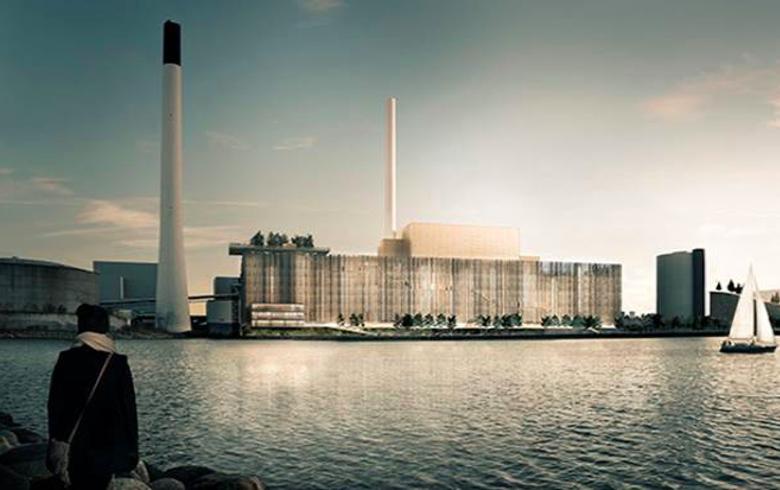
Valmet and HOFOR Energiproduktion A/S have signed a contract regarding delivery of a biomass-fired boiler plant and related biofuel storage and conveyor systems to HOFOR's Amagerværket heat and power plant in Copenhagen. The new power plant will supply electricity and heat for the needs of the city of Copenhagen.The value of the order is over EUR 150 million.
"The HOFOR biomass plant will be by value Valmet's largest boiler plant delivery so far. We have been able to use experiences from earlier similar type of projects in the design. The plant will fulfil tightening environmental requirements by utilizing efficient firing technique. This is an important order for our energy business and we estimate the employment impact to be about 1,000 man years including both Valmet's own and subcontractors' work. For Valmet the main employment impact will be in Tampere and Ulvila in Finland," says Bertel Karlstedt, President, Pulp and Energy business line at Valmet.
The investment will support the climate plan of Copenhagen, according to which the city aims to become the first CO2-neutral capital in the world by the year 2025. Installation of the power plant is scheduled to begin in July 2017, and the heat and power production will start in 2019.
The boiler plant to be supplied by Valmet will help to reduce CO2-emissions from the plant by a total of 1.2 million tons annually. "The investment supports HOFOR's strategy to reduce CO2 emissions through environmentally friendly and cost-efficient district heat production," says Carsten Schneider, Project Director at HOFOR.
Technical information about the delivery
Valmet's delivery includes a 500 MWf CYMIC boiler that uses circulating fluidized bed (CFB) technology, the district heat capacity of which will be 415 MJ/s. The power plant's net electricity production capacity will be approximately 150 MW. The boiler will use a total of 1.2 million tons of sustainable wood chips per year. The new boiler plant will replace an old 600 MW coal-fired plant, the operation of which will end after the start-up of the new plant.
Additionally Valmet's delivery includes biofuel storage and conveyor systems, the capacity of which will be 105,000 cubic meters. The conveying system will feed the boiler with 900 cubic meters of wood chips in an hour, which corresponds to one 18 meters long trucks with biofuel every six minutes, 24 hours per day.
HOFOR is the largest utility company in Denmark with more than one million customers in the greater Copenhagen area. The company pays special attention to sustainable deliveries and renewable energy in its operations.
In co-operation with a number of larger European energy companies HOFOR participates in developing requirements regarding biomass acquisition under Sustainable Biomass Partnership (SBP) collaboration. HOFOR has signed a voluntary agreement between Danish energy companies, the target of which is to secure sustainable biomass use.
HOFOR supplies district heat to 500,000 inhabitants, town gas to 300,000 inhabitants, and district cooling to 39 major customers. In addition, the company is in charge of water supply and waste water services of approximately one million inhabitants.

US imports more hardwood plywood and flooring from China

Hardwood plywood imports grew 4% in June to 279,542 cu.m. but year-to-date imports were lower than in June 2015. The value of plywood imported in June declined 3% to US$155 million.
The reason for higher volumes yet lower value imports in June was increased shipments from China. Imports from China grew 8% from the previous month to 169,806 cu.m., while the value of imports decreased 5%.
Plywood imports from China remained below 2015 levels in June, both in volume and value.
Hardwood plywood imports from Indonesia recovered after a brief decline in May. June imports from Indonesia were 24,486 cu.m., up 12% and worth US$15.4 million.
Plywood imports from Malaysia tripled to ,805 cu.m. from the previous month, while imports from other major plywood suppliers decreased in June.
Moulding imports from Brazil down
The US imported US$14.5 million worth of hardwood moulding in June, down 9% from May. Year-to-date imports were slightly lower (-1%) than in June 2015.
The month-on-month decline was chiefly in moulding imports from Brazil. Brazil’s shipments fell by 24% to US$2.9 million. Imports from China and Malaysia were up in June. Malaysian moulding shipments to the US were worth US$1.2 million in June, up 12% year-to-date from the same time last year.
Thailand increases engineered flooring exports to US
Hardwood flooring and assembled flooring panel imports increased in June to US$4.2 million and US$16.9 million, respectively. Year-to-date imports of assembled flooring panels (engineered wood flooring) grew 8% from June 2015, but hardwood floor imports were down compared to the same time last year.
Indonesia and China were the largest sources of hardwood flooring imports in June at just over US$1 million each.
Despite a jump in imports from Indonesia in June, year-todate Indonesian shipments were down 15% from June 2015. Hardwood flooring imports from China increased 24% year-to-date.
In assembled flooring panels, China and Thailand grew their shipments to the US market compared to the same time in 2015. China remains the main source of imports at US$9.9 million in June.
Imports from Thailand are relatively small (US$323,408 in June), but year-to-date imports increased 76% from June 2015.

Brazil: Wood product trade surplus grows in first half of 2016

Wood product trade surplus grows in first half of 2016 Brazil’s wood product trade surplus totalled US$3.3 billion in the first half of 2016, an increase of 12% over the same period of last year. Total revenue from exports of sawnwood, panels, pulp and paper for the first half year amounted to US$3.8 billion up slightly from the same period in 2015.
Exports of wood-based panels in the first half were 443,000 cu.m, compared to 289,000 cu.m in the same period in 2015, a 53% increase. Pulp exports grew to 6.4 million tonnes, a 16% increase over the same period in 2015. Paper exports increased just over 7% to top 1.1 milion tonnes between January and June 2016.
Exports of Brazilian pulp continue to grow, especially to China, which was the main market in the first half of 2016. A noticeable trend has been the effort of the pulp, paper and wood based panel industries to focus on exports as the strategy to partially offset the decline in domestic demand.
Domestic sales of wood-based panels totalled 3.2 million cu.m in the first half, down 4.2% compared to the same period last year. Domestic sales of paper totalled 2.6 million tonnes, being at about the same level as in the first half of 2015.
July export performance
In July 2016, Brazilian exports of wood-based products (except pulp and paper) fell marginally compared to levels in July 2015, from US$237.4 million to US$ 237.0 million.
On the other hand, the value of pine sawnwood exports increased 0.7% year on year from US$27.6 million in 2015 to US$27.8 million in the first half of this year. In terms of volume, exports of pine sawnwood increased 18.5% over the same period, from 124,000 cu.m to 47,000 cu.m.
Similarly, tropical sawnwood exports increased 19.6% in volume, from 27,100 cu.m in July 2015 to 32,400 cu.m in July this year and but the value of exports rose just 9% from US$13.6 million to US$14.8 million, over the same period.
Brazil’s pine plywood exports declined in July 2016 (-1%) in comparison with exports in July 2015, from US$34.2 million to US$33.9 million but the volumes shipped jumped almost 27% from 102,900 cu.m to 130,300 cu.m, during the same period.
As for tropical plywood, July 2016 exports increased 31% in volume (from 9,700 cu.m to 12,700 cu.m) and export revenues increased around 9% from US$4.6 million to US$5.0 milion.
It came as a disappointment that July 2016 exports of wooden furniture fell around 6.5% year on year.

Universal Forest Products buys idX for $68 million

Universal Forest Products, Inc. signed a definitive agreement to purchase idX Corp., an international provider of store fixtures, retail displays and customized merchandising products in a deal worth $68 million.
Universal Forest Products will acquire all outstanding shares of stock of the holding company, idX Holdings, Inc. The move opens new doors to Universal Forest, for growth in adjacent markets and new products, and offers idX access to enhanced capacity and to new customers and markets. The transaction is expected to close by the end of the third quarter of 2016.
Universal Forest Products will also advance $94.5 million to idX to resolve all outstanding debt. Last year Universal Forest Producst acquired a manufactured home builder, Rapid Wood Mfg., and opened a wood components plant in Utah.
Based in Earth City, Missouri, near St. Louis, idX is a market leader in the $6 billion merchandising solutions industry, with a comprehensive offering of products and services. The company was founded in 1999. Today, it has a network of more than 20 manufacturing, program management and sales facilities across North America, Europe and Asia. It’s sales in 2015 raised to approximately $303 million, according to UFPI.
According to FDMC 300 information, the company had nine manufacturing plants, in Ontario, California; Jeffersonville, Indiana; Columbia, Maryland; Washington, North Carolina; Dayton, Ohio; Cedar Hill, Texas; Puyallup, Washington; Leicestershire, UK; and Wujiang City, China.
The company had 1,400 employees, and produced custom fixtures, displays and millwork for the retail, financial and hospitality markets. idX bought Impressions Marketing Group in 2013.
The company ranked 26 on the FDMC 300 in 2015.
“idX brings to Universal the opportunity to supply some of their operations with products we currently manufacture, to grow adjacent business and capabilities, and to serve new customers and markets,” said Universal CEO Matthew J. Missad.
Universal Forest Products, Inc. is a holding company that provides capital, management and administrative resources to subsidiaries that supply wood, wood composite and other products to the retail, construction and industrial markets.

Canada and the US intensify talks on softwood lumber trade agreement

The negotiations regarding the softwood lumber agreement between Canada and the US are still on for a new meeting between Canadian Trade Minister Chrystia Freeland and U.S. Trade Representative Michael Froman.
The two had already met in China on September 4, during the Group of 20 summit and Freeland expects to meet Froman soon, as no date on the next meeting has been confirmed yet, as reported by Bloomber BNA.

“We continue to explore all possible approaches. Any agreement must reflect the realities of the softwood lumber sector, including differences in communities across Canada,” said Alex Lawrence, spokesman for Freeland.

There have been several meetings and conference calls between the officials of the two countries since the softwood lumber pact expired. In recent months, the level of engagement has intensified and calls are now being held bi-weekly.
Also, the US and Canadian negotiators are working intensively to accomplish the agreement consistent with a joint statement issued by President Barack Obama and Prime Minister Justin Trudeau, as reported by Bloomberg BNA.
The two countries now work on a new agreement because the one year standstill expires by mid-October. Once the standstill expires the US producers can bring dumping and subsidy cases against Canadian softwood lumber imports.
A new pact on softwood lumber should be flexible and reflect the commercial realities of every Canadian province to get the country's support, said Canada's Ambassador David MacNaughton. He added that Canada is ready to work with the US for the best solution. Yet, the US pushes for a quota on lumber imports from Canada, while Canada wants different options for several provinces.


US lumber prices continue to fall; $3 down last week

Sales of framing lumber got off to a fast start last week, on Tuesday. For the rest of the week, the futures tailed off, while the big move on the board followed a surge of orders in the cash market at Western S-P-F mills the previous Friday. Blocks sold late in the period extended order files at some mills, reportedly to late September and early October. Random Lengths Framing Lumber Composite Price fell $3.

This Week
Sep 9
Last Week
Sep 2
Year Ago
2015
Random Lengths Framing Lumber Composite Price* $351 $354 $298
KD Western S-P-F #2&Btr 2x4 R/L Mill Price 314 311 240
KD Eastern S-P-F #1&2 2x4 R/L, delivered Great Lakes 420 421 352
Green Douglas Fir Std&Btr 2x4 R/L (Portland) 332 332 297
Southern Pine (Westside) #2 2x4 R/L 402 409 297
KD Coast Hem-Fir #2&Btr 2x4 R/L 330 330 306
Ponderosa Pine (Inland) #2&Btr 1x12 R/L 690 695 665
* Weighted average of 15 key items

Random Lengths Panel Market Report
Structural panel markets were low and the OSB sales fell short of the brisk pace many traders had anticipated, especially following last week’s surge. Nonetheless, most sheathing prices moved higher on momentum from last week. There was a low demand for Southern Pine rated sheathing, which left the mills willing to negotiate. Buyers were most interested in mixed truckloads. The pace was slower in western Fir plywood markets, but business was still steady after the Monday holiday.

(f.o.b. mill prices) This Week
Sep 9
Last Week
Sep 2
Year Ago
2015
Random Lengths Structural Panel Composite Price* $392 $391 $361
Southern (west-east) 15/32-inch 3-ply rated sheathing plywood 370-389 370-389 390-415
Southern (west-east) 15/32-inch 4-ply rated sheathing plywood 372-390 372-390 395-420
Western 1/2-inch 4-ply rated sheathing plywood 422 420 415
North Central 7/16-inch Oriented Strand Board 304 300 214
*Weighted average of 11 key items

Forecast: Global timber decking market expected to grow steady by 2020

The global market for timber decking is expected to grow at a CAGR of almost 5% between 2016 and 2020. The growth of this market can be accredited to the increased availability of chemically and thermally treated softwood.
There has been an increase in the demand for tropical timber for applications like decking, furniture, and joinery owing to the ready availability of chemically and thermally treated softwood and temperature hardwood.
Treated wood is also used in almost 90% of decks because of their low cost and additional benefits such as durability and longer life span. Currently, North America dominates the global timber decking market by accounting for almost 39% of the overall market share. The increased demand for new housing projects coupled with growth opportunities in emerging markets such as Mexico will contribute to the growth of the timber decking market in North America during the forecast period.
The new market research report from Technavio presents a breakdown and analysis of the timber decking segments based on the end user. Continue reading "Forecast: Global timber decking market expected to grow steady by 2020"

UK's Timber Trade Federation to organize a debate on the impact of Brexit

The Timber Trade Federation (TTF) will hold a debate focused on the impact of Brexit on UK Timber Industry in the afternoon of Wednesday 14th September 2016, at the Building Centre in London.
The ‘State of the Market - Brexit Debate’ will be opened by TTF Managing Director David Hopkins. Speakers include Noble Francis, Economic Director for the Construction Products Association (CPA) giving an overview on market conditions and projections for the UK housing and construction sector as a whole; Mikael Eliasson, President of Swedish Wood giving the view from the UK’s largest timber supplier. The full agenda is available here.
Although too early to give any definitive long term analysis, this half day debate is designed to shed some light on the impact of Brexit so far from producers, importers and the wider market. Subjects of discussion include:

  • What does Brexit mean for the timber supply chain in the UK? How will trade with EU countries be affected?
  • What is the outlook for the sectors timber traders and distributors sell into, particularly housing?

To book your free place at the event, visit http://www.ttf.co.uk/events/state-of-the-market_brexit-debate-september16-27.aspx.
In parallel with the debate, the TTF has also launched an online survey among its members aimed to identify the key issues within the Timber Industry following the UK’s decision to leave the European Union.
The consultation will help the Federation map the likely implications of Brexit for the sector - including the UK Government’s exit negotiations with Brussels - and inform ongoing public affairs work.

UK’s Timber Trade Federation to organize a debate on the impact of Brexit

The Timber Trade Federation (TTF) will hold a debate focused on the impact of Brexit on UK Timber Industry in the afternoon of Wednesday 14th September 2016, at the Building Centre in London.

The ‘State of the Market - Brexit Debate’ will be opened by TTF Managing Director David Hopkins. Speakers include Noble Francis, Economic Director for the Construction Products Association (CPA) giving an overview on market conditions and projections for the UK housing and construction sector as a whole; Mikael Eliasson, President of Swedish Wood giving the view from the UK’s largest timber supplier. The full agenda is available here.

Although too early to give any definitive long term analysis, this half day debate is designed to shed some light on the impact of Brexit so far from producers, importers and the wider market. Subjects of discussion include:

  • What does Brexit mean for the timber supply chain in the UK? How will trade with EU countries be affected?
  • What is the outlook for the sectors timber traders and distributors sell into, particularly housing?

To book your free place at the event, visit http://www.ttf.co.uk/events/state-of-the-market_brexit-debate-september16-27.aspx.

In parallel with the debate, the TTF has also launched an online survey among its members aimed to identify the key issues within the Timber Industry following the UK’s decision to leave the European Union.

The consultation will help the Federation map the likely implications of Brexit for the sector - including the UK Government’s exit negotiations with Brussels - and inform ongoing public affairs work.

Western US sawmills production during January-July 2016

Western U.S. sawmills produced 8.120 billion board ft. (bbf) of softwood lumber in the first seven months of 2016, up 0.8% from 8.059 bbf in the same period last year, according to the latest figures from the Western Wood Products Assn. (WWPA) of Portland, Oregon.
Coastal mills accounted for 4.930 bbf of the seven-month total, down 0.4% from 4.949 bbf a year earlier, while inland mills produced 2.909 bbf, up 2.6% from 2.835 bbf last year. California redwood production increased by 2.2% year-over-year to 281 million board ft. (mmbf), up from 275 mmbf.
In July alone, Western lumber output was 1.071 bbf, down 4.3% from 1.119 bbf in July 2015, and 12.6% lower than production in June 2016 of 1.224 bbf.
Coastal mills accounted for 644 mmbf of July’s output, down 1.5% from 655 mmbf last year and down 14.1% from 750 mmbf in June 2016. Inland mills contributed 391 mmbf, a decline of 7.1% from 421 mmbf in July 2015, and 10.1% lower than production in June 2016 of 435 mmbf.
California redwood production in July was 35 mmbf, down 19.2% year-over-year from 44 mmbf, and down 10.5% from output in June 2016 of 40 mmbf.
Western softwood lumber inventories edged down 0.9% in July to 1.246 bbf compared with 1.257 bbf a year earlier.
Production as a percent of practical capacity for western US sawmills was 81% in July, up from 74% a year earlier but down from 84% in the previous month. In the first seven months, average production as a percent of capacity was 82%, up from 77% in the same period last year.

Husqvarna Group opens first saw-chain factory in Sweden

Husqvarna Group opened its first own saw-chain factory in Huskvarna, Sweden on the 30th of August.
According to a company’s press release, the Swedish manufacturer decided to open the factory because chainsaw performance is highly dependent on the quality of the chain.
SP33G chain is optimized for professional use and will be the first chain to leave the factory. X-CUT SP33G is made of five parts (cutter, tie strap, bumper drive link, drive link and rivet), carefully linked together to become a low-vibration, pixel saw chain that cuts a narrow kerf, and requires less power from the saw than standard cutting systems.
Also, the X-CUT SP33G has four main advantages: long-lasting sharpness, low stretch, high durability, and high cutting efficiency. Several engineers and professional loggers have developed the chain and the whole production happens in the factory, located beside the chainsaw R&D and factory.
Production is all done from scratch, from raw steel to finished product and the total investment rises up to nearly SEK 1 billion.
 

Chatham House meeting takes stock of FLEGT

Chatham House, the UK-based think tank, hosted the annual “Illegal logging Update” meeting in London in June, a two-day event with participants from a range of producer and consumer countries in both tropical and temperate regions – mainly government, NGOs, academics, consultants, trade association and corporate representatives.
The meeting featured a panel discussion on “next steps for FLEGT” which considered the implications of the recently published independent evaluation of the EU FLEGT Action Plan.
The panel comprised Alhassan Attah (FLEGT facilitator, Guyana), Rob Busink (Ministry of Economic Affairs, the Netherlands), Julia Falconer (DFID, UK), Harrison Karnwea (Forestry Development Authority, Liberia), Philippe Mayaux (European Commission) and Putera Parthama (Ministry of Environment and Forestry, Indonesia).
The Panel discussion highlighted and reinforced key findings of the FLEGT evaluation. There was agreement that the EU FLEGT initiative remains relevant and is playing a positive role to improve forest governance in targeted countries.
There was praise for the role it is playing to promote transparency and multi-stakeholder engagement in the forest sector. The success of these aspects of FLEGT is indicated by their being replicated in other sectors in some VPA countries such as Liberia.
The discussion also confirmed other key findings of the evaluation – that FLEGT activity needs to be better targeted and monitored, to adapt to significant changes in the political and economic environment – such as the rising importance of domestic markets in the tropics and other emerging markets, to improve engagement with and relevance to the private sector, and to focus on better communication and extending the network of those involved.
The panel was questioned directly on the continuing relevance of the FLEGT plan now that the EU plays a less significant role in the global wood trade. The panel broadly agreed that the EU market remains significant, even if timber volumes have declined the EU still takes a large share from many tropical countries, particularly in Africa.
The EU is more likely to import higher value products – such as furniture – than other destinations. The panel also emphasised that even as the EU’s direct role in tropical trade is diminishing, the EU can set a positive example for sustainable consumption and make a significant contribution to policy innovation. It was emphasised that FLEGT is more than just a trade initiative, bringing together actors which benefit many in different ways.
The panel was also asked whether lack of FLEGT licenses, 13 years on from the launch of the plan, is a problem. The panel acknowledged that the initial plan may have been too ambitious and that there was a failure to anticipate the time required to embed the changes in systems and capacity across entire countries and sectors in order to develop FLEGT.
However, it was also noted that significant experience has been gained in dealing with this complexity and licensing is close to being achieved in some VPA countries. Concerted efforts are now required to improve market incentives for licensing and to engage more widely with the private sector.

Austrian sawmill industry reports positive development in 1H/2016

Stable to slightly higher sales opportunities in the lumber markets were the main features of the development of the Austrian wood industry in the first half of 2016.
The positive currency development has helped the Austrian market to hold the sales up and running, while also improving the situation in Japan. Yet, the ongoing uncertain political structures in the Levant countries lead to difficult conditions, which are reflected in the slightly negative sales trend. Despite the Levant, there is still interest for the Austrian sawmill industry. Also, the Italian market has taken the positive momentum of last year to the first quarter 2016, slightly increasing the exports on the timber market.
The markets in Austria and Germany are developing very well, considering that the wood-processing industry has reported a very high level of utilization in prefabricated timber area. Prices in the areas of BSH and KVH have tightened significantly since 2016’s spring, as industry representatives reported on the Wood Fair Klagenfurt. As for the lumber sector, there’s yet no  price increase to be implemented.
To date, the Austrian roundwood supply proved very different. The heavy rainfall in spring was mostly an obstacle in the timber transport from the forest. Thus, the damaged timber volume is significantly lower than expected, which causes a negative impact on the supply situation. During the summer and early autumn, there are usually shortages of fresh wood supplies, but for the sawmill industry, however, it is essential to be continuously supplied with the raw wood material. For the coming months, the sawmill industry expects a similarly high level of production as in the same period of the previous year.

Newsletter

Subscribe to our digital newsletter for your daily digest of essential news, views and analysis from the international wood industry delivered directly to your inbox.


0