Article archive

Vietnam: 2018 timber imports almost 10 million cubic metres

Vietnam is increasing its imports of primary wood products, especially hardwoods, from over 100 countries to meet the demands of the rapidly expanding processing sector in the country.

In 2018, Vietnam’s wood processing industry imported the roundwood equivalent nearly 10 million cu.m of timber that provided around 25% of the total input required by the domestic industries. The value of this wood raw material was US$2.34 billion in 2018 up by 7% compared to 2017.

The EU-Vietnam VPA/FLEGT is to be implemented soon according to analysts who say this is expected to generate many export opportunities for domestic manufacturers. However, implementation will challenge the sourcing of wood raw materials as Vietnam still depends on imports from so-called ‘high-risk’ countries in terms of verification of legality.

Most of Vietnam-made finished wood products are exported to developed markets such as the USA, EU, Japan and South Korea so must meet the legal and technical requirements in these countries. This can be achieved by utilsing domestic planation material such as acacia, eucalyptus and rubberwood and importing verified legal timber raw materials.

Among the top 15 raw wood supplying countries there are 7 high risk sources in terms of legality and these currently account for a high proportion of Vietnam’s timber imports.

The implementation of the VPA will also impact imports of high value precious species used mainly for domestic consumption and imported from countries with weak forest management and law enforcement.

High import prices threatens competitiveness of Vietnamese companies

Over the past few years there has been a rise in raw material imports from the US, the EU and some African countries but the Vietnamese industries complain the CIF prices are very high and there are high logistics costs and that this is threatening the competitiveness and productivity of the Vietnamese companies in international markets.

The industry is now relying more heavily on domestic plantation resources for both exports and for domestic sales.
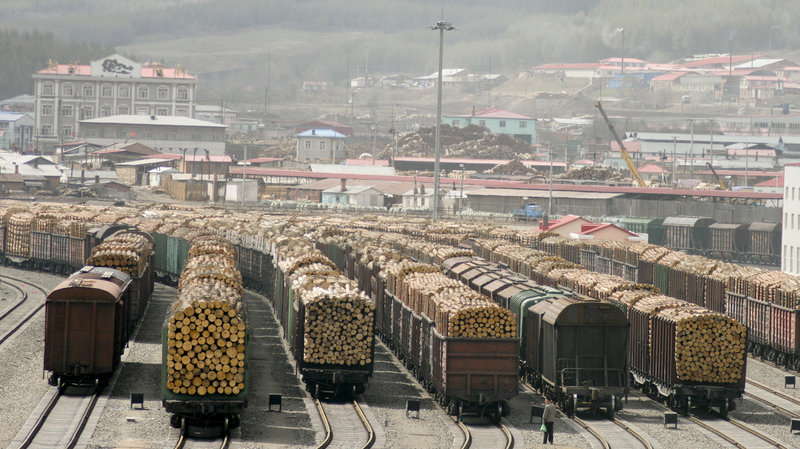
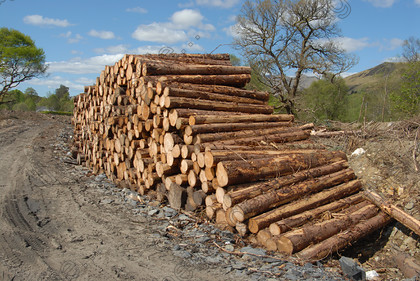
NZ log prices drop sharply; shippers blame cheap Russian and Scandinavian sawn timber arriving by train

New Zealand logs are piling up on Chinese wharves as cheap sawn timber arrives by train from Russia and Scandinavia and puts the skids under prices. In three months “A” grade log prices have gone from US$138/140 a tonne to US$110 a tonne and could sink to US$100-US$105/tonne.

NZ Forest Owners Association president Peter Weir said about 5 million tonnes of logs — mostly from New Zealand — are sitting unsold on wharves in China. Continue reading "NZ log prices drop sharply; shippers blame cheap Russian and Scandinavian sawn timber arriving by train"

Estonia: Considerable drop in roundwood prices in May

Spruce and pine sawlogs are priced at 75-76 EUR / m3 in May, more than 3% lower as compared to the previous month. 

The prices for softwood roundwood in Estonia are falling again after the rapid increase since the turn of 2017/18. The trend, which started in April, intensified in May. Continue reading "Estonia: Considerable drop in roundwood prices in May"

Russian softwood and hardwood sawn timber exports rising rapidly

The export value of Russian softwood sawn timber in 2018 was about $92 million, an increase of nearly 38% compared to 2017, 85.5% compared with 2015 and an increase of 81% over 2016.  Russia's export of hardwood sawn timber increased 2.7 times compared with 2017 and 15 times compared with 2016.

Russian sawn timber and wood processing products exports are growing rapidly, with an average annual growth of 10%. Continue reading "Russian softwood and hardwood sawn timber exports rising rapidly"

Corruption scandal hits hard Gabon’s timber industry

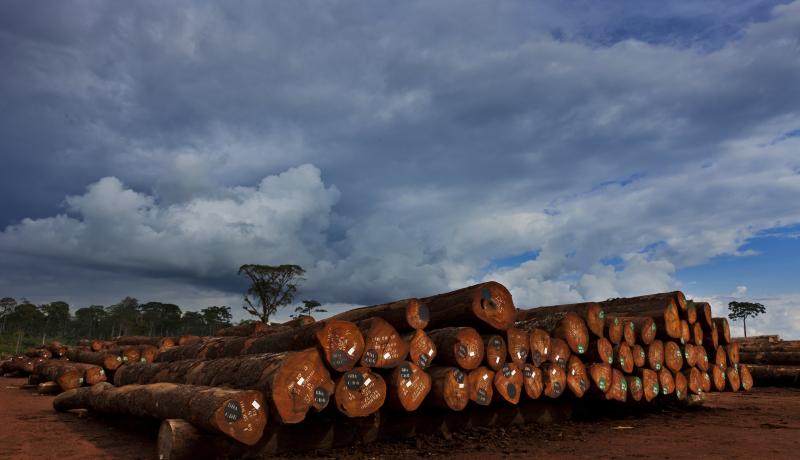
Tropical timber is piling up at Gabon's main port as the country's logging industry reels from a corruption scandal that brought down the vice president and ushered in a veteran environmentalist to oversee its forestry.

Wood is big money in the central African nation, which is almost 80 percent covered by forests. The timber industry accounts for 17,000 jobs and 60 percent of non-oil related GDP.

But at the port of Owendo on the Libreville peninsula, exports have stagnated for months and warehouses are overflowing. Continue reading "Corruption scandal hits hard Gabon’s timber industry"

Enviva starts pellet production at new Hamlet plant

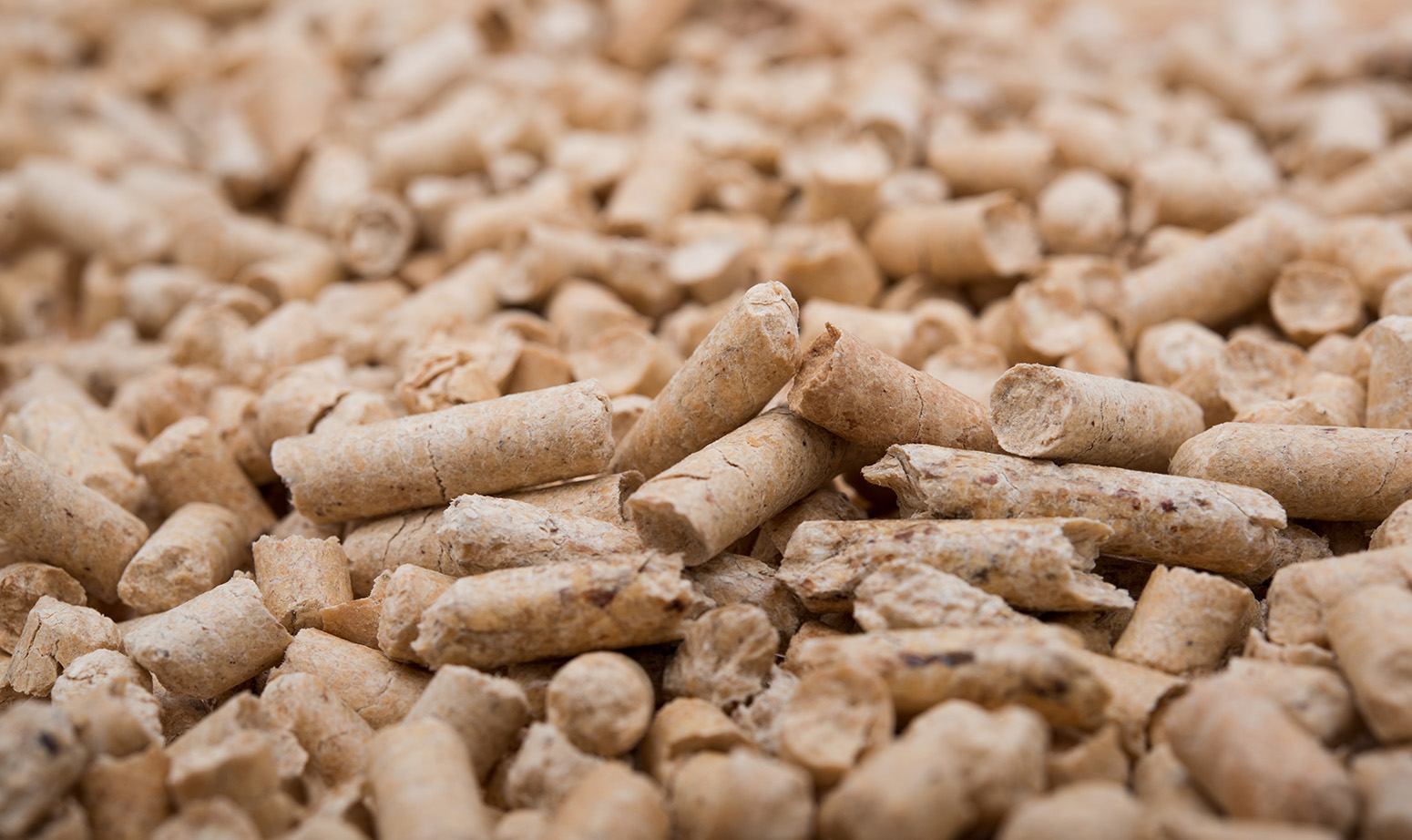
A few days ago, the US pellet producer Enviva Partners started pellet production in the newly built 600,000 t pellet plant of Enviva Pellets Hamlet LLC.

A drop-down process is currently underway for the Hamlet plant. Enviva will pay a total of US$ 165m to its joint venture partnerJohn Hancock Life Insurance. Continue reading "Enviva starts pellet production at new Hamlet plant"

China: Smooth transition in the particleboard market

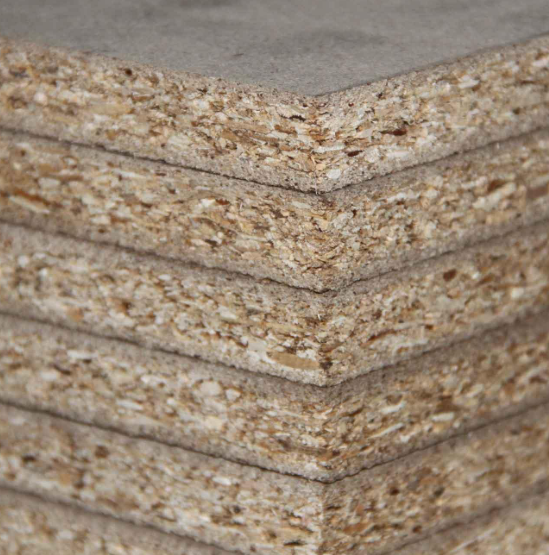
The Chinese particleboard market has a smooth transition. Some merchants have reported that the particleboard market has been hit by the impact of the overall macro environment. However, compared with other wood-based panels and other wood-based panels, the market for particleboard is relatively optimistic. The main reason is that some housing companies have developed it.
The commercial housing will be decorated with fine decoration, and most of them are finely decorated with particleboard, which has played a certain role in boosting the particleboard market. At present, the price of 1220×2440 ×12mm particleboard in Guangdong market is 55-60 yuan/sheet. Continue reading "China: Smooth transition in the particleboard market"

Global sawlog prices fell to the lowest level in two years in the 1Q/2019

In the first quarter of 2019, the global sawlog prices fell to the lowest level in two years. Sawlog prices declined the most in Central Europe, Western US and Russia
The global flow of softwood logs from countries with a surplus of wood raw-material to regions with tight, or costly log supply and higher consumption of forest products continued to expand for the third consecutive year. In 2018, the total trade of softwood logs in 2018 reached a new record high of 93 million m3. Continue reading "Global sawlog prices fell to the lowest level in two years in the 1Q/2019"

China is still a crucial market for the US hardwood industry

The market value for the U.S. hardwood lumber exports has fallen from $2.1 billion in 2017 to $1.9 billion in 2018; and continued to drop sharply in the first four months of 2019.

The American Hardwood Export Council is optimistic toward the Chinese market and committed to discovering more demand for sustainable products despite the headwinds resulting from trade tensions between the two countries.

As the largest export destination for U.S. hardwood, China remains a crucial market for the U.S. hardwood industry and the industry is committed to working with the China market, said Michael Snow, the council's executive director.

"American hardwood exports to China face many challenges, including tariffs, extreme weather and a general slowing of demand, but China remains the largest export market for American hardwood," said Snow.

"We will continue to put more effort into collaboration and promotion in the China market, discover more market needs, fully utilize the low-carbon, sustainable and environmentally friendly characteristics of American hardwood and promote American hardwood application in more fields," Snow added.

Despite the trade dispute, during the past 28 years in the Chinese market, the AHEC said Chinese consumers' awareness of high-quality sustainable materials has grown.

"We welcome a higher consumer awareness in China as well as the rest of the world," said American Hardwood Export Council Chairman Scott Seyler.

He added that as wood proved to be better in terms of environmental impact than other materials, the council was glad to see the positive trend in China.

The trade friction between the two countries has led to a yearly decline in the export volume of U.S. hardwood lumber from January to April.

"American hardwood lumber exports totaled $484 million in China from January to April, a decline from the previous year. Looking forward to the second half of this year and toward the future, we hope that market conditions will recover as soon as possible," he said.

According to the council's report, the market value for the U.S. hardwood lumber exports has fallen from $2.1 billion in 2017 to $1.9 billion in 2018.

"We recognize that the longer this goes on, there will be long-term damage on both sides. We have already seen some of the member companies of AHEC stop operating because they have lost the Chinese market," he added.

"Since 2007, U.S. companies'investment in China has yielded growing profits. While China had a trade surplus, the benefits U.S. companies gained from their China operations were also profound," said Huang Qunhui, an industrial economics researcher at the Chinese Academy of Social Sciences.

"The current global industrial chain was formed under the leadership of U.S.-based multinational companies, so a trade war will only result in losses for U.S. companies."

British Columbia’s lumber production expected to drop 22% by 2023

By 2023, the B.C. Interior’s harvest will be 20 per cent lower than it was before the mountain pine beetle outbreak, leading to a 22 per cent reduction in lumber production (to 9.5 billion board feet).

At this year’s FEA/WOOD MARKETS’ Global Softwood Log and Lumber Conference, Jim Girvan of MDT Management provided an update on the wood supply situation in the B.C. Interior as part of a panel that took a deep dive into the B.C. Coast and Interior regions’ forest. Girvan left some of the audience stunned with his forecast for B.C. Interior lumber production in the next decade.

As background, in 2010, Girvan, his business partner, Murray Hall collaborated in producing a blockbuster outlook report on the B.C. Interior timber harvest and wood products industry. The resulting forecast ¬– “16 sawmills to close by 2018” – made headlines nationally and around the world. To date, about 17-18 sawmills have closed since the 2010 forecast was made.

In his new forecast (BC Interior Regional Fibre Supply Forecast: analysis and forecast of BC timber availability and wood products production to 2028 – to be published by FEA in August), the B.C. Interior’s predicament is framed by a declining timber supply predicated on several factors:

  • The end of the mountain pine beetle epidemic: although drawing closer, the timber harvest will still drop much lower.
  • New spruce bark beetle activity: this is still small, but little salvage work has commenced.
  • A new Douglas-fir bark beetle infestation: this is localized in some smaller areas, but nonetheless represents a new threat.
  • Timber harvest reductions: these are resulting from the massive forest fires of 2017 and 2018.
  • A caribou protection program: this program is underway and will take timber out of the land base.

By 2023, the B.C. Interior’s harvest will be 20 per cent lower than it was before the mountain pine beetle outbreak, leading to a 22 per cent reduction in lumber production (to 9.5 billion board feet). In combination with fires, spruce beetles and the caribou protection strategy, further reductions in lumber output are likely to occur by the end of the next decade with even more sawmills (and OSB mills) closing, not to mention the possibility of a pulp mill, pellet plants and a co-generation plant closing.

Growth in the production of European wood-based panels

The European wood-based panels industry recorded a growth in production of 1.7% in 2018, with notable gains in particleboard, plywood, hardboard and softboard output.

Last week, the European manufacturers of wood-based panels gathered in Dunblane, Scotland for their 2019 Annual General Meeting, generously hosted by Norbord Europe.

All attendees received a copy of the new EPF 2018/2019 Annual Report, the headline figures of which were presented during the meetings. Overall the industry recorded a production growth during 2018 of 1.7%, led by increases on particleboard, plywood, hardboard and softboard.

Production (million m³) Countries 2018 2017 2018 v 2017
Particleboard EU28 + EFTA 32.0 31.2 2.6%
MDF EU28 + EFTA 12.3 12.3 -0.5%
OSB EU28 + EFTA 6.2 6.3 -1.6%
Hardboard EU28 + EFTA 0.5 0.5 1.5%
Softboard EU28 + EFTA 5.2 4.9 5.9%
Plywood EU28 3.2 3.1 1.7%
TOTAL WBP Total 59.3 58.3 1.7%


During the General Assembly, Dr Paolo Fantoni (Fantoni) was unanimously re-elected as Chairman of EPF for his third term from 2019-2021.  Mr Bernard Thiers (Unilin) remains Vice-Chairman. In addition, Mr Mārtiņš Lācis (Latvijas Finieris) will join the Managing Board of EPF as the new Chairman of the Plywood Product Group and successor to Mr Guillermo Hernanz (Garnica Plywood), who retired from this position that he had held since the plywood manufacturers joined EPF in 2016.

For the Open Part of the General Assembly, EPF welcomed more than 100 attendees to a stimulating debate on the opportunities to grow the demand for wood-based panels in construction, in furniture, in packaging and in other applications.  It concluded that an increased use of panels would bring multiple benefits, whilst helping to achieve the shared vision of a climate neutral Europe in 2050.

The next EPF AGM will be held on 17-19 June 2020, in Berlin, kindly hosted by VHI, our German member association.

U.S. lumber prices continue to move up, but pace of growth slower

Sales of framing lumber in U.S. geared down, as buyers had covered many of their needs prior to the holiday-shortened week. Prices continued to go up, but at a much lower pace as compared to the previous weeks.
Monday’s holiday in Canada got trading at mills north of the border off to a slow start. In the U.S., producers noted that sales were better than expected through Tuesday, although expectations for the balance of the week were low. Southern Pine buyers stayed in the market through Tuesday, helping to sustain recent price strength, although speculative purchasing dissipated.

Week
Jul 3
Last Week
Jun 28
Year Ago
2018
Random Lengths Framing Lumber Composite Price* $359 $354 $542
KD Western S-P-F #2&Btr 2x4 R/L Mill Price 392 392 590
KD Eastern S-P-F #1&2 2x4 R/L, delivered Great Lakes 460 460 676
Green Douglas Fir Std&Btr 2x4 R/L (Portland) 343 338 565
Southern Pine (Westside) #2 2x4 R/L 364 351 527
KD Coast Hem-Fir #2&Btr 2x4 R/L 387 387 595
Ponderosa Pine (Inland) #2&Btr 1x12 R/L 855 855 775
* Weighted average of 15 key items


Random Lengths Panel Market Report

Structural panel prices were firm to stronger amid a mixed trading pace. OSB trading fell silent across North America. Sales were confined to modest fill-in loads, but buyers paid modest premiums to secure new orders from mills. Southern Pine plywood trading was inconsistent during the holiday-shortened week, but prices of rated sheathing were firm. Most western Fir plywood producers reported “decent” sales, considering the holiday week’s typical impact on activity. Recent production cutbacks among Canadian plywood mills pushed buyers into the market.

(f.o.b. mill prices) Week
Jul 3
Last Week
Jun 28
Year Ago
2018
Random Lengths Structural Panel Composite Price* $344 $342 $542
Southern (west-east) 15/32-inch 3-ply rated sheathing plywood 340-380 340-380 500-535
Southern (west-east) 15/32-inch 4-ply rated sheathing plywood 345-385 345-385 505-540
Western 1/2-inch 4-ply rated sheathing plywood 359 355 542
North Central 7/16-inch Oriented Strand Board 205 200 435
*Weighted average of 11 key items


China prices for New Zealand logs drop dramatically on oversupply

From a sale price of US$130 per JASm3 for A grade the price dropped -US$15 in one week.
The CFR sale prices in China for New Zealand logs dropped dramatically in the second half of June.
Most exporters consider the market bottomed in early July with the lowest A grade sales in the US$105-110 range. This drop has predominantly been caused by an oversupply of logs and lumber along with negative market sentiment caused by the China - US trade war. The average drop between June and July ‘at wharf gate’ (AWG) prices was NZ$36 per JASm3. This drop in CFR prices and resulting drop in New Zealand AWG prices will have a significant impact on log supply. We expect CFR prices to start moving upward from September/October as activity increases in China as their temperatures cool.
The domestic markets for sawntimber produced by New Zealand mills are similar to last year. We are entering the winter season in New Zealand when demand drops but there seems to be fewer forward orders than this time last year. Their sawn timber sales in Asia and China in particular have significant price pressure as buyers try to compete with the falling log prices.
Due to the drop in the AWG and average domestic structural log prices the PF Olsen Log Price Index for July decreased $16 to $112. The index is currently $17 below the two-year average, $15 below the three-year average, and $7 lower than the five-year average.

Germany: Prices for wood products on a negative trend this spring

The economic downturn noted by the European market research institutes is also reflected in Germany's producer prices for commercial wood products in March and April. 
While a clear upward trend compared to the same month of the previous year was recorded in February, this trend is crumbling in March, and eleven of the 26 wood products are already below the previous year's level in April.
In the short-term comparison with the respective previous month, half of the values ​​are on the red. There are also some values ​​that are stagnating.
In March, only six out of 26 wood products had negative signs compared to the same month last year. Raw chipboard's prices dropped the most, followed by MDF boards and timber. In other words, twenty values ​​are still above the price level of the same month of the previous year. The strongest gains since March 2018 were from melamine-coated chipboards, followed by OSB boards, pellets and narrow boards.
In April, eleven of 26 values ​​had already fallen below the previous year's level, the most noticeable being raw chipboard and MDF boards, followed by wood chips and lumber. 15 values ​​are still positive in April, most noticeably OSB boards and melamine-coated chipboard, followed by strips, windows and doors.
In the short-term comparison, eleven values ​​have yielded. In March, the values ​​for MDF boards and lumber fell the most compared to February. Above all, OSB boards and strips were able to increase.
March producer prices for wood products in Germany

Producer price indices of industrial products (2015 = 100) Mar-18 Feb-19 Mar-19 Change in % Mar. 18-Mar. 19 Change in %. Feb-Mar19
Softwood, Thickness> 6mm, planed, ground, finger-jointed (m3) 103.9 108.3 108.2 4.14% -0.09%
Spruce, fir cut, Picea abies karst. (M3) 104.2 106.4 106.3 2.02% -0.09%
Construction timber, according to DIN 4074 / S10 103.5 103.9 101.1 -2.32% -2.69%
Boards, width 8 to 16 cm 104.7 109.3 109.5 4.58% 0.18%
Boards, width over 16 cm 102 102.6 101.6 -0.39% -0.97%
Roof battens, according to DIN 4074 / S10 106.6 105.8 106.4 -0.19% 0.57%
Standard beams wood A / B 101.6 103.6 103.2 1.57% -0.39%
KVH 106.2 105.9 106.9 0.66% 0.94%
Mouldings from softwood, all edges profiled (m) 103.1 104.4 105.7 2.52% 1.25%
Hardwood sawn timber 105.6 107.7 107.3 1.61% -0.37%
Beech sawn timber 104.9 106.7 106.2 1.24% -0.47%
Oak sawn timber 108.4 111.6 111.6 2.95% 0.00%
Wood in form of plateletsor chips from softwood 92 92.7 93.3 1.41% 0.65%
Pellets, briquettes, logs or similar forms from sawdust. 102.2 106.7 106.9 4.60% 0.19%
Particle board from wood, untreated or ground (m3) 102.2 98.7 97.8 -4.31% -0.91%
Particle board, high pressure laminate surface(m3) 99.8 101.8 101.8 2.00% 0.00%
Particle board, melamine paper surface (m3) 97.8 102.9 102.6 4.91% -0.29%
OSB, waferboard and similar boards, made of wood 116.7 117.5 122.4 4.88% 4.17%
MDF furniture panels, thickness> 9mm, density 650-800 kg / m3 107.5 105.8 104.6 -2.70% -1.13%
HDF board, density> 800kg / m3, raw / ground (m3) 99.7 101 100.4 0.70% -0.59%
Laminate flooring, density> 800kg / m3 (m2) 101.4 99.7 99.5 -1.87% -0.20%
Parquet panels for mosaic floors 105.6 105.6 106.3 0.66% 0.66%
Windows, doors, frames, cladding therefor, of wood 102.7 105.5 106.1 3.31% 0.57%
Doors and frames, door panels 103.9 105.3 105.3 1.35% 0.00%
Flat pallets, pallet tower walls 107.3 107.4 107.5 0.19% 0.09%
Boxes, crates, drums, etc., made of plywood (m3) 101.2 104.7 104.7 3.46% 0.00%

 
April producer prices for wood products in Germany

Producer price indices of industrial products (2015 = 100) Apr-18 Mar-19 Apr-19 Change in % Apr18-Apr19 Change in % Mar-Apr19
Nadelh., Thickness> 6mm, gehob., Geschliff., Keilverz. (M3) 106.2 108.2 108.2 1.88% 0.00%
Spruce, fir cut, Picea abies karst. (M3) 105.1 106.3 105.3 0.19% -0.94%
Timber, according to DIN 4074 / S10 104.5 101.1 102.4 -2.01% 1.29%
Boards, width 8 to 16 cm 106 109.5 108.3 2.17% -1.10%
Boards, width over 16 cm 103.2 101.6 101.4 -1.74% -0.20%
Roof battens, according to DIN 4074 / S10 107.1 106.4 105.9 -1.12% -0.47%
Stock edged A / B 102.2 103.2 100.9 -1.27% -2.23%
Konstruktionsvollholz 106.7 106.9 106.2 -0.47% -0.65%
Last a. Softwood, along edges profiled (m) 102.6 105.7 106.3 3.61% 0.57%
Laubschnittholz 105.7 107.3 108.2 2.37% 0.84%
Beech timber 104.9 106.2 107.2 2.19% 0.94%
Oak timber 108.8 111.6 111.8 2.76% 0.18%
Wood in F. v. Wood Plättch. or Schnitzel from Nadelho. 92.7 93.3 90.1 -2.80% -3.43%
Pellets, briquettes, logs or similar Molds from sawdust. 101.9 106.9 104.6 2.65% -2.15%
Chipboard a. Wood, untreated or ground (m3) 101.7 97.8 97.4 -4.23% -0.41%
Spanpl., M.Hochdruckschichtpr.stoff. m. Decor. (M3) 99.8 101.8 101.8 2.00% 0.00%
Spanpl., M. melaminharzgeträ. Pap.lag. beschi. (M3) 99.1 102.6 102.9 3.83% 0.29%
OSB, Waferboard and similar boards, made of wood 117.4 122.4 122.1 4.00% -0.25%
MDF furniture panels, thickness> 9mm, density 650-800 kg / m3 108.6 104.6 104.8 -3.50% 0.19%
HDF sheets, density> 800kg / m3, raw / ground (m3) 99.5 100.4 99 -0.50% -1.39%
Laminate floors, density> 800kg / m3 (m2) 101.4 99.5 99.4 -1.97% -0.10%
Parquet panels for mosaic floors 105.6 106.3 106.3 0.66% 0.00%
Windows, doors, frames, cladding therefor, of wood 102.7 106.1 106.1 3.31% 0.00%
Doors and frames for it, door panels 104.5 105.3 105.3 0.77% 0.00%
Flat pallets, pallet tower walls 108.3 107.5 106.6 -1.57% -0.84%
Boxes, crates, drums, etc., made of plywood (m3) 101.6 104.7 104.7 3.05% 0.00%

Pinnacle and Tolko to build a new wood pellet production facility

The facility is expected to have a run-rate production capacity of 170,000 to 200,000 metric tons per annum.

Pinnacle Renewable Energy has entered into a limited partnership agreement with Tolko Industries Ltd. to build Northern Pellet Limited Partnership, a new industrial wood pellet production facility in High Level, Alberta, Canada. The facility further diversifies Pinnacle Renewable Energy's fibre supply using high-quality wood fibre sourced primarily from Tolko's existing sawmill in High Level.

Annual production volumes from the facility will be sold through Pinnacle's contracted backlog of long-term, take-or-pay off-take contracts. Under the terms of the partnership, Pinnacle and Tolko will each own a 50% interest in the facility.

Pinnacle will operate the facility and manage all aspects of customer relations, marketing, sales, and logistics. Tolko will supply both heat energy and fibre to the facility under long-term supply agreements. The facility, which will be built on land owned by Tolko, will begin construction in the 3Q 2019. Initial wood pellet production at the facility is expected to commence in the 4Q 2020.

The capital cost of the facility is expected to be approximately $54 million, with 50% funded by Pinnacle and 50% by Tolko. Pinnacle expects the capital cost to be in line with its capital cost to run-rate EBITDA ratio target range. Pinnacle will fund its portion of the capital costs from draws on its recently expanded credit facilities.

Pinnacle is a rapidly growing industrial wood pellet manufacturer and distributor and the third largest wood pellet producer in the world.

Binderholz plans to double sales to the US market in the next three years

Austrian Binderholz is planning to boost its US business through a holding company established specifically for this purpose. Binderholz US Holding GmbH, based in Fügen, Austria was recently founded with the purpose of holding shares in timber companies abroad. 

"We have been sales-oriented in the USA since 2005; the founding only concerns the deepening of our sales activities in this market," Managing Director Natalie Binder explained for the Austrian media. "This year, we are realizing 60 million euros in the US market. A sales doubling is planned for the next three years, " he continued. Acquisitions or investments in companies in the United States are planned.

Most recently Binderholz had bought large in 2016 and 2017. Specifically, two sawmills were taken over in Finland, and a year later also the German Klenk Holz AG. Thus, the Binderholz Group is now the second largest timber industry in Europe. In 2017, more than 5 million cubic meters of roundwood were processed. The fact that consolidated sales of the Binderholz Group rose by 21% to EUR 585.2 million at the end of 2017 was only due to the Klenk takeover. With the full consolidation of Klenk, sales should rise to more than 900 million euros. The profit after taxes remained relatively stable in 2017 at EUR 34.8 million.

In total Binderholz counts twelve locations with more than 2500 employees. The corporate figures for 2018 have not yet been published.

Egger starts production at new chipboard plant in Biskupiec, Poland

On June 28, 2019, Egger Biskupiec began to operate its state-of-the-art chipboard production plant for furniture manufacturing. It is the Egger Group’s 19th plant in the world, with capacity of 650,000 cubic meters of chipboard and an investment of €440 million.

With 400 direct and 600 indirect jobs Egger Biskupiec will supersede the current chipboard import for Poland – one of the largest furniture producing countries in the world.

“I am delighted that we have started production at our Egger Biskupiec plant, and together with our management and staff we are honored to become an important supplier to the Polish furniture industry. We’ve been active in Poland since the early 1990s, and are successfully working with more than 150 local customers”, announced Michael Egger – the co-owner of the company.

The Egger Biskupiec plant was planned and built according to European Union regulation of BAT (Best Available Techniques). The plant has production lines for raw and laminated chipboard which are now, step by step, being started up. In full operation, the production capacity will be 650,000 m3 raw chipboard per year, of which a large part will be finished with decorative surfaces.

Around 400 people will be employed at Egger Biskupiec.

Danzer to close French veneer plant in Souvans

International hardwood specialist Danzer closes his plant in Souvans / France. The production site, which specializes in sliced oak wear layers for engineered hardwood flooring, faces a decline in demand for veneer and a challenging raw material supply.

Due to these specific circumstances, the company is forced to close the plant.

Only two years after the factory’s modernization and a 15 million euros investment, hardwood company Danzer has to shut down its plant in Souvans, France. The ambitious plan to increase the plant’s capacity and to specialize in the production of sliced thick-cut wear layers could not be realized. Hence, Danzer plans to close down the site. The decision was presented to staff representatives yesterday. The decreasing demand for PEFC-certified veneer and the limited availability of suitable raw materials in the region made this step inevitable:

"The ambitious goals of our investment plan could not be realized. After several attempts, we now understand that the Souvans plant cannot operate economically at this location," explains Danzer CEO Hans-Joachim Danzer, emphasizing that "the 95 employees of Danzer France will of course be supported by the company in cooperation with the local administration."

China drastically reduces imports of Russian logs and switches to lumber

In January-May, log imports to China from Russia declined 26.2% y-o-y to 3.6 million m3 with import value dropped 27.2% to $439.8 million, according to China Customs data.

U.S. log exports to China fell 39.5% to 1.6 million m3, export value decreased 44.6% to $338.4 million. Share of Russia in Chinese log imports slid 4.97 pp to 14.3% and share of U.S dropped 4.16 pp to 6.5%.

Russia continues to increase its lumber exports to China adding 18.3% in volume (7.0 million m3) and 7.3% in value ($1.2 billion) from January to May, according to China Customs data.

From January through May, log imports to China from New Zealand expanded 15.4% to 7.4 million m3 with import value surged 13.2% to $1.04 billion. Australian log exports to China jumped 29.9% to 2.5 million m3, while average price declined 18.5% to $109 per m3. Log exports from Germany to China soared 243.0% to 959.0 thousand m3, average price fell 39.8% to $153 per m3.

Total Chinese log imports slid 0.59% to 24.9 million m3, while average price decreased 12.1% to $169 per m3.

New player in the Swedish sawmill industry: Bergkvist-Insjön and Siljan Group to merge

The owners of Bergkvist-Insjön AB and Siljan Group AB have decided to create a strong joint sawmill group based in Dalarna. The Bergkvist family, which owned the company for four generations, remains as a significant shareholder.

New main owner of Bergkvist-Insjön is Dilasso Timber AB, which since May 2018 also owns Siljan Group AB, and together the companies will form the modern sawmill group Bergkvist-Siljan with production in Insjön, Mora and Blyberg, Sweden.

''We are proud to be able to conduct a business that ensures the long-term development of the business in Insjön'', says Ulf Bergkvist, chairman of Bergkvist-Insjön. ''Bergkvist-Insjön and Siljan complement each other both in terms of product range and market and together we also have a significant commodity organization in the region, which benefits the forest owners and other stakeholders in the industry.''

''I look forward to an exciting job together with Bergkvist-Insjön, says Jon Hansson, CEO Siljan Group AB. We are already good neighbors today and the two companies have similar cultures and fit each other well,'' he concluded.

Bergkvist-Insjön AB was founded in Insjön in 1925 by Ulf Bergkvist's grandfather, Axel Bergkvist, and has since then developed into a company with a turnover of approximately SEK 1.5 billion and about 200 employees. Siljan Group AB was founded in Mora in 1897, has a turnover of approximately SEK 1.4 billion and has about 200 employees.

- This deal gives us the opportunity to create a competitive sawmill company in a really good raw material area, says Anders Nilsson, CEO Bergkvist-Insjön, who also takes over as CEO of the new group Bergkvist-Siljan.

The deal is conditional on approval from the competition authorities and is expected to be completed during the summer. The new group will take shape during the autumn and until then the operations in Bergkvist-Insjön and Siljan will continue as usual.

Newsletter

Subscribe to our digital newsletter for your daily digest of essential news, views and analysis from the international wood industry delivered directly to your inbox.


0