Article archive

Ghana: November export prices for logs, sawnwood, veneer, plywood

Ghana recorded a year-on-year rise of almost 12% in the volume of wood product exports between January and August this year (2016, 264,889 cu.m; 2015, 237,004 cu.m) and there was a 26% increase in export earnings over the same period.
Price list for 1-15 November 2016:
Boule Export prices

Euro per m3
Black Ofram 380
Black Ofram Kiln dry 472
Niangon 530
Niangon Kiln dry 560▼

 
Export Sawnwood Prices

Ghana Sawnwood, FOB EURO per m³
FAS 25-100mm x 150mm up x 2.4m up Air-dried Kiln-dried
Afrormosia 860 925
Asanfina 492 564
Ceiba 297 320▲
Dahoma 363 380▼
Edinam (mixed redwood) 520 599
Emeri 465 570
African mahogany (Ivorensis) 848 1075
Makore 730 820
Niangon 500 575▼
Odum 755 869
Sapele 675 815
Wawa 1C & Select 363 465

Export Rotary Veneer Prices

Rotary Veneer 2mm and up,
FOB
EURO per m3
CORE (2mm & up) FACE (2mm & up)
Ceiba 300▼ 400
Chenchen 416 539
Ogea 478 604
Essa 480 561
Ofram 350 406

Export Sliced Veneer Prices

Sliced Veneer, FOB EURO per sq. m
Face Backing
Afrormosia 2.00 0.91
Asanfina 3.00 0.57
Avodire 1.20▼ 0.34
Chenchen 1.40 1.20
Mahogany 1.09▼ 0.82
Makore 0.85▼ 0.55
Odum 1.13 0.40

 
Export Plywood Prices

Plywood, FOB EURO per m3
Ceiba Ofram Asanfina
4mm
415 590 641
6mm
477 535 610
9mm
407 474 613
12mm
364 463 480
15mm
389▼ 410 430
18mm
292 417 370

Grade AB/BB would attract a premium of 10%, B/BB 5%, C/CC 5% and CC/CC 10%.
 
Source: ITTO

Continue reading "Ghana: November export prices for logs, sawnwood, veneer, plywood"

Prices for Indian teak, sawnwood and plywood during November

The price list for teak, sawnwood and plywood between 1-15 November 2016
Plantation teak prices
Demand for planation teak continues to be good and in recent shipments some suppliers have been providing larger diameter log which has lifted prices.

US$ per cu.m C&F
Angola logs 389-574
Belize logs 350-400
Benin logs 290-714
Benin sawn 530-872
Brazil logs 344-540
Brazil squares 333-556
Cameroon logs 405-616
Colombia logs 478-743
Congo D. R. logs 450-761
Costa Rica logs 357-780
Côte d'Ivoire logs 289-756
Ecuador squares 333-454
El-Salvador logs 320-732
Ghana logs 294-452
Guatemala logs 324-646
Guyana logs 300-450
Kenya logs 515-876
Laos logs 300-605
Liberia logs 265-460
Malaysian logs 225-516
Mexican logs 295-808
Nicaragua logs 402-505
Panama logs 335-475
PNG logs 443-575
Sudan logs 358-556
Tanzania, teak, sawn 307-613
Thailand logs 511-700
Togo logs 334-590
Trinidad and Tobago logs 603-753
Uganda logs 411-623
Uganda Teak sawn 680-900

Price range depends on quality, length and average girth of logs. Continue reading "Prices for Indian teak, sawnwood and plywood during November"

Canada’s Premiers plead for quick moves for a new lumber deal

On the 25th of November, Canada’s Premiers urged the Canadian and United States governments to move quickly to reach a new softwood lumber agreement that restores the longstanding trade relationship that benefits the economies of both nations. Continue reading "Canada’s Premiers plead for quick moves for a new lumber deal"

Roundwood prices in Sweden kept a steady rise during Q3/2016

During the third quarter of 2016, the Swedish roundwood prices have increased as compared to the previous quarter, but have slightly decreased as compared to the Q3 of 2015. Continue reading "Roundwood prices in Sweden kept a steady rise during Q3/2016"

Italian wood products sector eyeing growth in North Africa and Middle East

The strategy is that of looking at medium-long-term developments, without being too influenced by the signs of economic instability to which the Middle Eastern and North African countries have historically accustomed Italian entrepreneurs.

“Two elements make these potential sales markets very important for the Italian wood production chain, from manufacturers of machineries and technologies, to panel and finishing companies, to the construction companies,” explains Paolo Fantoni, the director of Made Eventi, the FederlegnoArredo company that organizes Made Expo, the building construction and architecture fair. “The traditional lack of the raw material wood, which often makes it cheaper to import the semi-finished products rather than the raw logs, and the heavy rate of urbanization, which brings with it significant investments in public and private construction.”

That’s why the roadshow organized to promote the next edition of Made (from March 8-11, 2017 in Fiera Rho in Milan) focuses on these countries, beginning with the United Arab Emirates, where Tuesday the first appointment was held, to be followed by Algeria and Morocco (respectively December 14 and 15).

All this to strengthen the internationalization of the Milan fair, where 12% of the visitors were foreigners in 2015, and out of a total of 208,000 participants, 36,000 were operators coming from abroad. The aim is to increase the percentage of exporting wood companies: now they are around 20-25% compared to 50-55% of their “cousins,” the furniture companies. “We must convince the entrepreneurs to invest not only in machineries and technologies, but also in export managers,” adds Fantoni.

The international scenario is indeed favorable: according to the latest ANCE (the Italian construction industry association) report on the presence of Italian building companies in the world, the year 2015 represented the 11th consecutive year of growth beyond national borders for Made-in-Italy construction, with an important role played by the Middle Eastern and North African countries.

“I am convinced of the importance of positioning Italy as a privileged trading partner for these areas,” said Fantoni, “both for the sale of semi-finished or finished products, and for supplying machineries and technologies for the development of the national industries.”

The gap in wood-working skills and in the goods produced in these countries works in Italy’s favor. The export figures for wood products in the first seven months of 2016, which have fallen for Algeria and Morocco compared to the same period in 2015, have little impact on the companies’ strategies. The recovery in the last months and analysts’ forecasts, in fact, encourage Italian companies, which can, in both countries, count on strong public investments in infrastructures and in residential buildings. The situation is different for the United Arab Emirates, and especially for Dubai, where the driving force of Expo 2020 brought a further acceleration in the already flourishing construction industry, which should register a 4% growth in 2017.

Schweighofer’s continued sourcing of illegal timber exposed in new EIA video

A new investigation by the U.S.-based Environmental Investigation Agency (EIA) shows that the largest timber processor in Romania, the Austrian company Holzindustrie Schweighofer , continues to buy illegally cut logs. This comes more than a year after EIA first exposed the company’s illegal sourcing. The full results of EIA’s investigation, carried out in September 2016, will be released in a series of short videos in the coming weeks.

The first video, released today by EIA, highlights the large number of “ghost trucks” arriving daily at Schweighofer’s three Romanian sawmills. Investigators tracked logging trucks delivering timber to Schweighofer’s mills back to the origins listed on officially-registered transportation documents. In about half of the cases, investigators found that the GPS coordinates of the official loading sites appear to be fake.

In order to combat illegal logging, Romanian law requires trucks to register the GPS coordinates of the location in the forest where logs are first loaded onto the truck. For nearly half the trucks observed by EIA entering Schweighofer facilities, the corresponding GPS coordinates showed locations that were nowhere near a forest, including private homes, cemeteries, and cornfields. In each case, investigators confirmed that no loading had recently occurred at or near the GPS coordinates listed in the document.

“EIA’s new findings follow years of stark evidence from NGOs and the media showing that Schweighofer’s sourcing policies incentivize illegal logging in Romania,” said EIA Eurasia Programs Coordinator David Gehl. “The company’s decades-long refusal to accept responsibility for ensuring legal sourcing has caused immeasurable damage to Europe’s last ancient intact forests.”

Romanian forest experts told EIA that using fake GPS coordinates on a timber truck’s official transport documents obscures the actual harvest location, preventing buyers or police from checking the actual origin of the timber. The high number of fake GPS coordinates found by EIA investigators on trucks delivering logs to Schweighofer is a disturbing sign that the company’s control systems remain insufficient for keeping out illegal timber.

As a result of EIA’s 2015 investigation, Romania’s Ministry of the Environment conducted its own investigation in May 2015 and found documentation of over 100,000 cubic meters of stolen logs in just one of Schweighofer’s mills. The case remains under investigation by Romania’s anti-organized crime prosecutors. In early 2016, FSC International launched an investigation into Schweighofer for violations of the FSC’s Policy of Association, which is set to conclude in early December 2016. If FSC’s investigation confirms that Schweighofer has been involved in illegal activities in Romania, Schweighofer could be disassociated from the FSC, including the termination of all its certificates.

In the coming weeks, EIA will release additional videos detailing evidence of continued sourcing of illegal timber by Schweighofer’s Romanian sawmills.

“EIA has long called on Schweighofer to publicly release key information about their log purchases,” said Gehl. “Schweighofer must urgently undertake tangible reforms, including opening up its supply chains to outside scrutiny through the release of detailed information about the forest concessions where each of its logs comes from.”

VIDEO:

Plywood plant worth $61,5 million to be built in Kirov, Russia

SevLesPil JSC plans to build a large modern plywood manufacturing plant in the Murashinsky district of the Kirov region located in southeastern part of European Russia. Continue reading "Plywood plant worth $61,5 million to be built in Kirov, Russia"

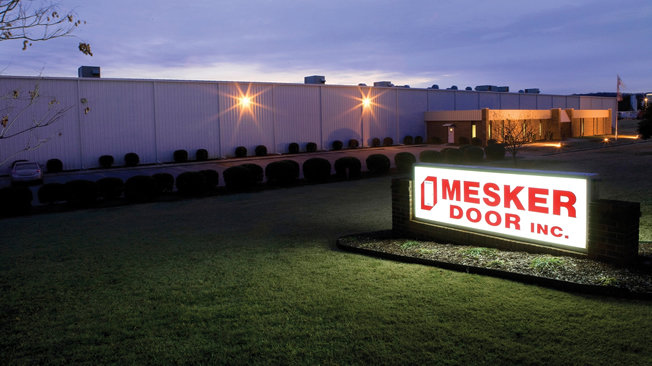
Swiss Dorma+Kaba plans takeover of US door producer Mesker for $142.5 mil.

Dormakaba has signed an agreement to acquire US-based Mesker Openings Group and expects to close the transaction in 2016 upon the satisfaction of customary closing conditions.

With the consummation of the acquisition of Mesker, a leader in the commercial door and hardware industry in the USA, Dormakaba will increase the breadth of its product offering in North America. “The acquisition of Mesker is a continuation of the industrial logic underlying the merger to dormakaba and a consistent implementation step of our strategy for North America," says CEO Riet Cadonau. “It will expand our offering in North American to include all essential door components as well as secure access to buildings and rooms from a single source.”

Mesker was founded in 1864 and is based in Huntsville (Alabama/USA). It offers a diversified product portfolio for commercial, industrial and institutional uses under four well-recognized brands in the industry (Mesker Door, Hollow Metal Xpress, Design Hardware, and Wood Door Xpress). The company’s five manufacturing and distribution facilities are strategically located in key regions providing significant efficiencies in delivering customizable products with very short lead times.

“By acquiring Mesker, we will add to our portfolio such products as manual doors and frames,” says Michael Kincaid, COO AS AMER. “This will enable us to serve customers more effectively and broadly, as some customer groups in our market request a full package, including doors.” The addition of Mesker will also provide Dormakaba with expanded distribution network and channels, and it will open up attractive sales opportunities due to Dormakaba’s presence in verticals such as Lodging and Multihousing, as well as in sales channels such as Security Hardware, Contract Hardware Distribution and Services.

Mesker has about 400 employees and generated turnover of about USD 67 million in 2015 (US GAAP), with an adjusted EBITDA margin close to 20%.

The purchase price is USD 142.5 million, which amounts to an EBITDA multiple of 8.9x on 2016E basis. The acquisition is expected to be accretive to Group EBITDA margin as well as to EPS from day one.

Dormakaba Group is one of the top three companies in the global market for access and security solutions. With around 16,000 employees and numerous cooperation partners, the group is active in over 130 countries. Dormakaba Group is headquartered in Rümlang (Zurich/Switzerland) and generates an annual turnover of over CHF 2 billion.

Canada-U.S. softwood lumber war restarts, after U.S. Lumber Coalition files petition

The softwood lumber dispute reignited Friday after the U.S. Lumber Coalition said it formally petitioned the American government to impose duties against Canadian softwood lumber producers.

The lobby group said it asked the U.S. Department of Commerce and the U.S. International Trade Commission to restore the conditions of “fair trade” for softwood lumber.

The coalition alleges that provincial governments, which own most of Canada’s vast timberlands, provide trees to Canadian producers at rates far below market value, along with other subsidies. As a result, the group says Canadian lumber is being sold for less than fair value in the United States. Continue reading "Canada-U.S. softwood lumber war restarts, after U.S. Lumber Coalition files petition"

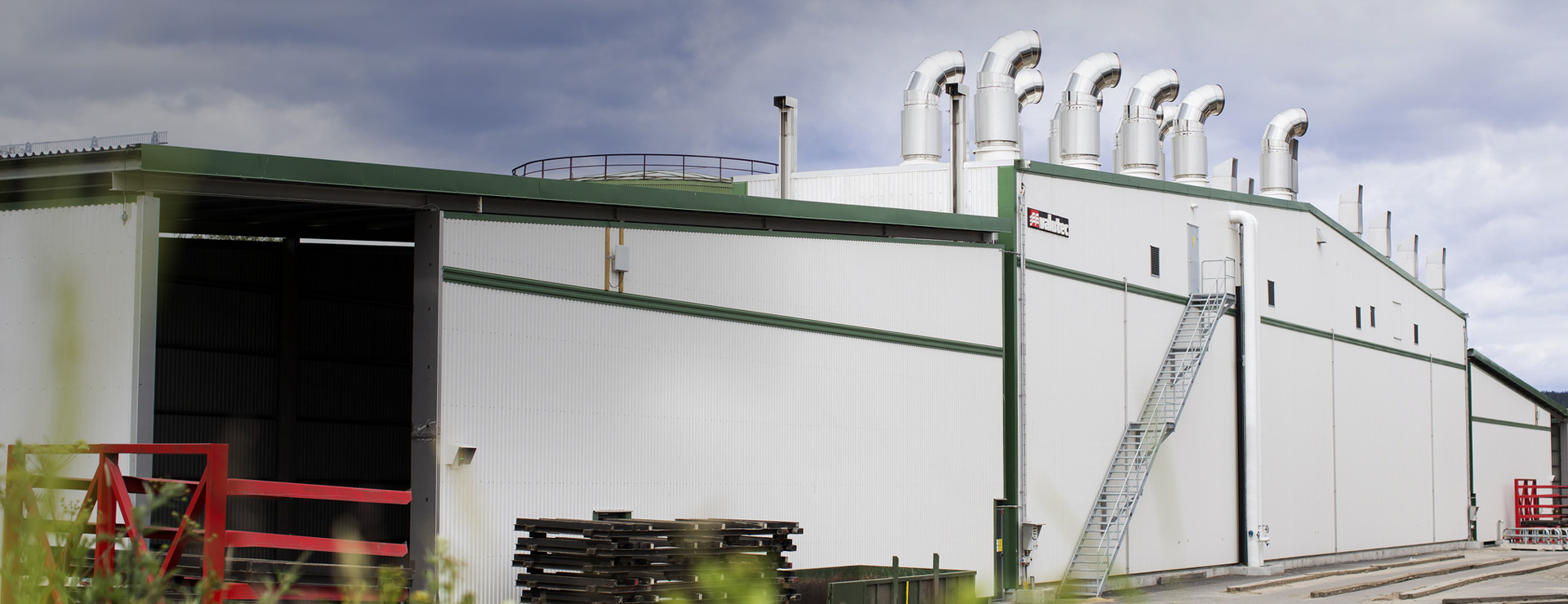
Valutec receives TC continuous kilns orders from major European sawmills

New high capacity TC continuous kilns are right now being planned and built all over Europe. In Germany, multinational wood-based panel manufacturer Egger is building Central Europe's first Valutec TC-kiln. Also, the two major Scandinavian sawmills, SCA and Södra Timber, have invested in larger TC kilns.

Egger Brilon in Germany's Hochsauerland invested in a Valutec TC continuous kiln this spring. Commissioning is scheduled for late November.

Egger is a professional organization and cooperation has been good from the beginning, says Fredrik Åhman, project manager at Valutec.

In a Valutec TC continuous kiln, timber package are fed length-wise through zones in which the air circulates laterally across the drying channel. This enables the separate regulation of the climate in different zones according to a schedule that comes very close to the ideal schedule of a batch kiln.

Egger's kiln will be used for spruce to a target moisture content of 18 percent.

As Central Europe's first TC-kilns are built, they continue to become a common sight at Scandinavian sawmills. Recently, company groups SCA and Södra Timber invested in TC-kilns which increased their capacities significantly.

Both kilns are built with as triple track kilns instead of double track kilns.

This way, we can reach a high capacity without building a kiln that's challenging because of it's length. That was important for us when we made the decision to invest, as well as the fact that Valutec build very good kilns, which we are confident in after a long cooperation, says Urban Wiklund, site manager at SCA Gällö.

HOLTEC to supply log sorting line and sawmill infeed to GP Wood in Ireland

The Irish sawmill company GP Wood (fusion of the family owned companies Grainger and Palfab in 2013) plans investments in the amount of 14 million € at its main site in Enniskeane.

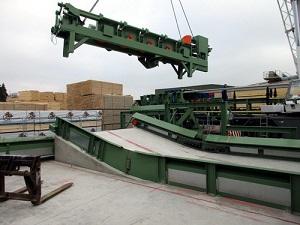
HOLTEC will supply a log sorting line as well as the sawmill infeed. The sorting line consists of a log deck, tandem step feeder, butt end reducer, measurement conveyor, turning device and sorting boxes. Just as the sawmill infeed it is designed in the HOLTEC standard solid line.

The complete waste evacuation, control and periphery (stairs, platforms, safety equipment) are part of the HOLTEC scope of supply.

Start of the installation was October 10th, 2016. 

GP Wood produces among others construction timber, material for fences, packaging wood as well as garden wood.

Lumber prices rising high in US

Sales of framing lumber were more active than many traders had anticipated heading into the holiday-shortened week. Prices in various species were on the upswing through Tuesday, even as many traders in the U.S. filtered out of their offices. Last week’s faster pace and finish helped producers carry momentum into Monday, with mills holding or bolstering Continue reading "Lumber prices rising high in US"

British Columbia explores opportunities for wood products in Japan

British Columbia's Forestry Asia Trade Mission delegates have a better understanding of trends, priorities and Japanese market opportunities for British Columbia wood products after touring a six-storey, 2x4 demonstration project and two-storey cross-laminated timber test house in Tsukuba, Japan, just outside Tokyo.

The projects are located at the Building Research Institute, Japan’s leading government research organization focused on housing, building and urban planning. The institute has an extensive history of joint research and development with foreign organizations, including programs with the University of British Columbia, FPInnovations and Canada Wood.

Completed in March 2016, the six-storey, 2x4 demonstration project (funded by the Japanese government) shows the viability of six-storey, 2x4, mid-rise structures made entirely from wood by incorporating “fireproof” features. This is the first building to achieve Japan’s two-hour fire-resistive standard for wood construction. Over 1,000 building professionals have visited the project since its completion.

Previously, 2x4 buildings were limited to four floors in wood or four floors in wood atop one floor with reinforced concrete in Japan. However, with achieving a new two-hour fireproof standard, 2x4 buildings can be built as high as six storeys in wood. The demonstration project is the first to incorporate these fireproof features as well as various innovative wall/floor components such as double-midply wall system, I-joists, parallel chord floor trusses and cross-laminated timber floors.

The two-storey cross-laminated timber test house is next to the 2x4 demonstration project and is meant to advance cross-laminated timber construction in Japan. The 130-square-metre test house is constructed from two-metre wide by six-metre long cross-laminated panels made from Japanese Sugi.

Both projects will be equipped with sensors that measure a variety of performance indicators such as durability, energy efficiency and seismic resistance.

Quotes:

Steve Thomson, Minister of Forests, Lands and Natural Resource Operations –

“Canada and Japan share a common appreciation and affinity for wood and our respective countries play leadership roles in encouraging the use of environmentally sustainable timber construction. The British Columbian and Canadian governments and industry continue to support collaborative research programs with Japanese stakeholders such as the Building Research Institute and the Japan 2x4 Home Builders Association.”

Rick Jeffery, chair, Canada Wood Group –

“Canada and Japan host vibrant research communities and forward-thinking forest products industries that are focused on advancing the growth of global timber use and we have much to learn from one another. The technical and commercial challenges that we face in creating markets for mid-rise and mass timber are not insignificant, but the more that we engage and collaborate, the better our chances for success in commercializing next generation wood building systems that will benefit our respective industries.”

Quick Facts:

  • Japan’s Building Research Institute was established in Tsukuba, Ibaraki Prefecture in the 1980s. It is Japan’s leading government research organization focused on housing, building and urban planning, with research and development programs directed by Japan’s Ministry of Land, Infrastructure, Transport and Tourism.
  • Cross-laminated timber panels consist of multiple layers of lumber positioned at right angles to each other and glued together to form a strong, rigid and stable end product.
  • Mid-ply walls incorporate assembly innovations that double the seismic performance in comparison to standard walls.

Europe’s protected forests are destroyed to meet EU renewable targets, says report

Protected forests are being indiscriminately felled across Europe to meet the EU’s renewable energy targets, according to an investigation by the conservation group Birdlife. Continue reading "Europe’s protected forests are destroyed to meet EU renewable targets, says report"

US expected to fire up softwood lumber dispute with investigation request

The US Lumber Coalition is expected to submit various petitions in a request for an investigation in the ongoing softwood lumber dispute.

The petitions will be submitted to the Department of Commerce on the 25th of November, as said by a spokesman for International Trade Minister Chrystia Freeland.

According to CBC News, softwood lumber is excluded from the continental trade agreement and lumber producers in both countries continually bicker over whether Canadian companies' cheap access to public forests constitutes an illegal subsidy. Continue reading "US expected to fire up softwood lumber dispute with investigation request"

Cameroon plans to increase export lumber tax from early 2017

The lumber export tax from Cameroon might increase to 20% from early 2017, if the Parliament adopts the proposal made by the government in the 2017 Finance bill currently under review without any changes. Continue reading "Cameroon plans to increase export lumber tax from early 2017"

Ukraine: Export duty might be a concession, if roundwood exports ban is retracted

The admission of an export duty of around EUR 50 per cubic meter of unprocessed timber might be some kind of concession, if Ukraine retracts the moratorium to export round timber that the European Union is waiting. Continue reading "Ukraine: Export duty might be a concession, if roundwood exports ban is retracted"

Start up of HOLTEC sorting line in the biggest Ukrainian sawmill

About 200 km northwest of Kiev the biggest Ukrainian sawmill starts putting its equipment into operation. The company will operate under the brand “Rezult” at the market. The sawmill capacity is designed for 1.2 million solid m³. Up to 400 jobs shall be created with the new mill.

HOLTEC supplied a high-capacity log sorting line with 88 sorting boxes. Further cornerstones of the system are two butt reducers, one double rotor debarker as well as a JÖRG ELEKTRONIK log scanner.

The log sorting line has already been put into operation in summer this year, the complete sawmill is going to go on line by the end of this year.

The sawmill is part of a fully integrated site. The same company operates a huge MDF mill for several years in Korosten. Part of the residual materials shall be used there in future.

About Holtec

HOLTEC GmbH is a premium equipment manufacturer for the wood industry; a manufacturer for log processing and crosscut systems for lumber packages.

With 150 employees, Holtec's product fields are:

  • Log handling systems for the sawmill industry
  • Package crosscut saws for sawmills and timber processing companies
  • Log yards for chipboard, MDF and OSB mills

Central/West Africa: Latest logs&sawnwood export prices

Most Central/West African timber traders are focusing on the financial implications, foreign exchange volatility and the likely impact on global markets of the US Presidential election.
Everyone is anticipating a very uncertain trading environment and expecting the coming months to be turbulent. Immediately after the US election exchange rates were very volatile with the Japanese yen particularly affected becoming, once again, the favourite safe haven.
Traders now have to wait a see how US trade negotiations progress and what will happen to existing free trade agreements.
Some price increases but these not a signal of improving market sentiment
Getting back to reality, there are once again a few price changes reported stemming from a boost in demand for specific species however analysts are quick to point out these changes do not signal any shift in overall market sentiment. West and Central African exporters report that markets are dull and they do not foresee any improvement in demand or prices through to year end.
As previously reported, the government in Gabon is experiencing financial constraints and there are rumours that they may consider resumption of log exports to generate income however most observers believe this is extremely unlikely. The new Minister for Forests has not yet announced decisions on several outstanding policies issues remaining from the previous administration.
Quiet EU construction and housing demand
Producers report business in the EU is steady but not showing any signs of growth and those trading with the UK report very dull trading conditions as activity in the construction and home building sectors has slowed.
Uncertainty in the global political and economic environment makes it most likely that timber markets will remain dull well into 2017.
Logging residues and carbon emissions
Researchers at the Nicholas School of the Environment, Duke University, have reported on a research project which suggests logged forests in Central Africa may contain more than three times as much carbon-emitting wood residue on the forest floor after logging as previous assumed.
If the results from this study of a small area are confirmed in further studies of various forest types under differing harvesting regiemes then there could be broad implications for regional forestry practices and policies and the development of this issue needs to be monitored.
The Africa Times writes “When calculating forest carbon, the existing models assume that the deadwood accounts for about 9 percent of all biomass in forests. What the Duke team found was that in Gabon, the more accurate figures are about 30 percent in logged forests and 18 percent for unlogged sites”.

Log Export Prices

West Africa logs, FOB € per m³
Asian market
LM
B
BC/C
Acajou/ Khaya/N’Gollon
240
240
160
Ayous/Obéché/Wawa
240
240
190
Azobe & Ekki
230
230
190
Belli
240↑
235
Bibolo/Dibétou
180↑
170
Bilinga
220
220
-
Iroko 325
300
265
Okoume (60% CI, 40% CE, 20% CS) (China only) 210 190 160
Moabi 330 300 235
Movingui 210
210
160
Niove
175
160
Okan
210
190
Padouk
300
280
230
Sapele 290 280 220
Sipo/Utile
310
290
255
Tali 330↑ 320

 
Sawnwood Export Prices

West Africa sawnwood, FOB
€ per m³
Ayous FAS GMS 400
Bilinga FAS GMS 520
Okoumé FAS GMS
340
Merchantable 270
Std/Btr GMS 266↓
Sipo FAS GMS
550
FAS fixed sizes 560
FAS scantlings 596
Padouk FAS GMS 850
FAS scantlings 950↑
Strips 640
Sapele FAS Spanish sizes 500↑
FAS scantlings 520↑
Iroko FAS GMS 620↑
Scantlings 710
Strips
440
Khaya FAS GMS
450
FAS fixed
460
Maobi FAS GMS
610
Scantlings
630
Movingui FAS GMS
420

Source: ITTO

Central/West Africa: Latest logs&sawnwood export prices

Most Central/West African timber traders are focusing on the financial implications, foreign exchange volatility and the likely impact on global markets of the US Presidential election.

Everyone is anticipating a very uncertain trading environment and expecting the coming months to be turbulent. Immediately after the US election exchange rates were very volatile with the Japanese yen particularly affected becoming, once again, the favourite safe haven.

Traders now have to wait a see how US trade negotiations progress and what will happen to existing free trade agreements.

Some price increases but these not a signal of improving market sentiment

Getting back to reality, there are once again a few price changes reported stemming from a boost in demand for specific species however analysts are quick to point out these changes do not signal any shift in overall market sentiment. West and Central African exporters report that markets are dull and they do not foresee any improvement in demand or prices through to year end.

As previously reported, the government in Gabon is experiencing financial constraints and there are rumours that they may consider resumption of log exports to generate income however most observers believe this is extremely unlikely. The new Minister for Forests has not yet announced decisions on several outstanding policies issues remaining from the previous administration.

Quiet EU construction and housing demand

Producers report business in the EU is steady but not showing any signs of growth and those trading with the UK report very dull trading conditions as activity in the construction and home building sectors has slowed.

Uncertainty in the global political and economic environment makes it most likely that timber markets will remain dull well into 2017.

Logging residues and carbon emissions

Researchers at the Nicholas School of the Environment, Duke University, have reported on a research project which suggests logged forests in Central Africa may contain more than three times as much carbon-emitting wood residue on the forest floor after logging as previous assumed.

If the results from this study of a small area are confirmed in further studies of various forest types under differing harvesting regiemes then there could be broad implications for regional forestry practices and policies and the development of this issue needs to be monitored.

The Africa Times writes “When calculating forest carbon, the existing models assume that the deadwood accounts for about 9 percent of all biomass in forests. What the Duke team found was that in Gabon, the more accurate figures are about 30 percent in logged forests and 18 percent for unlogged sites”.

Log Export Prices

West Africa logs, FOB € per m³
Asian market
LM
B
BC/C
Acajou/ Khaya/N’Gollon
240
240
160
Ayous/Obéché/Wawa
240
240
190
Azobe & Ekki
230
230
190
Belli
240↑
235
Bibolo/Dibétou
180↑
170
Bilinga
220
220
-
Iroko 325
300
265
Okoume (60% CI, 40% CE, 20% CS) (China only) 210 190 160
Moabi 330 300 235
Movingui 210
210
160
Niove
175
160
Okan
210
190
Padouk
300
280
230
Sapele 290 280 220
Sipo/Utile
310
290
255
Tali 330↑ 320


Sawnwood Export Prices

West Africa sawnwood, FOB
€ per m³
Ayous FAS GMS 400
Bilinga FAS GMS 520
Okoumé FAS GMS
340
Merchantable 270
Std/Btr GMS 266↓
Sipo FAS GMS
550
FAS fixed sizes 560
FAS scantlings 596
Padouk FAS GMS 850
FAS scantlings 950↑
Strips 640
Sapele FAS Spanish sizes 500↑
FAS scantlings 520↑
Iroko FAS GMS 620↑
Scantlings 710
Strips
440
Khaya FAS GMS
450
FAS fixed
460
Maobi FAS GMS
610
Scantlings
630
Movingui FAS GMS
420

Source: ITTO

Newsletter

Subscribe to our digital newsletter for your daily digest of essential news, views and analysis from the international wood industry delivered directly to your inbox.


0