

Article archive

Steinhoff’s Conforama counterbids Fnac’s offer for Darty

Conforama, South African furniture group of Steinhoff, has offered a counterbid for Darty, after Fnac already made an offer to the company, which they agreed on. Darty is now Europe’s third electrical goods retailer and earns 70% of its revenue in France, according to Reuters.

Fnac already raised its bid to one Fnac share per 37 Darty shares held, reaching a value of $859 million for Darty, a deal that is due around the middle of 2016.

Still, Conforama offered Darty nearly $925 million bid in cash and the company said that they were considering the offer. Conforama also made another offer for Britain's Home Retail this month, as the South African furniture group wants to expand its business in Europe, as Reuters reported.

Darty reported that "there can be no certainty that any firm offer will be made by Conforama, nor as to the terms on which any firm offer might be made."

Liberum analysts said that Conforama’s offer is 9% higher than Fnac’s offer and it’s “cleaner” because is in cash. They added that the offer represents a better valuation of Darty’s shareholders.


[gravityform id="1" title="true" description="true"]


[gravityform id="2" title="true" description="true"]


Possible forests fraud in Romania involves IKEA and Harvard

The retail giant IKEA is one of the world’s largest furniture makers, using one percent of the global wood supply each year to make about 100 million pieces of inexpensive, smartly designed furniture sold through its international network of stores.
Harvard University is the symbol of American intellectual and political power – producing eight US presidents and many of the leaders of American industry.
But for the past year, Harvard has been sitting in Romanian courts trying to keep control of national forests they bought. The state says Harvard bought some of its land from a group of figures that are under investigation for cheating the state. Subsequently, IKEA bought the same forests from offshores controlled by Harvard’s investment fund.
To say these two global brands may have been duped may not be accurate. Unlike IKEA’s furniture, these deals are turning out to be neither smartly designed nor inexpensive for either organization.
Starting in 2004, Harvard bought more than about 33,000 hectares (83,000 acres) of forest land in hundreds of small tracts through local intermediaries that Romanian prosecutors have since charged with corruption and organized crime activities or who are under investigation. The deal between Harvard and IKEA also followed an unusually complex route and was facilitated by another group of Swedish- and Luxembourg- based companies connected to, or controlled by, the American university.
Romanian authorities are challenging some of the transactions on the grounds that state-owned forests were illegally reclassified as private property through a restitution program designed to return nationalized land to its former owners.
A Romanian judge has already invalidated one property deed in Harvard's portfolio, ruling that the forest was not acquired in good faith. Because the same group of suspected fraudsters bought much of Harvard’s land, it’s possible that many more tracts may end up being returned to the state.
And that is a problem for IKEA, which bought the land from Harvard and may lose some or much of its newly acquired Romanian woods as well.
Toxic Woods
Romania’s forest restitution program has been riddled with corruption and major scandals almost since it started. High-profile politicians, controversial businessmen and even a member of Romania’s royal family have been arrested and charged with corruption and money laundering in connection to the deals.
Forest restitutions grew out of Romania's turbulent history in the last century, when the Communist regime nationalized private property nationwide and many people lost land that had been in their family for decades.
After 1989, new laws in the post-Communist Romania allowed former owners and their relatives to seek restitution for their lost properties. Unfortunately, these same laws created opportunities for fraud.
Crooked businessmen and dirty politicians seized the moment, forging documents and claiming forests that had never belonged to them or to their ancestors. In many cases, fake relatives armed with piles of forged paperwork claimed some of the last standing old-growth forests in Europe and quickly sold them to foreign companies who poured tens of millions of dollars into such deals hoping for great returns.
Harvard University, through its investment arm, became a major buyer of Romanian forests starting in 2004, eventually purchasing some 33,600 hectares (83,000 acres) of forest land despite longstanding rumors of corruption in the restitution program.
Then, at the end of June 2015, Harvard University abruptly sold most of the land to IKEA.  The deal was done through a series of steps that started in 2014 when Harvard first sold the land to a Romanian company owned by offshore companies controlled by Harvard, and then IKEA took over ownership of the Romanian company.
IKEA paid more than € 56 million (US$ 62.6 million or $73 an acre) for about 98 percent of Harvard’s forest, the biggest investment in raw forests for the Swedish giant. The forests owned now by IKEA are scattered all over the country with the biggest concentration in the northeast. Harvard, which had paid more than $100 million for the properties, sold them for two-thirds of what they had paid in cash, along with an agreement that IKEA assume an unknown amount of debt that Harvard had incurred.
By the time Harvard and IKEA shook hands over the forest deal in 2015, the Romanian government was already challenging some of Harvard’s acquisitions in court. Those properties, regarded as toxic assets, included just a few hundred hectares of their overall purchases, and were not included in the deal with IKEA.
Harvard, however, knew something else that was important. Three months prior to the deal, the Romanian citizen who had been purchasing forests on Harvard’s behalf was sentenced to jail for corruption related to these forest acquisitions. The hundreds of hectares in contention may be the tip of the iceberg.
IKEA, despite an audit conducted by its lawyers that said the land was mostly clear of problems, had more disputed forests on its hands.
This article was originally published by : 
xgjyu  Organized Crime and Corruption Reporting Project, 1st of March, 2016, https://www.occrp.org/en/investigations/4990-ikea-s-forest-recall
 
[gravityform id="1" title="true" description="true"]
 
[gravityform id="2" title="true" description="true"]

 

Opinion: How will China's hunger for wood be satisfied in the upcoming years?

Recently, China has approved the forest harvesting quota during the ''Thirteenth Five-Year Plan'' (2016-2020). The quota will reach only 254 million cubic meters every year. At the moment, the total annual wood consumption in China reaches about 539 million cubic meters, which is a huge gap between supply and demand. Moreover, commercial logging bans in state-owned forests contributes to the lack of domestic wood. In 2015, China had a full cessation in Inner Mongolia, Jilin, and other key state-owned commercial forests. By 2017, commercial logging in Chinese natural forests will be fully stopped.
How will China's wood demand be satisfied in these conditions?
The easiest will be to import. China already increased timber imports massively: in 2014, China imported 51.19 million cubic meters of logs and 25.74 million cubic meters of lumber, an increase over the year 2000 of 2.8 and 6 times respectively. Imports of logs and sawn timber have the equivalent of 93.4% of China's domestic production. Chinese imports of logs&lumber account for more than one-third of the world trade, so there is a huge international pressure.
Moreover, export bans are expanding worldwide. For now, there are restrictions on 246 wood species in the world, and 86 countries and regions have imposed partial or total bans on export of logs. This is another cause for the scarcity of wood, which can become a threat to China's wood needs.
In 2014, the Chinese total wood consumption reached 539 million cubic meters of wood, nearly four times more than in 2000. The full cessation of comercial logging in natural forests would mean that timber production will be directly reduced by nearly 47.37 million cubic meters, the equivalent of 60% of the 2014 national commercial timber production.
By 2020, taking into account the full stop of commercial logging in natural forests, population growth, urbanization and other factors, the gap might reach 300 million cubic meters of wood.
Plantation timber might be a solution
To offset the effects of the ban, China planned 14 million hectares of strategic timber reserves. In early 2013, China launched a forest reserve pilot program in seven provinces in the southern part of the country. With this move, in five to eight years, China might increase timber supply by 95 million cubic meters. Of these, one third will be covered by eucalyptus plantations, which have now reached an annual production of 30 million cubic meters. Up to now, the Chinese government plans to spend a total of 1.736 billion yuan to expand the strategic timber reserves.
However, by 2020, it is estimated that over 40 percent of China's wood demand will still have to be met by imports.
 
[gravityform id="1" title="true" description="true"]
 
[gravityform id="2" title="true" description="true"]

Opinion: How will China’s hunger for wood be satisfied in the upcoming years?

Recently, China has approved the forest harvesting quota during the ''Thirteenth Five-Year Plan'' (2016-2020). The quota will reach only 254 million cubic meters every year. At the moment, the total annual wood consumption in China reaches about 539 million cubic meters, which is a huge gap between supply and demand. Moreover, commercial logging bans in state-owned forests contributes to the lack of domestic wood. In 2015, China had a full cessation in Inner Mongolia, Jilin, and other key state-owned commercial forests. By 2017, commercial logging in Chinese natural forests will be fully stopped.

How will China's wood demand be satisfied in these conditions?

The easiest will be to import. China already increased timber imports massively: in 2014, China imported 51.19 million cubic meters of logs and 25.74 million cubic meters of lumber, an increase over the year 2000 of 2.8 and 6 times respectively. Imports of logs and sawn timber have the equivalent of 93.4% of China's domestic production. Chinese imports of logs&lumber account for more than one-third of the world trade, so there is a huge international pressure.

Moreover, export bans are expanding worldwide. For now, there are restrictions on 246 wood species in the world, and 86 countries and regions have imposed partial or total bans on export of logs. This is another cause for the scarcity of wood, which can become a threat to China's wood needs.

In 2014, the Chinese total wood consumption reached 539 million cubic meters of wood, nearly four times more than in 2000. The full cessation of comercial logging in natural forests would mean that timber production will be directly reduced by nearly 47.37 million cubic meters, the equivalent of 60% of the 2014 national commercial timber production.

By 2020, taking into account the full stop of commercial logging in natural forests, population growth, urbanization and other factors, the gap might reach 300 million cubic meters of wood.

Plantation timber might be a solution

To offset the effects of the ban, China planned 14 million hectares of strategic timber reserves. In early 2013, China launched a forest reserve pilot program in seven provinces in the southern part of the country. With this move, in five to eight years, China might increase timber supply by 95 million cubic meters. Of these, one third will be covered by eucalyptus plantations, which have now reached an annual production of 30 million cubic meters. Up to now, the Chinese government plans to spend a total of 1.736 billion yuan to expand the strategic timber reserves.

However, by 2020, it is estimated that over 40 percent of China's wood demand will still have to be met by imports.


[gravityform id="1" title="true" description="true"]


[gravityform id="2" title="true" description="true"]
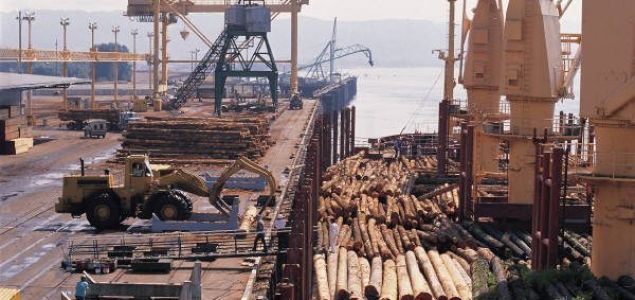
Brazil: Mahogany exports to resume

Mahogany (Swietenia macrophylla), one of high value hardwood species in the Amazon is back on the market. A timber company in Acre state will be the first to have secured FSC forest certification covering mahogany harvesting, ITTO reported.
Excessive harvesting of mahogany in Brazil led the Brazilian Institute for Environment and Renewable Natural Resources (IBAMA) to prohibit any harvesting or sale mahogany product in the country. In 2002, mahogany was listed in appendix II of the Convention on International Trade in Endangered Species of Wild Fauna and Flora (CITES).
In a report filed by Madeira Total this month it is stated that mahogany harvesting in the certified forests has started in the States of Acre and Amazonas and the first batch of mahogany logs will be transported for processing for export this month.
The resumption of mahogany product exports from Brazil is a victory for those who believe that industries based on timber produced responsibly contribute to the generation of employment in the Amazon.
When contacted a spokesperson from IBAMA said they have carefully monitored all administrative procedures and approved the management plan and that they have been following progress and are prepared to issue a CITES permit.
 
[gravityform id="1" title="true" description="true"]
 
[gravityform id="2" title="true" description="true"]

Ontario: Taller-wood buildings lack in CLT

Building developers in Ontario are having a hard time finding the right wood for building taller wood-frame structures. Even if Ontario’s government gave permission for taller wood buildings back in 2015, the development of such projects is not going so well because developers lack in cross-laminated timber (CLT), according to Toronto Metro.
This new product is the main component for taller wood structures, especially now that the new rules allow the construction of 6-storyes condos, such as Heartwood the Beach. The previous ruling only allowed 4-storeys building. Quadrangle Architects will develop the 37-unit and will use cross-laminated timber to achieve their design vision.
As Marco VanderMaas, a leading Canadian expert on wood-frame design from Quadrangle, said, the cross-laminated timber “it’s like lumber on steroids.” Still, this kind of wood is hard to be found on Ontario and has to be brought from BC or Quebec.
As Toronto Metro reported, Ontario’s ruling regarding the previous 4-storeys limit changed last year because of the housing market pressure on Toronto. Thus, the province wanted the infill to be built promptly and to be affordable. Still, as VanderMaas suggested, the 15-20% savings that were supposed to take effect once the wood-frame construction began, haven’t materialized so far.

Steven Street, manager at Ontario Wood Works, said that “the catalyst is there to set up operations in our own province. And once something is locally manufactured, costs in theory will come down,” referring to the Heartwood project as a catalyst for local manufacturers to respond to the demand.

Street now hopes to take a hold on Ontario-made cross-laminated timber by the summer, as Heartwood construction is set for the spring.
 
[gravityform id="1" title="true" description="true"]
 
[gravityform id="2" title="true" description="true"]
 

Stora Enso makes new investments in consumer board and biomaterials

Stora Enso will invest EUR 31 million in a new polyethylene (PE) coating line in the new consumer board mill in Beihai, China. The Beihai Mill is expected to be in operation during the second quarter of 2016, as communicated earlier.

The investment will enhance Stora Enso’s strategy for profitable growth and supports competitiveness by enabling short lead-times and full quality control for PE-coated prime Food Service Board (FSB), as the company stated in a press release. The investment is expected to be completed in mid-2017.

Stora Enso is also investing EUR 16 million in a new chemical plant at the consumer board mill in Skoghall, Sweden to further improve the environmental performance of the mill. The investment is expected to be completed by the end of 2017.

In the Biomaterials division, Stora Enso is investing EUR 16 million to improve the environmental performance by reducing sulphur emissions of its mill in Skutskär, Sweden. The investment is expected to be completed by the end of 2017.

EUR 31 million of these investments are part of the group’s 2016 capital expenditure forecast, which amounts to EUR 680–720 million as communicated earlier.


[gravityform id="1" title="true" description="true"]


[gravityform id="2" title="true" description="true"]

Vietnam advances through its own forest certification system

Vietnam has taken a big step towards the development of a national forest certification system in line with the Programme for the Endorsement of Forest Certification (PEFC) requirements, following the approval of Decision 83 by the Ministry of Agriculture and Rural Development (MARD), which establishes a Vietnam Forest Certification Scheme (VFCS) Programme.
The government-approved VFCS Programme aims to implement sustainable forest management and forest certification in the country over the period 2016-2020, and appoints key organisations with the required authority and resources to lead implementation. The cornerstone of the programme will be the establishment of a Vietnamese forest certification system, to be developed in accordance with PEFC Council requirements. With this decision Vietnam is taking national ownership of certification.

“To ensure the sustainability of our US$7 billion wood industry, we have an ambitious target to reach half a million hectares under sustainable forest management by 2020, which includes a significant proportion of natural forests and smallholders,” said Le Van Bach from Vietnam Administration of Forestry (VN Forest) of MARD.
“With the approval the VFCS Programme to implement sustainable forest management and forest certification to 2020, the government can be assured that the whole PEFC alliance is ready to give its support,” said Ben Gunneberg, CEO of PEFC International.

Since the approval, VAFS can officially partner in projects, as it did on 23 January when NGOs including WWF, PEFC, SNV, Farmers Union, Forest Trends, and FLEGT partners such as MARD and District Forest Officers, launched a project by FAO EU-FLEGT programme. This project aims to use the VFCS and PEFC Pilot projects to support market-driven implementation of the Vietnam Timber Legality Assurance System through PEFC Chain of Custody.
 
[gravityform id="1" title="true" description="true"]
 
[gravityform id="2" title="true" description="true"]
Kronospan, Schweighofer and Egger forming a cartel in Romania?

After the administrations of Kronospan Romania and Sebes, Lacul Codrilor and Alredia SRL, together with the forest administration departments of Alba and Hunedoara counties came under cartel suspicion two weeks ago, now the Romanian Competition Council (RCC) extended the investigation.

"There is evidence on possible agreements between these companies with the purpose of splitting the market, the sources of supply and price fixing in the auctions organized by Romsilva. New clues have led us to expand the investigation nationwide," said Bogdan Chiritoiu, President of the Romanian Competition Council.

Thus, the RCC extended the investigation on Holzindustrie Schweighofer SRL and Egger Romania SRL, under the same suspicion. Holzindustrie Schweighofer SRL and Egger Romania SRL, together with Kronospan have been dominating the timber market in Romania for many years now.
Because the timber was sold at a very low price, the RCC will aim the investigation on public auctions held by some regional forest agencies in Romania. As Chiritoiu added, they will analyze “the tenders with few bidders, as well as those where the price adjudication was very low.”
Schweighofer, Kronospan and Egger are the three Austrian companies with wood processing operations in Romania. Their cumulated business doubled between 2009 and 2013, reaching EUR 1 billion in 2013.
The three Austrian companies purchase by far the largest amount of wood in the country, mainly through their provider Romsilva, the Romanian state company managing local forest areas.
For years, companies from the Romanian timber market complained over the Austrian companies activities, which cause a lack of raw materials for the small entrepreneursOthers have complained over price pressure issues. 
 
[gravityform id="1" title="true" description="true"]
 
[gravityform id="2" title="true" description="true"]


Finland: Softwood lumber exports increase considerably in 2015

In the first eleven months of 2015, Finnish softwood lumber exports increased in volume by 16% as compared to the same period of 2014. Finnish sawmills exported about 7,1 million cubic meters of planed and sawn lumber against 6,1 million cbm exported in January-November 2014.
The Asian countries have in particular driven up Finnish exports. Despite the downward trend registered in recent years, especially in exports to Japan, in January-November 2015 a 31% increase was registered and a share of almost 32% of all Finnish softwood lumber exports. The driving force behind this development is undoubtedly China, with Finnish exports continuing the booming trend in recent years. Finnish lumber exports to China increased by 74%.
In Europe, Finland exported 9% more lumber than in 2014. UK is the main European buyer of Finnish lumber and has increased its imports by 21%. Germany and the France, two other major European consumer countries, have decreased their purchases by -2% and -4% respectively, against the same period of 2014.
Finnish deliveries to African countries are also on an upward trend. Egypt, Finland's worldwide biggest client has bought 15% more softwood lumber. The other major African customer country is Algeria, also with a major surge in imports by 11%.

Finland's exports of softwood lumber (in cubic meters);
Top 10 Destinations
January-November 2014 January-November 2015 Change in %
Egypt   954,187 1,096,912 +15%
Japan 628,089 796,551 +27%
United Kingdom 621,140    748,800 +21%
China 344,043 597,080 +74%
Germany 466,069 456,099 -2%
France 451,458 431,570 -4%
Algeria 384,437 425,923 +11%
Israel 333,543 409,408 +23%
Saudi Arabia 325,641 358,052 +10%
Estonia 188,454 243,858 +29%
Total exports to EU countries 2,584,183 2,826,261 +9%
Total exports to Asia 1,765,755 2,321,047 +31%
Total exports to North Africa 1,642,579 1,849,887 +13%
Total world exports 6,166,222
7,169,574
+16%

The statistics are based on the numbers published by Eurostat. HS Code: 440710.
 
 
[gravityform id="1" title="true" description="true"]
 
 
[gravityform id="2" title="true" description="true"]

Total turnover of the UK furniture industry passes £8 billion

The total turnover of the UK furniture manufacturing industry was over £8 billion in 2015, up 4.6% on 2014, according to the British Furniture Manufacturers (BFM).
In comparison with 2014 figures, the furniture manufacturing industry’s turnover appears to be boosted by almost 19% by income from sources other than in-house manufactured furniture sold at cost price.
Furniture imports to the UK also increased in 2015: A rise of more than 8% on 2014 to reach just under £6 billion with China accounting for one-third of the imports.
Exports from the UK also improved over the year with sales of furniture on the rise by over 6%, with the USA as the major destination.
 
[gravityform id="1" title="true" description="true"]
 
[gravityform id="2" title="true" description="true"]

Ghana: Prices for exported wood products in January

Prices for Ghana's exported wood products are the following as of 30 January, 2016:
Boule Export prices

Euro per m³
Black Ofram 380▼
Black Ofram Kiln dry 510
Niangon 455
Niangon Kiln dry 490

 
Export Sawnwood Prices

Ghana Sawnwood, FOB US$ per m³
FAS 25-100mm x 150mm up x 2.4m up Air-dried Kiln-dried
Afrormosia 860 925
Asanfina 492 564
Ceiba 203 320▼
Dahoma 467▼ 514▼
Edinam (mixed redwood) 537 580
Emeri 477 515▼
African mahogany (Ivorensis) 633 1025▼
Makore 660 760▲
Niangon 687▲ 873
Odum 660 900
Sapele 610▼ 791▼
Wawa 1C & Select 400 370▼

 
Export Rotary Veneer Prices

Rotary Veneer 2mm and up,
FOB
€ per m3
CORE (2mm & up) FACE (2mm & up)
Ceiba 314▼ 433
Chenchen 462 555
Ogea 474▼ 537
Essa 511▼ 561
Ofram 350 406

 
Export Sliced Veneer Prices

Sliced Veneer, FOB € per sq. m
Face Backing
Afrormosia 1.19 0.91
Asanfina 1.40 0.75
Avodire 1.90 0.34
Chenchen 1.10 0.30
Mahogany 3.10 0.92
Makore 1.80 0.80
Odum 1.33 0.40

 
Export Plywood Prices

Plywood, FOB € per m3
Ceiba Ofram Asanfina
4mm
482 510 641
6mm
508 535 615
9mm
407▲ 450 613
12mm
369 463 450
15mm
450 436 400
18mm
353▲ 383 370

Grade AB/BB would attract a premium of 10%, B/BB 5%, C/CC 5% and CC/CC 10%.
 
Export Added Value Product Prices

Parquet flooring 1st FOB € per sq.m
10x60mm 10x65-75mm 14x70mm
Apa 11.64    14.47    17.00
Odum 9.00   10.18    11.00
Hyedua 13.67   18.22    16.30
Afrormosia 13.72   13.93    17.82

Grade 2 less 5%, Grade 3 less 10%.
Source: ITTO
 
[gravityform id="1" title="true" description="true"]
 
[gravityform id="2" title="true" description="true"]
Japanese imports of logs from North America continue to drop in 2015

Japanese imports of logs reached 2,444,000 cbms in 2015, a drop of 19.8% as compared to 2014. This is a considerable drop compared to imports of lumber.
According to data of Japan's Lumber Importers Association, Japan's lumber imports from North America for the first eleven months of last year reached  2,089,000 cbms, only 1.4% less than in 2014.
The largest reason of the falling logs import is the drop of Douglas fir logs demand by Japanese plywood mills in 2015. Plywood mills in Japan had many production curtailments last year, so that the demand of logs declined considerably. Actually, imports of logs from Canada in 2015 dropped more than 30%.
Canadian Douglas fir logs are mainly used by plywood mills in Japan. The market for Canadian Douglas fir logs used for lumber manufacturing has been steady as the supply got tight since late last year, so the prices remain firm. Inquiries from plywood mills continue dull and slow.
There are two straight years already of decline of log imports from North America.
 
[gravityform id="1" title="true" description="true"]
 
[gravityform id="2" title="true" description="true"]

Peru: Export prices for sawnwood, plywood, veneer and panels

Export Sawnwood Prices
Peru Sawnwood, FOB Callao Port US$ per m³
Mahogany S&B KD 16%, 1-2'' random lengths (US market)
1570-1655
Spanish Cedar KD select
North American market
958-977
Mexican market
946-965
Pumaquiro 25-50mm AD Mexican market
545-598
Peru Sawnwood, FOB Callao Port (cont.)
US$ per m³
Virola 1-2" thick, length 6'-8' KD
Grade 1, Mexican market
462-544
Grade 2, Mexican market
413-449
Cumaru 4" thick, 6'-11' length KD
Central American market
841-865
Asian market
1036-1078
Ishpingo (oak) 2" thick, 6'-8' length
Spanish market
509-549
Dominican Republic
623-653
Marupa (simarouba) 1", 6-11 length Asian market
405-449
Peru Sawnwood, FOB Iquitos
US$ per m³
Spanish Cedar AD Select Mexican market
911-931
Virola 1-2" thick, length 6'-13' KD
Grade 1, Mexican market
468-562
Grade 2, Mexican market
365-402
Grade 3, Mexican market
161-176
Marupa (simarouba) 1", 6-13 length KD
Grade 1, Mexican market
394-444
Domestic Sawnwood Prices
US$ per m³
Mahogany
-
Virola
186-217
Spanish Cedar
305-364
Marupa (simarouba)
158-174
Export Veneer Prices
Veneer FOB Callao port
US$ per m³
Lupuna 3/Btr 2.5mm
221-249
Lupuna 2/Btr 4.2mm
234-266
Lupuna 3/Btr 1.5mm
219-228
Export Plywood Prices
Peru plywood, FOB Callao (Mexican Market) US$ per m³
Copaiba, 2 faces sanded, B/C, 15 x 4 x 8mm
328-365
Virola, 2 faces sanded, B/C, 5.2 x 4 x 8mm 466-489
Cedar fissilis, 2 faces sanded 4 x 8 x 5.5mm
759-770
Lupuna, treated, 2 faces sanded, 5.2 x 4 x 8mm
389-412
Lupuna plywood B/C 15 mm
421-451
B/C 9 mm
366-385
B/C 12 mm
350-360
B/C 4 mm
389-425
Lupuna plywood B/C 8 x 4 x 4mm Central Am.
370-393
Domestic Plywood Prices
Lupuna Plywood, BB/CC, domestic US$ per m³
(Iquitos mills)
    122 x 244 x 4mm 508
    122 x 244 x 6mm 513
    122 x 244 x 8mm 522
    122 x 244 x 12mm 523
(Pucallpa mills)
    122 x 244 x 4mm 503
    122 x 244 x 6m 511
    122 x 244 x 8mm 513
Domestic Prices for Other Panel Products
Peru, Domestic Particleboard US$ per m³
1.83m x 2.44m x 4mm 282
1.83m x 2.44m x 6mm 230
1.83m  x  2.44m  x  12mm 204
Export Prices for Added Value Products
Peru, strips for parquet US$ per m³
Cabreuva/estoraque KD12% S4S, Asian Market 1296-138
Cumaru KD, S4S             Swedish market 950-1094
                                        Asian market 1033-1069
Cumaru decking, AD, S4S, E4S, US market 1188-1222
Pumaquiro KD #1, C&B, Mexican market 479-554
Quinila KD, S4S 2 x 10 x 62cm, Asian market 493-519
2 x 13 x 75cm, Asian market 732-815

 
Source: ITTO
 
[gravityform id="1" title="true" description="true"]
 
[gravityform id="2" title="true" description="true"]

South Korea to impose anti-dumping duties on Chinese softwood plywood

The South Korean Trade Committee has informed Chinese authorities that it has made final determination of antidumping duties on Chinese softwood plywood. South Korea will introduce a duty of between 4.22% to 7.15% on plywood imported from named Chinese exporters.
South Korea first began the latest anti-dumping investigation of Chinese companies early last year. In related news, in response to complaints lodged in January this year by the European Panel Federation the European Union will conduct an anti-dumping investigation of China’s plywood.
The HS code of the products involved is HS 44123110 (decorative plywood). The investigation will cover the period January 1, 2012 to December 2015.
For more information here: 
EC launches anti-dumping investigation on China’s okoumé plywood
 

[gravityform id="1" title="true" description="true"]

[gravityform id="2" title="true" description="true"]


China: Imports of logs down sharply in 2015

44.6 million m³ of logs valued at USD 8 billion were imported into China in 2015, a drop of 13% in volume and 32% in value as compared to 2014. This is mostly due to a slower GDP growth and a slower construction growth, as International Wood Markets reports.
New Zealand remained the largest annual log supplier to China, supplying 24.2% of China’s total log import to China in 2015.
Softwood log CFR China pricing has continued its decline from the end of 2014 and steadily dropped virtually every month in 2015, until prices bottomed to the lowest prices in many years. Log prices have finally stabilized in early 2016, but where the direction of prices will be in 2016 is still very much unclear:
In 2015, China imported 4% more lumber, but had an 8% drop in value over 2014. Softwood lumber imports were valued at USD 3.4 billion and a volume of 17.5 million m3, while hardwoods were 9.2 million m3 in volume, valued at 4.1 billion USD.
Softwood lumber imports decreased only 1% in volume and 11.9% in value compared with 2014, whereas hardwood lumber imports increased by 14% in volume and dropped by 3.8% in value.
 
[gravityform id="1" title="true" description="true"]
 
[gravityform id="2" title="true" description="true"]

General Electric to build world's largest commercial biomass-fired plant

General Electric (GE) has been selected by Mechelen-based Belgian Eco Energy (BEE) to build the largest greenfield, 100 percent biomass-fired power plant in the world. The plant, which will be powered by wood pellets, wood chips and agro residues, will generate approximately 215 megawatts (MW) of cleaner energy for the industry and nearby households reaching over 60 percent efficiency when operating in cogeneration mode.
GE Steam Power Systems will provide the overall design, engineering and construction of the plant and the integration of the in-house critical parts of the power block including the circulating fluidized bed boiler, steam turbine, generator and air quality control systems.

“We are pleased to work with GE on this project and with their approach to focus on optimizing the technical solution for this plant outcome of the plant,” said Michael Corten, CEO, Belgian Eco Energy. “GE’s technology will help us reach the highest net efficiency, reduce operational costs.”

BEE’s new plant also will be fitted with a district heating system of approximately 110 MW thermal energy to supply heating to industries and households in the city of Ghent, Belgium. Commercial operation is planned for 2019.
The supply, which will consist 100% from raw material biomass (wood pellets, woodchips and agro-residues) will come from Atlantic basin, Western Africa and Northern and Southern Europe. Some of these materials will also come from the Mediterranean and Eastern Europe
The storage facilities include a 5,000m³ silo for the wood pellets, a 2,500m³ silo for the agro pellets and a 15,000m³ covered storage facility for woodchips, all of them delivered via the Ghent-Terneuzen canal.
 
[gravityform id="1" title="true" description="true"]
 
[gravityform id="2" title="true" description="true"]
 

General Electric to build world’s largest commercial biomass-fired plant

General Electric (GE) has been selected by Mechelen-based Belgian Eco Energy (BEE) to build the largest greenfield, 100 percent biomass-fired power plant in the world. The plant, which will be powered by wood pellets, wood chips and agro residues, will generate approximately 215 megawatts (MW) of cleaner energy for the industry and nearby households reaching over 60 percent efficiency when operating in cogeneration mode.

GE Steam Power Systems will provide the overall design, engineering and construction of the plant and the integration of the in-house critical parts of the power block including the circulating fluidized bed boiler, steam turbine, generator and air quality control systems.

“We are pleased to work with GE on this project and with their approach to focus on optimizing the technical solution for this plant outcome of the plant,” said Michael Corten, CEO, Belgian Eco Energy. “GE’s technology will help us reach the highest net efficiency, reduce operational costs.”

BEE’s new plant also will be fitted with a district heating system of approximately 110 MW thermal energy to supply heating to industries and households in the city of Ghent, Belgium. Commercial operation is planned for 2019.

The supply, which will consist 100% from raw material biomass (wood pellets, woodchips and agro-residues) will come from Atlantic basin, Western Africa and Northern and Southern Europe. Some of these materials will also come from the Mediterranean and Eastern Europe

The storage facilities include a 5,000m³ silo for the wood pellets, a 2,500m³ silo for the agro pellets and a 15,000m³ covered storage facility for woodchips, all of them delivered via the Ghent-Terneuzen canal.


[gravityform id="1" title="true" description="true"]


[gravityform id="2" title="true" description="true"]


John Deere to lay off 100 in construction and forestry segment

John Deere has informed approximately 100 manufacturing employees that they will be placed on indefinite layoff, effective April 1. The layoffs will take place at Deere's factories in Davenport and Dubuque, Iowa. Both facilities are part of the company's construction and forestry division.
Approximately 80 of the layoffs will take place at John Deere Davenport Works while the remaining 20 affects the Dubuque facility.
Deere said the layoffs reflect the company's ongoing efforts to balance the size of its manufacturing workforce with market demand for products at individual factories.
For the last financial quarter, construction and forestry sales of John Deere decreased 23 percent.
The outlook isn't positive as well. Deere's worldwide sales of construction and forestry equipment are forecast to be down about 11 percent for 2016, with the forestry segment alone, expecting a 5 to 10 percent fall from last year's strong levels.
 
[gravityform id="1" title="true" description="true"]
 
[gravityform id="2" title="true" description="true"]


US lumber & panel prices at the end of February

Framing lumber trading paused after a mostly busy first three weeks of February. Prices in key species still finished last week higher, but the overall pace of sales slowed. Producers cited mid-March order files as the key reason for the pause, and buyers acknowledged that they needed time to digest recent purchases and higher prices. Weather was also a factor, with warm conditions stoking demand in some markets and wintry or severe weather slowing sales in others. The Random Lengths Framing Lumber Composite Price edged up for a fourth straight week.

This Week
Feb 26
Last Week
Feb 19
Year Ago
2015
Random Lengths Framing Lumber Composite Price* $315 $314 $357
KD Western S-P-F #2&Btr 2x4 R/L Mill Price 271 267 313
KD Eastern S-P-F #1&2 2x4 R/L, delivered Great Lakes 364 360 418
Green Douglas Fir Std&Btr 2x4 R/L (Portland) 318 312 317
Southern Pine (Westside) #2 2x4 R/L 372 379 420
KD Coast Hem-Fir #2&Btr 2x4 R/L 310 303 330
Ponderosa Pine (Inland) #2&Btr 1x12 R/L 670 670 665
* Weighted average of 15 key items

Random Lengths Panel Market Report

Structural panel demand faded modestly. Strong OSB sales the previous two weeks dissipated to a more measured pace at the end of the month. Prices continued to post increases, but most gains were in single digits. Upward momentum ebbed late in the week. Southern Pine plywood buyers closely managed inventories, but replenishment purchases were steady enough to keep prices on a firm footing. Western Fir plywood sales were a grind, and prices of most items were flat to soft.

(f.o.b. mill prices) This Week
Feb 26
Last Week
Feb 19
Year Ago
2015
Random Lengths Structural Panel Composite Price* $348 $346 $381
Southern (west-east) 15/32-inch 3-ply rated sheathing plywood 368-395 365-393 440-490
Southern (west-east) 15/32-inch 4-ply rated sheathing plywood 370-398 370-393 445-500
Western 1/2-inch 4-ply rated sheathing plywood 330 330 413
North Central 7/16-inch Oriented Strand Board 227 223 195
*Weighted average of 11 key items

SOURCE: Random Lengths

[gravityform id="1" title="true" description="true"]

[gravityform id="2" title="true" description="true"]

Newsletter

Subscribe to our digital newsletter for your daily digest of essential news, views and analysis from the international wood industry delivered directly to your inbox.


0