Article archive

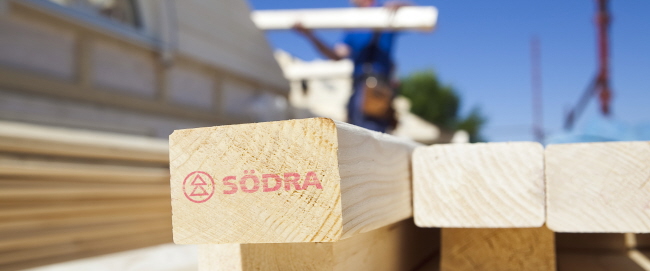
Södra expands sales on the Polish market

Södra's exports of sawn timber to Poland have increased 150 percent in 2016. Although Poland is not an entirely new market for Södra, it has grown rapidly in recent years and is interesting from various perspectives.

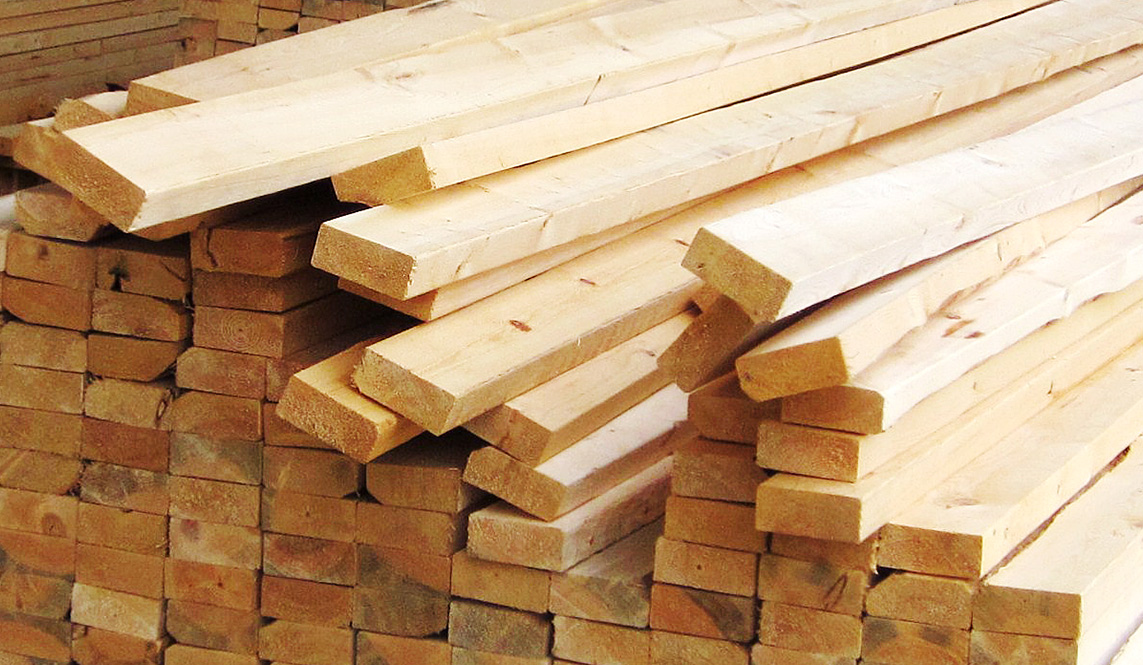
Construction timber accounts for the bulk of sales and there are several underlying reasons for the strong increase in exports. Timber house production is becoming increasingly popular in Poland, and Scandinavian timber has a good reputation. Scandinavian timber maintains an even quality, with less waste, so that customers get more for their money. But the increase is also due to the fact that Södra has chosen to invest more resources in this market.

“There is a high level of activity in Poland at present. Construction is on the increase and interest in sawn timber is growing,” said Andreas Jonasson, Marketing Manager at Södra Wood. “In a short time, we have grown our market share in this market, which is a clear indication that our product range is attractive from several perspectives. The products that are in demand in Poland belong to our core segment and are precisely those that we will focus on broadly and in the long term.”

Customers are mainly interested in spruce in a variety of dimensions and lengths, in particular roof truss manufacturers and packaging customers.

For Södra’s part, the Polish market has grown steadily in recent years. A real upswing was experienced in 2015 and this trend has persisted in 2016. Södra now accounts for more than 20 percent of total timber exports from Sweden to Poland.

Wood pellets' price in Germany grow only slightly in December

The price of wood pellets in Germany slightly increased towards the end of the year, but remained significantly below the oil price for the entire year 2016.
During December 2016, the price of EN plus wood pellets in Germany reached an average of EUR 235.17/tonne. Continue reading "Wood pellets' price in Germany grow only slightly in December"

Wood pellets’ price in Germany grow only slightly in December

The price of wood pellets in Germany slightly increased towards the end of the year, but remained significantly below the oil price for the entire year 2016.

During December 2016, the price of EN plus wood pellets in Germany reached an average of EUR 235.17/tonne. Continue reading "Wood pellets’ price in Germany grow only slightly in December"

Rising lumber prices in Vietnam after unexpected Chinese purchases

Several Chinese companies have crossed the border to Vietnam as to acquire a large quantity of rubber wood and acacia wood. The Chinese buyers were interested in the wood coming from entral and southern Vietnamese provinces. Continue reading "Rising lumber prices in Vietnam after unexpected Chinese purchases"

Downgrading of European construction sector growth forecasts according to Euroconstruct

Outlook both in the EU and wider global economy and political events including the UK’s decision to leave the European Union and upcoming elections in France, Germany and the Netherlands. These issues were highlighted at the 82nd Euroconstruct conference hosted by ITeC (Institut de Tecnologia de la Construcció de Catalunya), in Barcelona during November.

As usual, Euroconstruct issued their forecast of construction output in Europe at the conference, updating their forecast from the previous conference held in June.

The new forecast is for only 2% growth in 2016, six tenths of a point less than the previous estimate.

In issuing the new forecast, Euroconstruct noted that “Brexit has not yet caused a direct disaster on the European economy, but it has indeed lowered the midterm expectations, combined with a long list of other factors including China slowing down, Germany slowing down, uncertainty in the US, European banks still not out of trouble, and interest rates likely to increase”. Continue reading "Downgrading of European construction sector growth forecasts according to Euroconstruct"

German DIY retailer Hornbach ends collaboration with Holzindustrie Schweighofer

Hornbach has announced that it will end its cooperation with Austrian timber producer Holzindustrie Schweighofer starting January 2017.

The German DIY retailer wants to cease the sale of Schweighofer's construction and planed wood in its Romanian stores. Continue reading "German DIY retailer Hornbach ends collaboration with Holzindustrie Schweighofer"

US lumber prices fall at the beginning of 2017

Framing lumber prices remained as previously established due to uneventful trading. Buyers were low on circulating new inquiries, while the traders returned to their offices on Monday and Tuesday.
The wintry weather dulled demand in the Midwest and Northeast, while snow and ice in parts of the Northwest sapped demand and created transportation problems. Many buyers spent time chasing previously placed orders. Mill output was also affected, and some late shipping emerged. Continue reading "US lumber prices fall at the beginning of 2017"

Swiss timber harvests decline by 7%; prices fall by 6% in 2015

The Swiss timber market was impacted by the sudden rise of the Swiss franc in January 2015. Thus, in 2015 there were 4.6 million m3 of wood harvested, which is 7% less than a year before. The decrease was of 350,000 m3 of wood.

Sawlog harvest decreased the most, by 10%, from 2.313 million m3 to 264,000 m3. Pulpwood harvests declined by 7% or 488,000 m3, while wood fuel went down by 4% or 1.734 million m3. In 2015, the sawmills harvested around 1.82 million m3, or 2.5% less wood.

According to the forestry statistics and the forestry test network made by the Federal Offices for the Environment and Statistics Office in Switzerland, the wood from the Swiss forests experienced a significant decrease in the exports of raw wood.

The highest timber harvest volumes increased in the cantons of Bern with 808,000 m3 (-17%), Vaud with 436,000 m3, (-9%) and Zurich with 407,000 m3 (+ 2%). The private forests also experienced a decline in timber harvests, by 14%.

After the lifting of the franc minimum exchange rate in January 2015, the industry and the FOEN have taken special measures on the timber market, such as the initiative Schweizersholz, bringing forward young forest maintenance measures or support of the home character Schweizersholz, through the Action Wood Plan.

Thus, wood prices fell abruptly after the decision of the National Bank. According to the producer price index of the Federal Statistical Office, prices for raw timber fell by 6% in 2015, with the greatest reduction in pulpwood (-9%). The average timber revenue has fallen from 70 to 65 francs per cubic meter compared to last year.

The analysis was made by the Swiss Forestry Statistics, on 713 forest companies and the sample size of the test operation network rose to 160 establishments.

Roundwood prices in Estonia on recovery during October

Roundwood prices in Estonia started to recover during October 2016. Even if some of the wood prices have decreased, the rate is lower than in the previous month, as compared to October 2015. Continue reading "Roundwood prices in Estonia on recovery during October"

Peter Latham, new Chairman of the PEFC International Board

Chairman of James Latham Plc, Peter Latham, was elected as Chairman of the PEFC International Board, at the PEFC General Assembly which was held recently in Bali, Indonesia.

As well as being Chairman of one of Britain’s oldest timber companies, he is a former Chairman of the Forests Forever Committee of the Timber Trade Federation and member of the Council of Commonwealth Forestry Association.

Commenting on his appointment, Mr Latham said: “I would like to thank everyone at PEFC for the support I have received. I am very much looking forward to taking on this demanding new role with the support of the global PEFC family. 

“While PEFC enjoys increasing successes as an organisation, achieving significant growth in certified forest area, the number of new members and acceptance in public procurement policies, the organisation still faces important challenges and I am confident that we will  face them together.”

Welcoming the appointment, Ben Gunneberg, CEO of PEFC International said, “I am very much looking forward to working alongside Peter in his new role of Chairman.
 
Peter brings with him a wealth of valuable experience; not only has he been on the Board of PEFC International since 2011, he was also previously Chairman of PEFC UK and heads up one of Britain’s oldest and most respected timber trading companies, James Latham.  His knowledge and expertise will be invaluable to our organisation as it works to implement our vision of a world in which people manage forests sustainably.

Peter Latham was awarded an OBE in the 2012 New Years Honours List in recognition of his service to the UK wood industry.

Innovation critical to hardwood competitiveness

There are significant opportunities to increase yield and reduce material costs in the international hardwood industry but these are being squandered due to high levels of conservatism and a widespread lack of capacity and willingness to innovate. There’s also a need to work towards a smarter regulatory environment, driven more by sound scientific data and less by the concerns of narrow lobby groups, to encourage innovation, improve competitiveness and stimulate trade.

These were key messages in an intervention by Mr. Hans Joachim Danzer, Chief Executive Officer of Danzer Holding AG, at the ECE Committee on Forests and the Forest Industry (COFFI) held in Geneva, Switzerland in October 2016. Mr Danzer delivered a presentation as part of a panel
discussion on “opportunities for and barriers to forest products from the perspective of the private sector".

Mr Danzer offered these views from the perspective of a company which is the largest producer of decorative sliced wood worldwide and amongst the largest producers of sawn hardwood in Africa and North America. Now headquartered in Dornbirn, Austria, Danzer has operations in the US, Canada, France, Germany, Czech Republic, and the Republic of Congo.

On the question of how to encourage more innovation in the hardwood sector, Mr Danzer said that ultimately the initiative must lie with the private sector.

However, regulators can contribute by putting in place a regulatory environment that encourages a “bottom-up process of creative destruction”.

In such an environment, innovative companies will succeed while those that do not innovate will fail.

Government authorities should seek to avoid the creation of perverse incentives, through poorly targeted subsidies or research grants and marketing support for government preferred technologies.

According to Mr Danzer, governments should aim to develop clear rules for international trade and place greater emphasis on negotiating and implementing free trade agreements by reviving and finalising the Doha Round. He also called on the EU and partner governments to speed up the FLEGT process and to expand the number of VPAs, while ensuring consistent implementation of existing demand-side measures like EUTR.

However, he also observed that there needs to be greater recognition that excessive regulation tends to favour large companies and that compliance is relatively more costly for small businesses.

Mr Danzer made a plea for markets to be kept open to timber products from developing countries. He noted that entry barriers to hardwood production are low and the hardwood sector is therefore well placed to contribute to development goals. If tropical timber products are valued in trade and thereby help to support the local population, there is a greater incentive to maintain the forests.

Global trade of softwood lumber forecasted to increase by almost 14% in 2016

The World Trade Organization (WTO) reported in September that world trade will expand by only 1.7% in 2016, a downward revision from earlier this year and the slowest pace since the global financial crisis in 2009. This gloomy forecast cannot be extrapolated to the global trade of softwood lumber. Rather, global demand for lumber has increased in 2015 and 2016, resulting in a rise in trade by 10.2% in 2015, and Wood Resources International estimates that the increase will be as much as 13.6% in 2016. The major markets that have been driving this surge in trade are the US and China.

Lumber markets – North America

The slow and steady improvements in the US housing market in 2016 have resulted in both higher production domestically and an increase in lumber imports. During the first eight months of 2016, lumber production was up 3.6% as compared to the same period in 2015.

US lumber imports are up 31% so far this year and may reach an eight-year high of almost 40 million m3 in 2016. Prices for lumber surged in late 2015 and throughout 2016 as exemplified by prices for southern yellow pine, which jumped over 35% in 12 months.

Lumber markets – Northern Europe

Lumber exports from Sweden have remained practically unchanged in 2016 as compared to 2015 with total shipments likely to reach about 12.5 million m3 this year. Although the total export volumes have not changed much, the destinations have. Shipments to the key markets in the MENA region have declined, while more lumber has been shipped to Asian and European markets so far this year. Lumber export prices in Finland and Sweden continue to track each other, with average prices for Swedish softwood lumber being slightly higher than prices for Finnish exports.

Lumber markets – China

During the summer and fall, China has seen strong demand for imported softwood lumber, with the import volumes for the 2Q/16 and the 3Q/16 reaching their highest level on record. Although the volumes were down in the 3Q/16 from the previous quarter, they were still 24% higher than in the 3Q/15. Russia continues to be the major supplier with a 59% market share in the 3Q/16. Import prices have remained at historically low levels in most of 2016.

Lumber market – Japan

Demand in Japan for overseas lumber has picked up this year with import volumes during the first nine months being about seven percent higher than during the same period last year. Importation in the 3Q/16 was 7.5% higher than in the 3Q/15, with Canada being the largest supplier, followed by Finland, Russia and Sweden. Prices for softwood lumber, both domestic and imported, have remained practically unchanged in 2016 in Yen terms.

Lumber market – Russia

Russian export prices have been fairly stable so far this year with only slight increases during the fall. In US dollar terms, prices continue to be at their lowest levels in over ten years, thanks to the weak Rouble, reports the WRQ. The very competitive prices for Russian softwood lumber in the export market have mainly resulted in higher production in the sawmilling sector in Siberia, while exportation of lumber from Northwestern Russia into the European market has fallen substantially the over the past decade.

US buyers of Chinese hardwood plywood fight against import restrictions

U.S. customers for hardwood plywood made in China - represented by the American Alliance for Hardwood Plywood - say they will fight back against the latest effort to block cheaper imports.

Continue reading "US buyers of Chinese hardwood plywood fight against import restrictions"

Metsä Group reaches historical figures for sawn timber production

Metsä Group’s Finnish sawmills became part of the Group’s Pulp Industry Metsä Fibre in a group internal transaction on 1 November 2016. Until then, the sawmills had been part of the Group’s Wood Products Industry Metsä Wood. Continue reading "Metsä Group reaches historical figures for sawn timber production"

Wood pellets' price in Switzerland keeps on going up in December

Wood pellets' average retail price for in Switzerland increased during December 2016, to 369 CHF/t (342.76 EUR/t). This represents a 0.51% increase over November (367.1 CHF/t), but a 3.57% decrease as compared to December 2015. Continue reading "Wood pellets' price in Switzerland keeps on going up in December"

Denmark’s largest power station replaces coal with wood pellets

As part of Copenhagen's goal of being CO2-neutral by 2025, the Avedøre Power Station is now able to use sustainable wood pellets as fuel instead of coal. Continue reading "Denmark’s largest power station replaces coal with wood pellets"

Newsletter

Subscribe to our digital newsletter for your daily digest of essential news, views and analysis from the international wood industry delivered directly to your inbox.


0