

The average productivity of manufacturing companies has risen steadily from 1990´s whereas the productivity of construction companies has stayed flat or even declined. Faster building projects lead to faster revenue, thus saving money and time are the main drivers for increased usage of prefabricated elements.
Compared to manufacturing industries, the construction sector is still suffering from poor economic performance. It has been reported that the productivity gap between the two industries is currently 1.7-fold. The next 15 years will be crucial, since urban land area is estimated to triple between 2000 to 2030, and by 2050 almost 70 % of humankind will live in urban areas.
"Construction companies are typically operating with thin profit margins, thus relatively small reductions in costs can produce significant positive impacts. Utilizing prefabricated elements could be a solution for reducing construction costs without compromising quality. Depending on the size of the investment, different degrees of prefabrication may pay off even if their prices would be higher than those of building on site", says Matti Kuittinen, architect and researcher from Aalto University. Continue reading "Use of wood elements delivers faster revenues"
Article archive
Value of softwood lumber exported by Sweden and Finland to Egypt dropped 50% since 2014

The countries in the Middle East and Northern Africa, the MENA region, have become a major destination for European softwood lumber since mid-2000. In fact, over ten percent of world trade of softwood lumber in 2015 was destined for the MENA region. Import volumes to MENA increased virtually every year over the ten-year period leading up to the Egyptian Revolution in 2013, when shipments to Egypt fell by 15%. When the political situation stabilized in Egypt, practically all countries in the region expanded their importation of lumber.
From 2013 to 2015, total import volumes to the MENA region were up 26%, reaching over 11 million m3 in 2015, Continue reading "Value of softwood lumber exported by Sweden and Finland to Egypt dropped 50% since 2014"
Final sentences for a network selling timber to Schweighofer from illegally restituted forests

Holzindustrie Schweighofer was proved to have received wood from illegal sources, in an investigation that started in May 2015, according to Romanian media reports.
The Pitesti Court of Appeal in Romania has recently given the final sentences in a part of the file regarding the illegal restitution of the Puru, Galbenu and Petrimanu mountain forests in Vâlcea County. The decision was to convict 4 members who sold wood from illegally returned forests to the Austrian company Holzindustrie Schweighofer , Continue reading "Final sentences for a network selling timber to Schweighofer from illegally restituted forests"
Latvijas Finieris' subsidiary to build 45,000 m2/yr plywood plant in Estonia

Kohila Vineer OU plant in Estonia is ready to start manufacturing plywood in the fall of 2016. By the beginning of 2016, the plant is expected to work at full capacity.
"Until the end of last year we only produced wet veneer in Kohila, plywood has never been produced there," said Andres Laht, board member of Kohila Vineer.
The parent company of Kohila Vineer, Latvijas Finieris, was the one which took the initiative of starting plywood production back in 2014. As Laht added, the investements in all the facilities reach EUR 60 million, according to the Baltic Course.
Once the new facilities are ready, there is an expected 45,000 m2 of plywood production. The annual sales are expected to quadruple to approximately EUR 40 million and the plywood making facility will need 18,000 m2 to develop in the Kohila Vineer plant area.
Also, a new wood leftovers burning boilerhouse will be set up in the territory of the plant, as to meet the increased demand for thermal energy, as reported by the Baltic Course.
Latvijas Finieris’ subsidiary to build 45,000 m2/yr plywood plant in Estonia

Kohila Vineer OU plant in Estonia is ready to start manufacturing plywood in the fall of 2016. By the beginning of 2016, the plant is expected to work at full capacity.
"Until the end of last year we only produced wet veneer in Kohila, plywood has never been produced there," said Andres Laht, board member of Kohila Vineer.
The parent company of Kohila Vineer, Latvijas Finieris, was the one which took the initiative of starting plywood production back in 2014. As Laht added, the investements in all the facilities reach EUR 60 million, according to the Baltic Course.
Once the new facilities are ready, there is an expected 45,000 m2 of plywood production. The annual sales are expected to quadruple to approximately EUR 40 million and the plywood making facility will need 18,000 m2 to develop in the Kohila Vineer plant area.
Also, a new wood leftovers burning boilerhouse will be set up in the territory of the plant, as to meet the increased demand for thermal energy, as reported by the Baltic Course.
US tropical sawnwood imports up in March except sapelli

The US imported 80,626 cu.m. of sawn hardwood in March, down 16% from the previous month. However, the value of imports grew 4% largely due to higher tropical imports, ITTO reported,
Overall US sawn hardwood imports were worth US$41.1 million in March. Tropical sawnwood accounted for half of the import value at US$20.4 million.
US tropical sawnwood imports increased 21% in March to 19,828 cu.m. Year-to-date imports remained lower than in March 2015 (-24%). Imports of all major species grew in March, with the exception of sapelli which remained unchanged from the previous month at 2,003 cu.m. Year-to-date sapelli imports were only half the volume at the same time last year.
Ipe sawnwood imports increased 53% month-over-month to 3,001 cu.m. in March. Year-to-date imports were still 25% lower than in March 2015.
While most species had lower year-to-date imports than in 2015, US balsa and mahogany imports grew in 2016 up to March. March imports of balsa sawnwood were 4,562 cu.m., up 2% year-to-date. Imports of mahogany increased 31% year-to-date to 1,644 cu.m. in March.
After declining in February US keruing sawnwood imports almost doubled from the previous month to 1,881 cu.m. in March.
Ecuador was the largest source of tropical sawnwood imports in March, followed by Brazil, Malaysia and Cameroon.
Of the smaller sawnwood suppliers, Guatemala increased shipments to the US to 987 cu.m. in March. Imports from India on the other hand, declined from over 1,218 cu.m. in February to almost zero in March.
Canada imported more balsa in March
In March the value of Canadian imports of tropical sawnwood was down 4% from the previous month due to lower imports of sapelli. Imports were worth USUS$1.67 million. Year-to-date imports were still higher than in March 2015.
Sapelli sawnwood imports declined 10% month-overmonth to USUS$504,207, but sapelli remains the main tropical species imported into Canada.
At USUS$30,767 March imports of mahogany were up from February. Imports of virola, imbuia and balsa (combined) grew by one third to USUS$451,344 in March. Much of the growth was in balsa imports from Ecuador.
Canadian sawnwood imports from Cameroon fell to USUS$357,498 in March, while imports from Congo (formerly Brazzaville) increased to USUS$306,074. Brazil’s shipments to Canada declined in March, but the year-todate value is 43% higher than at the same time last year.
EC reviews impact of VPAs and EUTR

In May, the European Commission (EC) published a comprehensive independent evaluation of the EU FLEGT Action Plan. The Plan encompasses the wide range of EU policy measures introduced over the last decade to support good forest governance and remove illegal wood from trade, ITTO reported.
Key amongst these are the EU Timber Regulation (EUTR) and the Voluntary Partnership Agreements (VPAs) now being implemented by six tropical countries and negotiated by another nine countries. The report assesses progress since the Plan’s publication in 2003 and makes recommendations for future action.
The report’s central conclusions are positive: the EU FLEGT Action Plan is assessed to be a relevant and innovative response to the challenge of illegal logging and to have improved forest governance in all target countries.
The report says the EU FLEGT Action Plan has been effective in terms of raising awareness of the problem of illegal logging at all levels, contributing to improved forest governance globally and particularly in partner producer countries, and has helped reduce demand for illegal timber in the EU.
The report’s recommendations imply that the Plan is heading in the right direction and not needing a major overhaul. “Main pillars and action areas should be retained, but FLEGT support to producing countries should be delivered in a more demand-driven and flexible manner, while bottlenecks affecting VPAs should be addressed and the private sector more involved”.
The report suggests that “the direct FLEGT objective of decreased EU imports of illegal wood is being achieved.
This observation is based largely on the results of interviews and perception surveys undertaken by the consultants both in the EU and producer countries over the last two years rather than any direct evidence from changes in trade flows.
Assessments of trade flows have yet to reveal any significant step change in trade that can readily attributed to measures such as the EUTR and VPAs which are central to the FLEGT Action Plan.
Prices for wood products jump in Germany

In April producer prices for wood products in Germany moved significantly above the level of the previous month. For building products of solid wood this trend is more pronounced than for hardwood products and timber materials.
For the solid wood building products, only narrow boards’ price is at a lower level than in the previous year. Otherwise, the prices are about 3-7% higher than in April 2015.
For hardwood and wood composites the average price level is at best, just over 1%, except raw boards which are almost 8% higher. After months of decline, particleboard has reversed in recent months and in April, the price has increased nearly by 8% year on year. And also compared to March the price is up by 3.4%.
| Germany's Producer Price Index Commercial Products (2000=100) |
Apr. 2015 |
Mar. 2016 |
Apr. 2016 |
Change Apr. '15 to '16 |
| Spruce and Fir lumber (Picea abies Karst.) |
110.3 |
114.9 | 115.0 |
4,26% |
| Lumber according to DIN 4074/S10 |
113.8 |
116.3 | 117.1 |
2,90% |
| Finger-jointed squares and beams (KVH) | 101.3 |
105.0 | 103.6 |
2,27% |
| Boards, width over 16 cm |
114.9 |
121.0 | 121.6 |
5,83% |
| Boards, width from 8 to 16 cm, size from 15 to 24 mm |
112.9 |
111.9 | 111.5 |
-1,24% |
| Roof battens according to DIN 4074/S10 |
110.3 |
117.8 | 118.3 |
7,25% |
| Reserve squared timber, A/B, 10X10 - 12X12 |
109.4 |
113.7 | 114.1 |
4,30% |
| Softwood, size>6mm, planed, sanded, finger-jointed |
108.5 |
112.2 | 112.3 |
3,50% |
| Wood chips from softwood |
109.2 |
114.3 | 109.3 |
0,09% |
| Pellets and Briquets, compressed |
124.8 |
132.5 | 125.9 |
0,88% |
| Hardwood lumber |
106.4 |
107.0 | 107.3 |
0,85% |
| Beech blocks, A/B, size 50-60 mm, length 3m, damped |
104.8 |
102.3 | 102.3 |
-2,39% |
| Beech frames, size 26-32 mm, length 3m, undamped |
106.6 |
107.5 | 107.8 |
1,13% |
| Particle boards, raw or sanded |
103.2 |
107.7 | 111.4 |
7,95% |
| Particle boards, laminated with decor |
114.4 |
114.8 | 114.8 |
0,35% |
| HDF panels, size > 800 kg/m³, raw/sanded | 112.1 |
111.6 | 111.6 |
-0,45% |
| Laminate floorings, density > 800 kg/m³ |
109.1 |
110.0 | 109.8 |
0,64% |
IKEA proposes the Indian goverment to open cluster in Kandla port

IKEA has recently asked India’s government to allow the furniture company to develop a cluster near the Kandla port in Gujarat.
The cluster wouldn’t be used for a new IKEA factory, but for to offer designs to Indian furniture companies and to source products from them, as reported by Live Mint.
Continue reading "IKEA proposes the Indian goverment to open cluster in Kandla port"
Metsä invests € 100 million to boost plywood and LVL production
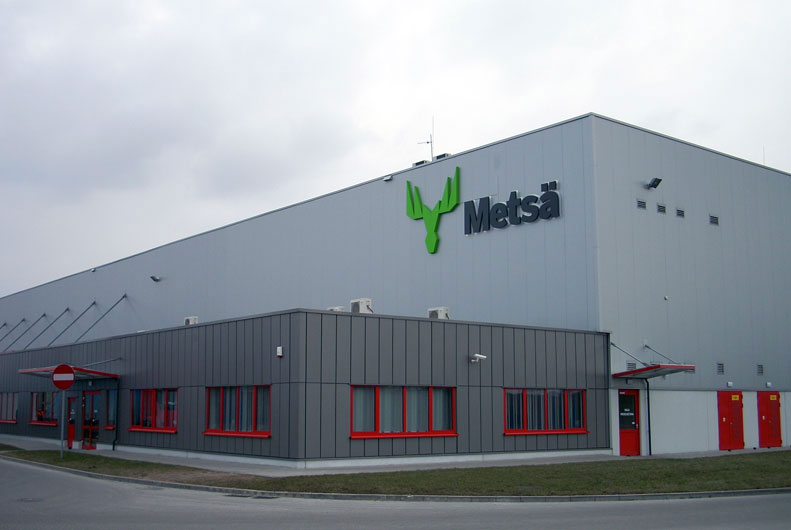
Metsä Wood launches an investment programme in its Kerto® LVL and plywood operations as part of its industrial efficiency strategy. The programme is planned to be implemented in steps by the end of 2018. The programme includes a total of EUR 100 million investments in Finland and Estonia.
A new birch veneer peeling and drying line is planned to be built in Äänekoski to the Metsä Group’s Pulp and Paperboard Industries’ mill site. This veneer production is planned to be processed in a new plywood mill to be constructed in Estonia. Suolahti mill’s current birch veneer line is planned to be transferred to Estonia. The total annual birch plywood production volume would increase by approximately 30,000 cubic meters.
Production of a new softwood based speciality product with an annual volume of approximately 60,000 cubic meters is planned to be established at the Suolahti mill. The final investment decision will be made at a later stage.
The annual production capacity of the Kerto® LVL mill in Lohja is planned to be increased by 20,000 cubic meters by replacing two oldest production lines with one new line. The increased capacity combined with the higher product quality enables strengthening of Metsä Wood’s position especially in markets outside Europe.
”These are major steps for Metsä Wood to grow and further improve cost competitiveness. Demand for birch plywood is increasing especially in the light transport industry. In Kerto® LVL business more capacity is needed to continue growth in North America, in particular. Thanks to the investment programme a notable result improvement will be achieved, fully from 2019 onwards,” says Esa Kaikkonen, Executive Vice President, Metsä Wood.
Approximately half of the EUR 100 million investments will be allocated to Finland. Annual sawlog consumption is expected to increase by almost 300,000 cubic meters.
The investment programme is not expected to impact the total amount of Metsä Wood’s mill personnel in Finland. Potential mill-specific personnel implications will follow the statutory labour negotiation process. Considering the changes in wood harvesting and logistics, the increase in employment in Finland is expected to be approximately 100 person-years in total. About 200 new jobs are expected to be created in Estonia.
Stora Enso starts LVL production at Varkaus
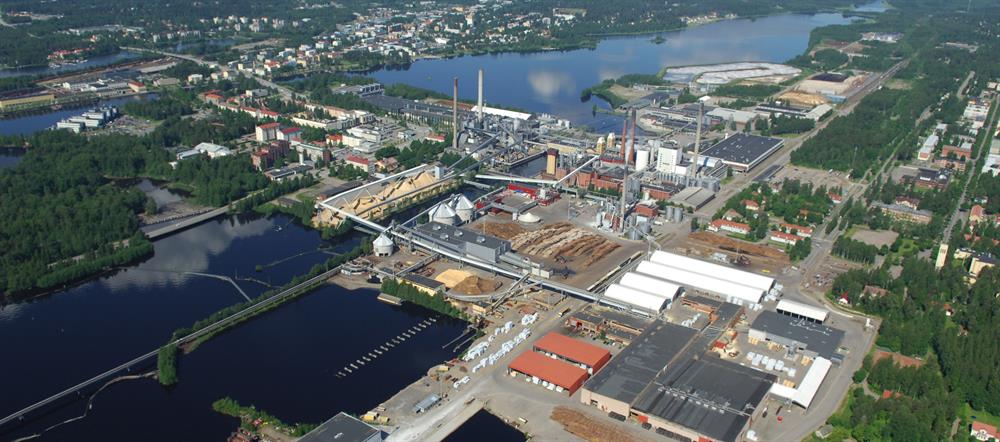
Stora Enso's LVL production line at Varkaus mill in Finland has successfully started and the first LVL deliveries to customers are made through Puumerkki, a Finnish wholesale and distribution chain fully owned by Stora Enso.
Stora Enso has built the production Continue reading "Stora Enso starts LVL production at Varkaus"
Global Plywood accused of illegal timber imports from the Amazon

A search warrant was executed on the 8th of June 2016, at the premises of Global Plywood and Lumber, a company found to be importing into the United States significant quantities of Amazonian timber declared illegal by the Peruvian government. The warrant was issued on the basis of probable cause that Global Plywood and Lumber smuggled illegal timber and violated the U.S. Lacey Act, a law prohibiting the import of and trade in illegally harvested wood.
The warrant that authorized the search describes proactive Continue reading "Global Plywood accused of illegal timber imports from the Amazon"
Finland: Sawn timber production to reach 10.9 mil. m3 in 2016
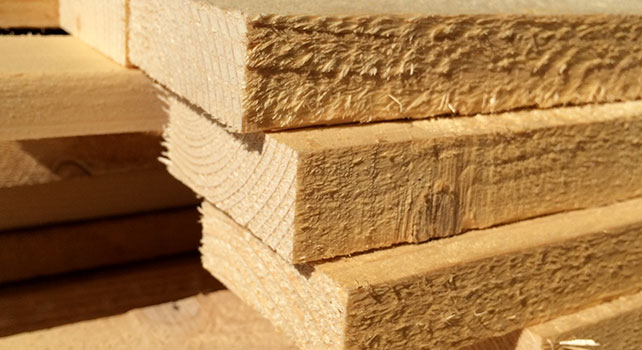
The market outlook for Finnish forest industry products is expected to increase in 2016, with strong improvements in paperboard, pulp and sawn timber.
According to the Natural Resources Institute Finland (Luke), Continue reading "Finland: Sawn timber production to reach 10.9 mil. m3 in 2016"
German Pellets' Langerlo power plant acquired by As Graanul Invest

The Estonian group Graanul Invest AS subsidiaries have recently acquired the Langerlo NV power plant in Belgium. A new EUR 250 million investment will be made to switch to pellet burning units.
Graanul Invest AS is now the biggest wood pellets producer in Europe.
The Langerlo plant was assigned green certificates as support measure to be able to convert the coal burning units to wood pellet burning units. At the moment, the plant has a 656 MW capacity. Out of this, 86 MW is gas-powered and the rest of 470 MW is coal-powered.
When making the switch and working at full capacity, the plant will use 1.8 million tons of pellets per year, as reported by the Baltic Course.
“I hope that by carrying out this project we are able to prove that sustainable use of biomass is one of the best ways to make use of existing energy infrastructure and a viable and solid alternative to whatever other renewable energy technologies," said Graanul Investboard chairman Raul Kirjanen.
The forestry and energy group AS Graanul Invest will be responsible for converting the Langerlo plant by fall 2018, as to be able to sustain the 8% of the electricity needs of the Flanders region.
The Estonian company will take hold of all the shares from Peter Leibold, former CEO of German Pellets German, but no information about the acquisition price has been offered yet.
Last year, Eon, the former owner of the 556 MW Langerlo coal-fired power plant, proposed to buy it back, but German Pellets went bankrupt. Eon sold the Langerlo plant to German Pellets back in August 2015, but there has been an investigation launched on whether Eon legally sold the plant to German Pellets. The subsidies may be withheld if proven so.
German Pellets’ Langerlo power plant acquired by As Graanul Invest

The Estonian group Graanul Invest AS subsidiaries have recently acquired the Langerlo NV power plant in Belgium. A new EUR 250 million investment will be made to switch to pellet burning units.
Graanul Invest AS is now the biggest wood pellets producer in Europe.
The Langerlo plant was assigned green certificates as support measure to be able to convert the coal burning units to wood pellet burning units. At the moment, the plant has a 656 MW capacity. Out of this, 86 MW is gas-powered and the rest of 470 MW is coal-powered.
When making the switch and working at full capacity, the plant will use 1.8 million tons of pellets per year, as reported by the Baltic Course.
“I hope that by carrying out this project we are able to prove that sustainable use of biomass is one of the best ways to make use of existing energy infrastructure and a viable and solid alternative to whatever other renewable energy technologies," said Graanul Investboard chairman Raul Kirjanen.
The forestry and energy group AS Graanul Invest will be responsible for converting the Langerlo plant by fall 2018, as to be able to sustain the 8% of the electricity needs of the Flanders region.
The Estonian company will take hold of all the shares from Peter Leibold, former CEO of German Pellets German, but no information about the acquisition price has been offered yet.
Last year, Eon, the former owner of the 556 MW Langerlo coal-fired power plant, proposed to buy it back, but German Pellets went bankrupt. Eon sold the Langerlo plant to German Pellets back in August 2015, but there has been an investigation launched on whether Eon legally sold the plant to German Pellets. The subsidies may be withheld if proven so.
Austria: Recovery for softwood lumber prices in April
In April, softwood lumber prices in Austria rose again after a slight decrease in March. The 1-2 EUR/cbm declines in March were recouped substantially.
Except edged and rough boards, all assortments have become more expensive by about 1 EUR/cbm. Continue reading "Austria: Recovery for softwood lumber prices in April"
Stora Enso divests Suzhou paper mill site to China
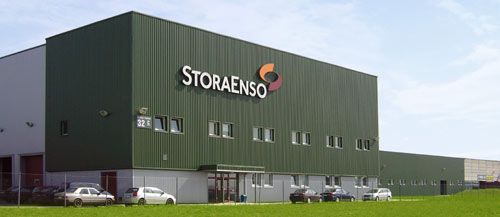
Stora Enso has signed an agreement to divest the key assets of its Suzhou Mill in China, including the land-use rights and buildings, to the local government of Suzhou National New & Hi-tech Industrial Development Area (SND). The cash consideration for the divestment of assets is approximately EUR 240 million.
The total gain on disposal to be reported in operating profit amounts to approximately EUR 180 million of which EUR 26 million will be recorded as a positive non-recurring item in Stora Enso’s second quarter 2016 results and EUR 154 million is expected to be recorded as a positive non-recurring item in Stora Enso’s fourth quarter 2016 results. The total net gain including the closure related costs after tax will be approximately EUR 150 million.
Production is planned to be stopped during June 2016 and the transaction is expected to be completed in the fourth quarter of 2016. Operational profitability of the mill is close to break even so the transaction will not have a material impact on Stora Enso’s operational EBIT going forward.
“Suzhou Mill is a recognised high quality paper producer with an established customer base. However, the mill only has one paper machine and it will no longer be competitive after the emergence of larger-sized mills in the Chinese market. The location of the mill in the middle of a large city is not favourable for paper production,” says Kati ter Horst, EVP Stora Enso’s Paper division.
Based on annual figures for 2015, the divestment is expected to reduce Stora Enso’s annual sales by EUR 126 million and simultaneously decrease the annual woodfree coated paper production capacity by approximately 240 000 tonnes. Suzhou Mill currently employs approximately 500 people, who will receive support in finding new employment opportunities.
About the buyer
SND is the administration of the Suzhou National New & Hi-tech Industrial Development Area, established in 1992. SND is part of the Suzhou City government. Suzhou City has approximately 11 million inhabitants and borders west Shanghai. SND plans to convert the mill site from industrial use to non-industrial use.
Kastamonu to produce over 1.8 million m3 of wooden boards per year in Alabuga, Russia
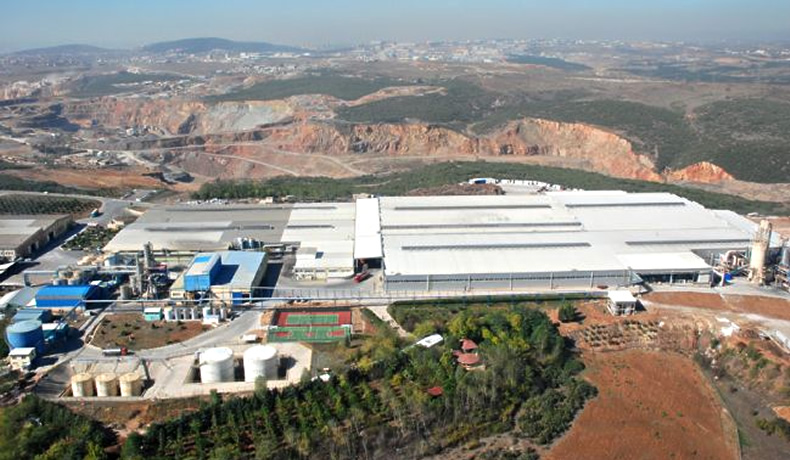
The Turkish wood-based panel giant Kastamonu has produced its first MDF sample at its second MDF-line in Alabuga, Russia. The woodworking site in Alabuga will produce over 1 million m3 MDF boards per year, after the pre-commissioning activities will be completed.
Back in 2014, the first stage of the site was completed with a capacity of 565,000 m3 of MDF and 20 million m2 of laminated flooring per year.
Continue reading "Kastamonu to produce over 1.8 million m3 of wooden boards per year in Alabuga, Russia"
Indian plywood producer Century Ply aims to expand its global footprint

Century Plyboards, one of the leading plywood manufacturers in India and a growing mid-cap company in the bourses, is expanding its global footprint in an attempt to become an Indian multinational. The plywood maker has set a target of $50 million turnover from its overseas operations in the next two years. Currently, the company has a turnover of close to US$ 235 million.
Sajjan Bhajanka, chairman of Century Ply, Continue reading "Indian plywood producer Century Ply aims to expand its global footprint"
Finnish company to reduce wood pellet production due to market oversupply

Vapo Oy will adjust its pellet production and enhance its own production control, as to respond better to the current pellet market. In recent years, the European markets have built nearly half a million tonnes of new capacity and the pellets supply has grown significantly, especially on the market in Central Europe, says Vapo.
Despite the high expectations, Continue reading "Finnish company to reduce wood pellet production due to market oversupply"

