
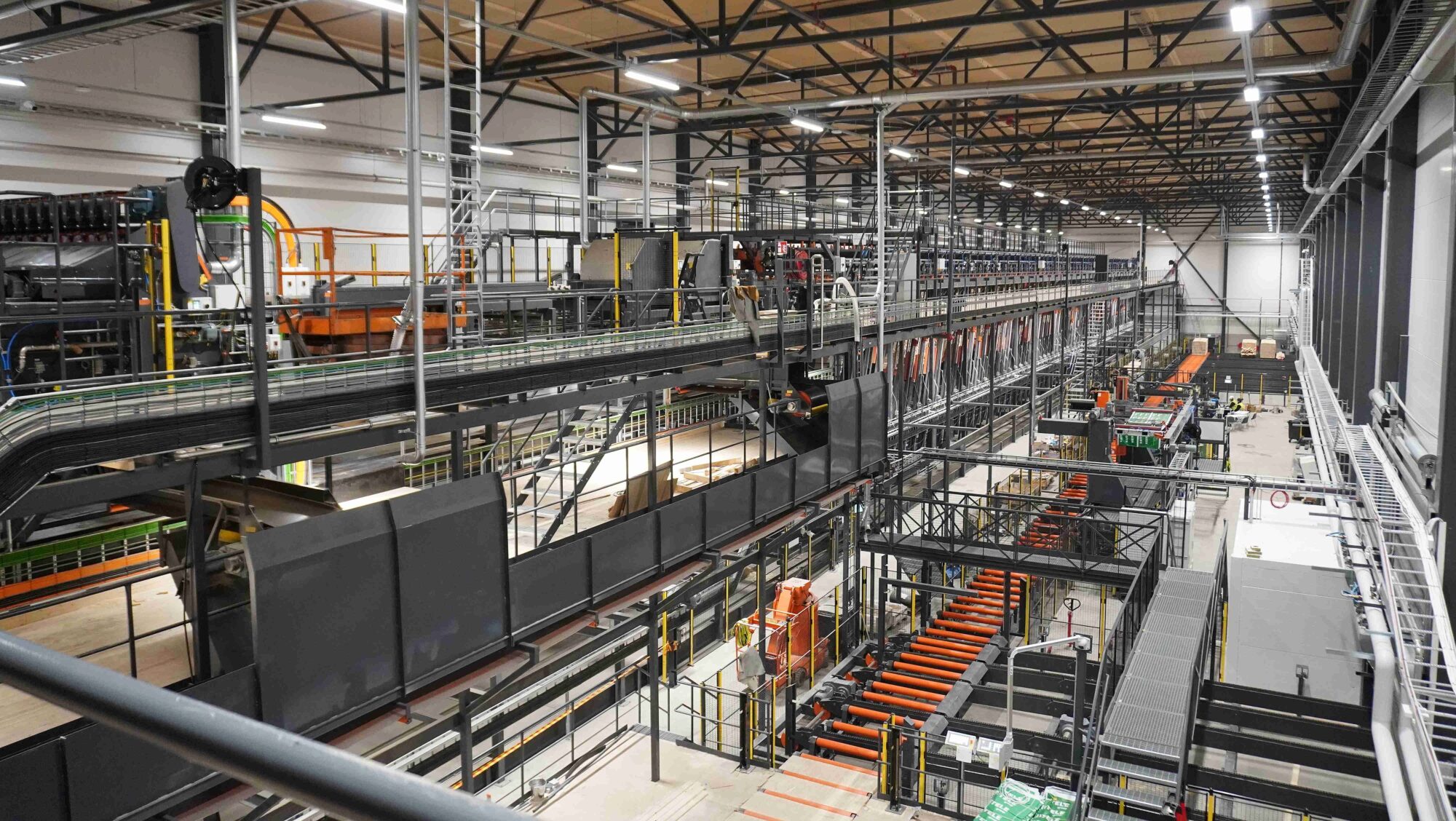
The Finnish sawmill industry has seen significant investments in recent years, some of which have occurred during a period of strong cost inflation. The runaway investment costs may cast a long shadow over profitability in the coming decades. Keitele Group decided to choose a different path: to invest, but counter-cyclically and by utilizing the existing factory infrastructure.
Existing infrastructure put to good use
Over the past ten years, Keitele Group has implemented several significant investment and development projects. A mechanical wood processing center was built at the Kemijärvi mill and the Alajärvi production facility has been upgraded to meet modern requirements. The total value of the investments is close to EUR 200 million.
The company is currently undertaking a major investment program for the Keitele factory area. The project did not start from scratch, as the factory already had parts of the production complex that had been invested in earlier in the 2020s: log sorting, sawing capacity and heat production. These also had some untapped potential.
The key was to identify bottlenecks. Sawn timber drying, dry sorting, factory logistics and storage no longer met the needs of the increased production. Once these development areas had been identified, the investment package began to take shape.
"It was an optimizing investment. We utilized what already existed and focused our efforts on the phases that limited the overall performance," describes Matti Kylävainio, CEO of Keitele Wood Oy .
The cost structure of the total investment of 40 million euros does not jeopardize the company's future flexibility.
“We wanted to avoid a situation where fixed costs, depreciation and interest costs would get out of hand and start to strain profitability far into the future.”
Timing played a crucial role. After the inflation spike following the COVID-19 pandemic, the general economic cycle turned around, and demand for both construction and sawn timber weakened globally. Demand disappeared from the market, corresponding to many times Finland's annual softwood sawn timber production.
The weakened economic cycle created an opportunity for the investor. There was capacity in the supply chains, negotiations with equipment manufacturers were possible, and the whole could be examined in peace. The best operators and technologies in different areas were selected from the alternatives.
“When demand is weak, the investment will not cause us any production losses. At the same time, we are preparing for the future. When the economy turns around, the capacity and processes will be ready for full use.”
Sawn timber dry sorting and packaging plant
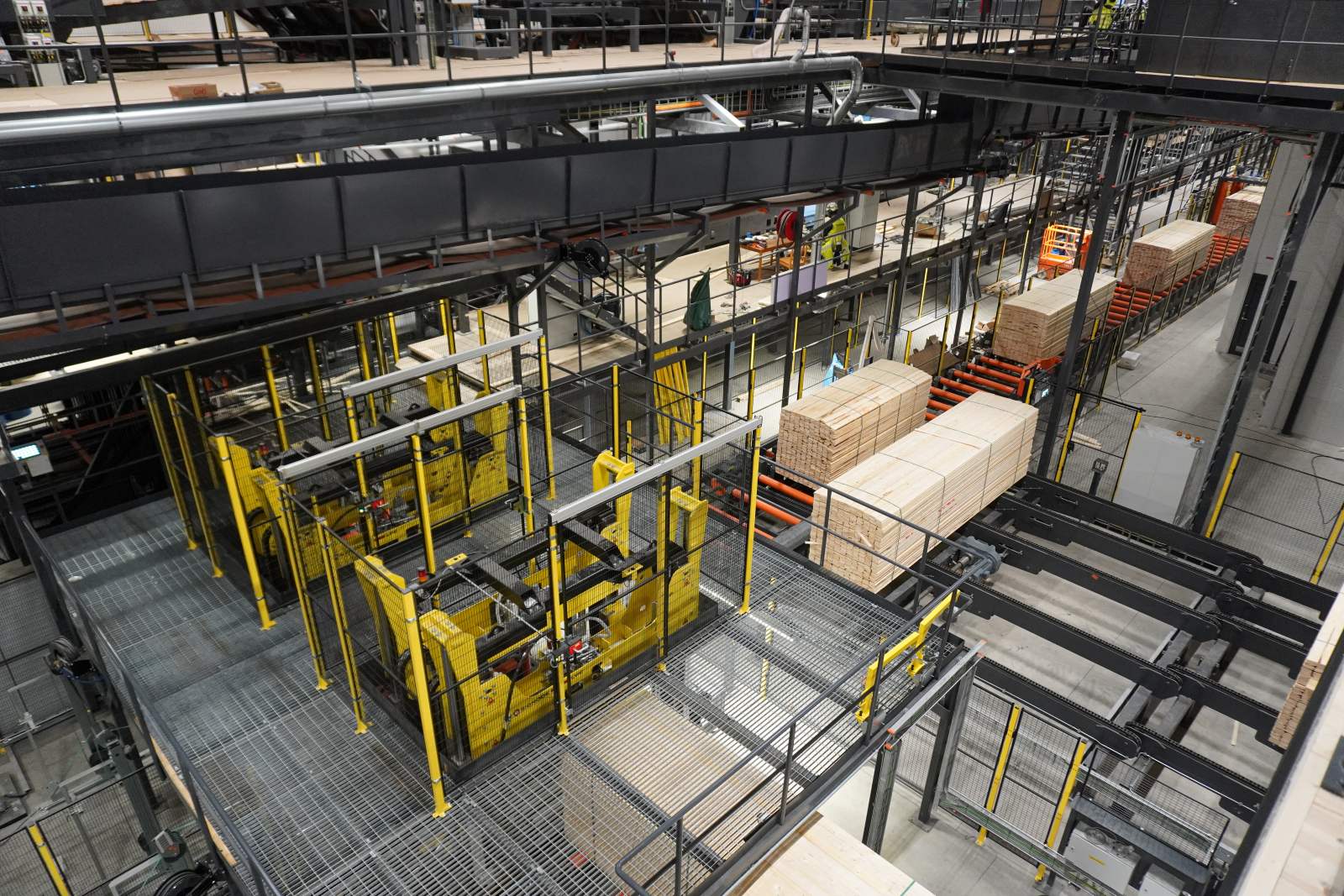
The most visible part of Keitele's investment program is the new dry grading and packaging plant. The plant is responsible for the finishing stages of sawn timber: grading after drying, measuring and cutting to customer lengths, and packaging and protection according to customer wishes.
Machine vision, automation and robotics are strongly present in the new plant's machinery. Kylävainio cites the automatic wrapping machine as an example: previously, finished lumber was wrapped by hand, but now the work is done automatically by a machine.
"Working in a dry sorting and packaging plant is more about process control than physical strain. It is suitable for almost all ages and all types of workers, thus also influencing the employer image."
The new plant will be at 90 percent capacity by the end of August 2026. The last ten percent is planned to be reached by the end of this year. With the investment, Keitele sawmill will be able to produce approximately 600,000 cubic meters of sawn timber per year and use almost 1.35 million cubic meters of roundwood, making it one of the largest sawmills in Finland.
Regional economic impacts extend to the forest
The benefits of the investment will not be limited to the mill area. Kylävainio estimates that the volume of logs will increase regionally by 300,000–400,000 cubic meters per year, which means an increase in felling volumes of up to 700,000 cubic meters per year. For forest owners, this means an estimated increase of 30–40 million euros in annual stumpage revenue.
In addition, harvesting and transport contracting will generate an additional impact of 10–15 million euros on the regional economy. The whole is significant for the entire province.
Ready for the next climb
Kylävainio describes the investments as primarily about building a brighter future. According to him, the ongoing process gives the company the ability to adapt to market changes and strengthens its ability to operate in fast-cyclical markets where demand and supply can change quickly.
“When demand weakens, oversupply puts pressure on prices and challenges the entire industry. That’s why adaptability is key. We should all learn to react to fluctuations in demand – to scale up and down operations as the situation requires.”
When the investment program is completed in its entirety, the Keitele mill will represent the industry's leading edge in terms of technology and productivity, according to Kylävainio. Next, attention is already being paid to future decisions regarding sawn timber drying and factory logistics, as well as sawmill feeding and debarking of the small sawmill line.
"In the summer of 2027, the following machinery and equipment investments will be made, which will complement the increase in production capacity. You could say that by then we will have Keitele 2.0: all key facilities will be up-to-date, and no investment debt will have accumulated as a burden for the coming years."

