
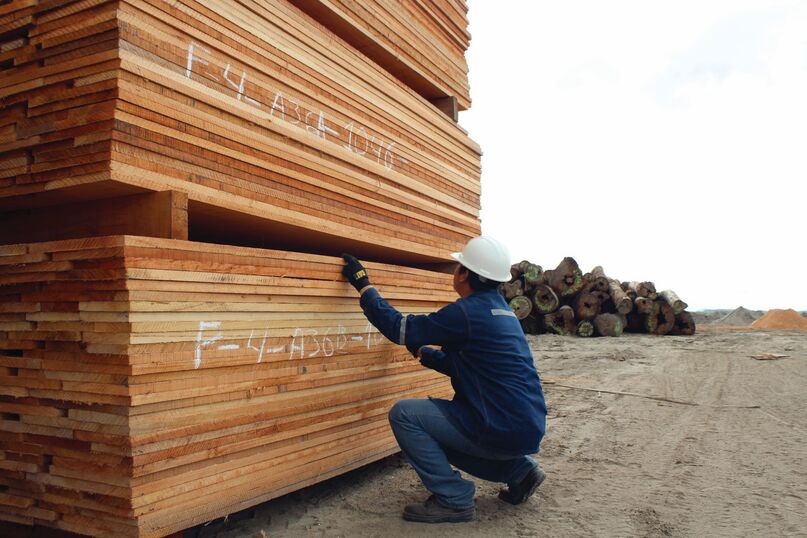
Timber market activity in West and Central Africa remains broadly stable, with no major changes in supply or production levels, but growing geopolitical uncertainty is weighing on forward business.
Tensions linked to the Middle East are increasingly influencing buying behaviour. The region remains a key outlet for timber exports, both for direct consumption in markets such as Dubai, Qatar and the UAE, and as a redistribution hub for Iraq and Iran. Current conditions are leading to greater caution among buyers, with hesitation in placing new orders and a more short-term purchasing approach.
Across West and Central Africa, fuel prices have not yet shown a major direct impact from recent developments, but overall living costs remain elevated and continue to rise. Governments are attempting to limit inflation through controls on essential imports, particularly food products, although broader inflationary pressure persists.
Production in the timber sector continues, but new export business is under pressure from external uncertainty. The direction of demand will depend largely on geopolitical developments and their impact on key markets in the Middle East.
Activity levels in the West and Central African timber industries are stable with no major shifts in supply or production but growing uncertainty is affecting forward business.
The most notable concern is the geopolitical situation which is creating hesitation in placing new orders amongst buyers, particularly for Middle East markets. This region remains an important outlet, not only for direct consumption in markets such as Dubai, Qatar and the UAE but also as a redistribution hub for Iraq and Iran.
Current tensions are making buyers more cautious and the coming weeks will be critical in determining whether demand stabilises or weakens further.
Within West and Central Africa there has not yet been a major impact on fuel prices as yet but overall living costs remain high and continue to rise. Governments are attempting to manage inflation by controlling the cost of essential imports, especially food products. Despite these efforts, inflationary pressure is clearly present across the region.
For the timber sector the situation remains cautious. Production is ongoing but new business, particularly linked to export markets, is under pressure from external uncertainties. Much will depend on geopolitical developments and their impact on key destinations such as the Middle East.
Gabon
The Gabonese timber sector remains operational but under pressure from a combination of logistical challenges, regulatory measure and shifting demand patterns. While no major structural changes have been seen several operational constraints continue to affect efficiency and supply.
Electricity and water supplies remain critical issues. Despite repeated meetings between the government and the national utility (SEEG), power cuts continue with multiple daily outages. In Libreville, water shortages have become severe, leading to the installation of public water distribution points. These disruptions are also impacting industrial operations.
Harvesting continues but is constrained by poor road conditions after prolonged rains. In particular, Azobé log supply is reported as low as bush roads remain in very poor condition. Some concessions in the Okondja Region have been trying for months to transport logs to mills without success. As a result, substitution with species such as Okan is increasing, raising questions about acceptance in key markets like the Netherlands.
Demand trends remain mixed across regions. Demand from China is showing a gradual recovery particularly for Okoume and Ovangkol which is supporting sawmill activity. Vietnam continues to be a strong market for Tali, Padouk and Niové.
The Philippines market is weakening while Middle East demand has slowed due to geopolitical uncertainty. However, expectations remain that demand could rebound quickly once the situation stabilises, driven by construction needs and re-export activity toward Iraq and Iran.
Exports of Azobé to the Netherlands are continuing but at reduced monthly volumes of around 1,500 cu.m, while Bangladesh is emerging as an additional buyer for Azobé and Okan.
A significant development recently reported is the Ministry of Forestry decision to block exports by some companies due to irregularities in their legal agreements. This measure is expected to impact export volumes and tighten compliance across the sector.
After a five-year restriction authorities are reviewing existing Kevazingo stocks. Companies have been instructed to declare their inventories and inspections are underway. There are indications that exports may resume under controlled conditions. However, market prices for Kevazingo have collapsed due to prolonged absence from the market and substitution by alternative decorative species such as Ovangkol and Belli.
For the industry in Gabon the outlook remains cautious. While demand from China is improving and alternative markets are developing, supply constraints, particularly for Azobé and infrastructure challenges continue to limit growth. Regulatory tightening and compliance enforcement may further reshape the sector in the coming months.
Cameroon
Harvesting activity is increasing as the dry season has fully set in with no more rainfall affecting operations. This allows operators to repair forest roads and improve access, supporting higher production levels. However, despite improved operational conditions, the international market demand remains low to stable, limiting the pace of expansion.
Sawmill production is picking up supported by the return of most Chinese operators who are actively seeking alternative markets for sawnwood. This is helping to stabilise the sector after a slower period.
European demand is still quiet, particularly for Padouk, Azobé and Ayous. Ayous exports to Italy and the Netherlands remain under pressure largely due to competition from alternative materials, including Brazilian softwood.
Logistics remain generally functional. Container availability is not an issue, with sufficient empty containers available. Port operations in Douala and Kribi are running normally, though congestion in Douala Port continues to cause delays of up to seven days or more for vessels waiting to berth.
Electricity supply remains unreliable with regular power cuts affecting major cities, similar to the situation in Gabon. This continues to impact both industrial operations and daily life.
No major new forestry regulations have been reported during this period.
The outlook for Cameroon is considered moderately positive from an operational perspective with favourable weather conditions and increased harvesting activity. However, market demand remains uneven, particularly in Europe and for certain species like Ayous. Continued port congestion and infrastructure issues, especially electricity supply, remain key constraints.
Republic of Congo
Harvesting operations remain generally stable with no major disruptions reported. Activity levels are steady, supported by selective demand from export markets, although overall momentum remains moderate.
Sawmill operations continue without significant technical issues. The supply of spare parts, particularly for logging machinery, is stable and not affecting production capacity.
Transport conditions remain manageable, with reliance on export corridors to Douala for northern flows and Pointe-Noire for southern shipments. Container availability is sufficient and there are no shortages reported.
Port operations are functioning under normal conditions, with no major disruptions in shipping or dispatch.
Demand remains stable but uneven across regions. The Philippines continues to reduce purchases of sawn Okoume, impacting volumes, while Vietnam remains a strong and consistent market, particularly for Tali.
There is also niche demand from China for species such as Okoume, Okan, Ovangkol and Belli. European demand remains generally flat.
The Congolese timber sector remains stable, with balanced operations and functioning logistics. Demand is selective rather than broad-based, with Vietnam and niche Chinese markets providing support. The outlook is steady but cautious.
| Species | LM | B | BC/C |
|---|---|---|---|
| Acajou / Khaya / N’Gollon | 220 | 220 | 175 |
| Ayous / Obeche / Wawa | 220 | 220 | 200 |
| Azobé & Ekki | 250 | 250 | 175 |
| Belli | 260 | 260 | - |
| Bibolo / Dibétou | 200 | 200 | - |
| Bilinga | 230 | 230 | - |
| Iroko | 270 | 250 | 225 |
| Okoume (China only) | 190 | 190 | 220 |
| Moabi | 260 | 260 | 220 |
| Movingui | 180 | 180 | - |
| Niové | 160 | 160 | - |
| Okan | 230 | 230 | - |
| Padouk | 300 | 280 | 200 |
| Sapele | 230 | 230 | 220 |
| Sipo / Utile | 250 | 250 | 200 |
| Tali | 260 | 260 | - |
| Product | Price |
|---|---|
| Ayous FAS GMS | 440 |
| Bilinga FAS GMS | 680 |
| Okoumé FAS GMS | 440 |
| Okoumé Merchantable KD | 420 |
| Okoumé Std/Btr GMS | 430 ↑ |
| Sipo FAS GMS | 520 |
| Sipo FAS scantlings | 540 |
| Padouk FAS GMS | 900 |
| Padouk FAS scantlings | 950 |
| Padouk strips | 420 |
| Sapele FAS Spanish sizes | 530 |
| Sapele FAS scantlings | 550 |
| Iroko FAS GMS | 870 |
| Iroko scantlings | 920 |
| Iroko strips | 410 |
| Khaya FAS GMS | 420 |
| Khaya FAS fixed | 440 |
| Moabi FAS GMS | 580 |
| Moabi scantlings | 620 ↑ |
| Movingui FAS GMS | 460 |
| Okoume Merchantable | 380 |
| Assamela FAS GMS | 1,400 |
| Gheombi | 450 |

