


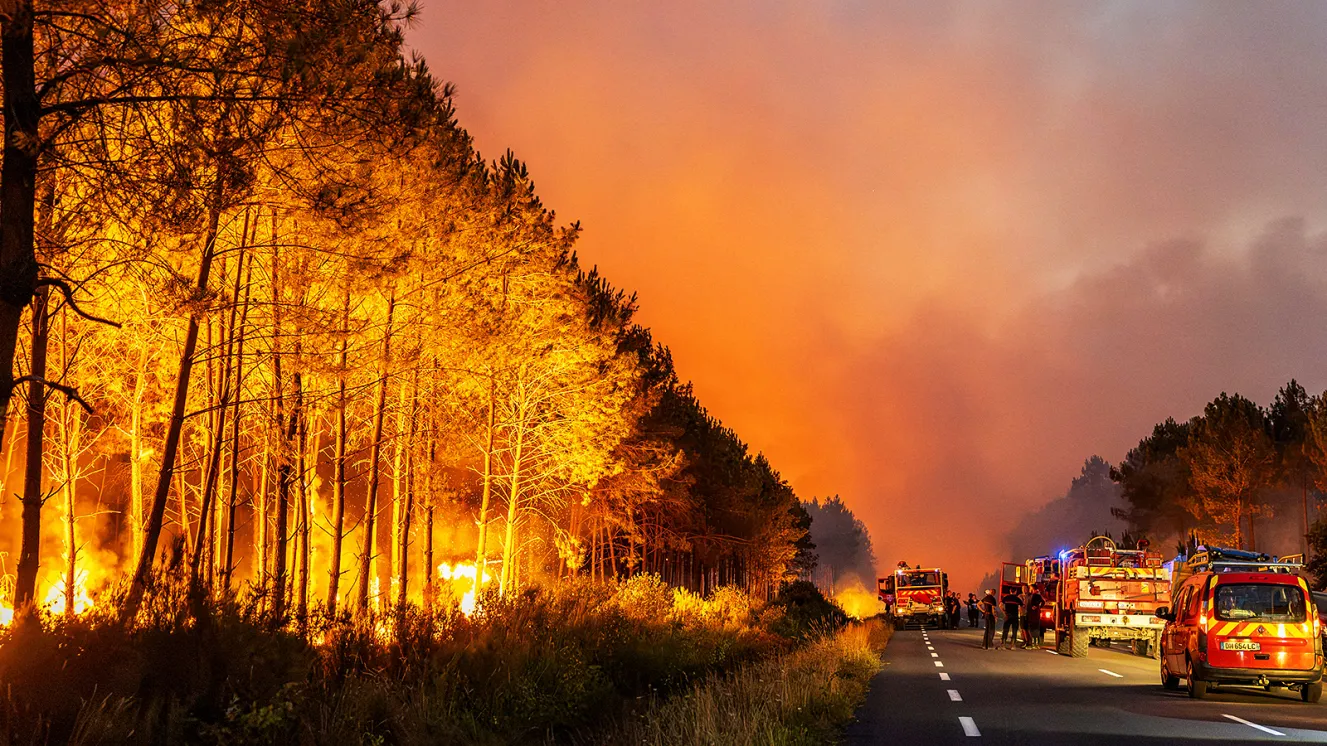
The devastating wildfires that have swept across France and Spain in recent weeks have once again exposed the growing vulnerability of Europe's forests to prolonged heatwaves and drought. Hundreds of thousands of people have been evacuated, major transport routes have been disrupted and tens of thousands of hectares of forest have burned, including large areas of the Landes forest in southwestern France, one of Europe's most important timber-producing regions. While the immediate priority has been protecting lives and containing the fires, attention within the forest sector is already shifting towards a different challenge: assessing the damage, recovering commercially viable timber and minimising long-term disruption to industrial supply chains.
For timber markets, the full economic impact remains impossible to quantify. Large sections of the affected forests remain inaccessible, road closures continue to delay inspections and many private forest owners still do not know whether their properties have been affected. France Bois Forêt has therefore urged caution against drawing early conclusions, arguing that reliable estimates will only become possible once emergency services have completed their work and foresters are able to assess the condition of individual stands.
What is already becoming clear, however, is that the discussion extends well beyond the number of hectares burned. For sawmills, harvesting contractors and wood processors, the next several weeks will determine how much timber can still be recovered before biological degradation begins to reduce its value. Salvage operations, procurement strategies and processing capacity are rapidly becoming just as important as firefighting itself.
 Thousands of quality articles