


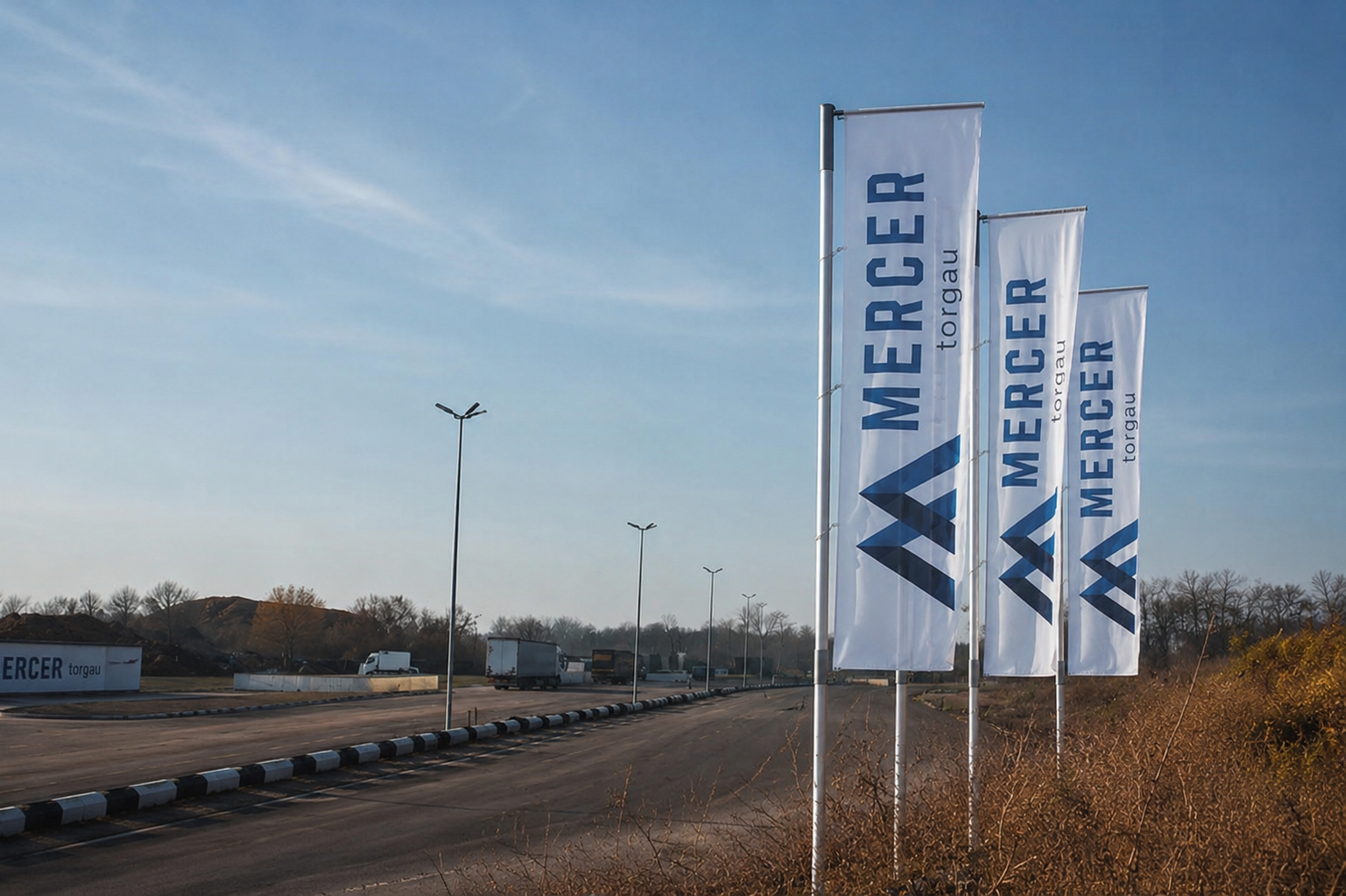
Mercer International's decision to eliminate around 350 positions at its Torgau wood-processing complex may have appeared abrupt, but the restructuring announced in July was the culmination of a process that had been unfolding for months. Long before workforce reductions became public, the company had already begun adapting its German operations to increasingly difficult market conditions by widening its raw-material procurement network, reassessing investment priorities and maintaining production at levels that were becoming progressively harder to justify economically.
Only after those measures failed to restore acceptable returns did management conclude that the site itself had to become smaller.
The sequence of events offers a rare insight into how one of Europe's largest integrated wood-processing complexes moved from being presented as a strategic growth platform to becoming the focus of one of the German wood-products industry's largest restructuring programmes in recent years. It also illustrates the limits of scale, integration and modernisation when raw-material costs remain structurally high while demand for finished products weakens.
 Thousands of quality articles