The international wood industry in one information service
Subscribe to our digital newsletter for your daily digest of essential news, views and analysis from the international wood industry delivered directly to your inbox.
GWMI visits Södra: inside Värö’s sawmill and the forests behind it
Our visit to Södra began in the forest. Before the automated saw lines at Värö and the pallet production at Åsljungapallen, there was Ann-Charlotte Larsson, talking about the land her family has managed for generations.
A forest owner and Södra member, Larsson described a responsibility that extends well beyond the next harvest. She wants to pass the forest to the next generation in at least as good condition as she inherited it. Replanting, active management and planning for the years ahead are part of that commitment.
GWMI joined around 160 industry participants for the tour on 1 October, during the FEFPEB Congress in Båstad. The programme took us from family forestry to Södra Wood Värö and then to Åsljungapallen, following the connections between forest owners, timber processors and wooden packaging manufacturers.
For an international group accustomed to discussing timber through prices, specifications and delivery schedules, meeting Larsson gave the day a personal starting point. She supplies timber to Södra, but her relationship with the company goes further: as a cooperative member, she also owns a share of the industry that processes it.
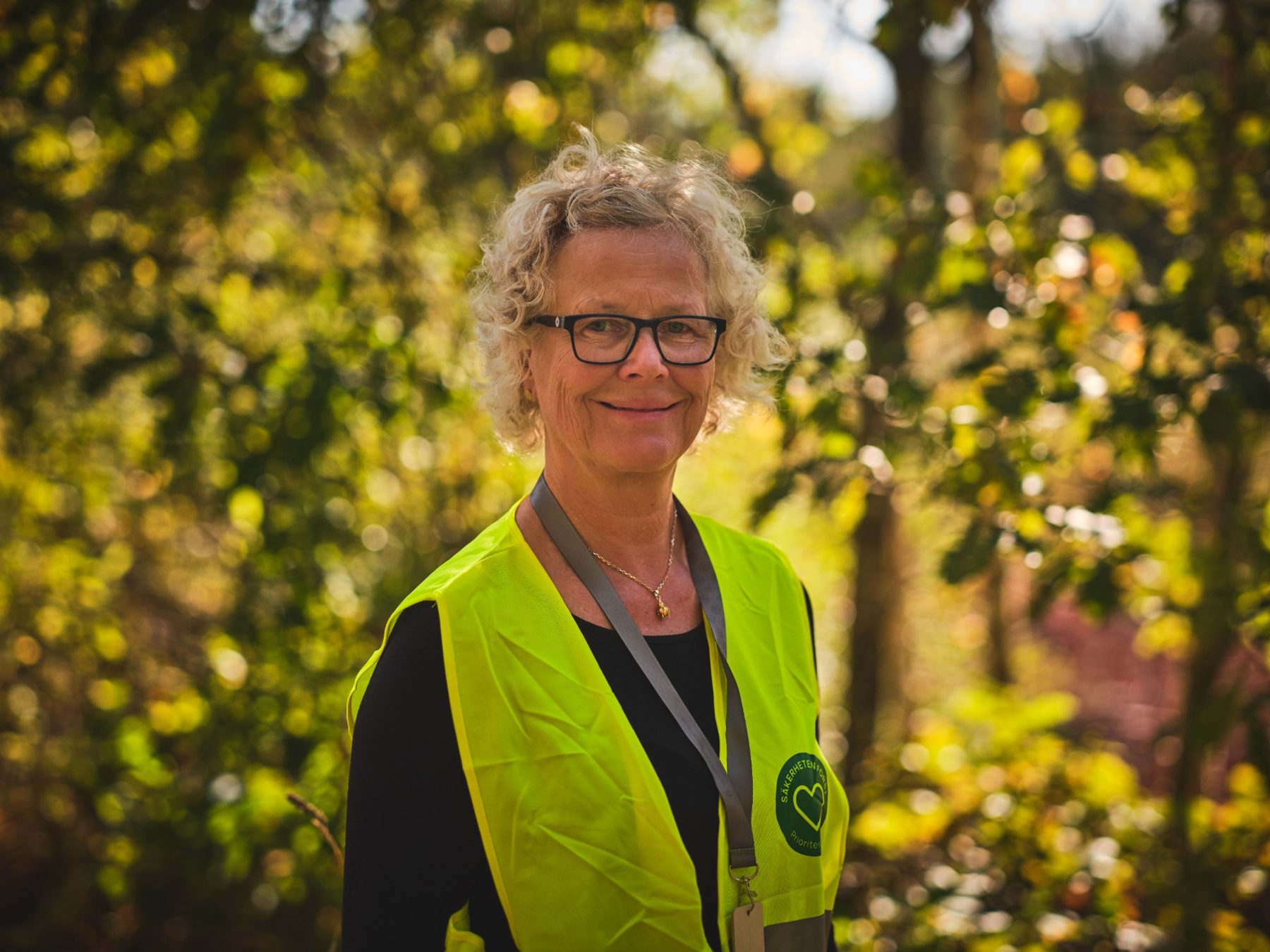
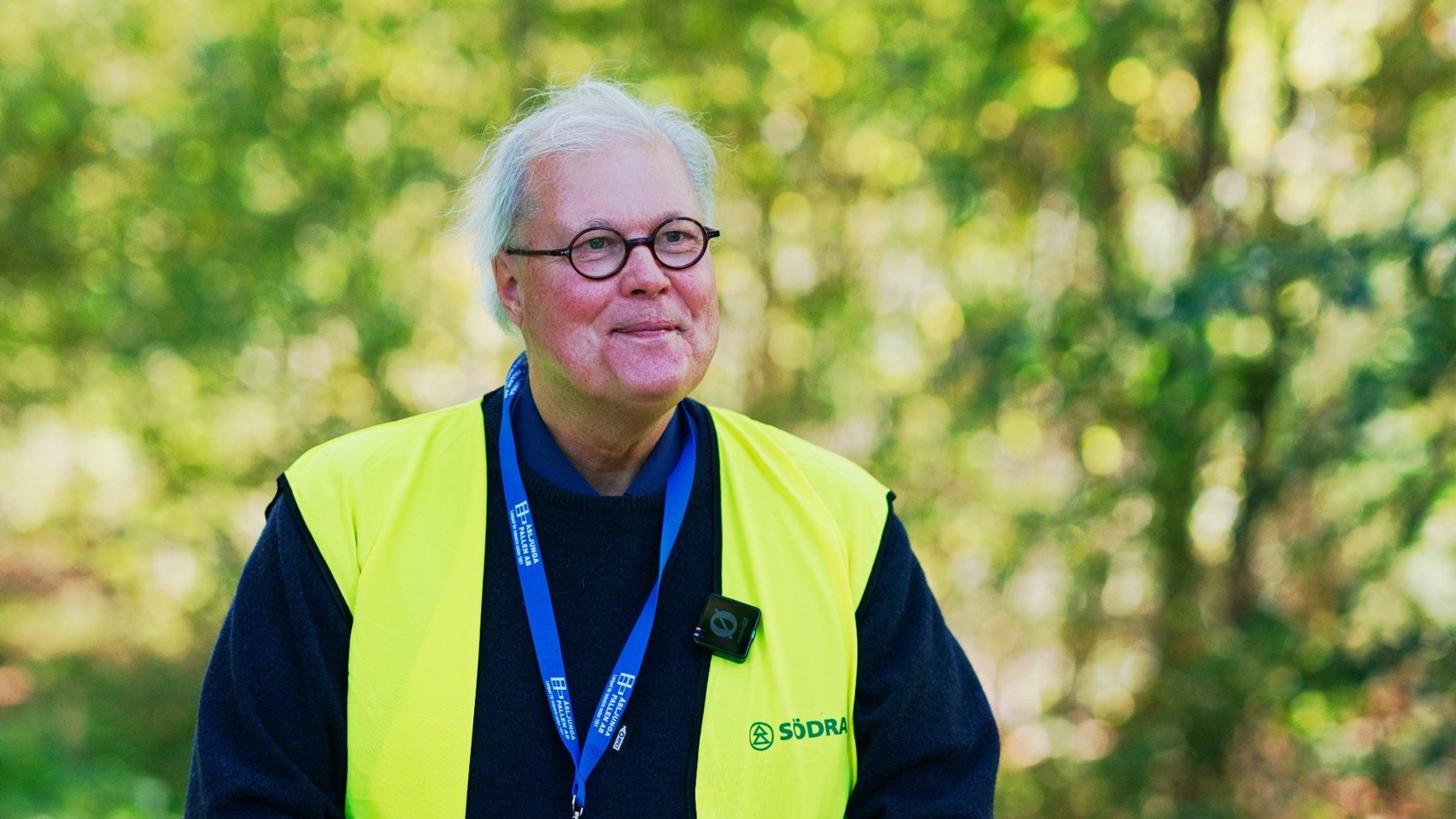
Forest owner and Södra member Ann-Charlotte Larsson, whose family forest was the starting point of the visit.
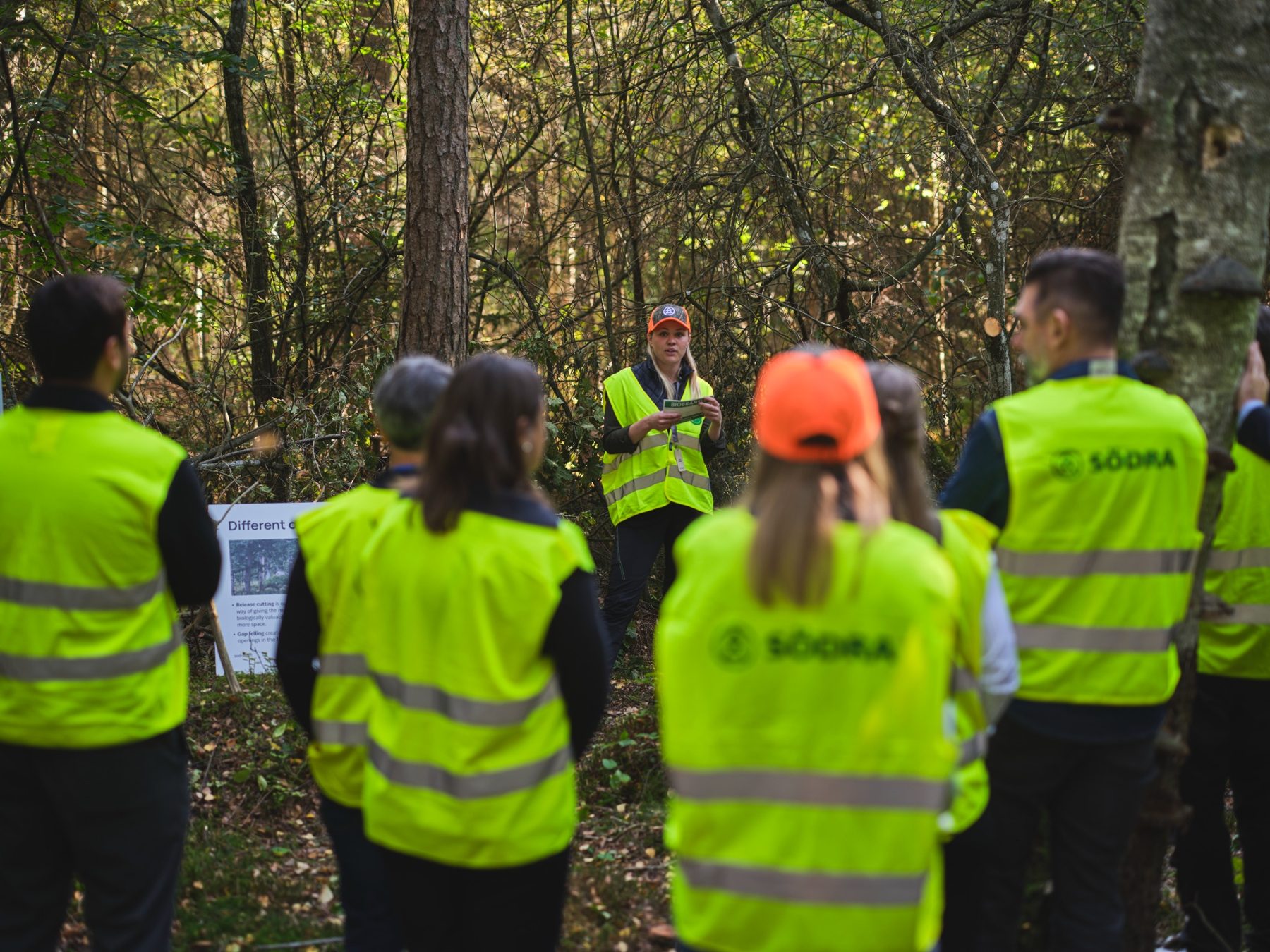
FEFPEB delegates hear about forest ownership and management during the forest visit
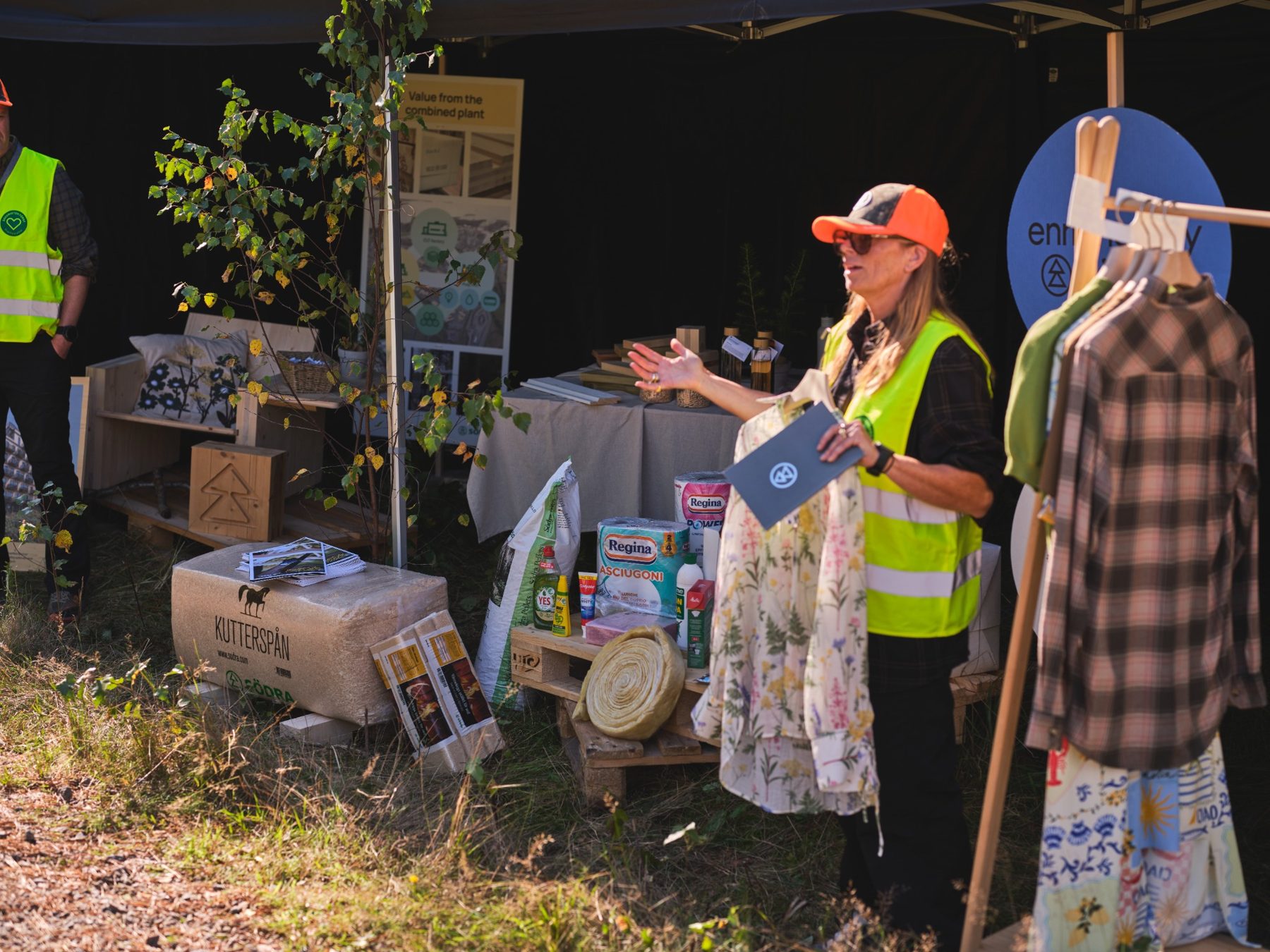
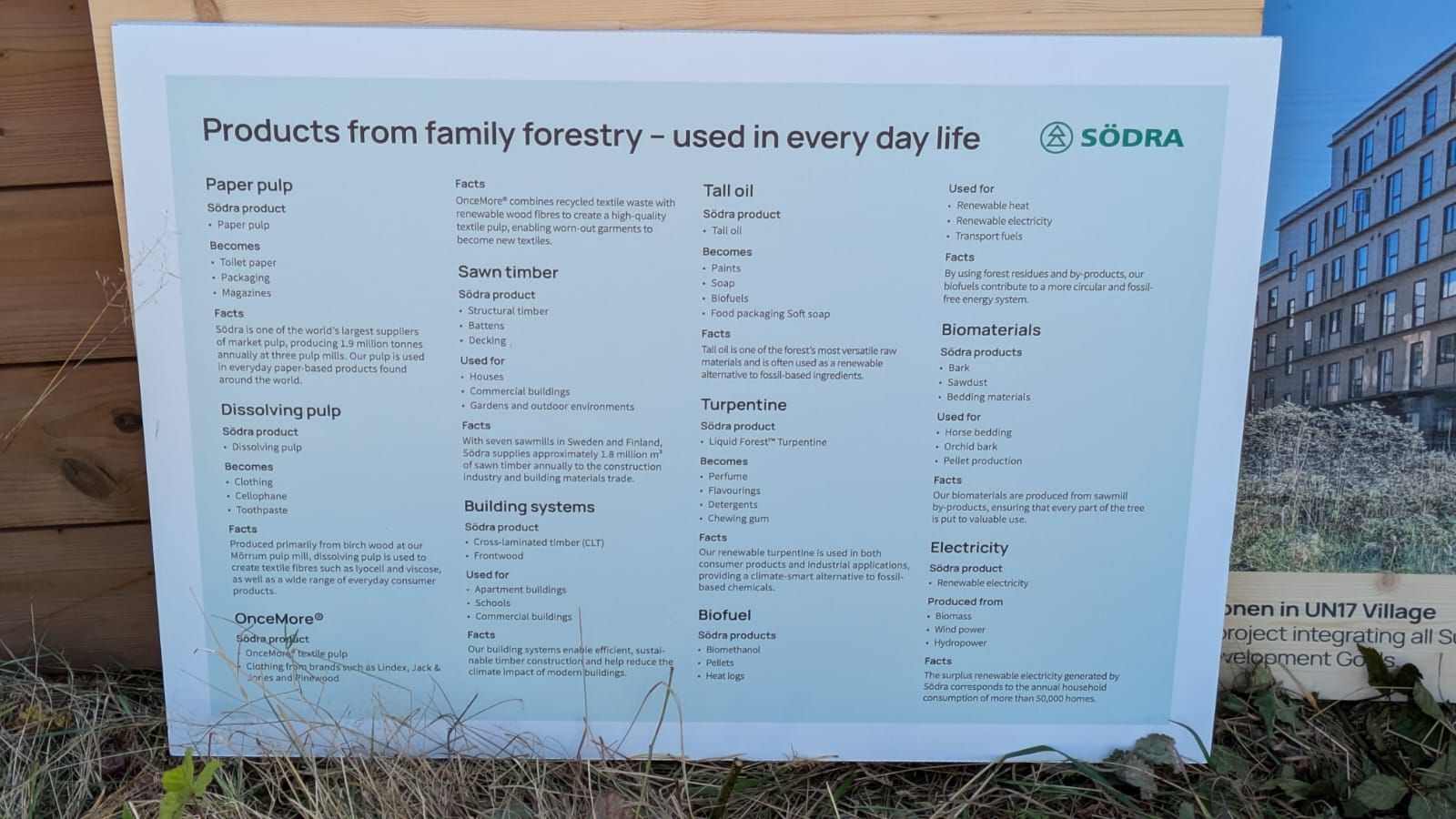
From timber to textiles: a display of forest-based products shows the many uses of wood raw material.
Starting with the people behind the timber
The forest visit allowed time for conversations as well as presentations. Along a trail, participants met Södra specialists who explained the cooperative’s operations, forest management and the uses found for different parts of the tree. Lunch was held in the forest, bringing delegates and their hosts together away from the congress meeting rooms.
Larsson’s account stayed close to the practical work of owning a forest: managing it, renewing it and keeping it productive for those who come next. It also introduced the ownership structure behind the industrial facilities we would visit later.
At Södra, the people supplying the raw material collectively own the business that turns it into sawn timber, pulp and other products. Meeting one of those owners made that arrangement easier to understand than an organisational chart could.
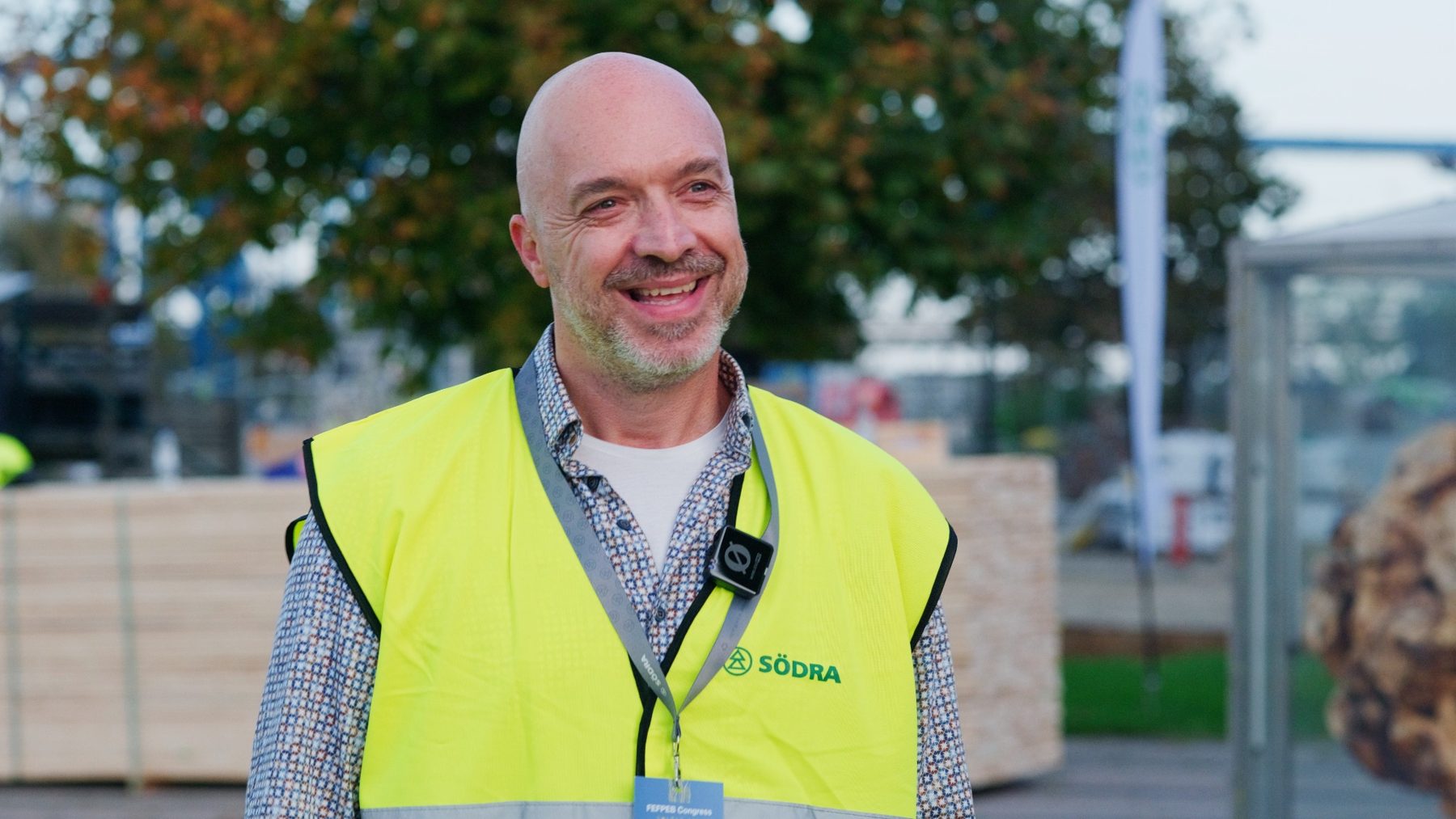
“All three visits we made while preparing the congress have been impressive in different ways, but this visit in the forest is something special. It has been very friendly, informative and well organized. And if I listen to the attendees, everyone is most impressed.”
Fons Ceelaert, Secretary General of FEFPEB
Inside Värö’s sawmill
At Södra Wood Värö, the pace changed. The focus moved to the volumes passing through the mill and the technology used to measure, cut and grade them.
The sawmill has annual sawing capacity of 610,000 m³. Its production includes planed, strength-graded construction timber and boards for the packaging industry, and it supplies the raw material for Södra’s CLT production.
During the tour, we followed the production flow and the role of measurement and automated controls in getting value from each log. Timber arriving at the mill varies in shape and quality; the equipment has to work with those differences while producing material to customers’ specifications.
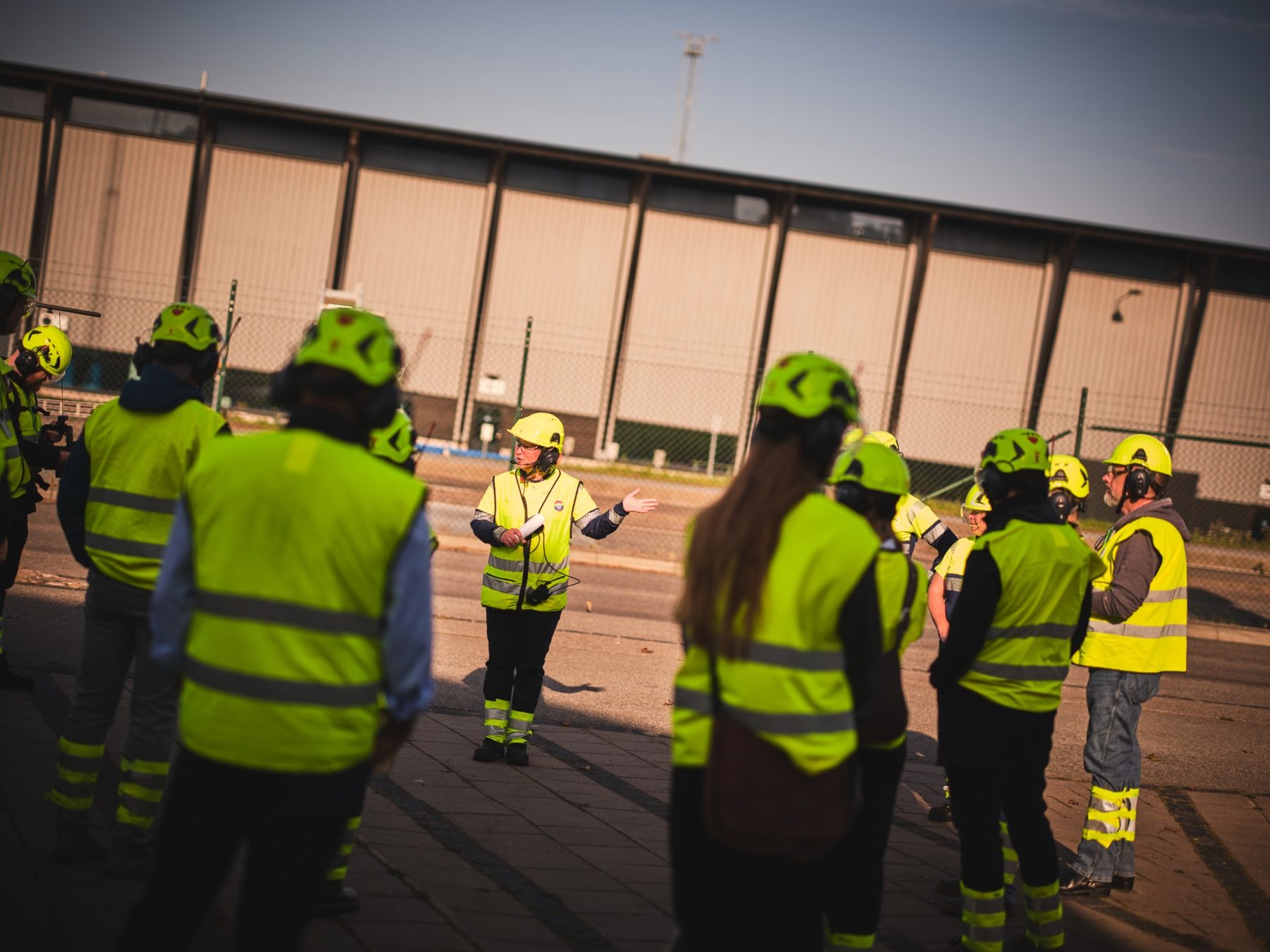
FEFPEB delegates receive a briefing at Södra Wood Värö before continuing the sawmill tour.
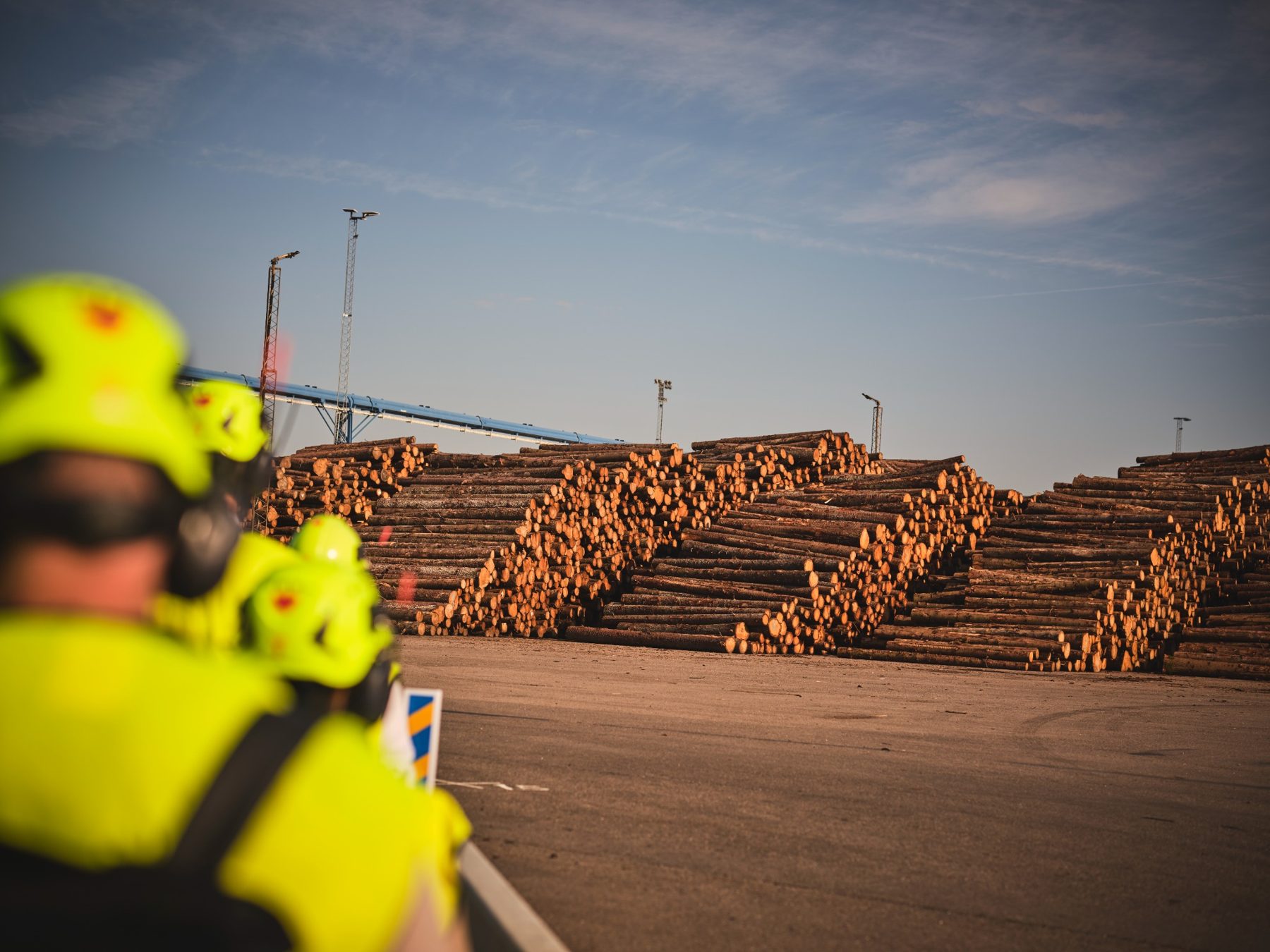
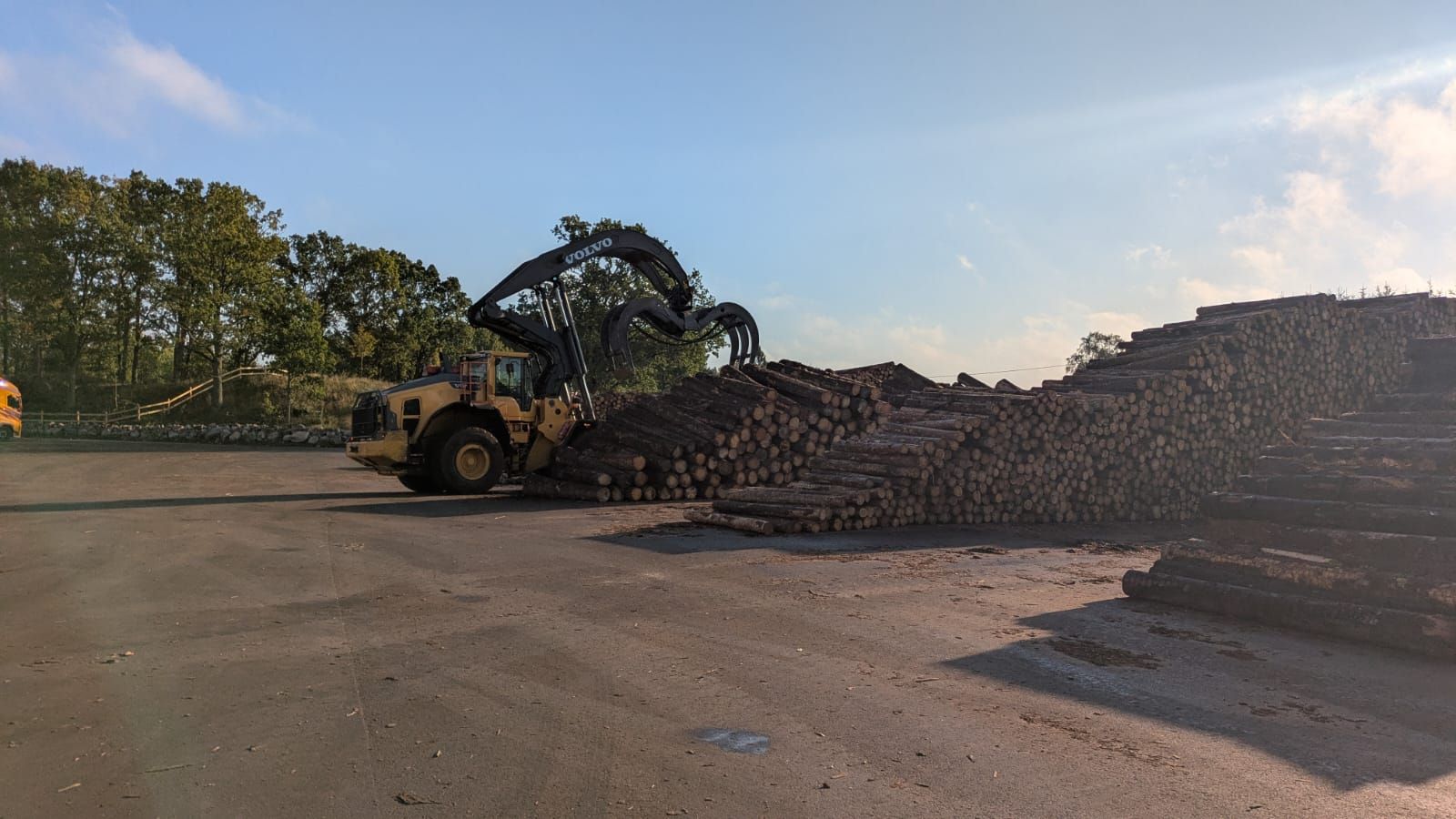
Sawlogs stacked in the yard at Södra Wood Värö during the delegates’ tour.
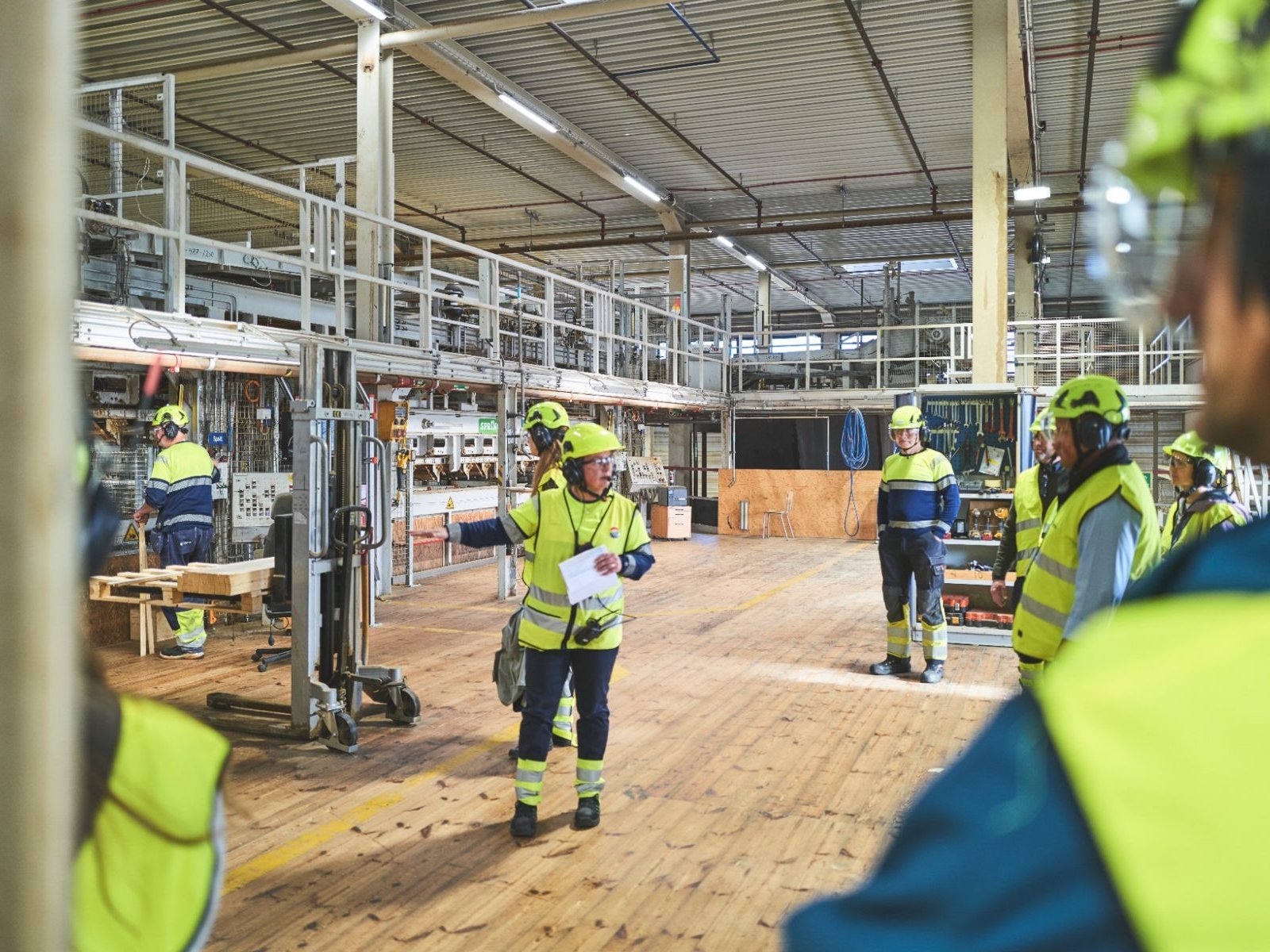
Inside Södra Wood Värö, where automated handling systems move sawn timber through the production line
Värö has continued to invest in that part of the process. Earlier this year, Södra announced the introduction of a Microtec GoldenEye Transverse scanner capable of analysing up to 240 boards per minute and supporting structural strength grading. A separate system from Taigatech adjusts log rotation before sawing, helping position the raw material more precisely.
The speed of the operation attracted attention, but so did what happened to the material outside the main timber output.
“The most surprising thing I've seen is that everything is used. There's no waste. Everything ends up in some product, and that was for me the most amazing thing to see. It's also amazing to see the speed at which everything goes and the volumes being handled.”
Jens Coquette, Müller Pallets, Belgium
That was a recurring subject during the visit. Boards leave the sawmill for construction and packaging customers, while chips, sawdust, shavings and bark enter other processes.
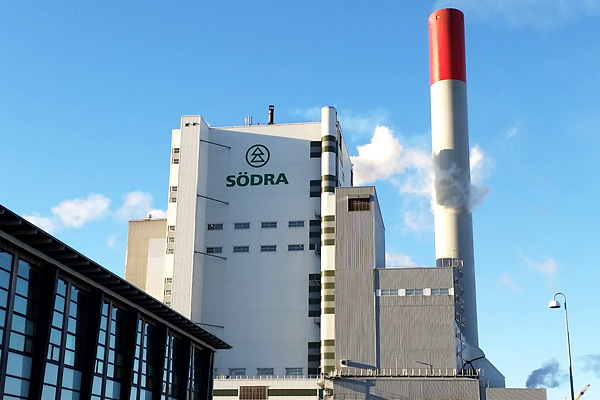
Värö brings a sawmill, pulp mill and CLT factory together on one site. Södra uses sawdust and planer shavings for pellets and fuel, while chips and bark have uses in the pulp operation. The pulp mill also supplies energy to the sawmill.
For the pallet and packaging manufacturers in the group, these connections were particularly relevant. Their industry provides an outlet for timber alongside construction, while the mill’s other material streams support neighbouring operations. The tour showed how those outlets fit together within the site.
From boards to finished pallets
The final stop brought us to Åsljungapallen, where the discussion turned to dimensions, assembly and the requirements of the goods a pallet will carry.
The company combines its own sawmill with pallet manufacturing. Following production at close range, delegates could see how timber components move towards a finished product through machining, handling and assembly.
Åsljungapallen has annual production capacity of approximately 2.5–2.8 million pallets, according to the material supplied for the visit. Sweden remains its main market, although its packaging enters supply chains extending across Europe and beyond.
Automation and robotics are already central to the operation. The company is also exploring further uses for digital production data, AI and predictive maintenance as it develops the plant.
Log handling in Åsljungapallen’s sawmill yard
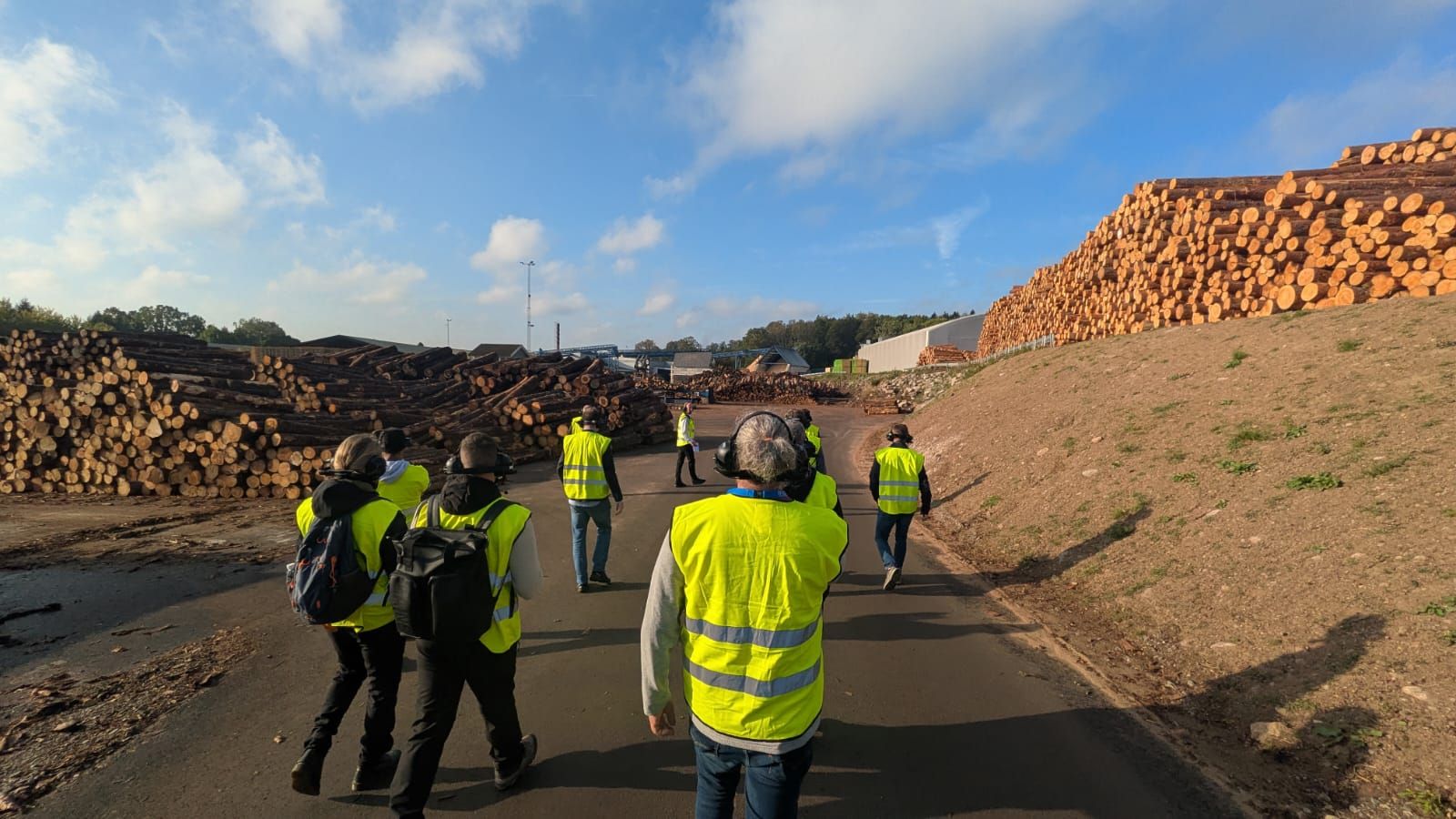
Visitors walk through Åsljungapallen’s sawlog storage yard
Södra’s display of wood-based products, from construction timber to pulp and biofuels
Its own sawmill produces the timber components used in a range that includes standard pallets, customised pallets, collars and boxes. Alongside production efficiency, the company emphasises designing packaging around customers’ handling needs.
By this point, the day had moved from a forest owner’s plans for the next generation to products made for daily use in warehouses, factories and transport networks. The distance between those two ends of the business had become much easier to follow.
Larsson’s forest, Värö’s production lines and Åsljungapallen’s manufacturing each brought a different part of the timber trade into view. For GWMI, seeing them together gave us a fuller picture of Södra’s place in that trade: a business rooted in family-owned forests, operating at industrial scale and supplying wood that other manufacturers turn into products their customers use every day.
GWMI impressions: from the forest to the production floor
What stayed with us was how each stop added something to the previous one. Ann-Charlotte Larsson spoke about decisions made with the next generation in mind. At Värö, the focus shifted to getting the right products from each log. At Åsljungapallen, those products became components of packaging built around customers’ needs.
Värö was particularly interesting for the scale of its operations and the choices behind the production figures. But the forest visit and the pallet factory gave that scale a context: where the timber comes from, who supplies it and what manufacturers need it to do. Having time to speak with people along the way helped connect the three.
The day also left questions worth pursuing. How are customer orders changing? How much flexibility do mills have to adjust their product mix? And how far can automation and better use of raw material help when costs remain high and demand is uncertain?
Those are subjects for our next conversations with Södra, which we’ll be sharing with GWMI readers over the coming days.
We arrived with the market in mind; we left with a closer view of the people and operations behind the timber...
Subscribe to our digital newsletter for your daily digest of essential news, views and analysis from the international wood industry delivered directly to your inbox.
We use cookies on our website to give you the most relevant experience by remembering your preferences and repeat visits. By clicking “Accept All”, you consent to the use of ALL the cookies. However, you may visit "Cookie Settings" to provide a controlled consent.
This website uses cookies to improve your experience while you navigate through the website. Out of these, the cookies that are categorized as necessary are stored on your browser as they are essential for the working of basic functionalities of the website. We also use third-party cookies that help us analyze and understand how you use this website. These cookies will be stored in your browser only with your consent. You also have the option to opt-out of these cookies. But opting out of some of these cookies may affect your browsing experience.
Necessary cookies are absolutely essential for the website to function properly. These cookies ensure basic functionalities and security features of the website, anonymously.
Cookie
Duration
Description
cookielawinfo-checkbox-analytics
11 months
This cookie is set by GDPR Cookie Consent plugin. The cookie is used to store the user consent for the cookies in the category "Analytics".
cookielawinfo-checkbox-functional
11 months
The cookie is set by GDPR cookie consent to record the user consent for the cookies in the category "Functional".
cookielawinfo-checkbox-necessary
11 months
This cookie is set by GDPR Cookie Consent plugin. The cookies is used to store the user consent for the cookies in the category "Necessary".
cookielawinfo-checkbox-others
11 months
This cookie is set by GDPR Cookie Consent plugin. The cookie is used to store the user consent for the cookies in the category "Other.
cookielawinfo-checkbox-performance
11 months
This cookie is set by GDPR Cookie Consent plugin. The cookie is used to store the user consent for the cookies in the category "Performance".
viewed_cookie_policy
11 months
The cookie is set by the GDPR Cookie Consent plugin and is used to store whether or not user has consented to the use of cookies. It does not store any personal data.
Functional cookies help to perform certain functionalities like sharing the content of the website on social media platforms, collect feedbacks, and other third-party features.
Performance cookies are used to understand and analyze the key performance indexes of the website which helps in delivering a better user experience for the visitors.
Analytical cookies are used to understand how visitors interact with the website. These cookies help provide information on metrics the number of visitors, bounce rate, traffic source, etc.
Advertisement cookies are used to provide visitors with relevant ads and marketing campaigns. These cookies track visitors across websites and collect information to provide customized ads.