
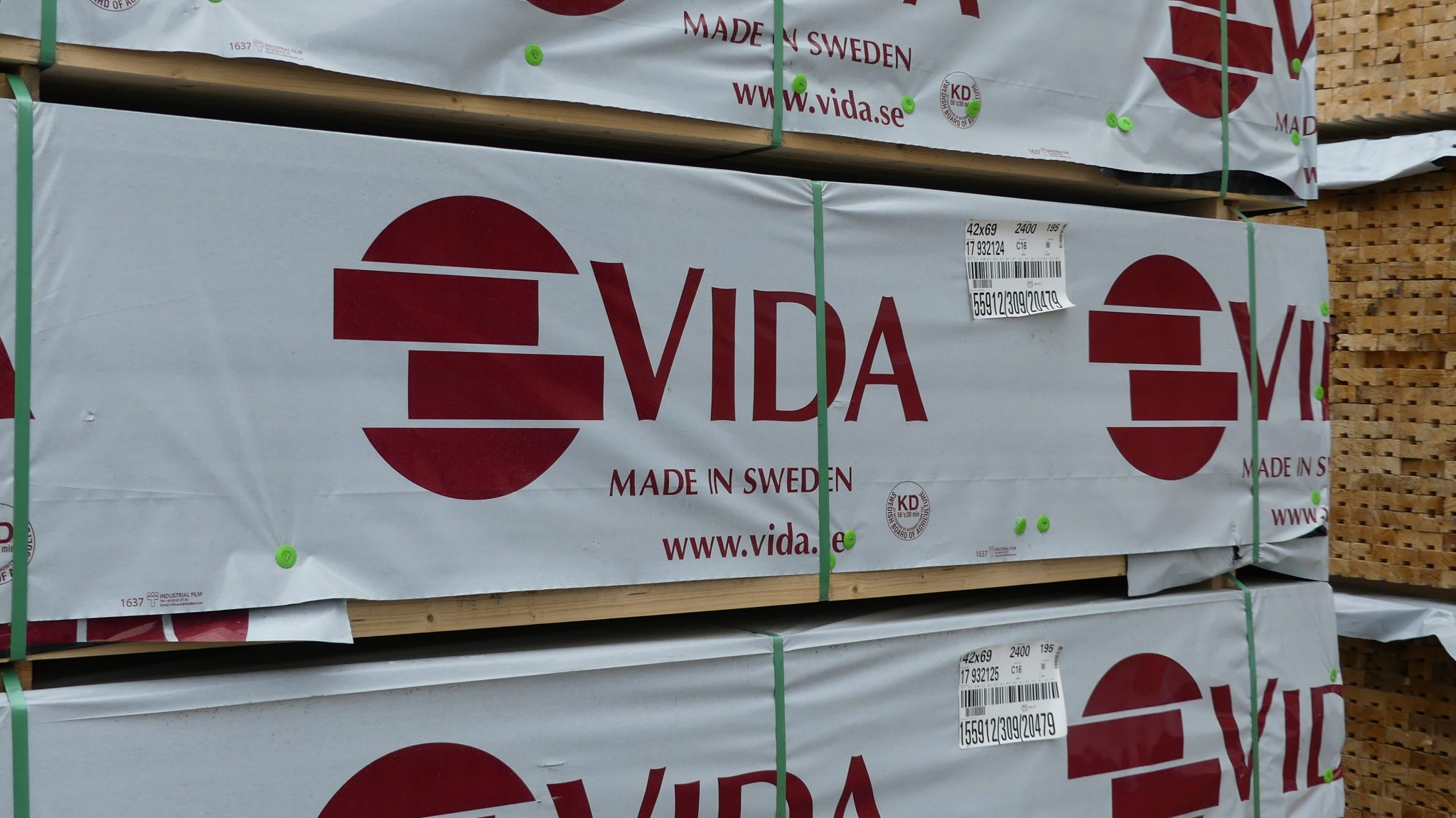
Swedish sawmill group Vida recently announced that it will close its sawmills in Urshult and Orrefors as part of a broader restructuring. The decision means that two of Vida’s total 15 sawmills will be shut down, affecting 92 employees.
According to Group CEO Karl-Johan Löwenadler, the decision is not linked to financial problems, but rather to long-term challenges related to raw material availability in southern Sweden. Following the announcement, Swedish wood industry media asked him several follow-up questions about why Urshult and Orrefors were selected, how the process will affect employees and how Vida views the future of the sawmill industry in southern Sweden.
“You say the group remains financially strong — how does that align with closing two sawmills?”
“Vida is a financially strong company and the decision is based on the overall shortage of sawlogs in southern Sweden. This is not about short-term problems, but about securing the long-term future of the business. By prioritizing investments in our most competitive sawmills, we create better conditions for long-term profitability and growth,” CEO Karl-Johan Löwenadler said in a written response.
“What is the main reason why Urshult and Orrefors cannot continue operating?”
“All of our sawmills were evaluated from a broader perspective, where sawlog availability was the most important factor. But elements such as capacity, investment needs, logistics, product focus and future competitiveness were also assessed. In the overall evaluation, Urshult and Orrefors face the greatest challenges in carrying the necessary investments on their own.”
“Will production from these sawmills be transferred to other facilities within the group?”
“Yes, we will redirect the raw material previously supplied to these two facilities to our nearby operations.”
“How many jobs are affected by the closures?”
“There are 92 employees at these facilities. Before union negotiations are completed, we cannot say how many redundancies there will be or how many employees may continue in other positions within the group.”
“Have layoff notices already been issued, and what does the process look like for employees?”
“Union negotiations began yesterday and at this stage we do not know when they will be concluded. We will offer transition support, occupational health services, individual discussions and cooperation with unions, the Swedish Public Employment Service and other parties. Where possible, we will also examine opportunities for employment within other parts of the group. Our employees are our most important resource and we take our responsibility very seriously, even in this situation.”
“How quickly will the closures be implemented?”
“That is also difficult to answer since we do not yet know when the union negotiations will end or when the final employment date will be.”
“How do you view the raw material situation — is this a long-term structural change in the industry?”
“The sawlog situation has been difficult for a long time, with supply and production capacity not matching in southern Sweden, and we do not see this changing in the foreseeable future. Studies carried out by organizations including the Swedish Forest Agency point to the same conclusion.”
“What does this mean for your total production capacity going forward?”
“Urshult and Orrefors process around 265,000 m3 annually. Our remaining sawmills have a combined annual production capacity of 3 million m3.”
“Is this an isolated decision, or do you expect further structural changes ahead?”
“We are not making those assessments at this stage. This decision is the result of a thorough analysis and a clear strategic choice. Our focus now is on developing and strengthening our remaining units,” Karl-Johan Löwenadler concluded.

